
Reviewed · SIENA & SAN GIMIGNANO DAY TRIPS
5-Day Best of Italy: Assisi, Siena, Florence, Venice and more
Rome to Venice in five days. That’s the pitch. What makes it appealing is how much classic Italy you can pack in without spending every morning figuring out logistics, because you travel by comfortable deluxe coach and you get guided tours with headsets. I particularly like the “best-of” hit list, Assisi to Venice, and the fact that entrance fees and most meals are handled for you. The main drawback is pace: this is a strictly scheduled tour with plenty of walking, so you need solid stamina.
I also like that the itinerary is built around structure, not chaos. You’re dropped at the key doorways, guided through the big stories, and then you get time to wander in the places that deserve it. If you want Italy at a light-to-moderate walking pace, bring good shoes and keep expectations realistic.
In This Review
- Key points before you go
- Price and value, what you’re really paying for
- The coach rhythm: how the trip moves day to day
- Day 1, Assisi and Siena: Franciscan art plus a medieval center
- Why this first day works
- What to watch
- Florence in real life: Duomo, Signoria, Santa Croce
- The Duomo area, Santa Maria del Fiore
- Piazza della Signoria, power made stone
- Santa Croce, where ideas got buried
- Florence downside to consider
- Bologna on Piazza Maggiore: huge church, big city feel
- Practical tip
- Venice, Piazza San Marco plus the Bridge of Sighs
- Venice downside to consider
- Montepulciano viewpoint on the way back to Rome
- Meals and hotels: what’s included, and how to manage expectations
- A small but important practical note
- Optional upgrades you might want to budget for
- Pacing and who this tour fits best
- This tour is a great fit if you:
- This tour is not the right fit if you:
- Small tips that make a big difference
- Should you book 5-Day Best of Italy from Rome?
- FAQ
- What is included in the tour price?
- Are city taxes included?
- Where does the tour start and what time?
- What language is the tour offered in?
- How much walking is involved?
- Is there onboard Wi-Fi on the coach?
Key points before you go
- Assisi, Florence, and Venice without stress: guided time at the places that usually eat up your whole day on your own
- Headsets on the walking tours: you hear the guide clearly even in crowded squares
- 4-star hotels twice in Florence and twice in Venice: centrally located so you can get to attractions quickly
- Timed entry for key sights: helps reduce the worst queue time
- Coach comfort with onboard Wi-Fi: useful on transit days
- Expect optional costs in Venice and Tuscany: you may want upgrades like a gondola or Pisa
Price and value, what you’re really paying for
At about $1,031 per person, this tour isn’t trying to be the cheapest way to see Italy. It’s priced more like a “time-saving bundle.” You’re paying for the deluxe coach with onboard Wi-Fi, licensed local guides, headsets, entrance fees for key stops, and 4 overnights in 4-star hotels (two nights in Florence and two nights in Venice). Add in most meals, including a welcome dinner plus lunches and breakfasts, and suddenly the price looks more normal for a guided, multi-city package.
Here’s how I’d judge the value for you: can you realistically arrange similar coverage in the same number of days without paying for several separate tickets, guides, and last-minute transport? Most first-timers can’t. That’s where this type of tour pays off. You lose some spontaneity, but you gain frictionless movement between regions.
Also note what’s not included: city taxes. You pay these directly at the hotels on arrival or check-out based on local rules. It’s common in Italy, but it’s still a real budget line, so plan for it.
Still weighing it up? We have written up plenty of other tours and tickets across Rome.
- Vatican Museums & Sistine Chapel Tour with Optional Basilica
★ 4.3 · 67,413 reviews - Vatican Museums, Sistine Chapel & St Peter’s Basilica Guided Tour
★ 4.5 · 39,149 reviews - Rome: Colosseum, Palatine Hill and Roman Forum Guided Tour
★ 4.8 · 32,814 reviews - Rome: Guided Tour of Colosseum, Roman Forum & Palatine Hill
★ 4.7 · 27,897 reviews
The coach rhythm: how the trip moves day to day
The tour runs on a group schedule, which matters because you’re packing multiple major cities into a short stretch. The deluxe coach is air-conditioned and has onboard Wi-Fi, which helps during the longer legs between towns. Reviews frequently praise the driving and professionalism of drivers such as Luigi, and some groups specifically mentioned how luggage handling and safe timing were taken seriously.
You’re not just transported, either. The point of the coaching is that you can stay oriented. You’ll hear background during the day, and you won’t be stuck guessing where to go inside each city. The headsets on guided walks are a big part of that. In places like Florence and Venice, sound issues and crowds can make guided tours less useful when you don’t have a system like this.
One practical note: the tour has a maximum of 45 travelers. That’s big enough to feel social, but small enough that the guide can still keep things moving, as long as everyone returns on time.
Day 1, Assisi and Siena: Franciscan art plus a medieval center
The day starts early. You depart Rome at 7:15 AM from Hotel St. Martin (Via S. Martino della Battaglia, 58). Then you head into Umbria to Assisi, a hilltop UNESCO World Heritage town that feels made for slow wandering, even if the schedule doesn’t allow slow for long.
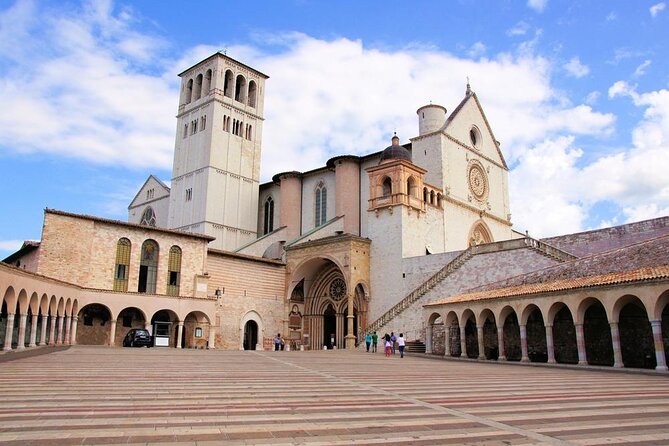
In Assisi, your highlight is Basilica Papale e Sacro Convento di San Francesco d’Assisi. This is the sacred anchor of the town because it preserves the remains of St. Francis. Inside, the basilica complex is famous for its art and frescoes, and the buildings blend together in a way that’s hard to fully appreciate from outside. Even if churches aren’t your thing, the sheer importance of the site comes through quickly, and the guide helps you notice what you might otherwise miss.
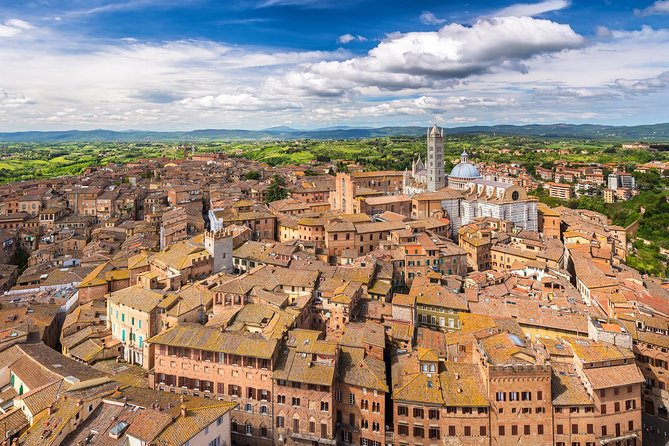
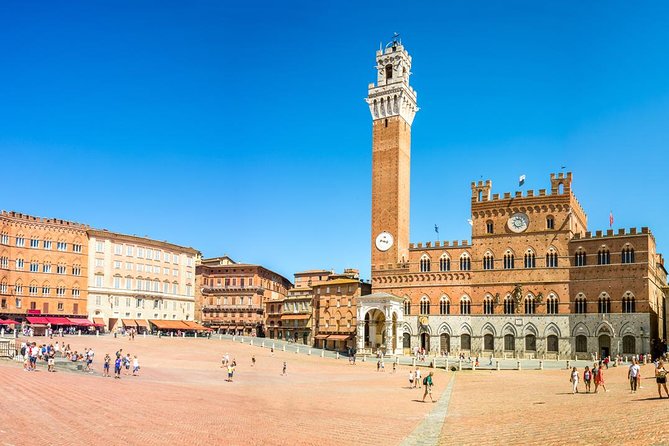
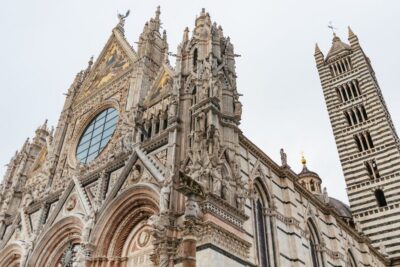
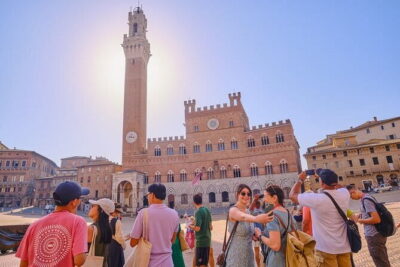
After Assisi, you continue toward Siena for Piazza del Campo, one of Italy’s most recognizable medieval squares. Siena’s biggest trick is that the square isn’t just pretty, it’s functional. It’s built for gatherings, markets, and ceremonies, and it gives you a snapshot of how the city worked at its civic core.
You end the day in Florence, check into your 4-star hotel, and enjoy a welcome dinner. This matters more than it sounds. Starting with a dinner on Day 1 helps you avoid the “what should we eat tonight?” stress right after travel.
Why this first day works
- Assisi gives you meaning and atmosphere fast.
- Siena gives you a strong visual anchor.
- Florence starts you with dinner and a base, so you’re not scrambling.
What to watch
Assisi and Siena involve walking on uneven surfaces. Comfortable shoes are not optional.
Florence in real life: Duomo, Signoria, Santa Croce
Florence is where the tour earns its keep. You get a tight run through the city’s major pillars: the Duomo complex area, the political heart at Piazza della Signoria, and the art and ideas packed into Santa Croce.
Kept in the same folder as this one, Umbrian hill town day trips in Rome.

The Duomo area, Santa Maria del Fiore
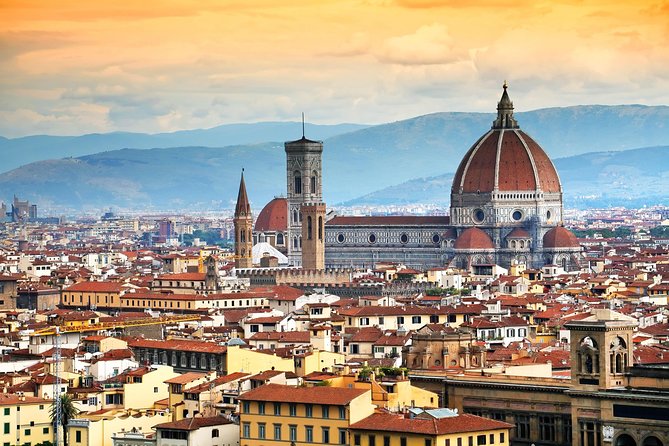
You’ll visit Cathedral of Santa Maria del Fiore, including the outside facade and the context of how the cathedral grew over time. The marble patterning is striking, especially when you’re standing right there instead of looking at photos. This is one of those places where the guide’s timing helps because the square fills quickly, and you want to see it while you can still focus.
The Duomo dome and the bell tower get attention for a reason. They’re a Renaissance flex, but also engineering statements. If you like architecture, this is the moment you understand why Renaissance art wasn’t just paintings. It was building.
Piazza della Signoria, power made stone
Next is Piazza della Signoria, Florence’s political stage since the 1300s. You’ll see sculptures connected to that power story, including Michelangelo’s David (not the original, but positioned for symbolism). Neptune by Ammannati is also part of what makes this piazza more than a pretty backdrop. The guide’s job here is to connect the statues to the city’s history so the square becomes a timeline.
Santa Croce, where ideas got buried
Then you get to Basilica of Santa Croce, the major Franciscan church tied to Florence’s famous minds. The burial list reads like a pop quiz for anyone who’s taken an art or philosophy class: Michelangelo, Rossini, Machiavelli, and Galileo Galilei are named in your tour stop information. You also hear the twist about Dante. His sarcophagus at Santa Croce is empty because he was buried elsewhere after exile, which turns the church into a story about power and politics, not just religion.
If you’re traveling with anyone who gets burned out by museums, Florence is a great place to reset by strolling. The guided stops still help you understand where to look while you explore on your own after.
Florence downside to consider
Santa Croce and the Duomo area are popular for a reason, so expect crowds. Even with timed entry for key sights, you will still feel Florence’s energy.
Bologna on Piazza Maggiore: huge church, big city feel
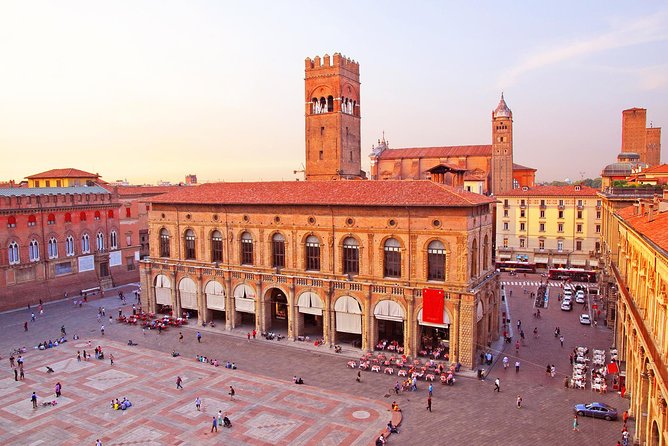
On Day 3 you trade Florence’s Renaissance intensity for Bologna, a city people often love once they stop treating it like a waypoint. You start at Piazza Maggiore, also known as the heart of the city. This square’s key detail is the Neptune statue, and the information you get focuses on the square’s creation and how the public space was reshaped in the Renaissance era.
From there, you visit Basilica di San Petronio, Bologna’s main church. The big wow factor is size, and the other wow factor is that it’s unfinished. It’s designed on a grand scale but never completed, which gives it a different feel than fully finished churches. In the tour context, it’s about seeing the scale and noticing how ambition can remain incomplete.
Practical tip
Bologna’s squares feel open, but weather can change fast. Keep a layer in your day bag.
Venice, Piazza San Marco plus the Bridge of Sighs
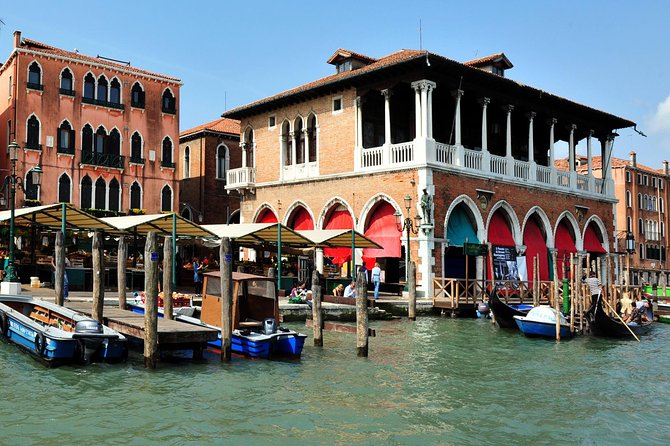
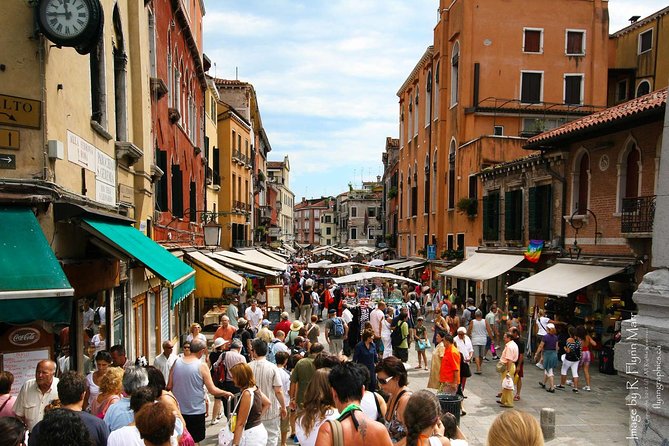
Venice can be overwhelming. This tour handles that by focusing on the sites that define the city, starting with Piazza San Marco. Your guided time looks at the bell tower, the Basilica with its five portals, and the mosaics and marble work around you. The stop also includes context for Palazzo Ducale, plus Torre dei Mori (the Clock Tower) and the Napoleonic Wing, where the Correr Museum is located.
One included highlight here is a spritz or prosecco paired with a small Venice-style food moment. The tour description also references cicchetti. That’s a very smart inclusion. Venice is one of those places where “where should we eat?” can turn into a long line situation. Having a guided moment helps you eat well without turning your trip into a search quest.
Then you head to Ponte dei Sospiri, the Bridge of Sighs. The name has a legend, and the guide framing matters because otherwise it’s easy to see the bridge like a postcard object. With the story, it becomes part of Venice’s legal and prison history.
Venice downside to consider
Your hotel base matters. In your data, some groups note that lodging can be more on the mainland (like Mestre) rather than in Venice proper. Others mention an upgraded hotel right on the island with canal access. That difference changes how much Venice feels like Venice, because commuting time is real on a floating-city schedule.
Montepulciano viewpoint on the way back to Rome
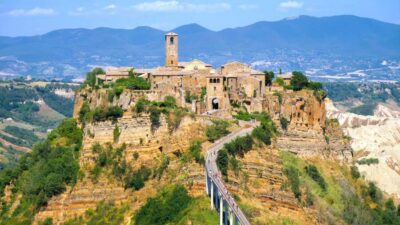
On Day 5 you head to Montepulciano, famous for the wine that shares its name. You get a hilltop viewpoint experience, sitting around 600 meters above sea level. The vantage is meant to show the Tuscan texture: green hills, olive trees, vineyards, and cypress lines. You’ll also connect the view to the Renaissance palace tower, with the prospect of distant mountain silhouettes in clear weather.
Then you return to Rome and finish back at the meeting point in the evening. This makes the tour feel complete. You end in the same city you started, rather than adding extra days to transport yourself home.
Meals and hotels: what’s included, and how to manage expectations
Meals are a mixed bag on any guided tour, but this one is structured. You have:
- A dinner included
- 5 lunches included
- 4 breakfasts included
- A Venice spritz and cicchetti light lunch experience
The likely vibe is this: included meals aim to get you fed efficiently between city walks. That’s not the same as every lunch being a top-tier culinary stop. Still, many people rate the logistics and food arrangement highly, and some groups specifically praise the choices.
Hotels are 4-star and described as centrally located for easy access. Still, Venice lodging is the one place where location can vary based on availability. If you’re picky about being steps from the main areas in Venice, it’s worth asking about where you’ll stay when you book, because your experience can change a lot.
A small but important practical note
Bring an item of clothing that covers shoulders and knees if you plan to visit churches beyond the guided stops. Even when you’re not “on church time,” you’ll likely pass places you want to go inside.
Optional upgrades you might want to budget for
This tour is built around key sights included with entrance fees and timed entry for major attractions, but you may be tempted to add extras. Your provided information includes examples of paid add-ons such as:
- A guided tour at the Florence Academy Gallery (EUR 34)
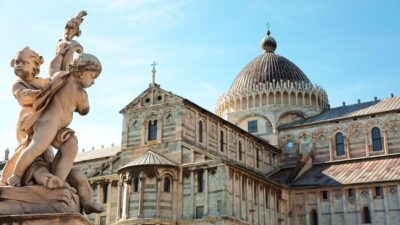
- A Pisa stop to see the Leaning Tower (EUR 45)
- Venice by night (EUR 25)
- A gondola ride (EUR 35)
Also, some groups mention doing things like gondolas separately to get better value. If you love boats, plan for it. Gondolas are expensive, and the difference between paying a group rate through an add-on versus booking locally can be significant.
If you want the best mix, I’d do this: pick one Venice “wow” experience (gondola or night tour) and keep Pisa and extra museums optional unless you’re specifically obsessed with them.
Pacing and who this tour fits best
This is not a slow countryside stroll tour. You’re walking through historic centers, and the itinerary has a very strict schedule. Your fitness level should be moderate, and the tour is not encouraged for mobility limitations due to tight timing and walking demands.
The positive side is that your group stays together and the guide keeps you on track. That’s why the tour leadership gets so much praise. Names that show up repeatedly in the provided tour feedback include guides like Clara, Niki (Nikki), Sabrina, Carlos, Rossella, Patrizia, and Mirjam, plus drivers like Luigi. People describe them as patient, organized, and helpful, including practical assistance like timing, group coordination, and on-the-ground guidance.
This tour is a great fit if you:
- Are seeing Italy for the first time and want a broad overview
- Want less planning and fewer ticketing headaches
- Like guided storytelling so you understand what you’re seeing
- Can handle lots of walking and a packed day
This tour is not the right fit if you:
- Want lots of long, free-form time in just one city
- Get cranky when you have to move on schedule
- Have mobility limitations that make uneven, crowded streets hard to navigate
Small tips that make a big difference
- Pack one luggage item per person, since that’s the stated limit.
- Expect rain at least some time during shoulder seasons. One group specifically warned to have an umbrella.
- Bring earbuds or a small personal fan only if you run hot. You’ll still rely on the included headsets for guided portions, but Venice can get warm and sticky.
- If Wi-Fi matters to you, use it as a bonus, not a guarantee. Your data mentions it can be shaky at times.
Should you book 5-Day Best of Italy from Rome?
Yes, if you want a high-value, low-planning tour that covers the biggest names in Italy in five days: Assisi, Siena, Florence, Bologna, and Venice. The included hotels, entrance fees, headsets, and guided storytelling make this work well for first-timers.
Hold off or adjust your expectations if you want a relaxed pace, deep museum time, or one-city immersion. This route is designed to show highlights fast. You’ll likely leave with favorites, and that’s actually the best reason to come back later and go slower.
If you do book, plan to invest in comfort: good walking shoes, weather protection, and a flexible mindset for Venice lodging logistics. Then you’ll get what this tour is built to deliver, a smart sampler of Italy that helps you decide where to return.
FAQ
What is included in the tour price?
The tour includes 4 overnights in 4-star hotels, most meals (including dinner, 5 lunches, and 4 breakfasts), entrance fees for key attractions, guided tours with headsets, timed entry tickets for key sights, and travel by air-conditioned deluxe coach with onboard Wi-Fi. A spritz and cicchetti experience in Venice is also included.
Are city taxes included?
No. City taxes are not included. You pay city taxes directly at the hotels upon arrival or check-out according to local procedures.
Where does the tour start and what time?
The tour starts at Hotel St. Martin, Via S. Martino della Battaglia, 58, 00185 Roma RM, Italy. Start time is 7:15 AM.
What language is the tour offered in?
It operates in English (monolingual from April to October) and also offers Spanish, Portuguese, and French as bilingual options. The tour maximum group size is 45 travelers.
How much walking is involved?
The tour requires moderate physical fitness and has a very strict schedule. It is not suitable for travelers with mobility issues, and you should plan for plenty of walking in historic city centers.
Is there onboard Wi-Fi on the coach?
Yes. The coach includes onboard Wi-Fi.
Umbrian Hill Town Day Trips in Rome That Made the Same Shortlist
Not quite the day you had in mind? The rest of our Rome write-ups sit below
- Rome: Guided Tour of St. Peter’s Dome Climb, Basilica & Vatacombs★ 5.0 · 167 reviews
- St. Peter’s Basilica Guided Tour with Reserved Entrance★ 4.0 · 168 reviews
- Golf Cart Driving Tour in Rome: 2.5 hrs Catacombs & Appian Way★ 5.0 · 168 reviews
- Rome: Trastevere Wine Tasting with Food Pairing and Gelato★ 4.9 · 168 reviews
- Guided Tour of the Colosseum Palatine Hill and Roman Forum★ 4.7 · 168 reviews
- Vatican Museums, Sistine Chapel & Saint Peter’s Semi-Private Tour★ 4.5 · 169 reviews
- Hidden Rome: Small Group E-Bike Tour with Street Food Stops★ 5.0 · 169 reviews
- Rome: Papal Audience with Pope Leo IV★ 3.9 · 169 reviews
- Rome Golf Cart Tour: Highlights & Must See★ 4.5 · 170 reviews
Siena & San Gimignano Day Trips, top to bottom.
 ★ 5.0Tuscany Day Trip from Florence: Siena, San Gimignano, Pisa and Lunch at a WineryFrom $11421,634 reviews
 ★ 4.6Florence: Pisa, Siena and San Gimignano Day Trip with LunchFrom $589,771 reviews
 ★ 4.5Florence: Pisa, Siena, San Gimignano, and Chianti ExperienceFrom $528,393 reviews
 ★ 4.5Pisa, Siena and San Gimignano Day Trip with Lunch & Wine PairingFrom $786,006 reviews
 ★ 4.8From Florence: Siena, San Gimignano, Pisa & Lunch at WineryFrom $1124,538 reviews
 ★ 4.6Florence: Pisa, Siena, S. Gimignano, Chianti Wine & LunchFrom $774,354 reviews
 ★ 4.5From Florence: San Gimignano, Siena, and Chianti Wine TourFrom $1643,762 reviews
 ★ 4.5Siena: Siena Cathedral and Piccolomini Library Entry TicketFrom $93,462 reviews