
Reviewed · BARI, ALBEROBELLO & THE TRULLI
Alberobello: History Walking Tour
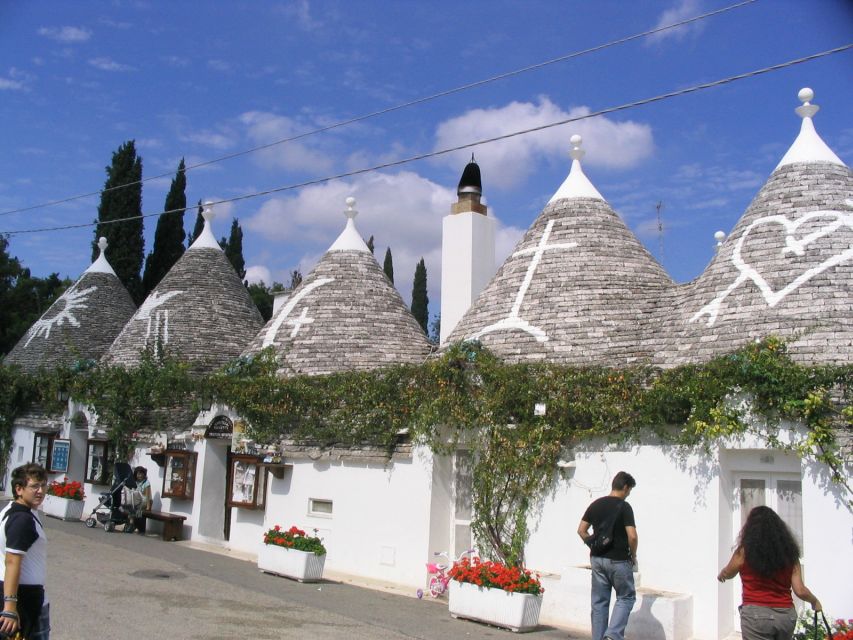
Cones of stone, and a real story. This Alberobello history walking tour turns the UNESCO trulli scene from postcard to place, with a local guide leading you through the village’s key neighborhoods. I especially liked the way the walk starts with a view and then quickly gives context on the trulli and how they work.
What I like most: you do not just look from the outside. You’ll step inside a traditional trullo, then later visit a local’s home to see how one is put together. Also, the pacing is ideal for people who want history without feeling stuck in a museum.
One thing to consider: it’s a 1.5 to 2 hour walk, and the meeting point can vary by option. If you need step-by-step guidance from a single fixed spot, plan to arrive a few minutes early and confirm details when you book.
In This Review
- Key highlights you will feel right away
- Alberobello trulli: why a guided walk beats wandering
- The Belvedere terrace start, where the village makes sense
- Rione Monti: trulli streets, real-world architecture, and local storytelling
- Aia Piccola: a second district that makes the patterns click
- Inside a trullo: what you gain when you cross the threshold
- The trullo-shaped Church of San Antonio: a stop you will remember
- What the $40 price covers, and why it can be good value
- Timing, walking pace, and who this suits best
- Should you book this Alberobello history walking tour?
- FAQ
- How long is the Alberobello history walking tour?
- Where does the tour start?
- What areas of Alberobello do you visit?
- Do you go inside a trullo?
- Are there any notable landmarks on the route?
- What languages is the live guide available in?
- Is there a private group option?
- How much does the tour cost?
- Are children welcome, and is it free for them?
- Is cancellation possible, and is there a minimum number of participants?
- Is transfers to and from the tour included?
Key highlights you will feel right away
- Belvedere terrace kickoff with a strong visual welcome to UNESCO-listed Alberobello
- Rione Monti and Aia Piccola are covered on foot, with classic trulli architecture and alleys
- Step inside a trullo so you understand space, layout, and materials firsthand
- Trullo-shaped Church of San Antonio is a memorable mid-tour landmark
- Visit a local’s home to see how a trullo is composed up close
- Licensed guides bring the story alive, including memorable storytellers like Francesco and Dominicio
Alberobello trulli: why a guided walk beats wandering
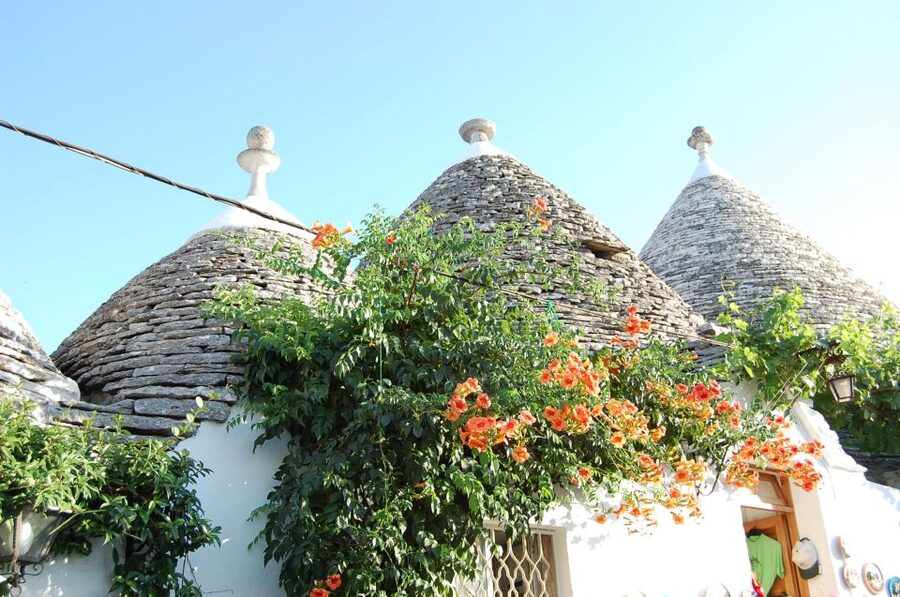
Alberobello’s trulli are famous for a reason. Those conical-roof stone houses are instantly recognizable, but the real value is understanding why they look the way they do and how people lived inside. A walking tour helps you connect the dots fast, because you see the architecture in place, not isolated in photos.
This tour works especially well if you care about the human side of UNESCO sites. You start with an overview from the Belvedere terrace, then move into the two districts that show the village’s most typical “shape.” Along the way, you learn details that make the village feel legible, like you finally understand the code.
I also like that the experience stays practical. It’s not a long day-trip marathon. It’s a focused stroll that gives you history, structure, and a couple of hands-on moments, all wrapped up around 2 hours.
Other Bari and Alberobello trulli days in Alberobello that earned their own write-up.
- Alberobello: 2-Hour Guided Trulli Tour
★ 4.6 · 727 reviews - Alberobello: Private Tuk Tuk Tour with Audio Guide
★ 4.8 · 172 reviews
The Belvedere terrace start, where the village makes sense
The tour begins with a view from the Belvedere terrace. From there, you get the kind of orientation that self-guided walking often misses. You see how the districts relate and why the trulli cluster the way they do, so later streets and courtyards stop feeling random.
That opening matters more than you might think. Trulli can look like a repeating pattern from a distance, but up close you notice differences in layout and how the village’s details connect. Starting with the view helps your eyes catch what your guide points out as you head into the walking portion.
It’s also a nice tempo setter. You’re not thrown immediately into narrow lanes. You get a calm, scenic warm-up, and then you transition into the neighborhoods with context already in your head.
Rione Monti: trulli streets, real-world architecture, and local storytelling
Next comes Rione Monti, one of the best places in Alberobello to see trulli in their natural habitat. This is where you’ll be walking among the typical houses and little alleys, and where the village stops being “a sight” and starts being “a place.”
In the best moments of this kind of tour, a guide points out small design choices that change how a home works. You learn how the architecture supports daily life and why it took shape the way it did. Guides in this program are licensed and, from the experience of people who booked, some standouts like Francesco and Dominicio use a storyteller tone that keeps it from feeling like a textbook.
You’re not just collecting facts. You’re learning the logic behind what you see. That’s why I’d rather do this with a guide than try to piece it together from signage alone.
Practical tip: if you’re the type who likes to ask questions, Rione Monti is a good time to do it. The streets and buildings are close, so it’s easy for a guide to point and explain on the spot.
Aia Piccola: a second district that makes the patterns click
After Rione Monti, you head to Aia Piccola. This district adds another angle, and that second neighborhood is a smart choice. Seeing only one area can leave you thinking the village is one-size-fits-all, but comparing districts helps you understand what is typical and what varies.
Here, you’ll keep admiring the trulli architecture as you walk. The alleys and house shapes guide your route, and the guide’s narration ties it together. In a well-led tour, the main payoff is that you start noticing details without being told every single one.
The people who rave about this experience tend to praise guides who explain with energy and clarity. Names that came up include Floriana, who balanced humor with history, and Sylvia, who was described as warm and strong on storytelling. Even if your guide is different, the style is clearly meant to feel like a conversation with someone who cares about the place.
Inside a trullo: what you gain when you cross the threshold
A major highlight here is that you will step inside a traditional trullo. That single detail changes everything. From outside, the cones are striking, but inside is where you understand how space is arranged and how the home feels in real life.
This is the kind of access that you simply cannot replicate by wandering. It’s also where the guide’s explanations turn visible. You hear about construction choices and layout, then you look around and see how those choices shape daily life.
Later in the tour, you also get a chance to visit a local’s home. The goal there is not just sightseeing. It’s seeing how a trullo is composed, up close, in a way that makes the village feel lived-in rather than staged.
If you’re the kind of traveler who loves architectural details, this is your moment. If you’re more into atmosphere, it still works, because being inside gives you scale and texture you cannot get from street level photos.
The trullo-shaped Church of San Antonio: a stop you will remember
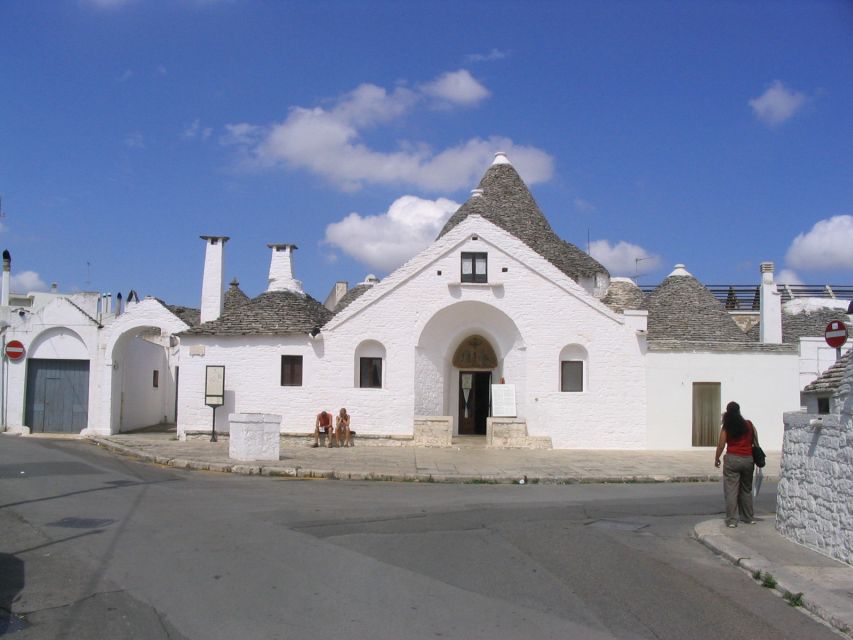
As the walking portion continues, you reach the trullo-shaped Church of San Antonio. This is one of those landmarks that feels playful and unusual at first glance, but it makes sense in the context of the village’s building tradition.
It’s a good mid-tour anchor. By the time you get there, you’ve already been learning about districts and architecture, so the church doesn’t feel like a random detour. Instead, it reads like another expression of the same local building language applied to community life.
Even if you’re not usually into churches, this one is special because of how it blends into the trulli theme. It’s a reminder that the tradition is not only about homes.
What the $40 price covers, and why it can be good value
At $40 per person, this tour can feel like a splurge if you were planning to wander on your own. But here’s the value math that matters: you’re paying for a licensed guide plus inside access that self-guided walking cannot guarantee.
The included parts are straightforward: walking tour and licensed guide. What you are getting, in real terms, is a guided route through two districts, stops at key points like the church, and access opportunities like stepping inside a trullo and visiting a local’s home. That combination is what makes the tour feel “worth it” rather than just “nice.”
Also, starting times vary, so you’re booking a planned window. That can be helpful in a place like Alberobello, where the village can feel overwhelming if you don’t know where to go first.
One more thing: transfers are not included, so factor that into your overall plan. If you’re already in town, this is usually simple. If you’re relying on rides from elsewhere, budget time accordingly.
Timing, walking pace, and who this suits best
This is designed to be a manageable half-tour, lasting 1.5 to 2 hours. That duration is long enough to cover Rione Monti, Aia Piccola, and the main landmarks, but short enough that you still feel fresh at the end.
You’ll likely enjoy it most if you:
- want a structured look at UNESCO Alberobello without planning every step
- care about architecture and what you can learn from being inside a trullo
- prefer small, focused learning over a long day of commuting
You might think twice if you dislike walking or have limited stamina, since the experience is built around moving through neighborhoods. And because the meeting point may vary by option, double-check your exact start location so you do not waste time hunting.
Good fit for couples, first-timers, and anyone who likes stories with their sights. It’s also a solid choice if you want a guided experience that still leaves room for independent wandering afterward.
Should you book this Alberobello history walking tour?
If you want more than a quick look at cute conical houses, I’d book it. This tour gives you the details that make trulli click: a terrace orientation, two districts on foot, the Church of San Antonio, and real interior access. The best part is how quickly a good guide turns architecture into meaning.
Book it if you value a guided route and want the inside moments, because those are the real differentiators. Consider skipping or switching plans only if your priority is purely independent wandering, or if you strongly prefer not to be on your feet for 1.5 to 2 hours.
If you’re in Apulia and Alberobello is on your list, this is one of the more direct ways to understand the place, not just photograph it.
FAQ
How long is the Alberobello history walking tour?
The tour lasts 1.5 to 2 hours. Starting times vary, so it’s best to check availability for the schedule.
Where does the tour start?
The tour start meeting point may vary depending on the option booked. The experience begins with a view from the Belvedere terrace.
What areas of Alberobello do you visit?
You visit two districts on a guided walk: Rione Monti and Aia Piccola.
Do you go inside a trullo?
Yes. You’ll step inside a traditional trullo during the tour.
Are there any notable landmarks on the route?
Yes. You’ll walk to the trullo-shaped Church of San Antonio as part of the visit.
What languages is the live guide available in?
The live tour guide is available in English, French, Spanish, and Italian.
Is there a private group option?
Yes. Private group availability is offered.
How much does the tour cost?
The price is $40 per person.
Are children welcome, and is it free for them?
Children under 18 are free.
Is cancellation possible, and is there a minimum number of participants?
You can cancel up to 24 hours in advance for a full refund. A minimum of 2 participants is required for the tour to run.
Is transfers to and from the tour included?
No. Transfers are not included.
Our Wider Tours File for Alberobello

Beside This One, Bari and Alberobello Trulli Days in Alberobello
Not quite the day you had in mind? The rest of our Alberobello write-ups sit below
- Alberobello: Private Tuk Tuk Tour with Audio Guide★ 4.8 · 172 reviews
- Alberobello: 2-Hour Guided Trulli Tour★ 4.6 · 727 reviews
Bari, Alberobello & the Trulli, top to bottom.
 ★ 4.8Polignano a Mare: Speedboat Cruise to Caves with AperitifFrom $353,382 reviews
 ★ 4.7Polignano a Mare: Cave Boat Tour with AperitifFrom $471,891 reviews
 ★ 4.8Polignano a Mare: Boat Trip, Swim & Cave with AperitifFrom $351,300 reviews
 ★ 5.0Bari’s Ultimate Street Food Tour – Small Group by Do Eat BetterFrom $591,187 reviews
 ★ 5.0Polignano a Mare boat tour emotions, caves, diving and appetizersFrom $421,022 reviews
 ★ 4.7Bari: Guided Walking TourFrom $34744 reviews
 ★ 4.6Alberobello: 2-Hour Guided Trulli TourFrom $47727 reviews
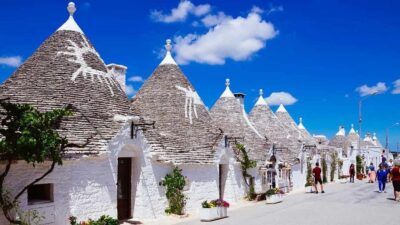 ★ 4.8Tour di Alberobello e Matera in bus privato da BariFrom $67701 reviews