

Reviewed · ACCADEMIA & MICHELANGELO’S DAVID
Florence Walking Tour with Accademia, Uffizi & Lunch
Florence without the guesswork is the goal. This package strings together Accademia, the Duomo area, Signoria, Ponte Vecchio, and (if selected) the Uffizi with expert guidance and timed entry that helps you spend more time looking, less time waiting.
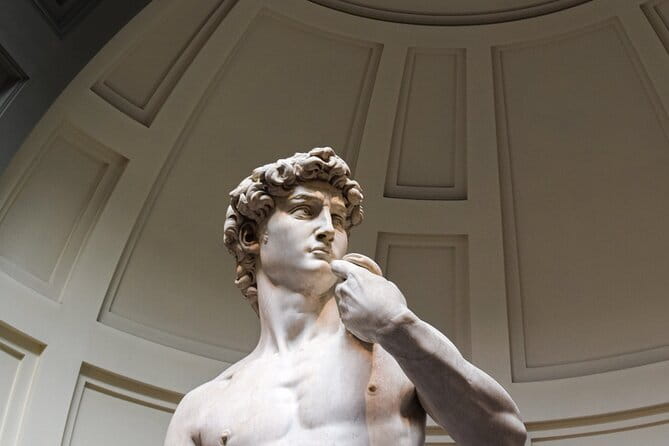
I especially like the Michelangelo focus at Accademia. Seeing David with context, plus sculptures like I Prigioni and other highlights, turns the statue from a photo into a real 3D object with meaning.
I also like the route through the historic center, because you get palace-and-piazza Florence in one sweep, with stops like Palazzo Medici Riccardi and San Lorenzo. One drawback to plan for: the day can feel like multiple smaller tours with different guide handoffs, plus plenty of walking, so you need to pay attention to the check-in times and meeting points.
In This Review
- Key highlights at a glance
- How this day is built, and why the timed entry matters
- Accademia Gallery: Michelangelo’s David and the sculptor’s mind
- Palazzo Medici Riccardi and San Lorenzo: Florence’s political stage
- Duomo square in short form: Piazza San Giovanni and the Baptistery
- Piazza della Signoria, Porcellino, and Ponte Vecchio: Florence at street level
- Lunch in the old town: a 3-course break, with drinks extra
- Uffizi Gallery visit: guided highlights, and why timing feels tight
- Walking pace, headset audio, and the reality of multiple guides
- Price and what you’re really paying for at $136.96
- Should you book this Florence Accademia and Uffizi day?
Key highlights at a glance
- Timed entry value at Accademia and, if selected, Uffizi to cut waiting lines
- Michelangelo’s David plus supporting works at Accademia, with clear art context in plain language
- Medici power stops around Palazzo Medici Riccardi and the Medici church, San Lorenzo
- Florence street-level wow-factors like Piazza della Signoria, Neptune Fountain, and Ponte Vecchio
- Porcellino fountain tradition you can participate in while the group is nearby
- Small group cap of 25 with English-language guiding during the April to October season
How this day is built, and why the timed entry matters
This is a full-day flow designed for people who want Florence highlights without spending the whole day in lines. You start at the Accademia Gallery, then shift into a historic walking route across the center, and finish with the Uffizi if you chose that option. The order of visits can change, so don’t lock yourself into a rigid mental schedule.
The timed entry is the practical advantage. Accademia and the Uffizi are famous for a reason, which also means long queues. With reserved entry and guided pacing, you’re more likely to see the important parts without losing your morning to crowd-control logistics.
Group size also helps. This is capped at 25 people, so it’s not a huge mob. Still, the day is active. If you’re someone who hates walking between close-by stops, plan for slower moments and wear comfortable shoes.
Our notebook holds other Uffizi Gallery tours in Florence if you are still weighing options.
- Florence: Skip-The-Line Uffizi Gallery Timed Entry Ticket
★ 4.5 · 27,832 reviews - Florence: Uffizi Priority Ticket & Masterpieces Audio App
★ 4.2 · 6,402 reviews - Florence: Skip-the-Line Uffizi Small Group Tour
★ 4.6 · 5,926 reviews - Uffizi Gallery Small Group Tour with Guide
★ 4.5 · 4,923 reviews
Accademia Gallery: Michelangelo’s David and the sculptor’s mind
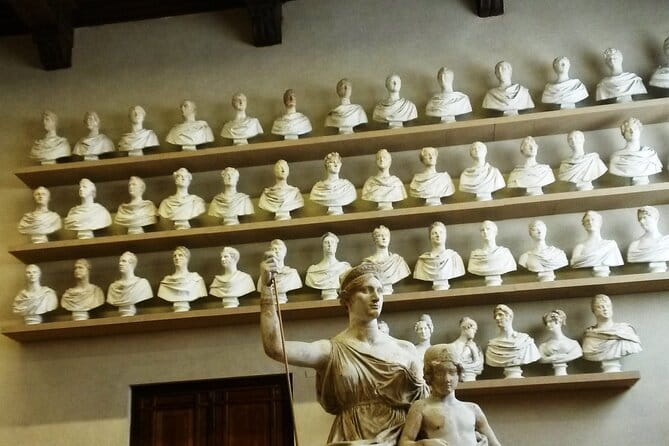
Your first stop is the Galleria dell’Accademia, and the guide’s job here is to get you ready to see Michelangelo. The timing is built around one big idea: the statue of David and the story behind how Michelangelo approached it as a young artist.
You’ll spend about one hour in the gallery with admission included. The big target is David, but you’re not only looking at one work. The tour also calls out other famous sculptures and related pieces such as I Prigioni and Palestrina Pietà. That variety matters because it gives you a sense of Michelangelo’s themes, like unfinished-looking forms and how he used stone like it was skin and muscle.
In real terms, here’s what you should do during the guided hour:
- Pay attention to the guide’s explanation before you look. It changes what your eyes notice.
- Don’t just stand in the first position you find. If you can, shift slightly to see how the pose reads from another angle.
- If you have a favorite detail, anchor on it. The guide often gives you a reason to look for it.
Accademia is one of those places where a great guide can make a huge difference. Several guide names came up in feedback, including Alicia, Marcella, and Marcello, and the consistent theme was clear, energetic Michelangelo context. If you love art history, you’ll likely feel your time here pay off.
Palazzo Medici Riccardi and San Lorenzo: Florence’s political stage
After Accademia, the tour moves into the Medici orbit. You’ll stop at Palazzo Medici Riccardi for about 10 minutes. This is designed by Michelozzo di Bartolomeo for Cosimo de’ Medici, and that alone is useful. It helps you understand that Florence was not only art, it was money and power, too.
This quick stop has a key limitation: it’s not an in-depth palace interior visit. Admission is not included here, and the stop is short. Think of it as a guided exterior and street-corner orientation. You’ll get the “why it matters” so you recognize the building later when you pass it on your own.
Then you’ll head to Basilica di San Lorenzo, also around 10 minutes. It’s described as the Medici family church and a Renaissance masterpiece associated with Brunelleschi. You’ll also hear about Medici tombs, which connect the architecture to real people and real influence.
A good way to use these short stops is to treat them like bookmarks. When you later walk Florence on your own, you’ll know which buildings are tied to the Medici story and which ones are mainly about style.
Duomo square in short form: Piazza San Giovanni and the Baptistery
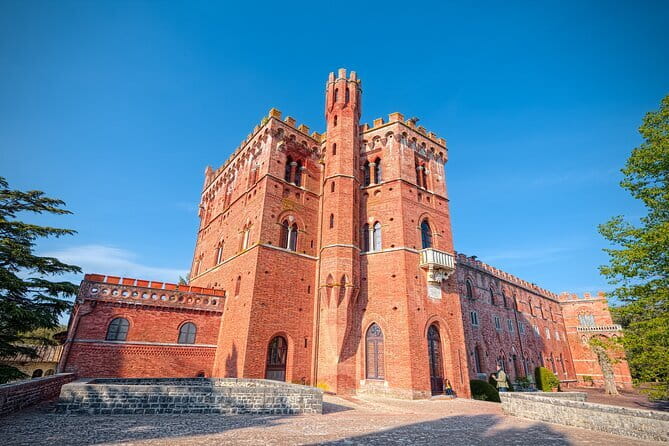
Next is Piazza San Giovanni, also called Piazza del Duomo. You’ll get about 10 minutes in the square, enough to take in the most iconic lineup: the Cathedral with the Cupola attributed to Brunelleschi, Giotto’s bell tower, and the Baptistery of San John, including the famous bronze doors often called the Gates of Paradise.
This is not a long cathedral-style visit in this portion. Admission is not included for this stop, and it’s a look-and-learn moment from the outside.
Still, it’s valuable. If this is your first time in Florence, you want that big picture visual quickly. You’ll walk away knowing what you’re looking at and why it’s famous. If you already climbed the Duomo or toured it separately, this stop becomes a “connect the dots” refresher.
One practical thought: the Duomo area can be crowded, and you’ll be moving with the group on a timed schedule. Take a few smart photos, then focus on the guide’s explanation. Otherwise you’ll get stuck photographing from the same angle everyone else uses.
Piazza della Signoria, Porcellino, and Ponte Vecchio: Florence at street level
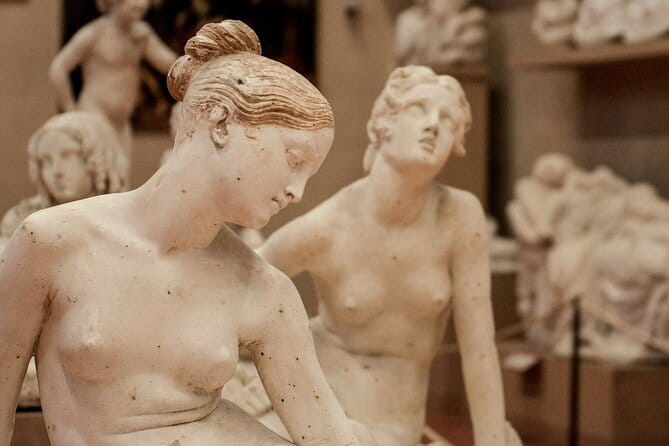
This is the part that feels most like walking through a living museum. You’ll pass the Porcellino Fountain (also called the boar statue in the Straw Market area). The tradition is that rubbing the boar’s snout brings good luck and dropping a coin in the mouth is supposed to help ensure you return to Florence. It’s tourist-y in the best way, and it’s also a fun break in an otherwise art-heavy day.
Then you reach Piazza della Signoria for about 10 minutes. This square is known as an outdoor sculpture space, dominated by Palazzo Vecchio. The tour highlights major works you can spot nearby, including the Fountain of Neptune, the statue of Cosimo I, and the Loggia dei Lanzi.
The key here is perspective. From the square, you can understand why Florence’s public spaces mattered. Art wasn’t only inside museums. It was placed in the open where politics, money, and civic pride played out in full view.
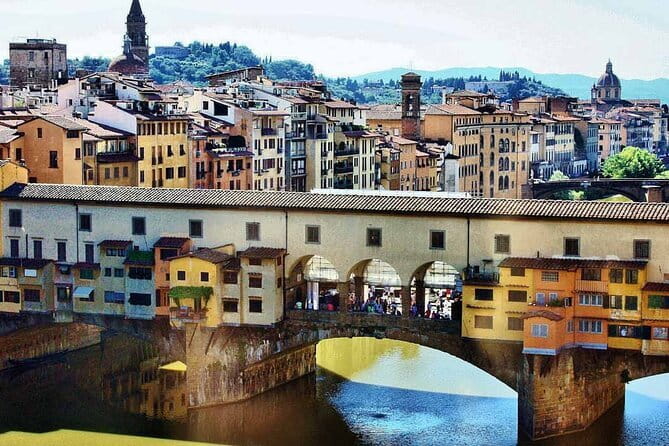
Finally, you end this walking stretch at Ponte Vecchio, the famous old bridge lined with jewelry shops. You’ll have about 10 minutes here, and the goal is simple: see the bridge’s famous look and realize why this spot survived when other bridges got rebuilt.
One more thing, because it comes up in feedback: while you’re moving through dense historic areas, watch your pockets. One group reported a pickpocket incident and the guide handled it calmly, with undercover police stepping in. It’s a good reminder to keep your phone and wallet secure when you’re in crowds.
Lunch in the old town: a 3-course break, with drinks extra
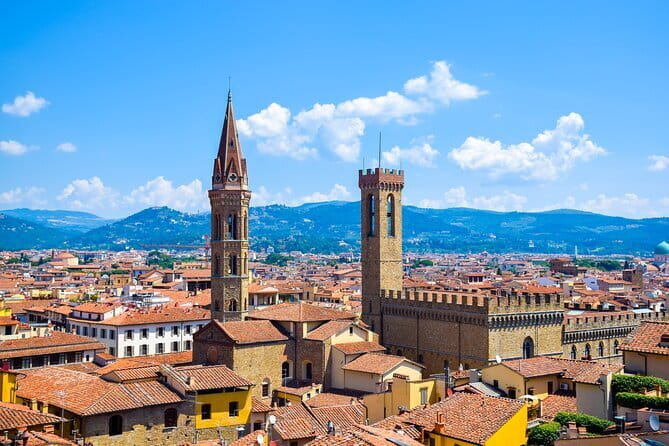
After the first museum portion, you’ll take lunch. This tour includes a 3-course Tuscan lunch at a typical historic restaurant in the old city. Drinks are paid on the spot.
This is a big “value” feature, because lunch is often the break where you lose time. With a scheduled meal, you don’t have to hunt for food while you’re tired and hungry and waiting for museum lines. It also keeps the day moving so you can still make it to the Uffizi visit on time.
That said, lunch is where expectations can differ. Some feedback praised the lunch as good and worth the add-on. Other people found the set menu only average. If you’re picky about food, think of this as a well-timed Florentine meal, not a gourmet tasting experience.
Practical tip: since drinks are extra, eat first, then decide what you want to add. This helps you avoid the common tourist mistake of ordering drinks immediately and feeling surprised by the total later.
A short passeggiata through our other Accademia and David tours in Florence.


Uffizi Gallery visit: guided highlights, and why timing feels tight
If you selected the full option, you’ll visit the Uffizi Gallery after lunch for about 1 hour 30 minutes with guided access. Admission is included, and the Uffizi ticket includes a standard surcharge listed as €29.
The Uffizi is huge, so the time limit matters. A guided session of roughly 90 minutes is about focus, not about seeing every painting in the building. Expect the guide to point you toward major artists and key rooms, including works associated with Botticelli, Leonardo da Vinci, Michelangelo, Raphael, and others mentioned in the tour description.
So what should you do in that hour-and-a-half?
- Use the guide’s route. You’ll see more of the big artistic story than if you wander randomly.
- When the guide pauses on a work, look slowly. The value is in understanding what makes that painting special, not just snapping a photo.
- If you care about one artist, tell yourself that you need to be in the right room for that segment.
A strong Uffizi guide can turn the visit from shopping-list art facts into something memorable. Riccardo was singled out as a standout for breaking down art and culture in a way that held attention, while Ilaria and Patricia were also praised for managing the visit well.
One timing caution: the later part of the day can feel rushed if the schedule slips. Some feedback included cases where Uffizi start times were late or the tour felt compressed. That doesn’t mean it will happen to you, but it does mean you should keep your evening plans flexible.
Walking pace, headset audio, and the reality of multiple guides
This tour is not a one-guide, one-continuous narrative all day. The structure can include separate guided components, sometimes with different guide assignments. That’s why you should treat the day like a schedule of connected stops, not one long classroom lecture.
Some people loved the museum guide handoffs because each guide could specialize. Other people found the transitions stressful because you might have to find the next meeting point on your own. If you’re new to Florence streets, this is the part where you can lose time.
Also, audio can make or break a guided walk. Some feedback mentioned headsets that were hard to hear. If you’re given audio equipment, do a quick check early:
- Make sure the receiver is on and working.
- Test volume before the first big explanation.
- If it cuts out, tell the guide right away.
Finally, walking distance and cold weather can change your day comfort. One person noted the day was very cold and several stops could have been done independently, making the guided value less felt. If you’re visiting in shoulder season or winter, bring layers even if Florence looks sunny.
Price and what you’re really paying for at $136.96
At about $136.96 per person for a roughly 6-hour day, the price makes the most sense when you treat it as a bundled win: museum access with reserved entry, guided interpretation, and lunch.
Here’s how the “value math” looks:
- Accademia admission is included with the reservation fee.
- If you choose Uffizi, the ticket surcharge is €29 included in the tour package pricing structure.
- Lunch is included as a 3-course Tuscan set menu.
- You’re paying for professional guidance across major stops in the center.
If you planned to do Accademia and Uffizi anyway, this package likely saves you time and confusion. The reserved timing matters on busy days, and the guided route reduces the mental load of figuring out what to see and in what order.
Where it may not feel worth it is if you already know exactly what you want from Accademia and Uffizi and you’re comfortable navigating on your own. A couple of feedback notes pointed out that skip-the-line access felt like the biggest draw, with the city-walk portion being less satisfying. If you love roaming, you might prefer doing the museums with a guide and then walking the rest independently.
Should you book this Florence Accademia and Uffizi day?
Book it if:
- You want timed museum access and a guided route so your day stays efficient.
- You love Michelangelo and want the David experience with context.
- You’ll use the included lunch to save time and keep your schedule intact.
- You prefer small group guiding, capped at 25 people, rather than a massive group day.
Skip or adjust your plan if:
- You want a single guide leading every step with no handoffs. This day can split into distinct guided segments.
- You hate walking and tight pacing. This is a full-center walk plus two museum blocks.
- You care deeply about lunch quality and want full control over the menu.
My bottom line: this is a solid “do the classics” day when you want structure and skip-the-line help. The best part is the Accademia start, especially for Michelangelo fans. If you book, wear comfortable shoes, arrive on time at the start check-in, and protect your pockets in crowded areas.
Further Accademia and David Tours We Cover in Florence
Also Written Up in Florence, Uffizi Gallery Tours



Not quite the day you had in mind? The rest of our Florence write-ups sit below
- David & Accademia Gallery: 1-Hour Small Group Tour★ 4.5 · 169 reviews
- Cinque Terre & Pisa Premium Tour from Florence★ 5.0 · 170 reviews
- Chianti Wine Tastings Day Trip at Sunset from Florence★ 4.5 · 171 reviews
- Private Transfer from Florence Airport to your Hotel in Florence★ 4.5 · 172 reviews
- Private Uffizi Gallery Tour with Reserved Entry★ 5.0 · 174 reviews
- Tasty Florence Street Food with Guided Walking of the City★ 5.0 · 174 reviews
- Uffizi Gallery Timed Tickets with Audio guide★ 4.0 · 174 reviews
- Florence: Tuscany Bike Tour with Wine & Olive Oil★ 4.9 · 174 reviews
- Florence: Small Group Guided Walking Tour★ 4.7 · 176 reviews
Accademia & Michelangelo’s David, top to bottom.
 ★ 4.6Florence: Timed Entrance Ticket to Michelangelo’s DavidFrom $2616,983 reviews
 ★ 4.5Florence: Michelangelo’s David Skip-the-Line Entry TicketFrom $4512,764 reviews
 ★ 4.4Florence: Michelangelo’s David Priority Ticket & Audio AppFrom $236,812 reviews
 ★ 4.5Florence Accademia Gallery Tour with Entrance Ticket IncludedFrom $456,148 reviews
 ★ 4.7Rome: St. Peter’s Basilica, La Pietà, Papal Tombs and DomeFrom $174,610 reviews
 ★ 4.6Florence: Accademia Gallery Guided TourFrom $534,156 reviews
 ★ 4.6Florence: Timed Entry Ticket to Michelangelo’s David & eBookFrom $374,049 reviews
 ★ 4.5Florence: Reserved Entrance Ticket to the Medici ChapelFrom $203,615 reviews