
Reviewed · TRAPANI, ERICE & THE EGADI ISLANDS
Guided tour of the salt pans of Trapani and the Salt Museum
Salt pans in Sicily are pure magic.
This guided outing turns a simple white flat into a real process you can see and understand, with WWF-protected views over the sea and salt tanks. You get the colors (white salt, blue water, gray clay, pink tanks) and the practical story of how salt is made, then you step indoors to see the tools and people behind it.
What I like most is the mix of hands-on salt work and a guided, story-driven museum visit. You can walk the perimeter of the salt pans, watch water behave like a mirror to the sky, and follow the step by step transformation from sea water to salt.
The one real catch is logistics. The meeting area is in Paceco, and the experience depends on getting there, since public transportation from Trapani is not something you should count on.
In This Review
- Key highlights you should not skip
- Where the magic starts: Paceco meeting point and quick orientation
- Entering Riserva Naturale Saline di Trapani e Paceco on the salt-tank perimeter
- What to watch out for during the walk
- How the salt process makes sense when you see it in place
- Why this is valuable for first-timers
- Museo del Sale: the ancient baglio and the 1400s mill story
- A fair consideration: hearing inside can get tricky
- Salt tasting: the quick payoff that sticks in your memory
- Guide style in English: what varies, and how to make it work
- Price and value in plain terms: what $21.77 buys you
- Who this tour is best for in Trapani and Sicily
- The car question you should not ignore
- Timing for photos: sunset light can be a real bonus
- Should you book the Trapani salt pans and Salt Museum tour?
- FAQ
- How long is the guided salt pans and Salt Museum tour?
- What is the price, and what is included?
- Is the tour offered in English?
- Where do I meet the guide?
- Is this a private tour?
- Do I need good weather?
- Can service animals join the tour?
- Is it accessible for most people?
- What should I know about getting there from Trapani?
Key highlights you should not skip
- A perimeter walk in the WWF reserve with protected plants and birds, plus mirror-like water views
- You can collect salt by hand and follow the production steps in real time
- Museo del Sale in an ancient baglio with an overview of salt work and the families who ran it
- A 1400s ancient mill focus, plus historical tools preserved from salt farming
- Small tasting included, so you can connect the process to flavor
- Two-guide setup, often friendly and energetic, with English that can vary a bit
Where the magic starts: Paceco meeting point and quick orientation
This tour is set around the salt-making zone in Paceco, not in the old center of Trapani. You meet at Via Salina Chiusa, 1, 91027 Paceco TP. The activity ends back at the same meeting point, which keeps the plan simple.
You’ll be with a guide in English, and it’s private in the sense that only your group participates. That matters here, because you’re walking outdoors and you’ll have questions. A private format also helps you hear explanations without constantly fighting the noise of a moving crowd.
One planning note I’d take seriously: this is booked fairly ahead on average, and it only runs in good weather. If you’re flexible, choose a day with clear skies, and if you care about the light for photos, book for later in the day when the salt pans glow.
Filed beside this one, more Trapani, Erice and Egadi island trips in Sicily.
- SALT TOUR-all inclusive: salt tour: Trapani, Paceco, Nubia
★ 5.0 · 589 reviews - Daily Egadi Tour: Favignana and Levanzo in Rubber Dinghy
★ 5.0 · 311 reviews - Favignana and Egadi Islands Boat Tour
★ 5.0 · 245 reviews - Egadi Sail Boat Tour to Favignana and Levanzo from Trapani
★ 5.0 · 194 reviews
Entering Riserva Naturale Saline di Trapani e Paceco on the salt-tank perimeter
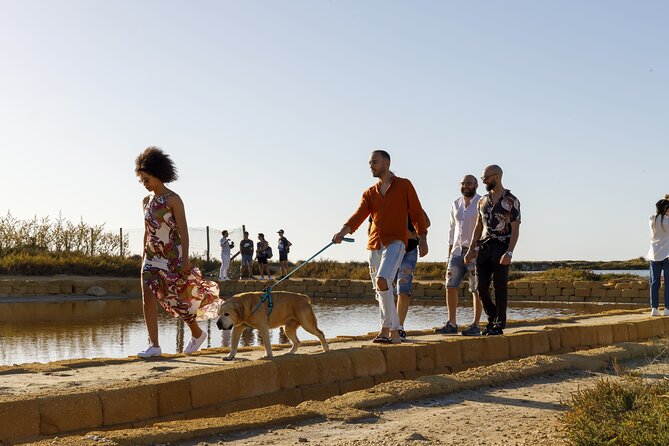
Stop 1 is the walk in Riserva Naturale Saline di Trapani e Paceco, and it’s where the tour earns its name. You start with an easy, relaxing route along the perimeter of the salt pans. The guide frames what you’re seeing, from the shades of white salt to the blue sea and the colors in the tanks.
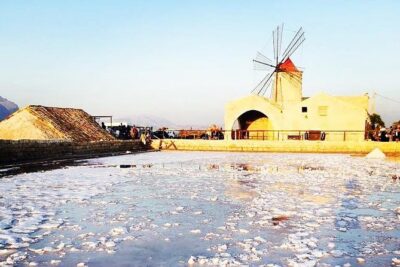
A big reason this part works is the pacing. It’s about 50 minutes, long enough to slow down and actually notice patterns in the water and salt. You reach areas along the banks where water can look like a mirror to the sky. That simple visual detail helps you understand why salt farming is so tied to weather and sun.
You also get the WWF angle, which is more than a label. You’re walking through a protected reserve with birds and protected plants. It turns this from just an industrial story into a living coastal system. And yes, it still stays practical. The tour follows the salt process in the places where it happens.
What to watch out for during the walk
The data says it requires good weather, so if conditions are bad, the tour may be rescheduled or refunded. Also, be prepared for the ground to be dusty and salty around active salt pans. Bring shoes you don’t mind getting a little gritty. It’s not a formal hiking route, but you will be walking.
How the salt process makes sense when you see it in place
One of the most praised parts is how clearly the guides explain the steps. In the salt pans, the transformation is visible. You don’t just hear about it, you watch water levels, tanks, and salt formation as the guide walks you through the full chain, from sea water to salt you recognize on your table.
A memorable element: you can collect salt with your hands as part of the tour. That’s not only fun. It helps you learn texture and the feel of salt crystals that formed naturally in the tanks. It’s the difference between reading about salt and actually understanding what you’re looking at.
The process is also tied to how water moves and gets managed across tanks. One review highlights the Archimedes screw as a particularly interesting detail. Even if you’ve seen old machinery before, it’s the kind of device that makes you connect the dots between engineering and what ends up in your salt shaker.
Why this is valuable for first-timers
If you know nothing about salt farming, this stop is a great entry. It takes something that feels boring on paper and makes it visual: water, sun, tanks, and timing. And because it’s a guided walk, you don’t have to guess what matters.
If you already know a lot, you’ll still enjoy the physical explanation. Seeing how salt is produced where it’s produced gives context to every tool and every old tradition the museum talks about later.
Museo del Sale: the ancient baglio and the 1400s mill story
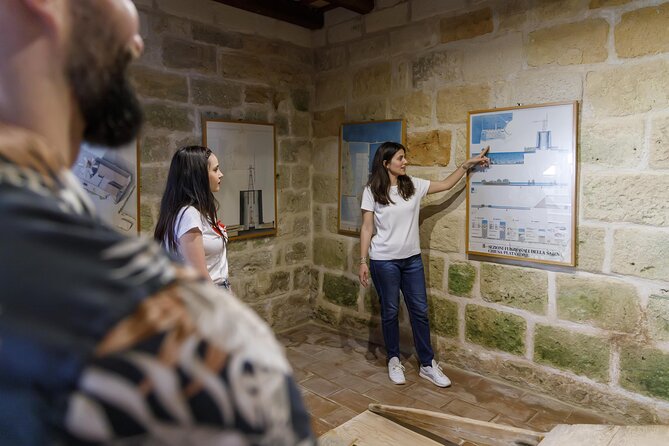
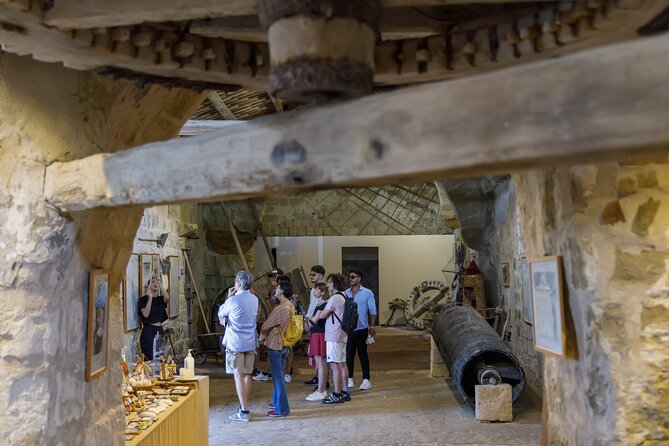
Stop 2 is the Museo del Sale, focused on salt history and the ancient mill from the 1400s. The museum sits inside an ancient baglio, which keeps the tone grounded in place. You’re not in a generic display room. You’re in a setting that fits the subject, with tools and stories built around how salt work shaped daily life.
This part is shorter, about 25 minutes, but it covers the human side. The tour traces not only the tiring labor of the salt pan, but also the family story, with salt production run for generations. That family continuity is a big theme, and it’s part of why the museum gets such strong marks.
Many visitors also mention preserved tools from earlier salt farming days. That’s useful because it makes salt production feel tangible, not just poetic. You can see what people used, how they worked, and why the mill and salt system mattered for the region.






A fair consideration: hearing inside can get tricky
Here’s the main drawback that shows up in feedback: the museum can be busy. When there are more people inside, it can be harder to hear every detail, especially if there are multiple guides speaking at once. If you care about every spoken word, arrive ready to listen closely and don’t be shy about adjusting your spot for a better view.
Salt tasting: the quick payoff that sticks in your memory
You’ll also get a small tasting. This is one of those simple additions that makes the tour feel complete. Salt pans can be visual and educational, but the tasting connects the story to a real-world result: the salt you actually use at home.
It also changes the tone for the last stretch. Instead of walking out with only facts, you leave with a sensory reminder. And if you’re shopping for edible souvenirs, this is exactly the moment where your brain switches from tourist mode to food mode.
Guide style in English: what varies, and how to make it work

The tour is offered in English, and the guide quality seems to be a huge reason for the strong rating. The best experiences are energetic and clear, with guides who explain the process in an approachable way. One detail that stands out from feedback is a two-guide setup: one guide may speak English very smoothly, while the other might have a stronger Italian accent.
If you’re sensitive to accents or group pace, that’s a consideration. You can still understand plenty, especially with a private group, but it’s smart to set expectations. If your English is strong and you like questions, you’ll probably have a good time.
Also, English slots can be less frequent than Italian, based on what people found when booking. If you’re traveling during a busy season, check language options early so you don’t get stuck with the wrong timing.
Price and value in plain terms: what $21.77 buys you
The price is $21.77 per person. For that, you get a guided experience about 1 hour 15 minutes total, plus admission included for both parts. Stop 1 includes the ticket, and Stop 2 includes the ticket too.
In value terms, this is not just a walk and a quick stop. You’re paying for guided interpretation and entry, and you’re getting two different perspectives on salt: the real working landscape outside, then the museum inside with tools and family history. That “outside plus inside” combo is why many people feel it was worth it.
It can still be a stretch if you’re only interested in one part. If you’re purely here for photos, you might feel the museum is extra. If you love learning, the museum portion can feel like the payoff that turns the walk into a story with context.
Who this tour is best for in Trapani and Sicily
This experience is described as suitable for all age groups, including in the reserve. That makes sense. The outdoor part is a walk, not a climb. It’s also easy to see why families would like it: you get movement, unusual colors, and real-world explanations without a heavy classroom feel.
I also think it’s a strong fit for couples who want something different from the usual bar-and-beach routine. Salt pans may sound niche, but they deliver drama in the light and a clear educational payoff.
One more group you should think about: people who care about how traditional industries work. The tour frames salt farming as both a history and a living process in the WWF reserve setting.
The car question you should not ignore
If you’re staying in Trapani city, plan your transport carefully. One piece of feedback is very direct: there’s no public transportation to the location from Trapani, and the operator doesn’t organize transport because it’s outside what they provide. So unless you already have a car, you’ll likely need to arrange a taxi or other private option on your own.
Timing for photos: sunset light can be a real bonus
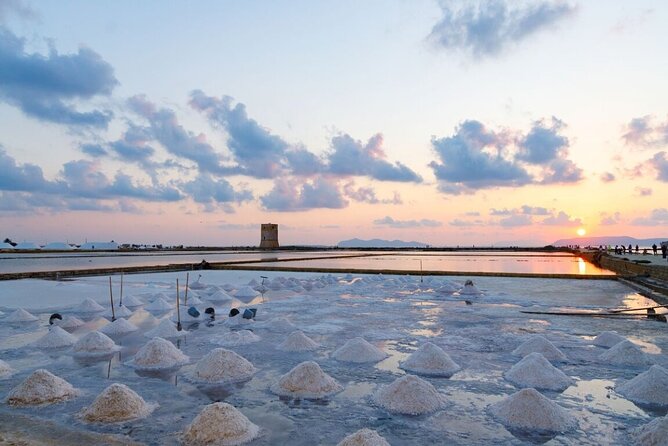
Several comments point out that the salt pans look especially striking with the right light. If your schedule allows it, consider booking a later departure, since sunset hours can turn the tanks into a glow-show.
Even if you do not chase sunset, the mirror-like water effect at the banks is best when the sky is clear. Good weather is required anyway, so you’re already starting on the right foot.
Should you book the Trapani salt pans and Salt Museum tour?
Yes, if you want an easy, guided way to understand salt production without doing homework first. The standout strengths are the salt-pan walk in the WWF reserve, the guide explanations that make the steps clear, and the added museum stop in the ancient baglio with the 1400s mill context. Add in the small tasting, and you have a complete experience, not just a photo stop.
Skip or rethink if your biggest issue is getting there. This trip is in Paceco, and relying on public transportation from Trapani is not a safe plan. Also, if you hate busy indoor spaces, know that the museum part can feel crowded and hearing can be harder.
If you can solve transport and pick a good-weather day, this is one of the more memorable and practical tours in the Trapani area.
FAQ
How long is the guided salt pans and Salt Museum tour?
It lasts about 1 hour 15 minutes, with roughly 50 minutes for the salt pan walk and about 25 minutes for the museum visit.
What is the price, and what is included?
The price is $21.77 per person. Admission tickets are included for both the salt pan portion and the Salt Museum.
Is the tour offered in English?
Yes. The experience is offered in English.
Where do I meet the guide?
You start at Via Salina Chiusa, 1, 91027 Paceco TP, Italy. The activity ends back at the meeting point.
Is this a private tour?
It’s a private tour/activity, so only your group participates.
Do I need good weather?
Yes. The experience requires good weather. If it’s canceled due to poor weather, you are offered a different date or a full refund.
Can service animals join the tour?
Service animals are allowed.
Is it accessible for most people?
Most travelers can participate, based on the experience details provided.
What should I know about getting there from Trapani?
Public transportation from Trapani to the location is not described as available, and the operator does not provide transportation. Planning on your own transport is important if you do not have a car.
Our Wider Tours File for Sicily

Other Trapani, Erice and Egadi Island Trips in Sicily From Our Notebook


Not quite the day you had in mind? The rest of our Sicily write-ups sit below
- Diving for certified divers with PADI 5* Diving Resort – Taormina★ 5.0 · 167 reviews
- Sicilian Cooking Class in Taormina★ 4.5 · 171 reviews
- The Godfather and Taormina Tour from Messina★ 4.5 · 174 reviews
- Palermo: Boat tour luxury★ 5.0 · 174 reviews
- Diving for patented divers★ 5.0 · 175 reviews
- Sunset Tour of the Valley of the Temples★ 4.5 · 178 reviews
- From Trapani: Egadi Islands tour with lunch on board★ 4.5 · 178 reviews
- City Sightseeing Palermo Hop-On Hop-Off Bus Tour★ 3.0 · 179 reviews
- Etna Private Tour and Excursion★ 5.0 · 180 reviews
Trapani, Erice & the Egadi Islands, top to bottom.
 ★ 4.2From Trapani: Cruise to Favignana and Levanzo with lunchFrom $532,286 reviews
 ★ 4.2Segesta, Erice and Salt Pans Full-Day Excursion from PalermoFrom $821,791 reviews
 ★ 4.3From Trapani: Day Cruise to Favignana & Levanzo with LunchFrom $461,483 reviews
 ★ 5.0Boat Tour Egadi Day discover Favignana and Levanzo from TrapaniFrom $1391,183 reviews
 ★ 4.2From Trapani: Favignana and Levanzo Mini Cruise with LunchFrom $47814 reviews
 ★ 5.0Favignana and Levanzo, Egadi islands tour by boat from TrapaniFrom $114720 reviews
 ★ 5.0Boat tour to Egadi Favignana and Levanzo islands from TrapaniFrom $102614 reviews
 ★ 5.0Egadi Islands Tour: Favignana and Levanzo from TrapaniFrom $114607 reviews
Filed under