
Reviewed · TRAPANI, ERICE & THE EGADI ISLANDS
Guided tour of the Trapani Salt Pans and Salt Museum
Sea salt turns into edible science. The guided visit between Salina Culcasi di Nubia and the salt museum is interesting because you get a real workflow view of how seawater becomes salt, not just a photo stop. I love the hands-on parts, like collecting and touching salt right in the production area, and I also love the tasting, especially the flavored fleur de sel. One drawback to plan for: it includes a walk that lasts about an hour, so you need basic fitness.
This is the only tour offered by the Culcasi family, and the family connection matters. You are following salt workers who have worked these pans for four generations, with the WWF reserve setting adding birds, protected plants, and that constantly shifting palette of whites, pinks, and grays. I also like that the tour moves at a human pace, with a guide speaking English or Italian.
You should also know what kind of day this is. This is a nature walk plus an indoor museum tour, so comfortable shoes and a hat are not optional. If you are hoping for something fully flat and low-effort, this may feel more physical than you expected.
In This Review
- Key takeaways before you go
- Salt pans in Trapani feel like a working landscape, not a museum prop
- The 75-minute plan: walk first, museum second
- Part 1: Your walk around Salina Culcasi di Nubia
- You collect and touch salt
- Nature in the background, learning in the foreground
- What to wear, and why
- Part 2: The salt museum and the 1400s mill
- The tasting: whole salt plus flavored fleur de sel from Slow Food
- Why this tasting is more useful than you might think
- Where the tour begins and how to find it fast
- Aperitif and dinner options after the tour
- Price and value: why $21 for 75 minutes makes sense here
- Who this salt pan tour is best for
- Should you book the Culcasi salt pans and museum tour?
- FAQ
- Where is the meeting point for the Trapani Salt Pans and Salt Museum tour?
- How long is the guided tour?
- What languages is the live guide available in?
- Is the tour wheelchair accessible?
- What happens during the first part of the tour?
- What happens during the second part of the tour?
- What tasting is included?
- Do you get to touch the salt?
- What should I bring and wear?
- Do I need a certain fitness level?
- Can I cancel or pay later?
Key takeaways before you go

- Culcasi family continuity: salt workers for four generations, and this tour is their only one.
- Hands-on salt: you can collect salt with your hands and touch the salt inside the production tanks.
- Slow Food fleur de sel tasting: you get flavored fleur de sel in different aromas, plus whole salt.
- Two-part format: salt pans walk first, then the ancient salt museum and 1400s mill.
- WWF reserve setting: protected plants and birds, with views that change with the tide and light.
Salt pans in Trapani feel like a working landscape, not a museum prop

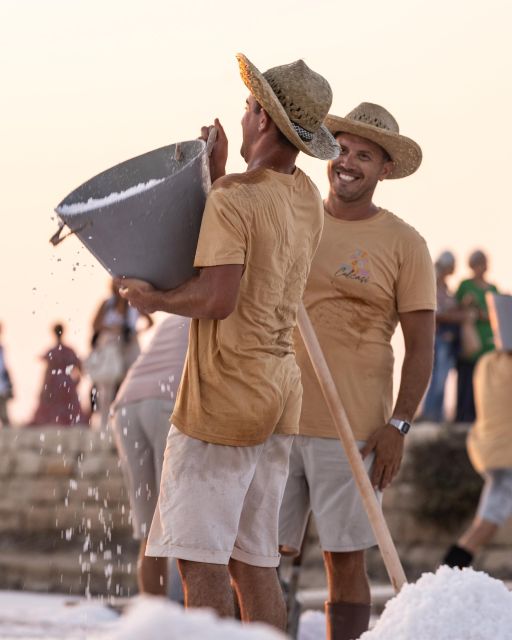
In western Sicily near Trapani, salt is not a story that happened long ago. It is still a working process, and the walk through the Saline Culcasi gives you that sense fast. You start with the perimeter route around the pans, where the visuals do half the explaining: the infinite shades of white of salt, the blue of the sea, the gray clay, and the pink tones that appear in the pools.
What I like is how the guide ties colors to steps. The pans look beautiful, yes, but you are also learning what you are seeing, like why different areas change over time. The environment matters here too. This visit takes place within a WWF reserve, where you may spot protected plants and birds. Even if you do not go bird-spotting, it adds a real sense that you are in an active ecosystem.
There is also a practical bonus: this is a short day. You are not committing to a full morning tour that eats half your Sicily schedule. At 75 minutes, it fits neatly between beach time, exploring nearby towns, or gearing up for dinner.
Filed beside this one, more Trapani, Erice and Egadi island trips in Trapani.
- From Trapani: Cruise to Favignana and Levanzo with lunch
★ 4.2 · 2,286 reviews - Boat Tour Egadi Day discover Favignana and Levanzo from Trapani
★ 5.0 · 1,183 reviews - From Trapani: Favignana and Levanzo Mini Cruise with Lunch
★ 4.2 · 814 reviews - Favignana and Levanzo, Egadi islands tour by boat from Trapani
★ 5.0 · 720 reviews
The 75-minute plan: walk first, museum second
This experience runs for about 75 minutes and is built as two clear parts.
First is the guided walk along the salt pan perimeter. You move through outdoor areas designed for observing the pans up close. As you go, you learn the process step by step, including the moment when salt forms and how workers collect it.
Second is the indoor guided tour of the salt museum, located in an ancient farmhouse. It focuses on the history of salt production, including the family behind it and the ancient mill from the 1400s. You get context for the labor and the tools, and you also get the family story that keeps the work from feeling abstract.
One thing to keep in mind: the tour includes roughly a 1-hour hike and requires a basic level of fitness. The experience is described as suitable for all age groups, but physics still applies. Plan for steady walking on uneven ground and sun exposure.
Part 1: Your walk around Salina Culcasi di Nubia
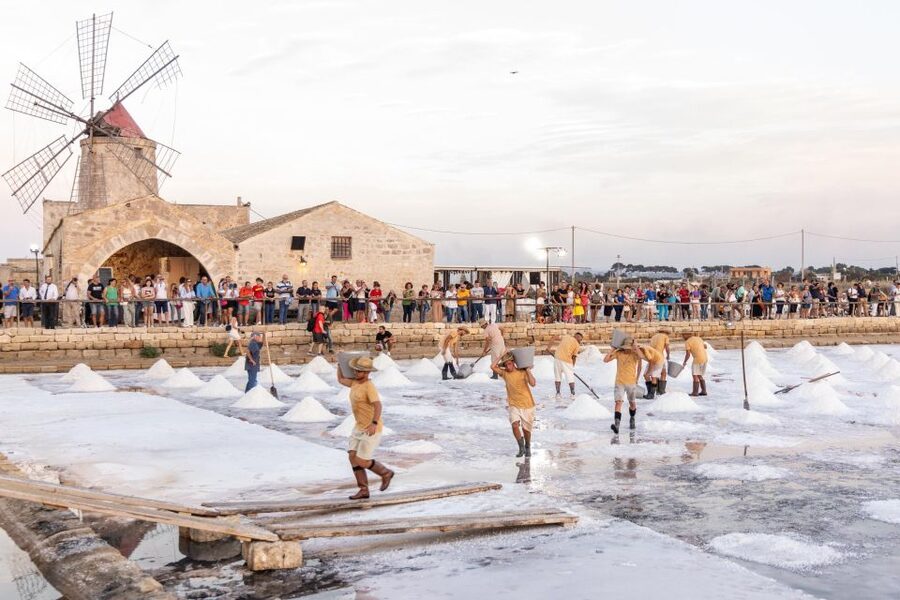
The outdoor part is where the tour earns its keep. You do not just walk past salt pans, you follow the perimeter route until you reach sections where water mirrors the sky. That reflection effect can be surprisingly beautiful, and it helps you understand why the pans are engineered the way they are.
As you move, your guide points out the different visual zones that salt workers pay attention to. The guide also explains the transformation process from seawater into salt you can actually use. You also get the most memorable hands-on moments during this segment.
You collect and touch salt
This is not a purely observational tour. You can:
- collect salt with your hands
- touch the salt inside the production tanks
That might sound simple, but it changes how you understand the whole process. Seeing salt is one thing. Feeling texture and noticing how salt behaves in real production zones makes the story stick. It is also a great moment for photos because the salt surface and colors give you natural contrast.
Nature in the background, learning in the foreground
Because this is within a WWF reserve, the tour does not feel like an industrial site with a sidewalk tour route. There are protected plants and birds mentioned as part of the experience. You might see them more if you slow down and look away from your shoes for a moment. It is a good reminder that this is salt production shaped around the coastal environment, not just a man-made factory in a field.
What to wear, and why
Bring comfortable shoes and a hat. The tour is short, but it is outdoor walking, and sun matters in Sicily. Wear comfortable clothes that can handle getting a bit dusty, since you are walking near natural ground and production areas.
Part 2: The salt museum and the 1400s mill
After the walk, the tour switches gears. Indoors, in the ancient farmhouse, the salt story becomes more human and more specific.
The museum focuses on:
- retracing the tiring work of the salt pan
- understanding the family that has run it for generations
- connecting salt production to the sea
The big hook here is the presence of an ancient mill from the 1400s. You are not just looking at modern displays. You are seeing a piece of the actual machinery history that shaped how salt was made. It gives you a clearer sense of how labor and tools evolved while the basic goal stayed the same.
I also like that this museum is described as included in the official European Union guide. That is a signal that it is not a random collection room. It is presented in a way meant to preserve and share the context of salt production, including why it was worth building infrastructure for centuries.
In plain terms, the museum takes your outdoor experience and gives it a spine. If the salt pans made you ask what you were seeing, the museum helps you answer why it mattered.
The tasting: whole salt plus flavored fleur de sel from Slow Food
If you enjoy food, do not skip the tasting part. This tour includes tasting of whole salt and fleur de sel prepared in different aromas from the production.
The flavored fleur de sel is specifically mentioned as coming from a Slow Food Presidium. That is a meaningful detail. It implies a careful approach to specialty salt flavoring and the idea that this is not just salt with a random scent. The tasting helps you understand that salt is not only about salinity. Flavor, aroma, and texture all come into play.
Why this tasting is more useful than you might think
Most salt tastings are just samples that disappear quickly. Here, the tasting works because you just watched salt form. Now you can match sensory experience to process. You can also compare whole salt to fleur de sel, and you get a practical sense of why chefs and home cooks talk about salt choice the way they talk about olive oil.
It is also a nice break after the walk. Even though the tour is short, the tasting makes it feel complete.
Where the tour begins and how to find it fast
You start at Via Salina Chiusa, 1.
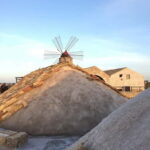
The meeting point is in the ticket office located in the forecourt below the windmill. The guide is behind the salt sales counter. If you show up early, you can get your bearings quickly because the windmill landmark makes the spot easier to recognize.
This is worth noting because the tour depends on starting on time. You are not doing a flexible “come when you want” walk. A clean meeting point helps you avoid stress, which is especially important when you have to wear your comfortable shoes and deal with Sicily sun.
Aperitif and dinner options after the tour
At the end of the visit, you can often continue your evening plans in the same area. There is the option for an aperitif with a breathtaking view, and there is also a chance to have dinner at the restaurant.
I like this setup because the tour ends in a place where the scenery is part of the value. After learning how the pans work and seeing the museum, it is satisfying to relax and eat while everything is still fresh in your mind.
Price and value: why $21 for 75 minutes makes sense here
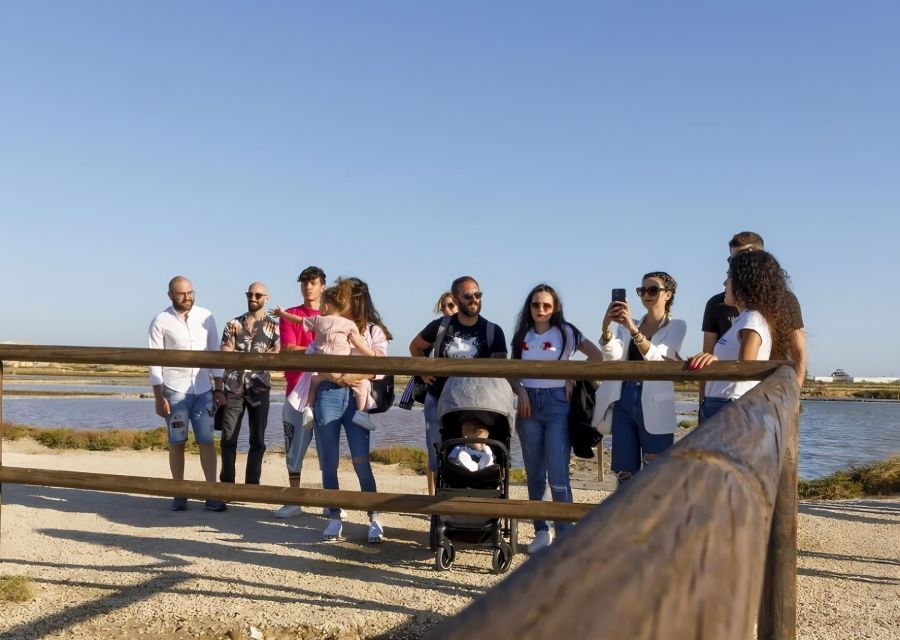
At about $21 per person for a 75-minute guided experience, this is not a long or luxury tour. But it is good value for a few concrete reasons.
First, the price includes more than entry. You get a guided tour of the salt pan area and the salt museum. You also get tasting of whole salt and flavored fleur de sel in different aromas. Those two things alone make it feel like a real guided package rather than an audio-guide walk.
Second, the tour is tied to the Culcasi family, and it is described as their only proposed tour. That matters. You are not just buying access to a viewpoint. You are buying a guided explanation of a working salt production site, plus the family context that keeps it grounded.
Third, you get hands-on salt contact, including touching salt inside production tanks. Few short tours include that kind of interaction.
If you like food-focused experiences where you can learn and then taste something immediately, the math tends to work in your favor. The duration also helps. You can spend an hour and change learning salt production, then still keep time for the rest of your Sicily day.
Who this salt pan tour is best for
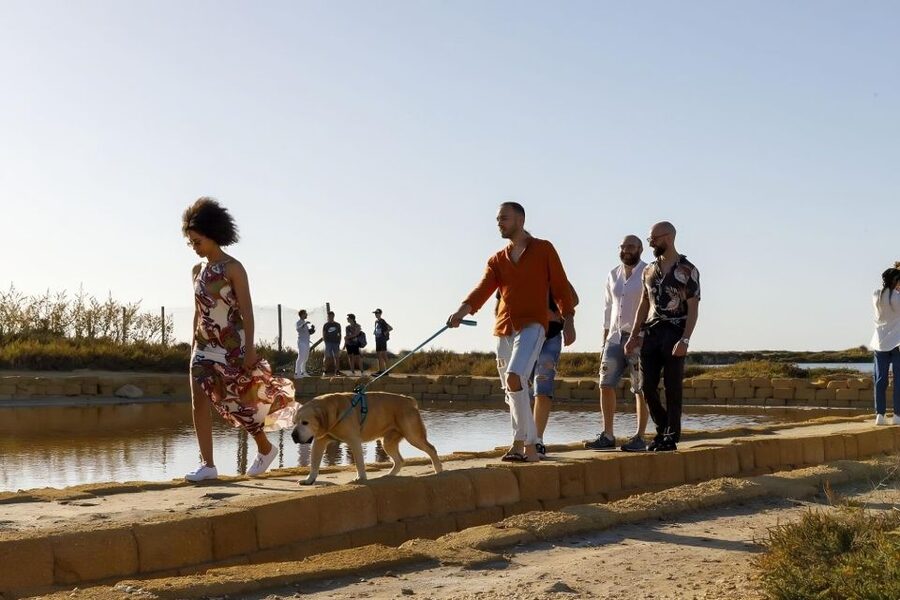
This tour fits best when you want a mix of nature, hands-on learning, and a family-linked museum stop.
You will likely enjoy it if:
- you like food experiences and want to taste flavored fleur de sel
- you enjoy short walks and can handle about an hour of hiking
- you want context behind an ingredient that shows up in cooking
- you prefer real places where work still happens
It is described as suitable for all age groups, and it is also wheelchair accessible. Still, because the walk is part of the experience, bring a realistic attitude about comfort and stamina.
If you are recovering from an illness or you hate walking on uneven ground, take the fitness requirement seriously. One irritation people note is that the hour of walking is not always obvious at first glance, so it is smart to check before you commit.
Should you book the Culcasi salt pans and museum tour?
I think you should book this tour if you want a short, hands-on salt experience that goes beyond pretty scenery. The salt pans walk inside a WWF reserve setting gives you visuals and nature contact. The museum in an ancient farmhouse, with the 1400s mill, gives you the reason behind the work. And the tasting, including Slow Food Presidium flavored fleur de sel, makes the whole thing practical for food lovers.
You might skip it or choose a lighter plan if you know you cannot handle about an hour of walking. That is the only real deal-breaker built into the format.
FAQ
Where is the meeting point for the Trapani Salt Pans and Salt Museum tour?
The meeting point is at the ticket office in the forecourt below the windmill, behind the salt sales counter.
How long is the guided tour?
The tour lasts about 75 minutes.
What languages is the live guide available in?
The live tour guide is available in English and Italian.
Is the tour wheelchair accessible?
Yes, the tour is wheelchair accessible.
What happens during the first part of the tour?
You take a guided walk around the salt pans, following the perimeter of the salt pan and reaching areas where water mirrors the sky. You also learn the process of turning seawater into salt and you can collect salt with your hands.
What happens during the second part of the tour?
You get a guided tour of the salt museum inside an ancient farmhouse, including the ancient mill from the 1400s, with focus on the salt pan work and the family history.
What tasting is included?
You can taste whole salt and fleur de sel in different aromas from the production, including flavored fleur de sel linked to a Slow Food Presidium.
Do you get to touch the salt?
Yes, you can touch the salt inside the salt production tanks.
What should I bring and wear?
Bring comfortable shoes and a hat, and wear comfortable clothes.
Do I need a certain fitness level?
The tour includes an about 1-hour hike, so a basic level of fitness is required.
Can I cancel or pay later?
You can cancel up to 24 hours in advance for a full refund. You can also reserve now and pay later.
Our Wider Tours File for Trapani
Other Trapani, Erice and Egadi Island Trips in Trapani From Our Notebook
Not quite the day you had in mind? The rest of our Trapani write-ups sit below
- From Trapani: Favignana and Levanzo Shuttle Tour★ 4.0 · 211 reviews
- From Trapani: Egadi Islands Favignana & Levanzo Cruise★ 4.9 · 229 reviews
- Mini Cruise to Favignana and Levanzo with lunch on board★ 4.0 · 270 reviews
- Trapani: 2-Hour Salt Flats Tour★ 4.9 · 286 reviews
- Full Day Boat Tour San Vito Lo Capo to Castellammare del Golfo★ 5.0 · 292 reviews
- 8-Hour Boat Tour from Castellammare del Golfo to San Vito Lo Capo★ 5.0 · 357 reviews
- From Trapani: Favignana and Levanzo Egadi Island Day Cruise★ 4.8 · 477 reviews
- Egadi Islands Tour: Favignana and Levanzo from Trapani★ 5.0 · 607 reviews
- Boat tour to Egadi Favignana and Levanzo islands from Trapani★ 5.0 · 614 reviews
Trapani, Erice & the Egadi Islands, top to bottom.
 ★ 4.2From Trapani: Cruise to Favignana and Levanzo with lunchFrom $532,286 reviews
 ★ 4.2Segesta, Erice and Salt Pans Full-Day Excursion from PalermoFrom $821,791 reviews
 ★ 4.3From Trapani: Day Cruise to Favignana & Levanzo with LunchFrom $461,483 reviews
 ★ 5.0Boat Tour Egadi Day discover Favignana and Levanzo from TrapaniFrom $1391,183 reviews
 ★ 4.2From Trapani: Favignana and Levanzo Mini Cruise with LunchFrom $47814 reviews
 ★ 5.0Favignana and Levanzo, Egadi islands tour by boat from TrapaniFrom $114720 reviews
 ★ 5.0Boat tour to Egadi Favignana and Levanzo islands from TrapaniFrom $102614 reviews
 ★ 5.0Egadi Islands Tour: Favignana and Levanzo from TrapaniFrom $114607 reviews
Filed under