
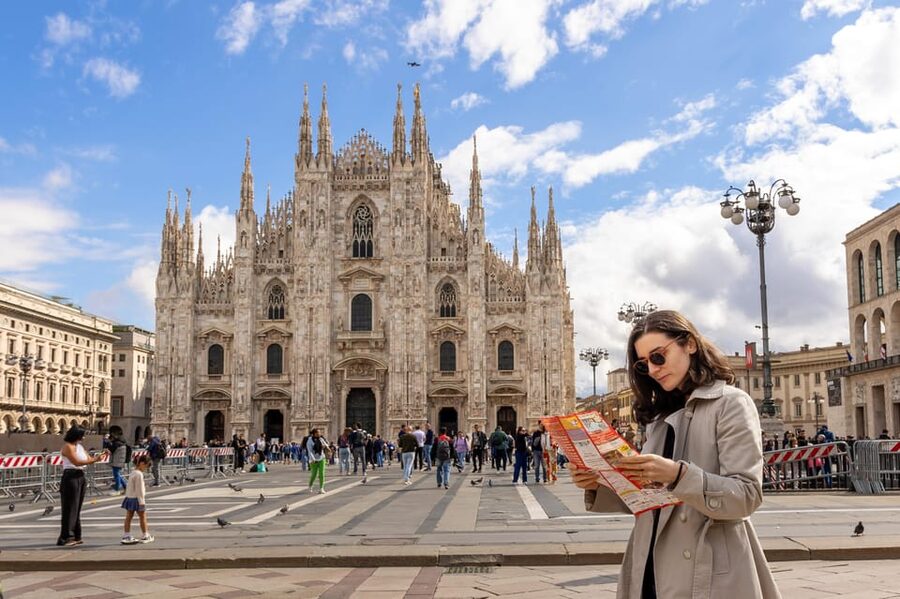
Reviewed · HOP-ON HOP-OFF BUS TOURS
Milan: City Sightseeing Hop-On Hop-Off Bus with Audio Guide
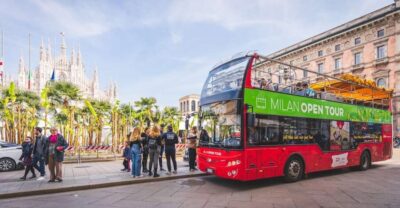
Milan moves fast, this bus keeps up. This hop-on hop-off ride gives you open-top views and multilingual audio, plus the freedom to hop off at the exact stops you want. My only real caution is that the first stop area, especially Foro Bonaparte, can be a bit confusing if you are not sure where to look.
What I like most is the convenience: you can use the bus to get your bearings fast and then decide where you want to linger. I also appreciated the overall vibe on board, with helpful staff and frequent running that makes it feel practical, not touristy and slow. The drawback, worth planning for, is Milan traffic. Transfers and time gaps can get tight if you are trying to jump lines repeatedly in one afternoon.
The audio guide does more than name landmarks. It also shares local food stories like the history of panettone and even the recipe for cotoletta alla Milanese, and it covers major sights such as the Opera House and Castello Sforzesco. If you use it actively, the routes become a moving primer for how Milan fits together.
In This Review
- Key things I think you should notice first
- Why 4 lines are the smartest use of a hop-on ticket
- Boarding in Foro Bonaparte vs Piazza Duomo, and how to avoid stress
- How to use the audio guide so it actually helps
- Line A: Castello, Cenacolo, Duomo, and the spots in-between
- Line D: Castello to Cenacolo to Navigli, with Brera as the payoff
- Line B: Duomo to Repubblica, Palazzo Lombardia, Centrale, and Porta Venezia
- Line C: Triennale to Arco della Pace, City Life, and the San Siro side
- Comfort and timing on Milan streets: what can slow you down
- Suggested pacing for 1, 2, or 3 days in Milan
- Food and local culture you can listen for while you ride
- Special conditions that can affect your ride
- Should you book this Milan hop-on hop-off bus?
Key things I think you should notice first
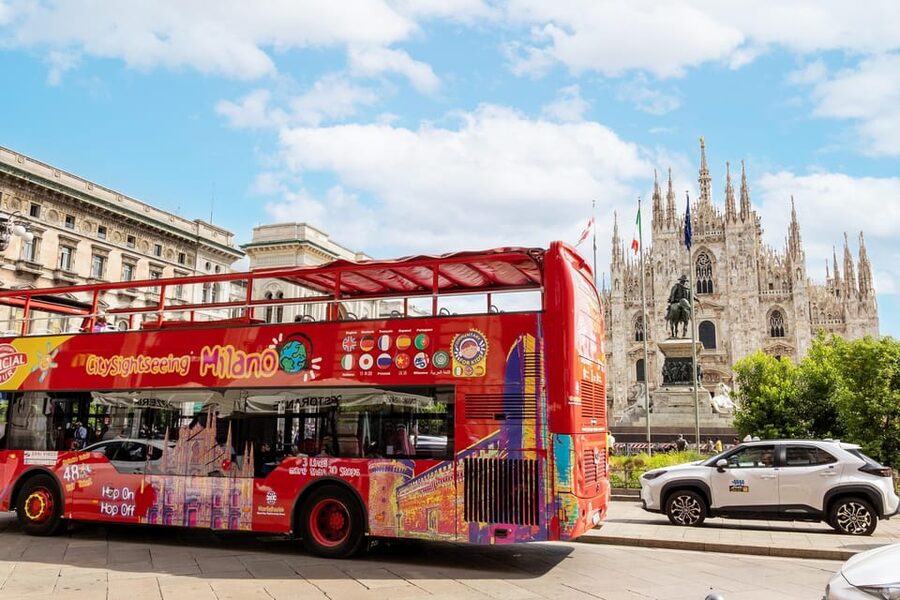
4 connected lines so you can cover a lot without backtracking
Audio in many languages, including a special child audio track
Open-top panoramas that make even a short ride feel like part of the sightseeing
Frequent stops across different neighborhoods, not just the center
- Milan traffic timing matters, especially during line transfers
Why 4 lines are the smartest use of a hop-on ticket
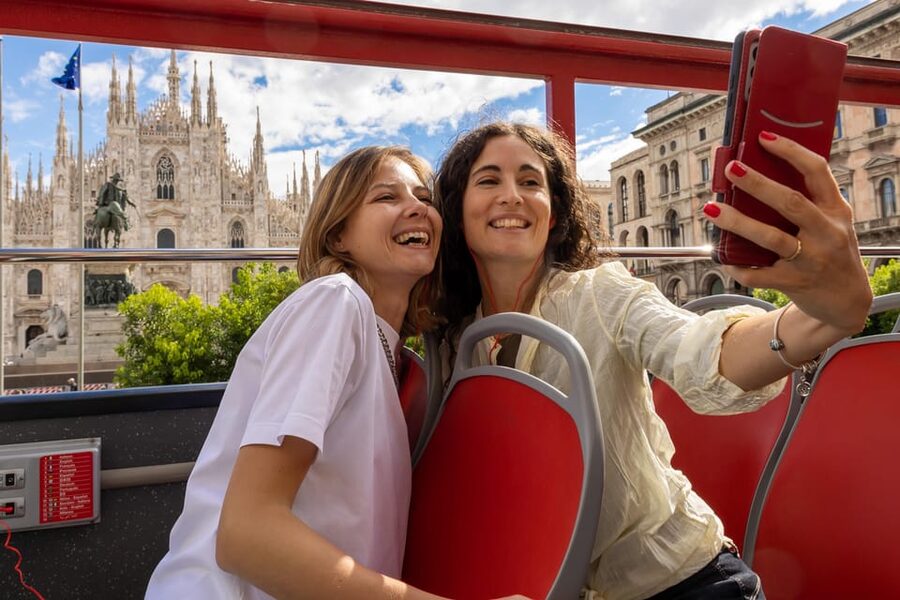
A $26 per person ticket that works for 1 to 3 days is a value play for Milan, especially if you only have limited time. One loop would be fine if Milan was flat and simple. It is not. With multiple lines, you can mix-and-match the neighborhoods that interest you most and spend walking time where it counts.
In practice, I like this format because it helps you build a flexible day. You can ride for orientation, get off for a closer look, then continue when you feel like it. It is also a nice plan if your days are a patchwork of Duomo-area shopping, gallery time, and just trying to get to places without wrestling with directions.
That said, the lines can feel similar at times. Some circuits overlap with the same big sights, so you will get the most satisfaction by hopping on more than one line, not by trying to repeat one view four times. If you want a quick “I saw the highlights” day, you can do that. If you want the full Milan feel, plan more than a day.
Between an espresso and the next booking, compare these hop-on hop-off bus tickets in Milan.
- Milan: Gray Line Milan Open Tour Hop-On Hop-Off Bus Tour
★ 4.0 · 1,549 reviews - Milan Hop-On Hop-Off Bus Tour with Four Routes
★ 3.5 · 1,214 reviews - Milan Duomo Rooftops Tour + Optional Hop-on-Hop-off ticket
★ 4.3 · 271 reviews - Milan: Duomo & Rooftop Tour with Optional Hop-On Hop-Off Bus
★ 4.5 · 262 reviews
Boarding in Foro Bonaparte vs Piazza Duomo, and how to avoid stress
Your first move depends on which line you choose. For lines A, C, and D, the first stop is Foro Bonaparte. For Line B, the first stop is Piazza Duomo.
Foro Bonaparte is huge, and I would not treat it like a small city square where you can just glance up and find the right pickup. One very clear piece of feedback I trust: the easiest fix was to get close to the travel information point in the area, then look for the bus stop from there. If you are standing across the street from a big building with no obvious sign, you will likely lose time.
The good news is that the staff are described as professional and helpful, and the buses are easy to spot at the stops. You also get a city tour map, which makes a difference when you are bouncing between lines and trying not to think too hard.
How to use the audio guide so it actually helps
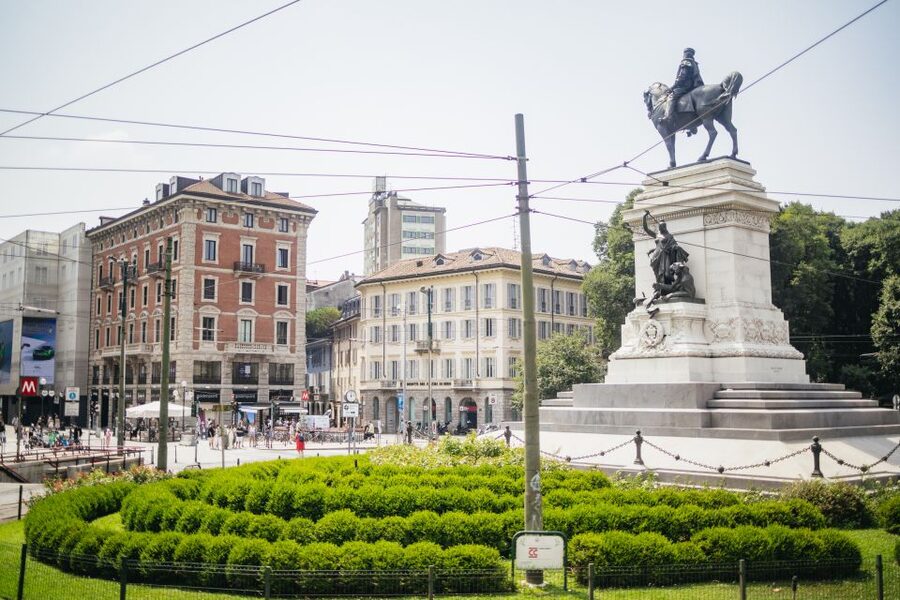
The audio is one of the strongest parts of this experience. You get commentary in a long list of languages: Spanish, Chinese, English, French, German, Italian, Russian, Portuguese, Japanese, and Arabic. There is also a special audio commentary for children, which is a practical touch for families.
Here is my advice for getting value from the audio: do not just listen while the bus is moving. Use it to decide when to get off. The commentary includes curiosities tied to major landmarks like the Opera House and Castello Sforzesco. It also brings in food culture, including the cotoletta alla Milanese recipe and the history of panettone.
One small caution: audio equipment issues can happen. A few people reported seats where the audio did not work, and the fix was to switch to another headset or seat where it did. This is not a reason to avoid the bus, but it is smart to test your audio soon after boarding.
Line A: Castello, Cenacolo, Duomo, and the spots in-between
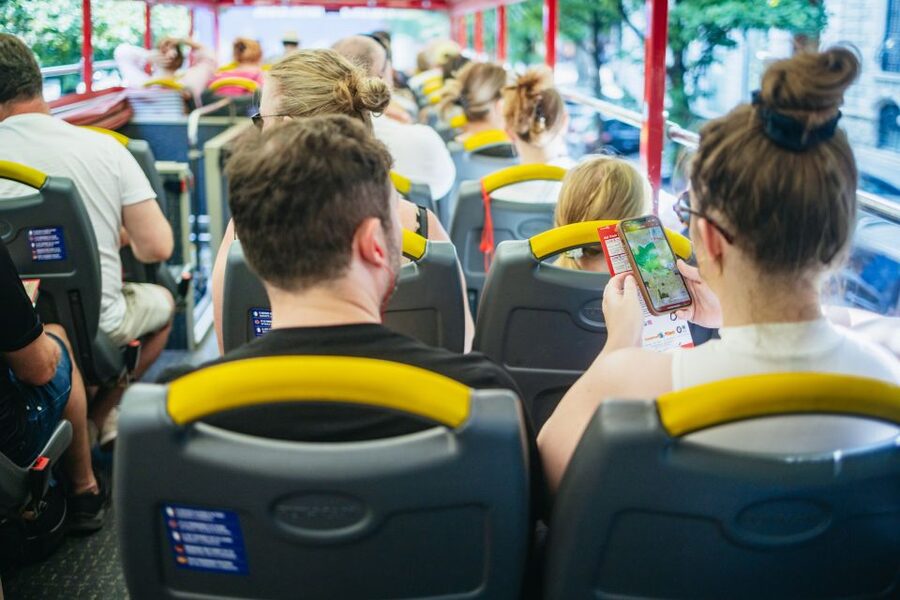
Line A is a classic way to connect a set of big Milan touchpoints. The stops are: Castello, Cadorna, Cenacolo, Corso Magenta, Duomo, Monte Napoleone, Manin, and Moscova.
What I like about this line is that it hits both “you came for this” sights and areas that give you a different angle on the city. Castello and Duomo are the kinds of stops people gravitate to first, and the audio commentary helps you understand what you are seeing as you pass. The Mid-route stops like Corso Magenta and the Monte Napoleone area are useful when you want a change of scenery without committing to a full walking day.
If you get off at multiple points, you can turn Line A into a flexible “choose your own pacing” itinerary. The drawback is that some people noted the routes can repeat the core sights across different lines. So if you are on a tight schedule, do not assume every stop will feel totally new. Use Line A to cover your must-sees and then move to another line for different neighborhoods.
Line D: Castello to Cenacolo to Navigli, with Brera as the payoff
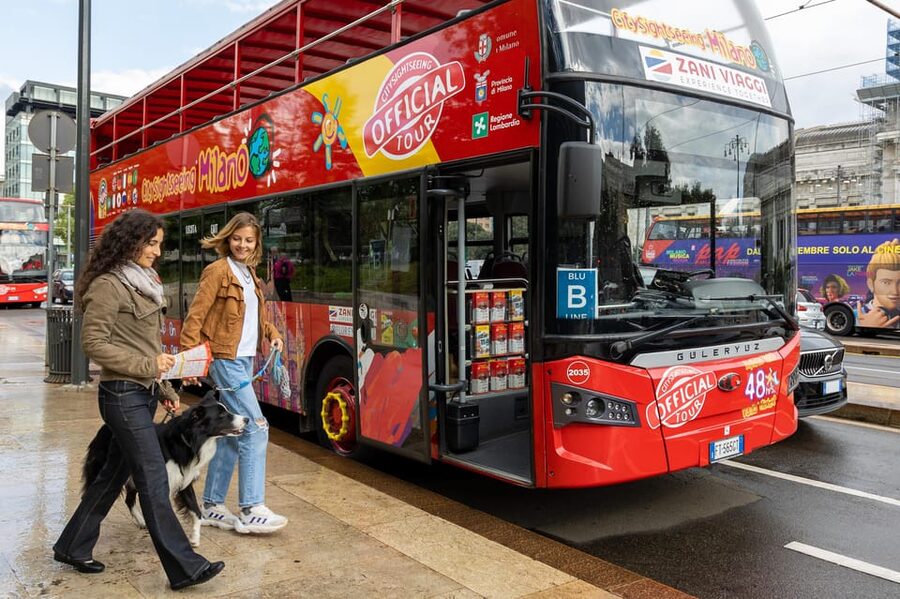
Line D shares some major overlap with Line A, but it adds stops that feel more about strolling and atmosphere. Stops include: Castello, Cadorna, Cenacolo, Navigli, Piazza XXIV Maggio, Duomo, Monte Napoleone, and Brera.
Brera is a great “end with style” kind of stop, because it is a natural place to step off and spend time on foot. Navigli and Piazza XXIV Maggio add a different Milan mood than the central monuments. If your plan includes a dinner near a place you can reach easily, this line gives you options.
The tradeoff is time and transfers. When you switch lines, buses can get packed, especially around high-demand areas. If you hate crowding, try to limit how often you transfer mid-afternoon, and aim to ride one line through, then hop off to explore.
Line B: Duomo to Repubblica, Palazzo Lombardia, Centrale, and Porta Venezia
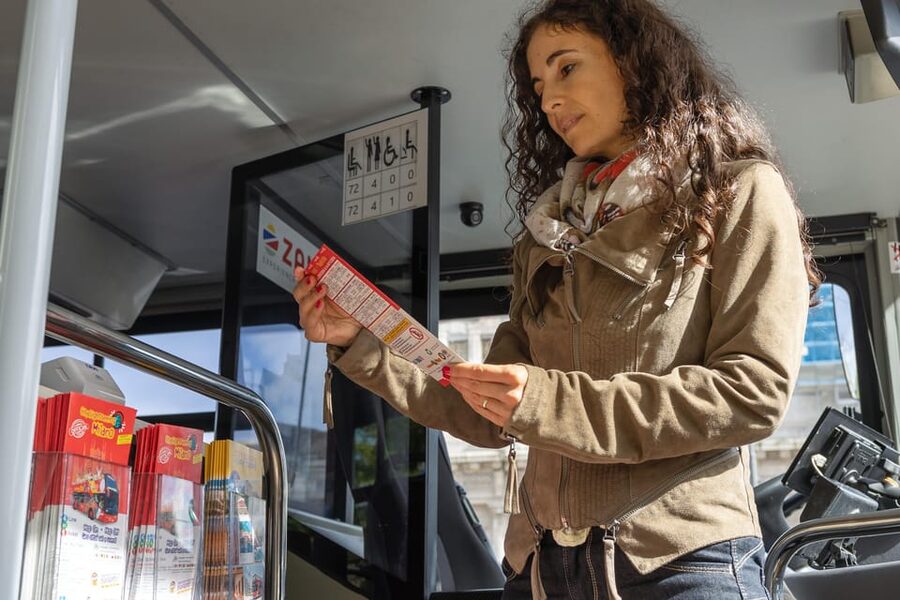
Line B centers more on the city core and major waypoints. Stops listed are: Duomo, Monte Napoleone, Manin, Repubblica, Palazzo Lombardia, Stazione Centrale, Buenos Aires, Porta Venezia, and San Babila.
If you want an easy, practical route that helps you both sightsee and navigate the city, Line B makes a lot of sense. Stazione Centrale is a useful stop name for anyone who is also moving around Milan by train. Repubblica, Porta Venezia, and San Babila are good anchors if you want to explore without always going back toward the Duomo area.
This line is also useful if you are basing yourself somewhere central and want fast reach to different pockets. One of the most repeated strengths of the service is simply how convenient it feels, with buses that run often enough that you do not feel stranded at the curb.
Our notebook holds other city tours in Milan if you are still weighing options.
Line C: Triennale to Arco della Pace, City Life, and the San Siro side
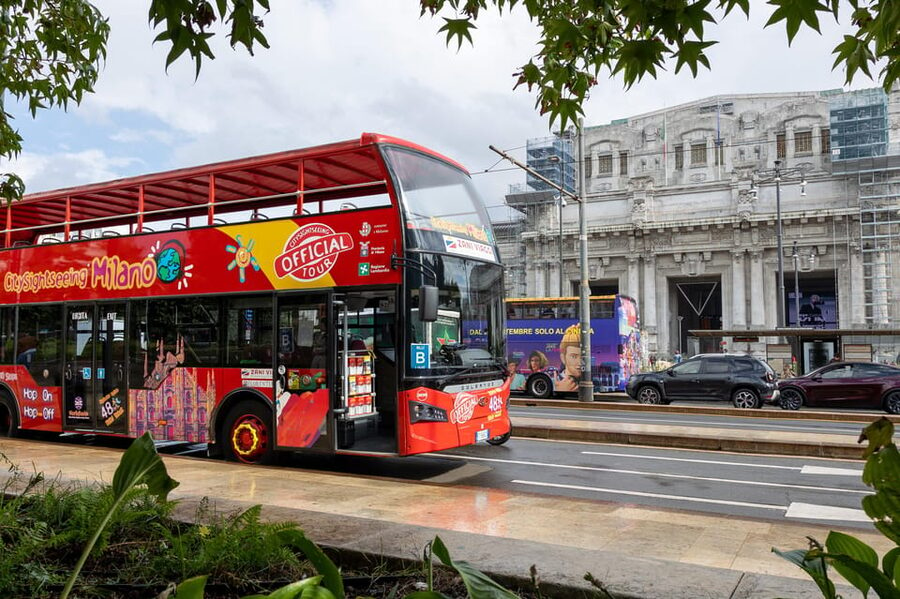
Line C is the “more Milan in one day, more variety too” line. The stops are: Castello, Triennale, Arco della Pace, City Life, Casa Milan, Mico – Congress Centre, Lotto – Montebianco, Lido, Ippodromo, Stadio San Siro, Lotto – Monterosa, Buonarroti, Pagano, Conciliazione, and Parco Sempione.
This is the line I would pick if you want modern Milan in the mix with classic landmarks. It includes City Life, Casa Milan, and Stadio San Siro, so it is a natural choice if sports and modern architecture interest you. It also includes Parco Sempione, which is a good name to have if you want a break between big monuments and shopping stretches.
A small practical note: some stops on this line feel like full-day exploration areas. If you get off too many times, you might end up spending more time waiting and transferring than you expected. If your goal is value, pick a couple of strategic stops and let the bus do the heavy lifting between them.
Comfort and timing on Milan streets: what can slow you down
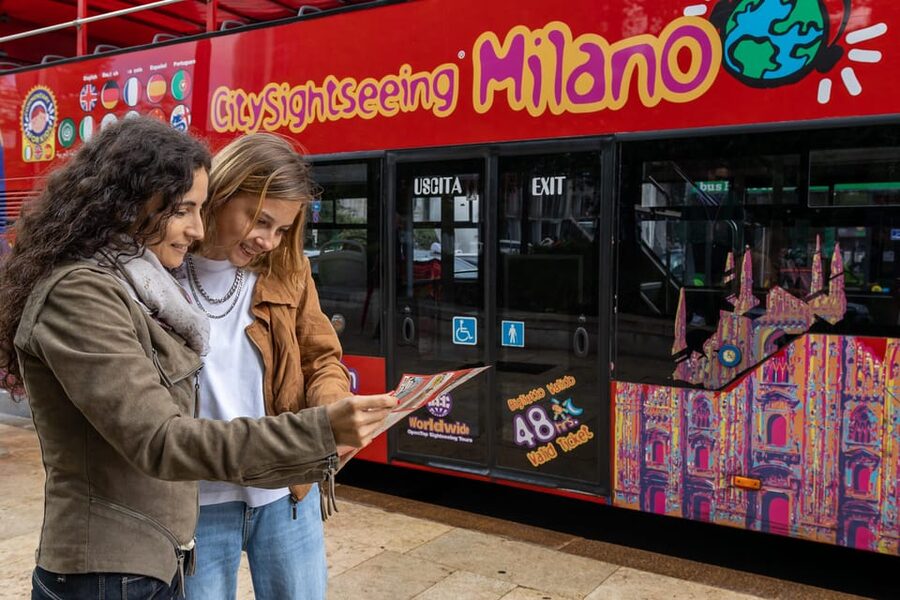
Milan is not famous for easy traffic. Even if the buses are frequent, you should still expect delays around intersections and slow sections. Some people said buses ended up late because of traffic lights, and that is completely believable.
You also need to plan for line transfer moments. If you switch lines and the bus is packed, the practical experience can feel more like squeezing than sightseeing. The good part is that the service is designed for quick hop-on, hop-off use, so you do not have to commit to one long uninterrupted ride.
One timing-related complaint that pops up is time between buses on the same line. One person described around 50 minutes as a long wait if you missed your window. That is not a reason to avoid the bus, but it is a reason to stay aware, especially if you are walking to a specific attraction once you get off.
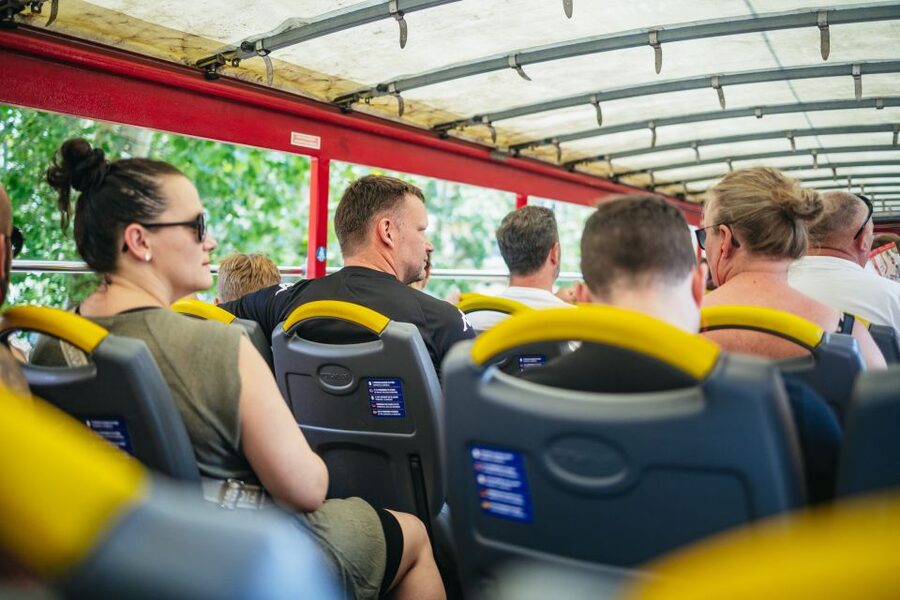
On the comfort side, open-top riding is a real treat in Milan because it makes the city feel wider and more panoramic. Some people even called out the air-conditioning in their experience. And yes, I saw mention that there was water provided on the bus, which is a nice bonus if you are out for hours.
Suggested pacing for 1, 2, or 3 days in Milan
I love this type of ticket for first-time orientation. It lets you cover lots of ground without committing to a strict walking route. But the best results come from choosing a plan that matches your time.
For a one-day visit, focus on one or two lines that hit your priority stops. People described doing major areas in just a couple of rides, and I think that works best when your goal is “see the icons and get oriented.” For most people who want more than just photos, two days is the sweet spot. One review even suggested that if you want to fully embrace everything, you need at least 2 days.
If you do have 3 days, use that flexibility. Ride one line for orientation on day one, return to the stops that grabbed you on day two, and finish by exploring a more different slice of Milan on day three, like the modern-focused side of Line C.
Food and local culture you can listen for while you ride
The audio commentary is where you get the extra “why should I care” layer. It is not only pointing out famous buildings. It also connects Milan to food and tradition.
You can listen for the recipe for cotoletta alla Milanese and the history of panettone, then decide whether you want to seek out food experiences later in your trip. The commentary also includes facts about notable buildings like the Opera House and Castello Sforzesco. That makes the experience more than a loop of names, because it gives context for what you are stopping to look at.
If you are someone who likes learning while you travel, use the audio as a running guide. When the bus approaches a stop that you care about, get ready to hop off. When it is describing something that sounds less interesting, stay on and save your time for later.
Special conditions that can affect your ride
There are a couple of seasonal and date-specific notes to keep in mind.
If you buy a 72-hour rate that is valid for the weekend (Saturday and Sunday) in June through September, the ticket for the Milan Night Tour is included. For Winter Olympic Games, there may be disruptions, including Green Line Stop n.2 being closed during the period. Also, on Saturday February 21, Stop Castello can be suspended.
If your dates land near any of these windows, it is smart to check before you go, so you can adjust which line and stop you rely on.
Should you book this Milan hop-on hop-off bus?
Book it if you want a practical way to see major Milan sights without planning every minute. This is especially worth it if you like the idea of open-top city views, want multilingual audio, and prefer deciding where you explore in real time rather than following a fixed tour script.
I would also recommend it if you are the type who uses public transit but does not want the stress of navigating every day. Multiple lines, onboard Wi-Fi, and a map help you feel in control.
Skip it or pair it with a different plan if you hate crowds at transfers or if you are very timing-sensitive. Traffic delays and line changes can add friction. And if you already know Milan well and only need one small section, you might find yourself repeating sights across lines.
If you are arriving in Milan and want quick orientation plus flexible stop options, this hop-on hop-off setup is one of the easiest ways to make your time count.
Also Written Up in Milan, City Tours
More Hop-on Hop-off Bus Tickets Pinned to Our Milan Map
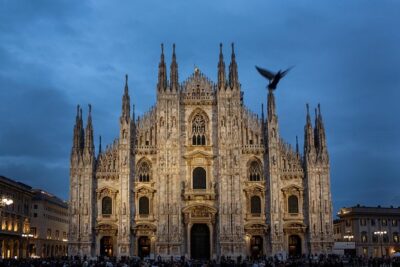
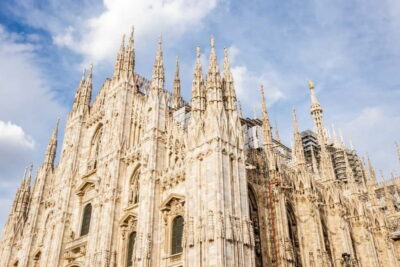
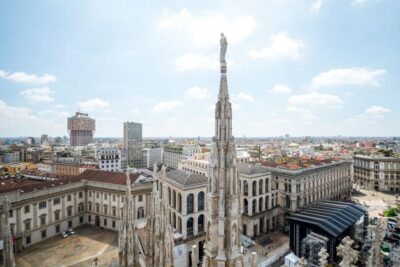
Not quite the day you had in mind? The rest of our Milan write-ups sit below
- Milan: Duomo and The Last Supper Skip-the-Line Guided Tour
- From Milan: Exclusive Boat, Lake Como, Bellagio, and Lugano Tour★ 4.5 · 168 reviews
- Pinacoteca Ambrosiana and da Vinci’s Codex Atlanticus admission in Milan★ 4.5 · 169 reviews
- Pizza Cooking Class with Tiramisù and Wine Tasting in Milan★ 5.0 · 172 reviews
- Milan: Exclusive Access with Last Supper visit & Guided Tour★ 4.5 · 173 reviews
- Milan: Private Professional Photoshoot at the Duomo★ 4.7 · 174 reviews
- Step Into History: Leonardo Vinci’s Last Supper Tour★ 4.5 · 175 reviews
- Small-Group Lake Como Experience with boat and van, from Milan★ 5.0 · 179 reviews
- Milan: Street Food Walking Tour★ 4.7 · 180 reviews
Hop-On Hop-Off Bus Tours, top to bottom.
 ★ 4.0Rome: City Sightseeing Hop-on Hop-off Bus with AudioguideFrom $1516,045 reviews
 ★ 4.0Rome:Hop-On Hop-Off Panoramic Open Bus Ticket 3 Circuits x 1From $2015,405 reviews
 ★ 4.0Florence: Hop-on Hop-off Bus Tour: 24, 48 or 72-Hour TicketFrom $246,283 reviews
 ★ 3.5City Sightseeing Rome Hop-On Hop-Off Bus TourFrom $165,446 reviews
 ★ 4.3Naples: Hop-on Hop-off Bus Tour 24-Hour TicketFrom $305,157 reviews
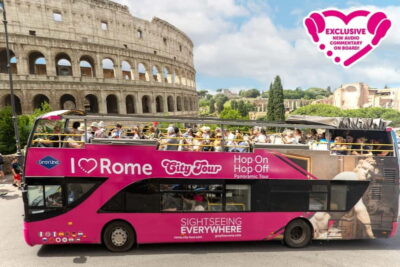 ★ 4.0Rome: Hop-on Hop-off Sightseeing Bus Tour with AudioguideFrom $224,329 reviews
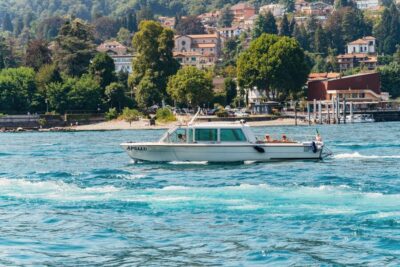 ★ 4.4Stresa: 3 Borromean Islands Hop-On Hop-Off Boat TourFrom $144,122 reviews
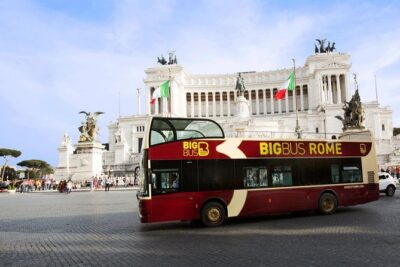 ★ 3.5Rome: Big Bus Hop-on, Hop-off Open-Top Sightseeing TourFrom $262,580 reviews