
Reviewed · MILAN DESIGN, NAVIGLI & LA SCALA
Official San Siro Stadium and Museum Guided Tour
San Siro has a way of feeling sacred. This official visit is interesting because you move in sequence, from the San Siro Museum into real matchday areas like the pitch and tunnel.
I like two big parts of this experience. First, you get backstage access that most stadium tours only gesture at, including changing rooms and the mixed zone. Second, the museum portion is built around real jerseys and artifacts tied to Milan clubs and Italy’s national team.
One drawback to plan for is time. The museum can feel brief depending on your group flow, and if sections are under maintenance (one reviewer noted AC Milan rooms were shut), your access may vary a bit.
In This Review
- Key highlights you should care about
- San Siro Stadium Tour, in plain terms: what you’re actually doing
- Before you go: Gate 8, vouchers, and why timing matters
- The San Siro Museum: jerseys first, then the stadium story
- Locker rooms, changing areas, and the mixed zone
- Sidelines, stands, and photos that actually feel close
- Walking the tunnel: pitch-level energy, not just a viewpoint
- Italia 110 & Lode: national team artifacts that hit hard
- Your guide: why the storytelling is part of the value
- Price and value: what $40.98 buys you at San Siro
- Group flow, guided vs self-guided, and what to do with it
- Who this tour suits best (and who should reconsider)
- Should you book the San Siro Stadium and Museum Guided Tour?
Key highlights you should care about
- Skip-the-line entry through a separate entrance so you lose less time standing around.
- Changing rooms and mixed zone areas that explain how players move, not just where fans sit.
- Tunnel and pitch-level moments that make photos feel more like matchday than sightseeing.
- San Siro Museum first leg with jerseys, plus a dedicated exhibition focused on Italy’s national team.
- Italia 110 & Lode exhibition with famous kit history, including the 1910 France match jersey and World Cup final memorabilia.
- Live guide support in Italian and English, with the option for self-guided elements when visitor numbers are high.
San Siro Stadium Tour, in plain terms: what you’re actually doing

If you care about football culture, you’ll feel the difference on day one. This tour does not just point out architecture. It walks you through the stadium like you’re following a player’s day, museum first, then locker rooms, then pitch level. The goal is simple: help you understand San Siro beyond the TV shots.
I like the pacing because it’s logical. You start with context, then you step into the spaces where that context becomes real. You also get a guide, usually in Italian and English, which matters at a place like this where details make the experience click.
Before you go: Gate 8, vouchers, and why timing matters
This is the kind of tour where logistics shape your mood. You exchange your voucher at the ticket office at gate number 8, and the activity ends back at that meeting point. That loop matters because you’re not wandering the area trying to figure out where the group begins.
The tour runs on a day you select, with multiple start times depending on availability. Because time slots vary, you should expect the day-of flow to affect how long the museum part feels. If you want the least rush, pick an earlier start time when possible.
Also note the language setup. The tour is always Italian and English. In larger groups, the experience may be partly guided and partly self-guided, with guides positioned around the stadium. In practice, this can still work well, especially if you’re the type who likes to ask questions when you want them and take photos at your own pace.
The San Siro Museum: jerseys first, then the stadium story
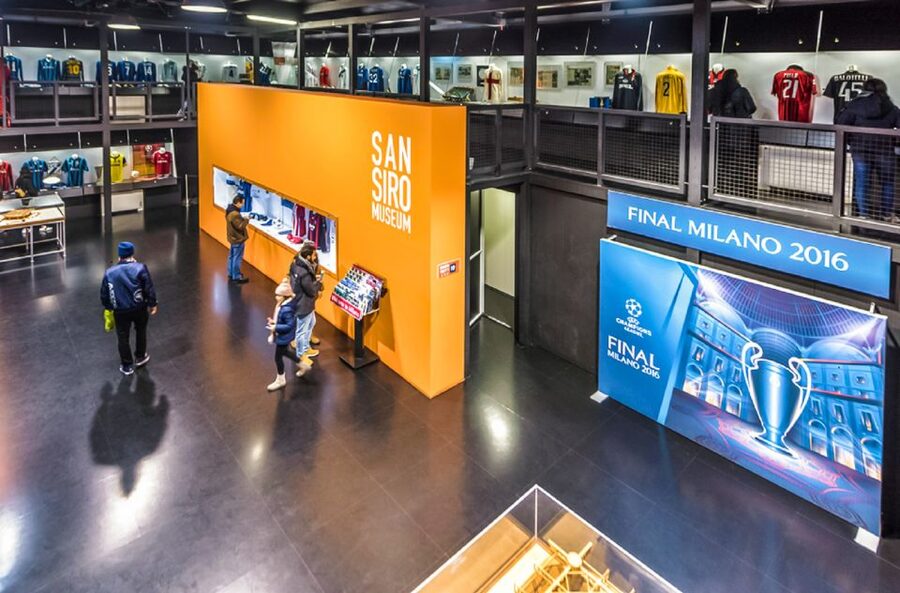
The tour begins with the San Siro Museum, set up in a dedicated area. This is your warm-up. You’ll see a selection of jerseys worn by leading players from the Milan clubs. Even if you’re not a kit historian, the visual timeline helps you understand why this stadium carries so much emotion for locals.
One pattern I’d watch for: the museum section is sometimes described as small but packed. That means the tour may feel efficient rather than sprawling. If you hate quick stops, you might find the museum time a bit tight. One guest explicitly said the scheduled museum time could be extended, and another noted the museum is small.
So here’s the practical takeaway for you: treat the museum as context, not as a full museum day. You’re coming for the stadium access. The museum is there to set the emotional stakes before you step behind the scenes.
Locker rooms, changing areas, and the mixed zone
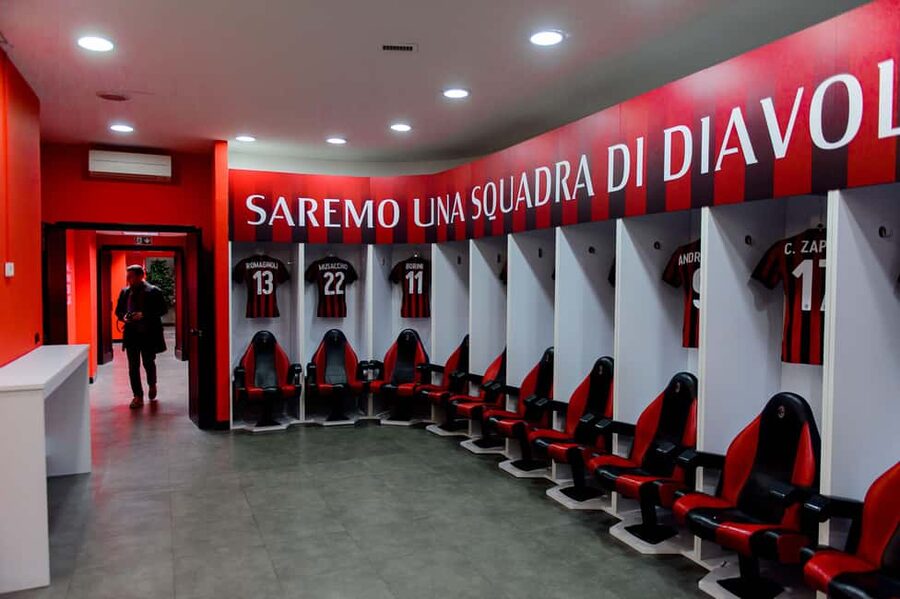
After the museum, you shift into the parts of the stadium fans rarely see. You’ll enter the changing rooms for AC Milan and Inter and then cross the mixed zone.
Why this matters: the mixed zone is where the story of the match gets told, with players moving through a media scrum. Even if you’re not into press culture, standing in the path players take gives you a new mental map of the stadium. Suddenly the pitch isn’t just a place to watch, it’s a stage with choreography.
A detail worth knowing: access can be impacted by maintenance. One reviewer said AC Milan changing rooms were closed due to refurbishment. You might get a similar partial situation depending on timing, so don’t build your expectations around every single room being open every day.
Sidelines, stands, and photos that actually feel close
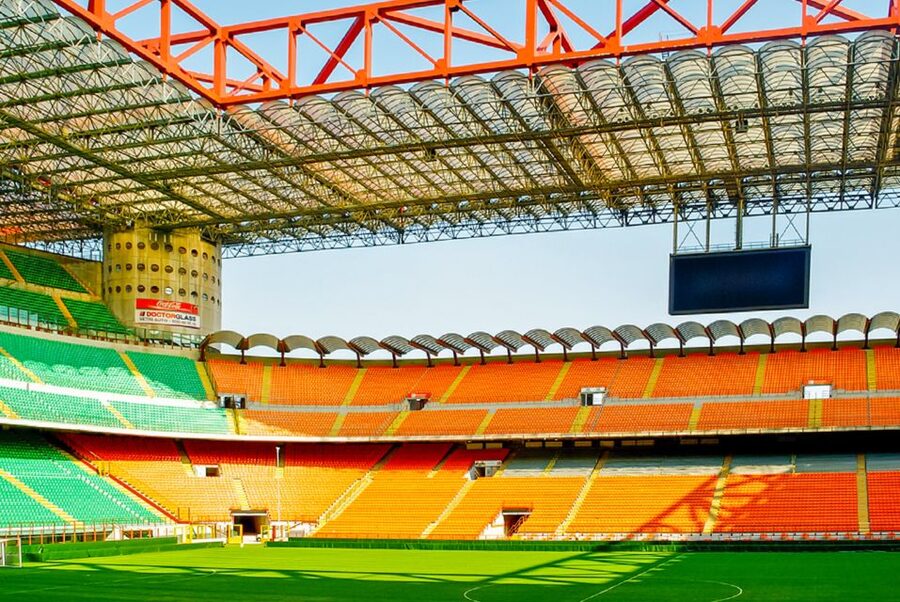
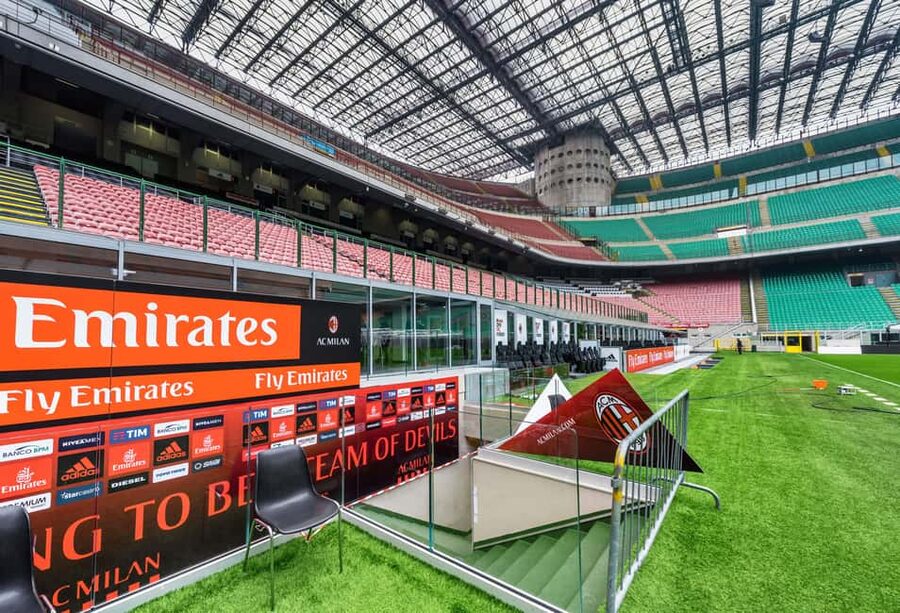
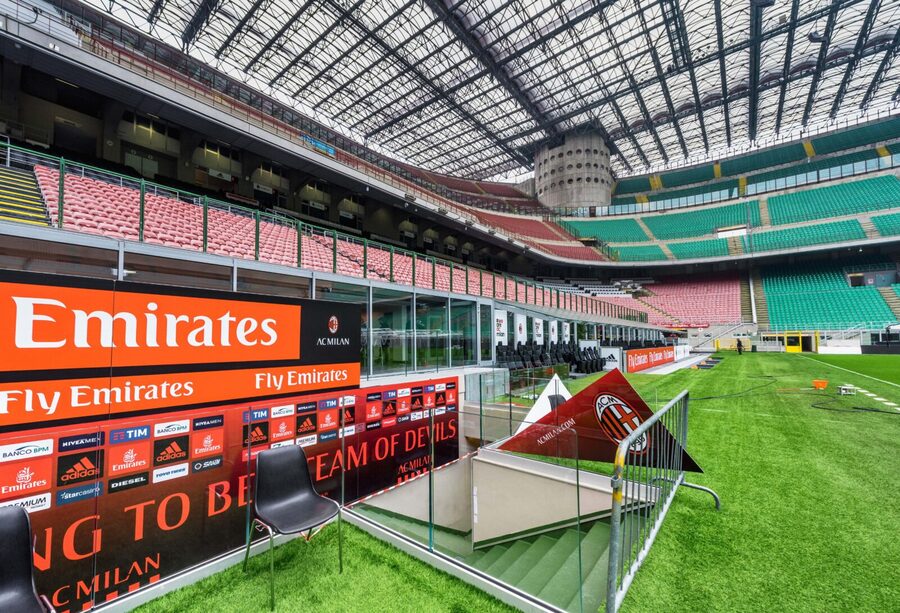
Next comes the bowl and the areas around it. You’ll visit the sidelines and stands, and you’ll get time to enjoy the stadium perspective from near the action. This is where the tour turns into something you can feel.
The pitch looks different when you’re not behind a screen. You can judge distance, angles, and how the stadium holds noise. You’ll also likely get photo moments from spots that feel like a halfway step between the fan experience and the player experience.
If you’re a first timer at San Siro, this is a great phase to learn where everything is. The tour guide helps you connect the history to the physical space, and you’ll finish this section with a stronger sense of what made this stadium legendary in the first place.
Walking the tunnel: pitch-level energy, not just a viewpoint
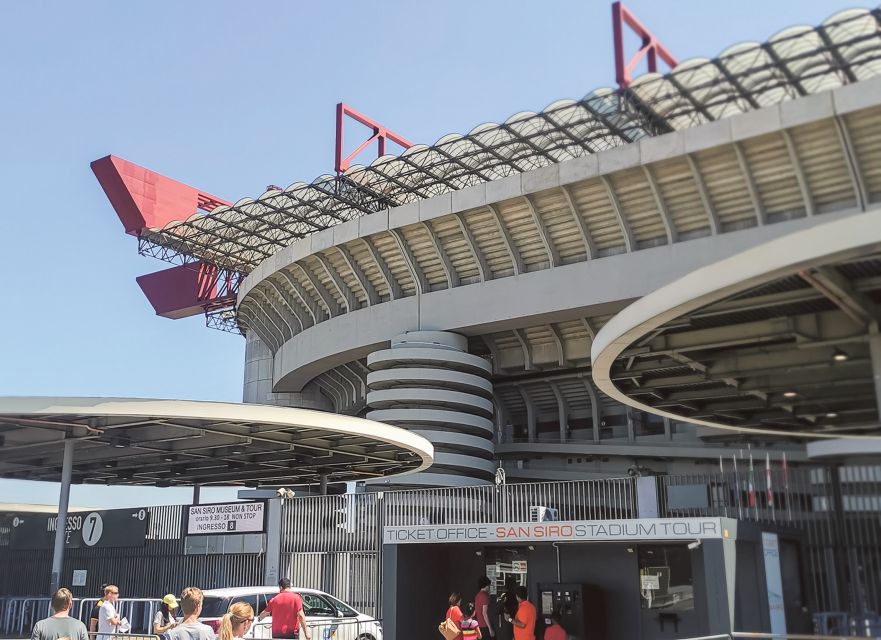
The main thrill is the tunnel and the pitch. You walk down the tunnel and onto the field, like a player making the final steps. This is the part most football fans remember.
Even the way the tour sets this up tends to land well. You’re guided through the progression so it doesn’t feel random. You enter the tunnel, then you reach the San Siro field itself, which is when the stadium finally feels like a living place rather than a building.
One practical note: the best photos often happen when you slow down. You’ll have multiple chances to shoot from near pitch level, so don’t sprint through the moment.
And yes, if you’re hoping for the exact bench-side perspective, you might not get every option. One guest said they wished they could go down to where players exit and the benches, so if that’s your top priority, keep your expectations flexible.
Italia 110 & Lode: national team artifacts that hit hard
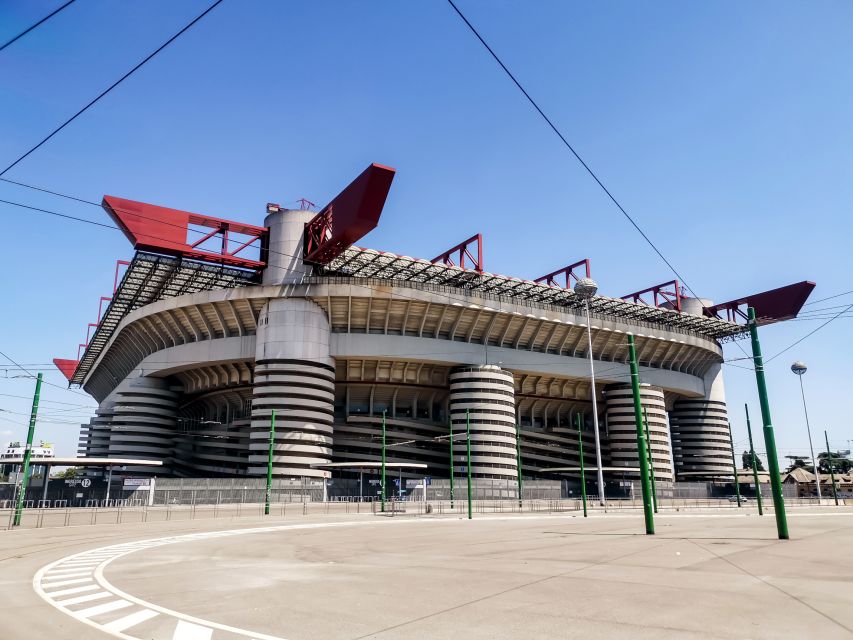
After the stadium tour portion, you’ll visit Italia 110 & Lode, an exhibition focused on the Italian National Football Team. This segment is where the experience widens beyond club rivalries.
Here’s what’s specifically highlighted in the exhibition, based on what’s listed as part of the display:
- the first jersey used against France in 1910
- the pennant from the 1938 World Cup final between Italy and Hungary
- the 1968 World Cup final kits of Italy and Yugoslavia
- tops from Italia 1970
- trophies and shirts from Italy’s World Cup and European Championship history
This matters because it changes what you think the stadium represents. San Siro is home to two clubs, but it also connects to Italy’s football identity. The exhibition helps you see why this building has long held a central place in the national imagination.
And yes, the exhibition time can still feel short. If you love reading displays and looking at details, plan to spend your energy here, even if you have to skim a few things elsewhere.
Your guide: why the storytelling is part of the value
The tour includes a guide, and the guide is a big reason this experience earns a high rating. The standout theme in the feedback is organization and clarity, with strong language support.
Some guide names come up in the feedback, which is a nice sign you’re not just getting random narration. Sophia is specifically praised for delivering the tour in English very well. Alessio is mentioned for passion and football knowledge that shows through. Simone is also noted for help with photos during a later time slot. Sandy is singled out as a top guide, and there’s even mention of guides using multiple languages to keep everyone included.
That matters for you because stadium tours can turn dry fast. When the guide ties a physical location to what happened there historically, the tour becomes more than a checklist.
Price and value: what $40.98 buys you at San Siro
At $40.98 per person, this tour isn’t bargain pricing, but it also isn’t trying to be. You’re paying for:
- San Siro Stadium and Museum entry
- skip-the-line access via a separate entrance
- a tour of the stadium and museum
- a live guide in Italian and English
In other words, you’re not just buying entry. You’re buying a route plus interpretation, and the key selling point is pitch-side access and real backstage areas like changing rooms and the mixed zone.
Is it worth it? If you’re a true football fan, it usually lands as worth it because the spaces are the experience. The museum adds context, the pitch and tunnel give you the payoff, and the guide helps you appreciate what you’re seeing in real time.
If you’re only casually interested in football history, you might feel the museum part is too quick. But even then, the pitch-level access is the kind of thing that often makes people feel they finally understood what they were looking at.
Group flow, guided vs self-guided, and what to do with it
San Siro tours can run in different formats depending on crowd levels. You can expect a guided experience, but when numbers are large, there may be a self-guided component with guides positioned around the stadium.
Here’s how to use that to your advantage:
- If you’re with kids or in a mixed group, ask the guide one or two targeted questions early, then use the rest of the time to explore and photograph.
- If you’re traveling as a couple, the self-paced parts can actually be a win because you’re not forced to walk at someone else’s speed.
- If you’re a photo person, be ready to slow down. You’ll want at least a few moments where you’re not rushing from one area to the next.
One more practical detail: the tour tends to end near the stadium shop area. One review mentioned the tour ended at a souvenir store where people bought official merchandise. If shopping matters to you, plan to stay calm and don’t rush your last minutes on the field.
Who this tour suits best (and who should reconsider)
This is best for:
- football fans who want backstage access without guessing what to do
- people who enjoy history tied to place, not just dates on a wall
- travelers who want an organized route that hits the big emotional moments quickly
It’s less ideal if:
- you strongly prefer long, unhurried museum time
- you dislike tours that move in a set sequence with limited flexibility
- you’re extremely sensitive to refurbishment surprises, because at least one room closure was reported by a guest due to maintenance
The best mindset is: come for the pitch-level and backstage stops, then enjoy the museum as a bonus that deepens the meaning.
Should you book the San Siro Stadium and Museum Guided Tour?
Book it if San Siro is on your Milan shortlist and you care about getting into the stadium spaces that fans normally never see. The combination of skip-the-line entry, a structured route, a live guide in Italian and English, and the pitch and tunnel access makes the ticket feel purposeful.
Skip it only if you’re mainly interested in a large museum day, or if you know you’ll be disappointed by a faster museum pacing. For most football travelers, though, this is exactly the kind of official, well-run experience that turns a famous stadium into a real place you can understand.
Milan Design, Navigli & La Scala, top to bottom.
 ★ 3.3Milan: Navigli Canal Boat CruiseFrom $254,502 reviews
 ★ 4.0Milan’s Must See: Half-Day Tour of Last Supper, Duomo & La ScalaFrom $1304,193 reviews
 ★ 3.6Milan: Navigli District Canal Boat Tour with AperitivoFrom $413,253 reviews
 ★ 4.1Milan: La Scala Theater & Museum Guided ExperienceFrom $342,931 reviews
 ★ 4.0Milan: Sforza Castle Entry Ticket with Digital Audio GuideFrom $152,675 reviews
 ★ 4.6Milan: “Museo Teatrale Alla Scala” Guided TourFrom $442,513 reviews
 ★ 4.1Milan: Branca Tower Entrance TicketFrom $102,045 reviews
 ★ 4.6Milan: Pinacoteca Ambrosiana & da Vinci Codex ExhibitionFrom $211,816 reviews
Filed under