
Reviewed · VESPA, FIAT 500 & GOLF CART TOURS
Rome: Golf Cart Tour of the Eternal City
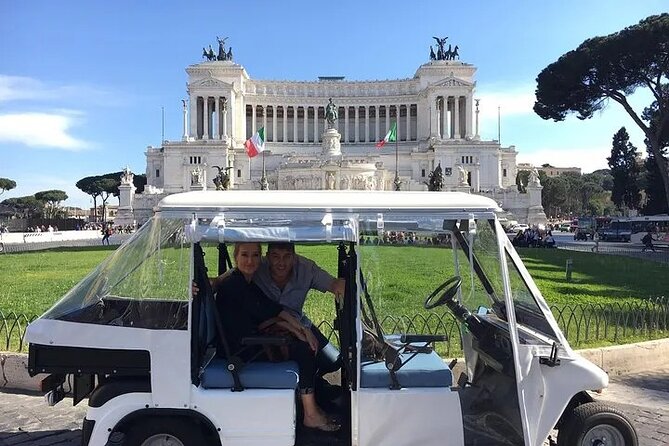
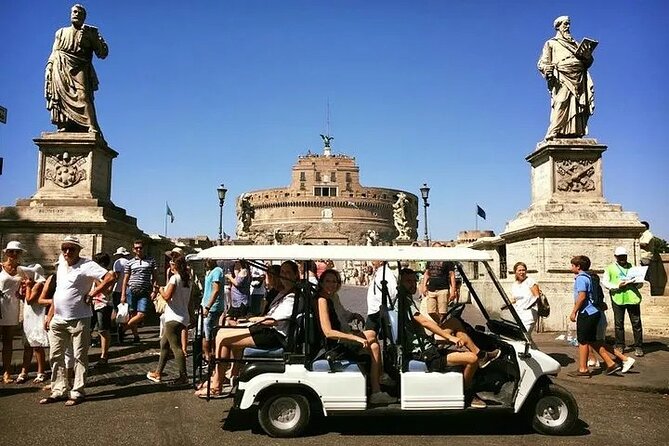
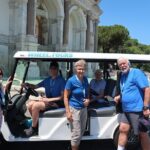
Rome moves fast, but this cart keeps pace. This open-air golf cart tour strings together major Rome sights with time for photos, plus an English-speaking guide who explains what you are seeing while steering you through narrow streets.
I like two things a lot. First, the start is easy: hotel pickup in central Rome (and if you are not central, you use a clear meeting point). Second, the pacing feels built for real life, not just a checklist, with guides who adjust to what you have already seen and how your group is doing.
One thing to watch: audio and pickup clarity can make or break the experience. If your hotel is outside the central zone, you may need to meet at the designated spot, and I would plan to confirm where to go the day before. Also, some carts may not be set up for clear listening, so bring a quick heads-up mindset if you think you might struggle hearing the guide.
In This Review
- Key highlights to know before you go
- Why a golf cart is the smart way to sample Rome fast
- Villa Borghese Gardens, Piazza del Popolo, and that first breath of green
- Augustus, Via del Corso, and the imperial storyline you can actually follow
- Piazza Venezia, Trajan Market, and Circus Maximus: three ways to feel ancient Rome’s size
- Aventine Hill, Bocca della Verità, and Capitoline energy without the chaos
- Piazza Navona to the Pantheon: iconic Rome, timed for breathing room
- Sant’Ignazio, Trevi, and the Spanish Steps: Baroque Rome, in the right order
- Price and logistics: what you are really paying for
- Who should book this Rome golf cart tour?
- Should you book this golf cart tour of the Eternal City?
- FAQ
- How long is the Rome Golf Cart Tour of the Eternal City?
- Is this tour private or shared with other groups?
- Is hotel pickup included?
- Where does the tour meet?
- What language is the tour in?
- Do I need a printed ticket?
- Are admissions included for the stops?
- How far in advance do people usually book?
- What is the cancellation policy?
Key highlights to know before you go
- Golf cart, not tour-bus math: You cover a lot of ground without draining your legs in heavy traffic and long walks.
- Central pickup where available: It saves time at the start, and it also gets you back to the same meeting area.
- A guide who can steer the day: Names like Hadi, Francesco, Pietro, Marco, Sahar, Ivana, Sabrina, Matter, and Gianluca show up in people’s experiences, and many emphasize route tweaks based on the group.
- Photo-friendly stops: The whole route is timed so you can get out, look, and shoot without feeling like you are constantly sprinting.
- A mix of big icons and calmer corners: You get the famous squares and churches, plus parks and viewpoints like Villa Borghese and Giardino degli Aranci.
- Limited to your group: It is not a mega-crowd experience, which makes questions and pacing easier.
Why a golf cart is the smart way to sample Rome fast
Rome is not hard because it is big, it is hard because it is layered. Street after street turns into another era, and you can easily spend your vacation doing logistics instead of sightseeing.
That is where this format helps. The golf cart takes you through tight neighborhoods and gets you closer to sights than you would on foot. It also keeps the day “in motion,” with enough stops that you are not just being transported while looking at monuments from behind glass.
And 3 hours is the sweet spot. It is long enough to build a mental map of the city, but short enough that you still feel human afterward. One practical bonus is that the route includes viewpoint moments like Piazza del Popolo and Giardino degli Aranci, so you get the postcard angles without turning every stop into a climbathon.
If you want one clear goal for the day, make it this: use the tour to learn the geography. After that, you can spend your remaining time in Rome where you actually want to linger.
Filed beside this one, more Vespa, Fiat 500 and golf cart rides in Rome.
- Rome by Golf Cart Private Tour: Beyond the Landmarks
★ 5.0 · 4,361 reviews - Rome on a Golf Cart Semi-Private Tour Max 6 with Private Option
★ 5.0 · 2,502 reviews - Rome Highlights by Golf Cart Private Tour
★ 5.0 · 2,379 reviews - Vespa Sidecar Tour By Night with Pickup
★ 5.0 · 1,803 reviews
Villa Borghese Gardens, Piazza del Popolo, and that first breath of green
You start in the Villa Borghese area, a park complex that covers more than 80 hectares. This is not just “pretty scenery.” It is a reset button. The gardens give you space to breathe before the dense classics of the center.
What to expect here:
- A gentle introduction to Rome’s scale, with lakes, fountains, sculptures, and garden paths.
- A natural lead-in to the Roman habit of combining art, architecture, and outdoors life.
- A good chance to orient yourself for the next sights, especially if you are planning a bigger day later.
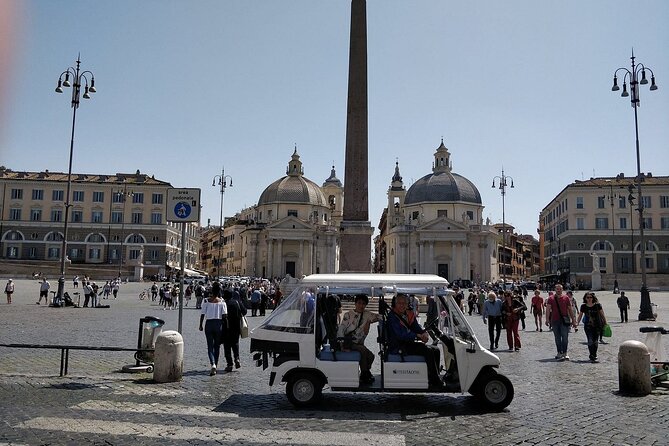
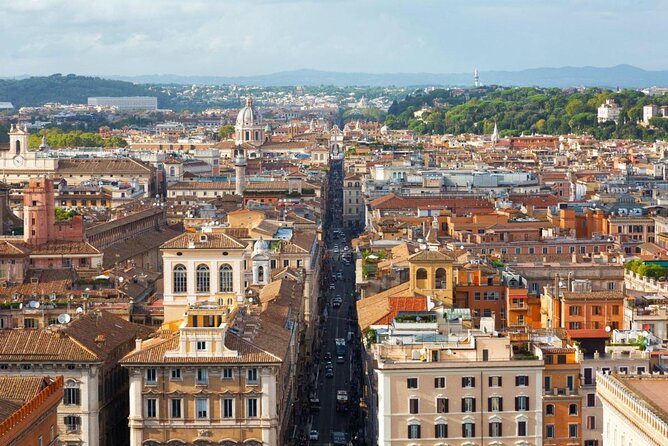
Next comes Piazza del Popolo. It is one of those places that feels dramatic even when you are simply standing there. The square is framed by historic buildings, dominated by an Egyptian obelisk, and backed by viewpoints. The Pincio hill terrace is the kind of stop that helps you understand Rome’s shape, not just its objects.
For photos, this is a smart timing choice. You are arriving at a point where big landmarks “open up” visually, so it is easier to get shots that show both buildings and the sweep of the city.
Augustus, Via del Corso, and the imperial storyline you can actually follow
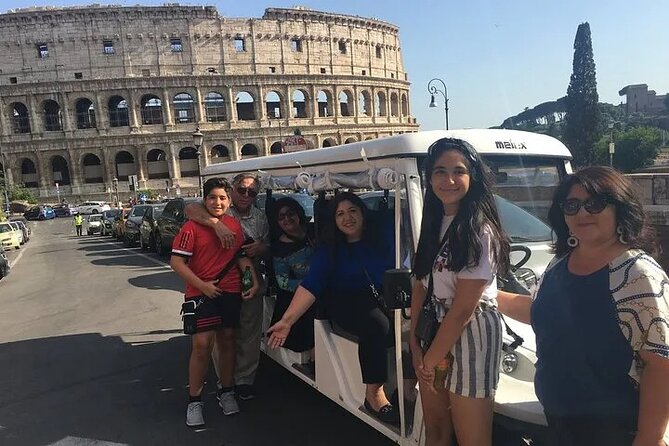
Rome’s “ancient” sites can feel like scattered props if nobody stitches them together. This tour does a decent job of threading the story, starting with the Mausoleum of Augustus.
The Mausoleum of Augustus was built in 28 BC to honor Augustus, the first Roman Emperor. Today, you see a surviving portion of a much larger original structure, and it is set in a peaceful park setting. The real payoff is the museum exhibit approach, which helps you connect the building to who Augustus was and why Rome cared.
Then you cruise along Via del Corso, a classic shopping street running from Piazza del Popolo toward Piazza Venezia. Think of it as your “Rome in motion” segment. It is lined with shops and cafés, and it is also a practical corridor for seeing how the city funnels people between major squares.
From there you get back into hard-core monument mode with the Column of Marcus Aurelius. This tall column, about 38 meters, is carved with a continuous spiral relief depicting the emperor’s military campaigns. If you climb inside for the view, you get a rare perspective, because you are literally inside the artwork as it spirals around.
A note on value here: these short stops are not meant to replace museum visits. They are meant to give you context fast, so when you return later, you know what you are looking for.
Piazza Venezia, Trajan Market, and Circus Maximus: three ways to feel ancient Rome’s size
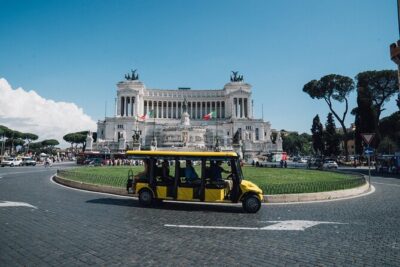
Piazza Venezia is dominated by the Vittoriano, the huge white marble monument tied to King Victor Emmanuel II. Even if you are not into statues, this is a powerful skyline object, and the square is a great hub for understanding why Rome developed as it did. If you climb, you get city views that help everything else click.
Then you step into the imperial world again at Mercati di Traiano, the Trajan Market, part of Museo dei Fori Imperiali. This is a complex built during Trajan’s reign. The reason it impresses is not only its ruins, but the design, including courtyards and underground spaces, plus that long, curved façade look. You also get a sense of Rome as a place where commerce and empire lived side by side.
Next is Circus Maximus. Yes, it is now a public park, but it is still one of the best reminders that Rome was a machine for public spectacle. This chariot-racing stadium could hold up to about 250,000 spectators. Even with parts lost over time, walking the area and looking at how the track works gives you a better feeling for what scale really meant here.
If you tend to get “ancient fatigue,” this section can help because it alternates between monument, architecture, and space. You are not just looking at stone, you are seeing what people did there.
Aventine Hill, Bocca della Verità, and Capitoline energy without the chaos
One of my favorite parts of the route is the pause on Aventine Hill at Giardino degli Aranci, the Orange Gardens. This park is peaceful and scenic, and it gives you a viewpoint angle over the city and toward the Tiber River. It is also famous for citrus trees and for the small keyhole trick. Look through the keyhole at the right spot and you can frame St. Peter’s Basilica in the Vatican. It is a small moment, but it is one you will remember.
Then you head to Bocca della Verità, the Mouth of Truth. It is a circular stone disk in the portico of Santa Maria in Cosmedin, made famous by the legend that it bites liars. On the practical side, it is also a photo moment. Plan for a line if it is crowded, because the point is the silly picture where you place your hand inside.
After that, you move to Piazza del Campidoglio on Capitoline Hill. This is a strong “look back at Rome’s power” stop. Capitoline Hill was a major religious and political center, and the Piazza was designed by Michelangelo. You also get the equestrian statue of Marcus Aurelius, one of the few surviving examples of its kind.
If you like Rome as an outdoor museum, this is one of the best zones on the list. It feels like you are standing in the center of a map the city drew for itself.
Piazza Navona to the Pantheon: iconic Rome, timed for breathing room
Piazza Navona is a lively square built around three famous fountains, including Bernini’s Fontana dei Quattro Fiumi. You also see Sant’Agnese in Agone nearby. Even when you only have a few minutes, this is one of those places where the visual “density” is the show. Buildings wrap the square in a way that makes you feel the city’s theater culture.
Then you hit the big one: the Pantheon. The Pantheon is revered for its dome and the oculus at the top, which brings in natural light and makes the interior feel taller and more alive than the exterior suggests.
This stop is also a timing test. The tour format gives you a short window, so you get the maximum awe-per-minute. One family described getting inside with no waiting, which is a reminder that crowds can vary a lot by day and time. If you care about photos, aim to capture the dome and the interior materials first, then circle slowly once you are inside so the light hits different angles.
If you are planning your own add-on time later, I would use the Pantheon stop to decide what you want to revisit. It is a landmark where you can spend five minutes or an hour, depending on your mood.
Our notebook holds other city tours in Rome if you are still weighing options.



Sant’Ignazio, Trevi, and the Spanish Steps: Baroque Rome, in the right order
After the Pantheon, you shift into Baroque with Chiesa di Sant’Ignazio di Loyola. This is the home of the famous False Dome, a painted trompe-l’oeil effect created by Jesuit artist Andrea Pozzo. The payoff is how convincing it feels once you are inside, even though the dome illusion is on a flat surface.
The church also includes gilded decoration and fresco work. This is one of those stops where even a quick look makes sense because you can see the artistic trick without needing a long lecture.
Then it is off to Trevi Fountain. The fountain is famous for its sculptures and the coin-toss tradition. You will see people throwing coins while the fountain area stays active. It is crowded, but it is also genuinely beautiful, and it is worth standing close enough to see the stonework details.
Finally, Piazza di Spagna and the Spanish Steps. This is a classic Rome lounge position, 138 steps connecting Piazza di Spagna to Trinità dei Monti. Even when you are not climbing, sitting on the edges gives you the best people-watching perspective. Flowers often line the scene, and you get broad views of nearby architecture plus the Barcaccia fountain at the base.
As a bonus, one highlight from guide-style experiences is that some guides plan food and gelato stops around your interests. If you want a treat, this is a good moment to ask, since the area is perfect for a quick pause.
Price and logistics: what you are really paying for
At $160.91 per person for about 3 hours, you are not buying a cheap sightseeing bus ride. You are paying for three things at once:
- Transportation in a form that handles Rome’s narrow streets well
- An English-speaking guide who translates monuments into meaning
- Time efficiency, meaning fewer long walks and less wasted repositioning
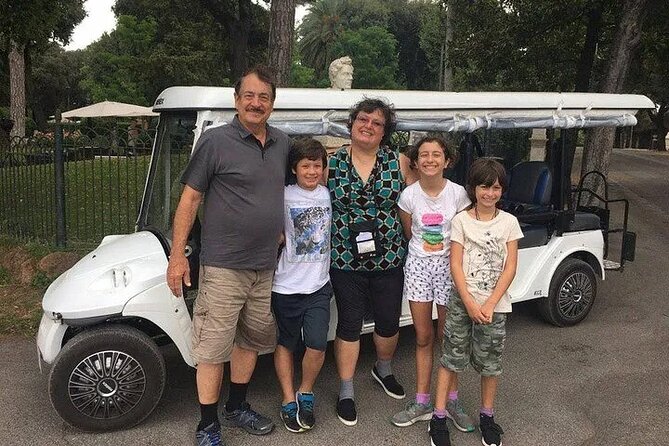
For families with kids, grandparents, or anyone with limited stamina, the value can jump fast because the golf cart removes a lot of the “we have to get there first” burden. More than one experience noted how this helped elderly family members feel comfortable and keep moving without feeling wrecked.
But here is the balanced part. The tour’s success depends on two logistics pieces: pickup and how well you can hear. Central pickup is a big win. If your hotel is outside the central area, you might have to meet at a designated location in Rome. That can turn frustrating if you show up at the wrong place or assume the driver will find you automatically.
So my practical advice is simple:
- Confirm where to meet the day before if you are outside central Rome.
- Give yourself buffer time at the start point.
- If audio is a concern for you, bring it up quickly so the guide can adjust.
Who should book this Rome golf cart tour?
Book it if you want an efficient first pass through Rome’s major sights without turning your trip into a step-count challenge. It is especially well matched to:
- First-time visitors who need a fast map of where everything is
- Families juggling different energy levels
- Anyone who wants stories and context while still getting time for photos
- Groups who prefer a private format rather than a large crowd
Pass or consider another option if you need long, unhurried time inside major museums and would rather not handle short stops. This is structured for breadth and orientation, not for deep museum immersion.
Should you book this golf cart tour of the Eternal City?
Yes, if your main goal is Rome orientation plus iconic highlights in a short window. The best version of this tour is when your guide keeps the day smooth, your group stays engaged, and you use the stop times to frame what you want to see in more detail later.
If you are sensitive to hearing the guide or your pickup logistics are complicated, do a quick sanity check before you go. Once those pieces are handled, this is a fun, photo-friendly way to get the big Roman feeling in a single afternoon.
FAQ
How long is the Rome Golf Cart Tour of the Eternal City?
The tour is approximately 3 hours.
Is this tour private or shared with other groups?
This is a private tour/activity. Only your group will participate.
Is hotel pickup included?
Pickup is offered from a central Rome hotel. If your hotel is outside the central area, you will be required to meet at the designated meeting point or another central location.
Where does the tour meet?
The start point is Piazzale delle Canestre, SNC, 00197 Roma RM, Italy, and the activity ends back at the meeting point.
What language is the tour in?
The tour is offered in English.
Do I need a printed ticket?
No. The tour offers a mobile ticket.
Are admissions included for the stops?
The listed stops show admission ticket free.
How far in advance do people usually book?
On average, it is booked 62 days in advance.
What is the cancellation policy?
Free cancellation is available up to 24 hours in advance of the experience for a full refund.
Our Wider Tours File for Rome
Other Vespa, Fiat 500 and Golf Cart Rides in Rome From Our Notebook

Not quite the day you had in mind? The rest of our Rome write-ups sit below
- Rome: Guided Tour of St. Peter’s Dome Climb, Basilica & Vatacombs★ 5.0 · 167 reviews
- St. Peter’s Basilica Guided Tour with Reserved Entrance★ 4.0 · 168 reviews
- Golf Cart Driving Tour in Rome: 2.5 hrs Catacombs & Appian Way★ 5.0 · 168 reviews
- Rome: Trastevere Wine Tasting with Food Pairing and Gelato★ 4.9 · 168 reviews
- Guided Tour of the Colosseum Palatine Hill and Roman Forum★ 4.7 · 168 reviews
- Vatican Museums, Sistine Chapel & Saint Peter’s Semi-Private Tour★ 4.5 · 169 reviews
- Hidden Rome: Small Group E-Bike Tour with Street Food Stops★ 5.0 · 169 reviews
- Rome: Papal Audience with Pope Leo IV★ 3.9 · 169 reviews
- Rome Golf Cart Tour: Highlights & Must See★ 4.5 · 170 reviews
Vespa, Fiat 500 & Golf Cart Tours, top to bottom.
 ★ 5.0Rome by Golf Cart Private Tour: Beyond the LandmarksFrom $1804,361 reviews
 ★ 5.0Rome on a Golf Cart Semi-Private Tour Max 6 with Private OptionFrom $1682,502 reviews
 ★ 5.0Rome Highlights by Golf Cart Private TourFrom $1632,379 reviews
 ★ 4.5Golf Cart Tour to Fiesole Roman Theatre and MuseumFrom $952,039 reviews
 ★ 4.6Florence: Eco-Friendly Golf Cart City Tour with Audio GuideFrom $671,094 reviews
 ★ 5.0Rome Highlights City Tour by Golf Cart with GelatoFrom $1071,088 reviews
 ★ 5.0Golf Cart Small-Group Guided Tour: Rome City HighlightsFrom $104907 reviews
 ★ 4.8Rome: City Highlights Golf Cart TourFrom $45857 reviews