
Reviewed · VESPA, FIAT 500 & GOLF CART TOURS
Rome: Private/Group 4 Hours Golf Cart SightseeingTour
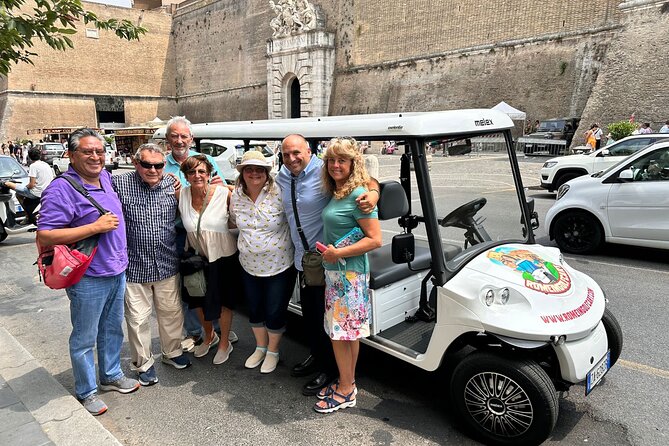
Four hours, Rome in motion. This deluxe golf-cart sightseeing tour is built for first-timers and time-crunch visits, with a fast route that hits the big-name sights plus lesser-seen streets. I love the time saved compared with walking and line-chasing, especially around Piazza Navona and Trevi Fountain. I also like having a local guide-driver at the wheel, but plan for one snag: entrance tickets are not included, and ID may be required for Colosseum and Roman Forum checks.
If you start downtown, pickup can make the whole thing feel effortless. And because the carts can slip into tight roads, you get a Rome experience that feels closer to the city’s neighborhoods, not just a checklist.
In This Review
- Key things to know before you ride
- Why Rome by golf cart feels like the smart shortcut
- The 4-hour pacing: what you see, what you skip, and why it works
- Pantheon to Piazza Navona: first hits, easy wins
- Trevi Fountain: 30 minutes to get your photos done
- Roman Forum area and Teatro di Marcello: ancient Rome without the all-day commitment
- The best viewpoints: Circus Maximus, Palatine Hill, and Colosseum-area panoramas
- Via Giulia: the street that feels like a shortcut to the Renaissance vibe
- Piazza di Spagna and the steps: a classic stop with real time to enjoy it
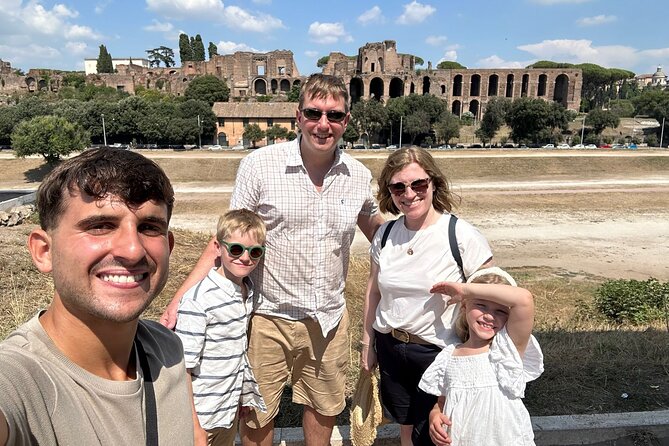
- Circo Massimo and the Palatine Hill area: big scale, quick payoff
- Guides and drivers: why the person matters as much as the route
- What’s included, what’s not, and how to pack for a comfortable day
- Price and value: is $168.09 per person worth it?
- Who this golf-cart Rome tour is best for
- Should you book this Rome golf-cart sightseeing tour?
Key things to know before you ride
- Built for a first-day orientation: you get your bearings fast, then you can plan the rest of your trip with more confidence.
- Cart views from near the action: you’ll see fountains, forums, and viewpoint panoramas without the strain of constant walking.
- Back-street flavor: Via Giulia is a highlight, and it is framed as a street experience you can only really get from the cart.
- Photo stops get real time: you spend actual minutes at places like Piazza di Spagna and the Circus Maximus and Palatine Hill overlook.
- Guide-driver energy matters: several guides in past tours, like Valerio, Eduardo, Francesco, and Achille, are praised for pacing and storytelling.
Why Rome by golf cart feels like the smart shortcut
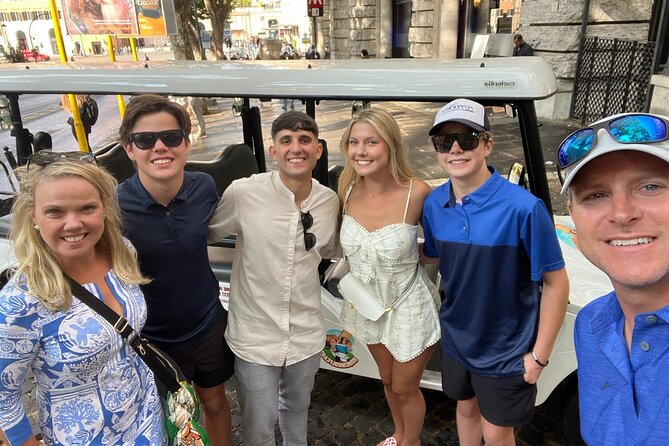
Rome has a weird talent for making even short distances feel long. That is exactly where a golf cart helps. In a few hours you cover a lot of ground, while still stopping often enough to actually look, take photos, and soak in details.
The best part is that the cart does not just move you from landmark to landmark. It also changes how you experience the city. When you can roll past buildings at street level and stop at specific viewpoints, Rome stops feeling like a museum you rush through and starts feeling like a living place.
This tour also gives you a practical advantage on any itinerary: it helps you understand where things are. After riding past the Pantheon, Trevi, the Roman Forum area, and the hills around Palatine, you will know what is close to what. That makes your next days easier.
Filed beside this one, more Vespa, Fiat 500 and golf cart rides in Rome.
- Rome by Golf Cart Private Tour: Beyond the Landmarks
★ 5.0 · 4,361 reviews - Rome on a Golf Cart Semi-Private Tour Max 6 with Private Option
★ 5.0 · 2,502 reviews - Rome Highlights by Golf Cart Private Tour
★ 5.0 · 2,379 reviews - Vespa Sidecar Tour By Night with Pickup
★ 5.0 · 1,803 reviews
The 4-hour pacing: what you see, what you skip, and why it works
This is about balance, not completeness. You are not spending an entire afternoon inside ruins. You are spending a focused half-day outside, soaking in the best angles and most recognizable backdrops.
Here is how that usually feels in real life. You start with the Pantheon area, then you move into classic central Rome stops like Piazza Navona and Trevi Fountain. After that, you transition toward the ancient core, with the Roman Forum and Teatro di Marcello. Then you shift to high-impact panoramas around Circus Maximus and the Palatine Hill area, plus scenic streets like Via Giulia and the steps at Piazza di Spagna.
The upside is obvious: you do not exhaust yourself before you even start your real sightseeing. The tradeoff is also clear: you are mainly seeing sights from the outside, and entrance is not included.
Pantheon to Piazza Navona: first hits, easy wins
You kick off near Piazza della Trinità dei Monti and hit the Pantheon area early. Even if you have seen photos before, the Pantheon has a way of resetting your expectations. It is one of those spots where scale and symmetry make an immediate impression.
From there, you head to Piazza Navona for about 15 minutes. This is a great “settle in” stop. The square has that stage-like feel, with fountains and baroque buildings framing the space. It is also one of the best places to start building your photo instincts for the rest of the day, because you can get wide shots quickly.
A small caution: Piazza Navona is famous for a reason, so it can feel busy. The cart helps you arrive and depart smoothly, but you still want to keep your eyes open for pickpockets and keep your phone zipped away when you are moving.
Trevi Fountain: 30 minutes to get your photos done
Trevi Fountain is next, with about 30 minutes. That is long enough to do the basics properly: walk in close, grab a few angles, and still have time to step back for the bigger composition.
This stop is also marked as free, which is helpful. You can plan your day without worrying about ticket timing or entry lines. The cart also keeps you from getting stuck in the “everything on foot” trap that can slow down first-time sightseeing.
If you want my practical take, use the first part of your time for the close-up views, then save a bit for a wider angle. Trevi changes a lot depending on where you stand, and spending a little extra attention there pays off later when you look back at your photos.
Roman Forum area and Teatro di Marcello: ancient Rome without the all-day commitment

After Trevi, you move toward Foro Romano for about 15 minutes. This is one of the most dramatic parts of Rome to see, even from street level. You get a sense of how the Forum worked as a stage for power, religion, and daily public life.
Important practical point: entrance is not included. Also, the tour information notes that each traveler must present valid ID documentation that matches the name on the booking for successful entry to the Colosseum and Roman Forum. That means if you plan to go inside later, bring the ID you were asked to use.
Next is Teatro di Marcello for about 10 minutes. The way it is positioned is part of the value. It is described as a “Colosseum little brother,” and it sits near the start of the Jewish Quarter. That matters because it gives you context for the city as a layered place, not just ancient ruins set apart from everything else.
The best viewpoints: Circus Maximus, Palatine Hill, and Colosseum-area panoramas
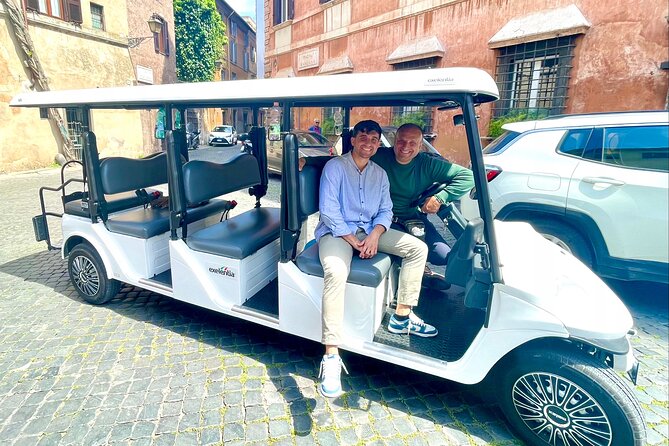
This is where the golf cart really earns its keep. You are given stops with viewpoint focus, including an overlook above Circus Maximus and Palatine Hill. You are also taken to a panoramic stop aimed at getting you pictures of the Colosseum Arena.
These are the moments that help you connect the dots. From the cart, you can see how hills, stadium spaces, and major monuments relate to each other. It is also when Rome starts looking like a map you can understand.
One heads-up: viewpoint spots can be affected by weather and crowds. If the day is windy, hot, or packed, prioritize photos first, then take a second look. The carts make it easy to move on, so you do not lose time waiting around.
And yes, these stops are mentioned as great for photos. If you like taking your time, the pacing here is flexible enough to let you get your shot without sprinting.
The same shortlist carries more private tours in Rome.



Via Giulia: the street that feels like a shortcut to the Renaissance vibe
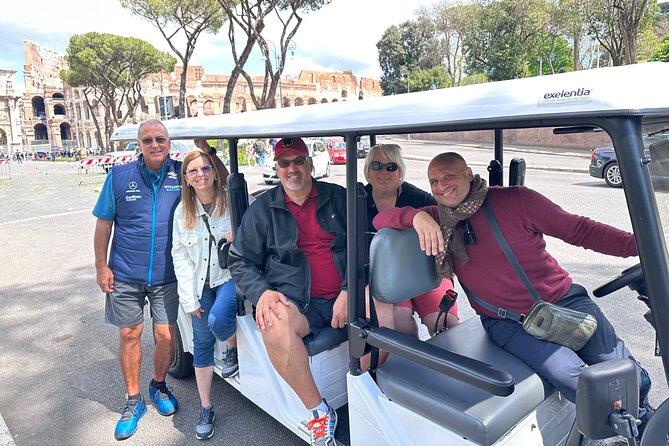
Via Giulia is one of the stops that feels different because it is not only about an individual monument. It is about street character. You get about 10 minutes, and the description frames it as a backstreet experience designed with Renaissance in mind.
The special part, per the tour framing, is that it is only available on board of the golf cart. That makes sense. Narrow streets and tight corners can turn “walking tours” into painful shoe tests. From the cart, you get the look and feel of the street without turning it into an obstacle course.
If you are the type who likes little courtyards, doorways, and unexpected angles, this is your calm, visual break. It is the portion of the ride that helps Rome feel human again, not just monumental.
Piazza di Spagna and the steps: a classic stop with real time to enjoy it
Piazza di Spagna comes next for about 20 minutes. This is where Rome shows its softer side: elegant buildings, the famous staircases, and a scene that feels like it belongs in a movie.
You do not need to rush here. Twenty minutes is enough time to get your main photos from different angles, then step back and watch the square for a moment. This is also a good time to re-check your energy level, because the rest of the day shifts more toward ancient stadium and hill views.
Circo Massimo and the Palatine Hill area: big scale, quick payoff
Circo Massimo is a short stop of about 10 minutes. It is one of those places where Rome’s scale is almost hard to grasp until you see it in context. This was a chariot-racing stadium and a major entertainment venue, and the setting makes it feel grand even when you are not going inside.
Then you finish with Palatine Hill, described as one of the most ancient parts of Rome, linked to the earliest nucleus of the Roman Empire. Like the other major stops, entrance is not included, so you are mainly getting the experience through views and the general setting.
The value here is continuity. By the time you reach Palatine, you have already seen Trevi’s central drama, the Forum area’s ancient core, and the viewpoint stops tying Circus Maximus to what comes next. That makes the final hill stop land with more meaning.
Guides and drivers: why the person matters as much as the route
One of the strongest patterns in the tour feedback is the guide-driver effect. People repeatedly name different guides, including Valerio, Eduardo, Francesco, Michael, David, Pietro, Pierre, Achille (and Achille’s spelling variants), Kalib, Eddie, and Peter. Across those names, the common threads are pacing, clear English, and smart stops for photos.
What that means for you: this is not the kind of tour where you sit and listen passively for hours. You are moving through the city, and the guide’s job is to help you notice what you would miss on your own.
It is also why you should pay attention to timing once you are seated. If your guide suggests a photo angle or tells you where to stand, you will usually save time later when you sort your pictures.
What’s included, what’s not, and how to pack for a comfortable day
Included:
- Tour in a Deluxe Golf Cart
- A professional local guide, who will also be your driver
Not included:
- Food and drinks
- Entrance to the attractions
So you should plan your day as an outdoor sightseeing ride. Bring water, and dress for the weather. The tour also notes that it requires good weather, so if the forecast is rough, expect changes.
If you plan to enter any major sites later that day, remember the tour’s ID reminder. Each traveler needs valid ID documentation matching the name provided at booking for Colosseum and Roman Forum entry checks. Even if you are mostly viewing from outside during the cart portion, having that ID ready prevents headaches.
Price and value: is $168.09 per person worth it?
At $168.09 per person for about four hours, this is not a bargain-bin activity. But it is also not trying to sell you “cheap.”
The value comes from three things:
- You get transportation that covers a lot of central Rome without long walks.
- You get a guide who drives and explains in real time, not just a printed audio track.
- You get short stops that help you see multiple major areas in one day, which is especially useful if Rome is a quick stop for you.
If you would otherwise spend your precious first day walking between Pantheon, Piazza Navona, Trevi, and then pushing toward the ancient core, the cart can reduce fatigue and help you keep your sightseeing momentum. For many people, that is worth more than a little extra cost.
Where it may not be worth it: if you are staying for a long time and you love slow travel and deep museum time, you might prefer to build a DIY route and spend your money on entrances instead.
Who this golf-cart Rome tour is best for
This fits best if any of these are true:
- You are in Rome for the first time and want to get your bearings fast.
- You want major sights and great photo angles without exhausting yourself.
- You have limited time and want a simple plan that covers a lot of ground.
- You want a guided day that includes classic icons and some back-street flavor.
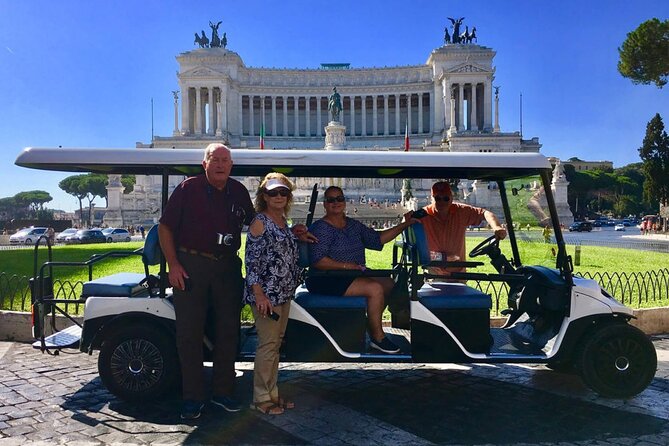
It also tends to work well for families and mixed groups because the cart reduces walking demands while keeping everyone engaged at stops.
Should you book this Rome golf-cart sightseeing tour?
Book it if you want a smart, time-saving Rome introduction with plenty of viewpoints and a local guide-driver who keeps the day moving. This is especially useful for day of arrival or for a first-half-day plan, because it helps you understand the city layout quickly.
Skip it if you are primarily chasing indoor ruins and long ticketed visits, because entrance is not included and the stops are short. In that case, you may be better off spending your budget on a focused museum or site ticket plan.
If you fall somewhere in the middle, this is one of the easiest ways to make Rome feel big and manageable at the same time.
Private Tours in Rome Worth Weighing Up


Other Vespa, Fiat 500 and Golf Cart Rides in Rome From Our Notebook

Not quite the day you had in mind? The rest of our Rome write-ups sit below
- Rome: Guided Tour of St. Peter’s Dome Climb, Basilica & Vatacombs★ 5.0 · 167 reviews
- St. Peter’s Basilica Guided Tour with Reserved Entrance★ 4.0 · 168 reviews
- Golf Cart Driving Tour in Rome: 2.5 hrs Catacombs & Appian Way★ 5.0 · 168 reviews
- Rome: Trastevere Wine Tasting with Food Pairing and Gelato★ 4.9 · 168 reviews
- Guided Tour of the Colosseum Palatine Hill and Roman Forum★ 4.7 · 168 reviews
- Vatican Museums, Sistine Chapel & Saint Peter’s Semi-Private Tour★ 4.5 · 169 reviews
- Hidden Rome: Small Group E-Bike Tour with Street Food Stops★ 5.0 · 169 reviews
- Rome: Papal Audience with Pope Leo IV★ 3.9 · 169 reviews
- Rome Golf Cart Tour: Highlights & Must See★ 4.5 · 170 reviews
Vespa, Fiat 500 & Golf Cart Tours, top to bottom.
 ★ 5.0Rome by Golf Cart Private Tour: Beyond the LandmarksFrom $1804,361 reviews
 ★ 5.0Rome on a Golf Cart Semi-Private Tour Max 6 with Private OptionFrom $1682,502 reviews
 ★ 5.0Rome Highlights by Golf Cart Private TourFrom $1632,379 reviews
 ★ 4.5Golf Cart Tour to Fiesole Roman Theatre and MuseumFrom $952,039 reviews
 ★ 4.6Florence: Eco-Friendly Golf Cart City Tour with Audio GuideFrom $671,094 reviews
 ★ 5.0Rome Highlights City Tour by Golf Cart with GelatoFrom $1071,088 reviews
 ★ 5.0Golf Cart Small-Group Guided Tour: Rome City HighlightsFrom $104907 reviews
 ★ 4.8Rome: City Highlights Golf Cart TourFrom $45857 reviews
Filed under