
Reviewed · VATICAN MUSEUMS & SISTINE CHAPEL
Rome: Vatican Museum and Sistine Chapel Skip-the-Line Tour
Michelangelo is easier to enjoy with a guide. This Vatican Museums and Sistine Chapel skip-the-line tour is interesting because it compresses the essentials into a tight route, with context you can actually use.
I love the headset setup, especially in rooms that swallow your voice and attention. I also love how guides like Marco C. and Sabina point out small but meaningful details in the Sistine Chapel before you see the ceiling for yourself.
One possible drawback is the pace. It is a busy place, so even with skip-the-line access, you may feel time pressure, and the special route between the Sistine Chapel and St. Peter’s Basilica can be affected, especially on Wednesdays.
In This Review
- Key things that make this Vatican tour worth it
- Why this skip-the-line route feels smarter than wandering
- Meeting point, tour start, and how to not get lost
- Vatican Museums: the highlights you’ll actually remember
- Raphael Rooms and what they add to your visit
- Belvedere courtyard: Apollo Belvedere and Laocoön
- Pinecone Courtyard and the big gallery rooms
- The Sistine Chapel: what to do with your 45 minutes
- Use the prep to change how you look
- A note for Jan to March 2026
- St. Peter’s Basilica: skipping the line, plus a 120-year story
- Important timing detail: not all tours include the basilica
- Wednesday route changes
- You might get extra basilica time on the spot
- Guide style, headsets, and the crowd problem
- Why the guide matters more than you think
- Dress code and rules: what to wear so you don’t get blocked
- Price and value: is $79 a smart deal for 3 hours?
- Who should book this Vatican tour, and who might want a different plan
- Should you book this Rome: Vatican Museum and Sistine Chapel skip-the-line tour?
Key things that make this Vatican tour worth it
- Skip-the-line entry into the Vatican Museums and a guided route designed for first-time priorities
- Guided prep for the Sistine Chapel, then time to look carefully on your own
- Classic sculpture stops like Apollo Belvedere and the Laocoön group in the Belvedere courtyard
- A route through big galleries such as Maps, Candelabra, and Tapestries
- Headsets to keep you connected to the guide during crowded transitions
- St. Peter’s Basilica access rules that vary by start time, plus a Wednesday closure note for the passage
Why this skip-the-line route feels smarter than wandering
The Vatican Museums are famous for one thing: lines. This tour aims to remove the worst part of the day, the queue you do not want to waste. After you meet your guide, you skip the ticket line and move straight into the galleries with a plan.
What makes this feel especially practical is that the tour is built around viewing priorities, not just a random walk. You hit the main landmarks in a sensible order, including major highlights that most people miss without a strategy. And because it is guided, the art comes with context, stories, and what to notice as you look.
That context matters. When you only have a few hours, you want your brain to know what it is seeing. That is the difference between standing under ceiling-sized paintings and really understanding what you are looking at.
We wrote up further Vatican Museums and Sistine Chapel tours in Rome on the same pass through the archive.
- Vatican Museums & Sistine Chapel Tour with Optional Basilica
★ 4.3 · 67,413 reviews - Vatican Museums, Sistine Chapel & St Peter’s Basilica Guided Tour
★ 4.5 · 39,149 reviews - Rome: Vatican Museums, Sistine Chapel & Basilica Tour
★ 4.3 · 13,872 reviews - Vatican Museums & Sistine Chapel Skip-the-Line Entry Ticket
★ 4.4 · 13,838 reviews
Meeting point, tour start, and how to not get lost
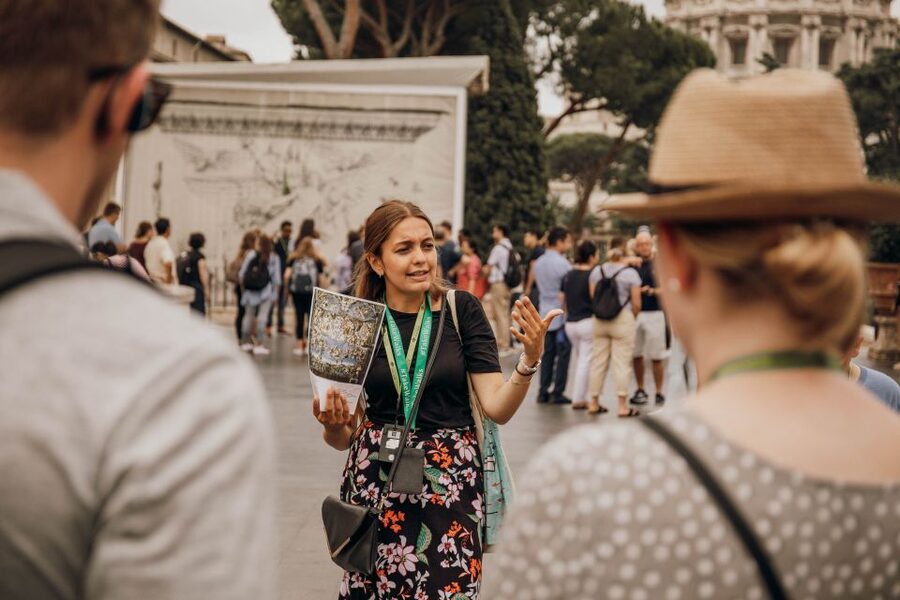
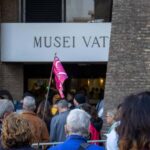
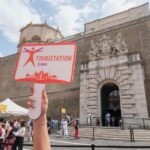
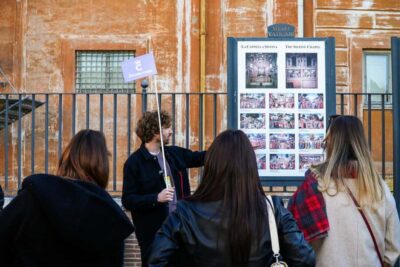
This tour uses one simple meeting system with a clear sign: your guide holds a green Walks sign at the start point.
Depending on the date, the meeting location changes:
- Until February 28: Antico Caffè Candia, Via Candia, 153, 00192 Roma RM
- From March 1 onward: Touristation Cappella Sistina, Viale Vaticano 95, 00192 Roma RM
Either way, plan to arrive a bit early. In this area, you can lose minutes just by walking the wrong direction or getting turned around by crowds.
Also note the tone of the tour. It is not a slow, museum stroll. You are moving, following the guide, and transitioning from one major site to the next.
Vatican Museums: the highlights you’ll actually remember
The day starts in the Vatican Museums, with a guided visit through a route designed to include the can’t-miss works and a few lesser-known pieces that can surprise you. Your guide is English-speaking and certified, and the goal is to help you understand what you are seeing, not just admire it silently.
A few stops are worth highlighting because they shape the feel of the visit:
Raphael Rooms and what they add to your visit
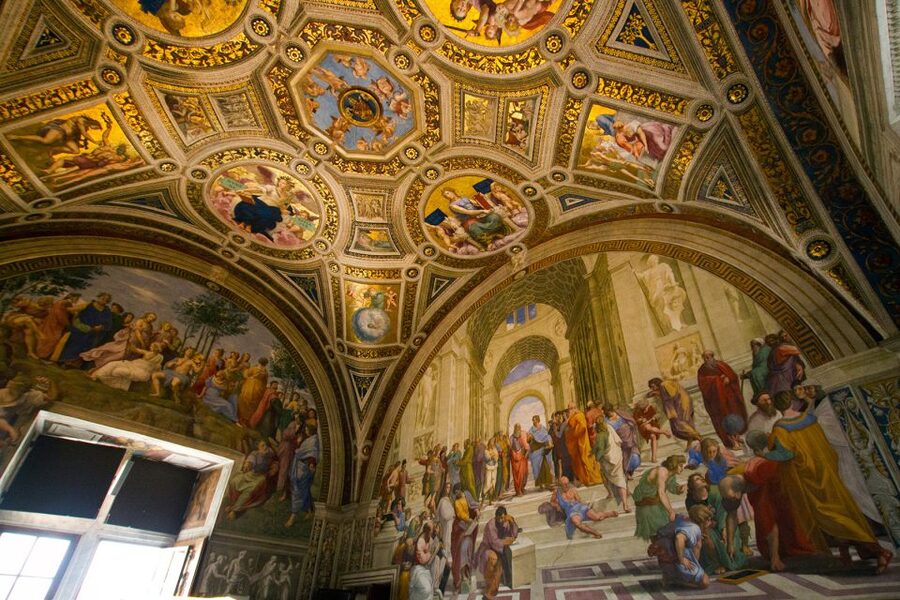
You spend time in the Raphael Rooms. This is one of those areas where the museum stops being only about objects and starts feeling like a designed visual world. The guide’s job here is to give you a way to read the artwork, so you know what you are looking at and why it mattered to the people who commissioned it.
Even in a short time, this stop works because the guide connects it to bigger themes in Vatican art and Renaissance thinking.
Belvedere courtyard: Apollo Belvedere and Laocoön
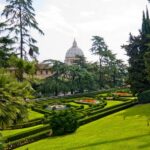
In the Belvedere courtyard, you see Apollo Belvedere and the Laocoön group. These are the kinds of statues that look impressive from a distance, but become memorable when someone points out details up close, like how the forms communicate emotion and action.
Without that guidance, you can end up doing the tourist thing, a quick glance and a photo, then moving on. With a guide, you slow down mentally even if you still move physically.
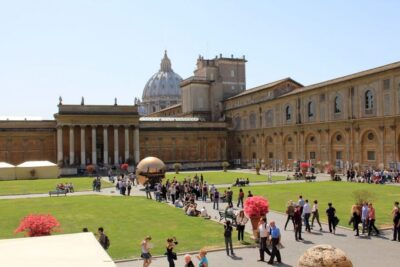
Pinecone Courtyard and the big gallery rooms
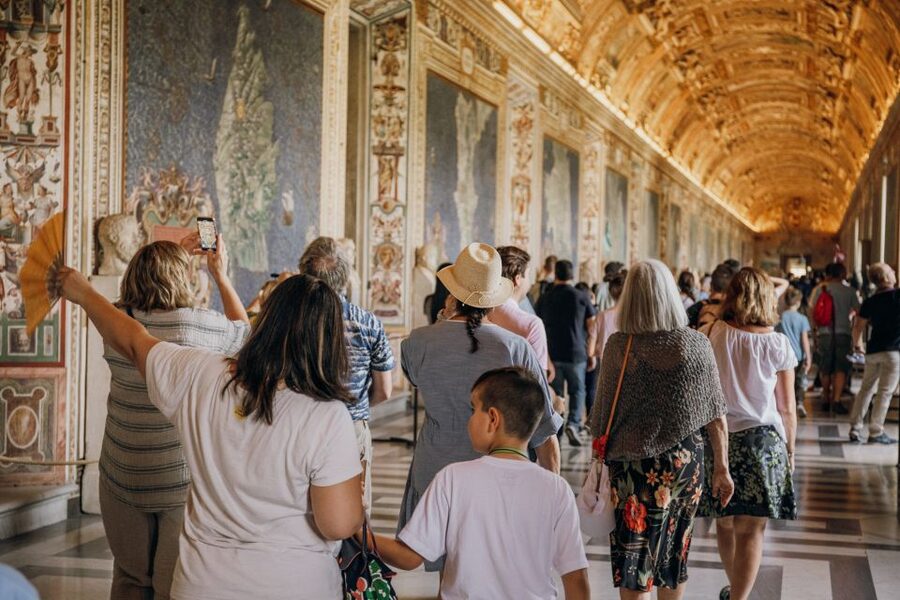
The route continues through courtyards like the Pinecone Courtyard, plus long galleries such as:
- Gallery of the Candelabra
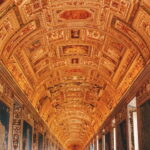
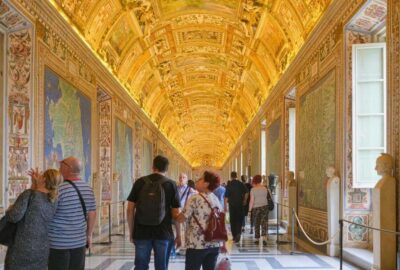
- Gallery of the Maps
- Gallery of the Tapestries
These spaces help you feel how the Vatican Museums work as a total experience. You are not only looking at famous names. You are walking through different types of artistic display, including rooms that use decoration as a visual system.
One thing I like about this setup is that it prevents museum burnout. You are constantly switching between sculpture and room-scale artworks, which keeps your attention from fading.
Kept in the same folder as this one, museum visits in Rome.
The Sistine Chapel: what to do with your 45 minutes
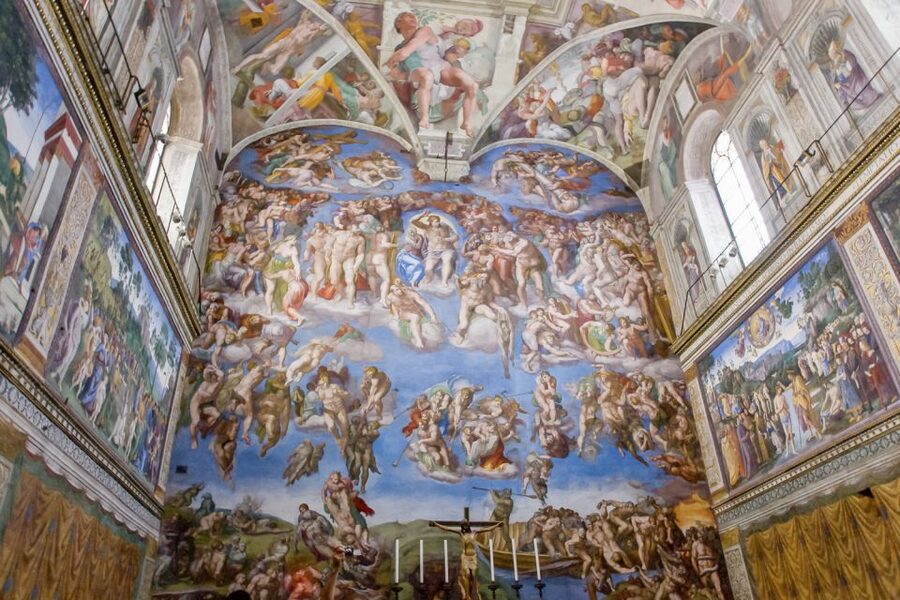
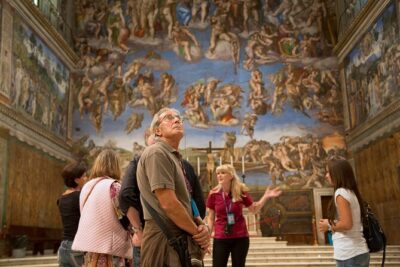
The Sistine Chapel is the piece-de-resistance, and the tour does a smart thing before you go in: it prepares you. Your guide gives stories behind the creation of the frescoes and explains what the scenes mean, so when you enter, you can look with purpose.
Then you have about 45 minutes of free time inside the chapel, guided prep in your head. That is key. The tour is not only about hearing. It also gives you space to look.
Small details can make or break this experience, and the guide helps you spot them. You may be directed toward things like Michelangelo’s self-portrait, and the tour includes guide commentary about what you are seeing and why those choices mattered.
Also, be ready for the reality of the chapel rules. Speaking is not allowed inside. You’ll need to keep your voice down and let your eyes do the work.
Use the prep to change how you look
Here is the practical trick I recommend: before you go in, listen for two or three things you want to confirm visually. During your free time, scan upward and check those points first. Once you find the scenes your guide mentioned, the rest clicks into place faster.
This is how the chapel turns from a famous moment into an actual experience.
A note for Jan to March 2026
Between January 12 and March 31, 2026, the Vatican Museums run a preservation project focused on Michelangelo’s Last Judgment. The Sistine Chapel stays open, but the fresco is temporarily covered by scaffolding during this period.
If your trip overlaps those dates, expect that Last Judgment may not be fully visible. The good news is you should still be able to experience the chapel and its other frescoes as usual.
St. Peter’s Basilica: skipping the line, plus a 120-year story
After the Sistine Chapel, you follow your guide through a special groups-only door and continue to St. Peter’s Basilica, skipping the long line outside. Your guide then points out precious art and shares the story behind the church’s 120-year construction.
This is a different mood from the museums and chapel. The Vatican shifts from museum-format art viewing to a living religious space where architecture and symbolism are front and center.
Important timing detail: not all tours include the basilica
St. Peter’s Basilica is not included on 4 pm and 4:15 pm tours. If you care about going inside, double-check your start time before booking.
Wednesday route changes
The special access passage between the Sistine Chapel and St. Peter’s Basilica is closed on Wednesdays and can also close unexpectedly. When that happens, the tour offers a more in-depth tour of the Museums instead, and refunds or discounts are not provided.
If you are traveling on a Wednesday, I’d treat it like a plan B day. You can still have a great experience, but you should expect the flow of the day to change.
You might get extra basilica time on the spot
One participant described a quick detour into the basilica crypt area. That sounds like something your guide may do depending on the moment and timing. The main point: the guide is actively managing what you can access while the day stays on schedule.
Guide style, headsets, and the crowd problem
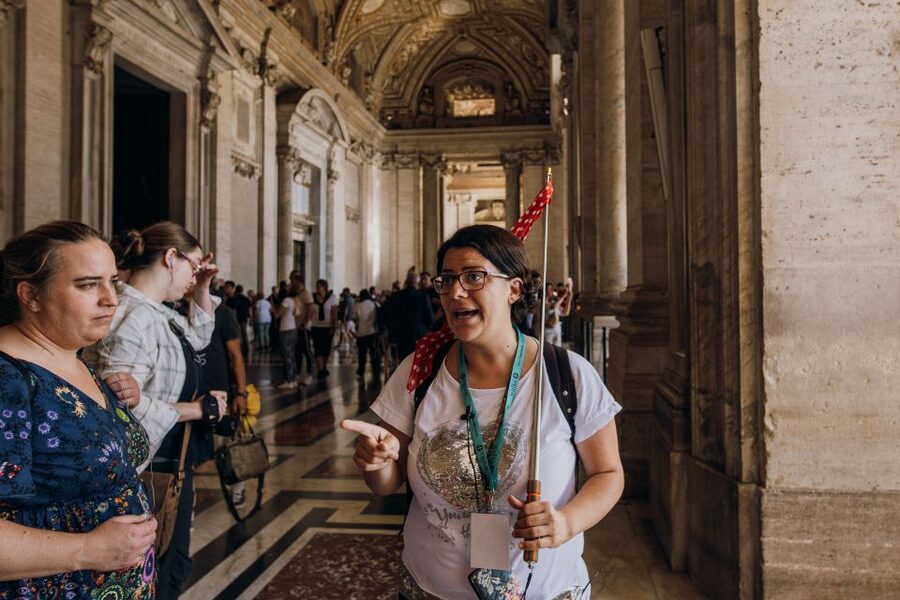
This tour works because it handles the crowd stress. Headsets are included, which means you can follow the guide even when the Vatican is doing what it always does, lots of people and lots of noise.
Most people mention smooth headset use. Still, one downside came up: on at least one visit, it was hard to hear the guide through the headphones. So if you are sensitive to audio quality, arrive with a calm expectation, and be ready to adjust the headset if needed.
Why the guide matters more than you think
There’s a pattern in the high ratings: people remember not just the art, but the delivery. Guides like Gigi, Fabio, Christina, Jeb, Barbara, Luigi, Mario, and John are repeatedly praised for being funny, animated, and packed with stories.
That matters because in three to three and a half hours, you cannot learn everything. But you can leave with understanding, especially if the guide helps you connect the dots between Catholicism, Renaissance art, papal politics, and the day-to-day operation of Vatican City.
If you are a first-timer, this is the best use of your time.
Dress code and rules: what to wear so you don’t get blocked
This tour is straightforward about what you can bring and wear, and it is not flexible on the big items.
Bring:
- Passport or ID card
- Long pants
- Long-sleeved shirt
Not allowed:
- Shorts
- Short skirts
- Sleeveless shirts
- Luggage or large bags
- Drinks
- Umbrellas
- Weapons or sharp objects
And one more practical reality: this is not a stroller-friendly or wheelchair-friendly experience. It is also not suitable for mobility impairments.
If you are traveling with any equipment, plan to leave it behind. Wear comfortable shoes and long sleeves that fit the rules.
Price and value: is $79 a smart deal for 3 hours?
At about $79 per person for a roughly 3 to 3.5 hour guided experience, you are paying for three things:
- Time saved by skipping the ticket lines
- Interpretation saved because someone explains what you are seeing
- Stress saved with headsets and crowd management
If you try to do Vatican Museums and the Sistine Chapel on your own, you will spend a lot of that 3 to 3.5 hours just waiting, then scrambling to decide where to go next. Here, you are buying a guided route that targets the biggest stops while also including some curveballs, like specific sculpture groups and galleries that many people bypass.
Is it expensive? It can feel so, especially if you are the type who likes slow, wandering museum time. But if you want your Vatican visit to feel like you understand it, not just survive it, the price starts looking fair.
Also, note that heavy crowds can stretch the experience. Some participants described finishing closer to 3.5 hours or even around 4 hours, depending on congestion. Either way, you are still getting the essential guided sequence.
Who should book this Vatican tour, and who might want a different plan
This works best for you if:
- You have limited time in Rome and want the key Vatican stops
- You like art with explanations, not just photos
- You want someone to steer you through the crowds safely
- You prefer a structured route rather than choosing galleries yourself
It may not be ideal if:
- You want a fully self-paced museum day with long, quiet stops everywhere
- You struggle with crowds and constant walking
- You need wheelchair access or stroller access (this tour is not suitable for those situations)
Season can also change your comfort level. One participant specifically suggested avoiding May to October if possible, since crowd levels rise. If you can travel in shoulder season, you might enjoy a smoother day.
Should you book this Rome: Vatican Museum and Sistine Chapel skip-the-line tour?
I think you should book it if you want the Vatican to feel understandable, not overwhelming. This tour is built for focus: skip the worst lines, hit the main museums and chapel highlights, and get into St. Peter’s Basilica with line-free help.
If you are choosing between doing it yourself and paying for guidance, I’d lean toward this one. Not because you are incapable without a guide, but because three short hours in Vatican City is an odd place to experiment. You’ll get better value by letting a certified guide direct your attention, then using your own free time in the Sistine Chapel to look carefully.
If you do book, do one more thing: double-check your start time so you know whether St. Peter’s Basilica is included, and if you are traveling on a Wednesday, assume the passage route may change.
In short: if you want maximum impact in minimal time, this is a strong pick.
Our Wider Tours File for Rome
Vatican Museums and Sistine Chapel Tours in Rome We Also Walked
Not quite the day you had in mind? The rest of our Rome write-ups sit below
- Rome: Guided Tour of St. Peter’s Dome Climb, Basilica & Vatacombs★ 5.0 · 167 reviews
- St. Peter’s Basilica Guided Tour with Reserved Entrance★ 4.0 · 168 reviews
- Golf Cart Driving Tour in Rome: 2.5 hrs Catacombs & Appian Way★ 5.0 · 168 reviews
- Rome: Trastevere Wine Tasting with Food Pairing and Gelato★ 4.9 · 168 reviews
- Guided Tour of the Colosseum Palatine Hill and Roman Forum★ 4.7 · 168 reviews
- Vatican Museums, Sistine Chapel & Saint Peter’s Semi-Private Tour★ 4.5 · 169 reviews
- Hidden Rome: Small Group E-Bike Tour with Street Food Stops★ 5.0 · 169 reviews
- Rome: Papal Audience with Pope Leo IV★ 3.9 · 169 reviews
- Rome Golf Cart Tour: Highlights & Must See★ 4.5 · 170 reviews
Vatican Museums & Sistine Chapel, top to bottom.
 ★ 4.5Vatican: Museums & Sistine Chapel Entrance TicketFrom $38144,003 reviews
 ★ 4.3Vatican Museums & Sistine Chapel Tour with Optional BasilicaFrom $7967,413 reviews
 ★ 4.5Vatican Museums, Sistine Chapel & St Peter’s Basilica Guided TourFrom $2239,149 reviews
 ★ 4.3Rome: Vatican Museums, Sistine Chapel & Basilica TourFrom $13013,872 reviews
 ★ 4.4Vatican Museums & Sistine Chapel Skip-the-Line Entry TicketFrom $4313,838 reviews
★ 4.7Rome: Vatican Museums, Sistine Chapel & Basilica TourFrom $7213,217 reviews
 ★ 4.5Skip-the-Line Group Tour of the Vatican, Sistine Chapel & St. Peter’s BasilicaFrom $3012,779 reviews
 ★ 4.3Rome: Vatican Museums & Sistine Chapel Guided TourFrom $11812,117 reviews
Filed under