
Reviewed · ITALY
The Treasures of Rome
Wearing Rome like a morning playlist. This 3-hour guided walk links the city’s most iconic centro storico sights with a ride to St Peter’s Square, ending with time to roam.
I especially like the way you get a tight hit of the classics, with stops at the Trevi Fountain and the Pantheon plus the Baroque grandeur of Piazza Navona. I also like that you ride in an air-conditioned vehicle for the Vatican segment, so the day stays pleasant even when the weather doesn’t.
One big consideration: you should expect real walking on uneven cobblestones. If you’re hoping for a mostly sit-and-glide tour, this one can feel like more on-foot time than your first read of the price and timing suggests.
In This Review
- Quick hits before you go
- Meeting Point and How the Tour Actually Feels in Real Life
- Centro Storico Lanes: Cobbles, Corners, and the Real Walking Budget
- Trevi Fountain in 20 Minutes: Make the Coin Toss Worth It
- The Pantheon and Raphael’s Tomb: The Wow Moment You’ll Keep Thinking About
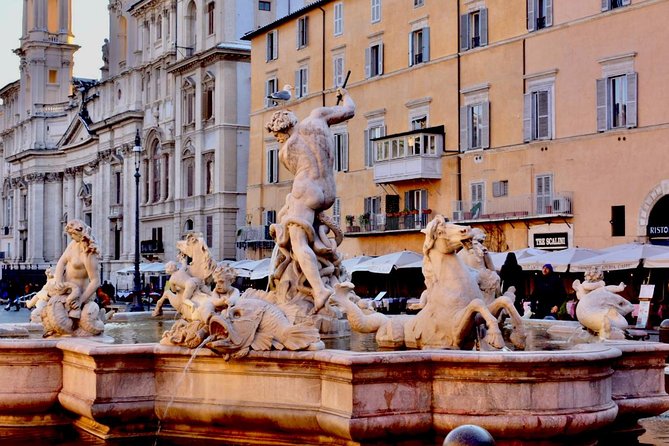
- Piazza Navona: Bernini-Style Baroque Fountains in a Stadium-Shaped Square
- From Rome to the Vatican: St Peter’s Square and Basilica Interior Conditions
- Price and Value: Is $49.26 for 3 Hours a Fair Deal?
- Should You Book The Treasures of Rome Morning Tour?
- FAQ
- How long is The Treasures of Rome tour?
- Where does the tour start and what time does it begin?
- Where does the tour end?
- What is included in the price?
- Is lunch included?
- Is St Peter’s Basilica interior always included?
- What dress code should I follow?
- Is there a lot of walking?
- What attractions does the tour cover?
Quick hits before you go
- A small group (max 20) helps the guide keep things moving without turning it into a herd.
- You start at Via Giovanni Amendola, 32 at 9:00 am, and the tour ends in Piazza San Pietro.
- Mobile ticket gets you into the flow with less fuss than paper vouchers.
- The route centers on centro storico power hits, then transitions to the Vatican area.
- Pantheon is free to enter, and St Peter’s Basilica interior is included except on Sundays and special religious days.
- Dress code is strict for churches, with knees and shoulders covered.
Meeting Point and How the Tour Actually Feels in Real Life
You meet at Via Giovanni Amendola, 32 (00185 Rome) at 9:00 am. The tour ends at St Peter’s Square, Piazza San Pietro (00120), so you’re finishing in the thick of Vatican life instead of being pulled back to the city center.
This is set up for a quick overview, about 3 hours total. That time pressure is exactly why it can feel great for first-time visitors, and why it can frustrate people who want long pauses in every square.
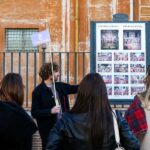
The pace depends heavily on how your group walks, but the structure is clear: you spend a good chunk on foot in the historic core, then you switch gears with a bus ride to Vatican City. With up to 20 people, I’d treat this as a “see the icons, get oriented, then go deeper on your own” style of tour.
One more practical note: this is a multilingual tour offered in English. If you want crisp, detailed explanations, you’ll get the best value when the guide’s explanations stay clear and you’re positioned where you can actually hear.
Still weighing it up? We have written up plenty of other tours and tickets across Rome.
- Vatican Museums & Sistine Chapel Tour with Optional Basilica
★ 4.3 · 67,413 reviews - Vatican Museums, Sistine Chapel & St Peter’s Basilica Guided Tour
★ 4.5 · 39,149 reviews - Rome: Colosseum, Palatine Hill and Roman Forum Guided Tour
★ 4.8 · 32,814 reviews - Rome: Guided Tour of Colosseum, Roman Forum & Palatine Hill
★ 4.7 · 27,897 reviews
Centro Storico Lanes: Cobbles, Corners, and the Real Walking Budget
Rome mornings look postcard-perfect, but the surface is honest: uneven, cobbled streets. That matters here because the tour is designed around walking between highlights in the Centro Storico. You’ll pass outdoor cafes, older churches, and Renaissance-era palaces while moving from square to square.
There is a choice point that some people don’t fully expect. You can stay on the vehicle at times, but then you miss key sights. In other words, this tour rewards active participation, not passive sightseeing.
On a hot day, the walking can feel steeper than the map suggests, and the short stop times mean you have to move when the group moves. My advice is simple: wear comfortable shoes with grip, and bring a light layer you can adjust as you hop between shaded lanes and open plazas.
If you’re traveling with someone who has limited mobility, this is the part to think through carefully. Rome’s historic center isn’t built for slow rolling. Even with guidance, the streets are still streets.
Trevi Fountain in 20 Minutes: Make the Coin Toss Worth It
The tour hits Trevi Fountain (Fontana di Trevi) for about 20 minutes, with admission listed as free. Trevi is busy, so the real trick is using that short window well: look first, then decide exactly where you want your photos.
What I like about this stop is that it’s not just a photo moment. The fountain is a true “water and stone” spectacle, almost tucked into the historic fabric of the center. When you’re there, take a second to notice the scale and how the water play creates depth against the buildings.
If you’re doing the classic coin toss, do it with awareness. You’re sharing the space, so keep it quick and respectful. The payoff is that Trevi feels like a destination even when time is tight.
Also, remember you’re not starting your day at Trevi from scratch. You’re arriving in the middle of a guided morning route, which means you’ll get the context of why the fountain sits where it does and how it connects to other nearby icons.
If you want more time at Trevi than the tour allows, treat this as the opening act. After you’re done with the guided stops, you’ll usually have an easier time lingering on your own with a calmer mindset.
The Pantheon and Raphael’s Tomb: The Wow Moment You’ll Keep Thinking About
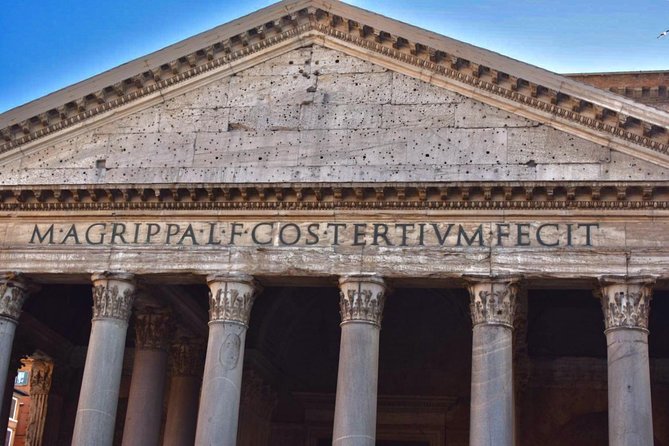
The Pantheon is the star stop on this kind of route because it’s one of the best-preserved ancient Roman buildings you can actually stand inside. You’ll spend about 30 minutes here, and entry is listed as free.
What makes this stop special is the blend of eras happening under one roof. The building began as a Roman temple, later became a church, and it’s still active today. That’s why your first look tends to hit like a slow clap: it’s huge, it’s intact, and it feels engineered rather than decorated.
The tour also points you toward the tomb of Raphael, a Renaissance artist, along with the tomb of King Umberto I. That detail changes how you experience the space. You stop thinking of the Pantheon as only an ancient shell and start seeing it as a place that continued to matter long after the Roman period.
Drawback check: 30 minutes sounds generous until you’re inside and you realize you want to look up as well as around. So if you’re the type who likes to linger in awe, keep your priorities. Focus on the dome, then work your way through the tomb area and the surrounding atmosphere.
This is also where a strong guide makes a noticeable difference. Some guides associated with this tour have been praised for being friendly and genuinely passionate about what you’re seeing, and the Pantheon is exactly the kind of place that benefits from that tone.
Piazza Navona: Bernini-Style Baroque Fountains in a Stadium-Shaped Square
Next comes Piazza Navona, about 20 minutes with free admission. This square is famous for its Baroque fountains, often credited to Gian Lorenzo Bernini.
What makes Navona more than a scenic detour is the story of the space. It follows the shape of an ancient Roman stadium, so when you stand in the middle, the geometry of the place clicks. It’s not random. The square’s form is built on an older plan, and the Baroque design layers on top of that.
In practical terms, Navona is ideal for short pauses. You can look up, then look around, then watch the fountain area long enough to catch the visual flow. If you like people-watching, this is also a good place to do it, because the square holds its own as a public room.
One consideration: this is a classic Rome photo stop, which means it can feel crowded during peak hours. Keep your expectations realistic. A quick guided visit plus a small buffer to orient yourself tends to be the best use of your time here.
By the end, you’ll be ready for the shift from central Rome lanes to the Vatican zone.
From Rome to the Vatican: St Peter’s Square and Basilica Interior Conditions
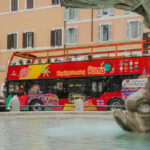
You move by air-conditioned vehicle toward Vatican City, then arrive at St Peter’s Square for about 30 minutes. Admission is listed as free for that stop.
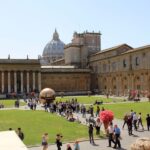
St Peter’s Square is built for scale. At the center is an ancient Egyptian obelisk, and Gian Lorenzo Bernini designed the dramatic colonnades that shape the space. When you look at the square from the right angles, you feel how carefully the layout draws your eyes toward the basilica.
The tour also includes an inside visit of St Peter’s Basilica, but with an important caveat. On Sundays, religious festivals, and religious ceremonies, the interior visit isn’t possible, and the itinerary may change. So if you care about the interior, check your travel day.
Dress code is not optional here. For places of worship and selected museums, knees and shoulders must be covered for both men and women. No shorts, no sleeveless tops. This is strictly enforced, and you can be refused entry.
After the tour ends, you’ll have time to explore the area on your own in Piazza San Pietro. That’s a smart setup because you can decide how long to stay, whether you want more basilica time (if it’s available on your day), or whether you’d rather just soak in the square again with fewer time constraints.


Price and Value: Is $49.26 for 3 Hours a Fair Deal?
At $49.26 per person for about 3 hours, you’re paying for organization, an expert guide, and a route that strings together major sights efficiently. Included items are a local guide, an air-conditioned vehicle, and lunch only if you choose a lunch option.
Here’s what boosts the value. Multiple key stops are listed as free to enter (Trevi Fountain, Pantheon, Piazza Navona, and St Peter’s Square). That means you’re not paying separately for the sights themselves, you’re paying for the guided navigation and the time-efficient sequence.
What can lower the value for some people is the short stop duration combined with walking demands. If you love slow museum-style pacing or you want long photo waits, you may feel rushed. If you prefer an orientation tour where you identify what you want to revisit later, this structure usually makes sense.
The maximum group size also helps the experience feel less stressful than bigger bus tours. And if your guide is strong, this kind of route can turn famous landmarks into places with meaning, not just targets on a list.
If you want a single morning “greatest hits” day without overplanning, this price point can be a solid fit. If you’re hoping for a low-effort tour with minimal walking, you may find better matches elsewhere.
Should You Book The Treasures of Rome Morning Tour?
Book it if you want a fast, guided overview of Rome’s most photographed classics, plus a smooth handoff to the Vatican area. It’s especially good as your first major Rome tour because it helps you understand how the city’s landmarks connect, and it gives you a shortlist of what to return to.
Skip it or think twice if you know you struggle with cobbled walking for extended stretches or if you hate time-boxed stops. Also, if your travel date includes a Sunday or major religious day, plan for the possibility that the Basilica interior visit may not happen.
My rule of thumb: this tour is best when you treat it like orientation plus momentum. You’ll get the highlights, then you can choose how to spend the rest of your day with more freedom around St Peter’s Square.
FAQ
How long is The Treasures of Rome tour?
It’s approximately 3 hours.
Where does the tour start and what time does it begin?
The meeting point is Via Giovanni Amendola, 32, 00185 Roma, and the start time is 9:00 am.
Where does the tour end?
The tour ends at St Peter’s Square, Piazza San Pietro, 00120 (near the basilica area).
What is included in the price?
It includes a local guide and an air-conditioned vehicle. Lunch is included only if you select the lunch option.
Is lunch included?
Lunch is included only if the lunch option is selected. Drinks are not included.
Is St Peter’s Basilica interior always included?
The inside visit is included, but it is not possible on Sundays, religious festivals, and religious ceremonies, and the itinerary may change on those days.
What dress code should I follow?
For churches and selected museums, knees and shoulders must be covered. Shorts and sleeveless tops are not allowed, and the rule is strictly enforced.
Is there a lot of walking?
Yes. The tour involves considerable walking on uneven, cobbled surfaces. You can stay on the vehicle at times, but then you will miss many of the sights.
What attractions does the tour cover?
You’ll see stops such as Trevi Fountain, the Pantheon (including mention of Raphael’s tomb), Piazza Navona, and St Peter’s Square. A stop is also listed around Piazza Barberini.
Not quite the day you had in mind? The rest of our Rome write-ups sit below
- Rome: Guided Tour of St. Peter’s Dome Climb, Basilica & Vatacombs★ 5.0 · 167 reviews
- St. Peter’s Basilica Guided Tour with Reserved Entrance★ 4.0 · 168 reviews
- Golf Cart Driving Tour in Rome: 2.5 hrs Catacombs & Appian Way★ 5.0 · 168 reviews
- Rome: Trastevere Wine Tasting with Food Pairing and Gelato★ 4.9 · 168 reviews
- Guided Tour of the Colosseum Palatine Hill and Roman Forum★ 4.7 · 168 reviews
- Vatican Museums, Sistine Chapel & Saint Peter’s Semi-Private Tour★ 4.5 · 169 reviews
- Hidden Rome: Small Group E-Bike Tour with Street Food Stops★ 5.0 · 169 reviews
- Rome: Papal Audience with Pope Leo IV★ 3.9 · 169 reviews
- Rome Golf Cart Tour: Highlights & Must See★ 4.5 · 170 reviews