
Reviewed · MURANO, BURANO & THE LAGOON ISLANDS
Venice: Explore San Giorgio Island with Ticket & Audio Guide
San Giorgio Maggiore makes Venice feel quieter and smarter. This 1-hour ticket pairs priority access with a multilingual audio guide, so you can tour the monumental Giorgio Cini complex or the Vatican Chapels without getting stuck in the usual crush. I especially love the way the route mixes big-name names and physical spaces you can actually walk through, plus the clear audio wayfinding that keeps your visit from feeling random. One thing to watch: it is not a full-day island experience, and some extras like a garden maze or other overflow areas may not be part of this short format.
You are also choosing your own “flavor” of art and architecture. If you like Renaissance and Baroque architecture, the Giorgio Cini option is built around cloisters, staircases, and libraries. If you prefer contemporary sacred design, the Vatican Chapels route takes you through the island’s wood with 10 chapels by 10 architects. The only real drawback is that the audio guide format means you get less live interpretation than a classic guided tour.
In This Review
- Key points worth knowing before you go
- Why San Giorgio Maggiore feels different from central Venice
- Two routes in one hour: Cini Foundation or Vatican Chapels
- Giorgio Cini Foundation route, for architecture lovers
- Vatican Chapels route, for design and sacred art
- Meeting point on San Giorgio Maggiore: where you should be, exactly
- Priority access and the audio guide that actually helps
- Giorgio Cini Foundation, stop by stop
- Cloister of Palladio and the feeling of orderly space
- Cloister of the Buora family, a quick shift to early Renaissance
- Palladian cenacle, where painting becomes context
- Longhena’s Grand Staircase, the complex’s movement engine
- Nuova Manica Lunga library, bright and practical
- Vatican Chapels in the Wood: what the circuit is really like
- Group size, timing, and how to plan your day
- Price and value: is $17 worth it for an hour?
- Who this tour suits best
- Should you book this San Giorgio Island tour?
- FAQ
- Where is the meeting point for this tour?
- How long is the tour?
- What does the ticket include?
- What language options are available for the audio guide?
- Do I need an ID to collect the audio guide materials?
- Is the tour refundable if my plans change?
- Final check before you book
Key points worth knowing before you go
- Two routes in one hour, Giorgio Cini Foundation or Vatican Chapels, each with a focused storyline
- Multimedia audio guide included in your ticket, available in multiple languages
- Cloisters and libraries are the star at Giorgio Cini, including Palladio’s cloister and the Nuova Manica Lunga library
- The Vatican Chapels circuit is designed as a walk in the Wood, with an introduction by H. Em. Gianfranco Ravasi
- Priority access and small group size keep your time from being wasted
- San Giorgio Maggiore is partly closed sometimes, so plan around possible limited areas
Why San Giorgio Maggiore feels different from central Venice
San Giorgio Maggiore sits just a short ride from Piazza San Marco, but it changes your rhythm fast. Instead of nonstop souvenir shops and tight lanes, you get a calmer island approach, then a concentrated hit of architecture and art. It is also a good way to “buy back” time. With an audio guide and entrance included, you are not spending your hour figuring out what you are looking at.
This tour also helps you focus. Venice can be visually loud. Here, your feet move in one direction while your ears map the buildings and their meaning. That is the practical magic: you get to see important spaces, without needing a PhD in Italian art history or a last-minute guide subscription.
Two routes in one hour: Cini Foundation or Vatican Chapels
You choose at booking time, and you will follow a route designed around that choice. The big advantage is that you do not have to “figure out the best parts” once you arrive. You get a structured circuit.
Giorgio Cini Foundation route, for architecture lovers
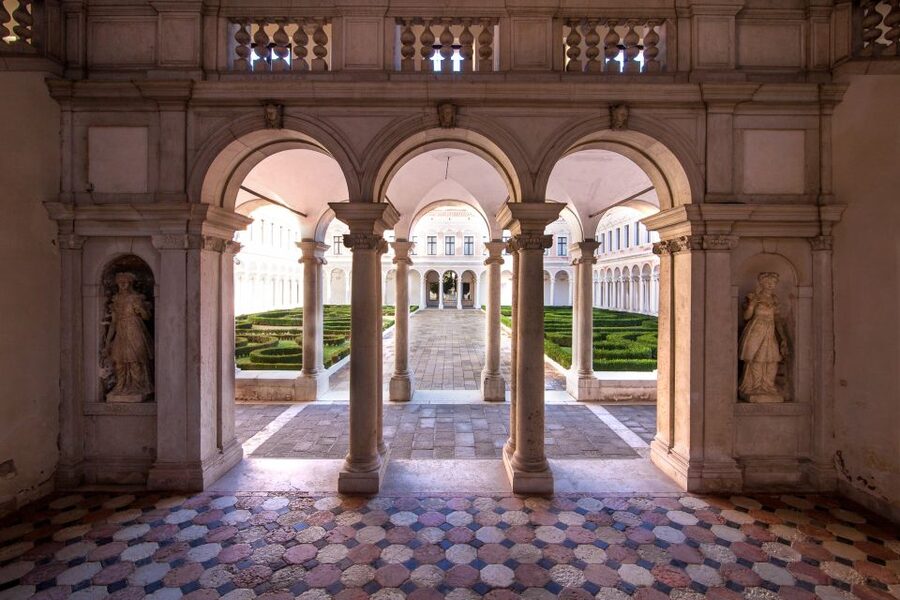
If you pick the Giorgio Cini Foundation option, you are walking through monumental spaces tied to famous names in design and painting. Think cloisters, a refectory, a grand staircase, and a library housed in an old dormitory wing.
Key stops include:
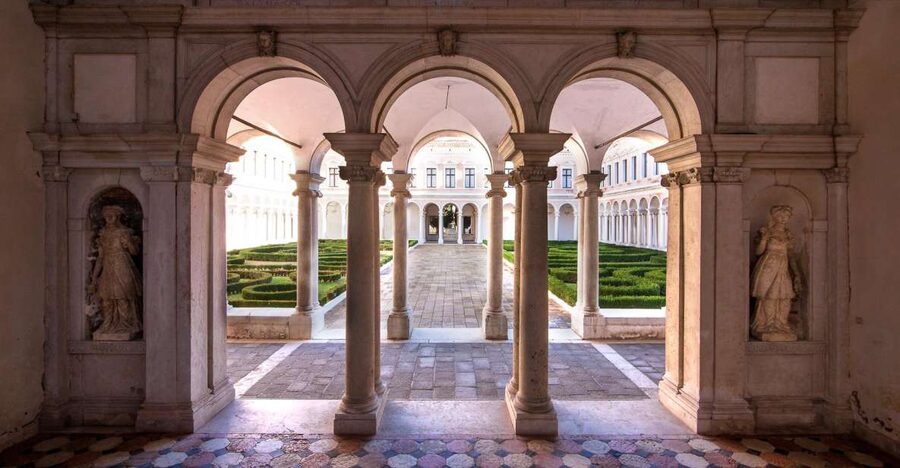
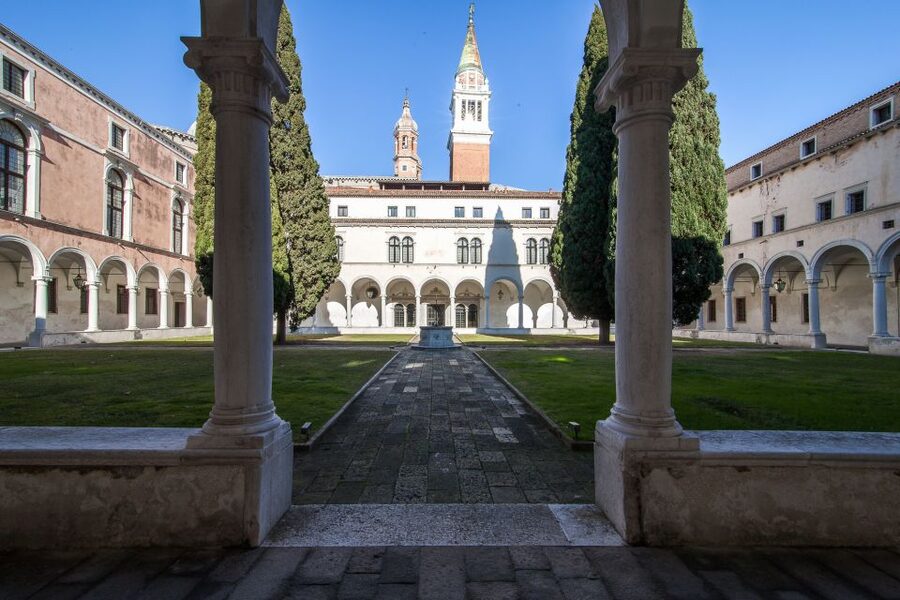
- Cloister of Palladio: completed after Andrea Palladio’s death in the 17th century, a classic architectural backbone for the complex
- Cloister of the Buora family: early Renaissance style tied to Giovanni and Andrea Buora
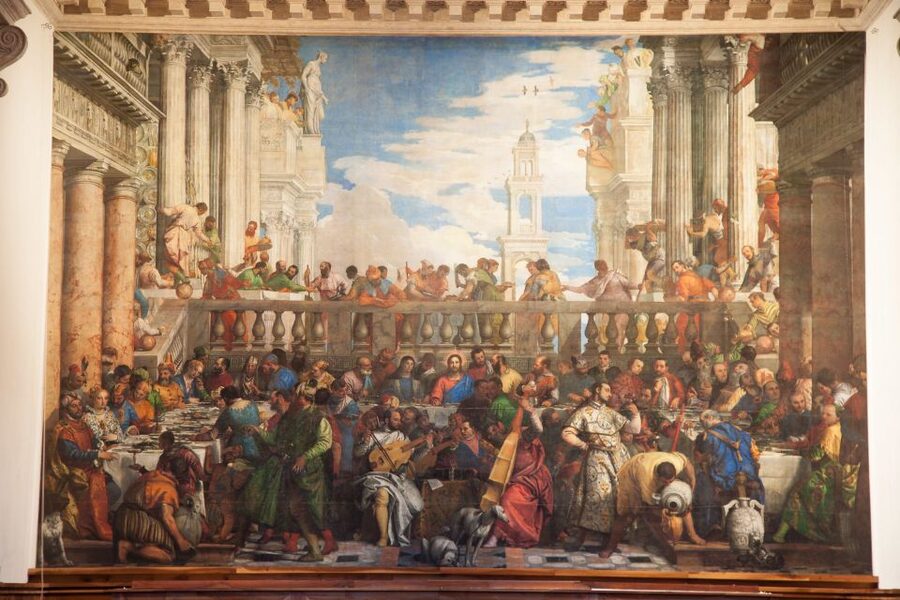
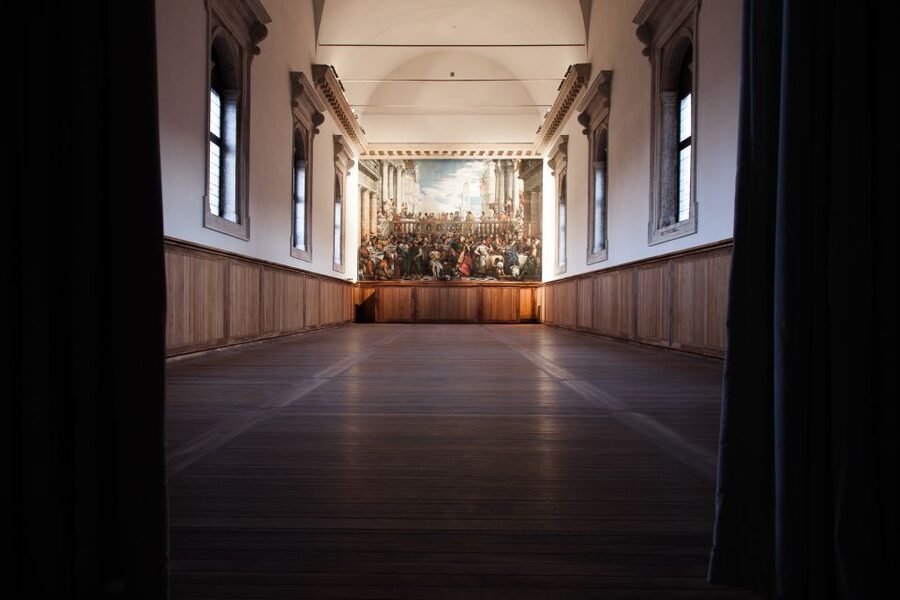
- Palladian cenacle (ancient Benedictine refectory): associated with Paolo Veronese’s Wedding in Cana. The original painting is now in the Louvre, but this is where the connection matters
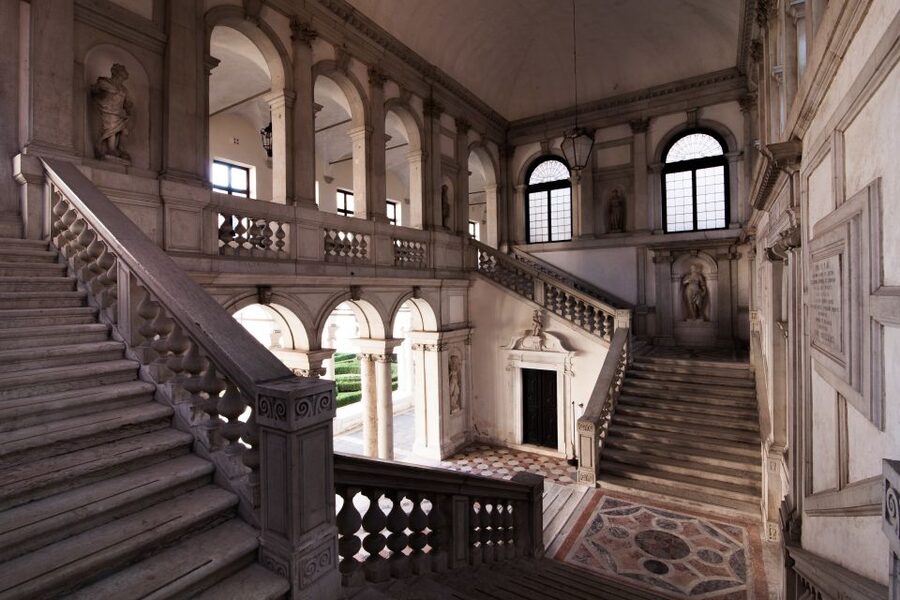
- Longhena’s Grand Staircase, completed in 1671: it connects spaces and is positioned between two cloisters
- Nuova Manica Lunga, the former dormitory turned library: this is where the complex shifts from cloister quiet to bright, readable interior space
What makes this route good for you: it gives you a sense of how an institution functioned over centuries. You start with courtyards and cloisters, then move through ritual and daily-life spaces like the refectory, and you end up in the library, which is basically the complex’s intellectual center.
Vatican Chapels route, for design and sacred art
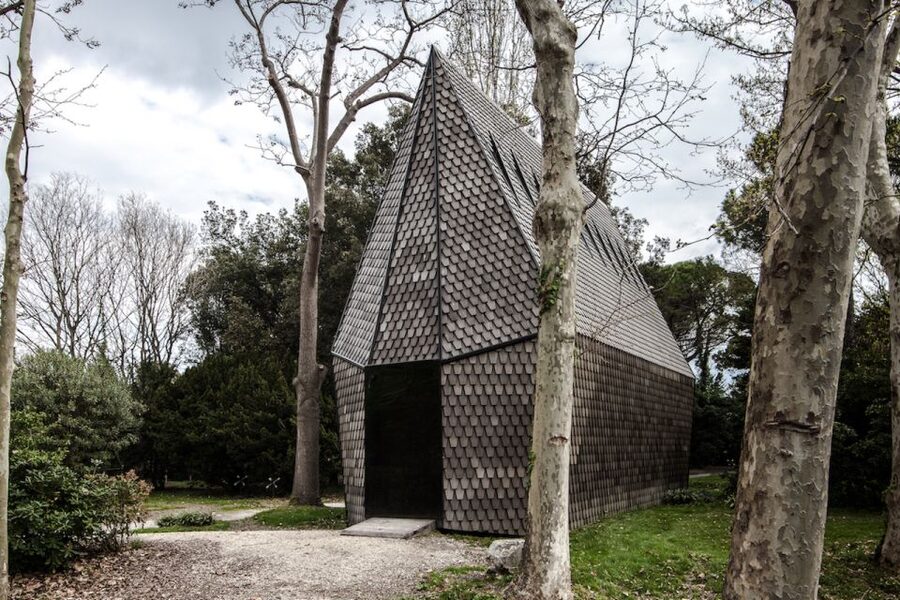
If you pick the Vatican Chapels option, the tone is different. You are guided through the island’s Wood, and the emphasis is on contemporary sacred architecture by world-renowned architects.
What is included in this concept:
- 10 Vatican Chapels, designed by 10 internationally renowned architects
- An introduction by H. Em. Gianfranco Ravasi
- Drawings and models for the chapel concept nicknamed chapel in the wood, associated with Asplund
Why this matters: it is not just “go inside, look around.” The audio guide is built around understanding what these chapels are trying to communicate through design. If you like architecture that plays with light, structure, and atmosphere, this route can feel more rewarding than a generic church visit.
Meeting point on San Giorgio Maggiore: where you should be, exactly
You meet at the ticket office on the left side of the Basilica on San Giorgio Maggiore Island, Venice. That is specific, and it is helpful because San Giorgio Maggiore can feel like a maze of approaches once you step off the boat.
If you are coming from Piazza San Marco, plan for a short transfer by boat-boat style transport. The tour timing assumes you are already on the island side, not still commuting across Venice during your slot. I suggest aiming to arrive a few minutes early so you can collect your audio guide materials without stress.
Priority access and the audio guide that actually helps
This tour includes priority access, and that is more important than it sounds. Venice tickets can turn into time theft if you arrive right when everyone else does. With priority entry built in, you spend less of your hour in line and more of it inside the buildings.
The audio guide is included in your admission price and is available in multiple languages, including Italian, English, French, German, Spanish, and Russian. A tour leader accompanies your group (small group size, up to 25 people). Even though the experience is guided by the audio, having staff there matters for pacing, directions, and keeping you on the right track.
One practical note: you will need a valid ID document to collect the video-guide. Bring it, even if you think you will be fine. If you leave it in your hotel safe, you can end up delayed at the counter.
Giorgio Cini Foundation, stop by stop
This is the part of the tour that feels most “walkable and readable.” Each stop is designed to teach you something, even if you only catch part of the audio.
Cloister of Palladio and the feeling of orderly space
The Cloister of Palladio gives you that classic architectural rhythm. It is the kind of space where you can look up and feel the proportions before you fully understand the details. The fact that it was completed after Palladio’s death in the 17th century adds a real timeline layer. You are not just looking at a style, you are seeing how long ideas took to reach stone.
Practical tip: take a minute here to look at the lines before you start moving again. The audio will make more sense if you already sense the structure.
Cloister of the Buora family, a quick shift to early Renaissance
Then the route moves into the Buora family cloister. This is early Renaissance architecture designed by Giovanni and Andrea Buora. It is a nice contrast after the Palladio-linked courtyard space, and it helps you notice how different periods handle form and light.
Palladian cenacle, where painting becomes context
In the Palladian cenacle you connect architecture to art. The audio guide points you toward Paolo Veronese’s Wedding in Cana, and while the original artwork is now in the Louvre, the link still matters. This is how you make sense of why some institutions invest in spaces built for contemplation, gathering, and learning.
If you care about art more than buildings, this is where the tour starts to feel like more than stone.
Longhena’s Grand Staircase, the complex’s movement engine
Longhena’s Grand Staircase is completed in 1671 and positioned between two cloisters. It is basically the complex’s circulation spine, a place where you can feel how people used the building day to day.
The staircase also has wooden bookcases by Franz Pauc. That detail is easy to miss if you rush, so slow down for a moment. It is one of those “you only see it if you look” touches that makes the hour feel worth it.
Nuova Manica Lunga library, bright and practical
The route ends at the Nuova Manica Lunga area, transformed into a light-filled library from the former dormitory of the Benedictine fathers. This is often the stop people remember, because it is both visually impressive and emotionally different. Cloisters can feel like pause. Libraries feel like “keep going,” even when you are just standing there listening.
If you want a quieter, more reflective end to your tour, this is a great landing point.
Vatican Chapels in the Wood: what the circuit is really like
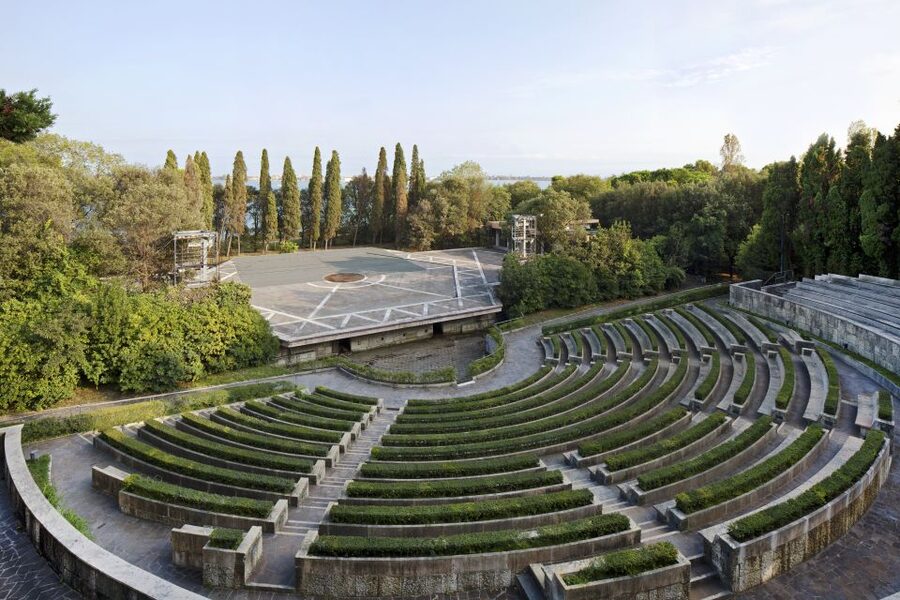
If you choose the Vatican Chapels route, you trade cloister courtyards for a walking sequence through the island’s wood. That change of setting matters. It stops the experience from feeling like a checklist of interiors. You experience it more like a designed journey.
You are looking at 10 chapels designed by 10 architects, and the audio gives you the framework. One of the most compelling bits is the introduction by H. Em. Gianfranco Ravasi. Even if you only catch key ideas, the tone helps you see the chapel designs as communication, not decoration.
You will also hear about Asplund and the “chapel in the wood” drawings and models. The audio guide approach is especially useful here because these projects make more sense when you understand the design intent, not just the building exterior.
Important realism check: the tour is only 1 hour. So you are not trying to read every plaque or see everything in isolation. Instead, you are getting a guided overview of the main chapel concept and the architects behind it. That is why it works well for people who have limited time and want the big picture.
Group size, timing, and how to plan your day
Your time is tight by design: the duration is 1 hour. That sounds short because it is short. But the tour is structured so you are not bouncing around from one random room to another. It is best if you treat it like a focused experience, not as the entire “San Giorgio day.”
Group size is up to 25 people, which is fairly small for Venice. Still, if you arrive late, you can miss portions because the experience is tied to a specific time slot.
Also be aware: some areas of the complex may close during concerts or other events. That can affect which spaces you actually get to see, even with priority access. It is not a dealbreaker, but it is a reason to keep expectations flexible.
Price and value: is $17 worth it for an hour?
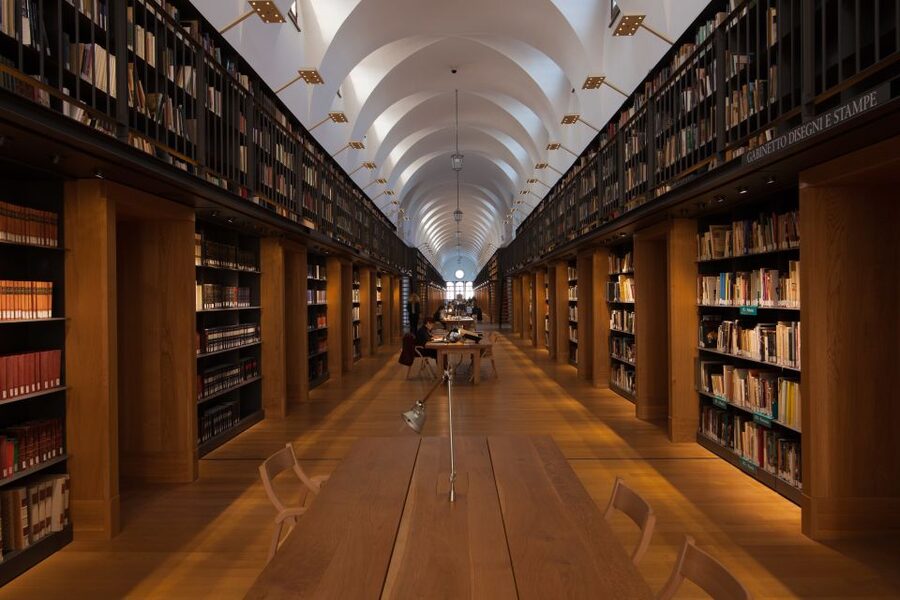
At about $17 per person, the value depends on what you want out of your hour. You are not paying for a full guided lecture. You are paying for entrance plus a multilingual multimedia audio guide and priority access.
Here is how I think about value in practice:
- If your alternative is wandering without a plan, the audio guide plus curated route can feel like great value. You get structure.
- If you hate audio tours and need constant human explanations, the price might feel high for 1 hour with limited live guiding.
- If you are the type who loves libraries, staircases, cloisters, and architecture details, the ticket can feel efficient because these spaces are not “quick glances.” They reward your attention.
One detail worth flagging: the tour price does not explicitly mention the cost of getting to the island from central Venice in the activity summary. You will likely want to budget for the boat ride separately, since the meeting point is on San Giorgio Maggiore itself.
Who this tour suits best
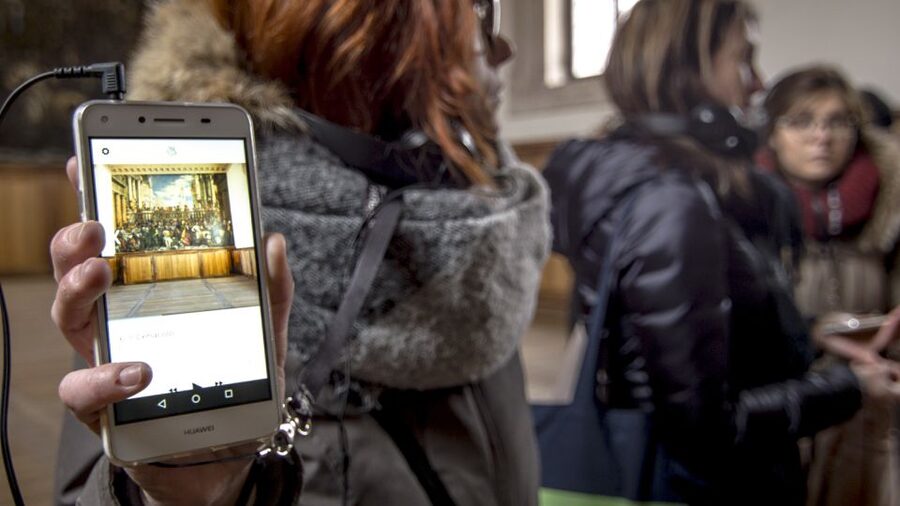
This experience is a strong match if:
- You have limited time and want a smart use of it, 1 hour on San Giorgio Maggiore
- You like architecture and art that you can identify through a guided explanation
- You want a calmer break from central Venice, without giving up major sites
- You appreciate small-group structure and a multilingual audio guide
It is not a great fit if:
- You need step-free access throughout, since it is listed as not suitable for people with mobility impairments
- You expect a long, fully live, conversational guided tour, because this is primarily audio-led
A small, practical strategy: if you are deciding between the two routes, let your curiosity lead. Architecture-first travelers usually enjoy Giorgio Cini for its cloisters, refectory connection, grand staircase, and library. Design-and-sculptural-space travelers usually prefer the Vatican Chapels route through the Wood.
Should you book this San Giorgio Island tour?
Book it if you want a focused, time-efficient Venice add-on that feels orderly and thoughtfully organized. With priority access, a multilingual audio guide, and entrance included, it is a smart way to see either the Giorgio Cini Foundation’s most important monumental spaces or the Vatican Chapels designed through the island’s wood.
Skip it or consider another format if you strongly prefer a fully guided, live commentary experience, or if your goal is to see every possible garden or side area. This is built to give you a strong hour of the main highlights, not to cover the entire island at whatever depth you can imagine.
If you are balancing Venice crowds and still want architecture you can actually understand while you stand in front of it, this is a solid booking.
FAQ
Where is the meeting point for this tour?
You meet at the ticket office on the left side of the Basilica on San Giorgio Maggiore Island, Venice.
How long is the tour?
The experience lasts 1 hour.
What does the ticket include?
It includes an audio guide, a tour leader, entrance to the Giorgio Cini Foundation monumental complex (or entrance to the Foundation’s Wood including the Vatican Chapels), and a booking fee.
What language options are available for the audio guide?
The audio guide is available in English, French, German, Italian, Russian, and Spanish.
Do I need an ID to collect the audio guide materials?
Yes, a valid ID document is required to collect the video-guide.
Is the tour refundable if my plans change?
Yes. Free cancellation is available up to 24 hours in advance for a full refund.
Final check before you book
If your Venice day is already packed, this is one of the cleanest ways to add a meaningful island experience without losing time. Choose the route that matches your taste, and bring your ID. Then use the hour to see fewer things, but see them properly.
Murano, Burano & the Lagoon Islands, top to bottom.
 ★ 4.3Boat Trip: Glimpse of Murano, Torcello & Burano IslandsFrom $2915,699 reviews
 ★ 4.4Venice: Burano, Torcello & Murano Boat Tour w/GlassblowingFrom $2810,245 reviews
 ★ 4.2Venice: Murano and Burano Boat Tour with Glass Factory VisitFrom $349,527 reviews
 ★ 3.5Murano, Burano and Torcello Half-Day Sightseeing TourFrom $257,928 reviews
 ★ 4.5Murano & Burano Islands Guided Small-Group Tour by Private BoatFrom $367,580 reviews
 ★ 4.4Venice: Murano & Burano Panoramic Boat Tour w/ GlassblowingFrom $296,212 reviews
 ★ 4.4Venice: Murano, Burano, Torcello, and Glass Factory TourFrom $405,563 reviews
 ★ 4.5Venice Islands: Murano Glass & Burano Colors Guided VisitFrom $254,581 reviews