
Reviewed · VESPA, FIAT 500 & GOLF CART TOURS
Vespa Sidecar Tour In Rome with Pickup, Drop-off, Gelato included
Rome moves fast, so this tour helps you keep up. A guided Vespa sidecar loop hits the big sights in a way that still leaves room to get out, stretch your legs, and take photos. I especially like the hotel pickup and drop-off and the way you get a guided photo-stop rhythm instead of sitting on a bus all day.
I also love that the tour stays small, with a maximum group size of 14, so you feel like you’re riding through Rome with a real plan and not shuffling in a crowd. Each Vespa sidecar carries two travelers, which keeps the experience feeling personal even when you share the road.
One thing to consider: Colosseum admission is not included, so you’ll want to plan that ticket separately if you’re aiming to go inside rather than just admire it from the area.
In This Review
- Key things to know before you go
- Why a Vespa Sidecar Tour Works in Rome
- Pickup, Helmets, and the Sidecar Layout for Comfort
- Colosseum Stop: Admire the Arches, Plan the Ticket
- Spanish Steps: Short Time, Big View
- Castel Sant’Angelo: Mausoleum to Fortress Views
- St. Peter’s Square: Vatican Moments Without Waiting All Day
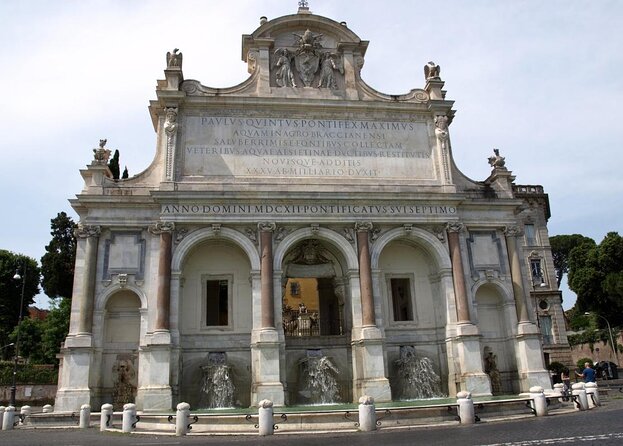
- Fontana dell’Acqua Paola on the Janiculum Hill
- Pantheon: The Oculus and the Story You Can See
- Piazza Venezia and the Vittoriano Area
- Gelato Included: The Perfect End Note
- What the Best Guides Get Right on This Route
- Value and Price: What $143.91 Actually Buys
- Who This Tour Is Best For (And Who Should Think Twice)
- Should You Book This Vespa Sidecar Tour in Rome?
Key things to know before you go
- Small-group Vespa loop: up to 14 people, guided in English, with drivers for each sidecar
- Hop off for photos: short stops, but enough time to get viewpoints and take pictures
- Helmets and hairnets included: safety gear is part of the deal
- Gelato included: you get a sweet break at the end
- A separate Colosseum ticket: Colosseum entrance is not covered
Why a Vespa Sidecar Tour Works in Rome
Rome can be a lot. The sights are everywhere, the streets can be tight, and getting between landmarks on foot takes longer than it looks on a map. This Vespa sidecar format is a smart shortcut. You travel quickly, then pause where photos and views matter most.
What I like most is the balance: you get the movement of a ride through Roman streets, plus intentional walking time at the main stops. You’re not just passing by behind glass. You stop at key viewpoints and landmarks like the Colosseum, the Spanish Steps, Castel Sant’Angelo, and the Pantheon, then you head out on foot long enough to get your bearings and snap your photos.
It’s also an easy way to experience Rome’s “real” feel. You’ll hear traffic, feel the pace, and see how the city connects. That matters because Rome is not one big postcard. It’s layers. A Vespa ride helps you notice the connections between them.
Filed beside this one, more Vespa, Fiat 500 and golf cart rides in Rome.
- Rome by Golf Cart Private Tour: Beyond the Landmarks
★ 5.0 · 4,361 reviews - Rome on a Golf Cart Semi-Private Tour Max 6 with Private Option
★ 5.0 · 2,502 reviews - Rome Highlights by Golf Cart Private Tour
★ 5.0 · 2,379 reviews - Vespa Sidecar Tour By Night with Pickup
★ 5.0 · 1,803 reviews
Pickup, Helmets, and the Sidecar Layout for Comfort
Logistics are part of the experience here, and they’re handled for you. The driver meets you at the pickup spot about 10 minutes before the booked time, and you get hotel pickup and drop-off included. That removes one of the biggest headaches in Rome, which is figuring out where to stand and when to move.
Safety gear is provided: helmets and hairnets. You’re also covered by insurance, which helps your peace of mind.
Now the sidecar math, because it affects who gets what seat. Each sidecar carries two passengers. The tour provides one sidecar for every two travelers, so if you book as a group, you’ll pair up with another rider in your sidecar. If you’ve got mobility needs, this is worth thinking through. The ride style is fun, but it can be bumpy on uneven pavement, which is just the reality of Roman streets.
There are size limits listed for each person: max weight 100 kg (220 lbs) and max height 195 cm (6.5 feet). If you’re near either limit, check with the provider before you book.
Language is English, and it’s a guided experience, not just drivers giving you a few facts at random.
Colosseum Stop: Admire the Arches, Plan the Ticket
Your first major stop is the Colosseum. You’ll be there for about 15 minutes. That’s not enough time for a full inside visit if you’re trying to see everything, but it’s a great window to take in the scale and get photos that make it feel real.
The big practical point: Colosseum admission is not included. So for you, the decision is simple:
- If you want the classic outside photo and a quick look around the surrounding area, you’re set.
- If you want to go inside, budget time and money for the ticket separately.
Even without entry, standing there for a short stop can reset your trip. You feel how the amphitheater dominates the area. It also sets the tone for the rest of the route, because the rest of the day is a mix of ancient Rome, Renaissance and Baroque landmarks, and Vatican-era symbolism.
Spanish Steps: Short Time, Big View
Next up is the Spanish Steps. You’ll stop at the top for about 15 minutes. This is one of those Rome locations that works perfectly with a short pause. You can look down into the Piazza di Spagna below, catch the lines of buildings and domes, and take photos without spending hours waiting in the densest parts of the area.
This stop also gives your eyes a rest from ruins and fortresses. The Spanish Steps are an 18th-century Baroque staircase connecting Piazza di Spagna and the Trinità dei Monti church. It’s a view point built for people watching, and it’s a great photo anchor for your Rome album.
Because your time is limited, I recommend you do the obvious fast:
- Take the main panorama photo first.
- Then grab a second angle from a slightly different spot so you’re not repeating the same shot.
If you’re traveling with kids, this is one of those stops that feels fun immediately, because the steps are a built-in playground for climbing a little, taking photos, and moving on.
Castel Sant’Angelo: Mausoleum to Fortress Views
Castel Sant’Angelo is your next big shift in scenery. You stop for about 15 minutes, and you get the chance to enjoy the fortress viewpoints over Rome. Historically, it began as Emperor Hadrian’s mausoleum in 139 AD and later served multiple roles, including becoming a papal residence and a military stronghold.
From the perspective of planning, this stop is valuable because it gives you a “different Rome” from the Colosseum and central pedestrian zones. You’ll also likely notice the way the Tiber River and Vatican area sit relative to each other. That connection makes the next stop easier to understand.
Even if you do not go far inside (your time is short), the location itself helps you frame the city. Rome is not just famous buildings in isolation. It’s a system of vantage points, defensive structures, and power centers.
St. Peter’s Square: Vatican Moments Without Waiting All Day
St. Peter’s Square is listed as a stop with about 15 minutes. This is one of the most recognizable places on earth, and the practical value of the quick stop is that you get context in a short time.
You’ll see St. Peter’s Basilica from the square. The basilica’s dome dominates the skyline, and the area is tied to Vatican City, the center of the Roman Catholic Church.
For your photos, plan around what’s easiest in your time window:
- Get at least one wide shot that shows the scale of the square.
- Then pick one detail angle if you can, like the view lines toward the basilica.
This is also where a strong guide makes a difference. In the experience details, multiple guides and drivers are praised for clear explanations at each stop, and names like Enes and Aybars show up again and again for that teaching style. When you have just 15 minutes, it helps to know what you’re looking at so you don’t feel like you’re rushing past a blur.
A short passeggiata through our other tiramisu and gelato classes in Rome.


Fontana dell’Acqua Paola on the Janiculum Hill
After Vatican area, you head toward higher ground with the Fontana dell’Acqua Paola stop. It’s also about 15 minutes, and the setting is one of Rome’s best “I didn’t expect this view” moments.
This Baroque fountain sits on the Janiculum Hill overlooking the city. It was built in the early 17th century to commemorate the restoration of the Aqua Traiana aqueduct. That aqueduct detail matters. Rome isn’t only art and monuments. It’s also engineering that shaped how water and life worked here.
What you’ll likely enjoy most is the combination of architecture and panorama. You get a landmark to photograph, plus the bigger city view behind it.
This stop also helps break up the day. After big stones and monumental squares, a hilltop fountain gives you breathing space, literally and visually. In a short tour, those “pause and look” moments make the whole route feel richer.
Pantheon: The Oculus and the Story You Can See
The Pantheon is next, again listed as about a 15-minute stop. This is one of those sites where the outside alone feels impressive, but the interior is where it really clicks.
The Pantheon is tied to Emperor Hadrian and features a massive dome. The structure is famous for its unreinforced concrete dome, plus the iconic oculus at the top. That open circle of sky is a moment. Even if your stop time is short, knowing it exists helps you look for it immediately once you’re inside.
The guide component matters here because the Pantheon’s story includes a shift from a pagan temple to a Christian church. If you understand that transition while you’re there, you notice different layers of meaning rather than just admiring the building as a static object.
If you’re short on time in Rome, this is one of the best “see it and get it” stops. It’s compact, powerful, and easy to remember.
Piazza Venezia and the Vittoriano Area
Your last listed stop is Piazza Venezia, again about 15 minutes. This square is tied to centuries of power in Rome, and it’s strongly connected with the Vittoriano monument.
Even if you’re not a deep history person, this is useful because it shows you a different side of Rome than the ancient and religious sites earlier in the route. It’s a reminder that Rome’s identity did not stop with the Roman Empire. It kept evolving, and symbols kept changing with it.
If you want to make the most of a short stop, don’t try to read every statue and inscription. Instead:
- Take your photo first.
- Then look for a guide explanation on what this area represented.
A good guide will connect the square to the larger story of the city, and names like Mustapha and Ahmad K have been praised for steering people through exactly that kind of context during the ride.
Gelato Included: The Perfect End Note
You also get gelato included on this tour. The timing is built into the experience, with a sweet break near the end. For me, food at the end helps lock the day in. You’re not rushing to find a place after a ride and short walks.
Gelato is also a nice way to cool down if the day gets warm. Even on a 3-hour tour, Rome can feel like it’s working up your appetite.
This matters for value too. Tours that include transport between spots but forget a small treat sometimes feel like you only paid for motion. Here you get a small, memorable payoff.
What the Best Guides Get Right on This Route
A big part of why reviews rate this tour so highly is the guide and driver experience. You’ll see names like Aybars, Enes, Arda, Salman, and Adam appear in the experience feedback, and the repeated praise pattern is consistent:
- Clear explanations at each stop, not just facts dumped quickly
- Photo help, including finding good angles
- A friendly, professional vibe that helps you feel safe on the road
I also noticed a practical theme in the feedback: drivers often treat the ride like a real service. One example in the details is Enes going out of his way to help return a left-behind wallet. That’s not something you should expect, but it tells you how seriously the team takes care.
So here’s what to do with that information: show up ready to talk. If there’s something you care about, ask. With short stops, asking one smart question can turn 15 minutes into a bigger memory.
Value and Price: What $143.91 Actually Buys
At $143.91 per person for about 3 hours, this isn’t a budget street tour. But it’s also not overpriced in a way that feels disconnected. Here’s the value math that matters:
- You get hotel pickup and drop-off, which saves time and stress
- You get guided stops at major landmarks spread across the city
- You get a Vespa sidecar ride, plus safety gear like helmets and hairnets
- You get gelato included
- Group size is capped at 14, which keeps the experience manageable
The one cost you may add is the Colosseum ticket if you plan to enter. But the tour’s structure makes sense even if you only want outside views at the Colosseum. In that case, you get a strong Rome overview with less commuting than you’d do on your own.
If you compare this to a bus tour plus a separate food plan plus the time cost of getting from place to place, the price looks more reasonable. It’s a compact way to see the big names, with some real photo and walking time.
Who This Tour Is Best For (And Who Should Think Twice)
This tour is a great match if you want:
- A fun, fast way to hit Rome’s most famous landmarks
- Short guided stops with time to get out and take pictures
- A small-group feel without planning between sites all day
It’s also ideal for families, as the ride experience can work well for kids when the guide keeps it engaging. Helmets and hairnets help everyone feel more comfortable, and the short stops give families a clear structure.
Who should think twice? If you strongly dislike quick stops or prefer long museum time, this might feel too brief. Each major stop is listed at around 15 minutes, so you’re not planning deep site study. And if you’re uncomfortable with the ride style on uneven streets, you might prefer a walking tour with transit.
Also, check the size limits if you are over the max weight or height listed.
Should You Book This Vespa Sidecar Tour in Rome?
I’d book this if you’re trying to get your bearings fast and you want Rome to feel alive, not just photographed from the sidewalk. The pickup and drop-off alone are a big win, and the mix of Colosseum, Spanish Steps, Castel Sant’Angelo, St. Peter’s Square, the Fontana on the Janiculum, and the Pantheon is an efficient way to cover a lot of Rome without feeling like you’re sprinting between stops.
If you are a Colosseum inside-the-grounds person, plan for the ticket cost and time. If you’re okay with outside views and photos for that stop, you’ll likely feel the day is a great deal.
One last tip: when a guide like Enes or Aybars is known for picture-perfect angles and clear explanations, take advantage of it. Ask for the best spots to photograph, and you’ll leave with images that actually match what you learned.
If you want Rome in 3 hours, with a sidecar twist, this is one of the more memorable ways to do it.
Further Tiramisu and Gelato Classes We Cover in Rome



Other Vespa, Fiat 500 and Golf Cart Rides in Rome From Our Notebook

Not quite the day you had in mind? The rest of our Rome write-ups sit below
- Rome: Guided Tour of St. Peter’s Dome Climb, Basilica & Vatacombs★ 5.0 · 167 reviews
- St. Peter’s Basilica Guided Tour with Reserved Entrance★ 4.0 · 168 reviews
- Golf Cart Driving Tour in Rome: 2.5 hrs Catacombs & Appian Way★ 5.0 · 168 reviews
- Rome: Trastevere Wine Tasting with Food Pairing and Gelato★ 4.9 · 168 reviews
- Guided Tour of the Colosseum Palatine Hill and Roman Forum★ 4.7 · 168 reviews
- Vatican Museums, Sistine Chapel & Saint Peter’s Semi-Private Tour★ 4.5 · 169 reviews
- Hidden Rome: Small Group E-Bike Tour with Street Food Stops★ 5.0 · 169 reviews
- Rome: Papal Audience with Pope Leo IV★ 3.9 · 169 reviews
- Rome Golf Cart Tour: Highlights & Must See★ 4.5 · 170 reviews
Vespa, Fiat 500 & Golf Cart Tours, top to bottom.
 ★ 5.0Rome by Golf Cart Private Tour: Beyond the LandmarksFrom $1804,361 reviews
 ★ 5.0Rome on a Golf Cart Semi-Private Tour Max 6 with Private OptionFrom $1682,502 reviews
 ★ 5.0Rome Highlights by Golf Cart Private TourFrom $1632,379 reviews
 ★ 4.5Golf Cart Tour to Fiesole Roman Theatre and MuseumFrom $952,039 reviews
 ★ 4.6Florence: Eco-Friendly Golf Cart City Tour with Audio GuideFrom $671,094 reviews
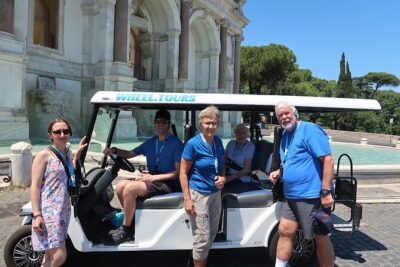 ★ 5.0Rome Highlights City Tour by Golf Cart with GelatoFrom $1071,088 reviews
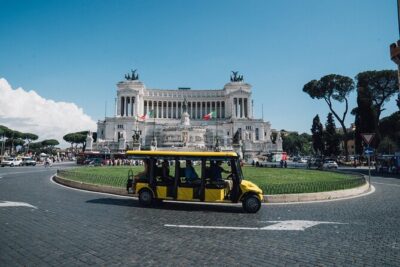 ★ 5.0Golf Cart Small-Group Guided Tour: Rome City HighlightsFrom $104907 reviews
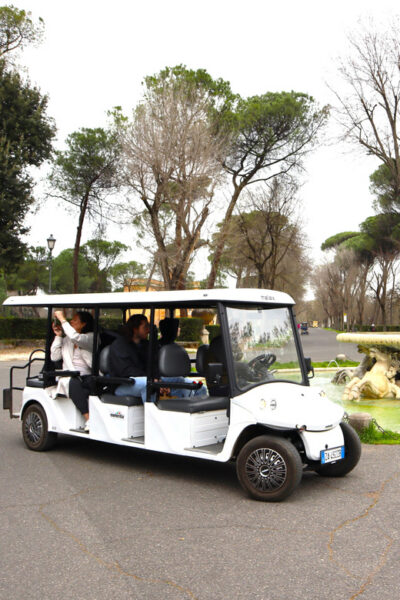 ★ 4.8Rome: City Highlights Golf Cart TourFrom $45857 reviews