

Reviewed · HERCULANEUM, VESUVIUS & OPLONTIS
Ercolano: Herculaneum Entry Ticket with Optional Audio Guide
Herculaneum still feels shockingly close to real life. This UNESCO site was buried in ash after Mount Vesuvius erupted in 79 AD, yet the town’s houses and everyday objects survived in striking detail. I like that your visit is self-paced, so you can slow down when something catches your eye.
What I really like is how intact the spaces are, not just the walls. You can walk the cobbled streets and look into rooms where residents slept, cooked, and worked, plus preserved frescoes and artifacts that hold their original form after almost 2,000 years.
The main consideration: the audio guide experience can be hit or miss, especially on the app if you do not download ahead. A few visitors also found signage and navigation not always clear once you’re inside.
In This Review
- Key things to know before you go
- Herculaneum, not Pompeii: what makes this Roman town feel real
- Getting in smoothly: redeeming your mobile voucher at the online ticket desk
- Walking the cobbled streets: what a self-paced circuit actually looks like
- Preserved roofs, beds, doors, and the 79 AD shock factor
- Frescoes and everyday rooms: how to get more out of each stop
- Audio guide options, and how not to lose track inside the ruins
- How long to spend, plus heat, shade, and what to bring
- Price and value: is an audio add-on worth it at about $21?
- Should you book this entry ticket with optional audio guide?
Key things to know before you go

- Herculaneum is smaller than Pompeii, but often more memorable because the town layout and rooms feel lived-in.
- Preservation is the star: roofs, beds, doors, food details, and even around 300 skeletons connected to the disaster.
- Optional audio guide matters: you can choose an app or a physical device, in several languages.
- Plan for heat and shade in summer, since the streets can feel exposed.
- Expect self-guided walking, no full guided tour included.
- Audio app needs prep: download before you arrive, because it can be data-hungry with limited coverage on site.
Herculaneum, not Pompeii: what makes this Roman town feel real
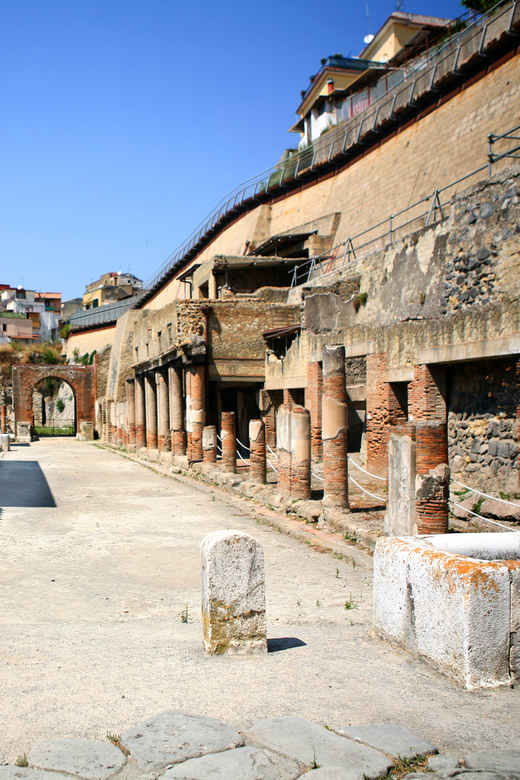
Herculaneum hits differently from the “big show” ruins. Pompeii gets attention for size, but Herculaneum gets attention for what survived intact. Here, you are not only seeing architecture. You’re seeing a built environment that still hints at routines.
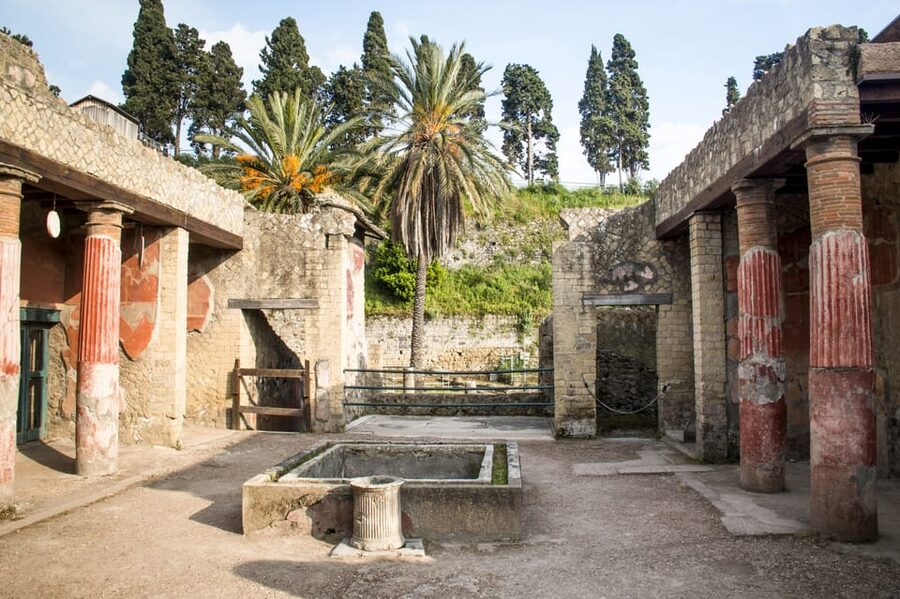
The reason the site feels so human is simple: when Vesuvius erupted in 79 AD, Herculaneum was buried under ash, and much of the town avoided the kind of heavy later damage you see elsewhere. The result is that you can stand near preserved doors, beds, roofs, and even food-related remains, then picture daily life rather than just admire stonework.
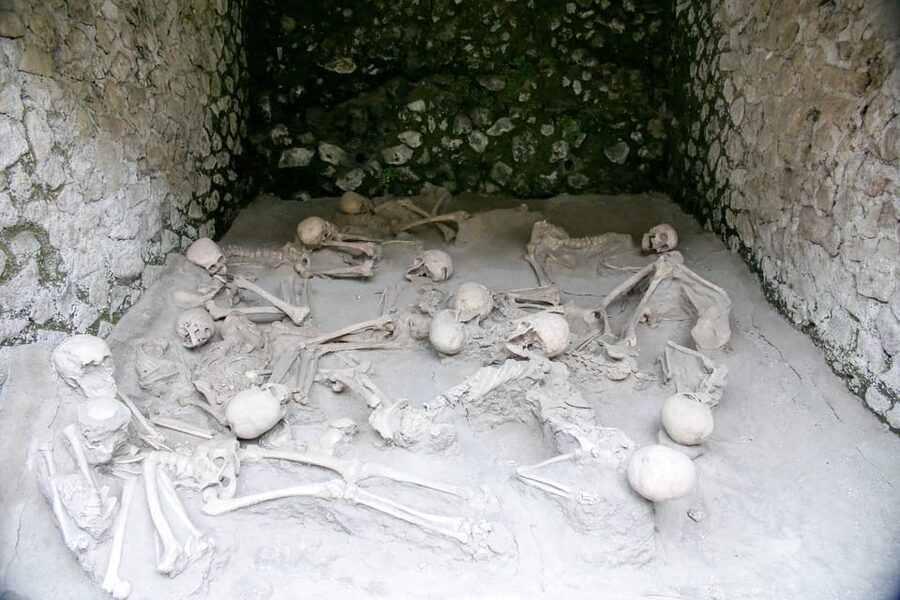
And yes, the tragedy is part of the story. You can see the around 300 skeletons found at the site, which turns the visit from “cool ruins” into something much more moving. It’s the kind of place where your brain keeps whispering, people were here, this mattered, and then it ended fast.
Kept in the same folder as this one, Herculaneum and Vesuvius visits in Ercolano.
- Herculaneum: Skip The Line Entrance ticket + Audioguide
★ 4.3 · 266 reviews
Getting in smoothly: redeeming your mobile voucher at the online ticket desk
This is an entry ticket you use on-site, not a long pickup with a bus or guide. When you arrive, you redeem your booking by showing your mobile voucher at the online ticket desk.
That one detail changes how you plan your arrival. If you have poor signal or your phone battery is low, the redeem step can slow you down. Bring a fully charged phone, and keep your voucher easy to find. A small prep step saves you from standing around with your screen dimming at the worst possible moment.
Once you’re through the entry point, you have one day to explore within the opening hours. There’s no fixed tour timing, so you can aim to start earlier in the day if you want calmer walking.
Walking the cobbled streets: what a self-paced circuit actually looks like
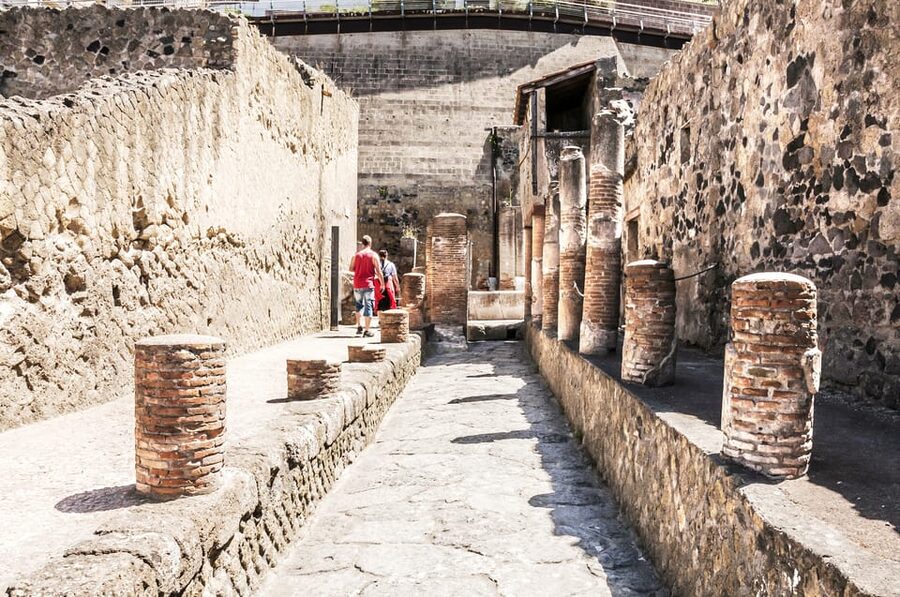
Think of Herculaneum as a compact town you move through in segments. You walk the cobbled streets, then pause at intact structures where details are preserved well enough to spark imagination.
A big part of the value here is that you can choose your pace:
- If you love architecture, you’ll naturally slow down in areas where you can see layout and building design.
- If you love daily life, you’ll gravitate toward rooms and features tied to routine activities.
You’ll also see evidence of public and semi-public spaces. The site includes stops tied to shops, a public gymnasium, and public swimming baths. Even without a guide explaining every function, these places do their job. A gymnasium tells you the social side of Roman life, where exercise and status mixed. Baths show how routine hygiene and gathering shaped community.
The atmosphere matters too. One reason the site feels powerful is the mixture of ordinary details with sudden disaster. You’re literally walking through a town that was interrupted, not just abandoned for centuries.
Preserved roofs, beds, doors, and the 79 AD shock factor
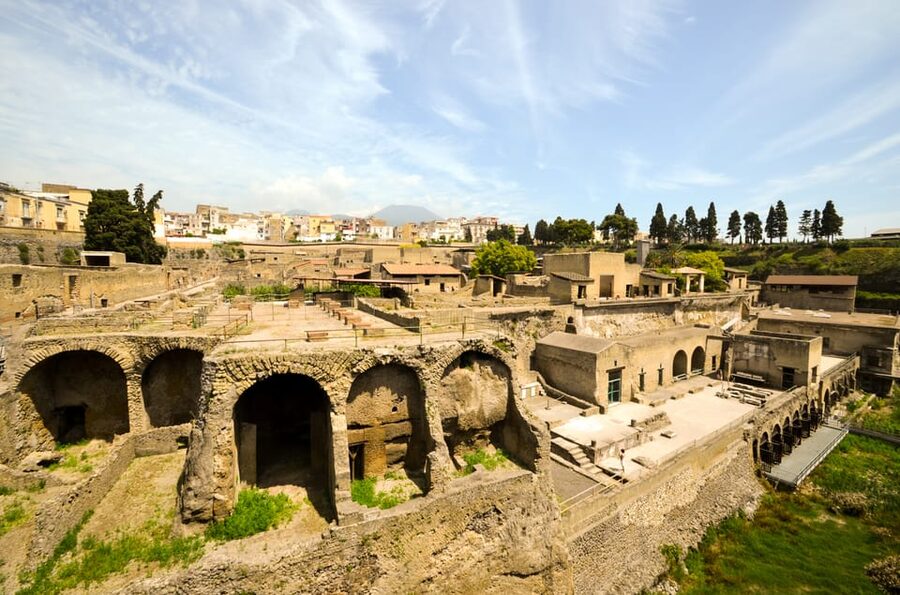
Most ruins tell you what buildings once were. Herculaneum tells you how people lived inside them. That’s the core difference you’ll feel as you wander.
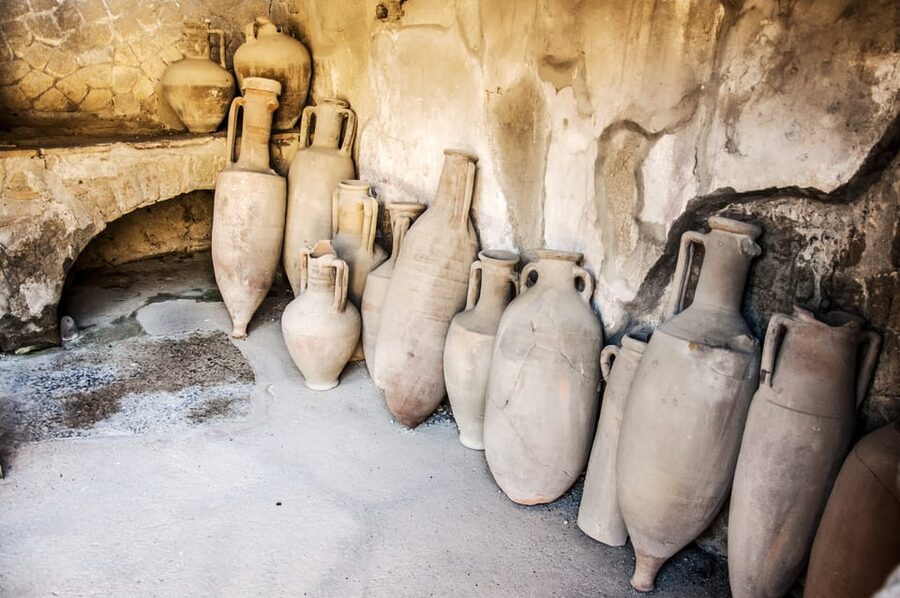
Because so many elements remained, the site can feel almost staged at a distance, then haunting up close. You may notice how bed areas, thresholds, and doorways connect to how someone would have moved through space. You can even spot preserved artifacts that help you visualize daily routines rather than only admire excavation work.
Then the disaster details bring you back to reality. Seeing the skeletons makes the eruption story unavoidable, and it lands even harder because the town looks so intact. It’s not just a historical event in a textbook. It’s a set of people caught during a sudden catastrophe.
This is also why the audio guide, if it works well for you, adds real value. It can help you connect preserved objects to the larger story, turning what you see into context instead of random fragments.
Frescoes and everyday rooms: how to get more out of each stop
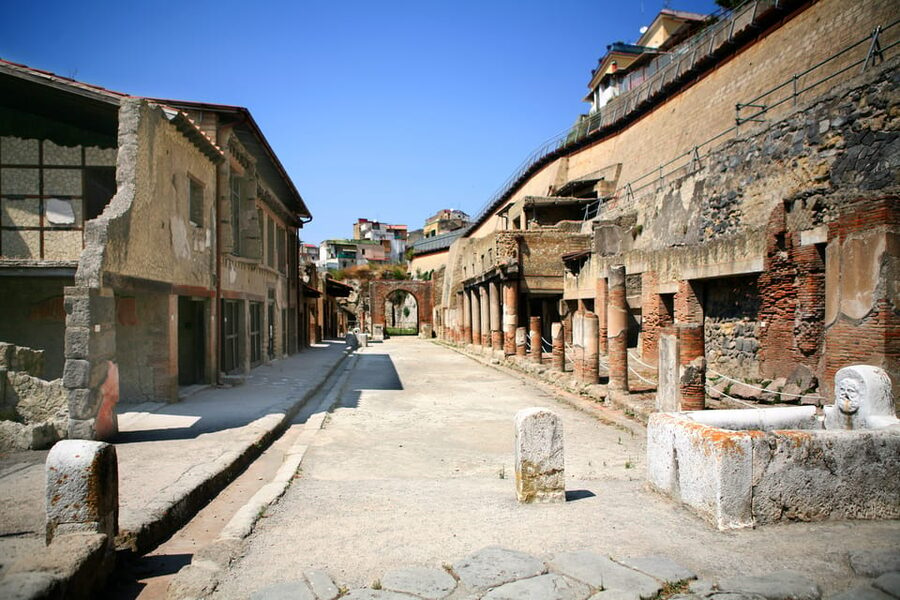
Herculaneum has a strong “micro” feel. You do not need to cover every square meter. Instead, you’ll get more from a few key stops done slowly.
Focus on three things as you walk:
1) Room-to-room transitions: notice how space changes from street level to internal areas.
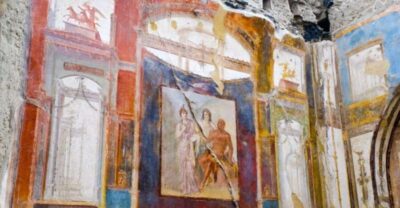
2) Wall decoration and preserved details: frescoes and artifacts help you picture mood, status, and taste.
3) Public spaces: gyms and baths are where you can compare everyday private life with more social routines.
Some visitors wished there were more information boards to explain each building feature. That matters because it changes how independent you feel. If you don’t want to rely on an app, set expectations now: you’ll do better if you bring headphones and use the audio guide, or if you’ve read a little about Roman life before you arrive.
Audio guide options, and how not to lose track inside the ruins

You have two audio options, and both can help. Your choices are:
- a digital audio guide app you download on your smartphone
- a physical audio guide device if you select that option
Languages include English, French, German, Italian, and Spanish. The exact app language list can vary by option, but the overall offering covers those languages.
Here’s the practical part. Several visitors advise downloading before you get there because the app can be data-hungry and coverage may be limited in the archaeological area. If you arrive relying on streaming, you might hit dead zones.
Also, the audio experience depends on how well the narration matches your location. Some people found the app’s structure confusing or hard to navigate, especially when trying to match audio to where they were standing. If you try the app and it feels like it’s talking about the wrong spot, switch strategies. Slow down, re-orient, and wait until you’re confident you’re in the right area before pressing play again.
Is a real guided tour better? For some history buffs, yes. But since a guided tour is not included here, the audio guide becomes your substitute. If you want maximum storytelling, consider pairing this self-guided ticket with your own reading plan or adding a separate guide day elsewhere in Naples and Campania.
One more caution based on real-world problems: when tickets include an audio add-on, double-check that your audio option is actually tied to your redemption. If the on-site desk has trouble matching your QR code, you can end up with entry only, not the audio you expected. To reduce stress, keep the confirmation details accessible.
How long to spend, plus heat, shade, and what to bring
The ticket is valid for 1 day, but that does not mean you must sprint. Many visitors report doing Herculaneum in about three hours, which feels realistic for a complete experience at an unhurried pace.
In summer, plan for heat. The streets can feel exposed, and you may want shade breaks. A practical tip: bring an umbrella for sun shade, and take advantage of shelter under roofs in the town streets and within covered structures.
Comfort matters because you’ll be walking on cobblestones. Wear comfortable shoes with good grip. Dress appropriately for a day outdoors in a protected archaeological setting.
If you’re visiting in a quieter season, you’ll probably enjoy the atmosphere more because the town feels less rushed. One visitor specifically liked going out of season for fewer crowds.
Price and value: is an audio add-on worth it at about $21?
At around $21 per person, this ticket is positioned as good-value entry to a site that gets less hype than Pompeii. The real value question is not the base ticket. It’s whether the audio guide option genuinely improves your visit.
If you love context, the audio guide can make the ruins feel organized. It can explain people and social structures, and it can call out what to look for in different areas and buildings. That kind of narration matters in Herculaneum because so much is preserved. Without interpretation, you might see details but miss how they connect to everyday life.
If the app is unreliable for you, you lose that structured experience. If you hate navigation and maps, a physical device might be simpler for your brain than the smartphone app interface. On the other hand, the app can be multilingual and easy to resume, once downloaded and ready.
One more value check: a visitor felt the platform upcharge was steep compared with what they saw on-site, and they recommended buying directly on the site. That tells me you should compare prices when possible, especially if you see big differences between online checkout and the on-site ticket booth. Free cancellation and reserve-and-pay-later can also help you make that comparison without locking yourself in too early.
Should you book this entry ticket with optional audio guide?
I’d book it if you want:
- a self-paced walk through highly preserved Roman spaces
- a “smaller than Pompeii” site that still covers major daily life themes like baths, a gym, shops, and housing details
- the flexibility to spend more time where you personally connect to the story
I’d think twice if:
- you strongly prefer a live guided narrative, because no guided tour is included
- you dislike smartphone apps, especially if you don’t want to download ahead or you struggle with location-based audio
- you want lots of on-site signage to do the explaining for you, since some visitors found signage and audio navigation not always smooth
If you can handle a bit of pre-trip prep, download your audio app before you go, charge your phone, bring comfy shoes, and plan on about three hours, this ticket can be a very satisfying day. Herculaneum may be less famous than Pompeii, but it has a way of making the past feel uncomfortably close.
Entry Tickets in Ercolano We Also Walked
Herculaneum and Vesuvius Visits in Ercolano That Made the Same Shortlist
Not quite the day you had in mind? The rest of our Ercolano write-ups sit below
- Herculaneum: Skip The Line Entrance ticket + Audioguide★ 4.3 · 266 reviews
Herculaneum, Vesuvius & Oplontis, top to bottom.
 ★ 4.3From Naples: Pompeii Ruins & Mount Vesuvius Day TourFrom $12011,459 reviews
 ★ 4.5Pompeii and Mount Vesuvius Day Trip from Rome with Pizza LunchFrom $906,151 reviews
 ★ 4.6From Rome: Pompeii Day Trip with Optional Vesuvius and LunchFrom $885,067 reviews
 ★ 4.6Naples or Sorrento: Full-Day Pompeii and Mount Vesuvius TourFrom $1044,235 reviews
 ★ 4.8Herculaneum: Skip-the-Line Guided Tour with ArchaeologistFrom $533,439 reviews
 ★ 4.0Pompeii & Mt.Vesuvius Day Tour from Naples with Pizza LunchFrom $1492,901 reviews
 ★ 4.2Mount Vesuvius: Skip-the-Line Ticket and Smart Digital GuideFrom $182,780 reviews
 ★ 4.5Naples: Pompeii & Mt Vesuvius All-Inclusive Small Group w/ LunchFrom $1312,748 reviews