
Reviewed · COLOSSEUM & ROMAN FORUM TOURS
Guided tour of the Colosseum, Roman Forum and Palatine in Spanish
Rome hits different in 3 hours.
This fast-track Spanish guided tour gets you into three top ancient sites with priority admission, so you can spend more time looking and less time stuck. I really like the way the route pairs big-picture storytelling with exactly where you’re standing, and I also love the headsets, which make the guide’s explanations easier to follow even when it’s crowded. One thing to consider: the pace is efficient, and the walking is not a slow museum stroll, so plan for heat and sun and bring water.
You’ll spend time on the Via Sacra in the Roman Forum, climb into the Palatine’s palace zone, then finish inside the Colosseum with time to keep exploring after the tour ends. Guides get repeatedly praised by name, including Sara, Tomas, Miriam, and Silvia, for being friendly and answering questions. The possible drawback is that group size can feel larger than you’d expect on very busy days, and if you want a more relaxed, stop-everywhere pace, this may feel a bit brisk.
In This Review
- Key things to know before you go
- Why this 3-hour Spanish combo tour is a smart use of time
- Price and value: what your $75.31 covers (and why it matters)
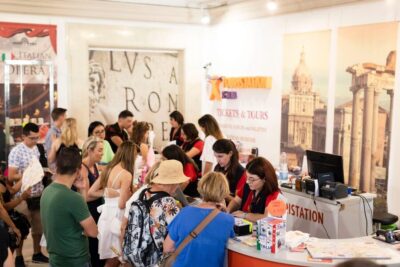
- Meeting point at Largo Corrado Ricci: the part that can trip you up
- Roman Forum stop: walking the Via Sacra with meaning
- Palatine Hill stop: where Rome’s power story begins
- Colosseum entry: priority access plus the freedom to stay inside
- Headsets and Spanish commentary: how you actually get the most out of it
- Group size, pace, and the heat factor
- What to bring and how to make the most of each stop
- Who this tour fits best, and who should consider alternatives
- Booking tip: the details that protect your entry
- Should you book this Spanish Colosseum, Forum, and Palatine tour?
Key things to know before you go
- Priority entry saves your time at the Colosseum and helps you avoid the worst line chaos.
- Headsets keep you connected to the guide’s commentary, even when the group gets spread out.
- Spanish-only guiding means you get clear, on-the-spot context as you move between sites.
- Three focused stops in 3 hours: Roman Forum, Palatine Hill, then the Colosseum.
- Tour ends inside the Colosseum, so you can stay and wander if you want more time there.
- Docs must match names on the ticket, including passport or ID for entry to the Colosseum and Roman Forum.
Why this 3-hour Spanish combo tour is a smart use of time
If your Rome days feel packed, this tour is built for that reality. You’re looking at the Roman Forum, Palatine Hill, and the Colosseum, which are the big three for ancient Rome, and you’re doing it with a guide who gives you the why behind what you see.
I like that the tour is not just a checklist. The Roman Forum portion follows the Via Sacra, so you’re walking the main ceremonial spine of ancient Rome, not just hopping between random viewpoints. Then Palatine Hill brings you to the symbolic origin zone, which helps the Colosseum make sense as the empire flexing its power.
The time format is also practical: about 3 hours, with a clear split between stops. That means you can still plan the rest of your day, instead of losing an entire half day to entry lines and slow wandering.
Filed beside this one, more Colosseum and Roman Forum tours in Rome.
- Rome: Colosseum, Palatine Hill and Roman Forum Guided Tour
★ 4.8 · 32,814 reviews - Rome: Guided Tour of Colosseum, Roman Forum & Palatine Hill
★ 4.7 · 27,897 reviews - Rome: Colosseum & Forum with Audio Guide App -Optional Arena
★ 4.2 · 24,770 reviews - Rome: Colosseum, Roman Forum and Palatine Hill Guided Tour
★ 4.5 · 23,903 reviews
Price and value: what your $75.31 covers (and why it matters)
At about $75.31 per person, you’re paying for more than entrance tickets. The key value is the combination of a Spanish-speaking professional guide, headsets, and fast-track priority admission that helps you spend your limited time where the history is.
The included Colosseum components are specifically helpful: you get the Colosseum entrance ticket (listed as €18 per person) plus the Colosseum reservation fee (listed as €2 per person). The remaining cost covers the guide, the small group experience, and the headset setup.
Here’s how I’d frame the value for you. If you were doing this on your own, you’d still face entry logistics and the risk of losing time trying to figure out what to look at first. With this tour, the pay-off is that you arrive at the Colosseum with a plan, and you leave the Forum and Palatine with context so the ruins stop being random piles of stone.
Meeting point at Largo Corrado Ricci: the part that can trip you up
The tour starts at Largo Corrado Ricci, 00184 Roma RM. It finishes inside the Colosseum at Piazza del Colosseo, 1.
Arrive early. The tour asks you to be on time, and I agree with that advice for one big reason: Rome entry points are chaotic, and names matter. You’ll need to provide full names when booking, and at the ticket office you must present a voucher with all travelers’ full names matching your passport or ID. If there’s a mismatch, entry to the Colosseum and Roman Forum can be denied.
Also note the item limits. You cannot carry large umbrellas, large backpacks, or sharp objects. If you’re traveling light, great. If you packed like it’s winter back home, consider what you can stash before you meet.
Finally, it’s a mobile ticket tour, so make sure your phone battery is healthy. It’s simple, but it saves real stress when everyone else is hunting for screens and chargers.
Roman Forum stop: walking the Via Sacra with meaning
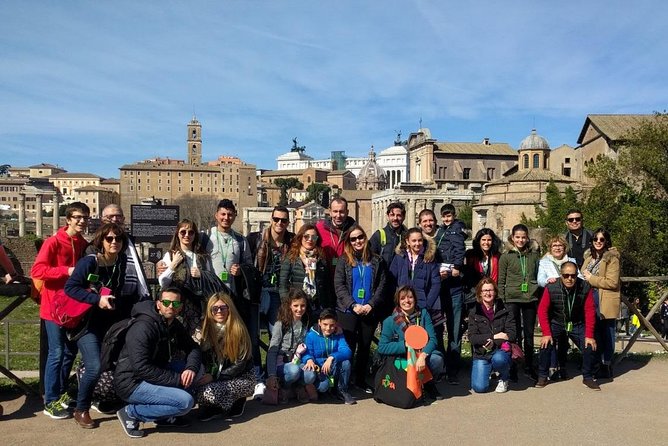
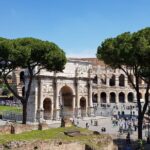
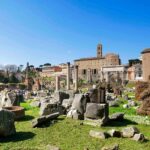
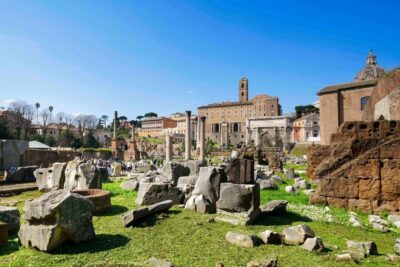
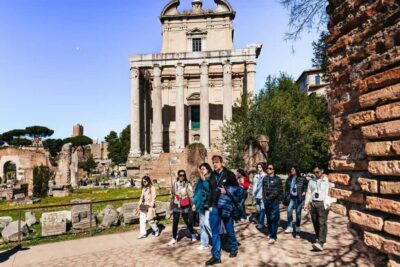
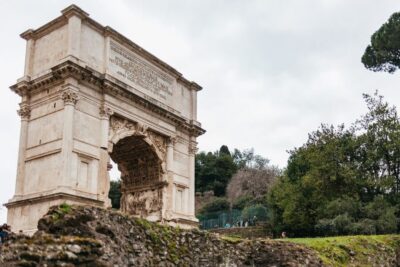
Your first stop is the Roman Forum for about 1 hour, with admission included. This is the heart of ancient Rome’s public life, and the best part is that you’re not just standing in one spot. You’ll walk along the Via Sacra, the ceremonial route that connects major spaces.
What you’re there to understand is the Forum’s role as Rome’s timeline in stone. The tour frames it as a place that grows, suffers, and changes through time, which is exactly what you’ll feel when you look at how different ruins sit on top of each other.
Along the route, you’ll enter basilicas, visit the Comicio area, and enjoy temples and architectural remains tied to the civic and political rhythm of the Republic and beyond. Even if you’ve seen photos, it’s worth seeing it in person with a guide because the Forum can feel like “many ruins in one area” unless someone gives you anchors.
One practical consideration: the Forum is an open-air zone, so it’s exposed. If you’re doing this in hotter months, plan for sun and shade gaps. Headsets help keep your place, but they won’t cool you down.
Palatine Hill stop: where Rome’s power story begins
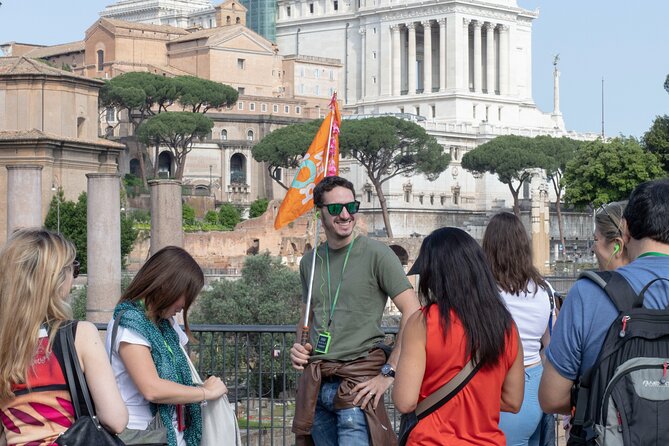
Next is Palatine Hill for about 40 minutes, also with admission included. The Palatine is strongly tied to the idea of patrician power, the “palaces” where the people who exercised rule made their homes and their statements.
This stop is valuable because it gives you the origin story layer. The tour’s framing connects the hill to Rome’s foundation myth, with Romulus choosing the area as the city’s origin. Even if you treat myths as myths, the symbolism matters. It explains why people kept returning to this hill as a marker of status and legitimacy.
You’ll be on a place that feels more like a stage than a flat museum floor. That means your views change as you move, and you start to see why the Colosseum becomes the next logical chapter. From the Palatine, the city’s power geography makes more sense.
The potential drawback is time. Forty minutes goes fast, especially if you stop to take photos or want extra questions answered. If Palatine Hill is a top priority for you, consider that this tour is designed as a best-of route, not a long deep study.
Colosseum entry: priority access plus the freedom to stay inside
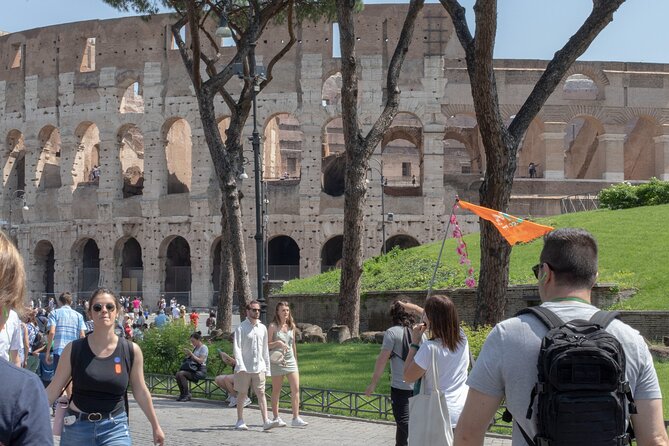
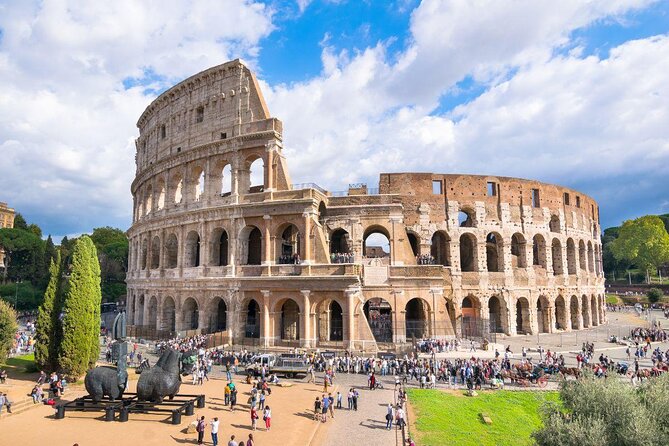
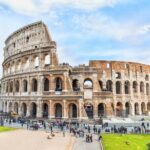
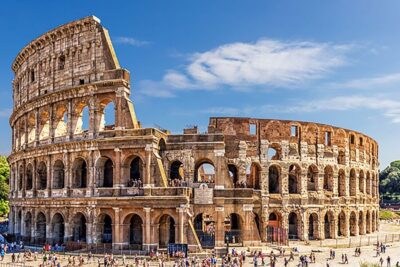
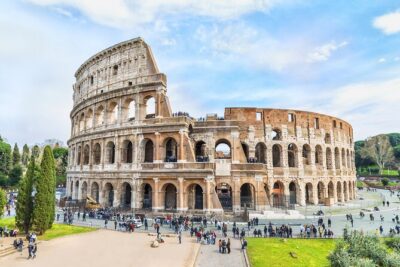
The final stop is the Colosseum for about 45 minutes. This is where priority admission matters most. When crowds are thick, even a small time saving feels huge, and the tour is designed to help you slip past the worst waiting.
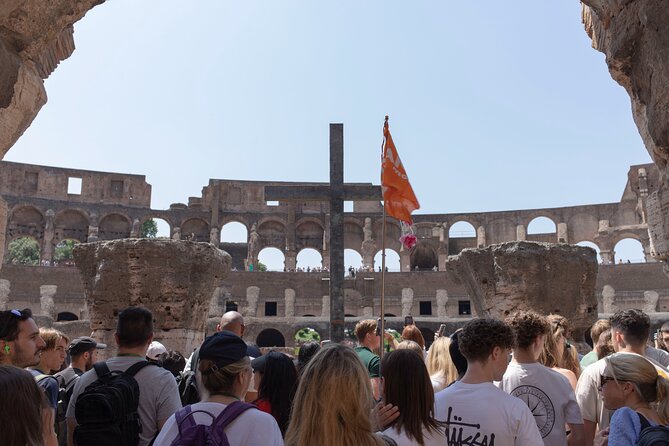
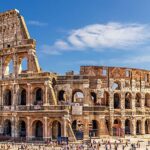
Once inside, you’re looking at the Colosseum as a symbol of imperial power. The tour emphasizes that it was built to celebrate the greatness of an empire and a city that marked world history. That angle helps you read the structure. You’re not just looking at what remains, you’re thinking about what it represented.
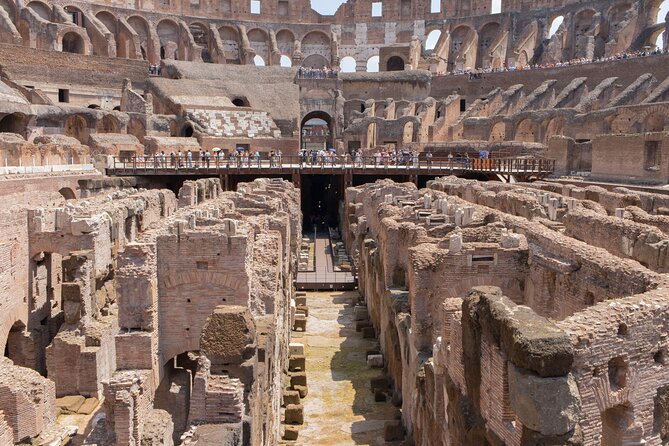
The Colosseum experience also gets a little extra because the tour ends inside. That means after your guided portion finishes, you can keep going at your own pace without having to reassemble and walk out with the group.
Here’s what to consider. The Colosseum is large, and 45 minutes can feel short if you stop often. If you’re the type who likes to trace every row of stone seating with your eyes, plan for extra time once the tour ends. The benefit is that you can control that time yourself.
We wrote up further guided tours in Rome on the same pass through the archive.
Headsets and Spanish commentary: how you actually get the most out of it
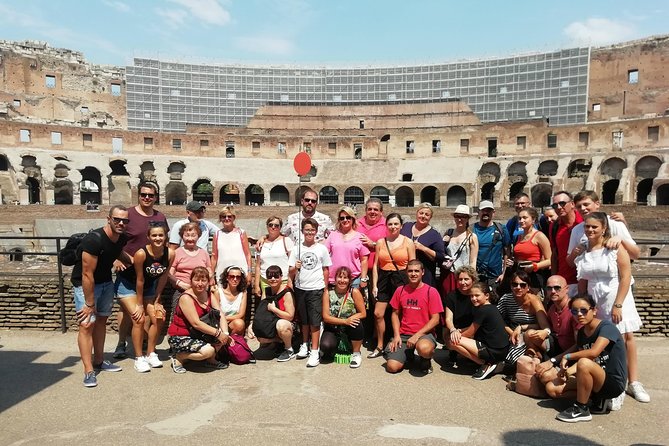
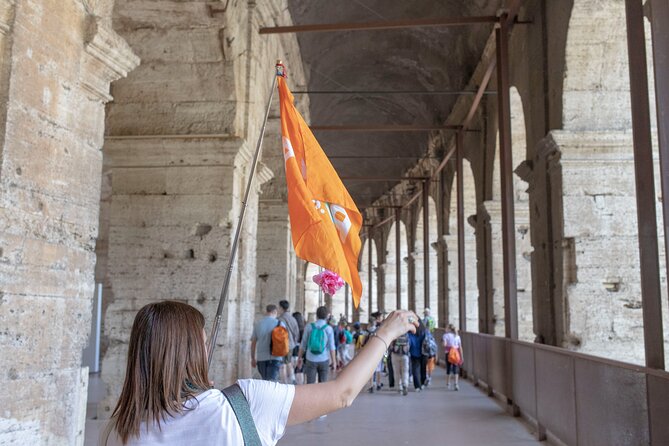
Headsets are included, and this is one of the most underrated parts of the whole experience. In busy ruins, people naturally spread out for photos, or they shuffle to find a better angle. With headsets, you’re still hearing the guide clearly, which keeps the tour from becoming a silent slideshow.
Spanish-only guiding can also be a big plus. If you speak Spanish or even just understand the basics, you’ll likely get more from the rhythm of the explanations. Even if your Spanish isn’t perfect, the guide’s pacing and references to what you’re looking at can make the key points easier to catch.
The guides’ quality comes up again and again in the feedback. Names like Sara, Tomas, Miriam, and Silvia show up with praise for professionalism, friendliness, and making the history easier to understand. I’d take that as a strong sign the tour is usually more than a “walk and look” kind of guide service.
Group size, pace, and the heat factor
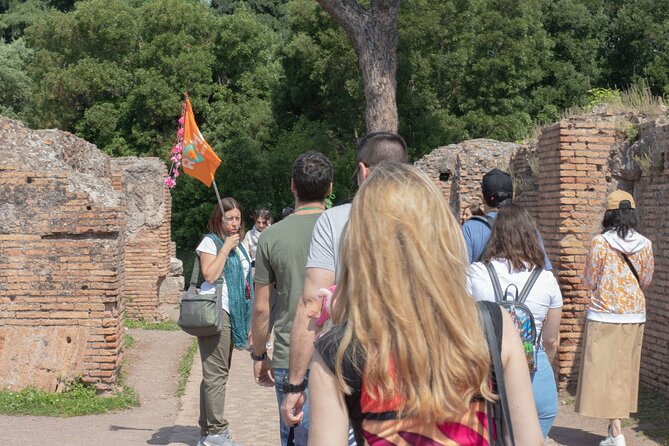
This is described as a small group tour with a maximum of 25 travelers. That cap matters because it can keep your guide’s attention more focused than in huge bus-group chaos.
Still, I wouldn’t ignore the reality of crowded Rome. One concern that shows up in feedback is that on some days the group can feel big, and when people drift during the transitions, it can cost time. The workaround is simple: listen for regroup points and stay close during moving sections.
The other major factor is physical comfort. The tour says it’s for travelers with moderate physical fitness. You’re walking between major zones and spending time outdoors. That’s manageable for most people, but not ideal if you want minimal walking.
If you’re heat-sensitive, this is where good planning makes a huge difference. Wear breathable clothes, bring water, and consider a hat. Headsets help with hearing, but they do not help you last longer in direct sun.
What to bring and how to make the most of each stop
You’ll enjoy this tour more if you come prepared to look up, look around, and ask questions. Ruins reward curiosity, not just camera clicks.
Practical items:
- A valid passport or ID that matches the names on your booking
- Comfortable shoes for uneven stone and walking
- Water and sun protection, since you’re outdoors for multiple stops
- A fully charged phone for the mobile ticket
Also, be ready for the entry rules. Large umbrellas and large backpacks aren’t allowed. If your bag is bulky, you might want to travel with something compact that fits what security expects.
For maximizing value, treat this like a story arc: Forum first, Palatine second, Colosseum last. Once you understand the Forum as civic life, and Palatine as the power base, the Colosseum reads less like a random ancient stadium and more like the empire’s message at full volume.
Who this tour fits best, and who should consider alternatives
This tour is ideal if you want the top sites without losing hours to lines or figuring out the order yourself. It’s also a strong fit if you like guided context. The Spanish explanations are built to help you understand the significance of the ruins, not just their names.
You’ll likely enjoy it most if:
- You have limited time in Rome
- You want to see Forum plus Palatine, not just the Colosseum
- You appreciate a structured route with a guide and headsets
- Spanish is your comfort zone, or you’re actively trying to use Spanish while traveling
Consider a different option if:
- You want a slow paced, linger forever style tour
- You need a route adapted for mobility difficulties or stroller travel, since the tour does not follow the mobility or stroller adapted route
- You’re extremely sensitive to outdoor heat and want mostly indoor stops
Booking tip: the details that protect your entry
This is the part you should take seriously, because it’s where many people lose time. Make sure the full names for all travelers are correct when booking. At entry, you must present a valid passport or ID document that matches those names.
Also, be on time. Arriving a few minutes early helps the tour start smoothly and keeps your visit efficient. If you arrive late, you can miss the best setup moments when the guide is explaining what you’re about to see.
If you want zero surprises, double-check your meeting point location beforehand using Google Maps. Largo Corrado Ricci is not hard to find, but Rome is full of side streets and everyone’s walking with their own agenda.
Should you book this Spanish Colosseum, Forum, and Palatine tour?
If your goal is to hit the top ancient Rome sights in one focused morning or afternoon, I think this is a smart buy. The combination of priority admission, a Spanish guide, and headsets makes it efficient without feeling rushed in terms of information.
Book it if you like structured context and you want your time to be used well. The guides getting named with consistent praise is a good sign you’ll usually get a tour that answers questions and keeps the group moving in a thoughtful way.
Skip it or shop around if you want a more relaxed pace, or if your travel style requires mobility adapted routes. Also, if you’re the type who hates any outdoor time in the sun, plan your timing carefully.
Overall, this is a strong value option for travelers who want a guided route that helps you read the ruins instead of just looking at them.
Our Wider Tours File for Rome
Other Colosseum and Roman Forum Tours in Rome From Our Notebook
Not quite the day you had in mind? The rest of our Rome write-ups sit below
- Rome: Guided Tour of St. Peter’s Dome Climb, Basilica & Vatacombs★ 5.0 · 167 reviews
- St. Peter’s Basilica Guided Tour with Reserved Entrance★ 4.0 · 168 reviews
- Golf Cart Driving Tour in Rome: 2.5 hrs Catacombs & Appian Way★ 5.0 · 168 reviews
- Rome: Trastevere Wine Tasting with Food Pairing and Gelato★ 4.9 · 168 reviews
- Guided Tour of the Colosseum Palatine Hill and Roman Forum★ 4.7 · 168 reviews
- Vatican Museums, Sistine Chapel & Saint Peter’s Semi-Private Tour★ 4.5 · 169 reviews
- Hidden Rome: Small Group E-Bike Tour with Street Food Stops★ 5.0 · 169 reviews
- Rome: Papal Audience with Pope Leo IV★ 3.9 · 169 reviews
- Rome Golf Cart Tour: Highlights & Must See★ 4.5 · 170 reviews
Colosseum & Roman Forum Tours, top to bottom.
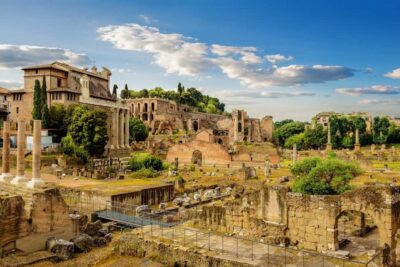 ★ 4.7Colosseum, Roman Forum & Palatine Guided TourFrom $7863,148 reviews
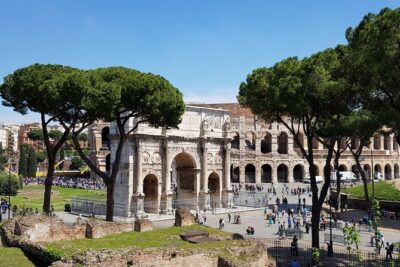 ★ 4.8Rome: Colosseum, Palatine Hill and Roman Forum Guided TourFrom $5232,814 reviews
 ★ 4.7Rome: Guided Tour of Colosseum, Roman Forum & Palatine HillFrom $5527,897 reviews
 ★ 4.2Rome: Colosseum & Forum with Audio Guide App -Optional ArenaFrom $4124,770 reviews
 ★ 4.5Rome: Colosseum, Roman Forum and Palatine Hill Guided TourFrom $5923,903 reviews
 ★ 4.4Rome: Colosseum, Forum & Palatine Hill Tour & Optional ArenaFrom $5813,839 reviews
 ★ 4.0Rome: Colosseum, Roman Forum, Palatine with Multimedia VideoFrom $3212,766 reviews
 ★ 4.6Rome: Colosseum, Palatine Hill & Roman Forum Guided TourFrom $5112,703 reviews
Filed under