
Reviewed · CYCLING TOURS
Highlights of Rome Bike Tour (Including Jubilee Sights)
First-time Rome needs a quick plan. This 3-hour bike tour gives you a tight, story-filled sweep through the city’s most famous center sights, including the Jubilee route stops. I like how it matches your pace with the right bike choice and keeps the group moving without turning the experience into a sprint.
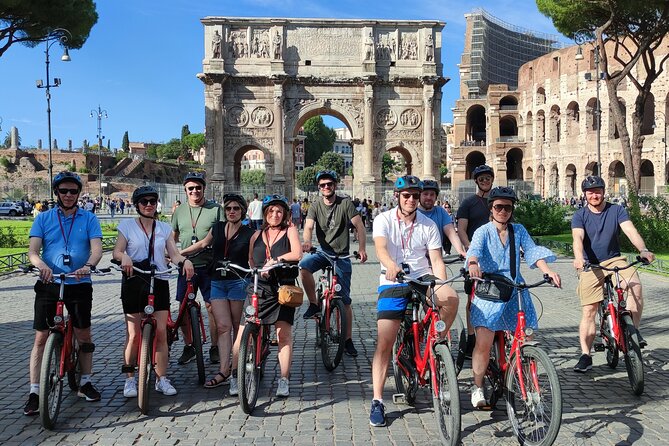
What I really like is the small-group feel, capped at 14 people, so you get a more personal ride and you are not stuck shouting over a crowd. Guides can be funny and sharp with details, from Daniele to Nico to Stefano and Elena, and they tend to keep you oriented as you roll from area to area.
One possible drawback: Rome is flat, but the streets are still uneven and often crowded, so cobblestones and traffic matter. If you are pregnant, the operator strongly discourages bike tours on cobbled streets, and if you dislike tight city navigation, you may want a slower walking-based day instead.
In This Review
- Key things to know before you ride
- A 3-hour “get your bearings fast” plan for Rome
- Starting at Via dei Delfini, 35, and why timing matters
- Bikes, helmets, and carrying your valuables safely
- Stop by stop: the Jewish Ghetto, Campo de’ Fiori, and Piazza Navona
- Pantheon area and Sant’Ignazio: what you can see without getting stuck
- Tempio di Adriano and Trevi Fountain, powered by the old aqueduct
- Trajan’s Forum to Piazza Venezia, Arch of Constantine, and Circus Maximus
- Crowds, cobblestones, and safety tips that make the ride smoother
- What you pay, and what you actually get for $54.44
- Who this Rome bike tour is best for
- Should you book this Rome Bike Tour?
- FAQ
- How long is the Rome Highlights Bike Tour?
- What is included in the price?
- Where do I meet for the tour?
- Is the tour offered in English?
- Are tickets to the sites included?
- Is this tour suitable for children?
- Can I cancel and get a full refund?
Key things to know before you ride
- A first-timer friendly route in about 3 hours that helps you pick what to revisit later
- Bike choice for your pace, plus helmet and a front bike pouch and rear rack for your stuff
- A tight stop-and-explain rhythm so you learn as you go, with short time for photos and walking
- Major sights without the full-day commitment, including Trevi Fountain and the ancient forums area
- Some entrances are not included, so plan for tickets if you want inside moments
A 3-hour “get your bearings fast” plan for Rome
This is one of those tours that feels practical from minute one. You start in the center, ride a manageable loop, and get back to the meeting point within about 3 hours. For first-time Rome, that matters, because after one afternoon or morning, you understand where everything is and you know which neighborhoods you actually want to return to.
The pace is built around short segments of riding plus short explanations at each stop. Most sites you see on this route are either outdoors or easy to wrap your arms around in a few minutes. That makes the day feel efficient, not exhausting.
You also get a good mix of Rome eras. You roll from the Jewish Ghetto into Baroque squares, then into the monumental “works of empire” zone around the forums. It is a smart way to see how Rome layers time on top of time without spending your whole trip inside museums.
We wrote up further cycling tours in Rome on the same pass through the archive.
- Rome EBike Tour: Appian Way, Catacombs & Roman Aqueducts
★ 5.0 · 1,766 reviews - Rome: Top Highlights & Hidden Gems Tour by Cannondale E-Bike
★ 4.9 · 1,760 reviews - Rome: Appian Way, Catacombs, & Roman Aqueducts E-bike Tour
★ 4.9 · 1,421 reviews - Rome City Small Group Bike Tour with quality Cannondale EBike
★ 5.0 · 1,380 reviews
Starting at Via dei Delfini, 35, and why timing matters
The meeting point is Via dei Delfini, 35, 00186 Roma RM. You should arrive 15 minutes early, because you need time for bike fitting and a quick briefing. The tour ends back at the same place, which is convenient when you are planning dinner or walking plans after.
Most tours like this run best when the streets are less packed. One important note from real-world experience: if you pick a very crowded time window, the ride can feel tighter and louder. In general, you will get a more relaxed experience earlier in the day than during peak evening crush.
Also, the tour is in English, and you receive a mobile ticket. That means you spend less time hunting for paper confirmations and more time actually riding.
Bikes, helmets, and carrying your valuables safely
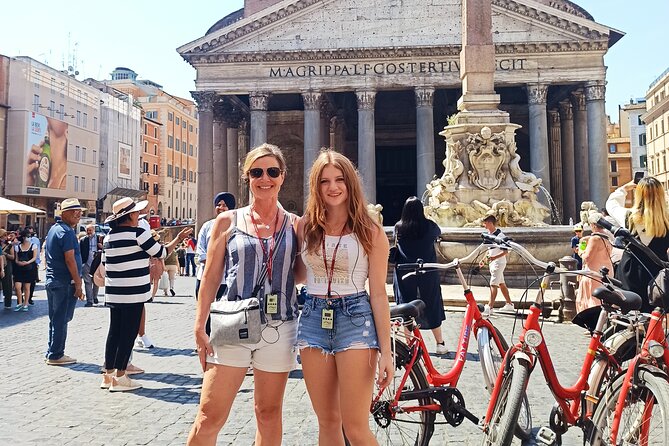
You get bike rental, a helmet, and a setup to keep your belongings under control. There is a front bike pouch and a rear rack, which is genuinely useful for phones, small cameras, and a light layer. It is a small detail that makes a big difference in a city where you do not want to keep holding items every few minutes.
The tour also emphasizes choosing a bike that fits your pace and budget. Some people prefer an assist option for comfort, especially if you want to feel less strain over uneven streets. Since Rome is mostly flat, you do not have to be super athletic, but you do have to be comfortable steering and braking in a busy urban environment.
One practical tip: bring a compact way to secure your valuables. Even with storage on the bike, you will feel more confident with your phone, wallet, and any essential items in one place you can access quickly.
Stop by stop: the Jewish Ghetto, Campo de’ Fiori, and Piazza Navona
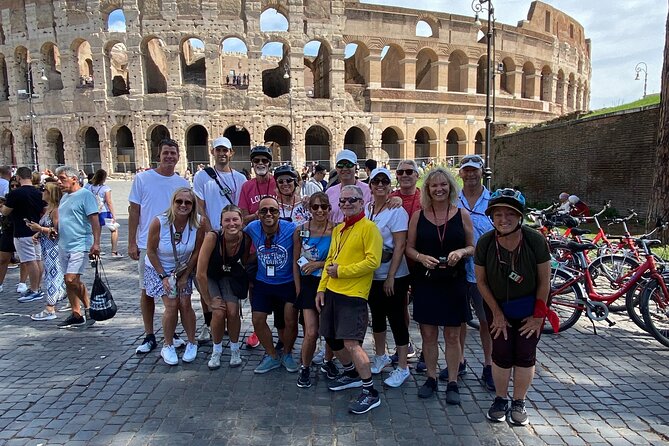
The first stop is Antico Quartiere Ebraico, the Jewish Ghetto of Rome. This neighborhood is considered one of the oldest in the world, second only to Venice’s ghetto. It was created in 1555 by order of Pope Paul IV, and Jewish residents were required to live there and carry a distinctive sign of belonging. Even if you know very little about Roman Jewish history, the guide framing here helps you see this area as more than a scenic old district.
Next comes Campo de’ Fiori, the square that stays lively both day and night. During the day, it is known for its market vibe. At night, terraces draw people in. This is a good stop for photos and for a quick sense of local street life, and it is close enough to other big sights that it flows naturally.
Then you reach Piazza Navona, one of the showpieces of Baroque Rome. The key detail that makes this square click is that its current shape follows the perimeter of an ancient Stadium of Domitian built in 86 AD for athletics and horse racing. That is the kind of “look at the ground, not just the buildings” insight that turns a famous square into something you actually understand.
Pantheon area and Sant’Ignazio: what you can see without getting stuck
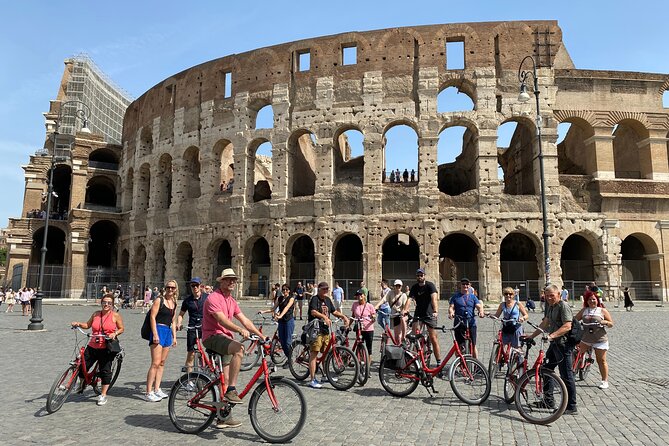
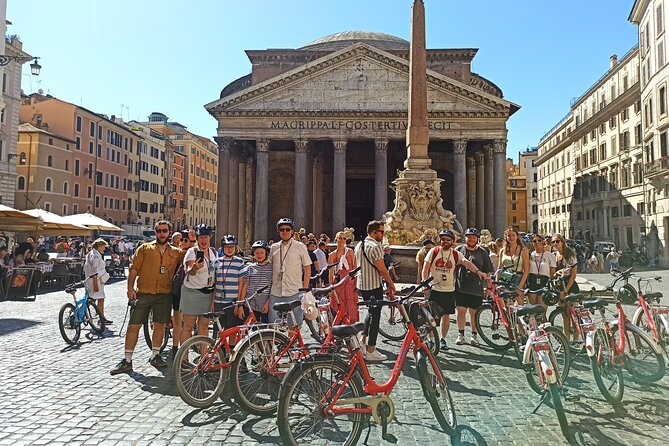
You get a stop at the Pantheon, with time for looking and explanations, but admission is not included. The outside view and architectural talk still help a lot, because the Pantheon’s beauty is tied to proportions and geometry that explain why generations of architects kept staring at it.
You also hear how one of the Pantheon’s origin stories goes back to 27 BC, when Marcus Vipsanius Agrippa commissioned a temple on the site dedicated to all the gods. You do not need a ticket to inside the building to grasp why this structure became a template for so much later design.
After that, you visit Chiesa di Sant’Ignazio di Loyola for an outside view and explanation with pictures. If your goal is getting a high hit rate of major sights, these “outside but explained” stops are perfect. They add context without eating your time the way long entrance lines can.
Tempio di Adriano and Trevi Fountain, powered by the old aqueduct
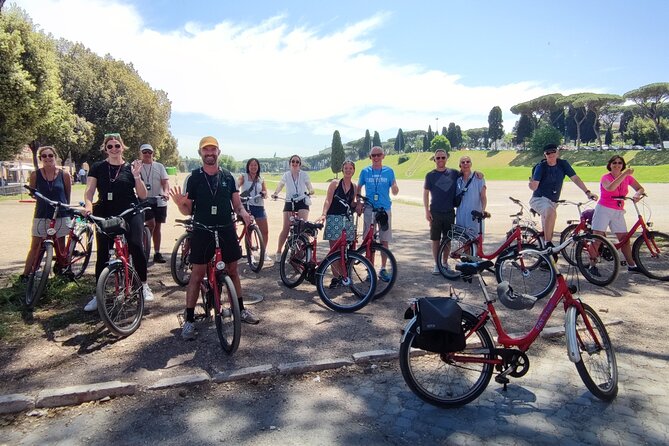
A quick stop brings you to Tempio di Adriano, where the story connects directly to Roman imperial power and dedications. The building is commonly associated with Emperor Hadrian, who intended it for Vibia Sabina. She died in 136 and was then deified, and construction works reportedly concluded around 145 under Antoninus Pius.
Then you are at Trevi Fountain. The standout detail is how it is fed by the terminal part of the Vergine aqueduct, still in use today. You will see why this fountain became Rome’s default postcard moment, because it is tied to engineering you can trace in the city, not just a decorative monument.
Trevi is free to view, but it is usually busy. Plan to keep expectations realistic. You will get time to look and take photos, but you might not get a perfect, quiet angle, especially if you are riding during high-demand periods.
Trajan’s Forum to Piazza Venezia, Arch of Constantine, and Circus Maximus
The route then shifts into the imperial landscape around the forums. You get an explanation of Trajan’s Forum and the Imperial Forum. This is where a bike tour shines, because you cover ground efficiently and you do not lose the thread. Even if you only have a short window, you can start recognizing how Rome’s empire presented itself through monumental public space.
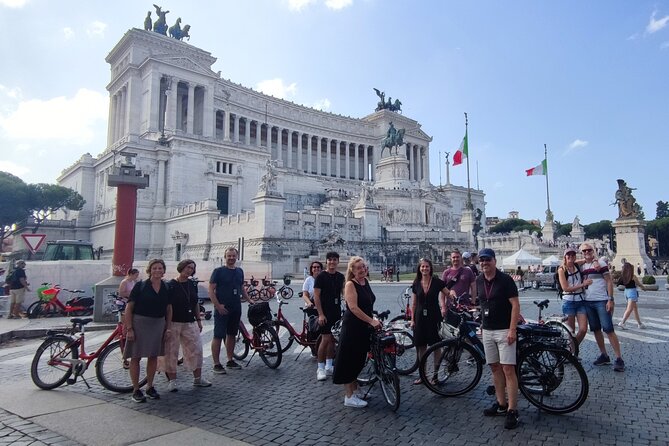
Next is Piazza Venezia, near the ancient city area and along major connecting streets. It is a short stop, but you get context about how modern renovations shaped the area, including the Monumento a Vittorio Emanuele II.
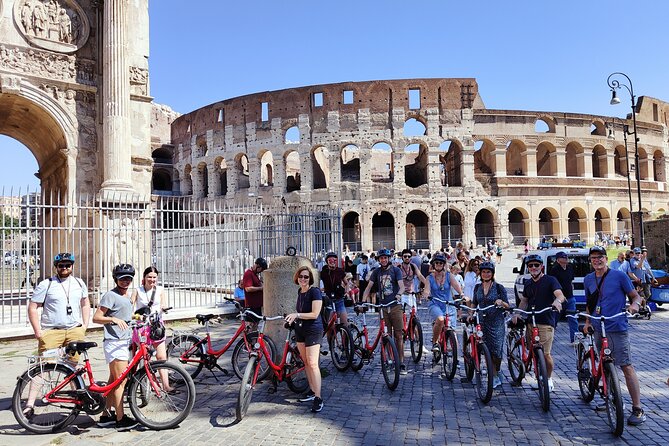
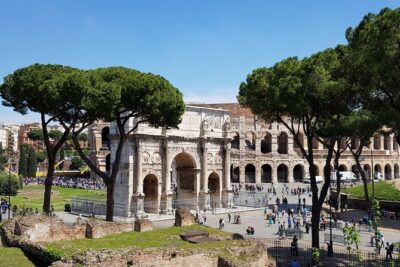
Then comes the Arch of Constantine, a major landmark along the route taken by triumphs. The guide focuses on what it celebrates: Constantine’s triumph over Maxentius on 28 October 312 AD. This is another spot where outside viewing plus an explanation helps you spot propaganda themes you would miss if you just walked past it.
Finally, you roll to Circus Maximus, the huge public entertainment venue. The dimensions are astonishing, about 600 meters long and 140 meters wide, and the guide includes the city origin legend about the Rape of the Sabine Women. Even if you treat legends as legends, the scale of Circus Maximus makes you feel how big Roman public life was.
Crowds, cobblestones, and safety tips that make the ride smoother
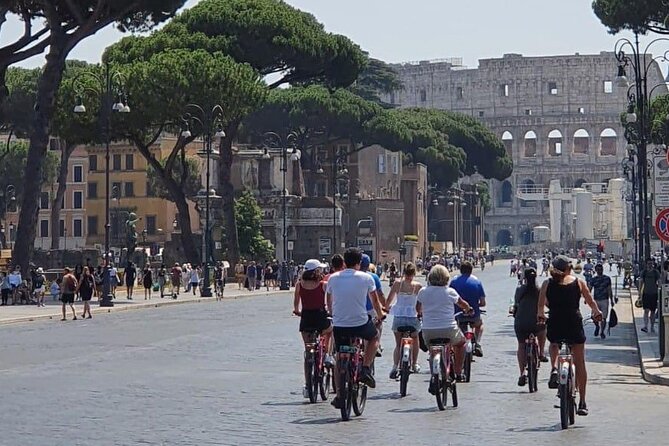
Rome is flat, and pedaling is generally easy. But the streets can still feel tricky. Cobblestones are uneven, intersections can get crowded, and the traffic flow can be surprising if you expect a calm cycling environment.
What makes this tour work is the rhythm: the guide keeps you together, gives frequent check-ins, and pauses enough for the group to regroup. You may also use a headset for commentary, and one practical issue is that hearing through the headset while moving can be harder in noisy streets. If you care about every detail, keep your focus when you stop and listen closely during the explanation moments.
Pack for comfort. Wear shoes that grip. Consider gloves if your hands get sore. Bring water, because drinks are not included. And if you want the best experience, aim for a time when crowds are lower, since dense evening foot traffic can make the ride feel more stressful.
One more safety note from the operator’s guidance: pregnant women are strongly discouraged from joining because of cobbled streets. That is a clear signal to choose a different tour format if you are expecting.
What you pay, and what you actually get for $54.44
At $54.44 per person for about 3 hours, the value is in what is included plus what it helps you avoid.
Included:
- Local tour guide
- Bike rental
- Helmet
- Front bike pouch and back rack
Not included:
- Drinks
On top of that, some stops are marked with free viewing, while key sites have admissions not included. Piazza Navona and the Pantheon are examples where your time is mostly outside and guided, with admission not included for the Pantheon. You should assume that if you want inside time at major buildings, you may need to buy tickets separately.
So the price makes sense if you want:
- A guided overview of Rome’s center sights in one shot
- Bike support without the effort of planning routes
- A chance to identify what deserves your next visit
It is also worth noting the tour has a maximum of 14 travelers, which helps keep the experience personal. If you prefer small-group travel over big bus routines, that’s part of the value.
Who this Rome bike tour is best for
This tour is a strong fit if you:
- Are in Rome for a short time and want a quick, high-impact overview
- Want to see major monuments and squares without doing a full day of museum lines
- Like learning through stories while walking for a few minutes at a time
It is also friendly for kids, with caveats. Kids are welcome, but they should have been riding for a while, feel comfortable riding in a group, and be able to navigate varied surfaces. You will want to provide the child’s height to reserve the correct bike size. It is not recommended for a child aged 1 and under.
It is not a great match if you:
- Are pregnant and do not want to risk cobbled surfaces
- Want long, deep museum-style explanations at every site
- Hate the idea of city cycling around traffic, even if the riding is mostly easy
Should you book this Rome Bike Tour?
If you want an easy way to get your bearings and start pulling Rome into focus, I think this is worth booking. The route hits the Jewish Ghetto, the Baroque showpieces around Piazza Navona, the Trevi area, and the ancient forum zone, all in a time window that works for real trip schedules.
I would especially book it if you enjoy guides who make the stories move, and if you value a small group where you are not lost in the shuffle. If you are the type who wants every site treated like a textbook lesson, consider pairing this with one longer, ticketed guided visit so you get both the big-picture orientation and the deep detail.
Bottom line: this is a practical, high-value overview that helps you understand where to go next in Rome, then revisit on your own with more confidence.
FAQ
How long is the Rome Highlights Bike Tour?
It runs for about 3 hours.
What is included in the price?
You get a local guide, bike rental, a helmet, and a front bike pouch plus a rear rack. Drinks are not included.
Where do I meet for the tour?
The meeting point is Via dei Delfini, 35, 00186 Roma RM, Italy. The tour ends back at the meeting point.
Is the tour offered in English?
Yes, the tour is offered in English.
Are tickets to the sites included?
Some stops are free to view, while certain entrances are not included, including the Pantheon and Piazza Navona. The route includes a mix of free stops and stops where admission is not included.
Is this tour suitable for children?
Kids are welcome if they have been riding for a while, feel comfortable in a group, and can handle various surfaces. You also need to provide the child’s height to reserve the correct bike size. It is not recommended for children aged 1 and under.
Can I cancel and get a full refund?
Yes. You can cancel for a full refund up to 24 hours in advance of the experience start time.
Cycling Tours in Rome We Also Walked
Our Wider Tours File for Rome
Not quite the day you had in mind? The rest of our Rome write-ups sit below
- Rome: Guided Tour of St. Peter’s Dome Climb, Basilica & Vatacombs★ 5.0 · 167 reviews
- St. Peter’s Basilica Guided Tour with Reserved Entrance★ 4.0 · 168 reviews
- Golf Cart Driving Tour in Rome: 2.5 hrs Catacombs & Appian Way★ 5.0 · 168 reviews
- Rome: Trastevere Wine Tasting with Food Pairing and Gelato★ 4.9 · 168 reviews
- Guided Tour of the Colosseum Palatine Hill and Roman Forum★ 4.7 · 168 reviews
- Vatican Museums, Sistine Chapel & Saint Peter’s Semi-Private Tour★ 4.5 · 169 reviews
- Hidden Rome: Small Group E-Bike Tour with Street Food Stops★ 5.0 · 169 reviews
- Rome: Papal Audience with Pope Leo IV★ 3.9 · 169 reviews
- Rome Golf Cart Tour: Highlights & Must See★ 4.5 · 170 reviews
Cycling Tours, top to bottom.
 ★ 5.0Rome EBike Tour: Appian Way, Catacombs & Roman AqueductsFrom $1021,766 reviews
 ★ 4.9Rome: Top Highlights & Hidden Gems Tour by Cannondale E-BikeFrom $851,760 reviews
 ★ 4.9Rome: Appian Way, Catacombs, & Roman Aqueducts E-bike TourFrom $851,421 reviews
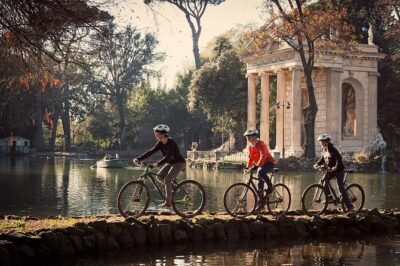 ★ 5.0Rome City Small Group Bike Tour with quality Cannondale EBikeFrom $1021,380 reviews
 ★ 5.0Tuscany Bike Tours Through the Chianti Hills with Wine TastingFrom $1451,300 reviews
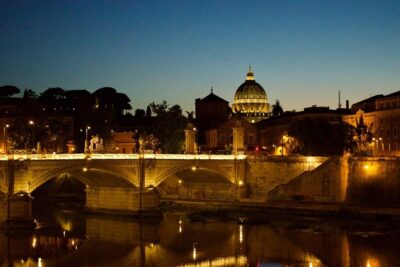 ★ 5.0Rome by Night – Ebike Small Group Tour – Food and Wine (Option)From $711,275 reviews
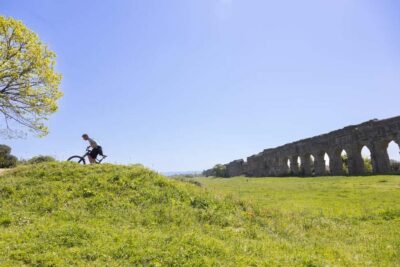 ★ 4.9Rome:Appian Way E-bike Tour with Catacombs, Aqueducts & FoodFrom $961,210 reviews
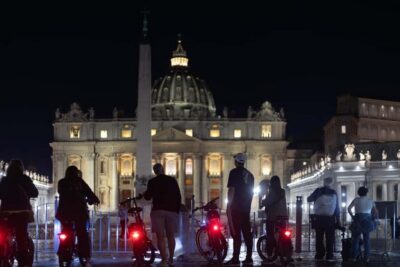 ★ 4.9Rome: E-Bike Night Tour with Food and Wine TastingFrom $891,131 reviews
Filed under