
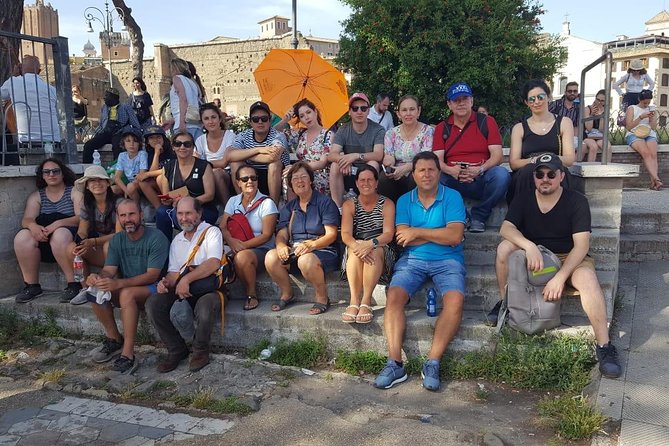
Reviewed · COLOSSEUM & ROMAN FORUM TOURS
Imperial Rome and External Colosseum Tour
Roman power feels close in the late afternoon. This Imperial Rome and External Colosseum Tour threads Colosseum atmosphere with the Imperial Forum Road and ends at the Capitol area, where Rome’s story shifts from arenas to emperors and then to art. You’ll connect the names you’ve seen on monuments, like JULIO CèSAR, AUGUSTO OCTAVIO, and TRAJANO, to the exact places that still shape how you understand the city.
What I like most is the practical feel. You get a small group setup (up to 15 people), and the route is built for people who want an intro that sticks without eating your whole day. I also appreciate that it uses a mobile ticket, so you are not digging through paper while trying to keep your bearings.
The main drawback to consider is entry. The Colosseum and Roman Forum admission is not included, and the tour also requires your ID (with names matching the booking) for successful entry. If you do not have that sorted, you can lose time at the gate.
In This Review
- Key things that make this tour work
- A late-afternoon route through imperial Rome
- Getting oriented: from Colosseo to Capitoline
- Colosseum time, then right into the imperial forums
- Nerva, Augustus, and Julius Caesar: reading Rome by the names
- Trajan’s corridor of power: forum, markets, and column
- Venice Square and the Monument Axis
- Capitoline Hill and Campidoglio: the she-wolf and art square
- Price and value: what $17.44 actually buys you
- Who should book this tour, and who should pair it
- Should you book Imperial Rome and External Colosseum Tour?
- FAQ
- What time does the tour start and how long is it?
- Where do I meet the tour, and where does it end?
- Is admission to the Colosseum and Roman Forum included?
- What identification do I need for entry?
- Do I get a mobile ticket?
- How many people are in the group?
- Is this experience refundable if I cancel?
Key things that make this tour work
- Up to 15 people keeps the walk manageable and focused on the route
- Mobile ticket means less fuss when you arrive
- A tight 2.5-hour timeline gives you big impact without a full day commitment
- Emperor-driven stops tie Julius Caesar, Augustus, Nerva, and Trajan to what you can actually see
- Capitoline finish at Campidoglio adds classic Rome viewpoints and symbolism
A late-afternoon route through imperial Rome
This tour starts at 4:30 pm, which is a smart time to plan your Rome day. During late afternoon, you usually get softer light for stone, fewer midday crowds than you’d see earlier, and a natural lead-in to the golden-hour feeling around the forums and hills. It is not a museum day. It is a walking, orientation-style experience that helps you connect Rome’s “greatest hits” to the logic of where power sat and how it moved.
The whole thing runs about 2 hours 30 minutes, so you can slot it between an early lunch and evening plans. At this length, you get enough time to understand the main story beats, but you should still expect it to be a guided walk with a moving rhythm rather than a slow sit-and-stare tour.
One more plus: the tour ends at Piazza del Campidoglio, which is a great springboard for dinner nearby. When your last stop is already on a viewpoint, you are not scrambling to find one after the tour ends.
Filed beside this one, more Colosseum and Roman Forum tours in Rome.
- Rome: Colosseum, Palatine Hill and Roman Forum Guided Tour
★ 4.8 · 32,814 reviews - Rome: Guided Tour of Colosseum, Roman Forum & Palatine Hill
★ 4.7 · 27,897 reviews - Rome: Colosseum & Forum with Audio Guide App -Optional Arena
★ 4.2 · 24,770 reviews - Rome: Colosseum, Roman Forum and Palatine Hill Guided Tour
★ 4.5 · 23,903 reviews
Getting oriented: from Colosseo to Capitoline
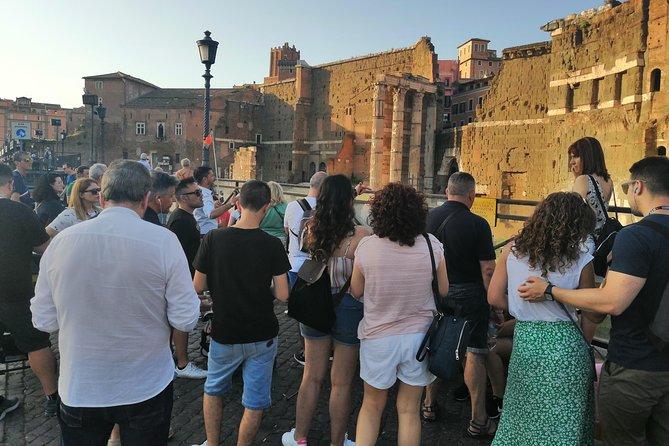
The tour begins at Colosseo00184, Rome, and the ending point is Piazza del Campidoglio, 00186 Roma RM. In other words, you start at the big Colosseum zone and you finish up on the Capitoline hill area. That “down and up” movement matters because Rome’s power centers are not flat. The city’s drama is built into its geography.
You will also want to be ready for one thing that surprises first-timers: Rome rewards punctuality. If you arrive late, you can lose your place in a short, structured route. Since the whole experience is about 2.5 hours, the tour does not have huge slack.
It helps that the tour is described as being near public transportation, so if you are coming in by tram, metro, or bus, you usually have options to get there. And with service animals allowed and most travelers can participate, it is a practical fit for a wide range of visitors.
Colosseum time, then right into the imperial forums
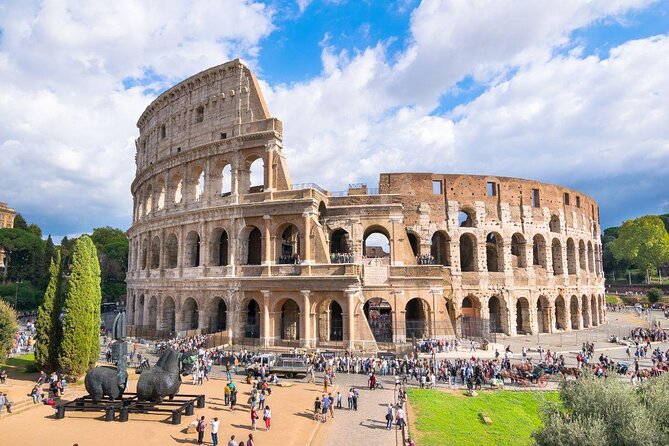
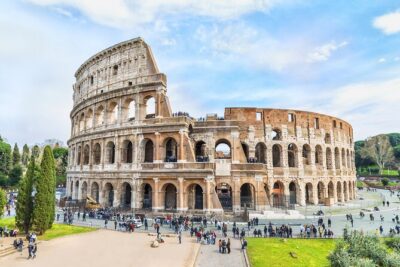
The Colosseum is the obvious magnet. Even if you have seen photos, seeing it in person changes your brain’s sense of scale. This tour’s Colosseum stop focuses on the area and nearby imperial landmarks, and it flags that admission tickets are not included and an admission ticket is required for Colosseum and Roman Forum entry.
Here is the practical way to think about this stop: treat it as your fast “power intro.” You start the story at the Flavio Amphitheater, and then you pivot into the forum world where emperors did politics, propaganda, and public messaging. If the Colosseum is the spectacle, the forums are the backstage set where the next spectacle gets organized.
As you move along the imperial trail, you hit names tied to major forums linked to different rulers. The tour includes:
- Nerva Forum
- Augusto Forum
- Julius Caesar Forum
- Trajan Forum
Even if you only catch pieces of the architecture while walking, the payoff is connection. You begin to see Rome as a sequence of rulers adding their own version of legitimacy. Each complex is another “this is our era” stamp placed on the city.
Tip for your first visit: keep a mental note of the biggest name you see for each stop, then look around for how the street lines and open areas lead your eye forward. Rome is easier when you treat it like a map, not just a set of ruins.
Nerva, Augustus, and Julius Caesar: reading Rome by the names
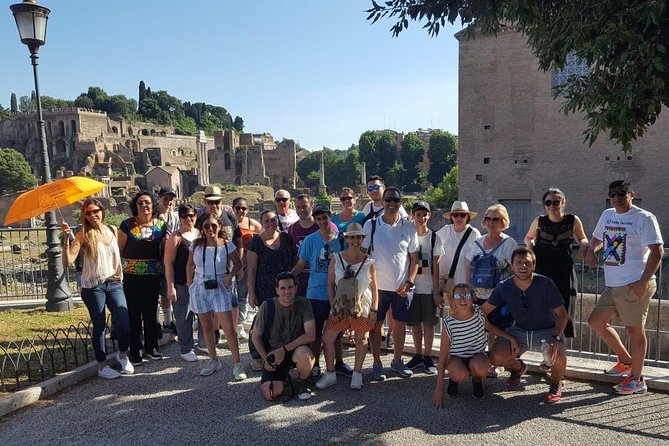
This part of the walk helps you translate what you see into what it means. When you stand near the forum complexes and hear the associated ruler names, you are not just collecting facts. You are learning how Romans used public space like a message board.
At Nerva Forum, the emphasis is the idea of succession and updates to Rome’s civic core. It is the kind of place that makes you understand Rome as a long-running project, not a single moment in time. Then Augusto Forum gives you the theme of Augustus establishing order and shaping public identity through monumental planning.
Next comes the Julius Caesar Forum, where Caesar’s name marks the transition to the imperial era you keep seeing everywhere in Rome. Even without deep time for every column and wall, the route is set up to help you remember the story: different leaders show up, reshape civic space, and make their rule feel permanent.
A consideration here is simple: Rome ruins at street level can feel fragmentary if you expect complete buildings. You might still enjoy it a lot, but if you need every detail nailed down, you may want to pair this with a longer stop later in the day or another ticketed add-on.
Trajan’s corridor of power: forum, markets, and column
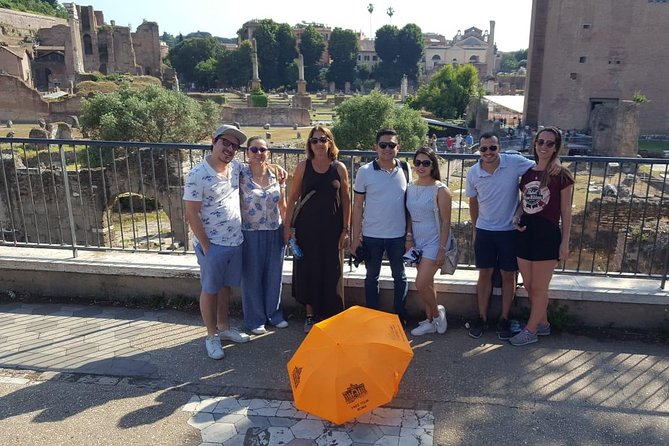
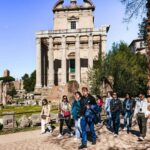
Then the tour shifts clearly into Trajan’s world. The route includes Trajan Forum, Trajan Markets, and the Trajan Column. This is where your understanding of Rome becomes more visual.
- Trajan Forum is where emperors used scale to say, I built this for you.
- Trajan Markets adds the angle of commerce and utility, showing that imperial monuments were not only for ceremonies, they were for daily city life functions too.
- Trajan Column is the memorable centerpiece for anyone who likes symbols tied to rule and messaging.
If you are the kind of traveler who likes to connect the dots between an image and the place it came from, this section is perfect. Seeing the scale of these spaces makes you realize why leaders poured money into stone. It was not just about beauty. It was about control and visibility.
One smart strategy during this segment: pause your walking pace when you hit the most recognizable landmark, like the column. That small break helps you absorb the stop as more than a checkbox. You will get more out of the rest of the route.
Venice Square and the Monument Axis
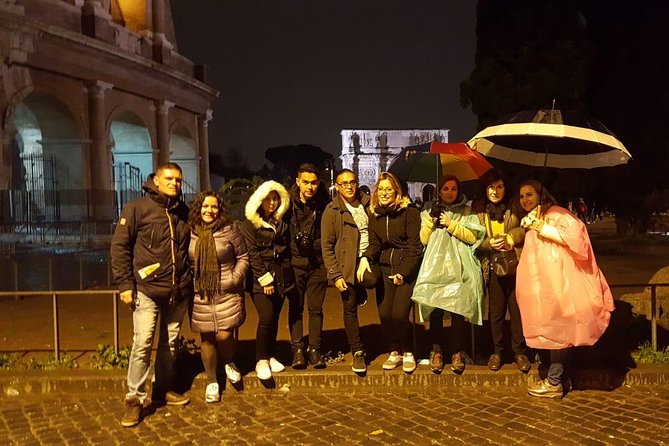
After the forum area, the tour reaches Venice Plaza (Piazza Venezia). From here, the route heads toward major symbolic landmarks, including the Altar of the Homeland and the Monument to Vittorio Emanuele.
The tour description points out Venice Plaza’s importance in fascism, and that matters. It is a reminder that Rome’s public spaces kept being used for political messaging long after the Roman Empire. When you stand there, you are seeing a city that reused its monumental language across different eras.
You will also get the angle of looking at the Vittorio Emanuele monument and how it fits into the “axis” feeling of the area. Then the tour continues toward the Altar of the Homeland, which is a dramatic stop for anyone who likes viewpoints with big symbolism. It is one of those places where the space itself helps you understand why Romans and later Italians built so much on ceremony and visibility.
This is a good time to take a breath. If you started the tour at Colosseum energy, your pace might be quick. Venice Plaza and the monument axis give you space to reset, look around, and connect what you’ve been told to the bigger urban layout.
Capitoline Hill and Campidoglio: the she-wolf and art square
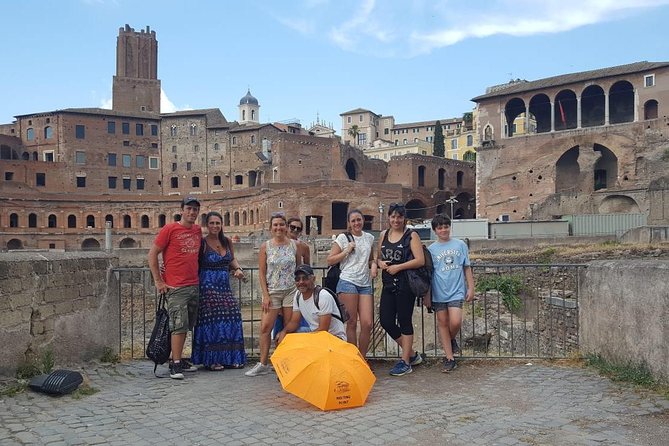
The tour culminates on the Capitoline Hill area and ends in Campidoglio. You will see the Capitolline area (Capitolino) and reach Campidoglio, tied to Miguel Angel Buonarroti.
This is the moment where the tour stops being only about emperors and becomes about the way later artists and planners framed Rome for visitors and power. The Campidoglio area is famous for its symbolic scene of the Loba feeding Romulo and Remo. Seeing that in place shifts your understanding of Rome. It is not just ancient politics. It is also myth used as a foundation story.
What you get here, practically, is a strong final impression. The walk ends on a square where you can naturally look in multiple directions. You do not have to hunt for the viewpoint, because the viewpoint is built into the setting. It is a good “close the loop” ending after the imperial names earlier in the route.
If you are taking photos, this is the area where you’ll be glad you slowed down earlier. You will have more patience for composition, and you will remember the symbolism better because it is your last major stop.
Price and value: what $17.44 actually buys you
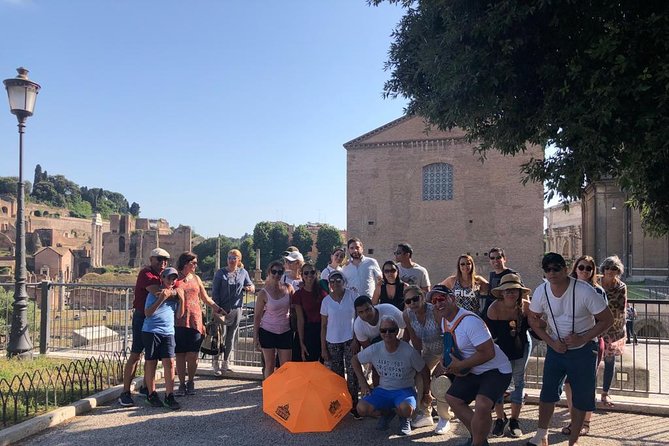
At $17.44 per person, this tour is priced as a budget-friendly guided walk. The big value is not that the ticket is expensive or that the tour covers a long list of museum rooms. The value is that you are paying for a route with clear imperial themes and the guidance to make those themes stick in your head.
Two details shape the real cost:
- Admission tickets are not included for the Colosseum and Roman Forum entry.
- The tour itself runs about 2 hours 30 minutes, so you are mostly paying for guidance and structured movement through key landmarks.
That said, the ratio still looks strong if you are planning to see these areas anyway. With a 4.8 rating and 96% recommended, it also suggests the experience is doing what it promises: helping first-timers get their bearings fast and giving you an intro that makes the rest of Rome easier to explore.
You might also like that the average booking timing is about 18 days in advance. That often points to a tour that works well for travelers who plan ahead without needing months of scheduling.
If you want a simple rule for value: if you are pairing this with your own admission tickets and you want a guided route that connects names to places, this price can be a bargain.
Who should book this tour, and who should pair it
This tour fits best if you are:
- In Rome for a limited time and want a fast imperial primer
- New to Rome and want the key stops tied to the big names: JULIO CèSAR, AUGUSTO OCTAVIO, TRAJANO
- The kind of traveler who likes stories that connect across neighborhoods and streets
It may not be your ideal choice if you want:
- Deep museum-style time inside monuments, because your stops are built around a walking route and time is limited
- A slow, unstructured wandering experience where you control every minute, because the format is guided and scheduled
For many people, the smartest approach is to treat this as your foundation walk, then build your day around one or two follow-up stops where you can linger. Start with the route to understand what you’re looking at, then return later with a clearer sense of what matters most to you.
Also, consider timing. Because it starts at 4:30 pm, it works well for people who already planned their morning and lunch and want a guided afternoon finale near viewpoints.
Should you book Imperial Rome and External Colosseum Tour?
Yes, if your goal is to get oriented fast and connect the “emperor names on stones” to actual locations. The experience looks like a strong value at $17.44, especially given the high rating and the practical, small-group format.
Before you book, do two things:
- Plan your admission tickets separately since entry is not included.
- Make sure your booking names match your valid passport or ID document exactly. The tour specifically warns that missing name matching can lead to denied entry for Colosseum and Roman Forum access.
If you want a guided route that ends with the Capitoline and Campidoglio payoff, this is a smart way to spend a focused evening window in Rome.
FAQ
What time does the tour start and how long is it?
The start time is 4:30 pm, and the tour duration is approximately 2 hours 30 minutes.
Where do I meet the tour, and where does it end?
You start at Colosseo00184, Rome, and the tour ends at Piazza del Campidoglio, 00186 Roma.
Is admission to the Colosseum and Roman Forum included?
No. Admission ticket is not included, and entry can require your own ticket.
What identification do I need for entry?
You need a valid passport or ID document that matches the name provided at booking for successful entry to the Colosseum and Roman Forum.
Do I get a mobile ticket?
Yes. The tour uses a mobile ticket.
How many people are in the group?
The tour has a maximum of 15 travelers.
Is this experience refundable if I cancel?
No. The experience is non-refundable and cannot be changed for any reason.
Our Wider Tours File for Rome
Other Colosseum and Roman Forum Tours in Rome From Our Notebook
Not quite the day you had in mind? The rest of our Rome write-ups sit below
- Rome: Guided Tour of St. Peter’s Dome Climb, Basilica & Vatacombs★ 5.0 · 167 reviews
- St. Peter’s Basilica Guided Tour with Reserved Entrance★ 4.0 · 168 reviews
- Golf Cart Driving Tour in Rome: 2.5 hrs Catacombs & Appian Way★ 5.0 · 168 reviews
- Rome: Trastevere Wine Tasting with Food Pairing and Gelato★ 4.9 · 168 reviews
- Guided Tour of the Colosseum Palatine Hill and Roman Forum★ 4.7 · 168 reviews
- Vatican Museums, Sistine Chapel & Saint Peter’s Semi-Private Tour★ 4.5 · 169 reviews
- Hidden Rome: Small Group E-Bike Tour with Street Food Stops★ 5.0 · 169 reviews
- Rome: Papal Audience with Pope Leo IV★ 3.9 · 169 reviews
- Rome Golf Cart Tour: Highlights & Must See★ 4.5 · 170 reviews
Colosseum & Roman Forum Tours, top to bottom.
 ★ 4.7Colosseum, Roman Forum & Palatine Guided TourFrom $7863,148 reviews
 ★ 4.8Rome: Colosseum, Palatine Hill and Roman Forum Guided TourFrom $5232,814 reviews
 ★ 4.7Rome: Guided Tour of Colosseum, Roman Forum & Palatine HillFrom $5527,897 reviews
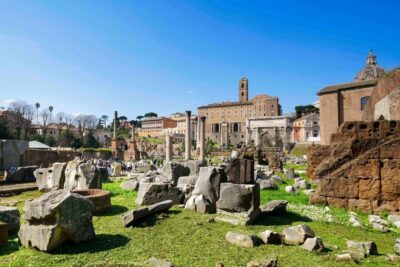 ★ 4.2Rome: Colosseum & Forum with Audio Guide App -Optional ArenaFrom $4124,770 reviews
 ★ 4.5Rome: Colosseum, Roman Forum and Palatine Hill Guided TourFrom $5923,903 reviews
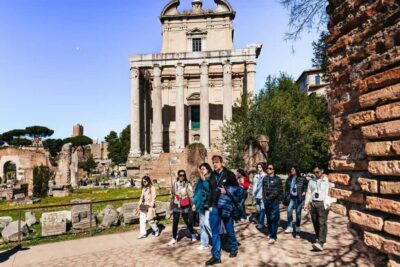 ★ 4.4Rome: Colosseum, Forum & Palatine Hill Tour & Optional ArenaFrom $5813,839 reviews
 ★ 4.0Rome: Colosseum, Roman Forum, Palatine with Multimedia VideoFrom $3212,766 reviews
 ★ 4.6Rome: Colosseum, Palatine Hill & Roman Forum Guided TourFrom $5112,703 reviews
Filed under