
Reviewed · BARI, ALBEROBELLO & THE TRULLI
Itria Valley: Polignano, Ostuni, and Locorotondo, from Bari
Three towns. One full Apulia day.
This Itria Valley route is built for big visual payoff without stress: an air-conditioned GT bus from Bari and three distinct old towns you can explore at your own pace. I like that it mixes iconic sights (Polignano’s cliffs, Ostuni’s white maze) with slower, gentler walking in Locorotondo.
I also really value the self-guided material system, with a printed brochure and digital help that gives you walking routes and useful context. You’ll start with a clear plan, then wander freely once you arrive, which makes the day feel flexible instead of rushed.
One consideration: it’s not a guided tour on foot, so if you want on-the-spot answers or a live storyline, you may feel a bit on your own in the streets.
In This Review
- Key things that make this Itria Valley day trip work
- A one-day Itria plan that feels efficient, not frantic
- Getting on the GT bus: where you meet and how the day flows
- Polignano a Mare: cliffs, caves, and the fast route to the best viewpoints
- Ostuni’s White City: how to use the 2.5 hours well
- Locorotondo: cummerse houses, Orange Flag vibes, and a calmer pace
- The real-world stuff: food, toilets, and timing that matters
- Price and value: what $71 buys you on this route
- Who should book this, and who might want a different format
- Should you book this Itria Valley day trip?
- FAQ
- How long is the tour from Bari to the Itria Valley?
- Where do I meet the bus in Bari?
- Is there a tour guide during the visits?
- What’s included in the price?
- What language is the tour material in?
- Do I need to bring food and drinks?
Key things that make this Itria Valley day trip work
- AC comfort on a GT bus for the long ride from Bari, with onboard video guidance during transit
- Self-guided stops designed around what to look for, with maps and QR-style digital info
- Polignano a Mare’s dramatic cliffs and sea caves plus historic layers from Arab, Byzantine, and Norman eras
- Ostuni’s White City with the Cathedral of Santa Maria Assunta and its rose window
- Locorotondo’s cummerse and the charm of its narrow streets and chianche paving
- Local extras onboard like apulian biscuits, and sometimes additional snacks and sweets
A one-day Itria plan that feels efficient, not frantic
Bari is a great base, but the Itria Valley towns are scattered in a way that can waste time if you’re figuring out trains and local buses on your own. This tour solves that by putting all the key logistics into the bus schedule, so you can focus on walking and views.
You’re visiting three towns that read like different pages of the same book. Polignano is sheer drama by the sea, Ostuni is sun-washed white streets above olive groves, and Locorotondo slows the pace with circular harmony and those distinctive cummerse houses.
The total day runs about 7.5 to 10 hours, so it’s serious enough to feel like you truly left Bari behind. Still, the stop lengths are long enough that you can do more than just take photos and move on.
Other Bari and Alberobello trulli days in Polignano A Mare that earned their own write-up.
- Polignano a Mare: Speedboat Cruise to Caves with Aperitif
★ 4.8 · 3,382 reviews - Polignano a Mare: Cave Boat Tour with Aperitif
★ 4.7 · 1,891 reviews - Polignano a Mare: Boat Trip, Swim & Cave with Aperitif
★ 4.8 · 1,300 reviews - Polignano a Mare: Boat Cruise to Scenic Caves with Prosecco
★ 4.7 · 550 reviews
Getting on the GT bus: where you meet and how the day flows
Check-in happens at a meeting point in Bari, listed as Ex capolinea 1/4 in Largo Eroi del Mare. A second starting option is also offered, with a bus stop area near Ex capolinea 1 at the Parcheggio retro stazione.
Once you’re on board, expect a comfortable air-conditioned GT (Gran Turismo) coach, and for many departures there’s onboard video guidance about what you’ll see in each town. You’ll also have access to 24-hour remote assistance, which is useful when you’re trying to line up your self-guided walking plans.
One small practical detail I like: you have a step-by-step brochure. It’s not just facts, it helps you know where to aim your feet first, and that makes those town hours feel productive.
Polignano a Mare: cliffs, caves, and the fast route to the best viewpoints
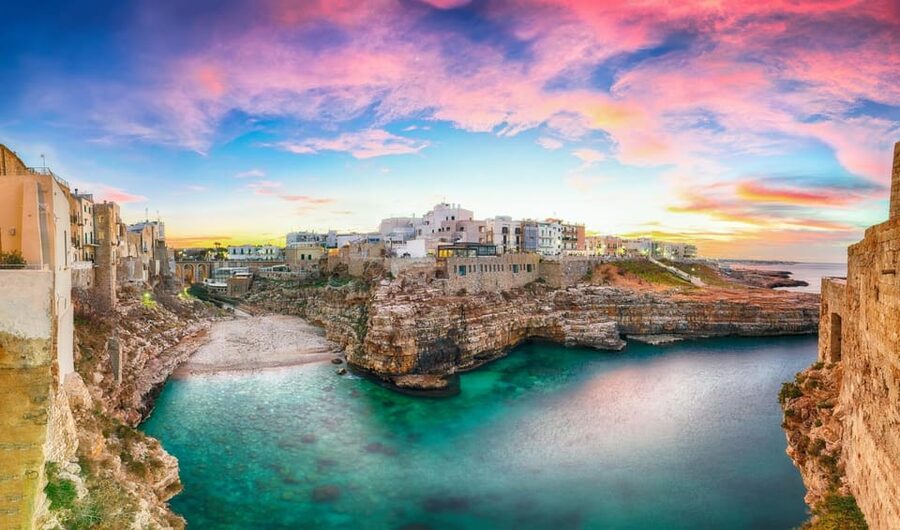
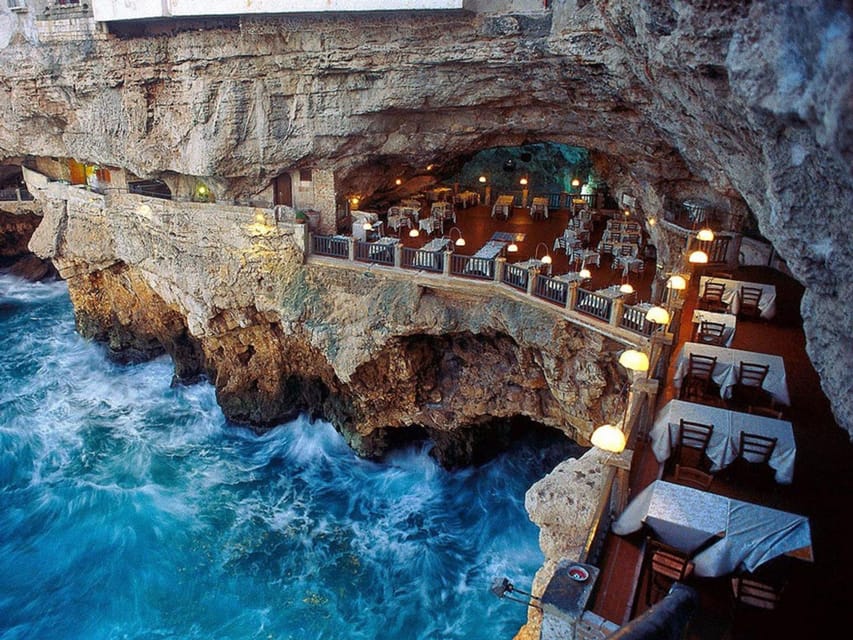
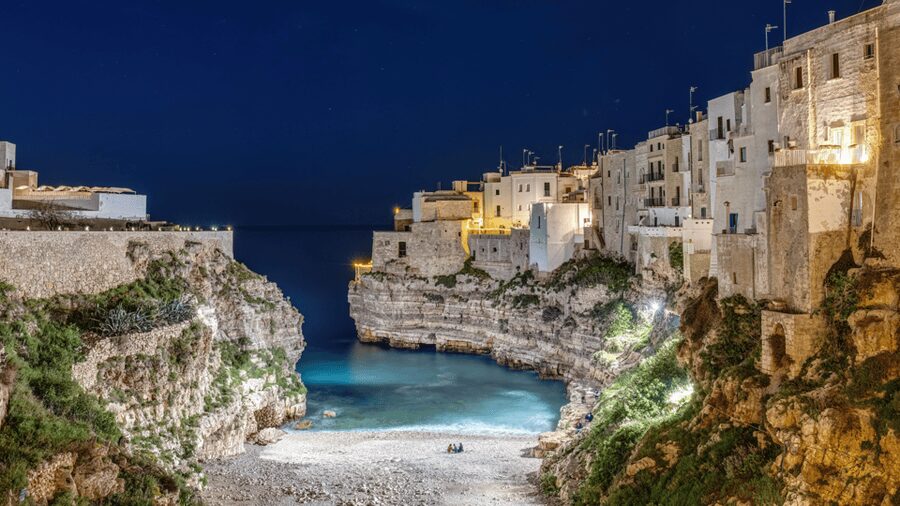
Polignano a Mare is the kind of place where you understand the hype in the first five minutes. The town is famous for Domenico Modugno, and for those unforgettable coastal cliffs plus clear water and sea caves.
You’ll have about 2 hours for a self-guided explore. If you start earlier, you can wander the historic center and connect the dots of Polignano’s layered past, including traces linked to Arab, Byzantine, and Norman eras. The cliffs give the whole town a sense of dramatic framing, and the nickname Pearl of the Adriatic fits for a reason.
If you prefer a clean, efficient arrival, there’s also an option to meet the group directly in Polignano a Mare later (around 11:30 a.m.) at the meeting point on Via Guglielmo Marconi 6. That’s handy if you’re already staying nearby and want to shave off bus time.
How I’d plan your 2 hours in Polignano:
First, walk until you’re above the waterline and can see the cliffs with your own eyes. Then, choose one cave-or-sea viewpoint direction and commit, because the best moments come when you linger instead of zigzagging through everything.
Ostuni’s White City: how to use the 2.5 hours well
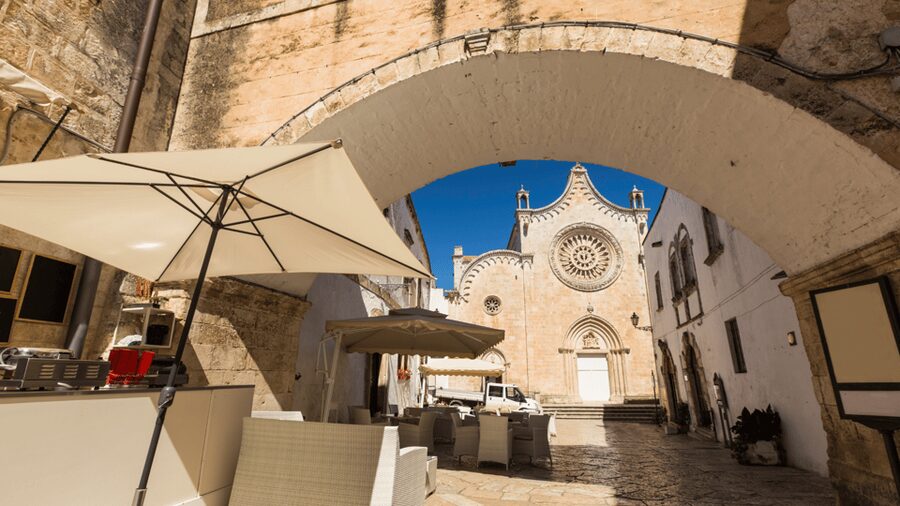
Ostuni is often called the White City because of its whitewashed houses, and it really does look like the whole town is made for walking slowly. This stop is longer than Polignano, with about 2.5 hours, which helps because the streets can pull you off course.
The highlight for structure is the Cathedral of Santa Maria Assunta. It’s known for its imposing rose window, and getting yourself to that area is a good anchor point so your wander feels guided even without a live guide.
From there, the city rewards you with views over olive groves and out toward the sea. The Piazza della Libertà is also a great reset zone, especially if you want a coffee break after climbing.
There’s one extra idea for Ostuni if your legs are tired: a local tuki-style city tour can be a way to cover more ground quickly. Since this isn’t listed as part of the tour itself, you’d need to handle it on your own, but it can be a smart option if you want the feel without the steep effort.
A practical way to avoid wasting time:
Treat Ostuni like a loop. Pick a top viewpoint direction first, then come back toward Piazza della Libertà for your rest and snack, instead of ending up half lost while time disappears.
Locorotondo: cummerse houses, Orange Flag vibes, and a calmer pace
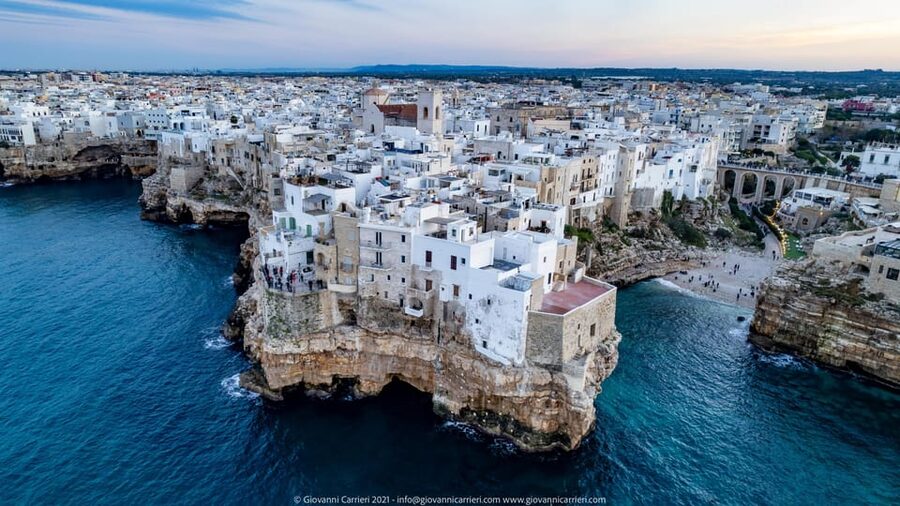
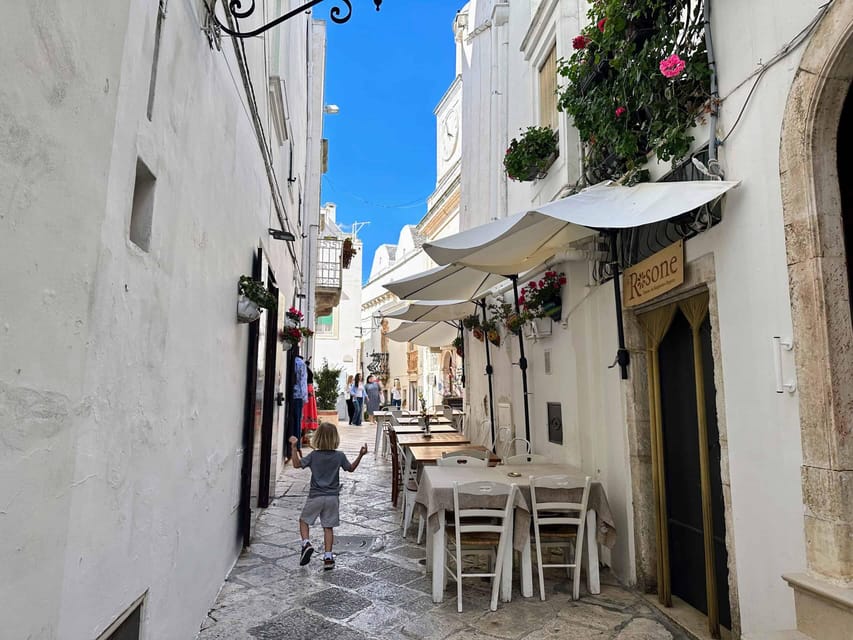
Locorotondo is the town that often wins people over quietly. It’s praised for its architectural harmony and its circular feel, and it’s known for cummerse: white houses with sloping stone roofs that look almost sculpted into the hillside.
This stop has about 2 hours, which is enough time to see the historic center and take your time on the narrow streets paved with chianche. Locorotondo is also awarded the Orange Flag by the Italian Touring Club, a small but meaningful marker that the town keeps its visitor experience in good shape.
The rhythm here is different from Polignano and Ostuni. You’re not chasing dramatic sea lines or major cathedral landmarks as hard. Instead, you notice details, the angles of buildings, and how the streets guide you toward viewpoints.
One balanced note: Locorotondo can feel smaller and quieter. If you only like high-intensity sightseeing, you might want to arrive ready for slow travel and street-level charm.
How to get more out of those 2 hours:
Start with the viewpoint search right away, then switch to “stroll mode.” Give yourself time to pause, because the best moments in Locorotondo often happen when you stop trying to cover everything and just let the town shape your walk.
The real-world stuff: food, toilets, and timing that matters

This trip includes transportation and a few onboard extras, but food and drinks are not included. So you’ll be deciding where and when to eat at each stop, and that can depend a lot on the day’s opening hours.
That’s one place where your timing matters. If you arrive during a gap between service times, you may find fewer options for a proper sit-down meal. I treat this tour like a great sightseeing day, then I plan my food as a flexible part of the day, not a guarantee.
Toilet access can be a make-or-break factor on a full-day bus outing. The good news is that a lot of the experience is built around town stops, so you have chances to use facilities in each place. Still, don’t assume every stop will have long, relaxed breaks.
Also, if you rely on your phone, plan for power. Some buses have charging stations, and I’d bring a cable and a backup plan because one traveler reported their phone charges did not work on the day. Simple fix: keep your battery levels topped up before you board, and take screenshots of your offline maps if you use them.




Price and value: what $71 buys you on this route
At about $71 per person, you’re paying for the hardest part, which is not walking the towns, it’s getting between them without juggling schedules. This price includes the GT bus with air conditioning, informative brochure and digital material, and visits to Polignano a Mare, Ostuni, and Locorotondo, plus onboard apulian biscuits.
What you are not paying for is a live guide on foot. That means the tour is best when you’re comfortable using maps and following a good self-guided plan. If you love asking questions and getting stories in real time, you might feel the absence of a guide inside the towns.
On the other hand, you’re not stuck with one pace. You can linger at sea views, step into a church area, or slow down for photos without a guide pulling you along. For many people, that freedom is exactly what turns a “bus tour” into a day that feels personal.
Who should book this, and who might want a different format

This day trip is a great fit if you want a classic Itria Valley highlight set with minimal planning. It works well for couples, solo travelers, and families who need a simple “get off, walk, return” structure, especially because you’re not coordinating transportation between towns.
If you’re traveling with a stroller, you’ll appreciate that this format can be easier than trying to piece together multiple local connections. One family even noted that the day worked well with a toddler and stroller.
If your priority is deep historical interpretation delivered by a live guide, you may prefer a different kind of tour. Since the content is primarily delivered through the brochure and onboard video, you’ll be the one responsible for turning stops into stories.
Should you book this Itria Valley day trip?

Book it if you want three distinct towns in one day from Bari, with AC coach comfort and self-guided support that keeps you from wandering aimlessly. It’s a solid choice when you’re happy to explore at your own pace and use maps, QR-style tips, and a structured brochure.
Skip or reconsider if you know you get frustrated with self-guided sightseeing, especially in churches and monuments where you want answers fast. Also, if you want lots of time in one single town, the stop timing may feel balanced but not generous, and Polignano is often the one people wish they could extend.
Bottom line: this is a practical, good-value way to taste Polignano a Mare, Ostuni, and Locorotondo without renting a car or losing half a day to transit.
FAQ
How long is the tour from Bari to the Itria Valley?
The duration is listed as 7.5 to 10 hours, depending on the starting time shown for your departure.
Where do I meet the bus in Bari?
The meeting point is listed as Ex capolinea 1/4 in Largo Eroi del Mare in Bari, though a second starting option is also offered near Parcheggio retro stazione and Ex capolinea 1.
Is there a tour guide during the visits?
The experience is self-guided in each town. A tour guide is not included, though there is onboard video guidance and 24-hour remote assistance.
What’s included in the price?
Included items are GT bus transportation with air conditioning, informative brochure and digital material, apulian biscuits, and visits to Polignano a Mare, Ostuni, and Locorotondo.
What language is the tour material in?
The materials are listed as available in Italian.
Do I need to bring food and drinks?
Food and drinks are not included, so you’ll need to find meals and drinks on your own during the town stops.
Beside This One, Bari and Alberobello Trulli Days in Polignano A Mare
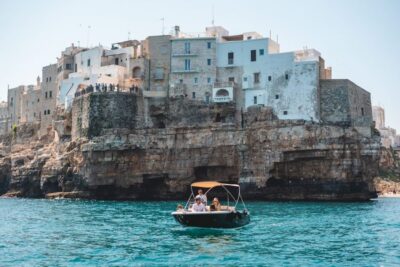
Not quite the day you had in mind? The rest of our Polignano A Mare write-ups sit below
- Polignano a Mare: Boat Tour with Prosecco and Snacks★ 4.8 · 237 reviews
- Polignano a Mare: Catamaran Tour with Aperitif & Local Food★ 4.9 · 249 reviews
- Polignano a Mare Caves and Grottos Tour with Refreshment★ 4.8 · 249 reviews
- Polignano a Mare: Pasta Making Cooking Class with Drink★ 4.8 · 260 reviews
- Polignano Sea Caves: Boat Tour with Snorkeling & Aperitif★ 4.8 · 310 reviews
- Itria Valley: Polignano, Ostuni, and Locorotondo, from Bari★ 4.6 · 502 reviews
- Polignano a Mare: Boat Cruise to Scenic Caves with Prosecco★ 4.7 · 550 reviews
- Polignano a Mare: Cave Boat Tour with Aperitif★ 4.7 · 1,891 reviews
- Polignano a Mare: Speedboat Cruise to Caves with Aperitif★ 4.8 · 3,382 reviews
Bari, Alberobello & the Trulli, top to bottom.
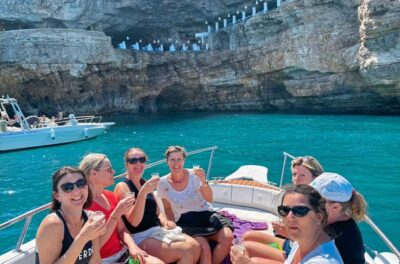 ★ 4.8Polignano a Mare: Speedboat Cruise to Caves with AperitifFrom $353,382 reviews
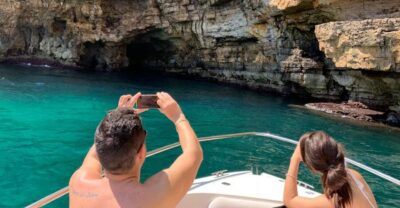 ★ 4.7Polignano a Mare: Cave Boat Tour with AperitifFrom $471,891 reviews
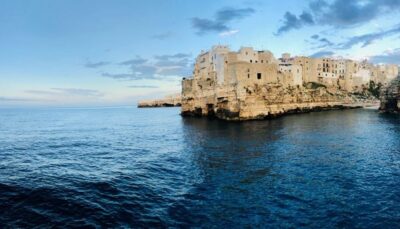 ★ 4.8Polignano a Mare: Boat Trip, Swim & Cave with AperitifFrom $351,300 reviews
 ★ 5.0Bari’s Ultimate Street Food Tour – Small Group by Do Eat BetterFrom $591,187 reviews
 ★ 5.0Polignano a Mare boat tour emotions, caves, diving and appetizersFrom $421,022 reviews
 ★ 4.7Bari: Guided Walking TourFrom $34744 reviews
 ★ 4.6Alberobello: 2-Hour Guided Trulli TourFrom $47727 reviews
 ★ 4.8Tour di Alberobello e Matera in bus privato da BariFrom $67701 reviews
Filed under