

Reviewed · VENICE GHOSTS, LEGENDS & MYSTERIES
Medici Legends & Renaissance Wonders: Florence Small Group Tour
Medici secrets hide in plain sight, if you know where to look. This Florence small-group walk (max 15) uses a Medici-focused story thread to connect famous buildings you already recognize with the people who shaped Renaissance power. Starting near Piazza di San Giovanni and finishing at Ponte Vecchio, it is a smart way to get your bearings fast while hearing why each stop mattered.
What I like most is how this tour is built for real life travel: a small group plus a whisper system keeps the guide audible as you move through crowded streets. The other big win is the guide storytelling style, with names like Manuel and Martina showing up in guide experiences for making details feel clear and memorable. One consideration: the tour name can make you expect nonstop Medici emphasis, but some stops widen out to broader Florence and Renaissance art, so if you want museum-level Medici depth, plan for additional time elsewhere.
In This Review
- Key Points to Know Before You Go
- Medici Florence in 1 hour 45 minutes, and who it fits best
- Starting at Caffè Scudieri, ending at Ponte Vecchio: an easy mental route
- Basilica di San Lorenzo: where the Medici made art permanent
- Biblioteca Medicea Laurenziana: Michelangelo’s architecture, and why it was political
- Cappelle Medicee and Sagrestia Nuova: when Michelangelo designed for power
- Palazzo Medici Riccardi: banking family, big-league building
- Duomo complex fast facts: dome, campanile, baptistery, and that famous façade
- Cupola del Brunelleschi: the brick-dome engineering flex
- Campanile di Giotto: Gothic style plus sculptural decoration
- Baptistery of Saint John: Romanesque roots
- Palazzo Vecchio and Piazza della Signoria: Florence’s power square
- Ponte Vecchio to Palazzo Pitti: the river shops and the Medici move
- Uffizi Gallery: a Renaissance hit list, with tickets you arrange
- Tour pace, whisper system, and group size you can actually hear
- Price and value for $119.77 plus the tickets you may need
- Should you book this Medici Legends and Renaissance Wonders tour?
- FAQ
- How long is the Florence Medici small group tour?
- How large are the groups?
- Is the tour in English?
- Are admission tickets included?
- Where does the tour start and end?
- What is the cancellation policy?
Key Points to Know Before You Go

- Medici lens on major icons like the Duomo complex, Palazzo Vecchio, and Ponte Vecchio, not just a generic highlights loop
- Max 15 people with a whisper system, which helps on narrow sidewalks and in noisy piazzas
- Michelangelo connects pop up in the Laurentian Library and the Sagrestia Nuova (New Sacristy)
- Duomo dome + Giotto campanile views give you “why it looks like that” context in minutes
- Uffizi included in the plan, but you should expect to arrange your own museum admission since tickets are not included
Medici Florence in 1 hour 45 minutes, and who it fits best

This is the kind of tour you book when you want Florence to click in your head. You will cover a cluster of the most important Renaissance landmarks, but the guide keeps returning to one question: how did the Medici family turn banking, patronage, and politics into art and power?
The time math matters. At about 1 hour 45 minutes, you get a strong orientation, yet you still have energy left to explore on your own after. It also tends to work for people traveling with teenagers. One guide experience even notes the tour feels right for kids around 10 and up, mainly because the stories stay focused and the pace is not slow and sleepy.
If you are a first-time Florence visitor, you will love the structure. If you have already done the basics, you might like it just as much, because the Medici angle points out details you would probably miss while taking photos. The “best for” sweet spot is people who want a guided foundation, not a full-day museum marathon.
If the dates do not line up, these Venetian ghost and legend walks in Florence are reviewed too.
- The Dark Side of Florence: Mysteries and Legends
★ 5.0 · 2,785 reviews - Florence: Dark Mysteries and Legends Guided Walking Tour
★ 4.6 · 1,081 reviews - Florence: Mysteries of the Medici Guided Walking Tour
★ 4.4 · 940 reviews
Starting at Caffè Scudieri, ending at Ponte Vecchio: an easy mental route
The tour starts at Caffè Scudieri Firenze, on Piazza di San Giovanni 19R. You finish near Ponte Vecchio (the exact pickup or drop spot can vary within the area).
That end point is not random. Ponte Vecchio is one of the best places in Florence to transition from “guided history” into “I want to wander.” After the tour, you can keep walking along the Arno, browse shops, and decide what you want to see next based on what the guide made you curious about.
Also, this walk is designed with practicality in mind. It is listed as near public transportation, so if your hotel is far from the center, you still have options. And since you get a mobile ticket, you are not stuck printing anything at home.
Basilica di San Lorenzo: where the Medici made art permanent

The walk begins at Basilica di San Lorenzo, one of Florence’s largest churches and the centerpiece of the city’s main market district. This stop is not just about architecture. It is also about legacy.
Here is the key story to listen for: this basilica is the burial place of the principal Medici family members, starting with Cosimo il Vecchio and continuing through Cosimo III. In other words, the Medici did not only commission paintings and buildings. They tied their family identity to sacred space.
Why it matters for you as a traveler: when you understand why a dynasty chose a final resting place, the rest of Florence starts to read differently. You begin seeing patrons as decision-makers, not just name drops on museum labels. Expect the guide to help you connect the basilica’s importance to the bigger Medici story across the city.
One practical note: churches often have dress expectations, and you will be standing or walking through active areas, so keep an eye on how you are dressed and bring patience if security checks happen.
Biblioteca Medicea Laurenziana: Michelangelo’s architecture, and why it was political

Next comes Biblioteca Medicea Laurenziana (Laurentian Library). The big idea here is that the library was built under the patronage of Medici pope Clement VII, and the architecture was meant to signal a change in status.
You will hear how the Medici wanted to move beyond the label of merchants. The library was a public statement that they belonged in circles of intelligence and ecclesiastical authority. That is a very Medici move: use institutions as branding.
Then there is the Michelangelo connection. The library’s architecture is designed by Michelangelo and is cited as an example of Mannerism. Even if you are not an art nerd, you can still appreciate the tone. The space feels like it was designed to make your eyes move, your attention focus, and your sense of importance rise.
What to watch for: ask yourself where your attention goes first. A good guide points out the design logic in a way that turns “cool building” into “I get why it was built this way.”
Admission is not included here, so if you want maximum time inside, you may need to plan your expectations and timing based on what the tour covers.
Cappelle Medicee and Sagrestia Nuova: when Michelangelo designed for power

The tour then heads to the Cappelle Medicee (Medici Chapels), built between the 16th and 17th centuries as extensions to Brunelleschi’s earlier church. The purpose is straightforward: celebrate the Medici family and the Grand Dukes of Tuscany.
This is where the guide’s storytelling really matters. If you listen for the “why,” you will understand that chapels are not only about worship. They are also about public memory, dynastic messaging, and prestige displayed through art.
You will also hear about the Sagrestia Nuova (New Sacristy), designed by Michelangelo. This is a stop where “Renaissance” becomes something physical. The guide should help you connect the idea of patronage to the lived experience of art in a sacred setting.
Again, admission is not included. Even if you are not paying to go deep inside on your own, you will still benefit from the explanation, because the chapels make far more sense when you know what story they were built to tell.
Palazzo Medici Riccardi: banking family, big-league building

At Palazzo Medici Riccardi, you get a key piece of the Medici logic chain. The palazzo was designed for Cosimo de’ Medici, head of the Medici banking family, built between 1444 and 1484.
This stop helps you understand how wealth becomes influence, and influence becomes culture. When a banking dynasty commissions a major palace, it is not just housing. It is also a signal of legitimacy and reach.
Here is what you can focus on while you look around: see if the guide points out how the building works as a statement in its neighborhood. The Medici did not just want private comfort. They wanted public recognition of their role in Florence.
As with the other major sites, admission is not included here, so the tour is best seen as narration and orientation at the exterior and key viewpoints, with details that prepare you for deeper independent visits later.
- The Best tour in Florence: Renaissance & Medici Tales – guided by a STORYTELLER
★ 5.0 · 12,316 reviews

Duomo complex fast facts: dome, campanile, baptistery, and that famous façade

No Florence tour plan is complete without the Duomo zone, and this one does it efficiently. You will spend time at Cattedrale di Santa Maria del Fiore (the Florence Cathedral), including the marble-clad façade in white, green, and pink. You will also stop for Battistero di San Giovanni and Campanile di Giotto, plus the Cupola del Brunelleschi.
Even in short time blocks, this complex is worth it because each building represents a different part of Florence’s artistic identity.
Cupola del Brunelleschi: the brick-dome engineering flex
The dome is described as the largest brick dome ever constructed, and once the largest in the world. That is the kind of fact that makes the architecture click: this is not only beauty. It is also daring engineering.
If the guide does their job well, you should leave with a clearer sense of why this dome still feels so imposing from street level. You get the scale without needing a full museum day.
Campanile di Giotto: Gothic style plus sculptural decoration
Giotto’s Campanile is adjacent to the cathedral and the baptistery, and it is known for Florentine Gothic style, sculptural decorations, and polychrome marble encrustations. This is a “slow down and look” tower, and the guide should help you notice patterns so you do not just see a tall structure.
Baptistery of Saint John: Romanesque roots
The baptistery dates to between 1059 and 1128 and is in the Florentine Romanesque style. That means you are seeing not just one era of Florence. You are seeing how the city kept layering meaning over time.
Admission is not included for these stops. Still, the exterior storytelling is useful because it gives context for what you will want to study later if you return on your own.
Palazzo Vecchio and Piazza della Signoria: Florence’s power square

Next you hit Palazzo Vecchio and Piazza della Signoria. Palazzo Vecchio is the town hall, a massive fortress-palace, and one of Tuscany’s most significant public places. You are not just looking at a building. You are looking at governance made visible.
The square in front, Piazza della Signoria, is an L-shaped meeting place near the gateway to the Uffizi Gallery. The guide should explain how this open space functions as a social stage, where Florence historically gathered for civic life.
This stop is also a good sanity-check for your Medici lens. Even when the Medici theme widens out, you can see how the family’s influence tied into public identity. Listen for how the guide connects patrons to what the city presented to itself.
If you want to extend your day later, these are the streets where it is easy to branch into museums, viewpoints, and classic photo spots.
Ponte Vecchio to Palazzo Pitti: the river shops and the Medici move
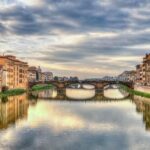
The tour then reaches Ponte Vecchio, noted as the oldest bridge over the Arno River in Florence. Shops line the bridge, and the guide will explain the evolution: butchers, tanners, and farmers originally occupied the spaces, while modern tenants are mainly jewelers and art dealers.
Ponte Vecchio is also special because it is photogenic from multiple angles, and it is a quick way to feel how Florence blends commerce and art. Admission is marked free for this part, so you can focus on the experience rather than planning ticket logistics.
From there, you move toward Palazzo Pitti. The Medici family bought it in 1549, and it became the chief residence of the ruling families of the Grand Duchy of Tuscany. The palazzo grew into a treasure house as later generations collected paintings, plates, jewelry, and other luxurious possessions.
This is where you should listen for the shift from public patronage to private power. A family that rules needs a home that reflects ruling. Palazzo Pitti gives you that physical sense of scale and ambition.
As admission is not included, your time here is more about setting context so you know what to look for if you later ticket into the palace collections.
Uffizi Gallery: a Renaissance hit list, with tickets you arrange
The plan includes Gallerie degli Uffizi, one of the most important and most visited Italian museums, famous for its Renaissance painting collection. You will hear that you can find major names like Michelangelo, Leonardo da Vinci, Raphael, and Botticelli.
The Uffizi part of the tour is described as taking you through a journey across over 80 halls of masterpieces from the 12th century up to the 16th century. That sounds like a lot, but remember: your guided time is limited, so you are likely using the tour for orientation, highlights, and the story connections that make the museum feel less like an overwhelming maze.
The catch is important for your planning: admission tickets are not included. So treat this as a guide-powered museum experience where you still need to secure your entry on your own.
Practical tip for you: when you get to the Uffizi, your best friend is knowing what you care about before you walk in. If you tell yourself which artists you want most, the guide’s context will feel targeted instead of generic.
Tour pace, whisper system, and group size you can actually hear
This tour caps at 15 travelers. That is the difference between listening to a guide and being lost in the crowd. With fewer people, the guide can slow down when someone asks a question, and you can form a stronger mental map of where you are in the city.
You also get a whisper system, which helps when streets are noisy and voices carry less in open piazzas. One review praised a guide named Manuel for being attentive to a guest using hearing aids, checking in to make sure they could follow the walk.
Still, consider this one realistic note: street noise can be high. If you know you struggle in loud places, you will probably feel more confident if you come prepared for that reality.
As for guide style, multiple names come up in guide experiences, including Manuel, Martina, Amanda, and Giacomo. The common thread is not just facts, it is story clarity. That matters because Florence is full of amazing objects that can feel confusing when you see them as isolated stops.
Price and value for $119.77 plus the tickets you may need
At $119.77 per person, you are paying for a guided circuit that hits major city anchors quickly. This is not a low-cost street-walk price, so you should judge it as value for time, not just sightseeing.
Here is the value logic I see:
- You get a clear Medici story thread across multiple iconic sites
- You travel efficiently between zones instead of navigating alone
- The small group and whisper system improve the quality of listening
The trade-off is that admission tickets are not included for most of the big stops on the route. Uffizi, Duomo complex buildings, and key churches all fall into that category based on the tour notes. Ponte Vecchio is listed as free, but much of the “museum-world” entry time likely costs extra.
So the smart budget approach is: treat this as the guided backbone, then add any paid entry you want for deeper time. If you would otherwise wander for hours without context, the guide fee often feels justified.
One more planning tip: this tour is commonly booked about 58 days in advance on average. Florence sells out, and guided time slots can disappear. If you are traveling during peak seasons, I would reserve early rather than gambling on last-minute availability.
Should you book this Medici Legends and Renaissance Wonders tour?
Book it if:
- you want a fast Florence orientation with a Medici story thread
- you like architecture and art, but you also want the “why” explained in plain language
- you prefer small groups (max 15) and a system that helps you hear your guide
Skip or reconsider if:
- you want a full museum-style deep dive into Medici power inside dedicated Medici collections
- you need fully accessible hearing in noisy outdoor areas, since the whisper system helps but streets can still be chaotic
My final take: this is a strong choice for your first day or first half-day in Florence. It gives you enough context to make the rest of your trip more meaningful, and it points your curiosity toward what is worth paying to see longer on your own. If you want Florence to feel connected, not random, this kind of Medici-led walk is a great place to start.
FAQ
How long is the Florence Medici small group tour?
It runs for about 1 hour 45 minutes.
How large are the groups?
The tour is limited to a maximum of 15 travelers.
Is the tour in English?
Yes, the tour is offered in English.
Are admission tickets included?
Admission tickets are not included for the major sites listed on the tour. Ponte Vecchio is listed as free.
Where does the tour start and end?
It starts at Caffè Scudieri Firenze, Piazza di San Giovanni 19R, 50123 Firenze FI, Italy, and ends at Ponte Vecchio, in the 50125 Firenze FI area.
What is the cancellation policy?
You can cancel for a full refund up to 24 hours before the start time. If you cancel less than 24 hours before, the amount you paid is not refunded. The tour may also be canceled due to poor weather, with an option for a different date or a full refund.
Our Wider Tours File for Florence

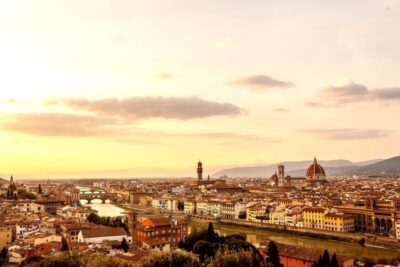
Our Wider Venetian Ghost and Legend Walks File for Florence
Not quite the day you had in mind? The rest of our Florence write-ups sit below
- David & Accademia Gallery: 1-Hour Small Group Tour★ 4.5 · 169 reviews
- Cinque Terre & Pisa Premium Tour from Florence★ 5.0 · 170 reviews
- Chianti Wine Tastings Day Trip at Sunset from Florence★ 4.5 · 171 reviews
- Private Transfer from Florence Airport to your Hotel in Florence★ 4.5 · 172 reviews
- Private Uffizi Gallery Tour with Reserved Entry★ 5.0 · 174 reviews
- Tasty Florence Street Food with Guided Walking of the City★ 5.0 · 174 reviews
- Uffizi Gallery Timed Tickets with Audio guide★ 4.0 · 174 reviews
- Florence: Tuscany Bike Tour with Wine & Olive Oil★ 4.9 · 174 reviews
- Florence: Small Group Guided Walking Tour★ 4.7 · 176 reviews
Venice Ghosts, Legends & Mysteries, top to bottom.
 ★ 5.0The Dark Side of Florence: Mysteries and LegendsFrom $32,785 reviews
 ★ 4.3Venice: Doge’s Palace, Bridge of Sighs & Prisons Guided TourFrom $682,549 reviews
 ★ 4.1Venice: Doge’s Palace Skip-the-Line Tour with PrisonsFrom $541,637 reviews
 ★ 4.6Florence: Dark Mysteries and Legends Guided Walking TourFrom $21,081 reviews
 ★ 4.0Venice: Lords of the Night Prison’s Palace Cells & TorturesFrom $111,067 reviews
 ★ 4.5Rome by Night Walking Tour – Legends & Criminal StoriesFrom $141,003 reviews
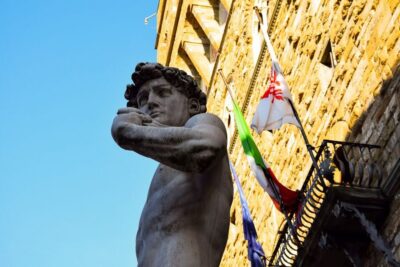 ★ 4.4Florence: Mysteries of the Medici Guided Walking TourFrom $31940 reviews
 ★ 4.0Venice Ghost Stories, Legends and Anecdotes TourFrom $42846 reviews
Filed under