
Reviewed · TOURS
The Best Tour in Florence: Renaissance and Medici Tales
Florence falls into place in two hours. The Renaissance and Medici Tales walking tour strings together big names and small details so you understand how this city went from power to art, fast. I especially love the Medici storytelling that turns landmarks into cause-and-effect, and I like how the route flows from San Lorenzo toward Piazza della Signoria.
One possible drawback: it is a tight, on-foot route with short stops, and several sights require separate entry tickets if you want to go inside.
In This Review
- Renaissance and Medici Tales, why it works
- Key highlights that make this walk a smart start
- Start at San Lorenzo, where the Medici story begins
- Basilica di San Lorenzo, where Medici reign gets a resting place
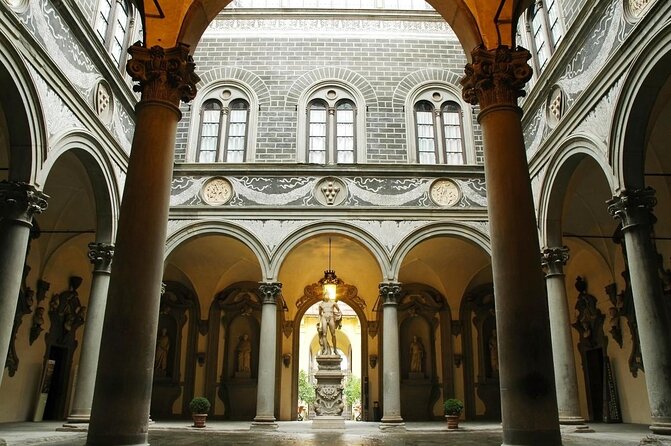
- Palazzo Medici Riccardi, Renaissance patronage made physical
- Baptistery and Duomo, Florence’s grand design logic
- Campanile di Giotto and Brunelleschi’s dome, the showpieces
- House of Dante, Florence as a literary city
- Piazza della Signoria and Palazzo Vecchio, where politics and art meet
- Uffizi Gallery edge, set up your next visit with confidence
- Who this tour is best for
- A realistic drawback to plan around
- Should you book this Florence Medici and Renaissance walk?
- FAQ
- How long is the Renaissance and Medici Tales walking tour?
- Where do I meet the guide, and where does the tour end?
- Is the tour offered in English?
- Do I need separate tickets for the sights?
- Is this tour donation-based?
- What happens if the weather is bad or I cancel?
Renaissance and Medici Tales, why it works
This is the kind of tour that helps you stop memorizing Florence and start reading it. You begin in the Medici neighborhood and end near the Uffizi, so you finish with a clear sense of what to prioritize next. I also appreciate the guide-driven pace. You get just enough time at each stop to learn the story, look around, and keep moving without feeling rushed the whole time.
If you are hoping for a slow museum day, plan something else too. This one is designed for seeing a lot on the street, then using that context when you return later.
Key highlights that make this walk a smart start
- Medici power explained in plain English as you move through the places they shaped
- Duomo complex orientation so you know what you are looking at before you pay or climb
- Time-saving route that packs Duomo sights, Dante’s area, and Piazza della Signoria into about 2 hours
- A story-focused mix of big and older Florence (not just the usual postcard order)
- Small-group feel with a maximum of 30 people
- Easy next step by the Uffizi so your afternoon has a plan
Still weighing it up? We have written up plenty of other tours and tickets across Florence.
- Florence: Skip-The-Line Uffizi Gallery Timed Entry Ticket
★ 4.5 · 27,832 reviews - Tuscany Day Trip from Florence: Siena, San Gimignano, Pisa and Lunch at a Winery
★ 5.0 · 21,634 reviews - Florence: Timed Entrance Ticket to Michelangelo’s David
★ 4.6 · 16,983 reviews - Florence: Michelangelo’s David Skip-the-Line Entry Ticket
★ 4.5 · 12,764 reviews
Start at San Lorenzo, where the Medici story begins
The tour kicks off at Piazza di San Lorenzo, 35R, right in the center of it all. You meet your guide near the statue of Giovanni de’ Medici sitting on a throne, which is a nice way to set the tone. Florence can feel like a maze of stone and churches. Starting with a Medici landmark helps your brain lock onto a theme immediately.
You are walking through real city blocks, not just hopping between distant stops. That matters because Florence’s feel comes from street scale, quick views around corners, and people moving through daily life. This walk is also offered in English, uses a mobile ticket, and keeps the group size to a maximum of 30, which usually means you can hear the guide without doing constant tippy-toe listening.
Bring comfy shoes. This is a short tour, about 2 hours, but you still cover enough ground that you want your feet on your side. Also, keep an eye on the weather. The tour requires good weather, and if it cannot run due to poor conditions you will be offered a different date or a full refund.
Basilica di San Lorenzo, where Medici reign gets a resting place
The first stop is Basilica di San Lorenzo, one of Florence’s largest churches and right in the main market district. That location is part of the point. This is not history sealed behind museum glass. It is history living next to daily commerce.
What makes this stop click is the Medici connection. This basilica serves as the burial place of principal Medici family members, from Cosimo il Vecchio through Cosimo III. When you learn that, the church shifts from being just impressive architecture into being a statement of power. The Medici were not only funding art, they were staging their legacy in the city’s most visible spiritual center.
Admission is not included here, so if you want to spend extra time inside, plan for separate entry. Still, even the exterior orientation and the guide’s explanation help. You understand why this site matters before you step in, and that often makes your own visit later feel more rewarding.
Palazzo Medici Riccardi, Renaissance patronage made physical
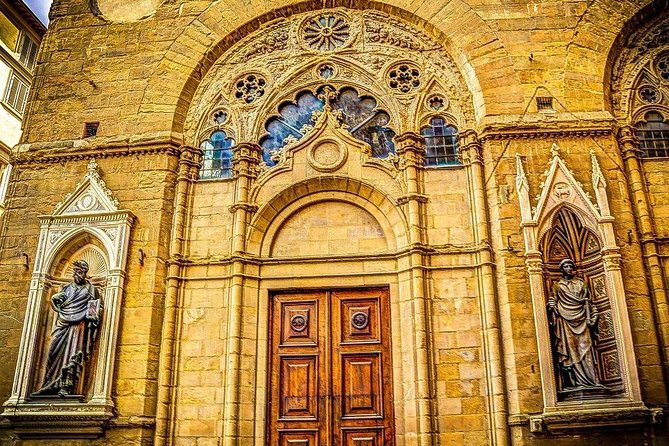
Next comes Palazzo Medici Riccardi, built between 1444 and 1484 for Cosimo de’ Medici. This building is one of those “you are looking at history” places. The Medici were bankers, but they behaved like state leaders. They commissioned architecture the way modern rulers commission monuments.
The guide focus here is key: you should leave with a clearer sense of what “Renaissance patronage” actually means. It is not vague support. It is timing, money, influence, and messaging, all wrapped into a physical address in the city.
Admission ticket details are not included for this stop, so treat it as a view-and-story moment during the walk unless your plans include paying for further access on your own. Even then, the brief time is useful because it places the Medici in the same sentence as Florence’s artistic breakthroughs. After this stop, you will start noticing how often art and authority overlap here.
Baptistery and Duomo, Florence’s grand design logic
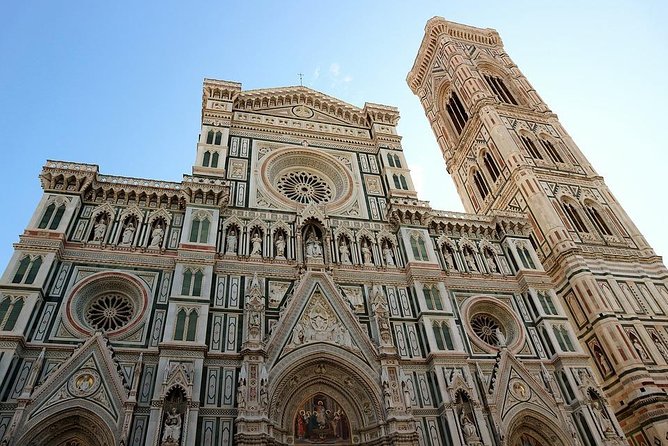
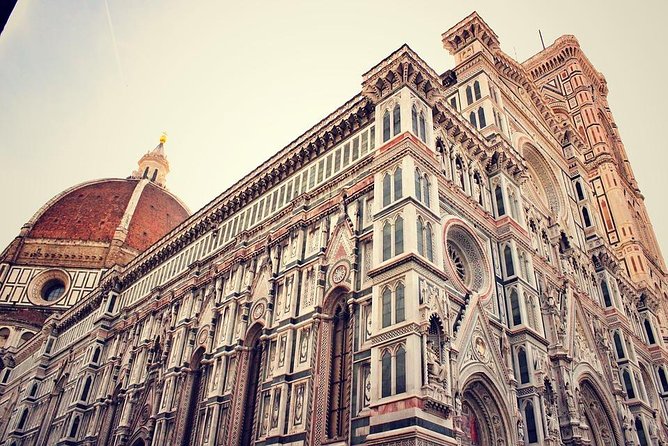
After Palazzo Medici Riccardi, you shift toward the cathedral area. The Florence Baptistery, or Battistero di San Giovanni, dates to 1059 to 1128 and shows Florentine Romanesque style. It also sits in a powerful position across from the cathedral and near the Campanile di Giotto. Standing around this cluster, you start to see how Florence built identity layer by layer.
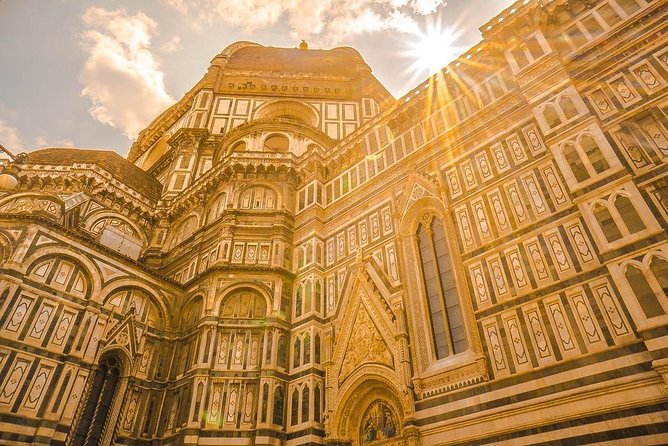
Then you get the Duomo, formally the Cattedrale di Santa Maria del Fiore. The cathedral complex is part of a UNESCO World Heritage Site that covers the historic center, and the walk helps you understand the whole “complex” concept. Florence’s cathedral is not a single building. It is a group, and each element has its own role.
Duomo detail you will hear: construction began in 1296 in the Gothic style based on a design by Arnolfo di Cambio. Admission is listed as free at this stop, but that does not mean every related interior area is free, so plan based on what you actually want to do.
Campanile di Giotto and Brunelleschi’s dome, the showpieces
From there the route focuses on two of the best-known visual anchors in Florence: Campanile di Giotto and the Cupola del Brunelleschi.
Campanile di Giotto is adjacent to the basilica and the baptistery. It is a showpiece of Florentine Gothic architecture, with Giotto credited for the design, plus sculptural decoration and polychrome marble encrustations. In plain terms, it is a guide for your eyes. You will spot it from afar and recognize it later from photos. The tour gives you enough context to understand why it looks the way it does, not just that it is impressive.
Then comes the Cupola del Brunelleschi. The dome is described as one of the big mysteries in art and architecture of every time. It was the largest in the world and is still the largest brick dome ever constructed. Hearing that while you are in the cathedral area can change your reaction. You stop seeing it as decoration and start seeing it as engineering ambition.
Several of these Duomo-area entries have admission not included during the walk. That is normal for a short tour. It is better to treat the dome and campanile as orientation points. Use the tour to learn what to look for, then decide later if climbing or deeper interior time fits your schedule.
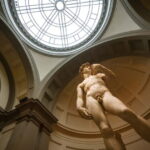
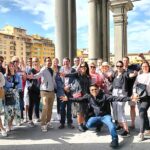
- The Best tour in Florence: Renaissance & Medici Tales – guided by a STORYTELLER
★ 5.0 · 12,316 reviews

House of Dante, Florence as a literary city
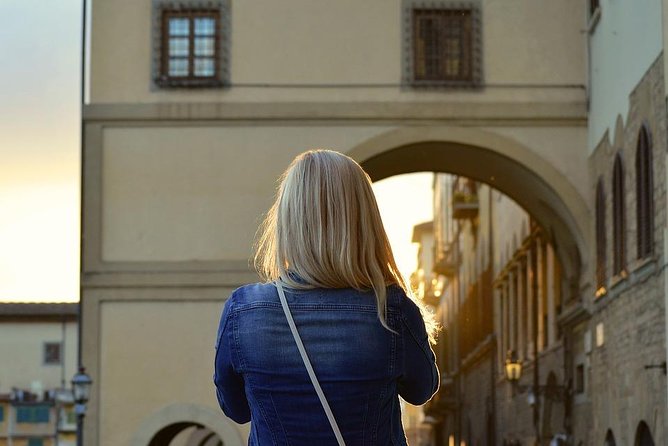
The tour then shifts from stone to words with a stop at Museo Casa di Dante. Dante Alighieri wrote the Divine Comedy, which is considered the most important poem of the Middle Ages and one of the greatest works in Italian literature.
This part is a smart change of pace. Florence can feel like a contest of architects and painters, so it is refreshing to be reminded that authors mattered too. You are seeing how the city built prestige across art, religion, politics, and literature.
Admission is listed as free at this stop. That means you may be able to keep it low-stress if your timing matches what is open. Even if you do not go inside for long, the story helps you picture Dante as part of the same city that financed painters and built domes.
Piazza della Signoria and Palazzo Vecchio, where politics and art meet
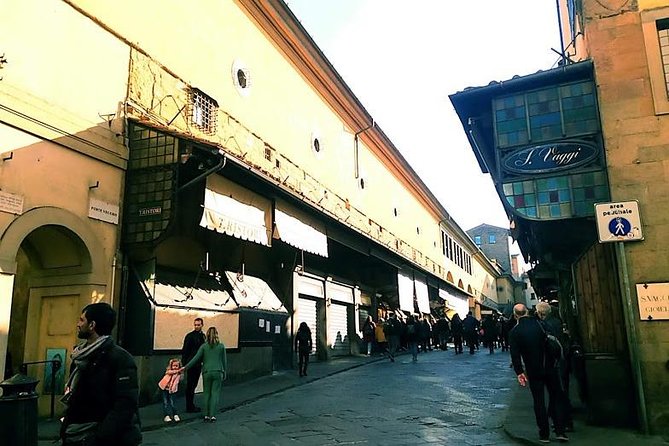
Now the walk lands at Piazza della Signoria, the L-shaped square in front of Palazzo Vecchio. It is a major meeting place for Florentines and tourists alike, and it sits near both Palazzo Vecchio and the Duomo area. It also acts like a gateway toward the Uffizi Gallery, which makes it a good ending zone.
Piazza della Signoria is also the kind of place where sculpture is not just decoration. It is a public language. That sets you up for the next stop, Palazzo Vecchio, the Old Palace, Florence’s town hall.
Palazzo Vecchio is described as a massive fortress-palace and among the most impressive town halls in Tuscany. The guide connects it to civic power, then points out the details that matter when you are standing in the square. One standout is the copy of Michelangelo’s David overlooking the plaza. It helps to know this is a copy while you are there, because it frames what you see next. The point is not just famous art. It is a message about what Florence wanted to claim about itself.
This is also where the Loggia dei Lanzi comes into the picture, an adjacent area associated with public display of statues. If you are the kind of visitor who likes to build a mental map, this stop is a high-value checkpoint.
Uffizi Gallery edge, set up your next visit with confidence
The walk ends near Gallerie degli Uffizi, adjacent to Piazza della Signoria. The Uffizi is described as one of Italy’s most important art museums and the most visited, with a collection of priceless works, particularly from the Italian Renaissance.
You may not walk into the Uffizi during the tour. The stop time is short, and admission is listed as not included. But ending here is still strategic. If you have the Uffizi on your list, you now understand why this neighborhood matters and how it links back to the Medici story. The Uffizi building was begun by Giorgio Vasari in 1560 for Cosimo I de’ Medici. It was built to accommodate the offices of Florentine magistrates, which is where the name uffizi comes from, meaning offices.
That tidbit helps a lot. You are not just visiting an art collection. You are walking through a building shaped by political administration, then repurposed into cultural authority. Once you know that, your next museum time tends to feel more coherent.
Who this tour is best for
This is a great fit if you want a fast, story-based introduction to Florence before you commit your time or money to deeper stops. It is also ideal if you have a short schedule. About 2 hours on foot is enough time to understand how the Medici shaped the Renaissance and enough context to make the famous places meaningful.
It is also a good choice if you like your learning in motion. Instead of sitting in one place, you get a sequence of landmarks that builds momentum. Many guides are strong at storytelling and Q and A, and you may even get food recommendations and ideas for what to see after. Even if you do not want to follow them exactly, it is useful to hear how locals think about pacing a day in Florence.
A realistic drawback to plan around
The biggest consideration is also the most obvious one: you will not get long, museum-style time in every spot. Some entries have admission not included, so if you want to spend lots of time in churches or go deep into the dome experience, you will need to buy or schedule extra time separately.
The tour also requires good weather. If rain is on the table, have a flexible mindset and be ready to move with the plan. The upside is that the tour is designed to make the streets themselves part of the show, so even shorter viewing moments still feel useful.
Should you book this Florence Medici and Renaissance walk?
Yes, I think you should book it if your goal is to understand Florence instead of just checking boxes. This walk is built to connect names, buildings, and political power into one story. Starting at San Lorenzo and ending near the Uffizi gives you a clean “first day” structure. You finish with direction, not just photos.
Book it early in your trip if you can, ideally around that first window when everything feels unfamiliar. If you like to return to places you learn during the walk, you will get extra value from the time you spend now. It is also smart to reserve ahead since it is often booked in advance.
Skip it only if your priority is long indoor visits, timed museum access, or a very slow pace. This one works best as your story-and-orientation foundation, then you build outward from there.
FAQ
How long is the Renaissance and Medici Tales walking tour?
It is about 2 hours.
Where do I meet the guide, and where does the tour end?
You meet at Piazza di San Lorenzo, 35R, 50123 Firenze FI, Italy. The tour ends near Piazza della Signoria, 50122 Firenze FI, and the exact endpoint may vary slightly in the area.
Is the tour offered in English?
Yes, it is offered in English.
Do I need separate tickets for the sights?
Some stops list admission as not included, while others are listed as free. The Duomo stop is shown as free, and the Museo Casa di Dante stop is listed as free. For places marked as not included, you should expect to pay separately if you want entry.
Is this tour donation-based?
Yes. The tour is made possible thanks to your donations, and at the end of the tour you decide the appropriate amount to compensate the guide, with the guide relying only on what you choose to donate.
What happens if the weather is bad or I cancel?
The tour requires good weather. If it is canceled due to poor weather, you will be offered a different date or a full refund. You can cancel for a full refund up to 24 hours in advance, and cancellations made less than 24 hours before the start are not refunded.
Our Wider Tours File for Florence
Not quite the day you had in mind? The rest of our Florence write-ups sit below
- David & Accademia Gallery: 1-Hour Small Group Tour★ 4.5 · 169 reviews
- Cinque Terre & Pisa Premium Tour from Florence★ 5.0 · 170 reviews
- Chianti Wine Tastings Day Trip at Sunset from Florence★ 4.5 · 171 reviews
- Private Transfer from Florence Airport to your Hotel in Florence★ 4.5 · 172 reviews
- Private Uffizi Gallery Tour with Reserved Entry★ 5.0 · 174 reviews
- Tasty Florence Street Food with Guided Walking of the City★ 5.0 · 174 reviews
- Uffizi Gallery Timed Tickets with Audio guide★ 4.0 · 174 reviews
- Florence: Tuscany Bike Tour with Wine & Olive Oil★ 4.9 · 174 reviews
- Florence: Small Group Guided Walking Tour★ 4.7 · 176 reviews
Tours, top to bottom.
 ★ 4.3Vatican Museums & Sistine Chapel Tour with Optional BasilicaFrom $7967,413 reviews
 ★ 4.7Colosseum, Roman Forum & Palatine Guided TourFrom $7863,148 reviews
 ★ 4.5Vatican Museums, Sistine Chapel & St Peter’s Basilica Guided TourFrom $2239,149 reviews
 ★ 4.8Rome: Colosseum, Palatine Hill and Roman Forum Guided TourFrom $5232,814 reviews
 ★ 4.7Rome: Guided Tour of Colosseum, Roman Forum & Palatine HillFrom $5527,897 reviews
 ★ 4.5Rome: Colosseum, Roman Forum and Palatine Hill Guided TourFrom $5923,903 reviews
 ★ 4.4Naples: Naples Underground Entry Ticket and Guided TourFrom $2121,781 reviews
 ★ 4.8Pompeii: Entry Ticket and Guided Tour with an ArchaeologistFrom $3519,459 reviews