
Reviewed · COLOSSEUM & ROMAN FORUM TOURS
Roman Gladiator School: Learn How to Become a Gladiator
Roman gladiator training feels like a time machine, without the paperwork. This 2 hour class at the Gladiator School of Rome has you start with a museum look at weapons and gear, then move into hands-on fighting practice near the Appian Way. I love that it is small-group (up to 15), so the instructors can correct your stance and timing, not just give a show. I also like the built-in mix of history and action, including museum time plus the arena finale.
One thing to think about: the venue is a bit out of the city center, and the walk from the Colosseum is not for everyone. If you do not want to taxi or bus, plan your route ahead of time.
In This Review
- Quick Hits Before You Go
- From Appia Antica to the Gladiator School
- Gear Up First: Costume, Museum, and Real Artifacts
- Sword and Shield Training That Actually Teaches
- Fighting Off Lions and Sparring in the Arena
- Family Watching From the Platform
- Price and Value: Is $108 Worth It?
- Who This Suits Best, and Who Might Skip It
- Practical Tips: Timing, Shoes, and Bugs
- Should You Book Roman Gladiator School?
- FAQ
- FAQ
- How long is the gladiator training session?
- Where does the experience take place?
- What is included with the ticket?
- Is the Gladiator School of Rome Museum included?
- Are there different lesson times during the day?
- How big are the classes?
- What language is the tour offered in?
- Is there a minimum age?
- Can I cancel and get a full refund?
- Is food provided?
Quick Hits Before You Go
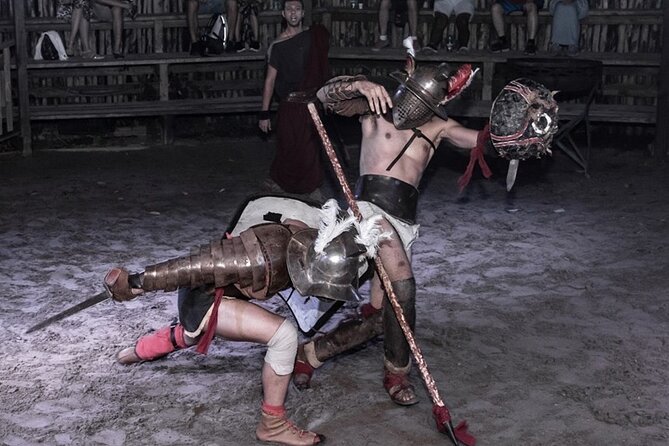
- Small-group class (max 15), which usually means more coaching when you are holding the shield and rudis sword
- Museum included, so it is not just pretend fighting, you also get the artifacts context
- Dress-up first, with a traditional belt, tunic, leather gloves, and training sword
- Arena time at the end, including sparring with other participants and the option of a tournament
- Friends and family can watch from a viewing platform while you train
- Minimum age is 6, and the format is designed for kids and adults to enjoy together
From Appia Antica to the Gladiator School
This experience takes place near the Colosseum, but it is not inside the big crowds. Your meeting point is at Via Appia Antica, 18, and the school is on this historic stretch. That matters because you get a more grounded, real-places feel than a street-corner performance.
Do not underestimate the logistics. Several people noted that it is a little tricky to find and that taxis can be pricey. If you are traveling with kids, building in extra time for the walk or the bus is smart. If you are already in Rome’s sightseeing rhythm, it still works well as an add-on after you check out major landmarks like the Colosseum.
Also, you get a choice of lesson times throughout the day. That is useful because you can match training to your energy level. Morning feels great if you want an active start. Later slots can be easier if you are already doing Roman ruins in the heat.
Filed beside this one, more Colosseum and Roman Forum tours in Rome.
- Rome: Colosseum, Palatine Hill and Roman Forum Guided Tour
★ 4.8 · 32,814 reviews - Rome: Guided Tour of Colosseum, Roman Forum & Palatine Hill
★ 4.7 · 27,897 reviews - Rome: Colosseum & Forum with Audio Guide App -Optional Arena
★ 4.2 · 24,770 reviews - Rome: Colosseum, Roman Forum and Palatine Hill Guided Tour
★ 4.5 · 23,903 reviews
Gear Up First: Costume, Museum, and Real Artifacts
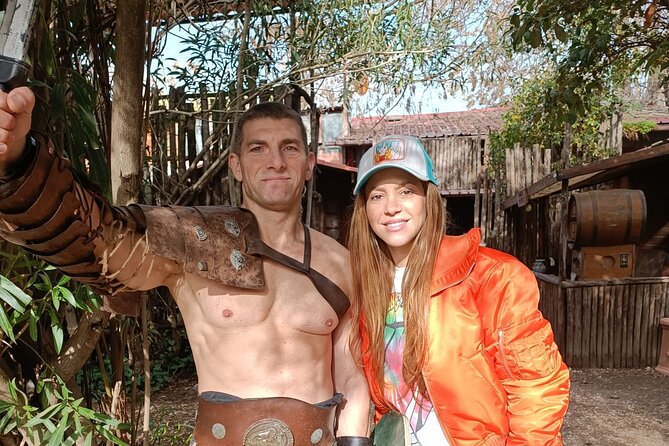
Your class begins by dressing the part. You will put on a costume that includes a traditional belt, tunic, leather gloves, and a training sword called a rudis. It is not just for photos. The clothing and gear help you understand the silhouette and basic feel of what ancient fighters actually wore.
Then you move into the Gladiator School of Rome Museum, which is included. This is where the experience earns its history points. You get to look at gladiator weapons and artifacts, and you can even learn how the gear connects to fighting styles. In the program, instructors are members of the Historic Group of Rome, so the tone is not random trivia. It is reenactment, with a focus on how things were used.
Several instructors stood out in people’s comments. Names like Mirkos, Patricio, Ivan, and Flama came up as examples of guides who can make the museum section click. You should expect an energetic, talk-with-your-eyes kind of approach, especially if you are bringing kids.
Pro tip: if you are planning to wear any kind of sandals or flimsy sneakers, swap them for sturdy shoes. You will be on your feet, and you will be moving.
Sword and Shield Training That Actually Teaches
After the museum, you get practical training. This is the core of what makes the class fun instead of just costume play. You learn basic sword-fighting skills before you go full imagination mode into more dramatic combat scenarios.
What you practice depends on the session, but the overall flow is consistent:
- warm-ups to get your body moving
- basic offense and defense instruction
- guided practice so you are not just mimicking blindly
The friendly coaching is a big reason people rate this so highly. Instructors seem to adjust quickly based on who is in the group. One parent even highlighted that the guide was especially attentive when the class was small.
Now for the part you should take seriously: it is still a training situation with real contact and fast movements. Some families said their kids ended up getting hurt a little during sparring. That does not mean it is unsafe, but it does mean you should watch your child’s comfort level. If you have a very young kid, you might want to treat this as active play with some bruising risk, not a gentle craft class.
Fighting Off Lions and Sparring in the Arena
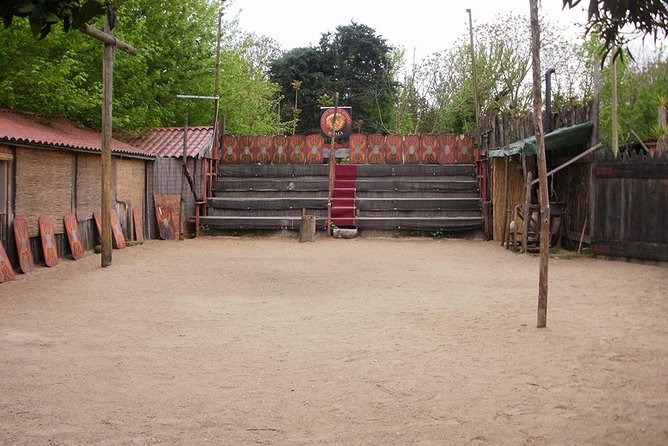
The session builds from basics into the big finale. The program includes imaginative combat scenarios, including the chance to fight off ferocious lions and battle other sword-wielding gladiators. Whether you see it as theater or history reenactment, it helps you stay in the moment.
Then you reach the arena segment. This is where you go from learning moves to experiencing the adrenaline of doing them in a fight-like format. Many participants loved this step because it gives you a clear sense of progression. You start with gear and museum facts. You end with match energy.
There is also an optional tournament. If your group wants a competitive angle, that can be a fun way to add a goal to the training day. Even if you do not join the tournament, you still participate in the main arena activities.
At the end, you receive a certificate of accomplishment. It is a small thing, but it is a great souvenir, especially for kids who want a tangible proof they did the gladiator part, not just the museum part.
Family Watching From the Platform
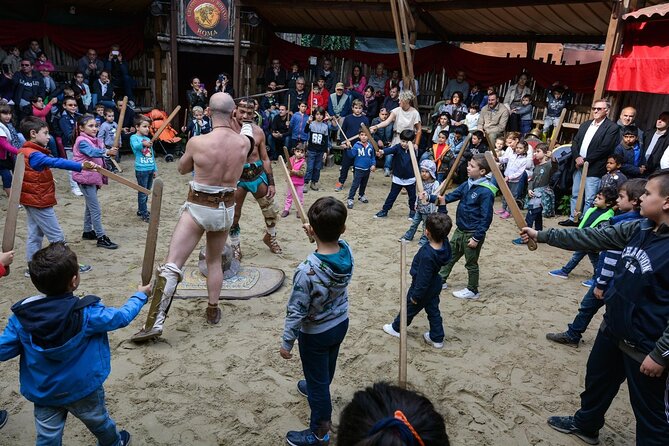
One of the better design choices here is that friends and family can watch from a viewing platform. That means you do not have to choose between participating and checking on your kids. Parents can sit, cheer, and spot what is going on without pulling attention away from the lesson.
This matters because gladiator training is an interactive class. Even adults who thought they might feel silly in costume tend to enjoy the public arena moment, since the instructor keeps things organized and upbeat.
If you are traveling as a couple or with extended family, the platform is also helpful for keeping everyone engaged at the same time. You can take turns joining while the rest of the group watches.
Price and Value: Is $108 Worth It?
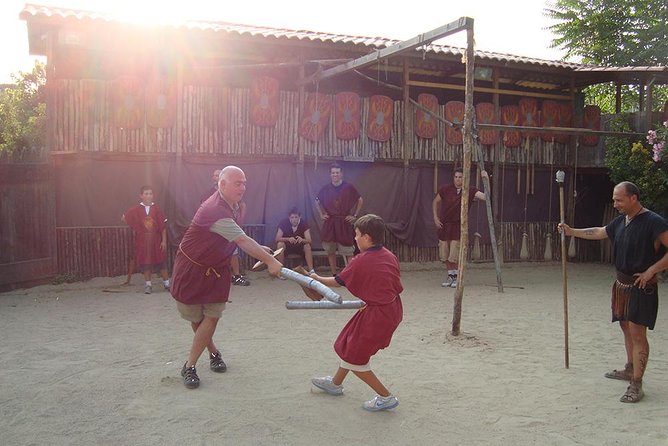
At about $108 per person for roughly 2 hours, this is not a bargain like a free museum stop. But it can be good value for Rome, because you are paying for several things at once:
- a guided small-group class
- costume and equipment hire (including the rudis training sword)
- museum admission included
- active instruction plus an arena finale
- a certificate you can take home
Compared with doing Rome sightseeing solo, you are also buying time savings. Instead of trying to piece together history and a hands-on activity, you get both in one block. And compared with other touristy experiences, the coaching focus helps you feel like you learned something, even if you are a complete beginner.
Still, there is one value wrinkle to flag. The class includes a drink, but at least one person reported that no drink was provided. If hydration matters to you, bring water as a backup. This is one of those small practical moves that prevents a minor disappointment from turning into a long day.



Who This Suits Best, and Who Might Skip It
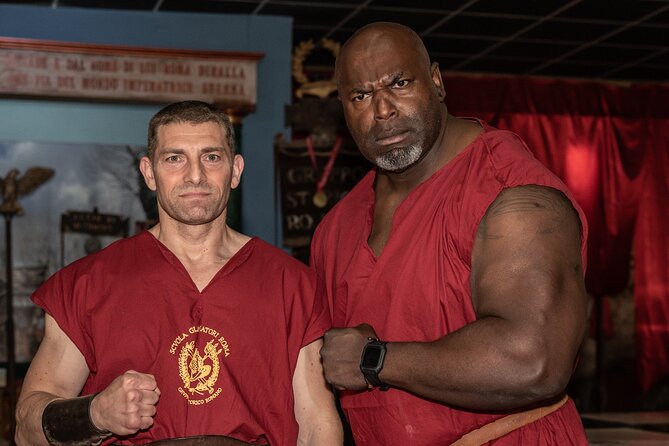
This is an easy win for families, especially kids who like action. Reviews often point out that it can become a favorite part of a Rome trip, even after big-ticket sights like the Colosseum. The combination of museum artifacts plus physical training keeps attention from drifting.
Adults who enjoy hands-on activities tend to do well too. Some people felt it leans more kid-friendly than adult-focused, but many also say adults had fun once they got into the flow.
It is also a strong choice if you want a break from standing around. If your plan includes a lot of churches and long museum lines, this gives your body a job.
Who might consider skipping? If your ideal Rome day is quiet, calm, and low-energy, the training may feel too physical or too theatrical. And if your child is very sensitive to getting bumped or bruised during sparring, you may want to treat it as a watch-first situation or pick a session at an age where the group fits their comfort level.
Practical Tips: Timing, Shoes, and Bugs

Wear comfortable clothes and shoes. You will move, lunge, practice blocks, and end in a mock fight. Stiff outfits do not help, and slippery footwear is a hassle.
Plan for sun and bugs. Multiple people noted mosquito issues, so bug spray is a smart idea, especially in warmer months or near outdoor spaces. If you are going during a season when mosquitoes show up, do not count on Rome air to save you.
Getting there: it is near public transportation, and one common route people mentioned is the 118 bus on Via Appia. But you should still give yourself extra time because it can be a little hard to spot at the end of a driveway.
And if you are bringing kids, pack a simple game plan: tell them the goal is to learn moves and have fun, not to win. That mindset usually improves the day for everyone.
Should You Book Roman Gladiator School?
If you want one memorable, hands-on experience that feels truly Roman, I think it is a great bet. The museum + training + arena structure is the key. You are not just dressing up. You learn basic skills, then step into a fight-like finale, with real instructors guiding the process.
Book it if:
- you are traveling with kids who love active games
- you want history with action, not just facts on a wall
- you like small-group formats where someone can correct your stance
You might skip or reconsider if:
- you dislike physical activities or worry about minor scrapes during sparring
- you do not want to deal with transport and locating a site outside the main core
FAQ
FAQ
How long is the gladiator training session?
The class runs for about 2 hours.
Where does the experience take place?
It meets at Via Appia Antica, 18, 00179 Roma RM, Italy. The activity ends back at the meeting point.
What is included with the ticket?
You get a 2 hour class, lessons instructed by members of the Historic Group of Rome, a drink, gladiator clothing and weapons hire for the duration, and admission to the Gladiator School of Rome Museum.
Is the Gladiator School of Rome Museum included?
Yes. Museum admission is included so you can see gladiator weapons and other artifacts.
Are there different lesson times during the day?
Yes. You can choose from available lesson times.
How big are the classes?
The maximum group size is 15 travelers.
What language is the tour offered in?
The experience is offered in English.
Is there a minimum age?
The minimum age is 6 years old.
Can I cancel and get a full refund?
Yes. You can cancel for a full refund if you cancel at least 24 hours before the experience start time.
Is food provided?
Food and beverages are not included unless specified, so only the drink is listed as included.
Other Colosseum and Roman Forum Tours in Rome From Our Notebook
Not quite the day you had in mind? The rest of our Rome write-ups sit below
- Rome: Guided Tour of St. Peter’s Dome Climb, Basilica & Vatacombs★ 5.0 · 167 reviews
- St. Peter’s Basilica Guided Tour with Reserved Entrance★ 4.0 · 168 reviews
- Golf Cart Driving Tour in Rome: 2.5 hrs Catacombs & Appian Way★ 5.0 · 168 reviews
- Rome: Trastevere Wine Tasting with Food Pairing and Gelato★ 4.9 · 168 reviews
- Guided Tour of the Colosseum Palatine Hill and Roman Forum★ 4.7 · 168 reviews
- Vatican Museums, Sistine Chapel & Saint Peter’s Semi-Private Tour★ 4.5 · 169 reviews
- Hidden Rome: Small Group E-Bike Tour with Street Food Stops★ 5.0 · 169 reviews
- Rome: Papal Audience with Pope Leo IV★ 3.9 · 169 reviews
- Rome Golf Cart Tour: Highlights & Must See★ 4.5 · 170 reviews
Colosseum & Roman Forum Tours, top to bottom.
 ★ 4.7Colosseum, Roman Forum & Palatine Guided TourFrom $7863,148 reviews
 ★ 4.8Rome: Colosseum, Palatine Hill and Roman Forum Guided TourFrom $5232,814 reviews
 ★ 4.7Rome: Guided Tour of Colosseum, Roman Forum & Palatine HillFrom $5527,897 reviews
 ★ 4.2Rome: Colosseum & Forum with Audio Guide App -Optional ArenaFrom $4124,770 reviews
 ★ 4.5Rome: Colosseum, Roman Forum and Palatine Hill Guided TourFrom $5923,903 reviews
 ★ 4.4Rome: Colosseum, Forum & Palatine Hill Tour & Optional ArenaFrom $5813,839 reviews
 ★ 4.0Rome: Colosseum, Roman Forum, Palatine with Multimedia VideoFrom $3212,766 reviews
 ★ 4.6Rome: Colosseum, Palatine Hill & Roman Forum Guided TourFrom $5112,703 reviews
Filed under