
Reviewed · WALKING TOURS
Rome by Night Walking Tour
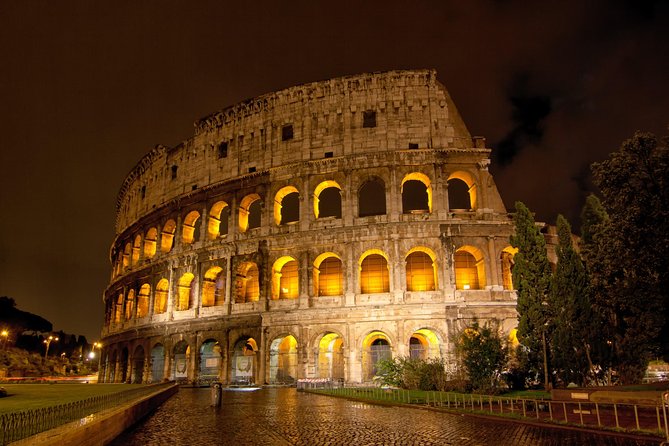
Rome at night feels like a movie. This guided walk strings together Rome’s biggest monuments after the sun cools down, with small group size so you can actually hear the story and ask questions. Expect classic photo stops like the Pantheon and Trevi Fountain, plus viewpoints over the Roman Forum from Capitoline Hill, and a look at the Colosseum exterior.
Two things I really like about this tour are the evening timing (less heat, more magic) and the fact that you’re not just staring at buildings, you’re getting the “why” from a professional guide. One thing to consider: the pace is still a walking tour, so comfy shoes matter, and you will be out for about 3 hours.
In This Review
- Key Highlights You Should Know
- Why Rome by Night Works Better Than Daytime
- Meeting Point Near the Colosseum, Then a Nighttime Loop
- Pantheon After Dark, Including the Dome Moment
- Trevi Fountain Illuminated, Plus the Coin Tradition
- Capitoline Hill and the Roman Forum View
- Piazza Venezia and Altare della Patria: Big Monument Energy
- Colosseum Exterior at Night: The Reminder of What Happened Here
- Piazza Navona Finale and Its Three-Fountain Story
- Pace, Group Size, and How the Tour Keeps You Hearing the Guide
- The Practical Side: What to Wear, What to Bring
- Value Check: Is $54.31 Worth It?
- When This Tour Might Not Be Your Best Fit
- Should You Book Rome by Night?
- FAQ
- How long is the Rome by Night walking tour?
- What time does the tour start?
- Where is the meeting point?
- Does the tour include entry tickets?
- What is included in the price?
- Is food or drinks included?
- What group size should I expect?
- Do I get an audio system to hear the guide?
- Is luggage storage available?
- Is this tour suitable for people with disabilities?
Key Highlights You Should Know
- Evening schedule to beat the heat: Start at 6:00 pm and let nighttime lighting do the work.
- Monuments in a logical core area: Pantheon, Trevi Fountain, Capitoline Hill/Forum views, Colosseum exterior, plus Piazza Navona.
- Small groups up to 15: Easier conversation and more personal attention from your guide.
- Better hearing with audio gear: Several guides are described as using headsets/radios so everyone can follow along.
- Useful Rome navigation tips: Many guides mix facts with practical advice for where to eat and how to move around.
Why Rome by Night Works Better Than Daytime
Daytime Rome can be brutally hot and packed. This tour solves the main problem by putting you out in the evening, when the city’s light softens and the monuments look sharper without you melting first. You get the best of both worlds: the feel of ancient Rome and the modern atmosphere of nighttime streets.
It’s also a smart length. At about three hours, you get a full “greatest hits” loop without turning your evening into a full-on marathon. And because this is a small group (max 15), it’s easier to keep track of where you are and what you are looking at, instead of getting swallowed by a larger crowd.
Filed beside this one, more walking tours in Rome.
- Rome: Trastevere & Campo de Fiori Street Food Walking Tour
★ 4.9 · 2,768 reviews - Rome: Paranormal Night Walking Tour & Secret Backstreets
★ 4.9 · 1,921 reviews - Rome by Night Walking Tour – Legends & Criminal Stories
★ 4.5 · 1,003 reviews - Rome: Guided City Center Evening Sightseeing Walking Tour
★ 4.4 · 953 reviews
Meeting Point Near the Colosseum, Then a Nighttime Loop
You meet at Piazza del Colosseo (00184 Roma RM) at 6:00 pm, and the tour ends back near the meeting area. That start point is handy. It means you’re beginning in the right neighborhood for photos and orientation, especially if it’s one of your first nights in Rome.
One caution from the practical side: the meeting area can be busy, and you’ll be walking through narrow streets and crowded areas. Arrive a few minutes early, and keep your phone handy for confirmation details, since luggage storage is not available.
Pantheon After Dark, Including the Dome Moment
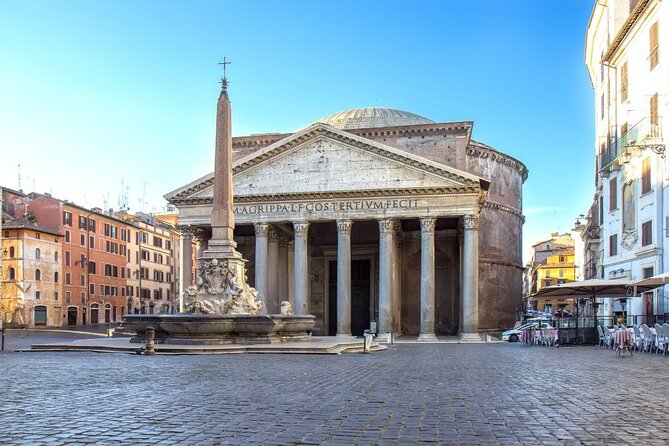
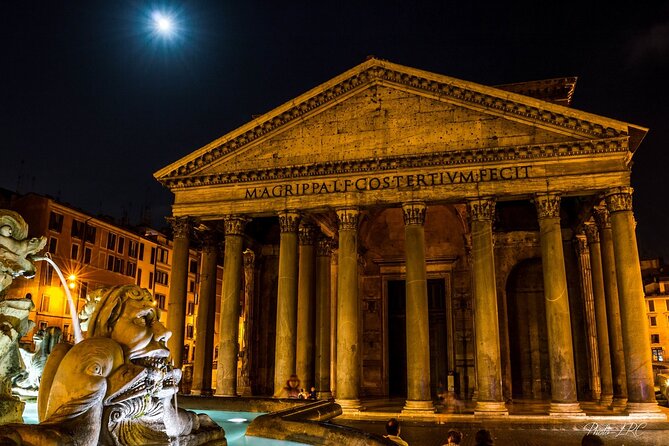
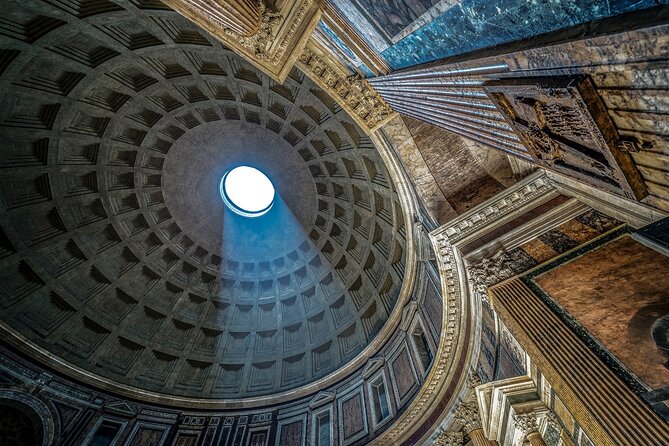
One of the first big wow-stops in the program is the Pantheon. At night, the square and surrounding streets feel calmer, and the building reads differently than it does in daytime crowds. You get the chance to take photos with the structure framed under evening lighting.
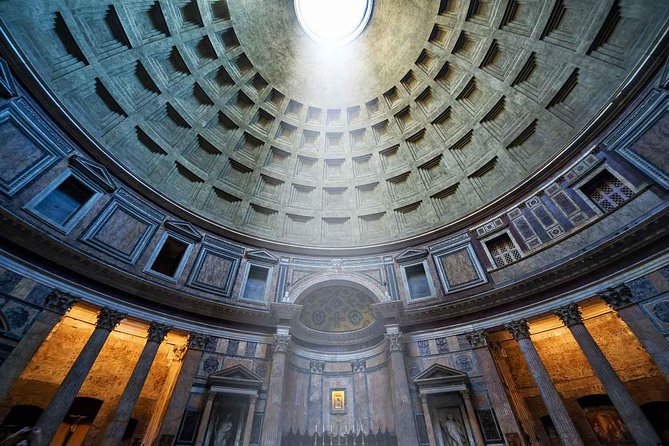
What I like here is the focus on the dome and the scale. The Pantheon is one of those sights where, if you only glance, it can feel like another famous church. With a guide pointing out what makes it technically and architecturally significant, it becomes more than a stop on a list. You’re seeing why people keep calling it special.
Practical note: the streets around this area are narrow and busy. If you’re photographing, stay aware of foot traffic and don’t stop in the middle of the flow for too long.
Trevi Fountain Illuminated, Plus the Coin Tradition
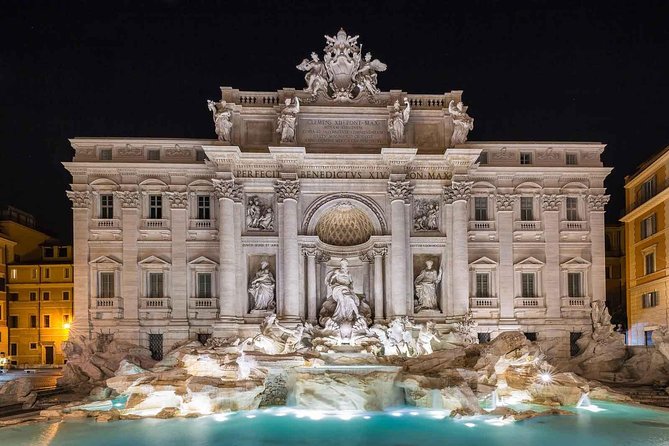
Next up is the Trevi Fountain, which is a whole production at night. The water, the lighting, and the sheer size of the fountain make it feel cinematic. And yes, it’s still touristy, but the nighttime atmosphere is a big upgrade over midday.
This stop also comes with an easy cultural moment. If you want luck, you can drop a coin in the fountain. It’s an optional thing on your own expense, but it’s built into the experience in a relaxed way.
What makes Trevi worth visiting here is the combination of timing and explanation. The guide can add context so you’re not just photographing the sculpture group but understanding how it fits into Rome’s identity and storytelling.
Capitoline Hill and the Roman Forum View
This is where the tour becomes more than photo ops. You move toward Capitoline Hill, and you get a glimpse over the Roman Forum and its ruins still standing from the era of the Roman Empire.
I like this stop because it gives you a mental map. Rome’s ruins are spread across the city like puzzle pieces. Seeing them from a viewpoint helps you connect what you’ve seen in books to what’s actually in front of you. You also get a sense of how the city functioned in ancient times, instead of treating each monument as a separate island.
This part is especially useful if you plan to do more Roman history later in your trip. It sets the stage so future sights make more sense.
Piazza Venezia and Altare della Patria: Big Monument Energy
Another highlight in the loop is Piazza Venezia and the Altare della Patria. This is one of those sights that changes the mood fast. From ancient ruins and narrow streets, you get a dramatic monument setting that feels more modern and national in scale.
Why it’s a good stop on a walking tour: you’re getting contrast. Ancient Rome, symbolic Rome, and the living city all in one evening. Your guide can also point out how these landmarks fit together in the city’s layout and visual language.
If you’re a photographer, this is often a place where the wide views help your composition. If you’re not, it’s still a meaningful pause, because it reminds you Rome is layered, not frozen in time.
Filed beside this one, more evening experiences in Rome.



Colosseum Exterior at Night: The Reminder of What Happened Here
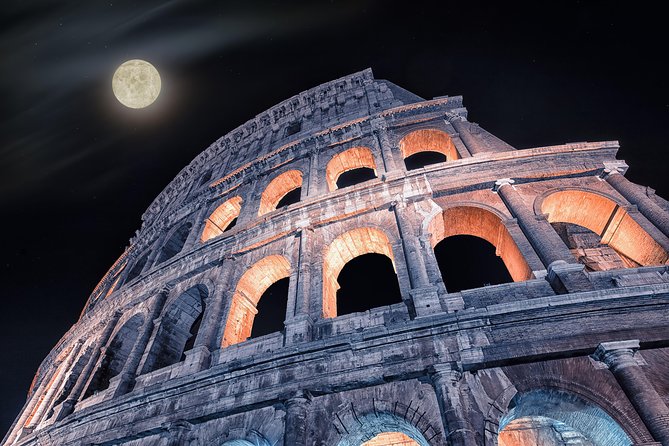
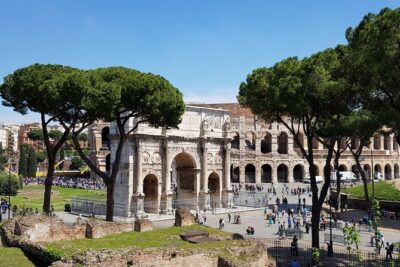
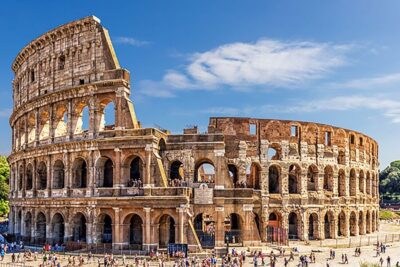
The tour ends with a visit to the Colosseum area and focuses on the exterior. You’re not inside, but you still get what matters most for first impressions: scale, setting, and the feeling that this was built for crowds.
The guide shares lesser-known facts and helps you see the amphitheater in context, like what it meant in Roman entertainment culture and how the site has changed over time. Several people also describe the Colosseum at night as genuinely beautiful, especially because the surrounding city lights add atmosphere to the stone.
If your main goal is night photos, ask your guide where the best viewpoints are for your camera position. Some guides are especially good at steering you toward “yes, that angle” moments.
Piazza Navona Finale and Its Three-Fountain Story
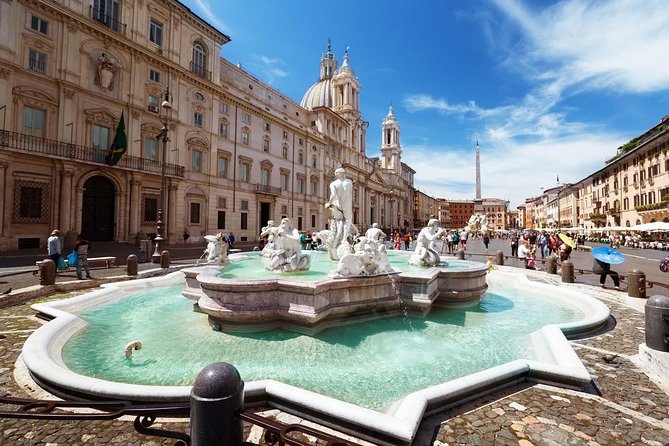
To close the tour, you’ll head to Piazza Navona, famous for its three fountains by Bernini. Night lighting makes this square feel alive, with a relaxed evening energy that’s different from the morning crowds.
This is a good finish point because it gives you a moment to breathe. You can linger, watch people, and take in the architecture without the pressure of rushing to the next stop. And the guide wraps up with anecdotes so the fountains are not just water features but a story of design and place.
Pace, Group Size, and How the Tour Keeps You Hearing the Guide
This tour runs about 3 hours and is built for walking. The pace is generally relaxed enough that it feels like sightseeing, not a race, but it’s still real walking on real streets.
A standout from the experiences shared is the audio setup. People mention headsets or small radios so you can hear the guide clearly, even when the street noise rises. That matters more than you’d think in Rome, where you can lose details fast if you can’t hear words well.
And because the group is capped at 15, it’s easier for the guide to manage questions. Names that come up in positive stories include Irene, Laura, Catia, Valentina, Reneta, and Claire, often praised for being animated and giving both history and practical tips.
The Practical Side: What to Wear, What to Bring
- Wear comfy shoes. You’ll be moving through uneven pavement and crowds.
- Bring a light layer. Even in summer evenings, night air can feel cooler once you’re out a while.
- If you care about photos, consider bringing a fully charged phone or camera, because you’ll want pictures at the Pantheon and Trevi Fountain.
Food and drinks are not included. Plan to eat after, not during. That also means you don’t have to stop mid-tour for meals, which helps keep the pacing smooth.
Value Check: Is $54.31 Worth It?
At about $54.31 per person, the value hinges on two things: (1) getting a guide who actually makes the monuments click, and (2) using the timing to avoid wasted time in heat.
If you are the kind of person who likes context, this tour can save you time later. You’ll leave with a clearer mental layout of central Rome, plus specific sights you’ll want to revisit on your own. And because this tour focuses on major stops close together, you spend your time seeing rather than commuting.
Also, it’s one of those “first night” style purchases. People often recommend doing it early in your trip, because it helps you get your bearings quickly for the rest of your days.
When This Tour Might Not Be Your Best Fit
This walk is great for active sightseers, but it’s not ideal if you want minimal walking or no street navigation. Also, the tour is subject to a minimum number of travelers. In some cases, it can be canceled, then you’d be offered another date or experience, or a full refund.
Finally, if you are very sensitive to noise or prefer audio without headsets, you might still feel the normal street-life sound level. The good news is that the audio gear helps, based on shared experiences.
Should You Book Rome by Night?
I think this tour is worth booking if you want a guided hit list of Rome’s top classics in a cooler, more atmospheric evening setting. The strongest reason is the mix of monuments plus explanation, and the small group size that makes the whole evening feel organized instead of chaotic.
Book it early in your trip if possible. You’ll get your mental map and photo highlights quickly, and then you can plan what to revisit with less pressure. If you hate long walks, scale your expectations and be honest with your comfort level. Otherwise, bring sturdy shoes, show up on time, and enjoy Rome when it looks like Rome, not a daytime checklist.
FAQ
How long is the Rome by Night walking tour?
It runs for about 3 hours.
What time does the tour start?
The start time is 6:00 pm.
Where is the meeting point?
Meet at Piazza del Colosseo, 00184 Roma RM, Italy.
Does the tour include entry tickets?
Admission is listed as free for the listed stops in the tour details.
What is included in the price?
A professional guide is included.
Is food or drinks included?
No. Food and drinks are not included.
What group size should I expect?
The tour has a maximum of 15 travelers.
Do I get an audio system to hear the guide?
Some experiences describe headsets or small radios so you can hear the guide through audio.
Is luggage storage available?
No, luggage storage is not available.
Is this tour suitable for people with disabilities?
You are asked to note accessibility needs on your booking.
Other Walking Tours in Rome From Our Notebook
Our Wider Tours File for Rome
Not quite the day you had in mind? The rest of our Rome write-ups sit below
- Rome: Guided Tour of St. Peter’s Dome Climb, Basilica & Vatacombs★ 5.0 · 167 reviews
- St. Peter’s Basilica Guided Tour with Reserved Entrance★ 4.0 · 168 reviews
- Golf Cart Driving Tour in Rome: 2.5 hrs Catacombs & Appian Way★ 5.0 · 168 reviews
- Rome: Trastevere Wine Tasting with Food Pairing and Gelato★ 4.9 · 168 reviews
- Guided Tour of the Colosseum Palatine Hill and Roman Forum★ 4.7 · 168 reviews
- Vatican Museums, Sistine Chapel & Saint Peter’s Semi-Private Tour★ 4.5 · 169 reviews
- Hidden Rome: Small Group E-Bike Tour with Street Food Stops★ 5.0 · 169 reviews
- Rome: Papal Audience with Pope Leo IV★ 3.9 · 169 reviews
- Rome Golf Cart Tour: Highlights & Must See★ 4.5 · 170 reviews
Walking Tours, top to bottom.
 ★ 4.7Milan: Guided Walking Tour & Last Supper Visit with TicketFrom $1015,409 reviews
 ★ 4.8Naples: Street Food Walking Tour with Local GuideFrom $474,256 reviews
 ★ 3.5Venice Walking Tour and Gondola RideFrom $723,630 reviews
 ★ 4.2Venice: Rialto Bridge & Offbeat Unusual Venice Walking TourFrom $283,538 reviews
 ★ 4.5Bologna: City Center Walking TourFrom $263,478 reviews
 ★ 4.0Private 3 hrs Venice Tour: St Mark’s, Walking tour & Boat tourFrom $4803,372 reviews
 ★ 4.5Florence: Guided Walking TourFrom $313,334 reviews
 ★ 4.5Skip the line: Uffizi and Accademia Small Group Walking TourFrom $1483,135 reviews
Filed under