
Reviewed · ROME CATACOMBS, BASILICAS & THE APPIAN WAY
Rome: Catacombs of Priscilla Entry Ticket & Guided Tour
Underground Rome has stories worth slowing down for. The Catacombs of Priscilla put early Christian burial life right under your feet, with guided context you can actually follow. I love how the tour is short and focused at 45 minutes, and I love that it is a small group, capped at 10, so the guide can keep the whole crew together in tight spaces. The main drawback is simple: the catacombs are not suitable for people with mobility impairments, and there is no stroller access.
What makes Priscilla stand out is how specific the place is. The catacombs grew from an old arenarium site and later became burial space in the early 3rd century, with walls packed with niche tombs and an adjacent area tied to the Greek Chapel and noble-family burial ground. You also get names that feel real and human, including Felice and Filippo, their mother St. Felicita, plus multiple popes linked to Priscilla.
One thing to keep in mind before you go: it is underground, so it is cooler than Rome at street level, but you still have to be comfortable with narrow corridors and limited space. Also, no photography is allowed inside, so plan to experience with your eyes, not your camera.
In This Review
- 6 things you should know before you book Priscilla Catacombs
- Underground Rome, with early Christianity as the main character
- Via Salaria location and what the meeting point really means
- Why this catacomb has a different origin story
- Two floors underground, how the tour is likely paced
- The Acili hypogeum, inscriptions, and the cistern surprise
- Martyrs and popes: the names the guide brings to life
- Frescoes and early Christian art, what to look for
- Cool air, tight corridors, and the comfort checklist
- Price and value: is $16 for Priscilla a fair deal?
- Language options and what that changes for your experience
- Who should book Catacombs of Priscilla, and who might skip
- After the tour: nearby context you can chase if you have time
- Should you book this Priscilla catacombs tour?
- FAQ
- How long is the Catacombs of Priscilla guided tour?
- Where do I meet for the tour?
- What languages are the guides?
- Is photography allowed inside the catacombs?
- Are baby strollers allowed?
- Is the tour suitable for people with mobility impairments?
- Can I cancel for a refund?
6 things you should know before you book Priscilla Catacombs
- A 45-minute route keeps the visit manageable in cramped underground corridors
- Small group, max 10 people helps you hear the guide and see key spots
- Two floors means you get more than one angle on the site
- Acili connections include inscriptions tied to an underground cistern history
- Martyrs and popes are part of what the guide explains, not just background
- No photos, no strollers means you need a hands-free plan
Underground Rome, with early Christianity as the main character
If you already hit the big checklist sites in Rome, Priscilla is a smart change of pace. This is Roman underground, yes, but the story focus is early Christianity, burial practices, and memorial spaces, not just ancient engineering.
A big part of the appeal is practical. The tour is 45 minutes, and that matters because catacombs are not museum-shopping. Your feet and attention stay busy, and the guide keeps things moving so you do not get lost in the dark. It also helps that the experience is built for small groups of up to 10, which makes a difference when you are navigating narrow turns.
And the vibe is quietly different from the grand sites above ground. Here, you are learning in real scale. The walls, the niches, and the memorial layout make the history feel less like textbook content and more like a lived routine of faith and loss.
Our notebook holds other catacomb, basilica and Appian Way tours in Rome if you are still weighing options.
- Rome: Crypts and Catacombs Underground Tour with Transfers
★ 4.6 · 5,341 reviews - Rome: Catacombs of St. Callixtus Entry Ticket & Guided Tour
★ 4.6 · 3,037 reviews - Rome: Guided Roman Catacombs Tour with Transfers
★ 4.6 · 1,830 reviews - Rome: Catacombs Guided Tour with Transfer
★ 4.2 · 1,808 reviews
Via Salaria location and what the meeting point really means
The Catacombs of Priscilla sit on Via Salaria, a bit away from the historic core. Plan for transit time, whether you take public transport or a taxi. One tip worth respecting: do not treat this as a show-up-late kind of stop.
The meeting instruction is very clear. Go directly to the catacomb ticket office and show your reservation at least 10 minutes before your scheduled tour. That buffer is not about drama. It is about timing once the group is formed, and it helps your guide start on time in a place where waiting feels extra slow.
If you are doing this as part of a longer day, pick a realistic time slot. This visit is short, but it still takes focus. It also works nicely when you want to cool down from Rome heat, since you will be underground most of the time.
Why this catacomb has a different origin story
Most Roman catacombs make sense once you understand the origin of the site. Priscilla has a particularly interesting one.
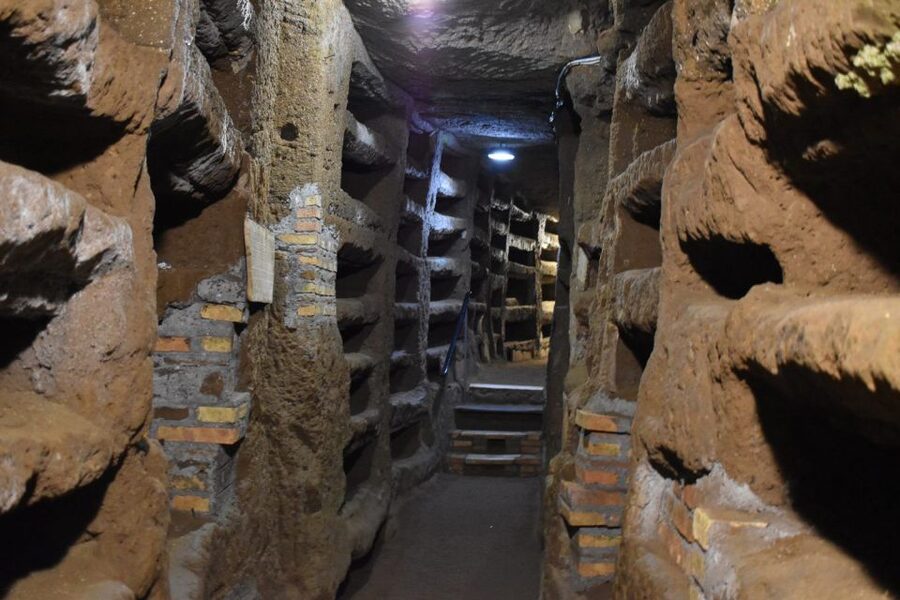
Long before Christians used it as burial space, the area appears to have begun as an arenarium and was later abandoned. The Christians started using the large, irregular galleries of the first floor around the beginning of the 3rd century. They then built around twenty niche tombs and dug hundreds more niches directly into the walls.
That origin matters because it changes the feel of what you see. You are not only looking at a purpose-built cathedral of death. You are walking through older space that got repurposed into a working burial and commemoration network as the Christian community grew.
Two floors underground, how the tour is likely paced
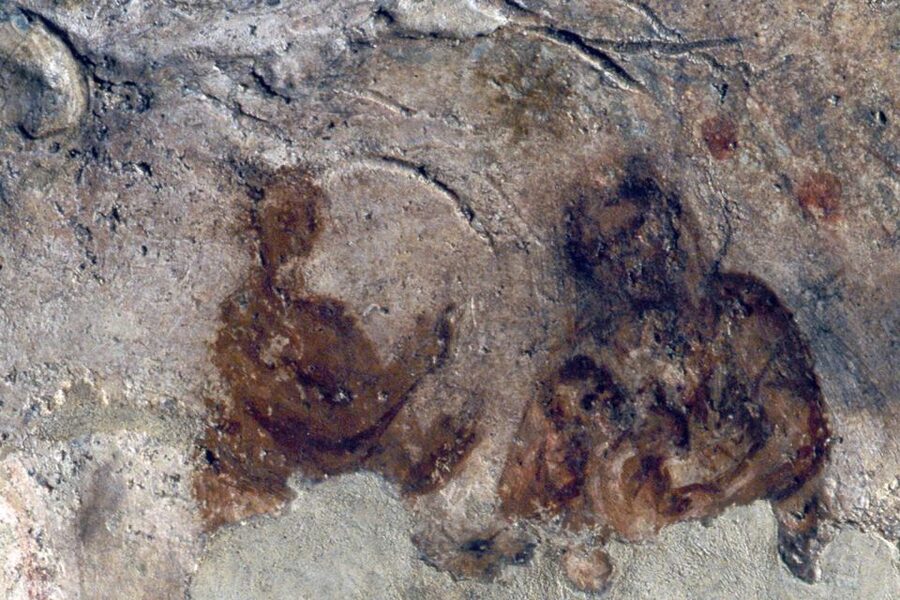
This ticket and guided tour is designed for the catacomb layout, which is described as spread over two floors. In practice, you should expect a route that mixes walking, short pauses, and explanation, because the space changes as you move between levels and areas.
On the first floor, you will spend time in the large and irregular galleries that became burial corridors in the early 3rd century. This is where the niche tombs come into play, and where the guide can point out how the wall system works as a kind of community memorial.
The second level and adjacent areas are part of what gives Priscilla its structure. The site includes an adjacent cryptoporticus linked to a Greek Chapel and a larger underground environment. It is described as connected to a noble family burial ground, and later tied into the catacomb complex.
In a 45-minute tour, you will not see everything in minute detail. But the pacing is meant to hit the meaning. The goal is that you leave understanding not just what the place is, but why it was built and reused the way it was.
The Acili hypogeum, inscriptions, and the cistern surprise
One of the most fascinating parts of Priscilla is the hypogeum of the Acili. The name matters because it connects this underground world to a specific family imprint.
Here is the twist that makes your guide’s explanation feel worth it. The hypogeum was originally a cistern of water. Later, inscriptions of the Acili family were found there and are part of what is exhibited, tying the underground setting to actual names and records.
When a guide points out that the space began as a water cistern, your brain instantly shifts. You stop seeing it as only burial infrastructure and start seeing it as a reused underground system, where practical needs and memorial needs can overlap across centuries.
If you like archaeology that feels grounded, this is your moment. It is not just dramatic legends. It is materials, inscriptions, and reuse over time.
Martyrs and popes: the names the guide brings to life
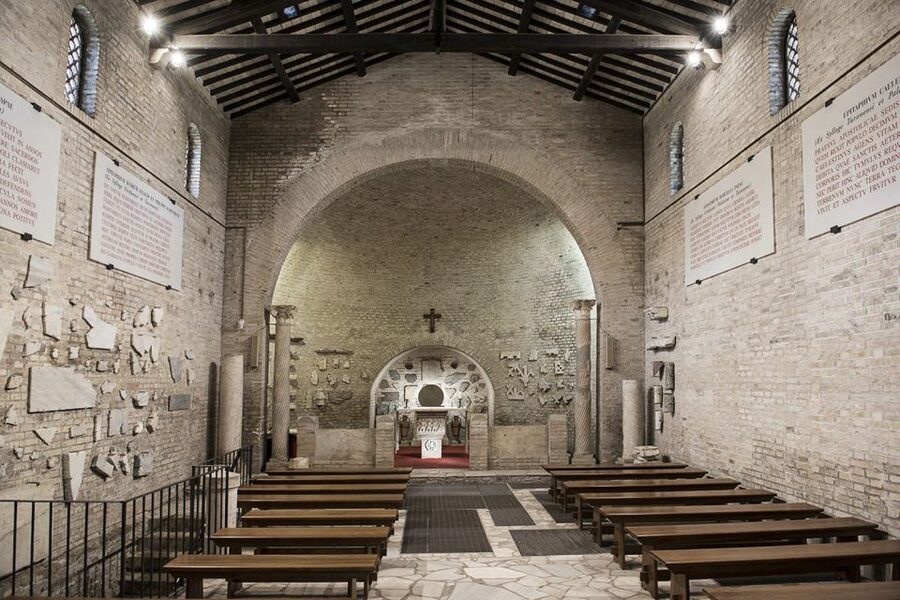
Priscilla is strongly connected to martyrs, which gives the tour emotional focus, even when you are mostly navigating stone corridors.
Among the martyrs remembered at Priscilla are the brothers Felice and Filippo, plus their mother St. Felicita. The text ties their martyrdom to a period that is likely under Diocletian, along with their additional brothers: Alessandro, Marziale, Vitale, Silano, and Gennaro.
You also hear pope names tied to Priscilla burial. The site includes burials associated with popes Marcellino (296 to 304), Marcello (308 to 309), Silvestro (314 to 335), Liberius (352 to 366), Siricius (384 to 399), Celestino (422 to 432), and Vigilius (537 to 555).
Even if you are not a religious-history superfan, this roster changes the tour from general to specific. It helps you see that Priscilla was not a one-time burial location. It became a recurring sacred memory space for a community over generations.
Also, keep an open mind about what you will and will not see. Some of these burial contexts focus on niche memorial spaces, and the original physical remains may not be present in the way you expect. The takeaway is the community marking, not a modern idea of what a grave should look like.
We wrote up further entry tickets in Rome on the same pass through the archive.







Frescoes and early Christian art, what to look for
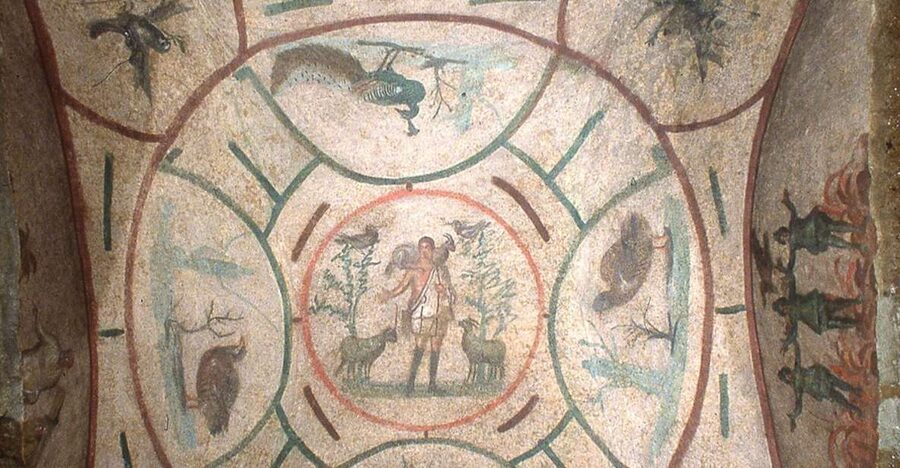
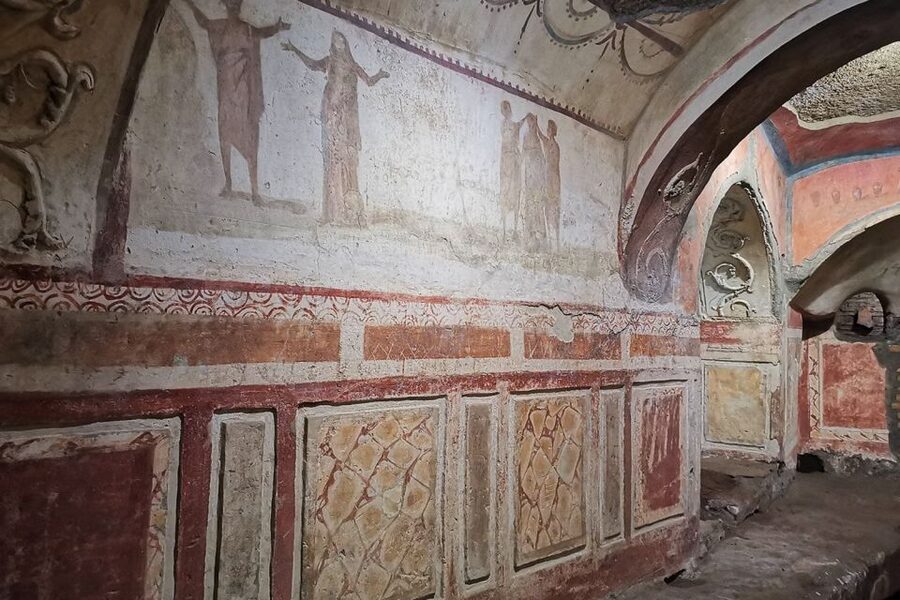
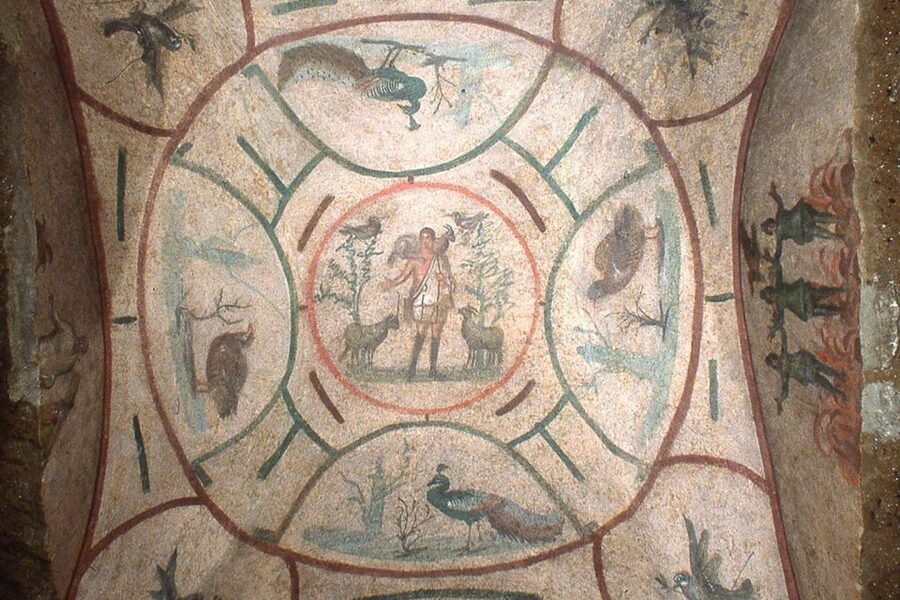
Early Christian imagery is one reason people seek out Priscilla in the first place. In several guided experiences, the guide highlights surviving frescoes, including paintings that can be dated to roughly the 240 to 280 AD window.
You might also hear about famous icon details that are considered early in Christian art history, including depictions involving Mary and Jesus. Even without catching every tiny detail, the big picture is what matters. These images were made for underground worship culture and community memory, not for gallery viewing.
Because photography is not allowed inside, you will want to slow down when the guide points something out. Look for the way images are placed in relation to the niche and memorial layout. That is usually where the guide’s explanation connects art, ritual, and daily grief.
Cool air, tight corridors, and the comfort checklist
Catacombs are cooler than street level, but you should still dress for comfort. Even short tours can feel physically demanding in tight spaces, especially when you are trying to hear the guide while walking slowly.
A few practical points to keep in mind:
- Expect narrow turns and walking on uneven surfaces
- Bring a light layer if you run warm easily
- Wear shoes you are fine with getting dusty
One more rule you should plan around: no photography inside. If you love taking pictures, it can feel limiting. But it also makes your visit more about attention. You will likely remember more than you think, because your brain is not constantly trying to frame a shot.
Price and value: is $16 for Priscilla a fair deal?
For around $16 per person and a 45-minute guided tour, Priscilla can feel like very good value, especially compared with Rome’s big-ticket highlights. You are paying for a guided interpretation of a specific underground site, plus the chance to see preserved elements of early Christian art in place.
Where the value shows most is in the guide time and the site access. A catacomb stop without context can become just corridors and niches. With a live guide, you get names, timelines, and why the site developed the way it did, including the Acili cistern origin and the martyr and pope connections.
Is it for everyone at that price? Yes, if you want something different from the main tourist circuit. If you expect a huge, grand-scale spectacle like the Colosseum, you may feel underwhelmed. Priscilla is not about size. It is about meaning and atmosphere.
Language options and what that changes for your experience
The live guided tour is offered in Italian, English, and Spanish. That matters more than it sounds. Catacombs are complex, and the guide’s explanations help you connect the carvings, inscriptions, and niche layout into a story you can follow.
If you pick English or Spanish, you can usually expect a smooth narrative flow and specific pointing out of key areas. Some English-language tours have been led by guides such as Sister Lydia or Sister Lidia, with a tone that is described as friendly and humor-friendly, which helps when you are moving through cramped spaces and need the group to stay together.
Who should book Catacombs of Priscilla, and who might skip
I think Priscilla is a great fit if:
- You like early Christianity and Roman burial customs
- You want a quieter, less crowded alternative to the top Roman checklist
- You enjoy guided history that includes names, dates, and place-based context
- You want a short experience that does not eat your whole day
I would be more cautious if:
- You need a fully accessible route, since it is not suitable for mobility impairments
- You rely on strollers, because baby strollers are not allowed
- You want lots of time for photos, because photography inside is not allowed
- You need a big wow-factor from scale alone, since this is a compact underground world with moments of stillness more than dramatic architecture
If you are traveling with kids, this is workable only if they can handle dark, narrow walking and the no-photo rule. For adults, it is a thoughtful stop.
After the tour: nearby context you can chase if you have time
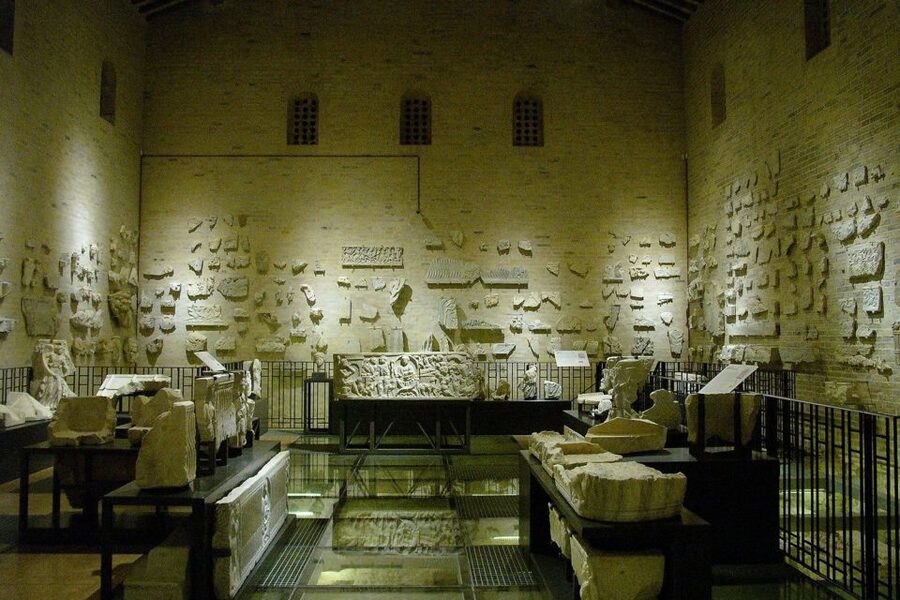
The Priscilla catacomb story connects with nearby sites. The text notes that inside Villa Ada there is a Basilica built by Pope St. Silvestro in correspondence with the tomb of Felice and Filippo. It also notes a Museum set up in an area near the basilica that collects hundreds of fragments of sarcophagi found during excavations around the catacomb.
You might not see these parts on every 45-minute tour, but they give you a useful roadmap for how to extend the experience. If you have energy and time after your guided visit, it is worth seeing whether you can connect the underground story to what sits above ground in the same broader area.
Should you book this Priscilla catacombs tour?
Yes, you should book if you want a small-group guided look at early Christian burial life in Rome, and you care about what the spaces mean. The price is reasonable for what you get, especially the guide-led explanation of niches, inscriptions, and the martyrs and popes tied to Priscilla.
Skip it if you need full accessibility, want to bring a stroller, or you are expecting the kind of massive spectacle that dominates first-time Rome itineraries. Priscilla is smaller and quieter. But when you pay attention, it is the kind of stop that makes Rome feel layered in a new way.
FAQ
How long is the Catacombs of Priscilla guided tour?
The tour lasts about 45 minutes.
Where do I meet for the tour?
Go directly to the ticket office of the Catacomb and show your reservation at least 10 minutes before the scheduled tour.
What languages are the guides?
The live guide is available in Italian, English, and Spanish.
Is photography allowed inside the catacombs?
No, photography is not allowed inside.
Are baby strollers allowed?
No, baby strollers are not allowed.
Is the tour suitable for people with mobility impairments?
No, the tour is not suitable for people with mobility impairments.
Can I cancel for a refund?
Yes, you can cancel up to 24 hours in advance for a full refund.
Our Wider Tours File for Rome

Also Written Up in Rome, Catacomb, Basilica and Appian Way Tours
Not quite the day you had in mind? The rest of our Rome write-ups sit below
- Rome: Guided Tour of St. Peter’s Dome Climb, Basilica & Vatacombs★ 5.0 · 167 reviews
- St. Peter’s Basilica Guided Tour with Reserved Entrance★ 4.0 · 168 reviews
- Golf Cart Driving Tour in Rome: 2.5 hrs Catacombs & Appian Way★ 5.0 · 168 reviews
- Rome: Trastevere Wine Tasting with Food Pairing and Gelato★ 4.9 · 168 reviews
- Guided Tour of the Colosseum Palatine Hill and Roman Forum★ 4.7 · 168 reviews
- Vatican Museums, Sistine Chapel & Saint Peter’s Semi-Private Tour★ 4.5 · 169 reviews
- Hidden Rome: Small Group E-Bike Tour with Street Food Stops★ 5.0 · 169 reviews
- Rome: Papal Audience with Pope Leo IV★ 3.9 · 169 reviews
- Rome Golf Cart Tour: Highlights & Must See★ 4.5 · 170 reviews
Rome Catacombs, Basilicas & the Appian Way, top to bottom.
 ★ 4.6Naples: Catacombs of San Gennaro Entry Ticket & Guided TourFrom $157,941 reviews
 ★ 4.6Rome: Crypts and Catacombs Underground Tour with TransfersFrom $745,341 reviews
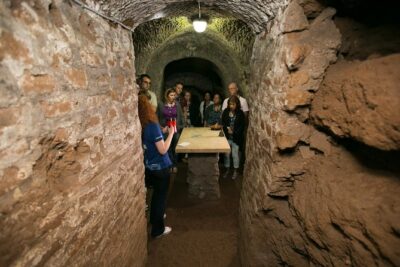 ★ 4.5The Original Roman Crypts and Catacombs Tour with TransfersFrom $664,896 reviews
 ★ 4.6Rome: Catacombs of St. Callixtus Entry Ticket & Guided TourFrom $163,037 reviews
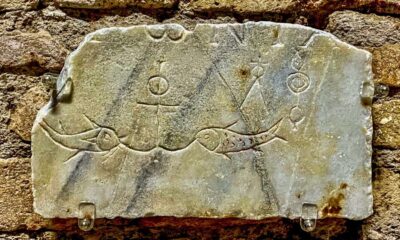 ★ 4.6Rome: Guided Roman Catacombs Tour with TransfersFrom $651,830 reviews
 ★ 5.0Rome EBike Tour: Appian Way, Catacombs & Roman AqueductsFrom $1021,766 reviews
 ★ 4.9Rome: Appian Way, Catacombs, & Roman Aqueducts E-bike TourFrom $851,421 reviews
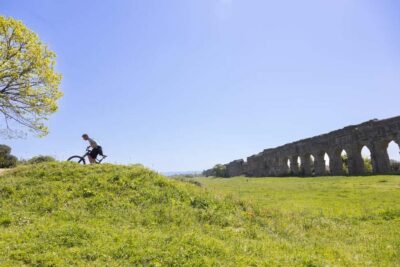 ★ 4.9Rome:Appian Way E-bike Tour with Catacombs, Aqueducts & FoodFrom $961,210 reviews
Filed under