
Reviewed · WALKING TOURS
Rome: City Walking Tour in English or Spanish
Rome feels like it has layers. This city walking tour strings together the biggest sights with story-driven stops along the way, so your first hours in Rome make sense fast. I like that it is a tight route built for a half-day rhythm, with a live local guide keeping the pace and context clear. One thing to consider: this is not a ticketed tour of everything, so you mainly see certain monuments up close from the outside, and you still need to plan your own meals.
Two things really make it click. First, the guided history moves from the Roman Empire into modern Rome, with enough detail to feel real and enough humor to stay awake. Second, you finish in an area that is perfect for switching from “tour mode” to “food and wandering mode,” with Piazza Navona set up as your ending point.
At $28 per person, you’re paying for a local guide, a route through the center, and practical recommendations at the end. If you expect a sit-down museum day or a meal included, adjust your expectations and you will get a lot more out of the walk.
In This Review
- Key points you’ll care about
- A short Rome walk that helps the city click
- Where you begin: Piazza d’Aracoeli or Piazza di Pasquino
- Piazza Venezia: a fast history hit in the center
- Trajan’s Column: learning how Rome tells stories
- Trevi Fountain: your best photo window plus the bigger meaning
- Galleria Sciarra: the “wait, what is this?” stop
- Church of Sant’Ignazio di Loyola: an art stop with guidance
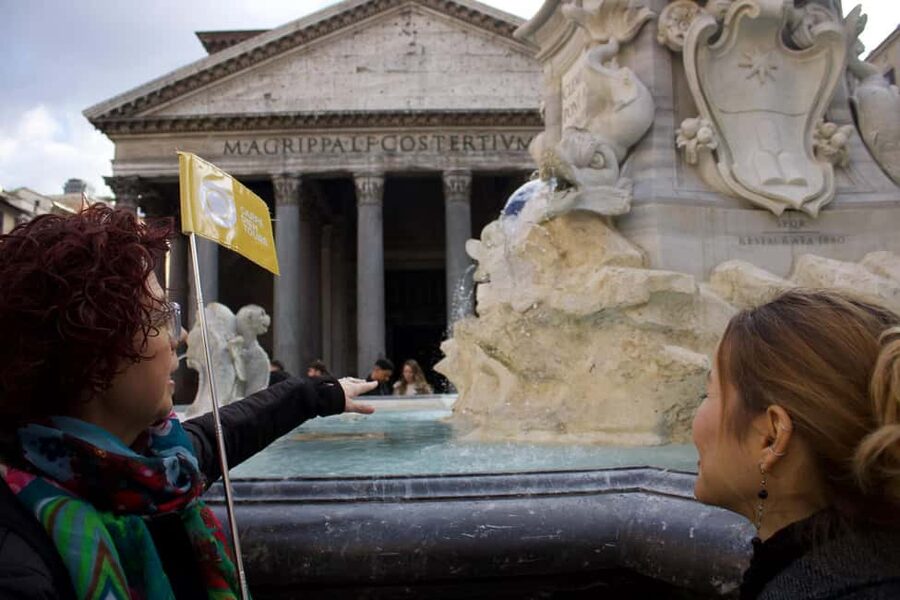
- The Pantheon area: you get the sense of it, not the full inside visit
- Ending in Piazza Navona, plus what that means for dinner
- Who this tour fits best (and who might want more)
- Price and value: $28 for a guided orientation
- Tips to get more out of the walk
- Should you book this Rome city walking tour?
- FAQ
- How long is the Rome city walking tour?
- What languages are available for the tour?
- How much does it cost per person?
- Where does the tour start?
- Where does the tour end?
- Are food and drinks included?
- What should I bring?
- Is hotel pickup included?
- Can I cancel and get a full refund?
- Is there a private group option?
Key points you’ll care about
• Live guide in English or Spanish, with time set aside for guided segments at major landmarks
• 2 to 2.5 hours that covers major monuments without long transport breaks
• Stops built around piazzas and sight lines, plus quieter corners like Galleria Sciarra
• Roman Empire to today storytelling, so places connect instead of feeling random
• Ends near Piazza Navona, a strong launchpad for dinner, bars, and rooftop views
• Comfy shoes matter, since this is a proper walking experience in the historic center
A short Rome walk that helps the city click
This tour works because it is designed like a history lesson you can walk through. You start in one of two central piazzas, then the route flows into the kinds of monuments that usually take more time to understand on your own.
You also get value because the guide does more than point. The tour includes history and recommendations, so you leave knowing what to prioritize later, whether that is another walk, a museum stop, or a specific neighborhood for dinner.
And yes, it is only a few hours. That matters in Rome, where one wrong turn can cost you time in lines or crowds. A good guide also helps you catch great angles without turning every stop into a wrestling match.
Filed beside this one, more walking tours in Rome.
- Rome: Trastevere & Campo de Fiori Street Food Walking Tour
★ 4.9 · 2,768 reviews - Rome: Paranormal Night Walking Tour & Secret Backstreets
★ 4.9 · 1,921 reviews - Rome by Night Walking Tour – Legends & Criminal Stories
★ 4.5 · 1,003 reviews - Rome: Guided City Center Evening Sightseeing Walking Tour
★ 4.4 · 953 reviews
Where you begin: Piazza d’Aracoeli or Piazza di Pasquino
Your starting point depends on the option booked, with two meeting locations listed: Piazza d’Aracoeli or Piazza di Pasquino. Either way, you are dropped into Rome’s center where streets narrow, views open up, and you can feel how the city grew outward.
Piazza d’Aracoeli puts you in the orbit of viewpoints and monumental streets, while Piazza di Pasquino is a classic launch pad for getting oriented around the old core. In both cases, the advantage is timing: you start close enough to the main sights that the first stretch of walking actually leads somewhere.
Practical tip: if you are early, do a quick look around the piazza you start from before the group gathers. Rome is full of “small” details that become big later once your guide points them out.
Piazza Venezia: a fast history hit in the center
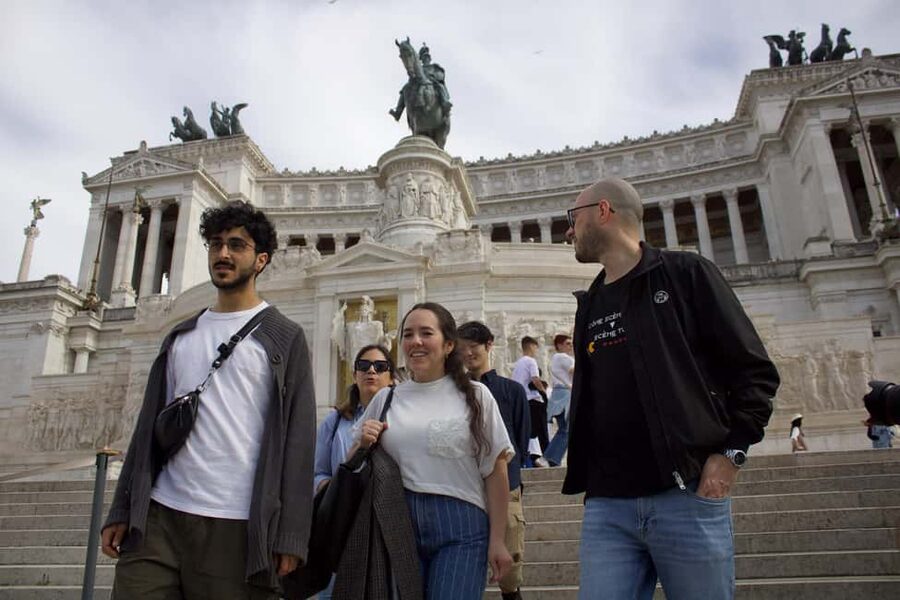
The route then heads to Piazza Venezia for about 20 minutes of guided time. This is a smart stop early on because it anchors your understanding of Rome’s political and civic identity. You’ll get context that makes later monuments feel connected, not just stacked next to each other.
What I like here is the way the guide can translate scale. Piazza Venezia helps you see why certain buildings and monuments were designed where they are, and how that shapes the way the streets feel even today.
A minor consideration: like many central squares, it can be busy. Your guide’s job is to keep the group moving and give you the key story beats without letting the crowd swallow the moment.
Trajan’s Column: learning how Rome tells stories
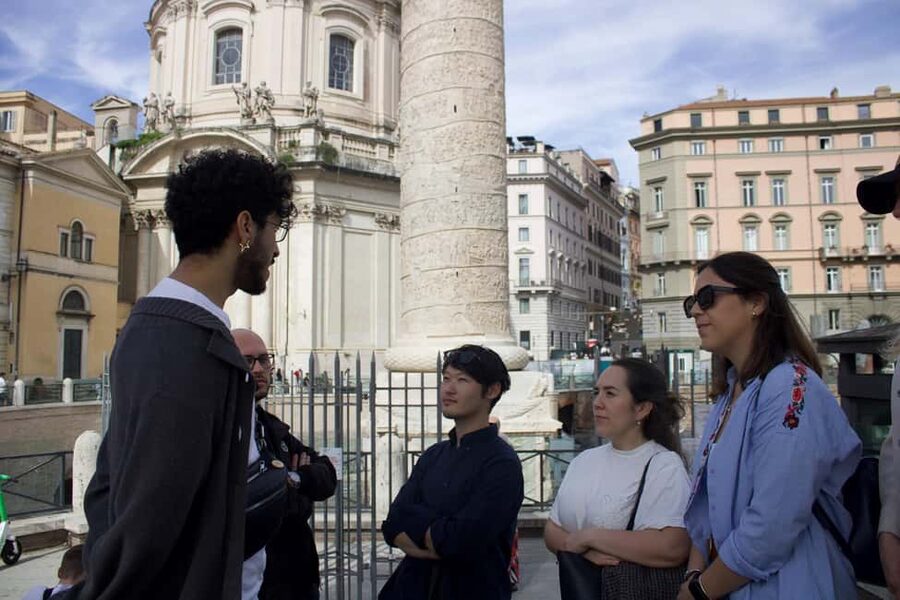
Next comes Trajan’s Column, also with about 20 minutes of guided time. This stop is famous, but the value is not just seeing the column. The value is understanding why it exists and what it was meant to communicate.
A column like this is public messaging in stone. With a guide, you can connect the visuals to Roman ambition, military power, and the idea that propaganda can be both art and instruction.
If you are the type who likes details, you’ll probably stay mentally longer here than the 20 minutes suggests. And if you are not into history, it still lands because you can literally look while the guide explains what you’re seeing.
Trevi Fountain: your best photo window plus the bigger meaning
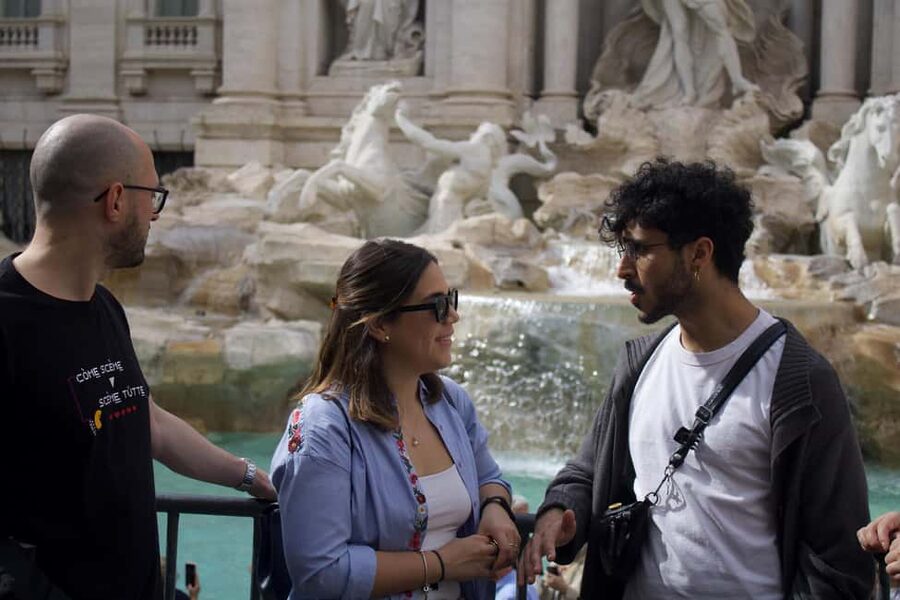
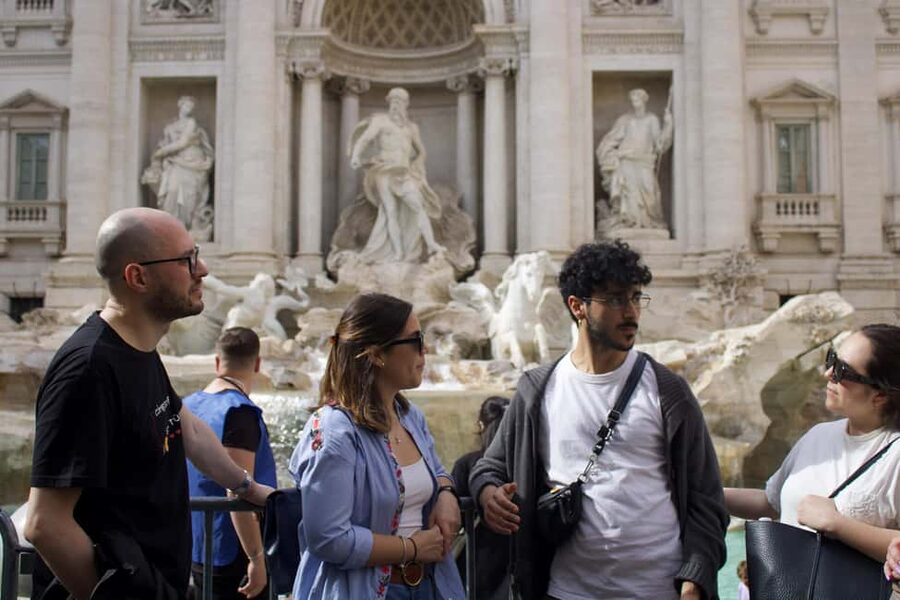
Then you hit Trevi Fountain for about 30 minutes. This is the longest guided stop on the walk, which tells you how central it is to first-time Rome.
Here is how to make it worth it: take in the fountain as a piece of storytelling. It is not only a postcard scene. It is designed to impress, to lure attention, and to reflect Rome’s ability to turn myth and power into something you can stand in front of.
A practical drawback: Trevi can be chaotic. Expect people. Your guide’s pacing and your spot choice matter, so listen when they suggest where to stand and where to move next for a clearer view.
Galleria Sciarra: the “wait, what is this?” stop
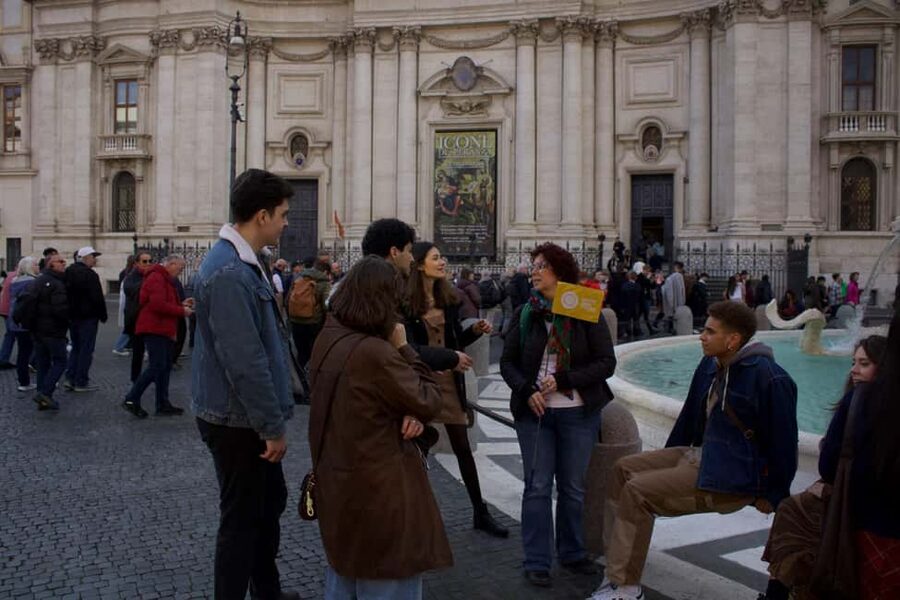
After Trevi, the tour moves into Galleria Sciarra for about 20 minutes. This is one of those Rome moments where the city briefly stops being an open-air museum and becomes a quiet interior surprise.
It is valuable because it breaks the rhythm. You go from the grand outdoor icons into a more intimate space, which makes the overall walk feel less like a checklist and more like a route through different versions of Rome.
If you like photographing architecture or you just enjoy texture and light, this stop is often the one you remember even if you cannot explain exactly why later.
Our notebook holds other city tours in Rome if you are still weighing options.




Church of Sant’Ignazio di Loyola: an art stop with guidance
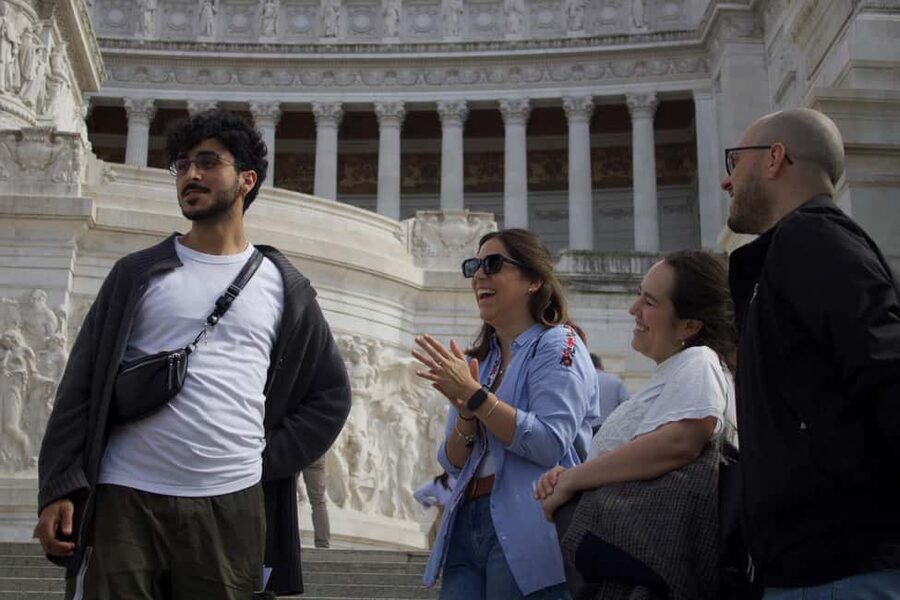
Next is Sant’Ignazio di Loyola with around 20 minutes of guided time. Churches in Rome can be overwhelming if you do not know what to look for. With a guide, you get a way to decode the space so it feels intentional instead of random.
This stop is great for people who want more than “pretty buildings.” You can usually expect your guide to point out features that explain why the church is famous and how that fame connects to broader Roman culture.
Time note: at 20 minutes, you are not touring the whole building like you would on a longer visit. The guide’s focus will keep it tight, so the key is to take the cue on what details matter most.
The Pantheon area: you get the sense of it, not the full inside visit
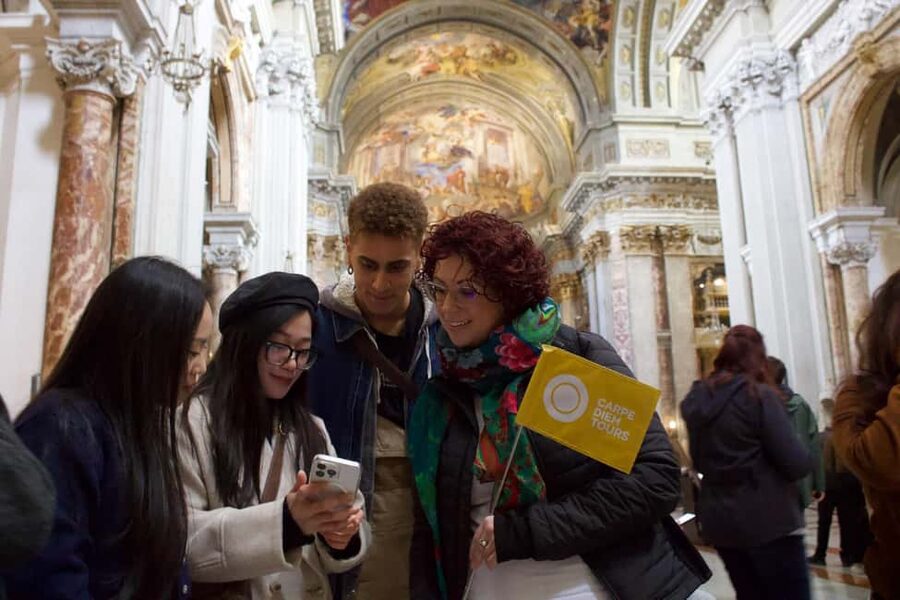
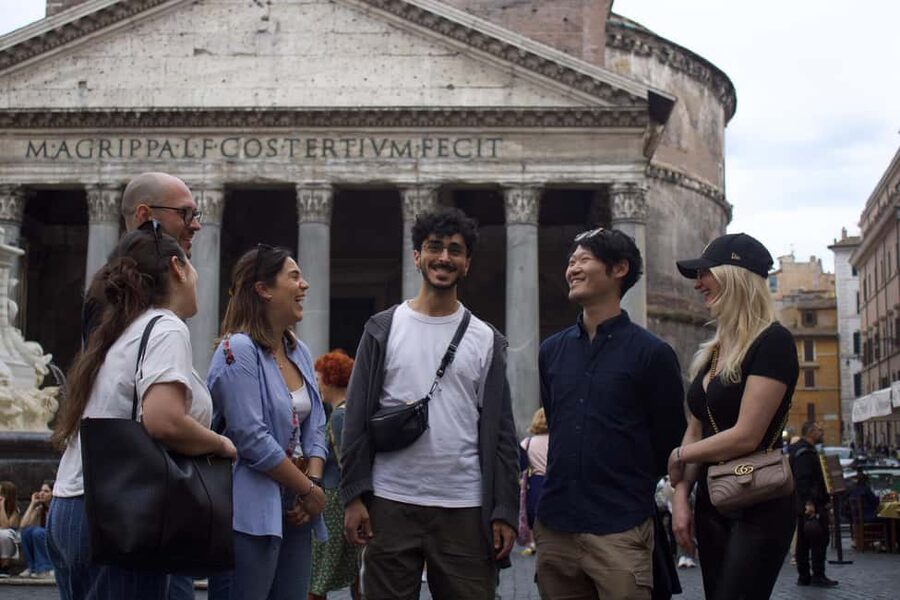
The tour then includes a pass-by of the Pantheon for about 20 minutes. That means you likely get a strong outside view and orientation, but it is not presented as an extended entry experience.
This is still worthwhile. The Pantheon exterior and the way it sits in its space help you understand why it has been copied, studied, and referenced for centuries.
A good strategy for a pass-by stop: look up, then step to the side your guide indicates. Rome monuments often reward movement, and with only 20 minutes, you want to use the time efficiently.
Ending in Piazza Navona, plus what that means for dinner
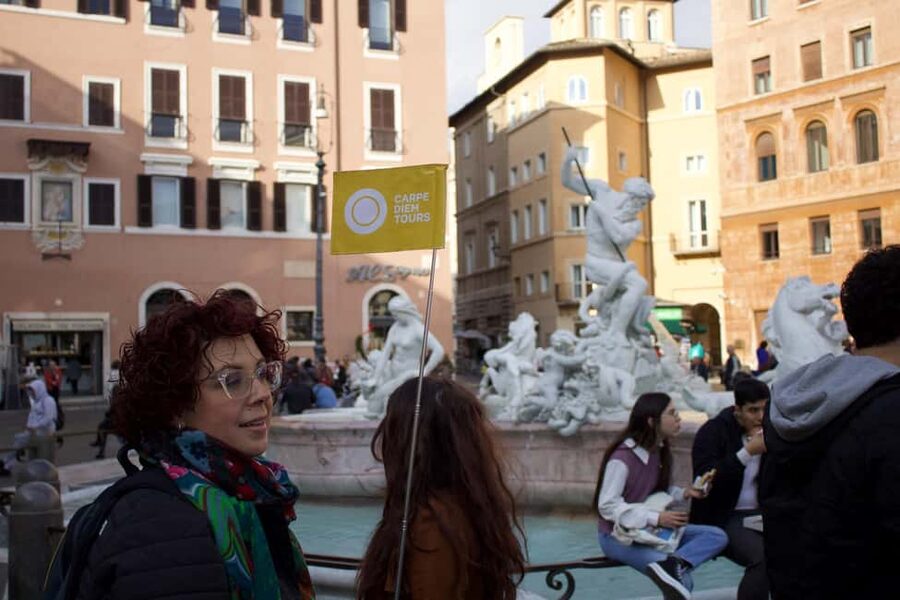
The walk finishes at one of the listed drop-off areas, including Piazza Navona (it appears more than once as an option) and also Colosseum. At the same time, the tour description also emphasizes returning toward the meeting point, so your best move is to follow what your confirmation says about where you end.
In real terms, Piazza Navona is a strong ending point because it is made for lingering. The tour frames it as a place with great eateries, bars, and rooftop terrace options, which is exactly what you want after a history walk.
If you want an easy “what now?” plan, this ending helps. You can get dinner without starting from zero, and you can keep exploring nearby streets with a guide’s map in your head.
Who this tour fits best (and who might want more)
This is a great first Rome day. It gives you structure, major landmarks, and a story thread that helps you understand what you see later when you return on your own.
It also suits couples and solo travelers who want a social rhythm without spending hours in transit. If your schedule is tight, it is long enough to feel like you learned a lot, but short enough to still do another activity afterward.
If you are traveling with kids, it can work as long as they can handle walking. The tour is only a few hours, and the guide is there to keep things engaging. Just keep an eye on energy, because you will be on your feet for the full route.
For people who only want inside access to major monuments, this might feel like an appetizer. You will see major sights, but some are pass-by segments rather than full visits.
Price and value: $28 for a guided orientation
At $28 per person for about 2 to 2.5 hours, this is priced like an orientation tour, not a museum marathon. You are paying for a local guide, Roman history context, scenic stops, and recommendations to help you spend your time well afterward.
The value is strongest if you want help deciding what to do next. Many Rome days fall apart because people rush into popular places without a plan. This walk sets the stage, so your later choices feel smarter.
You should also plan your own meals and drinks. Food is not included, but the ending near Piazza Navona is a clear hint that you are expected to stop for dinner right after.
Tips to get more out of the walk
Wear comfortable shoes and comfortable clothes, because Rome’s historic center is not designed for long days in stiff footwear. If you’re sensitive to uneven pavement, give yourself extra time.
Show up with a curiosity mindset. When a guide talks about things like Trajan’s Column or Roman architecture cues, the payoff is mental, not just visual. You’ll get more by staying present and letting the story connect the next stop.
Also, if your tour group uses any audio aids, they can make listening easier in busy streets. If that option is offered on your departure, take advantage of it. Clear audio helps you catch the details that make the whole route feel worth it.
Should you book this Rome city walking tour?
I think you should book it if you want a smart first pass through Rome’s center, with a guide who makes major landmarks understandable in a short time. The 2 to 2.5 hour format is ideal when you do not have a lot of days, and the ending near Piazza Navona gives you an instant plan for the rest of your evening.
You might skip or add extra tours if you want long inside visits to multiple monuments or a full day of timed entry experiences. For everyone else, this is a solid, cost-effective way to get your bearings and start building a Rome story you can keep adding to.
FAQ
How long is the Rome city walking tour?
The duration is listed as 2 to 2.5 hours. Starting times vary, so check availability when you book.
What languages are available for the tour?
The live tour guide is available in English and Spanish.
How much does it cost per person?
The price is listed as $28 per person.
Where does the tour start?
The meeting point may vary depending on the option booked. Two starting options listed are Piazza d’Aracoeli and Piazza di Pasquino.
Where does the tour end?
This activity ends back at the meeting point, and the listed drop-off locations include Piazza Navona and Colosseum. Your confirmation will indicate the exact end location for your departure.
Are food and drinks included?
No. Food and drinks are not included.
What should I bring?
Bring comfortable shoes and comfortable clothes.
Is hotel pickup included?
No. Hotel pickup and drop-off are not included.
Can I cancel and get a full refund?
Yes, you can cancel up to 24 hours in advance for a full refund.
Is there a private group option?
Yes, private group availability is listed.
Other Walking Tours in Rome From Our Notebook
Our Wider Tours File for Rome
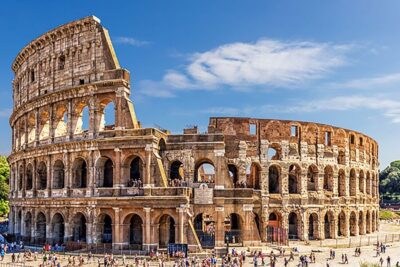
Not quite the day you had in mind? The rest of our Rome write-ups sit below
- Rome: Guided Tour of St. Peter’s Dome Climb, Basilica & Vatacombs★ 5.0 · 167 reviews
- St. Peter’s Basilica Guided Tour with Reserved Entrance★ 4.0 · 168 reviews
- Golf Cart Driving Tour in Rome: 2.5 hrs Catacombs & Appian Way★ 5.0 · 168 reviews
- Rome: Trastevere Wine Tasting with Food Pairing and Gelato★ 4.9 · 168 reviews
- Guided Tour of the Colosseum Palatine Hill and Roman Forum★ 4.7 · 168 reviews
- Vatican Museums, Sistine Chapel & Saint Peter’s Semi-Private Tour★ 4.5 · 169 reviews
- Hidden Rome: Small Group E-Bike Tour with Street Food Stops★ 5.0 · 169 reviews
- Rome: Papal Audience with Pope Leo IV★ 3.9 · 169 reviews
- Rome Golf Cart Tour: Highlights & Must See★ 4.5 · 170 reviews
Walking Tours, top to bottom.
 ★ 4.7Milan: Guided Walking Tour & Last Supper Visit with TicketFrom $1015,409 reviews
 ★ 4.8Naples: Street Food Walking Tour with Local GuideFrom $474,256 reviews
 ★ 3.5Venice Walking Tour and Gondola RideFrom $723,630 reviews
 ★ 4.2Venice: Rialto Bridge & Offbeat Unusual Venice Walking TourFrom $283,538 reviews
 ★ 4.5Bologna: City Center Walking TourFrom $263,478 reviews
 ★ 4.0Private 3 hrs Venice Tour: St Mark’s, Walking tour & Boat tourFrom $4803,372 reviews
 ★ 4.5Florence: Guided Walking TourFrom $313,334 reviews
 ★ 4.5Skip the line: Uffizi and Accademia Small Group Walking TourFrom $1483,135 reviews
Filed under