
Reviewed · WALKING TOURS
Rome: Ghostly Nighttime Walking Tour
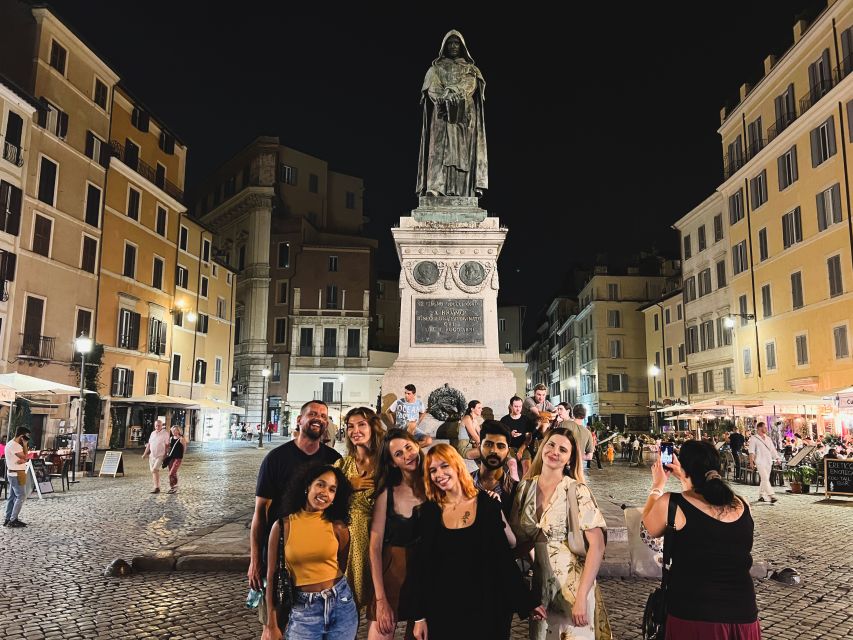
Rome turns spooky after dark. This 2-hour ghostly walking tour takes you past Rome’s famous landmarks in the cooler, calmer evening hours, with a guide who connects the city’s sights to executions, murders, and eerie legends. You start at the Monumento a Giordano Bruno spot right in the heart of Campo de’ Fiori, and the whole walk is designed to change how you see the city.
I love two things about it. First, it is a smart way to see Rome at night without getting baked or swallowed by daytime crowds. Second, the tour leans hard into storytelling, and guides like Maham and Dinara are repeatedly praised for making the facts feel vivid, clear, and easy to follow.
One possible drawback: it can feel more dark history than full paranormal theater. If you are chasing jump scares only, you might find it steadier and more historical than you expected.
In This Review
- Key things to know before you go
- Why Rome Ghost Stories Feel Extra Real After Dark
- Meeting at Giordano Bruno: Your Night’s First Clue
- Piazza Farnese, Madonnelle Shrines, and the City’s Quiet Signals
- Ponte Sisto and the River Walking Feel
- The Fountain of the Mask: Small Stop, Strong Atmosphere
- The Church Stops: Where the Tour Turns Most Chilling
- Castel Sant’Angelo: The Finale with Big-Scene Night Views
- Pace, Timing, and What Two Hours Actually Feels Like
- Is $28 a Good Value for a Rome Ghost Tour?
- Who This Tour Fits Best
- Should You Book This Rome Ghostly Night Walking Tour?
- FAQ
- Where does the tour start?
- How long is the Rome ghostly walking tour?
- Is the guide available in English?
- How much does the tour cost?
- What sights will we see during the walk?
- What should I bring?
- Can I book a private group?
- How can I find the exact starting time?
- Is free cancellation available?
- How do I book if my plans might change?
Key things to know before you go
- Start in the center of Campo de’ Fiori at the Giordano Bruno monument, with an easy meet-up spot
- A smooth 2-hour format with short guided stops and walking segments, great for first-timers
- Specific, atmospheric sights like Ponte Sisto, the Fountain of the Mask, and Castel Sant’Angelo
- Church stops with death-themed stories, including a chapel description involving human bones
- Guides with strong delivery in English, often energetic and interactive
- Photography-friendly evening views, especially around the river and fortress area
Why Rome Ghost Stories Feel Extra Real After Dark
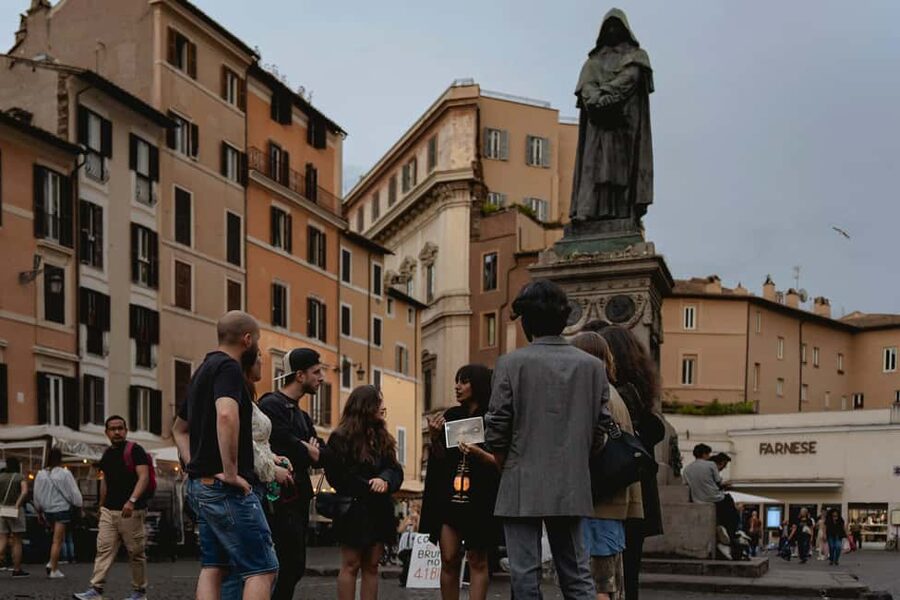
Rome is impressive in daylight, but at night it gets sharp around the edges. The benefit here is practical: you see the city when heat and crowds are easier to manage, and the streets feel calmer enough to actually hear the stories.
This tour is built around the idea that Rome’s famous sites were not always peaceful. You’ll hear about sinister events tied to popes, emperors, and other big names, plus the kinds of grim punishment and violence that shaped the city. And you do not just get told spooky lines. The guide uses the landmarks as anchors, so the atmosphere has a place to land.
A lot of people do not realize how much mood can change your perception. After a tour like this, the same squares and bridges you walked past earlier can start to look like stages, not just scenery.
Filed beside this one, more walking tours in Rome.
- Rome: Trastevere & Campo de Fiori Street Food Walking Tour
★ 4.9 · 2,768 reviews - Rome: Paranormal Night Walking Tour & Secret Backstreets
★ 4.9 · 1,921 reviews - Rome by Night Walking Tour – Legends & Criminal Stories
★ 4.5 · 1,003 reviews - Rome: Guided City Center Evening Sightseeing Walking Tour
★ 4.4 · 953 reviews
Meeting at Giordano Bruno: Your Night’s First Clue
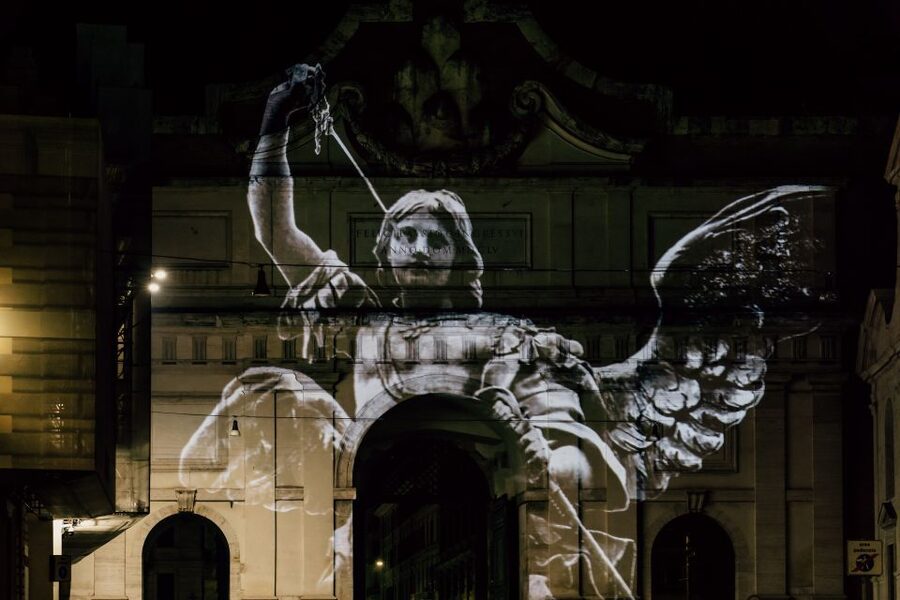
You meet in front of the statue connected to Giordano Bruno in the center of Campo de’ Fiori, and your guide will be holding an iPad or a red sign. This is a great setup because Campo de’ Fiori is a known hub, not a mystery side street.
The tour starts with a visit to the Giordano Bruno statue area. That matters because your guide typically uses this first stop to set the tone fast: why Rome’s history can get dark, and why certain locations became symbols of power, punishment, and fear. You get the tour’s “rules of the night” early, so the rest of the walk feels connected, not random.
If you want a low-stress start, arrive a few minutes early, look for the red sign or iPad, and then let your guide do the introductions. This first stop is also your chance to ask a quick question and get your bearings.
Piazza Farnese, Madonnelle Shrines, and the City’s Quiet Signals
From Campo de’ Fiori, you move into the orbit of major neighborhoods and squares. The stop at Piazza Farnese gives you a classic Rome moment, but with a twist. In the evening, a grand square feels less like a postcard and more like a living room for the stories you’re about to hear.
Next is Madonna della Pietà, a “Madonnelle” type of small shrine. These tiny religious markers can look easy to ignore in daytime, but at night they feel intentional. Your guide uses places like this to explain how faith, superstition, and fear often shared the same corners of the city.
This is one of the tour’s underrated strengths: it does not only point at the headline landmarks. It shows you how Rome marks memory in small ways, and how those marks become part of the city’s folklore.
Ponte Sisto and the River Walking Feel
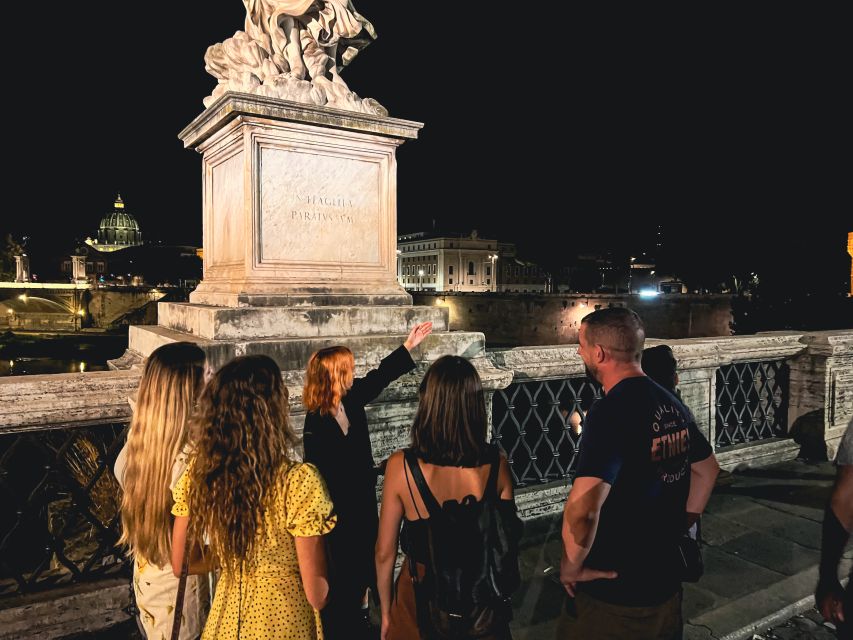
You cross to Ponte Sisto for a guided walk-and-look segment. Bridges are powerful story settings anywhere, but in Rome they also connect multiple eras of the city. Even if you do not catch every detail, you can feel why a guide would anchor grim narratives here: the river, the crossings, and the constant movement through the city all make great dramatic context.
At this point in the tour, you’ll likely notice the pace. It is not a sprint. It’s short stops, quick explanations, then walking to the next site. That rhythm helps you absorb the stories without losing track of where you are.
Also, if you care about photos, bridge lighting at night can be gorgeous. Bring your camera, and remember comfortable shoes matter more than you’d think on a two-hour evening walk.
The Fountain of the Mask: Small Stop, Strong Atmosphere
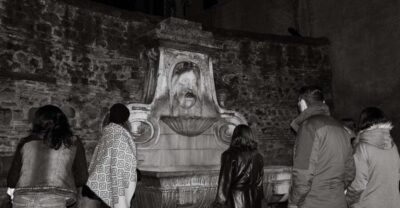
Then you get the Fountain of the Mask stop. It sounds like a niche detail, and that is exactly why it works. A mask motif fits the whole theme of hidden stories, identity, and the darker side of public life in historical Rome.
This kind of stop is also a good break in the route. You get a bit of variation from squares and bridges, and you can take in the sculpture and the explanation side by side. You’re still learning, but the setting gives your brain a moment to reset.
If you like tours that treat every stop as meaningful instead of just checking boxes, you’ll appreciate this shift. It also shows that the guide has an eye for the city’s character, not only its biggest names.
The Church Stops: Where the Tour Turns Most Chilling
This is where the tour earns its reputation. You’ll visit Chiesa di Santa Maria dell’Orazione e morte and then Santa Maria in Monserrato degli Spagnoli.
The standout element is the way the guide frames the theme of death and punishment through church spaces. The tour description mentions a chapel decorated with human bones, and at these stops the atmosphere is clearly meant to make you feel the weight of history rather than just learn dates.
A key point: it can be intense in theme, but it is not random gore for its own sake. You’ll get context tying these spaces to how Rome handled mortality, grief, and social power. That is one reason the tour can feel more historical than purely paranormal. The “ghost” is often the echo of how people lived with fear.
Guides also vary in style. In several accounts, people highlight that the guides are engaging and willing to answer questions. If you’re the type who likes to ask what something means or why a location mattered, this format tends to work well.

Castel Sant’Angelo: The Finale with Big-Scene Night Views
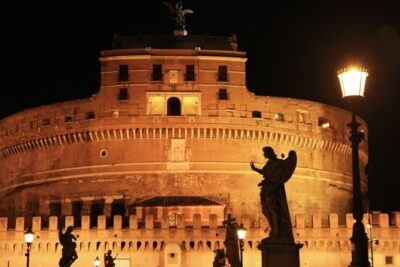
The walk ends at Castel Sant’Angelo, with a guided visit right around there. This fortress area is one of the most dramatic places to close a “dark Rome” route. Even if you are not deep into fortress architecture, you’ll understand why a guide ties it to grim stories: power, imprisonment, and authority all show up in places like this.
Practically, this final stretch is also where the night becomes easier. You are usually near key viewpoints and calmer streets, so the walk feels like it’s wrapping up neatly rather than stretching into the unknown.
If you are thinking about logistics, keep your expectations simple. You’ll finish the tour at the Castel Sant’Angelo area, and the tour concludes back at the meeting point area. So plan to stick around the center for a quick regroup and then head to dinner.
Pace, Timing, and What Two Hours Actually Feels Like
This is a 2-hour experience with a series of guided stops, each lasting roughly 15 minutes, plus walking time between locations. That means you get frequent “reset points” to listen, look, and ask questions, without getting trapped in one location too long.
The route is designed for nighttime comfort. You will be standing, walking, and listening outdoors, so the smart move is to wear comfortable shoes and keep your camera ready. If you’ve been touring all day, the evening timing can be a relief, not another endurance test.
Also, the tour is in English with a live guide. Many participants praise clear speaking and storytelling energy, which matters because a ghost tour lives or dies on the guide’s ability to pace the narrative.
Is $28 a Good Value for a Rome Ghost Tour?
At $28 per person for about 2 hours, the value is mainly about what you get in return for your time. You are paying for an English-speaking local guide plus a focused route that hits multiple themed stops, including bridges and church sites that you might otherwise walk past quickly.
The tour also has a strong track record, with a 4.8 rating across hundreds of ratings. The pattern in the praise is consistent: people like the guides’ delivery, the interactive feel, and the sense that the tour is worth the money.
One more value point: some guides add practical extras, like suggestions for where to eat after the walk, and using a picture book to help visualize the stories. Those small touches are not guaranteed, but they show how seriously the guides treat the experience.
If you want a cheap thrill, this may not be the only option. But if you want a guided evening with a strong narrative and real city context, $28 feels fair.
Who This Tour Fits Best
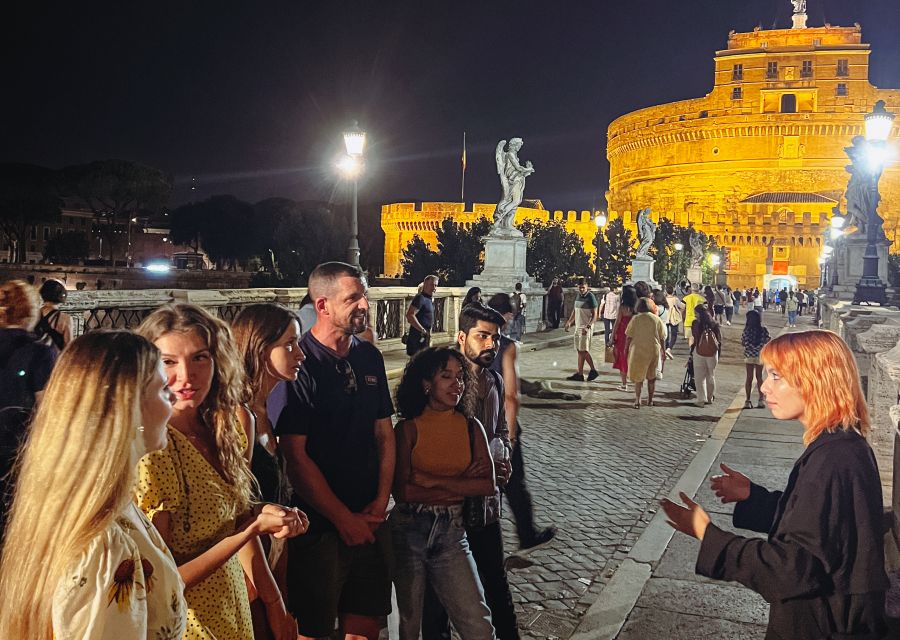
This tour is ideal if you want to see Rome differently, not just louder. It’s a good match for you if you enjoy:
- walking and listening at night
- stories tied to specific locations
- a mix of history and chills
It may be less satisfying if you are only into paranormal activity with no historical context. One account notes it is more historical than ghostly, and the overall structure supports that. Think medieval-era and papal-era darkness with a spooky tone, not a haunted-house script.
It also suits groups of like-minded people. And if you prefer privacy, a private group option is available, which can be great if you want more time for questions or a quieter pace.
Should You Book This Rome Ghostly Night Walking Tour?
I’d book it if you want an evening plan that mixes atmosphere, themed storytelling, and real landmarks without adding daytime crowds and heat to the equation. The starting point in Campo de’ Fiori is easy to find, the route is time-managed at about two hours, and the guide quality seems to be the main reason people rate it so highly.
Skip it only if you are expecting pure paranormal performance with minimal history. If you like your scares with context, this is a smart, good-value way to experience Rome at night.
FAQ
Where does the tour start?
Meet directly in front of the statue of Giordano Bruno in the center of Campo de’ Fiori. Your guide will be holding an iPad or a red sign.
How long is the Rome ghostly walking tour?
The tour runs for 2 hours.
Is the guide available in English?
Yes, the live tour guide is listed as English.
How much does the tour cost?
The price is $28 per person.
What sights will we see during the walk?
You’ll make stops at places including the Giordano Bruno statue area, Piazza Farnese, Ponte Sisto, the Fountain of the Mask, Chiesa di Santa Maria dell’Orazione e morte, Santa Maria in Monserrato degli Spagnoli, and the walk ends at Castel Sant’Angelo.
What should I bring?
Wear comfortable shoes and bring a camera if you want photos.
Can I book a private group?
Yes, private group availability is listed.
How can I find the exact starting time?
Starting times vary, so you need to check availability to see the times for your date.
Is free cancellation available?
Free cancellation is available up to 24 hours in advance for a full refund.
How do I book if my plans might change?
Reserve now and pay later is available, so you can keep your travel plans flexible.
Other Walking Tours in Rome From Our Notebook
Our Wider Tours File for Rome
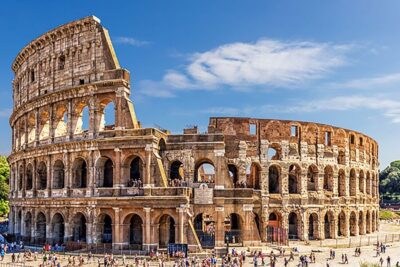
Not quite the day you had in mind? The rest of our Rome write-ups sit below
- Rome: Guided Tour of St. Peter’s Dome Climb, Basilica & Vatacombs★ 5.0 · 167 reviews
- St. Peter’s Basilica Guided Tour with Reserved Entrance★ 4.0 · 168 reviews
- Golf Cart Driving Tour in Rome: 2.5 hrs Catacombs & Appian Way★ 5.0 · 168 reviews
- Rome: Trastevere Wine Tasting with Food Pairing and Gelato★ 4.9 · 168 reviews
- Guided Tour of the Colosseum Palatine Hill and Roman Forum★ 4.7 · 168 reviews
- Vatican Museums, Sistine Chapel & Saint Peter’s Semi-Private Tour★ 4.5 · 169 reviews
- Hidden Rome: Small Group E-Bike Tour with Street Food Stops★ 5.0 · 169 reviews
- Rome: Papal Audience with Pope Leo IV★ 3.9 · 169 reviews
- Rome Golf Cart Tour: Highlights & Must See★ 4.5 · 170 reviews
Walking Tours, top to bottom.
 ★ 4.7Milan: Guided Walking Tour & Last Supper Visit with TicketFrom $1015,409 reviews
 ★ 4.8Naples: Street Food Walking Tour with Local GuideFrom $474,256 reviews
 ★ 3.5Venice Walking Tour and Gondola RideFrom $723,630 reviews
 ★ 4.2Venice: Rialto Bridge & Offbeat Unusual Venice Walking TourFrom $283,538 reviews
 ★ 4.5Bologna: City Center Walking TourFrom $263,478 reviews
 ★ 4.0Private 3 hrs Venice Tour: St Mark’s, Walking tour & Boat tourFrom $4803,372 reviews
 ★ 4.5Florence: Guided Walking TourFrom $313,334 reviews
 ★ 4.5Skip the line: Uffizi and Accademia Small Group Walking TourFrom $1483,135 reviews
Filed under