
Reviewed · CYCLING TOURS
Rome: Highlights Bike Tour
Rome moves differently on two wheels. On this 3-hour cruiser ride, you roll past Rome’s biggest icons while your guide keeps the stories flowing through a headset, from the Pantheon to the Trevi Fountain area. You get the feeling of a highlights tour, but paced like a real neighborhood stroll, just faster.
I especially like two things. First, the guides, like Mattia and Marco, do a solid job handling Rome’s traffic energy, so the group stays together and biking feels manageable. Second, the tour hits the right rhythm: longer stops for the photos and shorter rides between scenes so you learn a lot without feeling stuck in lines.
One drawback to plan for: you are on a bicycle on Rome’s streets and cobblestones. If you are not comfortable riding around other bikes and crowds, or if you fall in the categories the operator flags for safety, this is not the best fit.
In This Review
- Quick reasons to go
- Rome bike tour value: you trade time for momentum
- Getting oriented at Fat Tire Tours Rome, Via dei Delfini
- Jewish Ghetto to Campo de’ Fiori: the quick-start Rome route
- Pantheon and Piazza Navona: classic Rome you can read from the street
- Sant’Ignazio and Hadrian’s Temple: the details that reward slow looking
- Trevi Fountain with real time to enjoy it
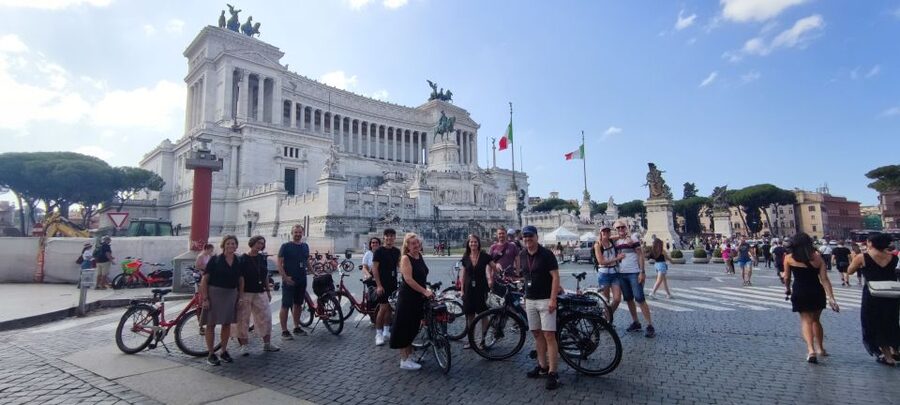
- Trajan’s Column, Piazza Venezia, and the Arch of Constantine
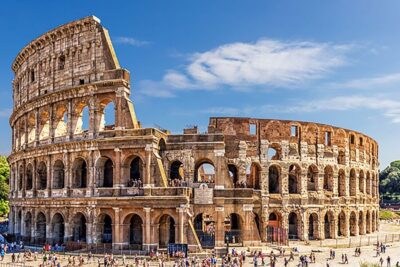
- Colosseum stop that feels like a photo opportunity marathon
- Circus Maximus: the relaxed finish with big Roman scale
- Guides and safety: why the headset matters in traffic
- Who should book, and who should skip this ride
- Price and value: what $51.24 buys you in Rome time
- Should you book this Rome Highlights Bike Tour?
- FAQ
- How long is the Rome Highlights Bike Tour?
- Where does the tour meet and when should I arrive?
- What’s included in the bike tour?
- Is the tour guided in English?
- Does the tour include visits inside monuments or museums?
- What happens if it rains?
- Are kids allowed on the tour?
- Is the tour suitable for everyone, including pregnant women?
Quick reasons to go
- Cruiser bikes plus headsets, so you can hear the guide even at loud street corners
- Timed photo and story stops, including extra time around the Trevi Fountain and the Colosseum
- Classic sights in one loop, Pantheon, Piazza Navona, Trevi, Trajan’s Column, Arch of Constantine, Colosseum, and Circus Maximus
- Strong safety focus, praised by riders for keeping groups together in busy Rome
- Rain-ready setup, with ponchos available if weather turns
Rome bike tour value: you trade time for momentum
Rome is a city where your time evaporates fast. You can walk to one great sight and then lose an hour to detours, crowds, and getting your bearings again. This bike tour is built to solve that. In about 3 hours, you cover a wide slice of the city’s major landmarks, with a guide calling out what matters while you ride.
The big value is not just speed. It is the structure. You stop at key points long enough to actually look at what you came for, then you move on before the day turns into one long scramble. With headsets included, you can keep your eyes up and your brain on the stories, not straining to hear above street noise.
Also, this tour does not sell you on museum time. It is about street-level Rome: façades, street views, plazas, and architectural moments you can appreciate without paying separate entry fees or waiting in lines to go inside.
We wrote up further cycling tours in Rome on the same pass through the archive.
- Rome EBike Tour: Appian Way, Catacombs & Roman Aqueducts
★ 5.0 · 1,766 reviews - Rome: Top Highlights & Hidden Gems Tour by Cannondale E-Bike
★ 4.9 · 1,760 reviews - Rome: Appian Way, Catacombs, & Roman Aqueducts E-bike Tour
★ 4.9 · 1,421 reviews - Rome City Small Group Bike Tour with quality Cannondale EBike
★ 5.0 · 1,380 reviews
Getting oriented at Fat Tire Tours Rome, Via dei Delfini
Meeting is at Fat Tire Tours office, Via dei Delfini 35/36 (00186 Rome), about 150 meters from Piazza Venezia and roughly 1.5 km from the Colosseum. Arrive 15 minutes early so you have time for check-in and a quick bike fit.
The tour uses cruiser bikes, which matter more than people think. Cruiser frames generally feel steady and upright compared to tight racing bikes. That suits a highlights route where you are stopping often, leaning in for photos, and riding through traffic without wanting your legs to constantly fight the bike.
You also get a local guide, a headset, and an optional helmet. The headset is a quiet superpower. Rome can be loud and full of motion, and the headset keeps the storytelling clear, which is one reason so many riders mention how much they could hear throughout the ride.
Practical tip: wear closed-toe shoes. Open-toed shoes are not allowed. And pick comfy clothing that handles sun and shade, because you are outdoors for the whole session.
Jewish Ghetto to Campo de’ Fiori: the quick-start Rome route
Right after starting out, you ride through the Jewish Ghetto area (a short segment), then keep rolling toward Campo de’ Fiori. These stops work like a warm-up. They are not about staring at one monument for an hour. They are about setting the stage, so the rest of the tour feels connected instead of random.
What you get here is perspective. Even when you are moving quickly, your guide can point out how the city’s layers sit side by side. You start to see the difference between a postcard view and the reality of Rome streets: corners, markets, and streets that have held community life for generations.
Campo de’ Fiori also has a practical payoff for your planning later. It is a good spot to remember if you want to walk back on your own after the tour for a drink or a snack, since the vibe is different from the grand monuments. You get bearings fast.
If you do struggle with bike riding around crowds, this early stretch can help you settle. Keep your pace steady, watch the guide’s movement, and do not force passing in tight spots.
Pantheon and Piazza Navona: classic Rome you can read from the street
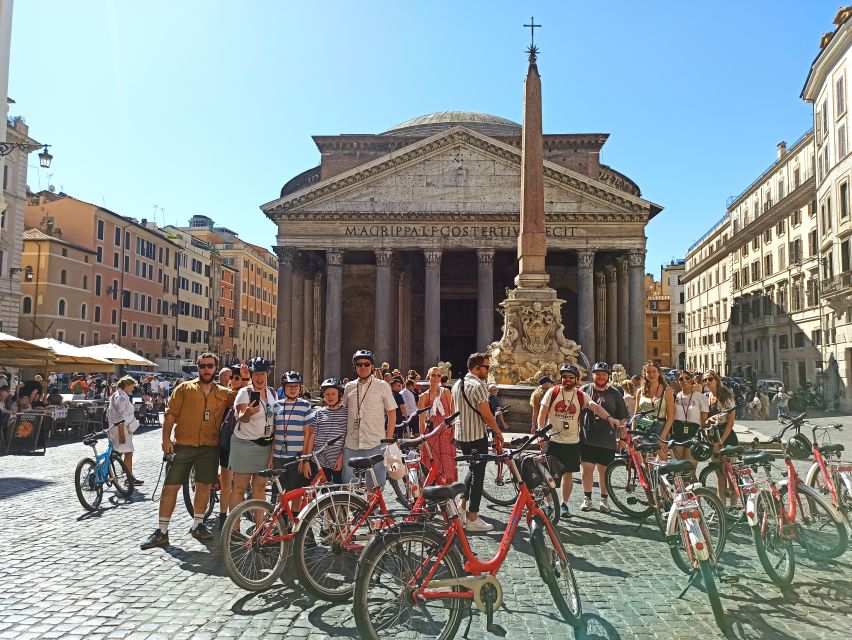
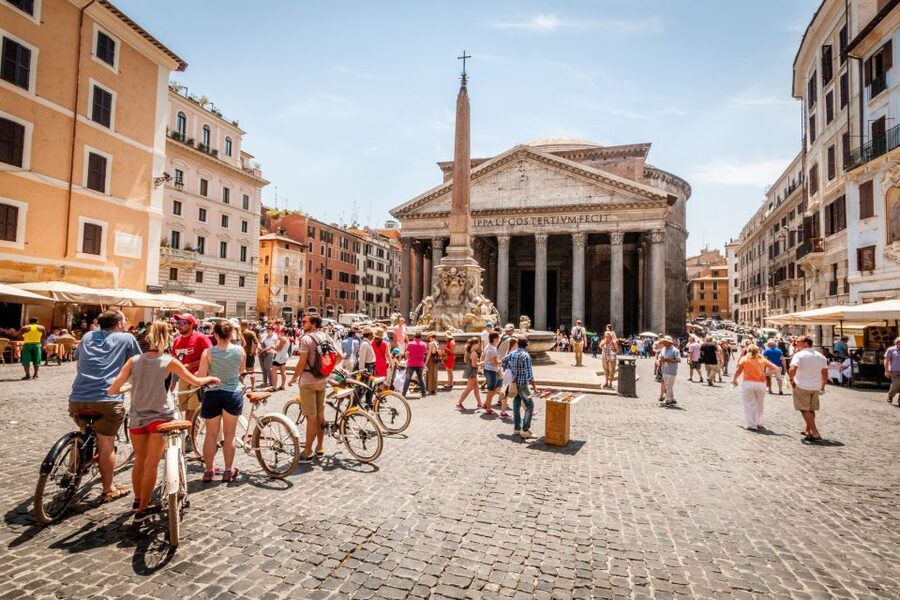
Then comes the big architectural anchor: the Pantheon area. You spend time here so you can actually study it. Even without going inside, the Pantheon is a lesson in form. Look for the Corinthian columns and that massive dome that influenced buildings far beyond Rome.
The point is not just that it is famous. It is that the guide helps you see it as engineering as well as art. Once you know what you are looking at, the building stops being one more stop on your list and starts being a clear reference point for Roman architecture.
After that, you head toward Piazza Navona. This is one of those plazas where the space itself is the attraction. You are riding in the open, then stopping where the architecture and the people meet. It is a good match for a bike tour because you can appreciate the square without feeling stuck in a line.
What I like about the order here is momentum. Pantheon gives you depth. Piazza Navona gives you atmosphere. Together, they make the tour feel like more than a checklist.
Sant’Ignazio and Hadrian’s Temple: the details that reward slow looking
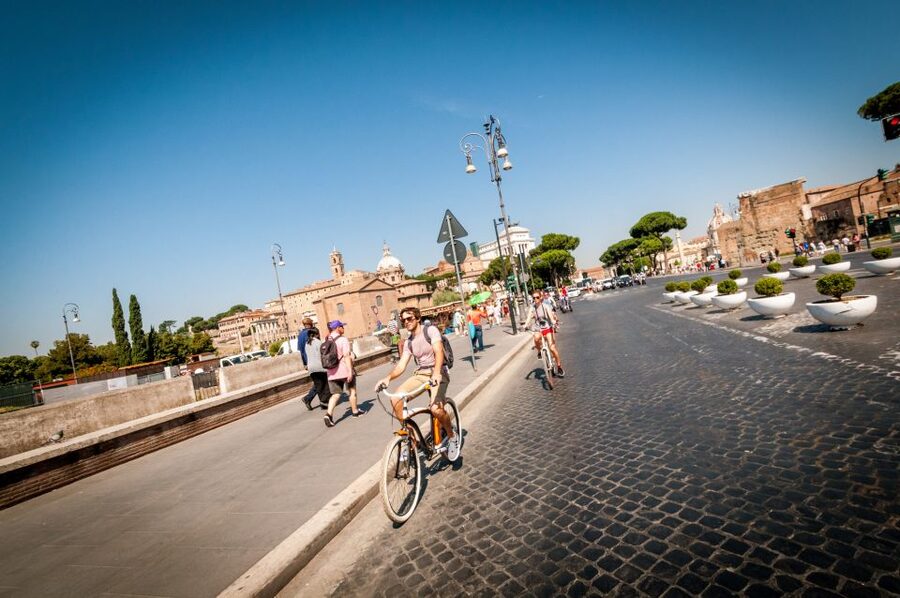
Next, you ride past the Church of Sant’Ignazio di Loyola and then get a quick look at the Temple of Hadrian. These are both examples of Rome rewarding attention, even when you are not going inside.
Sant’Ignazio is the kind of place you can miss if you only care about the biggest billboards of tourism. Here, the guide can steer your attention to what makes the church worth stopping for, not just walking past.
The Temple of Hadrian is short and sweet on a highlights tour, but it is still a smart stop. It reminds you that Rome is not only Colosseum and fountains. It is also the smaller-scale, high-importance structures that show the city’s long continuity.
Drawback to note: because the tour is time-efficient, these stops are brief. If you are hoping for long photo sessions, you might want to save extra time for these sights on a second day of your own.
Trevi Fountain with real time to enjoy it
At Trevi Fountain, you get a longer stop compared to many other points. That is the right call. Trevi is busy by nature, and you need a bit of time to get a decent view, take photos, and actually look at the craftsmanship instead of just orbiting the crowd.
This fountain is described as Rome’s largest Baroque fountain, and when you are standing there, you can see why: it is ornate, sculpted, and theatrical. The guide’s job is to keep it from becoming only an obligatory snapshot. You learn how it fits into the city’s visual storytelling.
My practical advice: plan for crowd flow. If you want photos without constant jostling, position yourself early in the stop window and let the crowd cycle move around you. With only a limited time at each sight, timing your standing spot matters.
Also, wear comfortable shoes. The area is crowded and you will likely stop, turn, and shuffle more than you would on quieter streets.
Trajan’s Column, Piazza Venezia, and the Arch of Constantine
After Trevi, you bike toward Trajan’s Column, then toward Piazza Venezia. Trajan’s Column is a powerful visual marker for Roman power and messaging, and it is the kind of landmark that makes more sense once your guide gives you context. Even without entering anything, the column tells a story that is visible from the street.
Piazza Venezia is a strong pivot point in the tour. It helps you feel how Rome’s grand monuments connect to each other geographically. It also functions like a scenic reset after the intense crowd energy around Trevi.
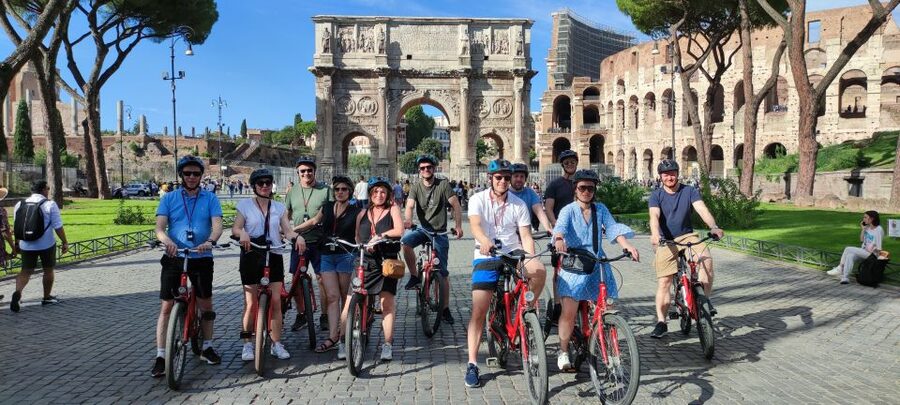
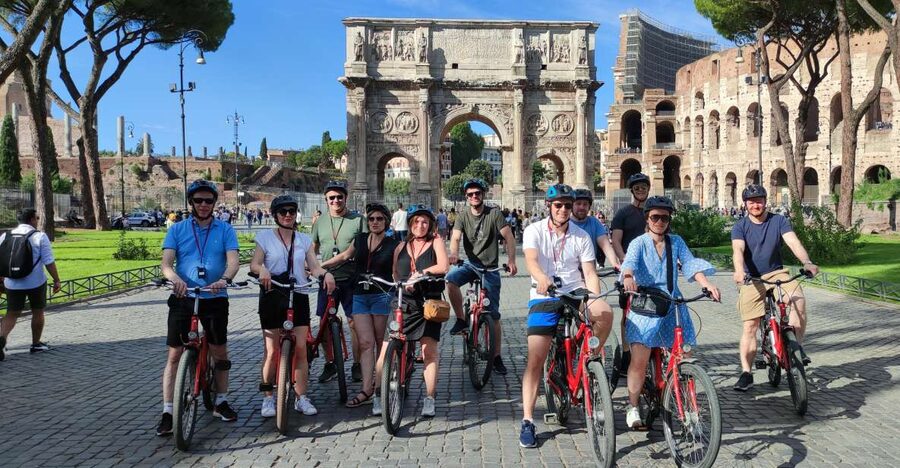
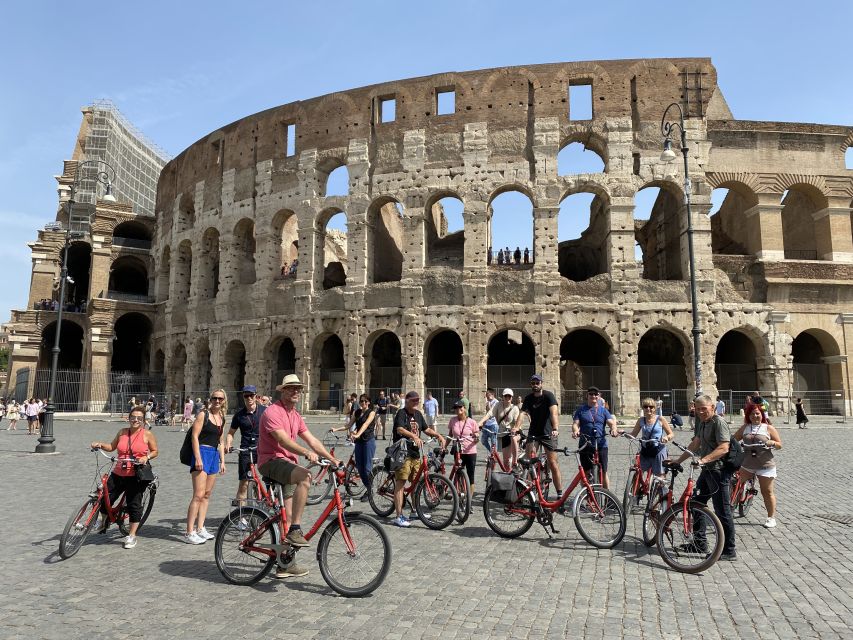
Then you pass by the Arch of Constantine. It is short, fast, and photogenic. But the value is in understanding what it is doing: framing the city’s monumental lines and creating a memorable focal point. The guide can also help you read the arch as part of a broader system of Roman commemoration.
If your day is already packed, this section is especially useful. It compresses big landmark recognition into manageable travel segments, so you do not have to stitch the route together yourself.
Colosseum stop that feels like a photo opportunity marathon
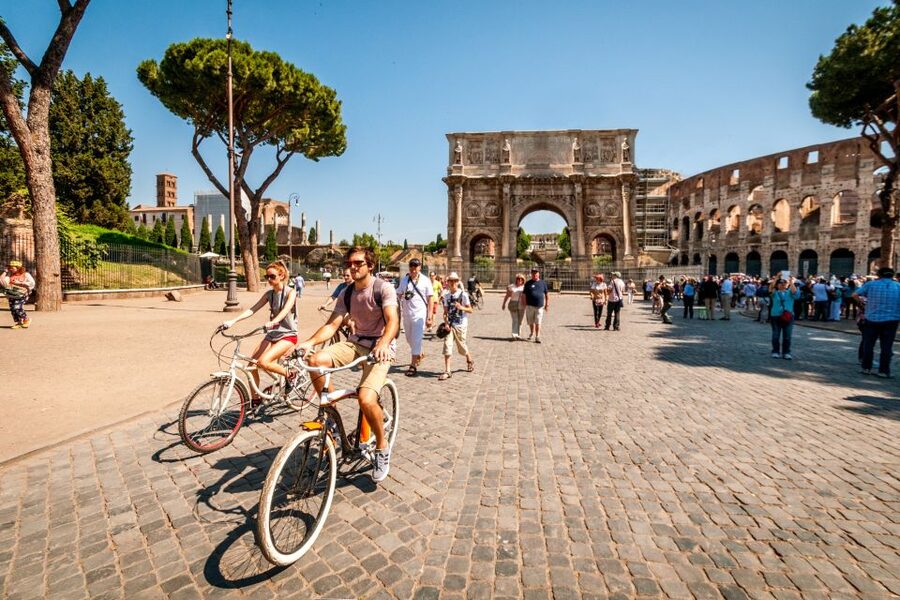
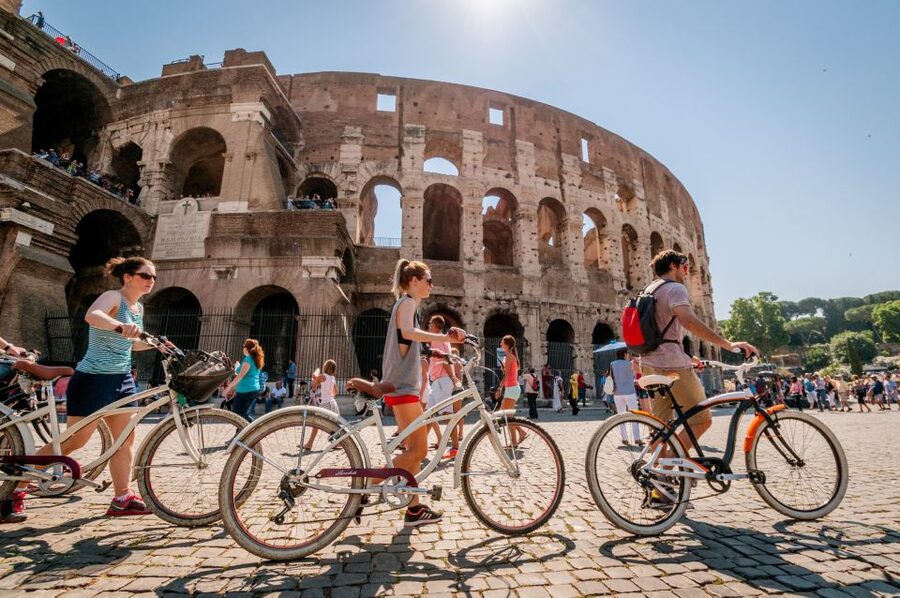
The Colosseum stop is one of the longest on the ride, which fits how important it is. You spend enough time here to look from the right angle, take photos, and let the scale sink in.
One reason this stop lands well on a bike tour is how you arrive. Instead of approaching from only one direction via foot traffic, you roll through the city’s streets in a way that helps you understand how the monument sits within the urban grid. Riders have also noted that the route can include a fun rolling stretch past the Colosseum, which makes it feel like more than a slow roadside stop.
The tour also does something practical: it sets expectations for what you can do next. Since the tour does not visit inside monuments and museums, you are not distracted by ticket lines. You can treat Colosseum as your big visual anchor and decide later if you want inside access on a separate booking.
One caution: the area and the streets around it can be hectic. The guides, including Stefano and Sergio, are praised for keeping riders safe while managing the crowd movement. Still, go into it with a calm biking mindset. Your job is simply to follow instructions and stay aware.
Circus Maximus: the relaxed finish with big Roman scale
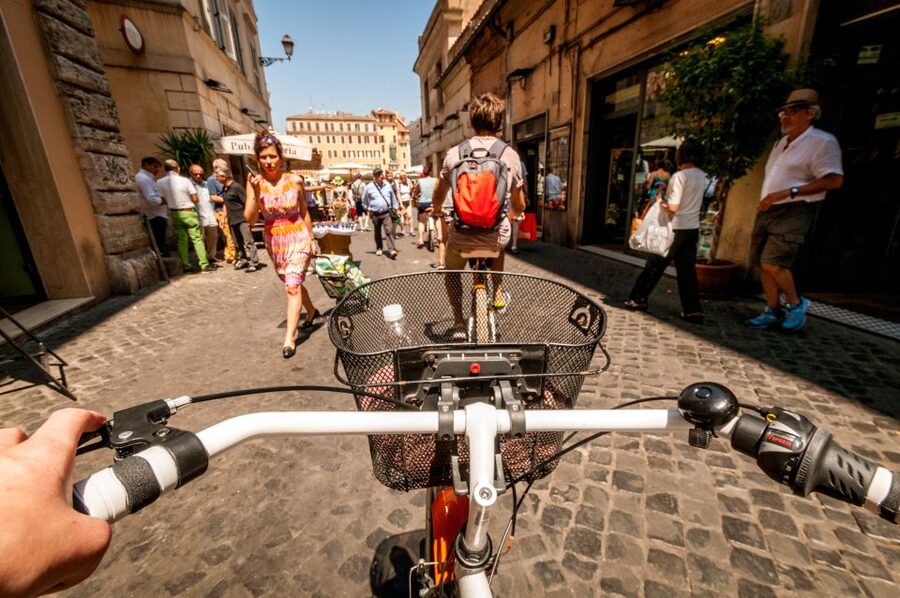
After the Colosseum, you ride toward Circus Maximus and finish the loop back at the starting office. Circus Maximus is different from many other stops because it is about scale and space. You can appreciate the idea of the chariot-racing site even if you are standing in a modern street environment.
This is a great closing move. You end with an open feel compared with the tight concentration around some of the most photographed areas. It also gives your legs a bit of a mental cooldown after the Colosseum intensity.
If you have the energy, this finish works well as a launch point for your next plan. You will have a clearer mental map of central Rome, and you will know what directions you are already close to.
Guides and safety: why the headset matters in traffic
This tour’s reputation is tied to guide quality. Names like Mattia, Marco, Sara, Mary, Daniele, Stefano, and Sergio pop up in rider feedback, and the themes are consistent.
Guides are repeatedly praised for:
- Keeping the group together even when streets get crowded
- Giving clear biking instructions so you do not get lost in traffic flow
- Using the headset to keep narration audible and the experience coherent
Rain is another safety factor. The tour runs rain or shine, and ponchos are available. In heavy rain, a calm guide approach matters, because slippery surfaces and sudden braking can turn a pleasant ride into a stress test. The operator provides rain ponchos and can pause to shelter if roads become risky.
If you take one thing from all of that, take this: biking in Rome is doable when you have a strong traffic-aware leader. Your job is just to ride predictably, hold your line, and stay focused.
Who should book, and who should skip this ride
This tour is a smart pick if you want a high-impact overview. It is also ideal when you have limited time and you want to see major icons like Pantheon, Trevi Fountain, Colosseum, and Circus Maximus without planning a day of independent transit.
It fits well for people who:
- Are comfortable riding a bike
- Like guided history, not just reading signs
- Want the speed of biking but the structure of planned stops
It is not a great fit if:
- You are pregnant (it is specifically noted as not recommended due to cobblestones and bike conditions)
- You are not comfortable on uneven streets
- You want to spend long periods inside museums or monument interiors, because this tour does not do that
Kids are allowed with conditions. Unaccompanied minors are not allowed, and children under 18 must be accompanied by an adult 18+. For children under 10, the operator requires an excellent level of biking and the child must ride on their own bike. Staff may decline participation without refund if the child cannot ride safely.
If you are visiting as a family, message the operator about your child’s age and height so bikes can be prepared.
Price and value: what $51.24 buys you in Rome time
The price is $51.24 per person for a 3-hour highlights route. That might sound steep until you translate it into what you are getting.
You are not paying just for a bike rental. The cost bundles:
- A local guide who manages the route and storytelling
- Headsets to keep the experience clear
- A cruiser bike for the whole ride
- Optional helmet
And importantly, it is time-efficient. If you tried to replicate this route by yourself, you would spend time figuring out bicycle-friendly navigation, dealing with parking and pedestrian crowd bottlenecks, and piecing together sight stops. This tour removes those friction points.
The value is best if you care about seeing many landmarks quickly and want the guide context. If you want slow, contemplative museum hours, this is not the best spending choice.
Should you book this Rome Highlights Bike Tour?
Book it if you want an efficient, guided way to hit the city’s top landmarks without the inside-museum pressure. This is especially worth it if you enjoy biking, want clear narration through a headset, and like getting a strong first mental map of central Rome.
Skip it if you are not confident biking through crowds, you have concerns about cobblestones, or you are hoping for indoor monument visits. Also skip if the tour’s street-ride style sounds stressful rather than fun.
If you are on the fence, here is the simplest test: if you can imagine yourself calmly following a guide through busy streets for about three hours, this tour is a solid use of time and money.
FAQ
How long is the Rome Highlights Bike Tour?
The tour duration is 3 hours. Starting times vary, so you will need to check availability for the slot that fits your day.
Where does the tour meet and when should I arrive?
The meeting point is Fat Tire Tours office, Via dei Delfini 35/36, 00186 Rome. You should arrive 15 minutes prior to departure.
What’s included in the bike tour?
The tour includes a cruiser bike, a local guide, and a headset. A helmet is optional.
Is the tour guided in English?
Yes. The live tour guide is in English only.
Does the tour include visits inside monuments or museums?
No. This tour does not visit inside monuments and museums.
What happens if it rains?
Tours run rain or shine. Rain ponchos are available, and they are fully reimbursed if you do not use them.
Are kids allowed on the tour?
Unaccompanied minors are not allowed. Children under 18 must be accompanied by an adult (18+). For children under 10, the operator requires an excellent level of biking and that the child can ride on their own bike.
Is the tour suitable for everyone, including pregnant women?
Open-toed shoes are not allowed, and the tour is not recommended for pregnant women due to Rome’s cobblestones. It also may not work well for children who are uncomfortable riding a bike.
Cycling Tours in Rome We Also Walked
Our Wider Tours File for Rome
Not quite the day you had in mind? The rest of our Rome write-ups sit below
- Rome: Guided Tour of St. Peter’s Dome Climb, Basilica & Vatacombs★ 5.0 · 167 reviews
- St. Peter’s Basilica Guided Tour with Reserved Entrance★ 4.0 · 168 reviews
- Golf Cart Driving Tour in Rome: 2.5 hrs Catacombs & Appian Way★ 5.0 · 168 reviews
- Rome: Trastevere Wine Tasting with Food Pairing and Gelato★ 4.9 · 168 reviews
- Guided Tour of the Colosseum Palatine Hill and Roman Forum★ 4.7 · 168 reviews
- Vatican Museums, Sistine Chapel & Saint Peter’s Semi-Private Tour★ 4.5 · 169 reviews
- Hidden Rome: Small Group E-Bike Tour with Street Food Stops★ 5.0 · 169 reviews
- Rome: Papal Audience with Pope Leo IV★ 3.9 · 169 reviews
- Rome Golf Cart Tour: Highlights & Must See★ 4.5 · 170 reviews
Cycling Tours, top to bottom.
 ★ 5.0Rome EBike Tour: Appian Way, Catacombs & Roman AqueductsFrom $1021,766 reviews
 ★ 4.9Rome: Top Highlights & Hidden Gems Tour by Cannondale E-BikeFrom $851,760 reviews
 ★ 4.9Rome: Appian Way, Catacombs, & Roman Aqueducts E-bike TourFrom $851,421 reviews
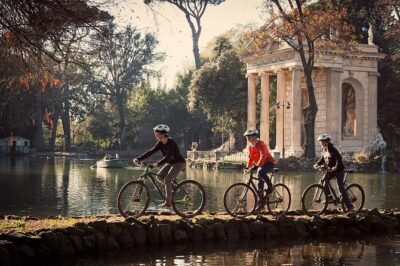 ★ 5.0Rome City Small Group Bike Tour with quality Cannondale EBikeFrom $1021,380 reviews
 ★ 5.0Tuscany Bike Tours Through the Chianti Hills with Wine TastingFrom $1451,300 reviews
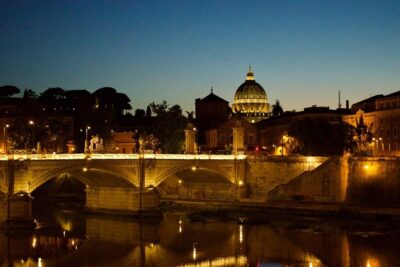 ★ 5.0Rome by Night – Ebike Small Group Tour – Food and Wine (Option)From $711,275 reviews
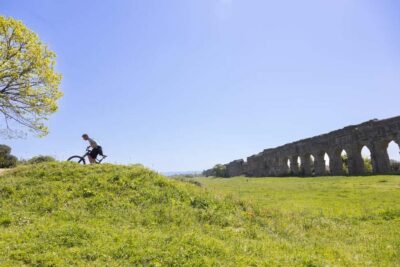 ★ 4.9Rome:Appian Way E-bike Tour with Catacombs, Aqueducts & FoodFrom $961,210 reviews
 ★ 4.9Rome: E-Bike Night Tour with Food and Wine TastingFrom $891,131 reviews
Filed under