
Reviewed · TRASTEVERE & THE JEWISH GHETTO
Rome: Jewish Ghetto and Trastevere Tour
Rome gets personal in two old neighborhoods. This Jewish Ghetto and Trastevere walking tour threads together the stories of Rome’s Jewish community and the everyday life that grew around them, with Roman landmarks along the way.
I especially like how the guide’s storytelling stays human, not academic. Guides such as Alethea, Ben, and Guido are repeatedly praised for sharp English, humor, and turning place names into real people and real moments.
One consideration: the tour does not include the synagogue entrance, so you’ll see it from the outside rather than going in.
In This Review
- Key highlights you should care about
- A 2.5-hour Rome walk that links two very different neighborhoods
- Meeting point at Santa Rita da Cascia in Campitelli, Campitelli
- Theatre of Marcellus and Portico d’Ottavia: setting the Roman stage
- Entering the Jewish Ghetto: streets, memory, and resilience
- Piazza Mattei: where the tour slows down and meaning lands
- Tiber Island: a small stop with a big payoff
- Trastevere lanes and Santa Maria in Trastevere: the city’s older everyday feel
- What’s included, what’s not, and how to plan your own food
- Price and value: why $35 makes sense for this route
- Who should book this tour, and who might want a different option
- Quick planning tips for a smooth, comfortable walk
- Should you book this Jewish Ghetto and Trastevere stroll
- FAQ
- How much does the Rome Jewish Ghetto and Trastevere tour cost?
- How long is the tour?
- Where do I meet the guide?
- Is the tour guided in English?
- Is the synagogue entrance included?
- Do we stop for food or drink during the tour?
- What should I bring for this tour?
Key highlights you should care about
- A two-neighborhood storyline that connects the Jewish Ghetto to Trastevere, plus the bridge stop at Tiber Island.
- Major landmarks in a tight route, including the Theatre of Marcellus and the Portico d’Ottavia.
- Piazza Mattei and the Ghetto street layout, where the geography helps the story make sense.
- Guides who actually perform the history, with humor and clear English that keeps questions flowing.
- A real walking rhythm for 2.5 hours, with an optional gelato or cafe stop for a break.
A 2.5-hour Rome walk that links two very different neighborhoods
If you only know Rome from big-ticket sights, this tour changes your angle. You’ll start in the area of Campitelli, then move into the Jewish Ghetto, cross over at Tiber Island, and finish in the atmospheric lanes of Trastevere.
What makes this especially useful is the way the route is built like a story. You’re not just collecting photos. You’re learning why these places matter to Rome’s bigger chapters, from ancient Rome through later eras, and how communities shaped the city’s street life.
The pacing is built for conversation as much as walking. You’ll have multiple guided segments that slow down at key intersections, squares, and viewpoints. For a first trip to Rome, that gives you orientation fast.
Worth an aperitivo-hour scroll, our other Trastevere and Jewish Ghetto walks in Rome.
- Winner 2025 Rome Twilight Trastevere Food Tour by Eating Europe
★ 5.0 · 5,157 reviews - Rome: Trastevere or Jewish Quarter Street Food Tour
★ 4.8 · 3,839 reviews - Rome: Trastevere Food tour with Free-Flowing Fine Wine
★ 5.0 · 2,853 reviews - Rome: Trastevere & Campo de Fiori Street Food Walking Tour
★ 4.9 · 2,768 reviews
Meeting point at Santa Rita da Cascia in Campitelli, Campitelli
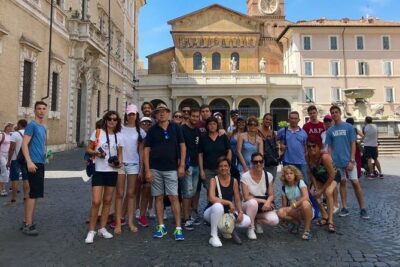
Plan to arrive early, about 10 minutes before the start. The meeting point is outside Santa Rita da Cascia in Campitelli, on Via Montanara, next to the Antico Caffè del Teatro Marcello.
Your guide waits by the church and carries a sign that reads Jewish Ghetto & Trastevere Stroll. This matters because the area is full of similar storefronts and side streets, and it’s easy to wander a block or two off from your exact spot.
Practical tip: put on your comfortable shoes before you leave the hotel. This is a walking-focused tour, and you’ll want your feet ready from the first stop at the Theatre of Marcellus area.
Theatre of Marcellus and Portico d’Ottavia: setting the Roman stage
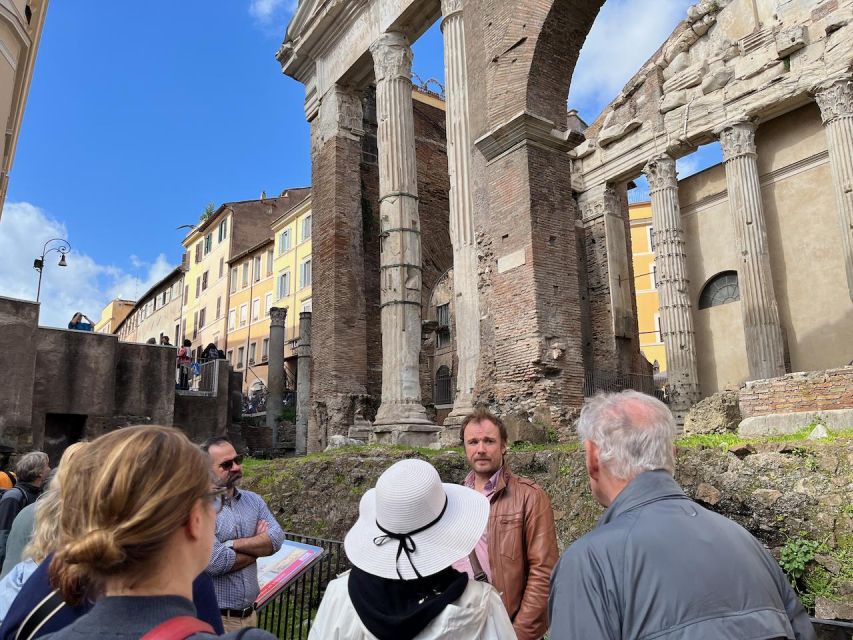
You start with two quick, high-impact stops that give you context. The tour includes a guided look at the Theatre of Marcellus and then the Portico d’Ottavia.
The Theatre of Marcellus stop is short, but it works because it anchors the walk in ancient Rome right away. You get a feel for how Roman monumental architecture shaped the city’s layout, even when later centuries layered new life into old spaces.
Then the Portico d’Ottavia helps you understand how civic and religious life often shared the same real estate over time. Even without a long lecture, these opening minutes help you read the streets better once you reach the Ghetto.
If you’re the type who likes “why is this here” more than “what is this,” these two stops do their job.
Entering the Jewish Ghetto: streets, memory, and resilience
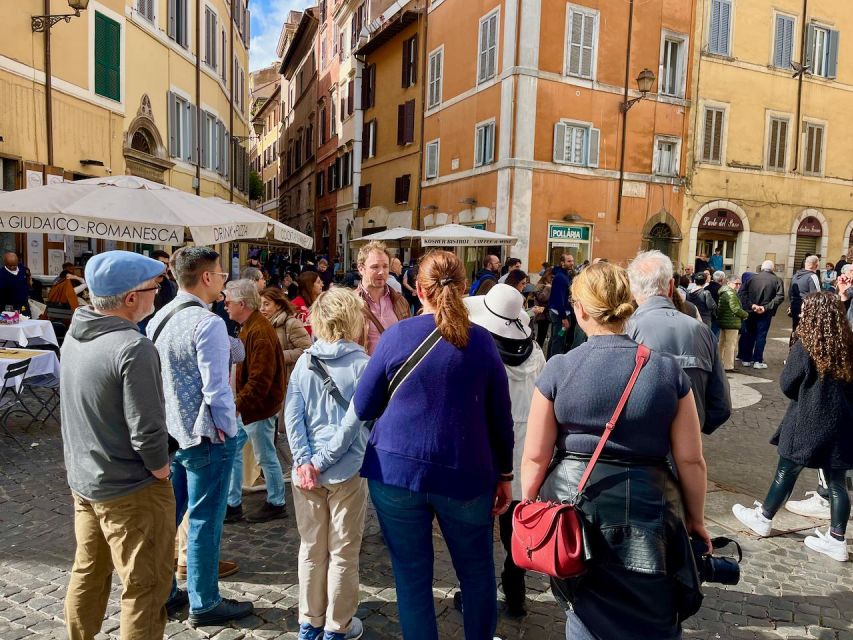
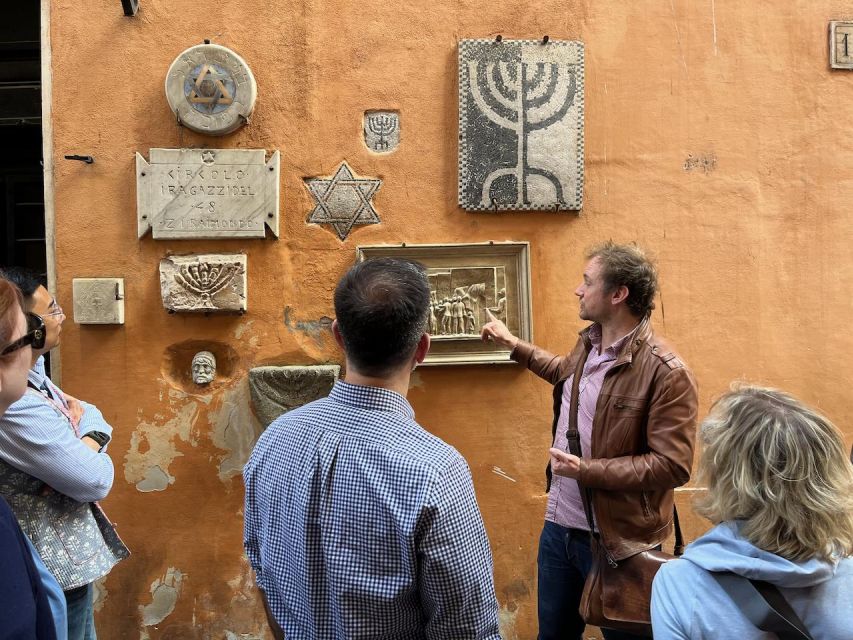
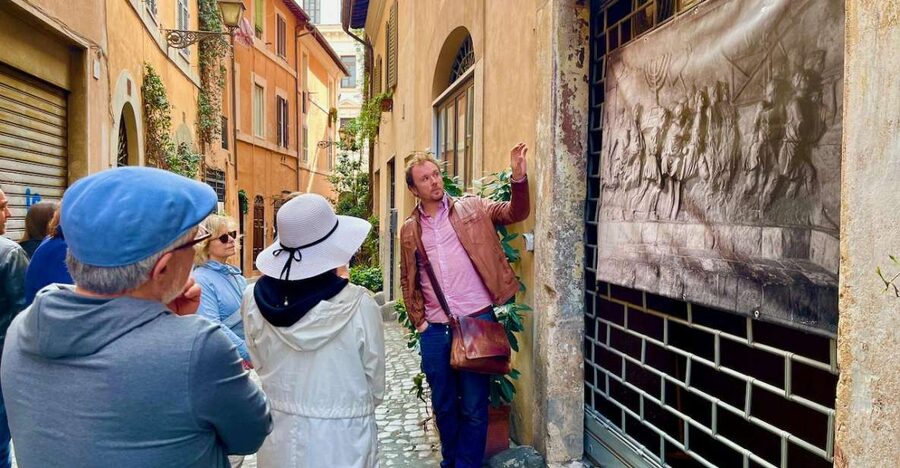
Once you move into the Jewish Ghetto, the tour shifts from Roman monuments to lived community stories. You’ll walk down cobblestone lanes where the street pattern and building edges help explain how daily life was shaped by rules, history, and survival.
You spend a chunk of guided time in the Ghetto area, with stops that help you spot what’s relevant and why. The guide’s style is a big part of the value here, because this topic can swing between tragedy and determination. The best part is how the tour keeps the story grounded in place, not just big-picture summaries.
Also note what you will and won’t see. The synagogue itself is viewed from the outside, since synagogue entrance is not included. That’s not a deal-breaker, but it is the one limitation if you were hoping for an indoor visit.
Practical takeaway for you: treat this section like a walking history lesson. Ask questions. If you’re curious about how communities functioned, how restrictions changed daily routines, and what life looked like over generations, this is where your guide can connect the dots.
Piazza Mattei: where the tour slows down and meaning lands
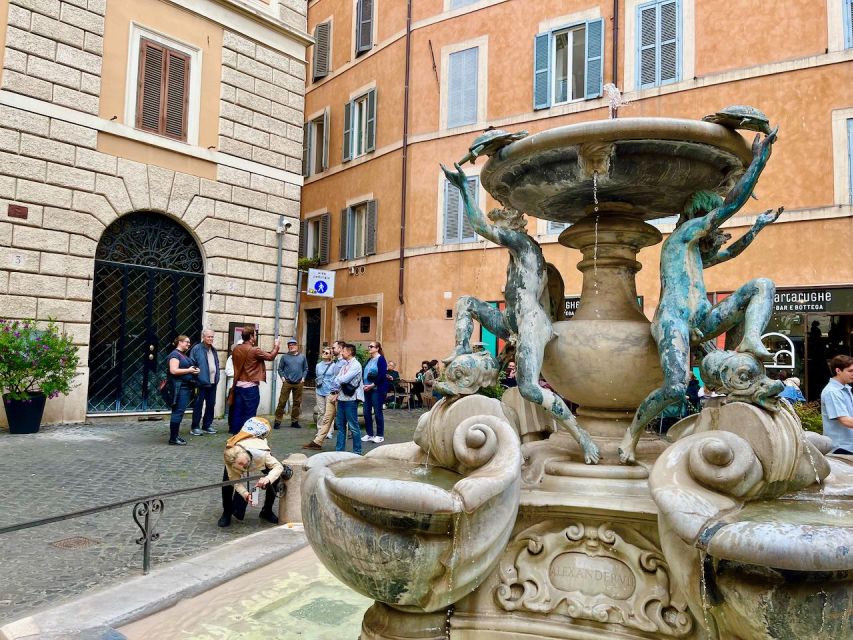
One of the more satisfying rhythm changes is the stop at Piazza Mattei. It’s quick compared to the longest Ghetto segment, but it’s exactly the kind of square that helps you recalibrate.
Squares work in cities like Rome because they act like mental bookmarks. After cobbled lanes, a small open space makes it easier to absorb the story, orient yourself, and understand where you’re going next. Piazza Mattei also gives you a break from constant turning and looking upward.
If you like tours that help you visualize what came next, this is the kind of stop that improves your whole memory of the walk. You’re not just moving through space, you’re building a map in your head.
Tiber Island: a small stop with a big payoff
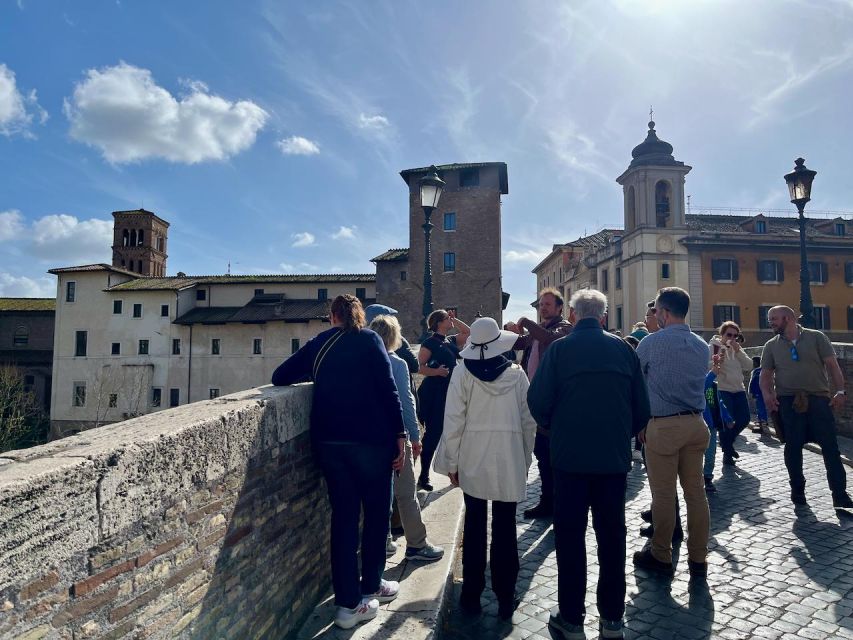
Next comes Tiber Island, which is included as both a guided segment and a built-in break. You’ll get guided time to understand why this small island is significant to Roman history and society, and then you’ll have a 10-minute break to catch your breath and take photos.
This is a good moment to check your own tour energy. The island works as a natural reset between the Ghetto and Trastevere. If you’ve been concentrating hard on history, this pause gives you space to look at the river and re-enter the story with fresh eyes.
What I like here for practical travelers is the “why it matters” angle. You don’t just stand near the water. You learn the historical reasoning, which makes the views feel less random and more intentional.



Trastevere lanes and Santa Maria in Trastevere: the city’s older everyday feel
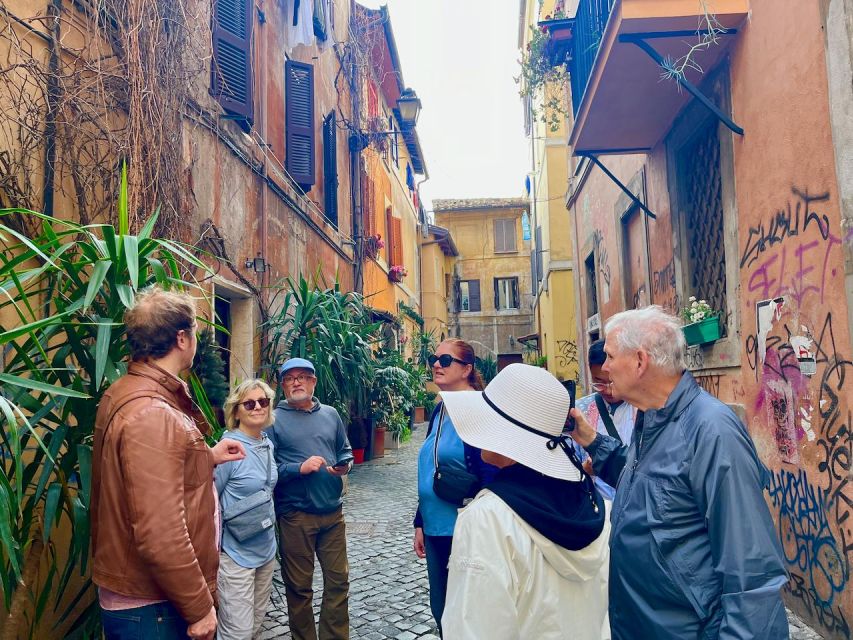
After Tiber Island, the walk turns into Trastevere, with guided time that focuses on the district’s character. Trastevere has that Rome feeling you can’t really fake: narrow alleys, older churches, and an atmosphere that reads like tradition rather than tourism.
You’ll also visit Santa Maria in Trastevere during the guided portion. This stop is a highlight if you enjoy church architecture and the way religion shaped neighborhoods. It’s also useful for photography, because you get a sense of scale and style in a way that street corners alone can’t deliver.
Then the tour continues deeper in Trastevere, with one more guided segment and a final stretch that winds you toward the end point at Piazza Trilussa.
For you, this part is the emotional counterweight to the Ghetto. The Ghetto section asks you to face history and its consequences. Trastevere lets you experience the city’s everyday texture and how communities keep living in the same spatial footprint.
What’s included, what’s not, and how to plan your own food
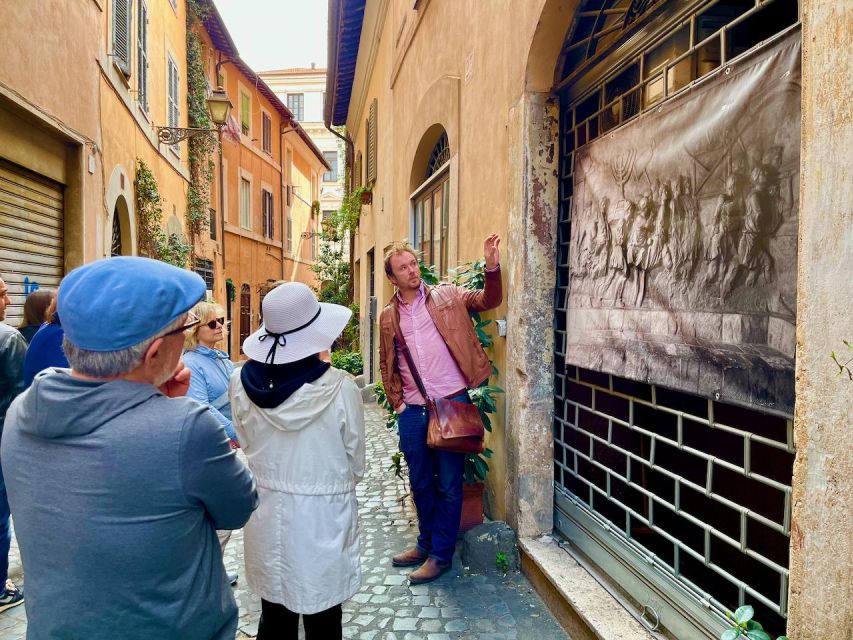
This tour includes an expert storytelling guide in English. No special tickets are required for the guided portions, and the focus stays squarely on walking and story.
Food and drink are not included. There is an optional stop at a gelateria or cafe, so if you want to snack, you can. In hot weather, this is a good time to hydrate, because the whole tour runs rain or shine.
Synagogue entrance is also not included. You’ll see relevant sites from the outside, which means you should set expectations accordingly if you want an inside visit.
If you like building a full afternoon, I suggest treating the tour as your appetizer. After it ends at Piazza Trilussa, you’ll be in a neighborhood where it’s easy to keep wandering on your own.
Price and value: why $35 makes sense for this route
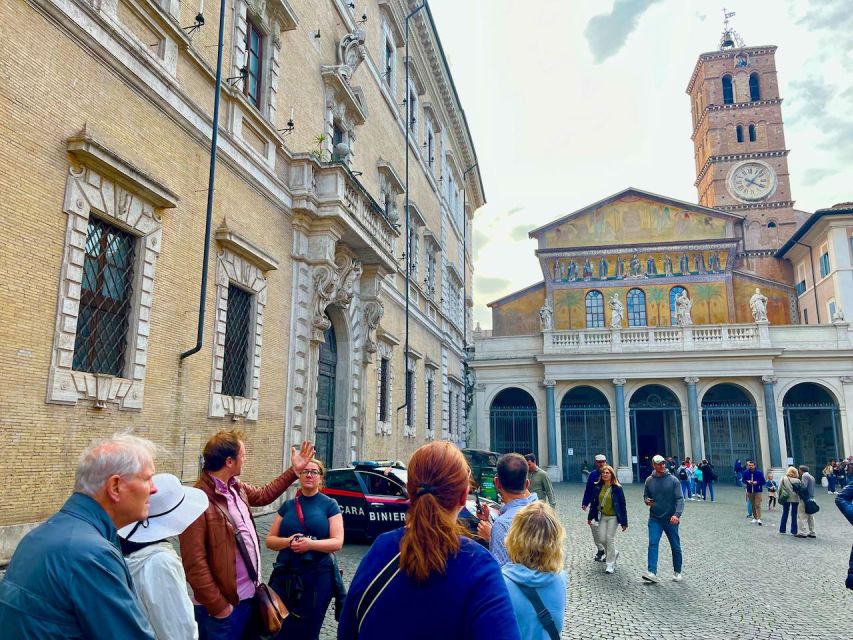
At $35 per person for 2.5 hours, the value comes from three things.
First, you’re paying for interpretation. The route covers multiple distinct areas, and without a guide you’d likely read it as separate “nice spots.” With the guide, the story connects the Ghetto, Tiber Island, and Trastevere into one coherent line.
Second, the tour is built for question time. Many guests praise the guides for clear explanations and patience, plus a sense of humor that keeps the walk from becoming a lecture. That kind of guide performance is what you’re truly buying.
Third, the stops are practical. You get quick hits at major Roman landmarks early on, then you slow down where the subject needs careful attention.
At this price, this tour is a strong option for a first or second day in Rome when you want orientation and context, not just iconic landmarks.
Who should book this tour, and who might want a different option
This tour fits you best if you want more than monuments. If you enjoy neighborhood-level history, religious and community context, and walking tours with story-first guiding, you’ll probably find it rewarding.
It’s also a good fit if you like mixed pacing. Short stops at the start help you get oriented, longer segments in the Ghetto do the heavy lifting, and the Trastevere portion gives you atmosphere and beauty after a heavier topic.
A possible mismatch: if you were specifically hoping for synagogue interior access, this tour won’t deliver it since the synagogue entrance is not included. Also, if you dislike walking for 2.5 hours, you might prefer a shorter ride-based or ticketed tour.
Quick planning tips for a smooth, comfortable walk
Bring comfortable shoes. The route involves cobblestones and lots of turning your head to look up and around, especially in older neighborhood lanes.
The tour runs rain or shine, so pack weather protection. In summer it can be warm, and you’re smart to bring a water bottle since fountains are available for refills.
If you want the day to feel easy, schedule this tour when you’re not already exhausted. It’s long enough that you’ll remember it, but short enough that you still have energy afterward for gelato, dinner, or a second stroll.
Should you book this Jewish Ghetto and Trastevere stroll
Yes, you should book it if you want Rome to feel personal and readable, not just photographed. The best reason is the way the guide turns geography into story, moving from the Jewish Ghetto to Tiber Island and into Trastevere without losing the thread.
Book it even if you already know Rome’s big-name sights. This walk gives you something those stops often miss: the neighborhood-level human history and the way communities leave their mark on streets, squares, and churches.
If your top priority is synagogue interior access, then you’ll need a different option. For most people, though, this is a high-value, story-driven way to understand two of Rome’s most meaningful districts in one afternoon.
FAQ
How much does the Rome Jewish Ghetto and Trastevere tour cost?
It costs $35 per person.
How long is the tour?
The tour lasts 2.5 hours.
Where do I meet the guide?
Meet outside Santa Rita da Cascia in Campitelli, in Via Montanara next to Antico Caffè del Teatro Marcello. The guide will be waiting there with a sign that says Jewish Ghetto & Trastevere Stroll.
Is the tour guided in English?
Yes, the tour is guided in English.
Is the synagogue entrance included?
No. The synagogue is seen from the outside only.
Do we stop for food or drink during the tour?
Food and drink are not included, but there is an optional stop at a gelateria or cafe.
What should I bring for this tour?
Wear comfortable shoes. Bring weather protection since the tour runs rain or shine, and in summer bring a water bottle since fountains are available for refills.
Our Wider Tours File for Rome
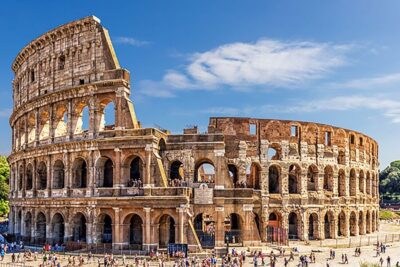
Trastevere and Jewish Ghetto Walks in Rome, Written Up Separately
Not quite the day you had in mind? The rest of our Rome write-ups sit below
- Rome: Guided Tour of St. Peter’s Dome Climb, Basilica & Vatacombs★ 5.0 · 167 reviews
- St. Peter’s Basilica Guided Tour with Reserved Entrance★ 4.0 · 168 reviews
- Golf Cart Driving Tour in Rome: 2.5 hrs Catacombs & Appian Way★ 5.0 · 168 reviews
- Rome: Trastevere Wine Tasting with Food Pairing and Gelato★ 4.9 · 168 reviews
- Guided Tour of the Colosseum Palatine Hill and Roman Forum★ 4.7 · 168 reviews
- Vatican Museums, Sistine Chapel & Saint Peter’s Semi-Private Tour★ 4.5 · 169 reviews
- Hidden Rome: Small Group E-Bike Tour with Street Food Stops★ 5.0 · 169 reviews
- Rome: Papal Audience with Pope Leo IV★ 3.9 · 169 reviews
- Rome Golf Cart Tour: Highlights & Must See★ 4.5 · 170 reviews
Trastevere & the Jewish Ghetto, top to bottom.
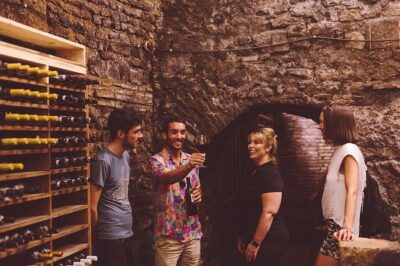 ★ 5.0Winner 2025 Rome Twilight Trastevere Food Tour by Eating EuropeFrom $1255,157 reviews
 ★ 4.8Rome: Trastevere or Jewish Quarter Street Food TourFrom $513,839 reviews
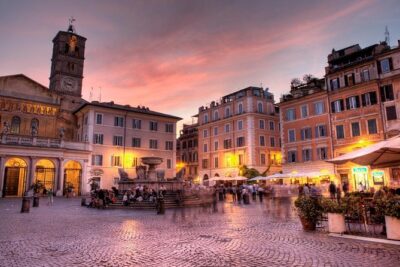 ★ 5.0Rome: Trastevere Food tour with Free-Flowing Fine WineFrom $1022,853 reviews
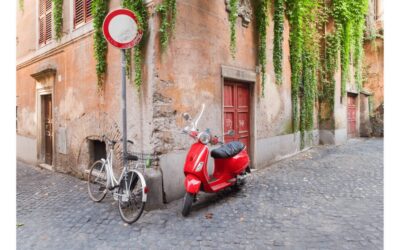 ★ 4.9Rome: Trastevere & Campo de Fiori Street Food Walking TourFrom $512,768 reviews
 ★ 5.0Rome: Award Winning Trastevere Group Food Tour with WineFrom $812,273 reviews
 ★ 4.8Rome: Guided Food Tour in TrastevereFrom $1122,266 reviews
 ★ 4.5Jewish Ghetto and Trastevere Tour RomeFrom $41,729 reviews
 ★ 5.0Taste of Testaccio: Special 15 Year Anniversary EditionFrom $1311,658 reviews
Filed under