
Reviewed · PANTHEON, TREVI & PIAZZA NAVONA
Rome: Pantheon Fast-Track Ticket and Official Audio Guide
Fast access meets top-notch audio at the Pantheon. This experience pairs skip-the-line entry with an official audio guide that explains what you are looking at, from Hadrian’s original plan to the church it became. I especially like that the audio is voiced by recognizable talent, so the history feels more like a story than a lecture. One practical catch to plan around is the required audio guide deposit, plus the time needed to pick up your ticket at the store first.
Two things I really like: you get a fast-line ticket so you spend less time inching forward, and the audio guide points your eyes to the Pantheon’s big features, like the dome geometry and the oculus. You also get a built-in “what am I seeing” route through the building, with voices such as Sergio Rubini, Alessandro Haber, Giusi Cataldo, and Mons. Daniele Micheletti.
My one main consideration is logistics. You need to collect your ticket at OhMyGuide – Roma Museum Store (Via dei Bergamaschi 49) and you will need a valid ID or credit card deposit to borrow the audio guide. If you are arriving late or trying to tour in ultra-tight timing, that setup can feel a little strict.
Key highlights at a glance
- Fast-line entry through a separate booking line to reduce waiting at the Pantheon
- An official audio guide built around historical figures including Hadrian, Pope Boniface IV, Raphael, and Queen Margherita
- Architecture focus: the dome’s 43.44-meter diameter and the oculus that controls the sunlight
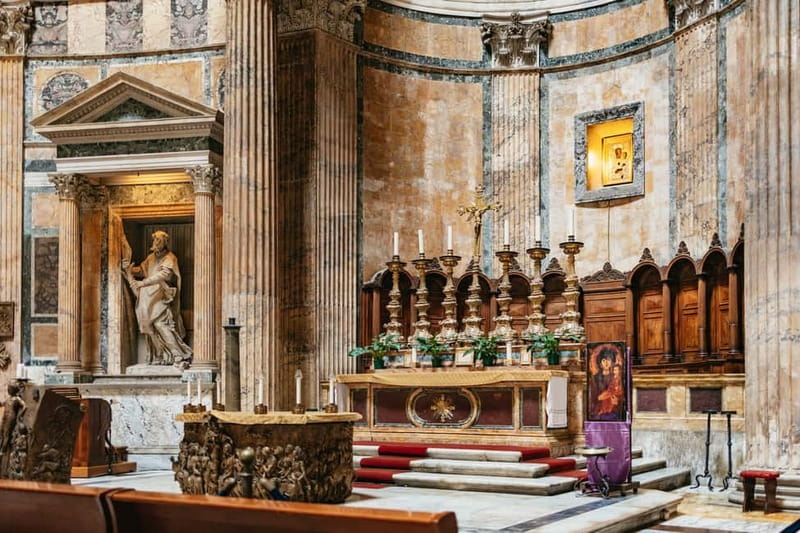
- Real-world church context: conversion to the basilica and the Pantheon’s continued religious life
- Donations included to support Santa Maria ad Martyres (the Pantheon’s church identity)
In This Review
- Why the fast-track ticket plus official audio guide works
- Where you pick up your ticket at OhMyGuide, and how to plan your time
- Walking in with Hadrian’s story, and why that start matters
- The dome geometry and how to spot the oculus in seconds
- From Temple to Basilica: Pope Boniface IV and what changed in 609 AD
- Pink granite columns and Raphael’s burial, the portico you will remember
- Margherita of Savoy, rose petals, and the Pantheon as an active church
- How the audio guide is performed, and what that means for your visit
- Practical rules: dress code and the audio guide deposit
- How long it takes and how to pace a 1-hour Pantheon visit
- Who this ticket suits best (and who might prefer something else)
- Should you book this Pantheon fast-track ticket with official audio?
- FAQ
- Where do I pick up my ticket for the Pantheon fast-track entry?
- How long is the experience?
- What hours is the ticket pickup location open?
- Does this include a live guide?
- What languages are available for the audio guide?
- Is the audio guide accessible, and what do I need to borrow it?
Why the fast-track ticket plus official audio guide works
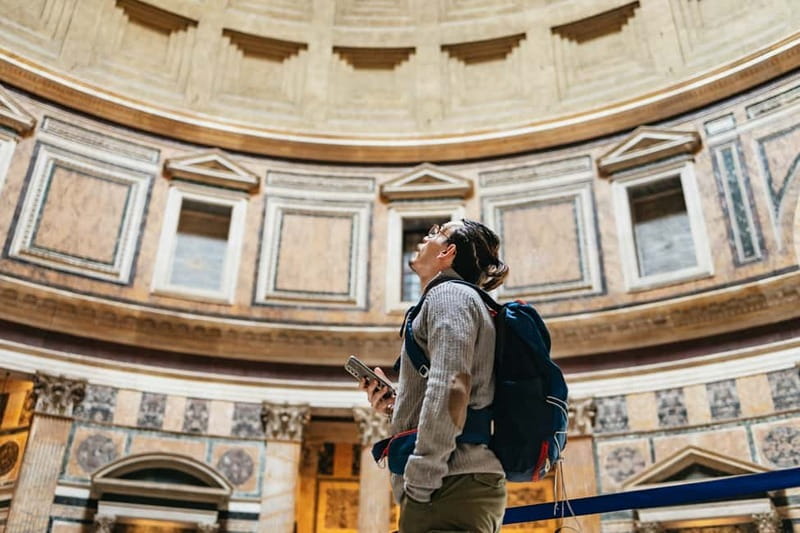
The Pantheon is one of those places where your brain wants to do two things at once. You want to admire the building, and you want to understand it. This ticket setup is built for exactly that. The fast-track entry gets you inside without the long crowd crush, and then the audio guide handles the “wait, what is that and why does it matter?” part.
I also like that the format does not force you to stand still. The visit is structured so you can move at your pace, listen, look, and then look again. That matters in a building that is still a church. You are not just touring a ruin, you are walking through a working religious site where people come to pray, not just to take photos.
And there is a surprisingly human advantage here: the audio is performed by professional actors (Sergio Rubini, Alessandro Haber, Daniele Parisi, Giusi Cataldo, and Mons. Daniele Micheletti are among the listed voices). That kind of voice acting helps you stick with the story long enough to notice the details.
The price is also low enough that it feels like a “smart upgrade,” not a big splurge. At $6 per person, you are paying for time saved and for interpretation you would otherwise need from printed panels or apps.
Where you pick up your ticket at OhMyGuide, and how to plan your time
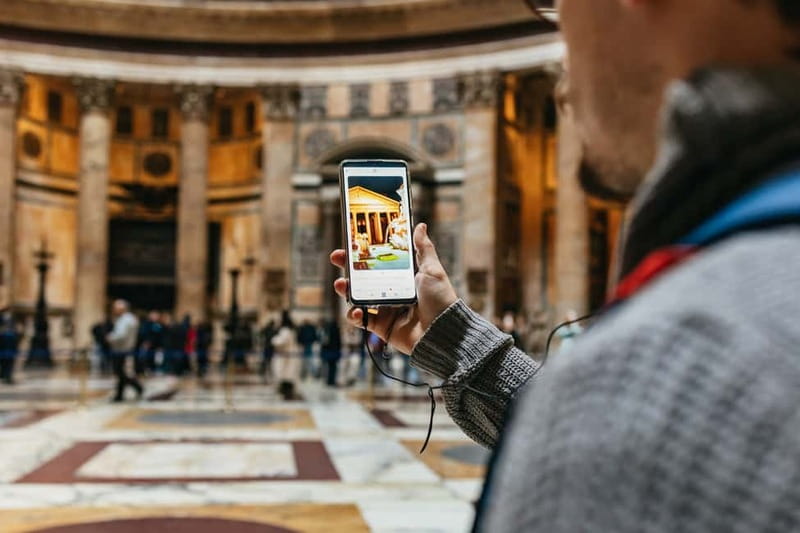
Your appointment starts away from the Pantheon itself. You collect your ticket at OhMyGuide – Roma Museum Store, Via dei Bergamaschi 49, Rome. After pickup, you go to the Pantheon and enter through the online booking line, then collect your audio guide.
A short reality check: this pickup point is a separate step before you get your entry. If you are the type who arrives right at the last minute, this can create stress. If you arrive with a little buffer, it feels easy.
Also note the operating hours for ticket pickup:
- Monday to Friday, 09:00 to 18:00
- Saturday, 09:00 to 15:00
- Sunday, 12:00 to 18:00
Because you must adhere strictly to your reservation time, I recommend choosing a slot that matches how you actually move through Rome. If you are juggling multiple stops in a day, give this one real time.
Between an espresso and the next booking, compare these Pantheon, Trevi and Piazza Navona walks in Pantheon Rome.
- Pantheon Reserved Entry Ticket with Audio Guide
★ 4.0 · 4,486 reviews
Walking in with Hadrian’s story, and why that start matters
Once you are inside, the audio guide essentially gives you a guided viewpoint without forcing you into a fixed route. It begins with Adriano (Emperor Hadrian), who commissioned the Temple of all the Gods as we see it today.
That opening is not random. The Pantheon feels timeless, but the building you see is the result of a deliberate design program. Starting with Hadrian helps you shift from “wow, old building” to “wow, engineered vision.”
As the story unfolds, you are prompted to look at the dome’s scale. The audio highlights the dome with a diameter of 43.44 meters, and it frames the structure as a kind of physical math lesson you can actually stand under. That is a rare gift in museum-style audio, because it tells you what to notice while you are standing in the exact spot.
If you tend to rush through monuments, this kind of start slows you down in a good way. It gives your eyes a job.
The dome geometry and how to spot the oculus in seconds
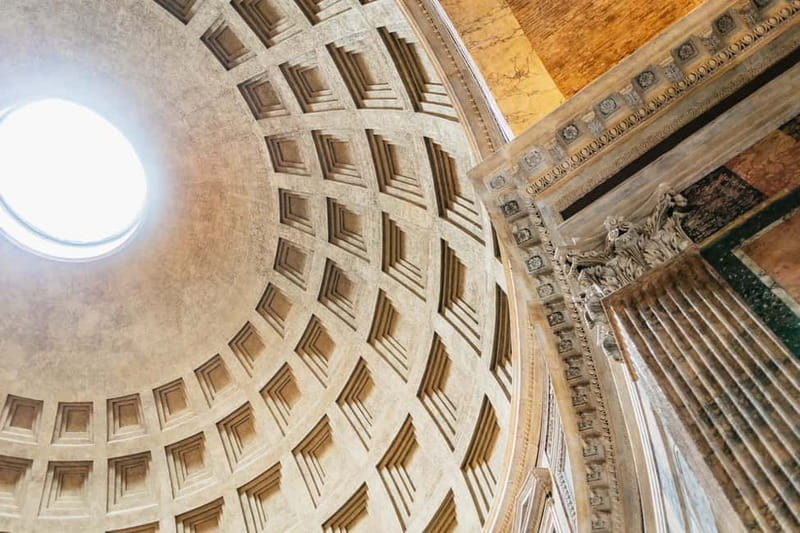
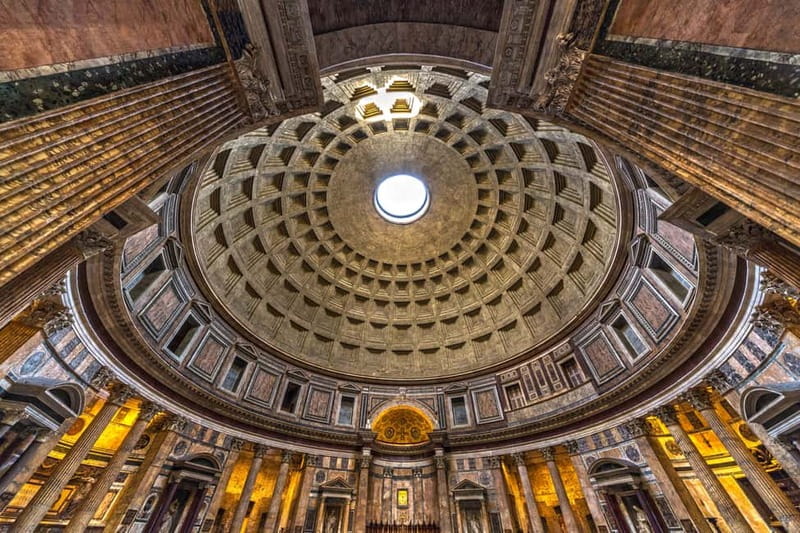
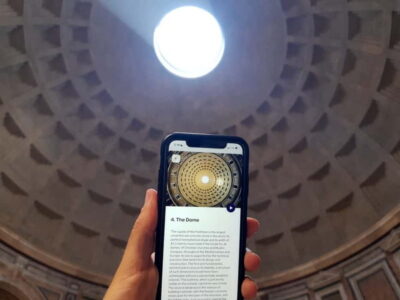
This is the moment you came for. The Pantheon’s interior feels open, even though you are indoors. The reason is the oculus, the large opening at the top.
The audio guide explains why it matters: sunlight streams in and changes the interior light like a sundial. That is the key. The oculus is not just a decorative hole. It is the mechanism that makes the space dynamic.
Here’s how I suggest you use the audio at this stop:
- Pause your photos for a second, then look upward when the audio mentions the oculus
- Notice how the beam of light lands and shifts as you move
- Watch other people for a moment, then decide where you want to stand
Even if you think you know what the oculus is, hearing it explained in a way that connects light to time makes it feel more real. It also gives you an easy “anchor point” so you do not get lost in the details.
From Temple to Basilica: Pope Boniface IV and what changed in 609 AD
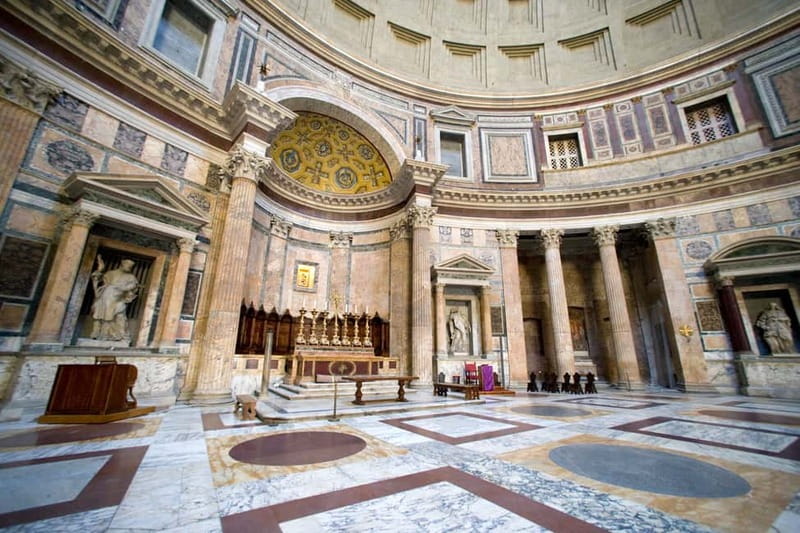
In the Pantheon, history is layered, not erased. The audio moves from Roman emperor to church authority with Pope Bonifacio IV, who in 609 AD converted the temple into the Basilica of Mary and all Martyrs.
This part matters because it changes how you interpret what you are seeing. Without this context, you might treat the building like a monument frozen in Roman time. With it, you start to understand that the Pantheon survived partly because it was protected by its religious role.
The audio also frames this conversion as safeguarding the building from plunder and helping preserve its integrity down to today. That concept is powerful in a place where so many other ancient structures were repurposed, damaged, or dismantled.
Take advantage of this segment by slowing down at transitional viewpoints. The Pantheon’s layout can feel circular and slightly confusing. When you hear the “second life” story, your brain organizes the space better.
Pink granite columns and Raphael’s burial, the portico you will remember
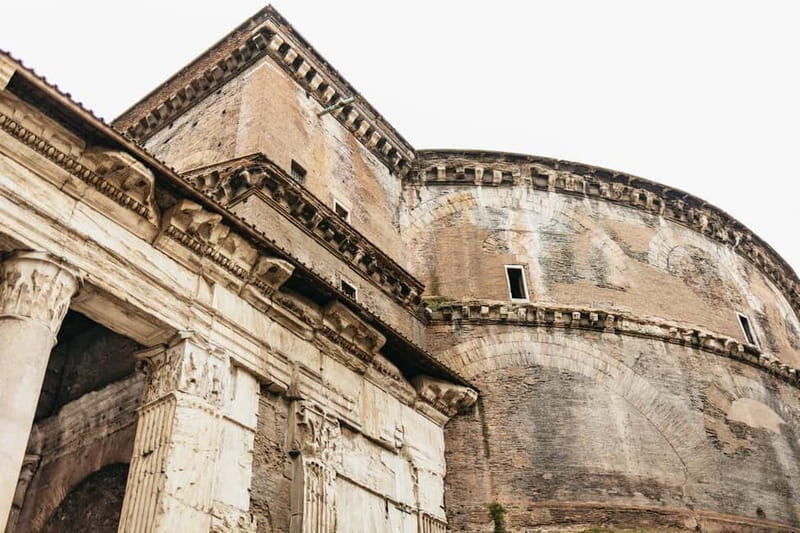
Next comes the portico, the dramatic colonnade area where the building shifts from open courtyard vibe to the sheltered approach. The audio calls out columns of pink granite from Egypt, and that is one of those details your eye can miss if you are only focused on the dome.
Then the story turns to Raphael Sanzio of Urbino. The audio guides you to meet Raphael as a figure connected to the Pantheon’s burials and to the Renaissance artists who admired classical architecture.
If you love art history, this segment gives you something practical. It explains the emotional logic of why classical forms mattered again in the Renaissance. You are not just told that Raphael is buried here. You are directed to see the building in the way he and his peers would have recognized: as an achievement worth studying and copying.
One more note: the Pantheon can feel crowded depending on your time slot. This setup helps because you can listen and keep moving even when you cannot stand exactly where you want to stand. The audio gives you focus, so the crush becomes less annoying.
Margherita of Savoy, rose petals, and the Pantheon as an active church
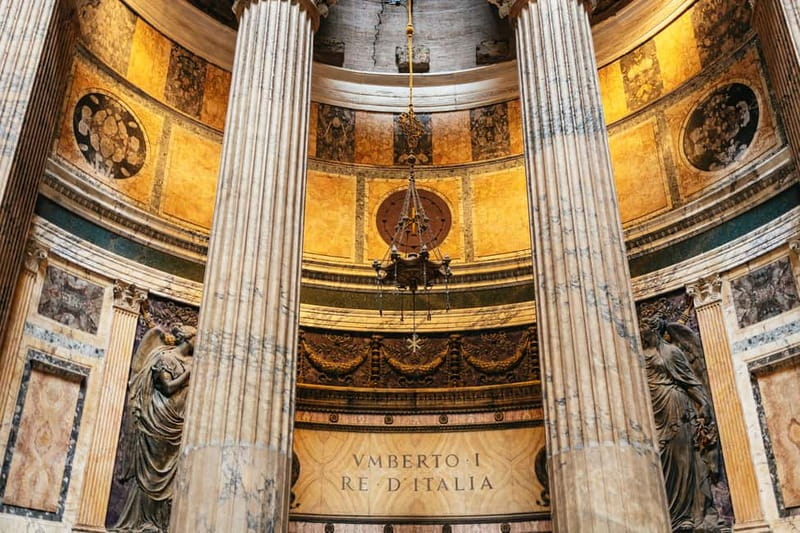
The Pantheon today is not only architecture. It is still a place of devotion, which is why the audio guide includes voices tied to later history and to religious practice.
You hear from Queen Margherita, resting at the Pantheon with King Umberto I and Vittorio Emanuele II of Savoy. That trio gives the monument a “more recent past” layer, reminding you the site has been meaningful well beyond ancient Rome.
The audio also paints a vivid seasonal detail: a red rose petal tradition linked to Pentecost, described as petals descending from the oculus each year to commemorate the descent of the Holy Spirit on the Apostles. Even if you are not visiting during that exact moment, knowing it exists changes how you see the oculus. It stops being only an architectural feature and becomes part of lived tradition.
You will also hear the Pantheon framed as both monument and church. That matters because it influences how you behave inside. You will get the best experience if you keep your voice low, avoid blocking others, and treat the space like it still belongs to people who are not there for a photo.
How the audio guide is performed, and what that means for your visit
This audio guide is not a dry walking tour script. It is described as voiced by talented actors including Sergio Rubini, Alessandro Haber, Daniele Parisi, Giusi Cataldo, and Mons. Daniele Micheletti. There are also original compositions by Antonio Fresa, performed with the Orchestra of Teatro La Fenice.
That combination has a practical effect. When the sound design is strong, you actually listen. When you listen, you catch connections like:
- why the dome geometry is emphasized
- how the oculus changes the mood inside
- why the 609 AD conversion is treated as a protection story
- how Renaissance figures like Raphael link back to classical design
The guide also comes in multiple languages. You can choose from:
Chinese, English, French, German, Italian, Portuguese, Russian, Spanish, Arabic, Dutch, Korean, and Polish.
And yes, it is wheelchair accessible.
In short, this is the kind of audio that works even if you are not a “museum person.” The building gives the visuals, and the voices help you keep up.
Practical rules: dress code and the audio guide deposit
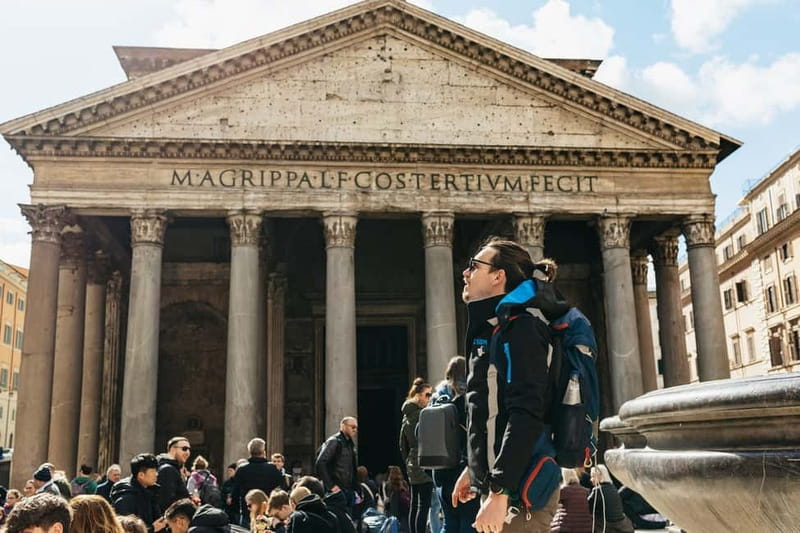
Before you go, check the rules that can trip you up if you are traveling light. The Pantheon requires suitable attire:
- no shorts
- no short skirts
- no sleeveless shirts
If your plan is to visit in summer and you are carrying minimal clothing, this is worth thinking about before you leave your hotel. A quick change can save you from awkward delays at the entrance.
Then there is the audio guide deposit rule. You need a valid ID (passport, ID card, driver’s license) or a credit card as a deposit to borrow the audio guide. Photocopies, pictures on your phone, student cards, and digital IDs are not accepted.
So if you hate the idea of handing over your passport, plan another approach. This ticket is built around borrowing the device onsite, so bring what the rules ask for. Also bring a credit card just in case.
One more “plan for real life” note: the Pantheon can be affected by anticipated closures, postponed openings, masses, concerts, or other events that may vary service time. That is not common in every visit, but it is part of the reality of a major historic church.
How long it takes and how to pace a 1-hour Pantheon visit
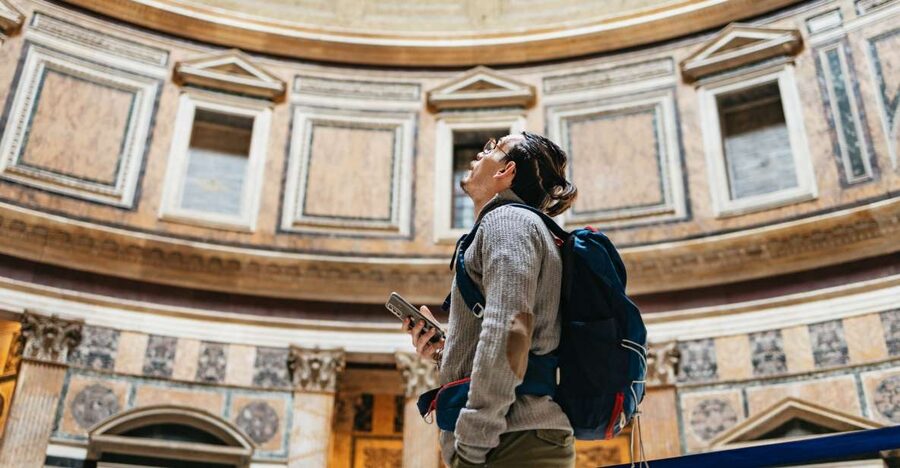
Your guided time is listed as 1 hour. That is enough time to see the key architecture and hear the big historical shifts without turning the experience into a marathon.
I recommend you pace it like this:
- First 10 to 15 minutes, focus on orientation, start with the dome and oculus segment when you are in the right position
- Middle of the visit, walk and listen through the conversion story and the Renaissance burial material
- Final stretch, slow down again for Raphael’s area and then the Margherita segment, when you can stand more calmly and take it in
If you are traveling with someone who wants lots of photos, treat that as part of the plan. The audio guide helps you time it. You can listen while others photograph, then swap.
Who this ticket suits best (and who might prefer something else)
This works best for people who want two things at once:
1) less time waiting
2) a smart way to understand what they are seeing
It is great for first-timers who know the Pantheon is famous but want the “why” behind it. It is also a good fit if you do not want a live guide talking nonstop. You are free to wander, and the audio is there when you want it.
It is less ideal if you are allergic to any rules or deposits. Between the dress code and the ID or credit card deposit requirement, you will want to go prepared.
If you already know a lot about Roman architecture and you only want to admire the dome quietly, you might feel like the audio is extra. But the guide’s figure-based structure, from Hadrian to Boniface IV to Raphael to Queen Margherita, is actually a clean way to break the building into digestible themes.
Should you book this Pantheon fast-track ticket with official audio?
If your priority is avoiding lines and getting a guided explanation without hiring a live guide, I think this is a solid choice. The fast-track entry does real work in a high-demand site, and the audio guide is built around the Pantheon’s most important ideas: geometry, light, transformation into a basilica, and the Renaissance and royal layers that followed.
Book it if you want value, clear direction, and a visit that feels understandable even if you are not a Rome scholar. Skip it only if you are unwilling to follow the practical rules (dress code, and the deposit requirement for the borrowed audio guide) or if you absolutely prefer a completely unguided walk.
If you do book, show up prepared with the right ID, give yourself a little time for ticket pickup at Via dei Bergamaschi 49, and plan to look up early. The Pantheon rewards that habit.
FAQ
Where do I pick up my ticket for the Pantheon fast-track entry?
You pick up your ticket at OhMyGuide – Roma Museum Store, Via dei Bergamaschi 49, Rome. After that, you go directly to the Pantheon to enter through the online booking line and collect your audio guide.
How long is the experience?
The duration is listed as 1 hour. Please check availability to see the starting times.
What hours is the ticket pickup location open?
Monday to Friday it is open 09:00 AM to 06:00 PM, Saturday 09:00 AM to 03:00 PM, and Sunday 12:00 PM to 06:00 PM.
Does this include a live guide?
No. This experience includes an audio guide, not a live guide.
What languages are available for the audio guide?
The audio guide is available in Chinese, English, French, German, Italian, Portuguese, Russian, Spanish, Arabic, Dutch, Korean, and Polish.
Is the audio guide accessible, and what do I need to borrow it?
The experience is wheelchair accessible. To borrow the audio guide, you must provide a valid ID (passport, ID card, or driver’s license) or a credit card as a deposit. Photocopies, pictures on your phone, student cards, and digital IDs are not accepted.
Entry Tickets in Pantheon Rome We Also Walked
More Pantheon, Trevi and Piazza Navona Walks Pinned to Our Pantheon Rome Map
Not quite the day you had in mind? The rest of our Pantheon Rome write-ups sit below
- Pantheon Reserved Entry Ticket with Audio Guide★ 4.0 · 4,486 reviews
Pantheon, Trevi & Piazza Navona, top to bottom.
 ★ 5.03 in 1 Cooking Class near Navona: Fettuccine, Ravioli & TiramisuFrom $837,376 reviews
 ★ 4.0Pantheon Reserved Entry Ticket with Audio GuideFrom $134,486 reviews
 ★ 4.9Rome: Pantheon Timeless Marvel Guided Tour with Entry TicketFrom $214,002 reviews
 ★ 4.1Rome: Pantheon Priority Entry Ticket & Audio Guide AppFrom $63,234 reviews
 ★ 5.0Enjoy Spritz and Pasta Making in Piazza NavonaFrom $901,681 reviews
 ★ 4.3Rome: Trevi Fountain and Underground Guided TourFrom $411,664 reviews
 ★ 5.0Pantheon Elite Guided Tour – Rome’s Iconic Ancient TempleFrom $411,447 reviews
 ★ 4.8Rome: Pasta & Tiramisu Cooking Class near the Spanish StepsFrom $581,395 reviews