

Reviewed · PANTHEON, TREVI & PIAZZA NAVONA
Rome: Trevi Fountain and Underground Guided Tour
Trevi has a second life below ground. This 40-minute guided tour takes you from the marble spectacle to Vicus Caprarius ruins and a 2,000-year-old aqueduct that is still at work. I love the way the guide ties the surface sculptures to what sits under the streets, and I also like how the group gets a clear, organized walking flow with audio support. One drawback to plan for: you do not get the restricted basin area right at the fountain unless you pay an extra €2 fee, and the guide leads you to the public piazza level.
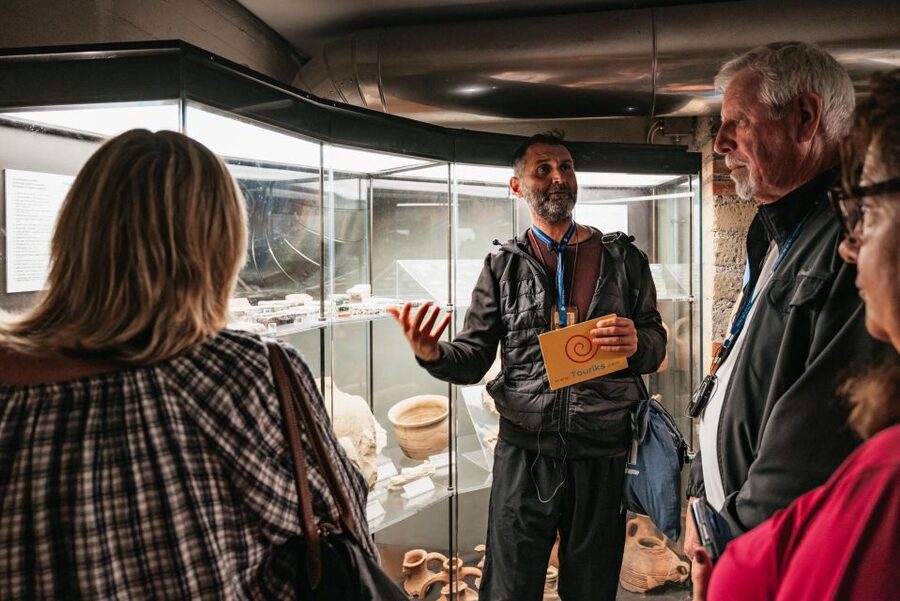
The meeting point is right at the edge of the Trevi chaos, in front of the church Santi Vincenzo e Anastasio a Fontana di Trevi. You’ll look for a yellow label marked TOURIKS, then the tour focuses on two main chunks: Trevi itself and the underground site below.
This is also one of the better “Rome out of the heat” moments, since you head 9 meters underground. Expect stairs and a mix of uneven surfaces, so it is not suitable for wheelchair users, and weather can affect the schedule.
In This Review
- Key things I’d circle before you go
- Trevi Fountain’s Underground Proof: from piazza view to Roman aqueduct
- Meet the guide at Piazza di Trevi, then head to Trevi Fountain
- Trevi Fountain surface stories: myths, figures, and why they matter
- Vicus Caprarius ruins and the imperial Domus under modern streets
- The 2000-year aqueduct still supplying water to Trevi
- How long is 40 minutes, and is the pace worth it
- Price and value at about $41, plus the €2 basin add-on
- Who this Trevi underground tour suits best
- Should you book this Trevi Fountain Underground Guided Tour
- FAQ
- Where do I meet the guide for the Trevi Fountain and Underground tour?
- How long is the Trevi Fountain underground guided tour?
- How deep do we go underground?
- Is access to the restricted basin area included?
- What is included in the price?
- What should I bring?
- What languages are offered?
- Is the tour wheelchair accessible?
- What happens if weather cancels the tour?
Key things I’d circle before you go

- 9 meters underground to see the newly uncovered archaeological area beneath modern Rome
- A fully functioning 2000-year aqueduct that still supplies water to the fountain above
- Trevi’s mythological scenes explained in a way that actually makes the sculptures make sense
- Vicus Caprarius and an imperial Domus you can view as layers of lived-in Roman space
- Headsets included, plus you’re told to bring headphones for the best audio comfort
Trevi Fountain’s Underground Proof: from piazza view to Roman aqueduct
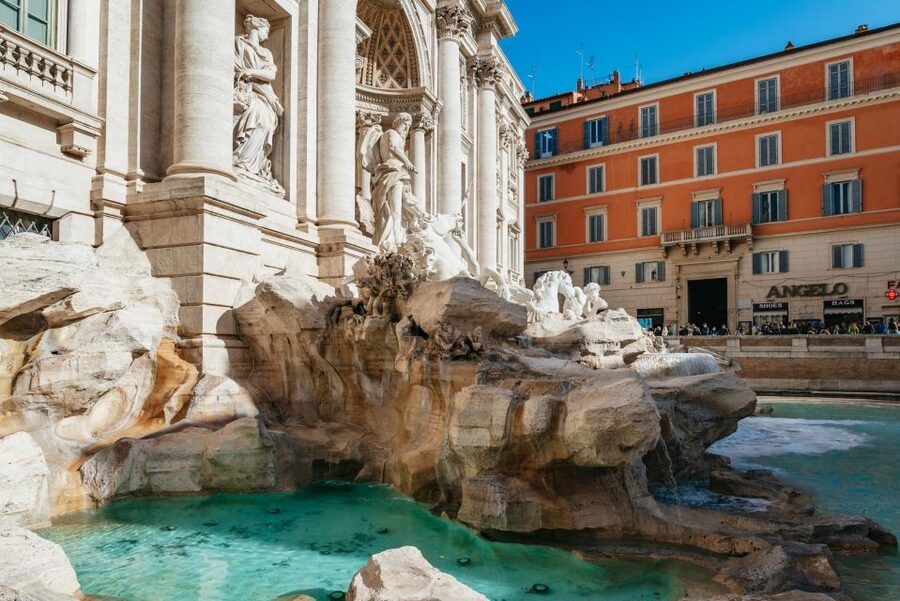
Trevi Fountain is famous for being dramatic. The underground part is dramatic for the opposite reason. Up top, you see stone, water, and Roman myth in full public view. Down below, you get engineering and daily reality: where water came from, where people moved, and how the city grew over itself.
The big “wow” is the aqueduct story. You do not just hear that ancient Rome built water systems. You see the remains connected to a fully functioning ancient aqueduct line, and the purpose is still clear: it supplies water to the fountain above. That turns Trevi from a postcard into a working machine with a human story.
I also like that the tour is built around layers. You’re not only looking at one moment in time. You’re seeing how Rome stacked time on top of itself. The tour includes viewing remains of an imperial Domus and even the idea of touching millenary stratification beneath the streets, which helps you understand the city as a timeline you can feel.
If you’re the type who normally spends Trevi walking in circles and taking photos, this tour gives you a different task. You stop chasing angles and start tracking causes and connections.
Between an espresso and the next booking, compare these Pantheon, Trevi and Piazza Navona walks in Rome.
- 3 in 1 Cooking Class near Navona: Fettuccine, Ravioli & Tiramisu
★ 5.0 · 7,376 reviews - Rome: Pantheon Timeless Marvel Guided Tour with Entry Ticket
★ 4.9 · 4,002 reviews - Rome: Pantheon Priority Entry Ticket & Audio Guide App
★ 4.1 · 3,234 reviews - Enjoy Spritz and Pasta Making in Piazza Navona
★ 5.0 · 1,681 reviews
Meet the guide at Piazza di Trevi, then head to Trevi Fountain
You’ll meet your guide at the entrance to Santi Vincenzo e Anastasio a Fontana di Trevi Church, on the left corner of Piazza di Trevi. Look for a yellow TOURIKS label, because the area is packed and that small sign makes a huge difference.
The tour lasts about 40 minutes, so you should treat it like a focused sprint, not a slow meander. In practice, that means you will want to arrive a few minutes early and stay ready to follow the group quickly. Many people come for Trevi at peak time, and if you arrive late you can lose that tight flow.
A helpful detail: the tour operates in multiple languages, including English, French, Spanish, Portuguese, German, and Italian. Guides in this program are also known for staying patient when people have questions, including kids. Names that show up in the guide experiences include Mario, Francesca, Vito, and Anestis, and the common thread is clear explanations and a calm approach.
If you’re wondering what the “tone” is, it tends to be friendly and story-led. You’re moving through two sections with a guide who points out what to look for and what it means.
Trevi Fountain surface stories: myths, figures, and why they matter
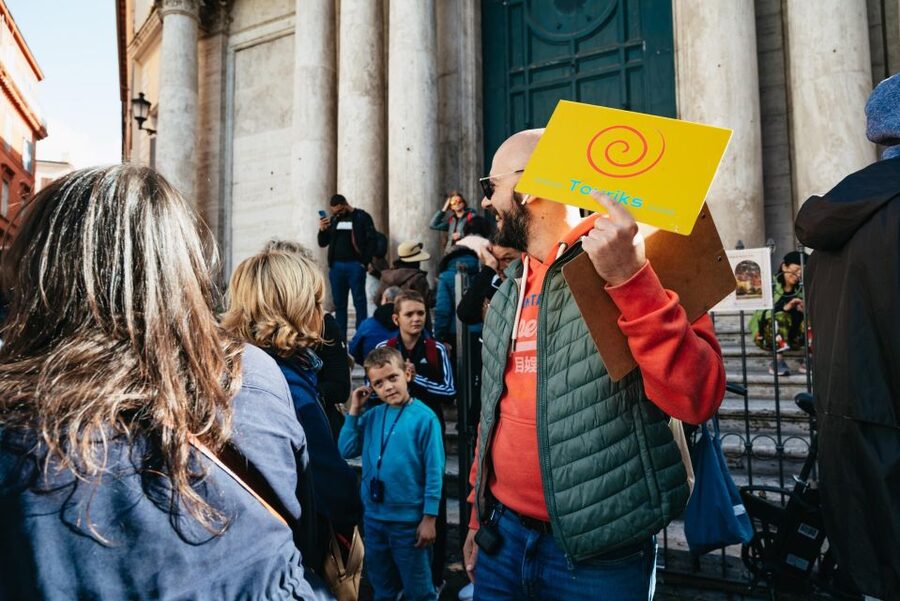
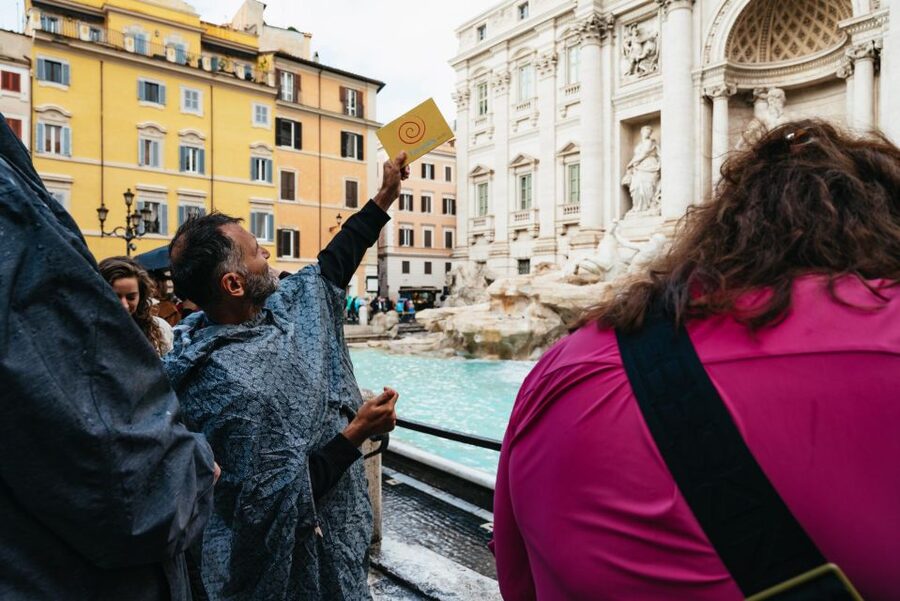
Trevi Fountain is not just pretty. It is built to tell a story, and the guide helps you read it instead of just watching it from the crowd. You get a guided look that focuses on origins, hidden mysteries, and the lesser-known facts behind the famous facade.
One of the highlights is how the guide connects Trevi’s sculptural program to the setting beneath it. You’ll hear explanations about the mythological figures and dramatic scenes across the stone. It is a nice shift from the usual “here’s the fountain” approach, because you start noticing details that are easy to miss when you only glance up.
The tour also includes a quick, thorough walking approach. That matters because Trevi is one of the most crowded corners in Rome. Even with a short experience, the guide’s job is to keep you moving and keep your attention on the right features before the crowd noise swallows the details.
One practical thing I’d watch for: the restricted basin area is not part of the standard included access. So even if you’re standing close, you may not get the vantage you’re imagining near the water. The guide will lead you to a strong view from the public piazza level, but you should not expect to wade into the restricted zone without the additional €2 fee.
Vicus Caprarius ruins and the imperial Domus under modern streets
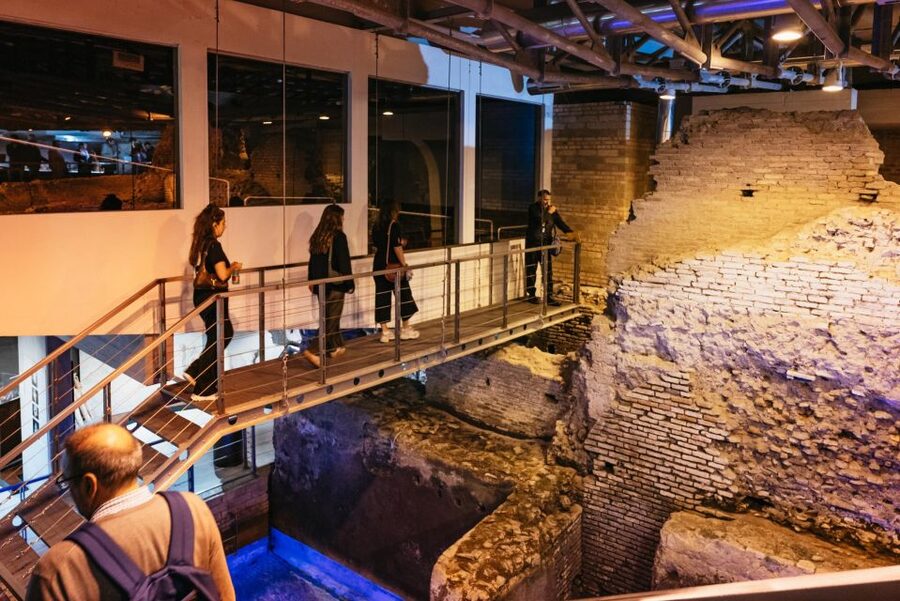
The underground portion is where the tour stops being “famous landmark sightseeing” and starts being “how Rome worked.”
You head down 9 meters to the archaeological area and move through what is connected to Vicus Caprarius. This is the kind of site where the street is the headline, because the ruins sit beneath the modern city and you can see evidence of how Romans lived, built, and reused space.
You’ll also get to view remains of an imperial Domus. That word sounds grand, and it is, but the real value is what it teaches you: Rome’s elite life did not sit in a vacuum. It sat in a city that had infrastructure, water systems, movement corridors, and later layers piled on top.
Another point that makes this stop feel more meaningful is the “layering” theme. You’re not just touring a single room. You’re seeing stratification, the way centuries stack physical proof. That gives you a mental model for Rome. Even if you never return to this exact spot, you start to look at other ruins through the lens of time and reuse.
This is also a tour that tends to work well with families. Some guides manage kids by breaking information into bite-sized pieces while still expanding the story for adults.
The 2000-year aqueduct still supplying water to Trevi

Here’s the best reason to pay for a guide at Trevi’s underground: the aqueduct explanation makes the site click.
The tour says you’ll see a 2000-year-old, fully functioning ancient aqueduct that still supplies water to the fountain above. That is rare. Most archaeology sites are silent and dead. This one has a living purpose, even if you are underground looking at the infrastructure, not the fountain spray.
As you follow the guide, you learn what the aqueduct means in practical terms. Water is not just a poetic Roman symbol. It is a system with routes, engineering, maintenance, and outlets. When you can connect what you see underground to what is happening above, the whole area becomes understandable in one coherent story.
I also appreciate that the aqueduct viewing is part of a guided path. You could probably find an audio guide later, but a good human guide helps you map the “why” behind what you’re seeing. You’re less likely to wander aimlessly and more likely to leave with a simple takeaway you can repeat at dinner.
If you’re a systems person, you’ll probably enjoy how the tour frames Rome as infrastructure. Even if you are not, the aqueduct detail turns Trevi into more than a photo spot.
How long is 40 minutes, and is the pace worth it

Forty minutes is short. That sounds obvious, but it affects everything: what you see, how much time you have in each area, and how you experience the crowd.
The tour splits into two main parts, with guided time at Trevi Fountain and then guided time in the underground area connected to Vicus Caprarius. The result is a fast-paced, thorough route that aims to hit the key highlights without stalling. If you like slow museum-style wandering, you might feel slightly rushed. If you want an efficient orientation, you’ll like the structure.
A common theme in guide quality is that people feel time is used well. Some guides are described as entertaining, funny, and able to handle questions without losing control of the pace. When a guide keeps a group together while still answering real questions, the tour feels more valuable even if it is brief.
One practical consideration: you are not going to spend a long time at every tiny visual detail. This is about the story and the big features. If you want to linger at Trevi after the tour ends, plan to do it carefully, because crowds can funnel you in awkward directions. The tour also notes that you get access to a viewing point at the public piazza level, so you may find it easier to take your final photos right after your guide finishes rather than trying to squeeze in later.
We wrote up further guided tours in Rome on the same pass through the archive.







Price and value at about $41, plus the €2 basin add-on

At $41 per person for about 40 minutes, you are paying for two things: a trained guide and access to the underground excavations, with entrance fees included plus headsets for audio.
So the cost is not just for words. It is also tied to the site access and the experience design. If you only wanted surface views, you would likely pay less elsewhere. The underground piece is the main value driver because it is harder to find on your own and harder to understand quickly without context.
Still, balance matters. Some people feel the tour is a bit pricey because it is short, and others say the description can lead you to expect more direct fountain access than you actually get. The data you should trust is this: access to the restricted basin area costs an additional €2 fee, and the guide leads you to the public piazza level.
My take on the value equation:
- If you want the underground aqueduct story and the archaeology beneath the streets, $41 can be a fair price for a guided, structured experience.
- If you mainly want to stand in the most famous part of the fountain area, you may end up paying extra and still not getting what you pictured.
Who this Trevi underground tour suits best
This is a strong match for people who want Rome context without a long commitment. You get a landmark plus an archaeology payoff, and it’s paced so you can still do other sightseeing after.
It’s also a good choice for families. Guides are praised for engaging with young kids and keeping explanations short and digestible, while expanding the story for adults. If you travel with children who get bored during long museum tours, this format can work.
It suits history-lovers who like concrete details. You’re not only hearing myths. You’re seeing physical remains, including an imperial Domus and the idea of layered city growth. It also fits engineering-minded visitors, especially because the aqueduct point is so central.
It is not the right pick if mobility matters. The tour is not suitable for wheelchair users, likely due to stairs and underground conditions.
If you hate crowds, the underground time can give you relief. You also get audio support, which helps you keep track of the story even when you’re outside in a noisy piazza.
Should you book this Trevi Fountain Underground Guided Tour
I’d book it if you want Trevi Fountain to become more than a famous photo stop. The underground focus on Vicus Caprarius and the functioning aqueduct gives you a reason to care that goes beyond marble and crowds.
I would think twice if you mainly want the restricted basin area right up close. In that case, know you may pay extra for the €2 access, and the tour’s default plan keeps you at the public piazza level.
So my decision rule is simple:
- Book if you want the underground archaeology story and the aqueduct connection to the fountain above.
- Pass or pair with other self-guided Trevi time if your priority is maximum access at the waterline.
If your goal is to understand what you are looking at, this is one of the smarter “short Rome” choices you can make.
FAQ
Where do I meet the guide for the Trevi Fountain and Underground tour?
Meet your guide in front of the entrance to Santi Vincenzo e Anastasio a Fontana di Trevi Church, on the left corner of Piazza di Trevi. Look for a yellow label with TOURIKS written on it.
How long is the Trevi Fountain underground guided tour?
The tour duration is about 40 minutes.
How deep do we go underground?
You go down 9 meters underground to explore the archaeological site.
Is access to the restricted basin area included?
No. Access to the Trevi Fountain restricted basin area has a separate €2 fee. The guide leads you to an excellent viewing point from the public piazza level.
What is included in the price?
The tour includes the guide, entrance fees into the underground excavations, and headsets to hear the guide.
What should I bring?
Bring headphones and a reusable water bottle.
What languages are offered?
The live tour guide is available in English, French, Spanish, Portuguese, German, and Italian.
Is the tour wheelchair accessible?
No. The tour is not suitable for wheelchair users.
What happens if weather cancels the tour?
This tour is subject to weather conditions. If it is canceled, you are offered an alternative date or a full refund.
Our Wider Tours File for Rome




More Pantheon, Trevi and Piazza Navona Walks Pinned to Our Rome Map
Not quite the day you had in mind? The rest of our Rome write-ups sit below
- Rome: Guided Tour of St. Peter’s Dome Climb, Basilica & Vatacombs★ 5.0 · 167 reviews
- St. Peter’s Basilica Guided Tour with Reserved Entrance★ 4.0 · 168 reviews
- Golf Cart Driving Tour in Rome: 2.5 hrs Catacombs & Appian Way★ 5.0 · 168 reviews
- Rome: Trastevere Wine Tasting with Food Pairing and Gelato★ 4.9 · 168 reviews
- Guided Tour of the Colosseum Palatine Hill and Roman Forum★ 4.7 · 168 reviews
- Vatican Museums, Sistine Chapel & Saint Peter’s Semi-Private Tour★ 4.5 · 169 reviews
- Hidden Rome: Small Group E-Bike Tour with Street Food Stops★ 5.0 · 169 reviews
- Rome: Papal Audience with Pope Leo IV★ 3.9 · 169 reviews
- Rome Golf Cart Tour: Highlights & Must See★ 4.5 · 170 reviews
Pantheon, Trevi & Piazza Navona, top to bottom.
 ★ 4.3Rome: Pantheon Fast-Track Ticket and Official Audio GuideFrom $621,008 reviews
 ★ 5.03 in 1 Cooking Class near Navona: Fettuccine, Ravioli & TiramisuFrom $837,376 reviews
 ★ 4.0Pantheon Reserved Entry Ticket with Audio GuideFrom $134,486 reviews
 ★ 4.9Rome: Pantheon Timeless Marvel Guided Tour with Entry TicketFrom $214,002 reviews
 ★ 4.1Rome: Pantheon Priority Entry Ticket & Audio Guide AppFrom $63,234 reviews
 ★ 5.0Enjoy Spritz and Pasta Making in Piazza NavonaFrom $901,681 reviews
 ★ 5.0Pantheon Elite Guided Tour – Rome’s Iconic Ancient TempleFrom $411,447 reviews
 ★ 4.8Rome: Pasta & Tiramisu Cooking Class near the Spanish StepsFrom $581,395 reviews
Filed under