
Reviewed · WALKING TOURS
Rome: Under the Moonlight Evening Walking Tour
Rome at night does something strange to your sense of time. This moonlit walking tour strings together iconic stops like the Pantheon and Colosseum after dark, so you get the same wow factor without the full-day crush. I love how the route is built for atmosphere, with pauses in big squares and a steady rhythm that keeps the story moving.
Two specific things I like a lot are the way you get to watch the Colosseum glow once the sun is gone, and the fact that the tour doesn’t just point at monuments, it explains what you are seeing and why it mattered. Guides can bring it to life in very human ways too, and names that come up often in this experience include Mary, Vladimir, Csenge, Domenica, and Dan.
The main consideration is simple: it is still a walking tour. You will cover a lot of ground in about 2 to 2.5 hours, so comfortable shoes matter, and some of the stops are brief pass-bys rather than long museum-style hangs.
In This Review
- Key Highlights You Will Feel Right Away
- Why Rome Looks Better Under Moonlight
- Getting Oriented: Piazza d’Aracoeli vs Piazza di Pasquino
- Piazza Navona Stop 1: Fontana dei Quattro Fiumi and Night Square Energy
- The Pantheon Moment: Seeing Hadrian’s Monument Without the Full-Day Rush
- Sant’Ignazio di Loyola: A Church Stop That Breaks Up the Monument Cycle
- Galleria Sciarra: The Art Deco Curve You Might Miss Alone
- Trevi Fountain at Night: Coin Toss, Photo Light, and Story Time
- Passing the Imperial Fora: Reading Rome Like a Street Map
- Colosseum Under Moonlight: The Glow That Makes the Walk Worth It
- Trajan’s Column and Roman Forum: Context in Short Guided Bursts
- Piazza Venezia Ending: Where to Pick Up Your Rome After the Tour
- Pacing, Shoes, and What You Should Bring
- Price and Value: Is $28 a Good Deal for This Walk?
- Who This Tour Fits Best (and Who Might Want Something Else)
- Should You Book This Rome Under the Moonlight Tour?
- FAQ
- How long is the Rome Under the Moonlight Evening Walking Tour?
- How much does the tour cost?
- Where does the tour start?
- Where does the tour end?
- What sights are included on the route?
- Is food or drink included?
- What languages is the guide available in?
- What should I bring?
- Is cancellation possible if my plans change?
Key Highlights You Will Feel Right Away
- Colosseum lighting after sunset, when the architecture looks softer and more dramatic
- Pantheon and Trevi Fountain stops timed for evening calm and photo-friendly light
- Piazza Navona with Fontana dei Quattro Fiumi, where you can slow down and listen
- Church of Sant’Ignazio di Loyola and Galleria Sciarra, for contrast beyond the usual postcard route
- Trajan’s Column and Roman Forum, short guided stops that add big context fast
- Ending near Piazza Venezia and the Colosseum area, so you can keep exploring after
Why Rome Looks Better Under Moonlight
Rome is famous for its ruins and its fountains, but it is also famous for what happens in the spaces between them. At night, the streets feel narrower, the shadows are deeper, and the landmarks stop looking like a checklist. That is the real value of this evening format.
You also get a more comfortable flow. Many people expect nighttime to be empty, but that is not the case. Still, you tend to see fewer tour groups than you would in the middle of the day, so it is easier to actually hear your guide and take photos without fighting elbows. One recurring theme from well-rated runs is that the pace stays lively, not rushed, even when you are walking.
If you want a first-day overview, this kind of tour helps you sort out what you want to return to later. You start recognizing streets, squares, and sightlines. It is like getting your bearings fast, then using Rome like a local map instead of a tourist app.
Filed beside this one, more walking tours in Rome.
- Rome: Trastevere & Campo de Fiori Street Food Walking Tour
★ 4.9 · 2,768 reviews - Rome: Paranormal Night Walking Tour & Secret Backstreets
★ 4.9 · 1,921 reviews - Rome by Night Walking Tour – Legends & Criminal Stories
★ 4.5 · 1,003 reviews - Rome: Guided City Center Evening Sightseeing Walking Tour
★ 4.4 · 953 reviews
Getting Oriented: Piazza d’Aracoeli vs Piazza di Pasquino
The tour starts from one of two meeting spots, depending on the option you book: Piazza d’Aracoeli or Piazza di Pasquino. Both put you close to the classic central sights, but they change the feel of the opening minutes.
Here is how I would think about it. If you prefer to start near views that naturally funnel toward the big monuments, Piazza d’Aracoeli can feel like a strong launch point. If you want a start that keeps you near lively streets and lets you settle into the tour vibe quickly, Piazza di Pasquino is a solid alternative.
Either way, the first leg is designed to get you with the right mindset: late evening is the time to look up, notice façades, and watch how lighting changes stone and marble. And since the tour is guided in English or Spanish, you can follow the route without straining to piece together your own Roman history notes.
Practical tip: plan to arrive a few minutes early. Rome move fast when you are trying to locate a group in historic squares. A small buffer makes the start smoother.
Piazza Navona Stop 1: Fontana dei Quattro Fiumi and Night Square Energy
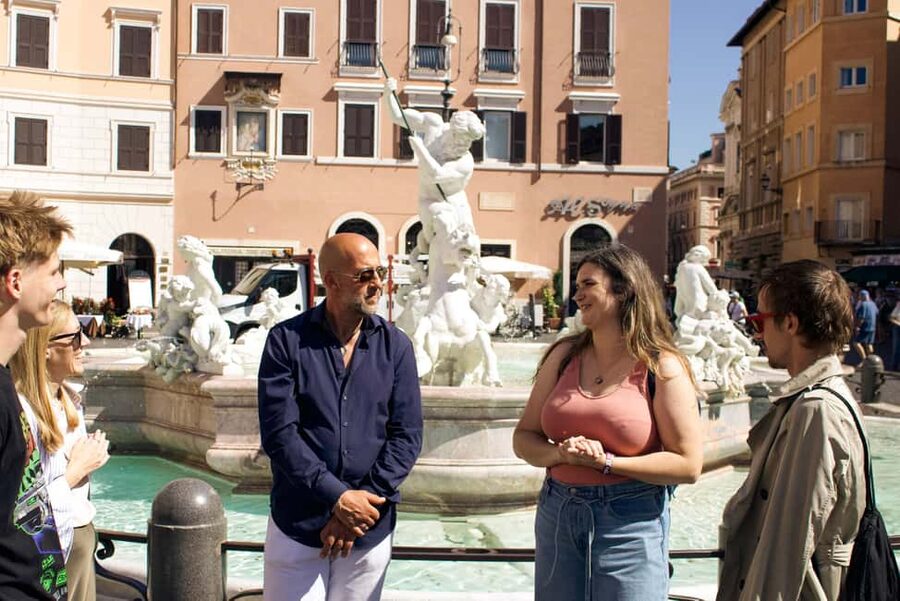
Your group gathers at Piazza Navona for a guided stop of about 20 minutes. This is one of those squares where evening is simply more fun. The shapes and lines make more sense when you are not battling midday glare, and the space feels made for slow wandering.
A small detail I really like is that you start by paying attention to the Fontana dei Quattro Fiumi, the fountains at the center. The sound is part of the experience. Listening while you look is one of the quickest ways to switch from sightseeing to actually being in the place.
From here, you begin moving toward the ancient core. Expect your guide to connect what you see now with what came before. In Rome, buildings have a habit of layering time on top of time. This is where that idea becomes practical.
The Pantheon Moment: Seeing Hadrian’s Monument Without the Full-Day Rush
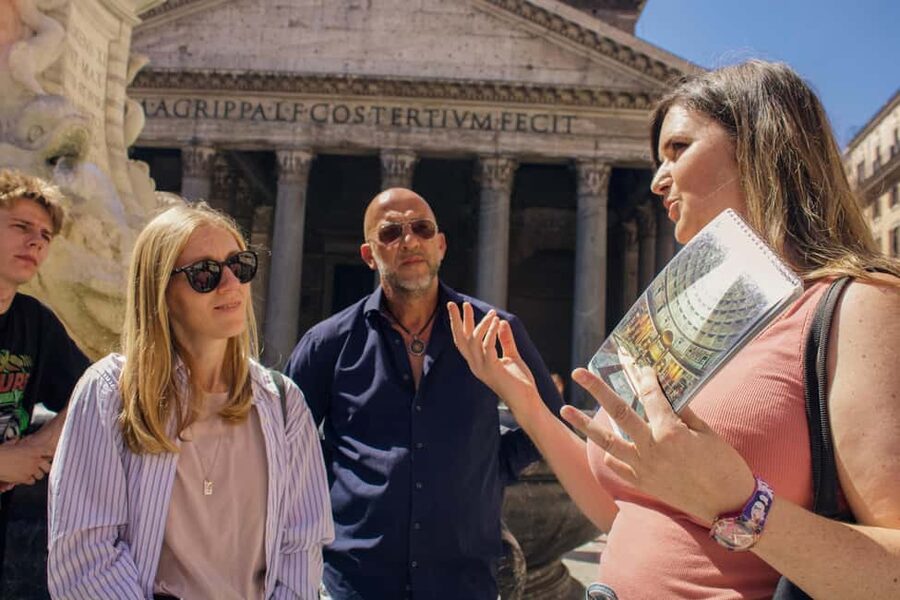
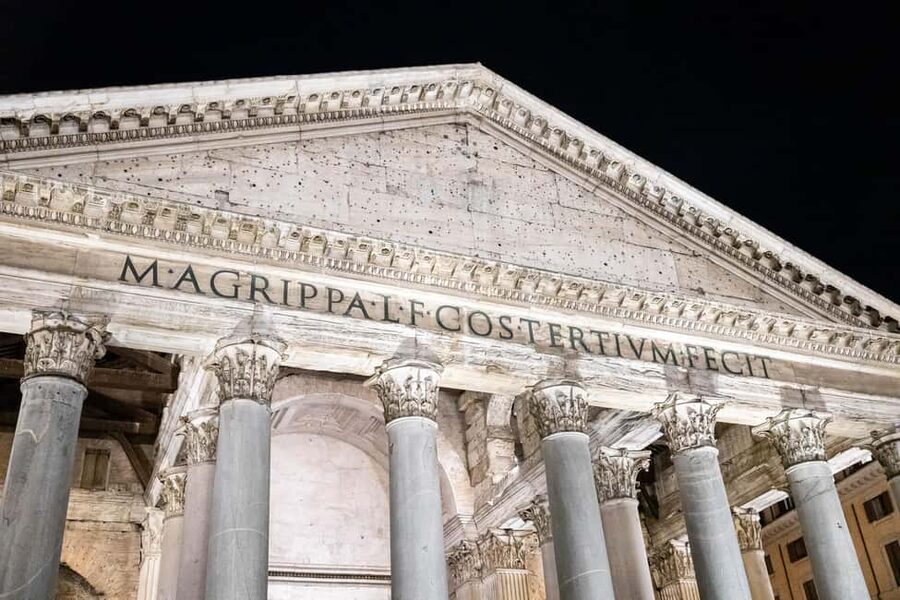
Next comes the Pantheon area. You get to pass by for about 20 minutes, which means you see it, you take in the scale, and you learn what you are looking at, without getting stuck in long “just waiting to enter” lines.
The Pantheon is famous for its engineering and its survival. Even if you already know the headlines, a good guide helps you notice the things that make the building work, like how the proportions pull your eye upward. And at night, the building tends to photograph more gracefully because the surrounding streets are darker and the light falls differently.
A quick reality check: since this is a pass-by segment, do not expect a long inside visit or an extended sit-down stop. If you are hoping for a deep, hour-long Pantheon experience, you may want to pair this tour with a separate timed visit later. But as a “get the big picture” night stop, it earns its place.
Sant’Ignazio di Loyola: A Church Stop That Breaks Up the Monument Cycle
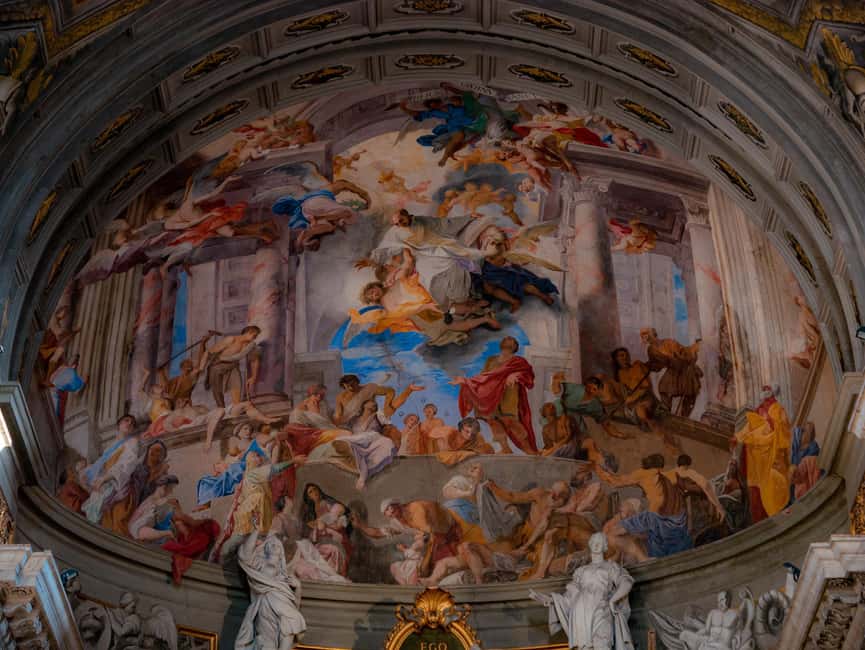
After the Pantheon, the tour includes Sant’Ignazio di Loyola, with a guided stop of about 30 minutes. This is a welcome change of pace. You are coming off ancient Rome, and then you step into a different kind of power, the kind expressed through religious art and architecture.
Why this matters on an evening walk: it keeps the tour from feeling like only the loudest names. Piazza Navona and Trevi can grab all the attention. A church stop gives you something calmer and more focused, where you can slow down and let details register.
Again, since it is a guided segment, you should get context you might miss if you are walking it on your own. If you like architecture that rewards close looking, this is a strong mid-tour anchor.
Galleria Sciarra: The Art Deco Curve You Might Miss Alone
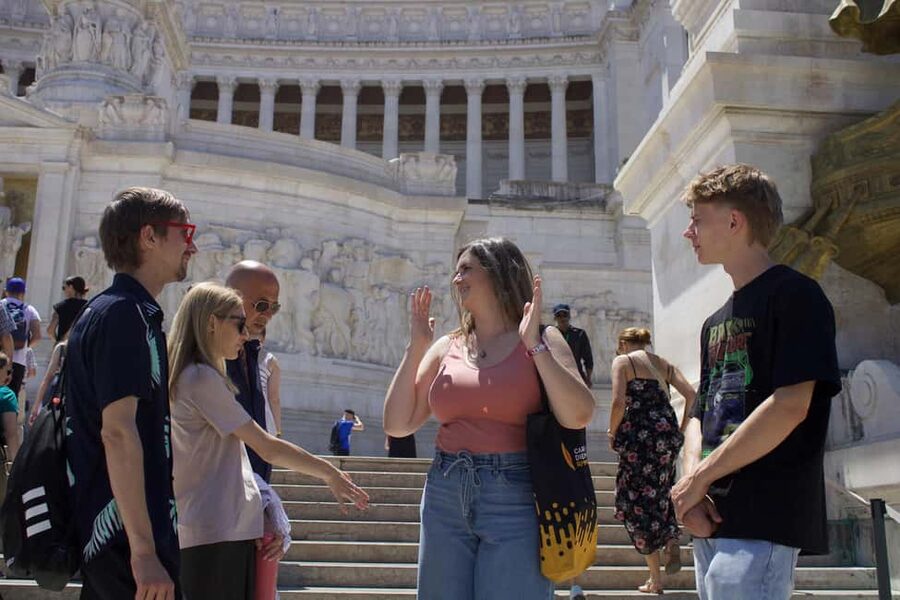
Then you reach Galleria Sciarra for about 20 minutes. This is one of those places that many visitors walk past or never notice at all, even when they are in the area.
What makes it special on this tour is contrast. You are going from big outdoor monuments to a quieter interior corridor feel. Expect your guide to point out visual details that help you understand why this space feels different from the stone streets outside.
In some highly rated experiences, guides highlight how places like Galleria Sciarra bring a later layer of Rome into the same walking day. Even if you are not an architecture nerd, it is still a satisfying “how did I miss this?” moment.
Filed beside this one, more evening experiences in Rome.

Trevi Fountain at Night: Coin Toss, Photo Light, and Story Time
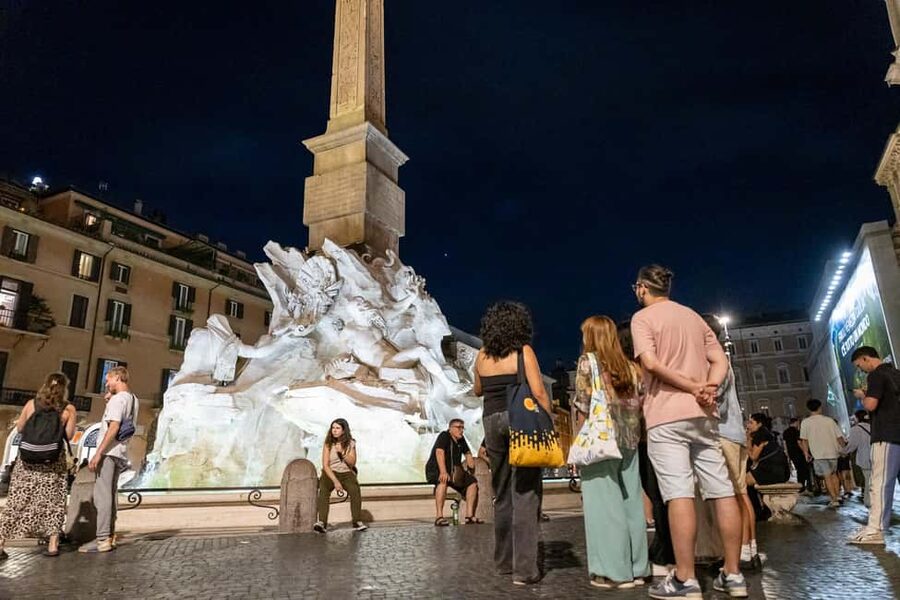
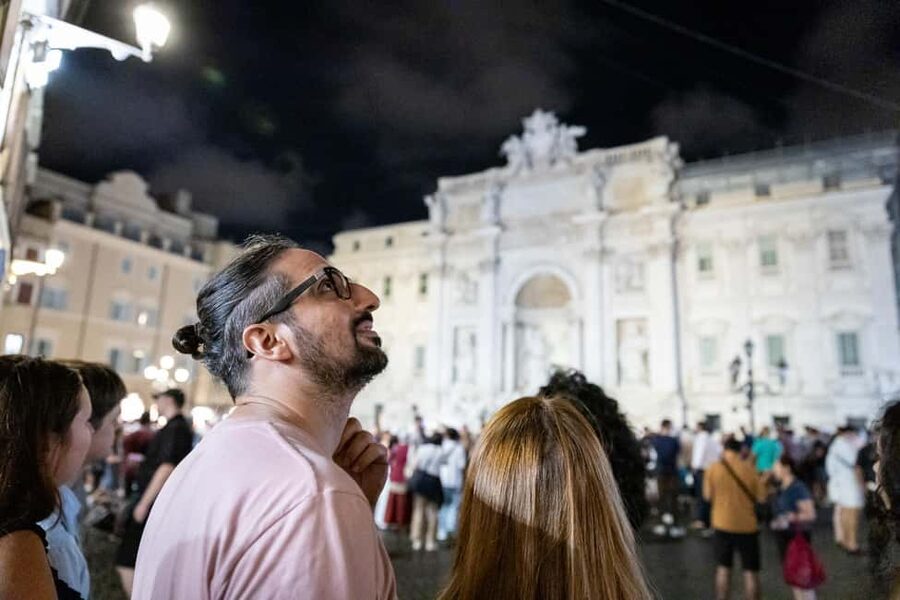
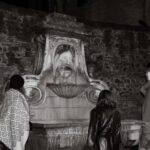
Next is Trevi Fountain, with a guided stop of about 30 minutes. Yes, it is crowded in general, but nighttime tends to make it more manageable than peak daytime hours. You get time to see the fountain properly, take photos, and still hear the guide’s explanation over the background.
A classic ritual is included: you throw a coin into the fountain to make a wish. It is touristy, sure, but in Rome, rituals are part of the atmosphere. The more important part is that you get that moment with context, not just a quick stop.
Photo tip that actually helps: when you are taking pictures in fountain areas, aim for angles that include nearby architecture lines. The fountain is the star, but the frames make your photos look less like a single object snapshot and more like a Rome scene.
Also, if you want that “I am in the story” feeling, this stop is where the atmosphere clicks. Twilight water reflections and warm lighting make it feel cinematic.
Passing the Imperial Fora: Reading Rome Like a Street Map
Between major stops, the tour passes along the Imperial Fora zone. You are not settling in for a long lecture here, but this pass-by segment matters because it trains your eyes.
Your guide will point out columns, statues, and the kind of temple-and-monument density that makes this part of Rome feel like an open-air archive. At night, those shapes can look even more dramatic, since shadows carve the details.
This part is also a practical gift. Once you understand the layout basics, you can better navigate on your own later. You stop thinking of ruins as isolated stops and start seeing them as a system.
Colosseum Under Moonlight: The Glow That Makes the Walk Worth It
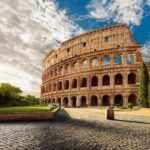
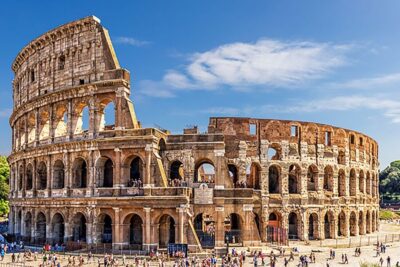
Then comes the star: the Colosseum. You arrive for time around the site, and the emphasis is on seeing it lit after sunset, when it looks romantic in a very non-cheesy way.
Even if you have seen photos, the live experience hits differently. Lighting changes the scale. The stone texture looks deeper. And since you are walking around the area, you can choose angles that work for you, not just the angles other groups tolerate.
This is one of the most praised aspects of the tour, because it is not only about checking the Colosseum off. It is about seeing it at the right emotional temperature. After dark, it feels less like a monument and more like a character in the city’s nighttime story.
Trajan’s Column and Roman Forum: Context in Short Guided Bursts
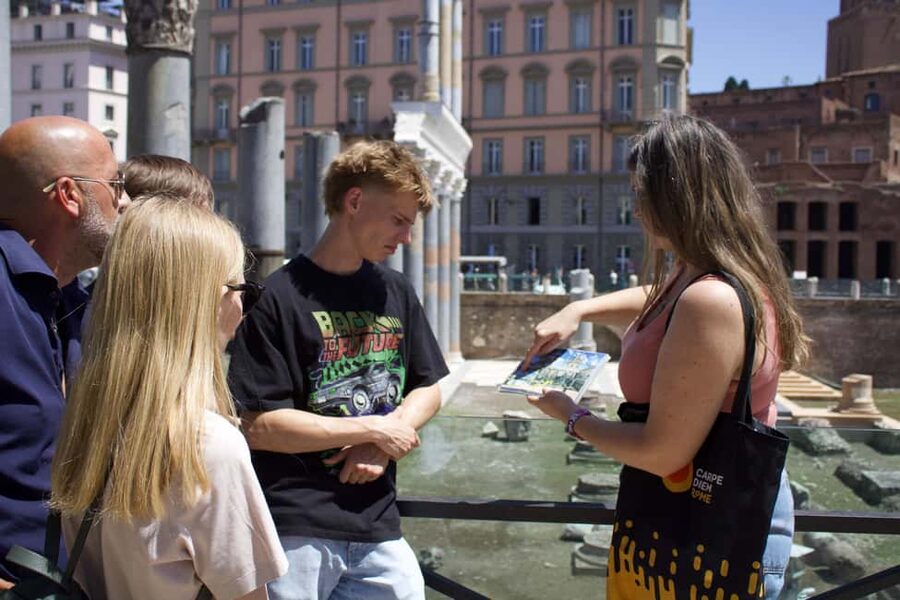
The tour continues with Trajan’s Column for about 20 minutes, then moves on to the Roman Forum with a guided stop of about 20 minutes.
These two stops are short, but that is exactly why they work on an evening schedule. You get a framework: what this space was, why it mattered, and how to connect what you are seeing to the bigger picture. Without that, the Forum can turn into a lot of stone and generic “wow.” With the context, it becomes readable.
If you are the type who likes a fast mental model, this is a great way to leave with understanding instead of only images. And if you want to return the next day for a deeper wander, this tour gives you targets to look for.
Piazza Venezia Ending: Where to Pick Up Your Rome After the Tour
The tour wraps around Piazza Venezia, with a guided stop of about 20 minutes. This area sits well for continuing your own evening plans, because it is central and helps you transition out of the structured route.
The end point can vary by option, with drop-off locations listed near Piazza Navona and the Colosseum area. In plain terms: you should finish somewhere that still lets you walk to something else without needing transit.
If you have energy after, it is a good moment to extend the night. If you are tired, you still get a satisfying set of major highlights before calling it a day.
Pacing, Shoes, and What You Should Bring
This is a 2 to 2.5 hour walking tour. That is not an all-day marathon, but it is also not a gentle stroll where you barely move your feet. Plan on steady walking between stops.
Bring:
- Comfortable shoes
- Comfortable clothes
I also suggest dressing for the evening, especially if you tend to feel cooler after sunset. Rome in the evening can shift from warm to cool faster than you expect, and you will appreciate being comfortable when you need to stand and look.
What you will not be doing is sitting down to eat. The tour does not include food or drink, so eat beforehand. If you need a quick water stop, do it before you commit your time to major squares.
Price and Value: Is $28 a Good Deal for This Walk?
At $28 per person, this tour is priced for value. You are paying for a local guide, live interpretation, and a route that hits high-impact sights in a short window.
Here is what you get for that price:
- A local guide leading you through the core sights
- Guided segments at multiple locations, not just exterior photo stops
- Practical tips and recommendations, which help you plan the rest of your stay
- A night-focused route that makes the experience feel different from daytime sightseeing
It is not a full-day private driver service. You are walking. You are using time instead of paying for transport. For most people, that is the best trade in Rome, because parking and driving can eat up your day fast.
If your priorities are: see the big names, get context, and enjoy Rome’s nighttime atmosphere without committing an entire day, then this price feels fair.
Who This Tour Fits Best (and Who Might Want Something Else)
This tour is a strong fit if you:
- Want a first-night orientation around the big highlights
- Like learning stories tied to landmarks you can see in front of you
- Prefer fewer crowds and better lighting for photos
- Enjoy walking routes that feel guided but not stiff
It may feel less ideal if you:
- Want long indoor time at specific sites
- Hate walking enough that even a 2 to 2.5 hour plan feels like too much
- Are hoping for a food-focused experience, since food and drink are not included
Should You Book This Rome Under the Moonlight Tour?
I think you should book it if you want your first taste of Rome to feel cinematic but still practical. This experience brings together the Pantheon, Trevi Fountain, Piazza Navona, the Colosseum, Trajan’s Column, and the Roman Forum in a way that makes sense for an evening schedule. The standout is the atmosphere after sunset, plus the consistent praise for engaging guides, including performers like Mary, Vladimir, Csenge, Domenica, Dan, and Sharon.
If you are the kind of traveler who likes to understand what you are looking at and then wander on your own afterward, you will get a lot out of the route structure.
If your ideal day is slow, padded, and food-first, you might be happier with a longer day tour that includes meals. Otherwise, this one is a solid buy for the money, especially when you want to see Rome’s biggest hits under moonlight.
FAQ
How long is the Rome Under the Moonlight Evening Walking Tour?
It runs about 2 to 2.5 hours. Starting times vary, so check availability for the schedule you want.
How much does the tour cost?
The price is listed as $28 per person.
Where does the tour start?
Meeting point may vary depending on the option booked. Start locations shown include Piazza d’Aracoeli and Piazza di Pasquino.
Where does the tour end?
The activity ends back at the meeting point. Drop-off locations are also listed, including options around Piazza Navona and the Colosseum area.
What sights are included on the route?
You will see major stops and guided segments including Piazza Navona, the Pantheon area, Sant’Ignazio di Loyola, Galleria Sciarra, Trevi Fountain, Piazza Venezia, Trajan’s Column, and the Roman Forum, plus walking by the Colosseum area.
Is food or drink included?
No. Food and drink are not included.
What languages is the guide available in?
The live tour guide is available in English and Spanish.
What should I bring?
Wear comfortable shoes and comfortable clothes.
Is cancellation possible if my plans change?
Yes, free cancellation is offered up to 24 hours in advance for a full refund.
Other Walking Tours in Rome From Our Notebook
Our Wider Tours File for Rome
Not quite the day you had in mind? The rest of our Rome write-ups sit below
- Rome: Guided Tour of St. Peter’s Dome Climb, Basilica & Vatacombs★ 5.0 · 167 reviews
- St. Peter’s Basilica Guided Tour with Reserved Entrance★ 4.0 · 168 reviews
- Golf Cart Driving Tour in Rome: 2.5 hrs Catacombs & Appian Way★ 5.0 · 168 reviews
- Rome: Trastevere Wine Tasting with Food Pairing and Gelato★ 4.9 · 168 reviews
- Guided Tour of the Colosseum Palatine Hill and Roman Forum★ 4.7 · 168 reviews
- Vatican Museums, Sistine Chapel & Saint Peter’s Semi-Private Tour★ 4.5 · 169 reviews
- Hidden Rome: Small Group E-Bike Tour with Street Food Stops★ 5.0 · 169 reviews
- Rome: Papal Audience with Pope Leo IV★ 3.9 · 169 reviews
- Rome Golf Cart Tour: Highlights & Must See★ 4.5 · 170 reviews
Walking Tours, top to bottom.
 ★ 4.7Milan: Guided Walking Tour & Last Supper Visit with TicketFrom $1015,409 reviews
 ★ 4.8Naples: Street Food Walking Tour with Local GuideFrom $474,256 reviews
 ★ 3.5Venice Walking Tour and Gondola RideFrom $723,630 reviews
 ★ 4.2Venice: Rialto Bridge & Offbeat Unusual Venice Walking TourFrom $283,538 reviews
 ★ 4.5Bologna: City Center Walking TourFrom $263,478 reviews
 ★ 4.0Private 3 hrs Venice Tour: St Mark’s, Walking tour & Boat tourFrom $4803,372 reviews
 ★ 4.5Florence: Guided Walking TourFrom $313,334 reviews
 ★ 4.5Skip the line: Uffizi and Accademia Small Group Walking TourFrom $1483,135 reviews
Filed under