
Reviewed · LECCE & THE SALENTO COAST
Strolling through Lecce
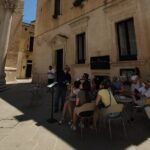
Lecce is prettier than the photos. This 2-hour stroll layers baroque landmarks with Roman leftovers, guided in English by Sara Bianchi. I especially like how the small group setup keeps the walk relaxed, questions welcome, and the explanations actually land, and I like that the route starts right at a major old-town gateway with quick context for what you are seeing. One consideration: a few of the big sights on the route need separate paid entry, so you may want to plan for add-on tickets.
You’ll meet at Porta Napoli and finish near Piazzetta Gabriele Riccardi. The pace is easy to follow, most people can join, and you’ll get a mobile ticket plus a guide who focuses on the “why” behind the architecture, not just quick fun facts.
In This Review
- Key Points That Matter Before You Go
- Entering Lecce Through Porta Napoli
- Piazza del Duomo, Where Lecce Shows Off
- Teatro Romano di Lecce: Seeing the City’s Roman Skeleton
- Piazza Sant’Oronzo: The Market Square Feeling Like Gladiators
- Basilica di Santa Croce: The Facade That Takes Over Your Brain
- Why Sara Bianchi’s Guide Style Changes the Walk
- Tickets and Extra Entry: What You Pay For, What You Don’t
- Timing, Route Flow, and Where You’ll Actually Be
- What This Tour Is Best For
- Should You Book Strolling Through Lecce With Sara Bianchi?
- FAQ
- How long is the Strolling through Lecce tour?
- How much does the tour cost?
- Is the tour guided, and in what language?
- Is a mobile ticket provided?
- Are tickets for churches included?
- Are Roman theatre and amphitheatre tickets included?
- How many people are in the group?
- What happens if the weather is bad?
- Can I cancel for free?
Key Points That Matter Before You Go
- Sara Bianchi’s storytelling style turns stone buildings into understandable history
- Max 12 people keeps the group small and the English easy to hear
- A smart route that connects Salento context to Lecce’s baroque core and Roman sites
- Some entries are extra, so you can choose how much you want to pay for
- Good-weather dependent, and the tour is set up for a calm street walk rather than a museum sprint
Entering Lecce Through Porta Napoli
Your walk starts at Porta Napoli, the old-town gate at Piazzetta Arco di Trionfo. It is a strong first moment because you are not wandering blindly through pretty streets. You get a brief introduction about Salento and Lecce right where the city’s story begins, with the gate acting like a frame.
What I like about this start is how it gives you a mental map fast. You begin to understand why Lecce looks the way it does, why certain materials and styles show up again and again, and how the city’s “layers” feel when you are walking. This also helps if you only have a limited time in town, because you are set up to recognize what matters at the next stops.
Timing is short here, around 10 minutes, so it does not bog down. It is more like a warm-up than a lecture.
Practical note: this is an outdoor street start, so check weather. The tour requires good weather, and if conditions are poor you will be offered another date or a full refund.
The same shortlist carries more Lecce and Salento coast outings in Lecce.
- Lecce: Baroque Architecture and Underground Walking Tour
★ 4.7 · 842 reviews - Small group tour of the caves of Santa Maria di Leuca
★ 5.0 · 806 reviews - 3 Hour Group Tour by Boat to the Caves of Santa Maria di Leuca
★ 5.0 · 472 reviews - Lecce: Pasta Making Class in 1400s-Era Courtyard with Wine
★ 4.7 · 369 reviews
Piazza del Duomo, Where Lecce Shows Off
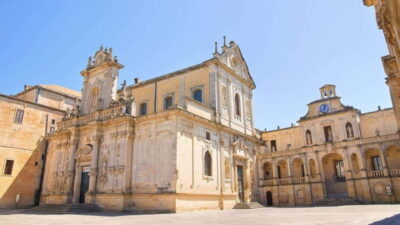
Next up is Piazza del Duomo, one of Italy’s most striking squares for baroque architecture. In about 20 minutes, you get the chance to stand back, look around, and connect the buildings to the story you just started at Porta Napoli.
This is the stop where the city’s famous look really clicks. Lecce’s baroque is not just fancy decoration. It is part of how the town expressed identity, power, and faith through stonework. When you have a guide pointing out the right details, it turns “pretty buildings” into something you can actually read.
A small drawback here is that squares can get busy in peak hours. The tour keeps a steady flow, but if you are hoping for quiet photos, aim to arrive with patience and be ready to let the group move first.
Still, if you want the classic Lecce scene, this is the place that delivers.
Teatro Romano di Lecce: Seeing the City’s Roman Skeleton
Then the tour steps back in time at the Teatro Romano di Lecce. The focus is on the Roman theater that dates about 2000 years back, a reminder that this city was shaped long before baroque took over the visual spotlight.
This stop is only around 15 minutes in the walk, but the key thing is expectation. The Roman theater is not included in the tour price. You will want to decide whether you pay for entry based on your interest level. If you love architecture and “history you can spot,” it is usually worth it. If you prefer the baroque streets more than the Roman relic angle, you can treat this as a quick look and keep moving.
What you get from a guided approach here is better than a photo stop. You do not just see seats and stone. You understand how theaters fit into Roman public life and why that matters when you are comparing older structures to what came later.
Piazza Sant’Oronzo: The Market Square Feeling Like Gladiators
Piazza Sant’Oronzo is a great contrast stop. Around 20 minutes here, the vibe is like an ancient market square in the center of town, with Roman references that make the place feel theatrical in a fun way.
The Roman Amphitheatre is part of the picture, and this is another area where entry is not included. The amphitheatre entry is paid separately, so you can choose your level of commitment. If you are already paying for the theater, you might bundle your Roman-site spending into one decision. If you are not feeling it, you can still get a lot out of the square itself, especially once you understand what to look for.
Also, this stop is a good moment to slow down and look around beyond the main sights. Squares like this are where Lecce’s street life and architecture mix. Even if you do not go inside the amphitheatre, you will still start noticing how the town’s design shapes movement.
Basilica di Santa Croce: The Facade That Takes Over Your Brain
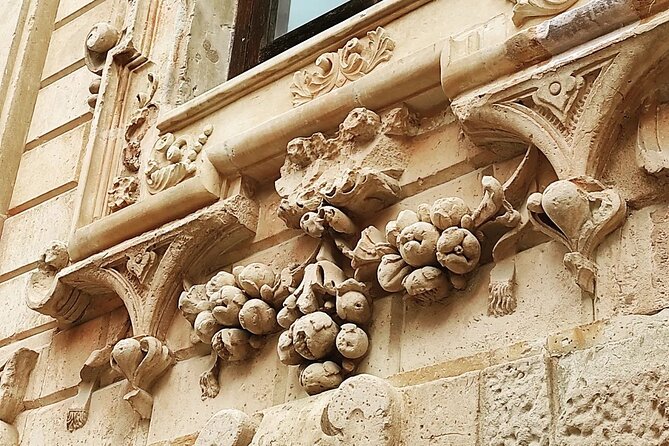
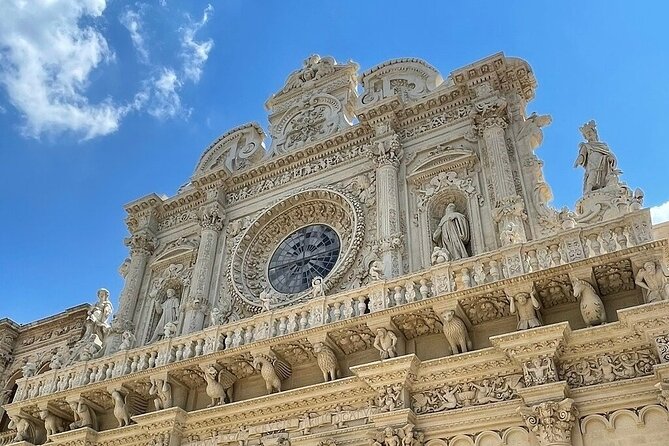
The tour’s final major highlight is the Basilica di Santa Croce. Expect about 20 minutes here, and a wow factor that tends to stop people mid-sentence.
This is the kind of church where the exterior is the headline. The stonework is detailed and layered, and when you are guided through what you are looking at, you start to see patterns and meaning instead of just surface decoration. The basilica is a strong payoff after the Roman stops because it shows what Lecce chose to celebrate and highlight as its identity moved forward.
One careful planning point: church admission is not included. That does not mean you will miss the main visual experience outside, but it does mean your total cost can rise if you want to go in. If you want interiors, bring that into your planning rather than being surprised at the last stop.
Why Sara Bianchi’s Guide Style Changes the Walk
A big part of why this tour earns consistent top marks is the guide. Sara Bianchi has a way of explaining that is not just facts. It is story. She connects buildings to the human reasons behind them, and the walk stays fun, not stiff.
Here is what this means for you as a visitor:
- You get historical context that helps you understand what you see, not just what it is called
- You learn how to look, so the next streets you explore on your own feel easier
- The group stays small, so you are not lost in a loud crowd
You also get practical side benefits. The guide is the type to point out good local places to eat or pause, which can save you time when you are hungry and trying to decide quickly.
And if weather turns rough, the tour still aims to keep things engaging. That matters because Lecce’s sidewalks are made for walking, not for retreating every time the sky does something dramatic.



Tickets and Extra Entry: What You Pay For, What You Don’t
This tour includes the guide, but not every stop’s entry. Here is the useful breakdown so you do not get stuck mentally at the gate:
- Porta Napoli is free for the tour context stop
- Piazza del Duomo is a free admire-from-the-square moment
- Teatro Romano di Lecce entry is not included
- Roman Amphitheatre entry is not included
- Basilica di Santa Croce entry is not included
So what is the value of the price if you still pay extras? The guide time matters. You are not just “buying access.” You are paying for an organized route, a small-group pace, and explanations that make the paid sites more meaningful once you decide to enter them.
If you want to keep costs down, you can focus on the free viewpoints and treat the ticketed Roman and church sites as optional upgrades. If you are a “go inside too” type, plan for that extra budget up front.
Timing, Route Flow, and Where You’ll Actually Be
The tour runs about 2 hours. It is set up as a walk through the old-town core, not a long-distance trek. That makes it a strong “first day in Lecce” move, or a “tight schedule” move, because it helps you get oriented.
You start at Porta Napoli in Piazzetta Arco di Trionfo, 73100 Lecce LE, Italy. You end at Piazzetta Gabriele Riccardi, 73100 Lecce LE, Italy. Finishing near the center helps because you are not forced into a long transfer right after.
Because it is a small-group tour with a maximum of 12 people, it tends to work well if you like asking questions. It also means the guide can slow down or speed up slightly depending on what catches attention.
One more practical angle: the tour is near public transportation. That is helpful if you are mixing it with other plans the same day.
What This Tour Is Best For
This is a great fit if you want:
- A guided overview of Lecce’s major sights without wasting time
- Better understanding of baroque architecture and why it shows up this way
- A route that blends Roman remnants with Lecce’s later identity
- A small-group experience in English, with space to hear and talk
It may be less ideal if you dislike walking, or if you strongly prefer sites where everything is included and you hate managing ticket upgrades. Also, since good weather is required, have a flexible plan in shoulder-season drizzle.
Should You Book Strolling Through Lecce With Sara Bianchi?
Yes, if you want an organized, easy 2-hour introduction that helps you see Lecce more clearly right away. The best reason to book is not just the landmarks. It is the way Sara Bianchi connects them so you understand what you are looking at, and you leave with a better sense of where to spend your extra hours in the city.
If you are budget-sensitive, you can still make it work by treating the ticketed sites as optional. If you love architecture and history, it is the kind of tour that makes the paid entries feel like part of a bigger picture instead of random stops.
One last practical nudge: this tour is typically booked about a month in advance on average, so if your dates are fixed, lock it in early to avoid missing your preferred time.
FAQ
How long is the Strolling through Lecce tour?
It lasts about 2 hours.
How much does the tour cost?
The price is $36.30 per person.
Is the tour guided, and in what language?
Yes, it includes a tour guide, and it is offered in English.
Is a mobile ticket provided?
Yes, the tour uses a mobile ticket.
Are tickets for churches included?
No, ticketed church entry is not included.
Are Roman theatre and amphitheatre tickets included?
No, tickets for the Roman theatre and the Roman amphitheatre are not included.
How many people are in the group?
The tour has a maximum of 12 travelers.
What happens if the weather is bad?
The tour requires good weather. If it is canceled due to poor weather, you will be offered a different date or a full refund.
Can I cancel for free?
Yes. You can cancel up to 24 hours in advance for a full refund.
Lecce and Salento Coast Outings in Lecce Worth Weighing Up
Not quite the day you had in mind? The rest of our Lecce write-ups sit below
- Ostuni, Alberobello and Polignano a Mare. Departing from Lecce★ 5.0 · 195 reviews
- Lecce: Street Food Tasting and Sightseeing Tour★ 4.8 · 197 reviews
- Orecchiette Cooking Class and Wine Pairing in Lecce★ 4.5 · 205 reviews
- Porto Selvaggio kayak tour + cliff diving + cold spring immersion★ 5.0 · 227 reviews
- Lecce guided tour with underground discoveries★ 4.5 · 230 reviews
- 3-hour Boat Tour in Santa Maria di Leuca★ 5.0 · 233 reviews
- Lecce: City Highlights Guided Tour by Rickshaw★ 4.8 · 236 reviews
- Santa Maria di Leuca: Capo di Leuca Boat Tour★ 4.8 · 245 reviews
- Discovering Lecce★ 5.0 · 247 reviews
Lecce & the Salento Coast, top to bottom.
 ★ 4.7Lecce: Baroque Architecture and Underground Walking TourFrom $28842 reviews
 ★ 5.0Small group tour of the caves of Santa Maria di LeucaFrom $25806 reviews
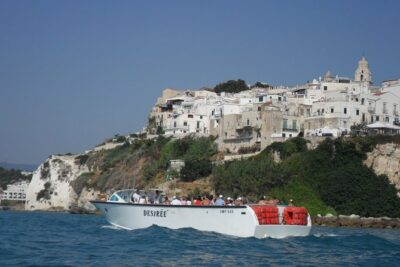 ★ 5.0Desirèe experience. Visit of the marine caves of ViesteFrom $30732 reviews
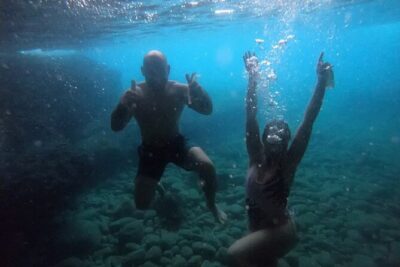 ★ 5.03 Hour Group Tour by Boat to the Caves of Santa Maria di LeucaFrom $54472 reviews
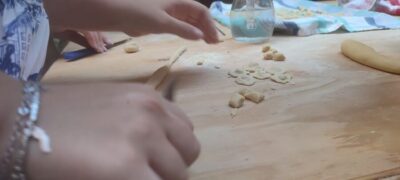 ★ 4.7Lecce: Pasta Making Class in 1400s-Era Courtyard with WineFrom $68369 reviews
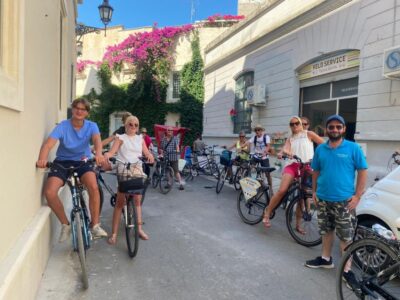 ★ 4.8Lecce: City Highlights Guided Tour by BikeFrom $58362 reviews
 ★ 5.0Tour to 4 Towns of Salento: Otranto, Leuca, Gallipoli, GalatinaFrom $145360 reviews
 ★ 5.0Cooking class, dinner and wine tasting near LecceFrom $95350 reviews
Filed under