
Reviewed · AEOLIAN ISLANDS: LIPARI & STROMBOLI
Stromboli: Sunset Trekking at Sciara del Fuoco
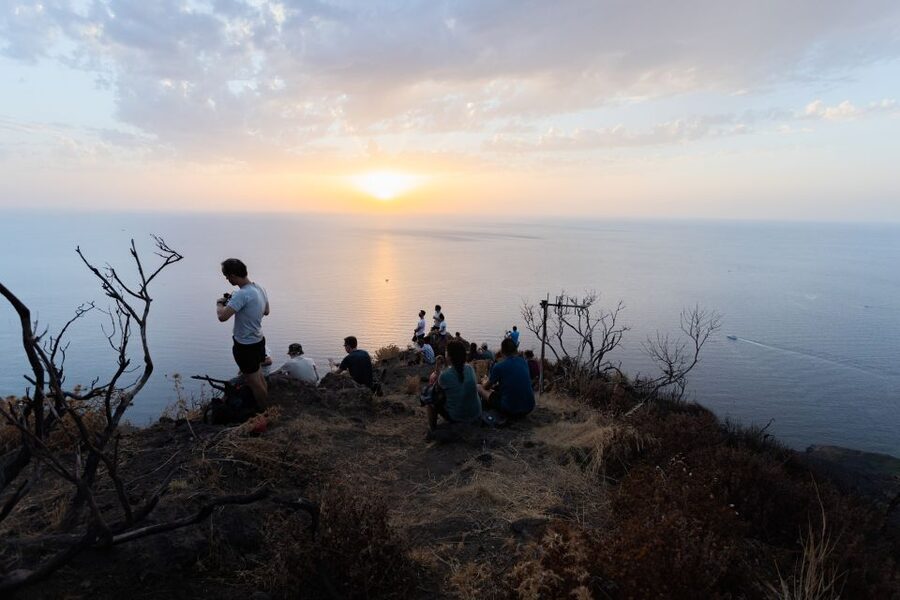
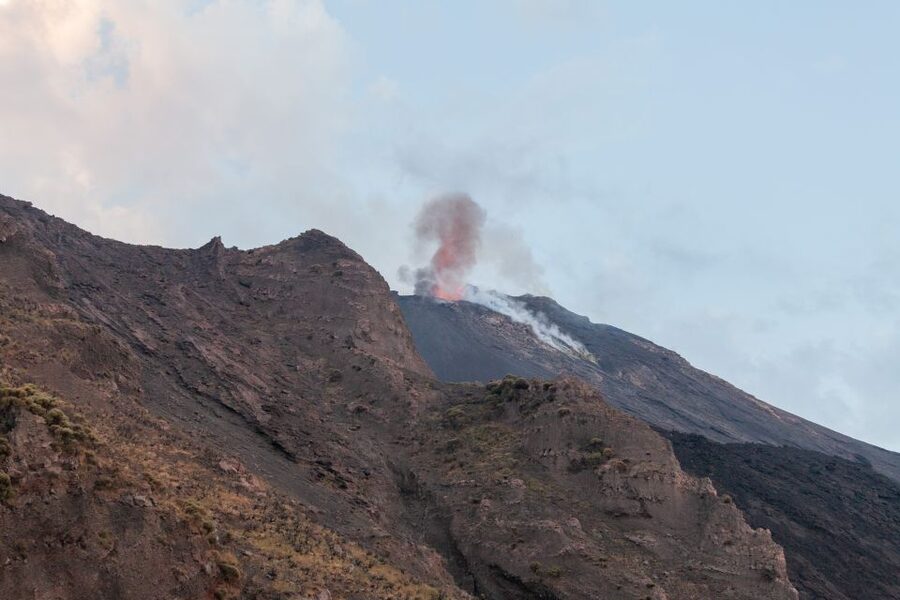
Fire turns the sea red at sunset. The guided walk to Sciara del Fuoco brings you right into the drama of Stromboli’s lava bursts, and it feels like you’re watching a natural light show that nobody can script. I love the up-close volcanic perspective your guide brings, plus the time you get at the viewing point to actually watch. I also like the practical safety setup, including the headlamp and rock helmet, because the return is in the dark. One drawback to plan for, you finish late and you will need to stay overnight on Stromboli since there are no late ferry boats.
This tour is built around timing. You meet about two hours before sunset, hike up to the maximum guided altitude of 400 meters, then go back downhill with light as the sky turns black. The climb includes narrow, stony sections and dusty paths, so you should treat footwear and pacing as part of the experience, not an afterthought.
In This Review
- Key things to know before you go to Sciara del Fuoco at sunset
- How the Ashara start sets the tone for the whole hike
- The climb to the 400m cutoff: where the trail earns its sweat
- Breaks, the old cemetery stop, and the Strombolicchio effect
- Sciara del Fuoco at sunset: the view turns into a show
- The downhill return with torches and headlamps
- Gear, footwear, and what to pack for volcanic dust
- Price and value: why this $35 option works
- Guides who make the difference: pacing, safety, and real explanations
- Who this sunset trek suits best on Stromboli
- Important timing reality: you will likely need to stay overnight
- Should you book Stromboli sunset trekking at Sciara del Fuoco?
- FAQ
- How long is the Stromboli sunset trekking tour?
- Where do I meet for the tour?
- How high do we hike during the tour?
- What gear is included in the tour?
- Is food or drink included?
- Can I rent trekking shoes on Stromboli?
- Will there be ferries back late after the tour?
- Who is the tour not suitable for?
Key things to know before you go to Sciara del Fuoco at sunset
- You hike to a permitted 400m limit, not the summit craters, so you still get big views without going where you should not
- You get a real sunset window, usually enough time to see the show as the sky darkens
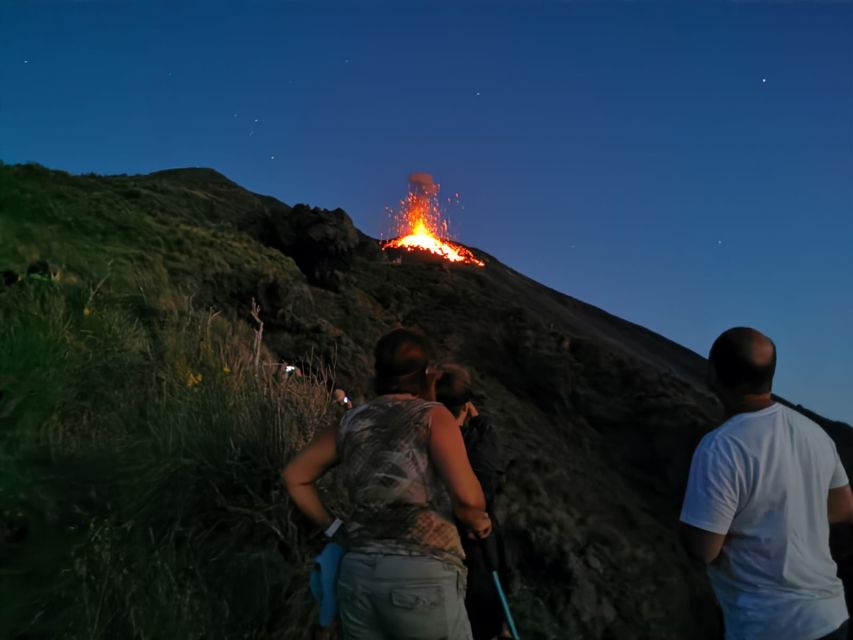
- Sciara del Fuoco is the highlight, where the sea-facing slopes help the eruptions look extra close
- You cross real island terrain, Mediterranean shrubs plus cool side stops like the old island cemetery
- The descent is at night, so expect uneven ground and keep your flashlight habits tight
- Clouds can dull the view, so your best photos depend on weather that night
How the Ashara start sets the tone for the whole hike
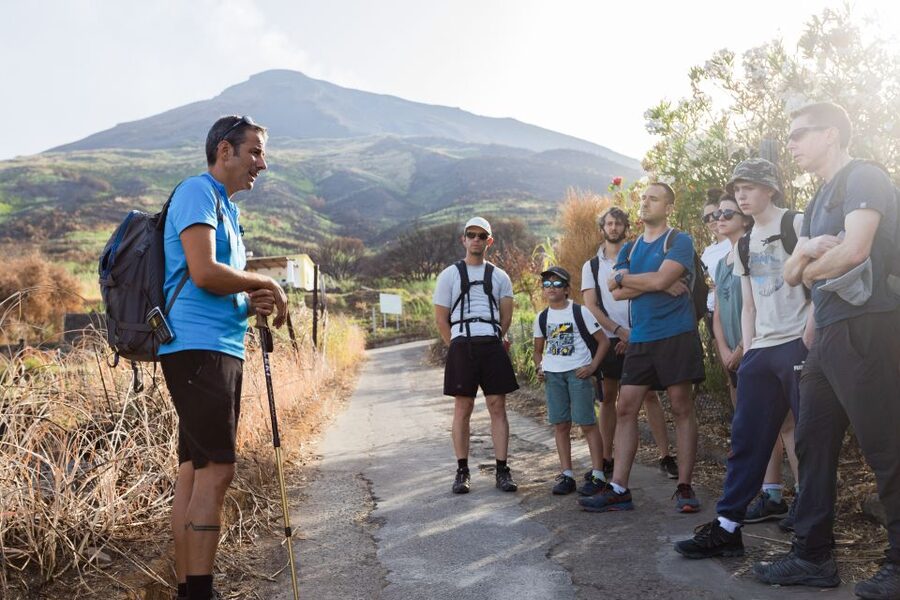
You meet at Ashara’s info point behind the church in Piazza San Vincenzo, near Via Vittorio Emanuele. Starting here matters because you are not just walking out into the dark later, you build confidence early, with a real safety briefing before the steep parts begin.
The tour also runs in multiple languages, English, French, and Italian, which is useful if your group has mixed needs. I like that guides operate with a clear plan and a consistent pace, because Stromboli is not a casual stroll when you are aiming to be in position before sunset.
The climb to the 400m cutoff: where the trail earns its sweat
The hike starts roughly two hours before sunset, and you begin on a nature trail that climbs up to 400 meters, the maximum altitude allowed with a volcanological guide. That detail is important. You get the prime permitted vantage without pushing into restricted or closed crater areas.
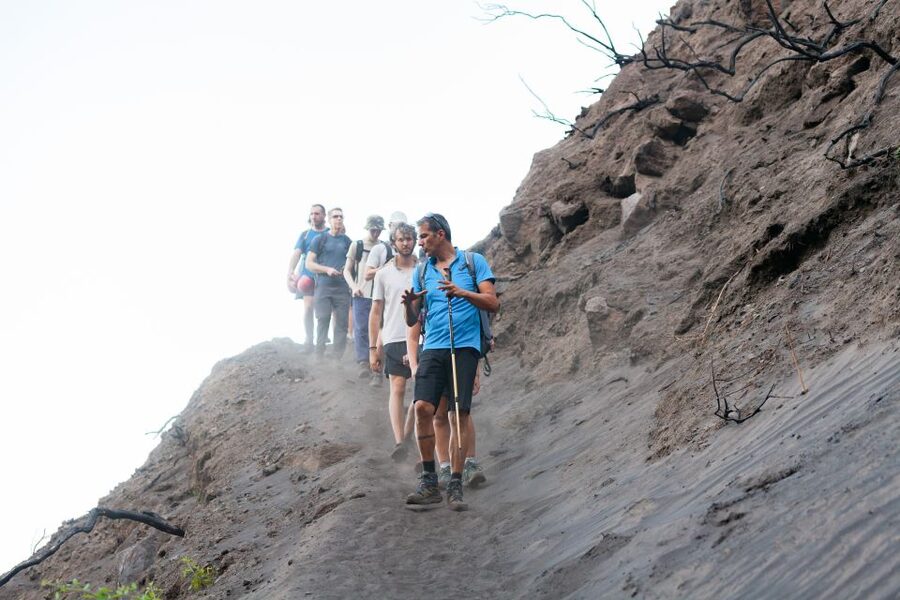
Along the way, you keep getting new angles: summit craters from a different angle, the dramatic slope of Sciara del Fuoco, and a constant view of Strombolicchio offshore. The climb is not technically complicated, but it is work, especially if you are not used to volcanic paths.
A big practical point is that the pace is guided, not free-for-all. You will have breaks for water and for looking, and the guide uses those pauses to explain what you are seeing. That is part of what makes the hike worth doing, because the volcano becomes less mysterious and more understandable.
Breaks, the old cemetery stop, and the Strombolicchio effect
The route includes natural pauses where you can catch your breath and reset your eyes on what matters. One of the most memorable side moments is the old island cemetery stop. It adds a human note to a place that can feel purely dramatic, and it gives you a different kind of attention while you wait for the light to change.
You will also walk through Mediterranean shrubs, and Strombolicchio stays in view as a visual anchor offshore. That constant reference point helps you orient yourself, especially when the terrain starts to feel repetitive. I find that little mental anchors like that make night-time logistics much easier later.
Expect a mix of short climbs and level stretches. Some sections can feel narrow and a bit dusty, so plan to move slowly, keep your footing deliberate, and let the group breathe.
Sciara del Fuoco at sunset: the view turns into a show
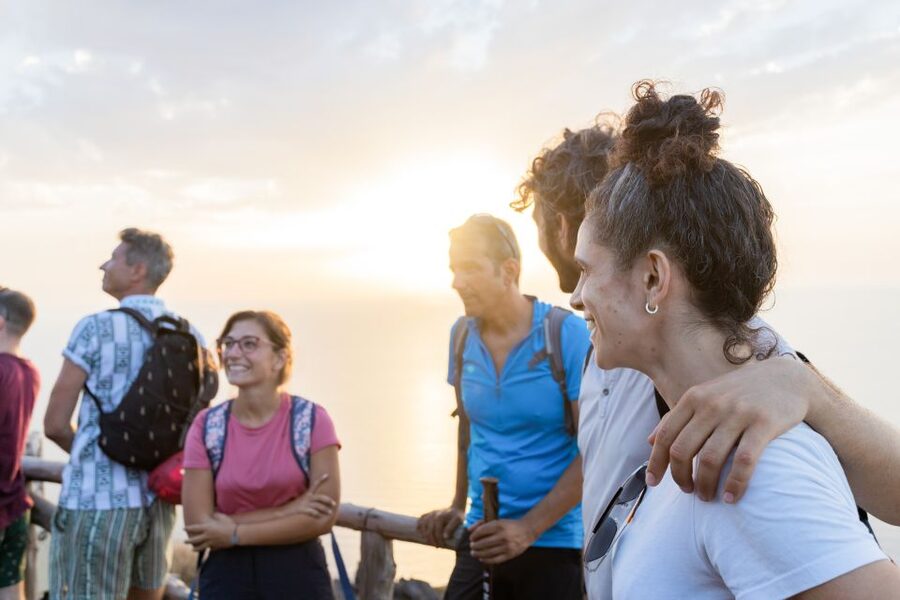
Once you reach Sciara del Fuoco, the experience shifts from hiking to watching. Sunset colors the Aeolian archipelago, and then the sky begins to deepen fast, which is exactly when Stromboli’s activity becomes more visible against dark backgrounds.
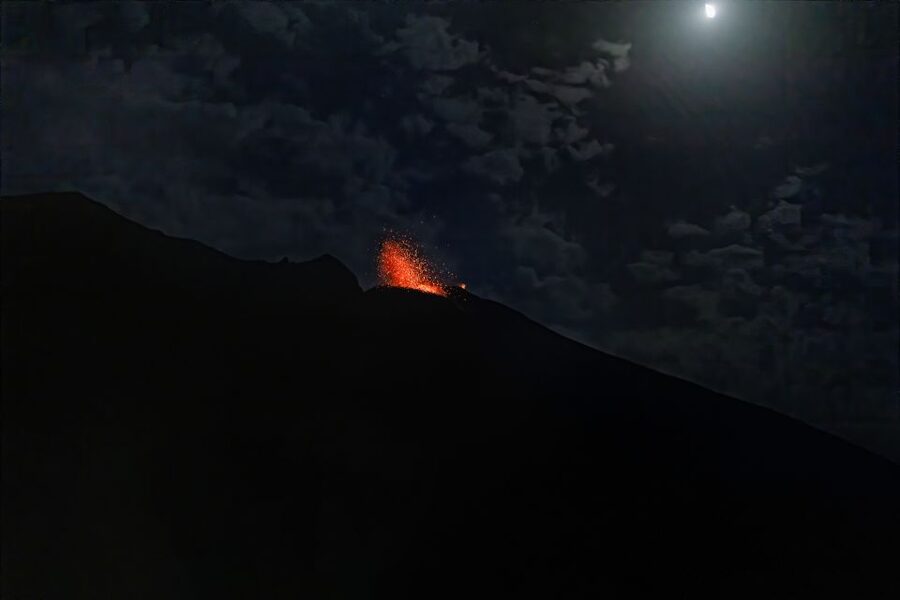
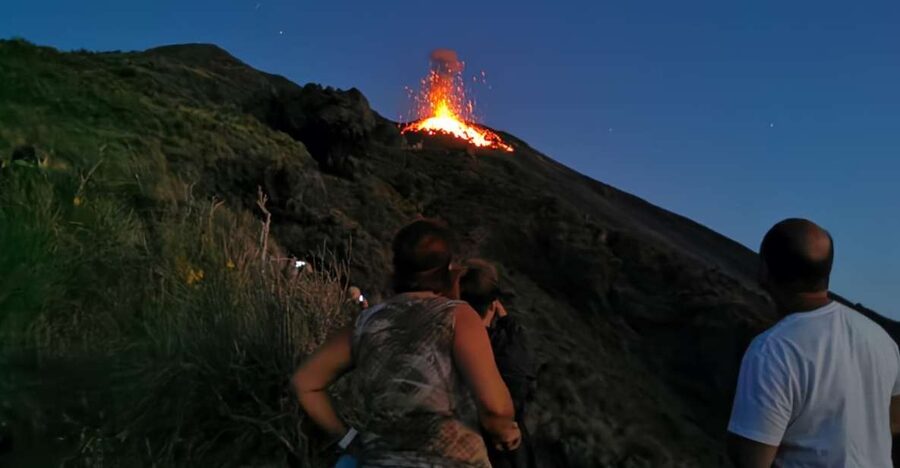
This is where the eruptions light up the night sky. The timing of eruptions can vary, and sometimes you get several displays in one viewing window, other nights are quieter. Either way, your job is simple: stand where the guide tells you, keep your eyes up, and let the guide explain what you are seeing in plain terms.
Even if you are not a hardcore volcano person, you will feel the difference when eruptions pop against the dark sea horizon. It is the kind of moment that makes the whole hike feel worth every step.
If weather or clouds roll in, visibility can drop. You might still see activity, but the brightness of the evening can make smaller eruptions harder to spot. So bring a calm mindset. Think of it as a live natural event, not a guaranteed fireworks schedule.
The downhill return with torches and headlamps
After your sunset viewing time, the tour heads downhill in the dark. You are equipped with torches and you also have a headlamp provided, which makes a big difference when the ground texture changes after sunset.
This descent is commonly where people feel the most tired, not because it is the hardest climbing, but because it is dark, uneven, and you need to pay attention. Cobblestone or stony sections can make you step carefully, and you do not want to rush in the last stretch.
My advice is to think like a cautious hiker, not a night runner. Keep a steady rhythm, give yourself time at turns, and let the guide manage the group so nobody gets left behind. If you are the type who hates darkness, remember that you are not walking blind. The lights are part of the plan.
Gear, footwear, and what to pack for volcanic dust
The tour includes a headlamp flashlight and a rock helmet, plus a volcano guide. That is already a lot of the critical safety gear handled for you, which lowers the pre-trip stress.
But you still need to bring the basics. Pack snacks and water, wear sportswear you can move in, and bring a jacket for cooler evening air. Even when the day feels warm, the island breeze can turn chilly once the sun drops.
Shoes matter. Closed-toe hiking footwear with grip is the best bet, since the descent is at night and the path can be dusty. Trekking shoes are available for rent on site, and at least one traveler noted rental boots for around 8 euros, which is handy if you do not want to haul gear.
Also consider dust. Volcanic paths can kick up fine powder, and it can end up on your clothes and in the air around you. If you are sensitive to dust, a simple face covering for the hike can be a smart comfort move.
Price and value: why this $35 option works
At $35 per person for a five-hour guided experience, the value is strong when you look at what you get. You are paying for access to a guide who understands the rules around altitude, safe viewing points, and what the volcano behavior means in real time.
You are also getting equipment that you would otherwise have to buy or rent, the headlamp and rock helmet. The biggest value is the timing expertise, because the tour is designed around being in position before sunset and then returning safely after dark.
Is it perfect value for everyone? Not quite. If you want a relaxed, sit-and-watch experience with zero walking, this is not that. You should be ready for a real hike, usually described around 9 kilometers total by some visitors, with enough stops that it feels manageable rather than punishing.
But if you want a guided route, a volcano perspective, and a genuine chance to see Stromboli in action, this price makes sense.
Guides who make the difference: pacing, safety, and real explanations
A recurring theme is the way guides handle the group. People mention guides like Giuseppe, Giovanni, Federico, Nino, and Katya, and the common thread is that the hike is paced for real humans, not athletic robots.
In at least one case, when a guest got scared during the trek, the guide supported them and helped them make it up and down more comfortably using a walking stick. That tells you something useful: the guide does not treat fear as a dealbreaker. They adjust when they need to.
Expect frequent stops for water and viewpoints, plus explanations that go beyond simple facts. You learn how Sciara del Fuoco fits into Stromboli’s activity and why the viewing angles matter. When the guide gives context for what you see, the volcano stops being random and becomes a story you can follow.
Who this sunset trek suits best on Stromboli
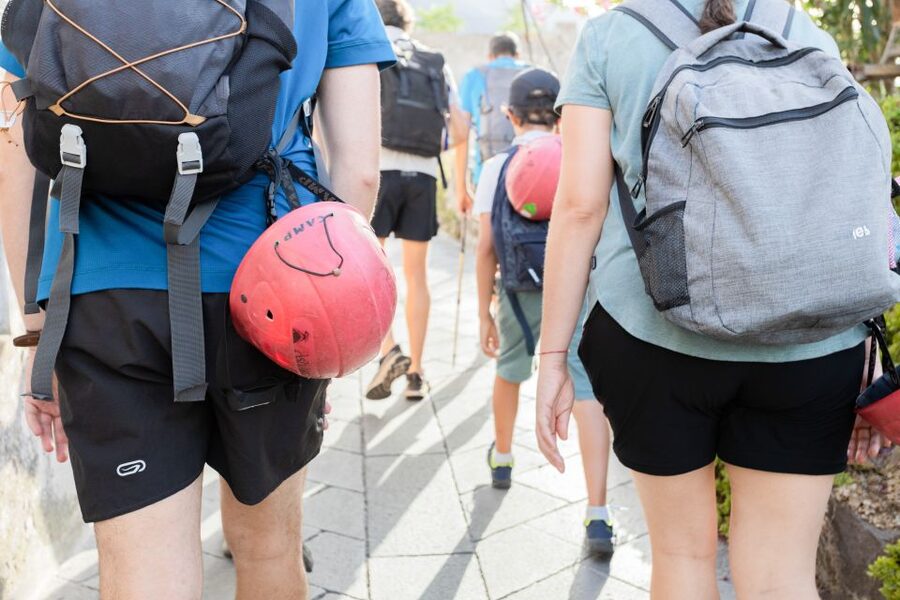
This is best for people who:
- enjoy hiking and can handle uneven ground in the dark
- want an active, guided volcano experience rather than only a photo spot
- like structured explanations while still having time to watch the eruptions
It is usually not a good fit if you have issues with vertigo, heart problems, respiratory issues, pregnancy, back problems, or mobility impairments. The route includes climbs, uneven surfaces, and a night descent, and the tour is clear that it is not set up for wheelchair users.
Also, if you are sensitive to heat or dust, bring the right layers and consider a mask for dust comfort.
Important timing reality: you will likely need to stay overnight
The hike finishes late in the evening, and that has a direct planning impact. There are no late return ferry boats, so you should plan to spend the night on Stromboli after the tour. This is one of the biggest “make sure you plan ahead” items for the whole experience.
If you are trying to do a same-day return to the mainland or another island, you will probably run into scheduling problems. Build your itinerary so you are not rushing, because you will be tired and you will be walking in low light on the way back.
Should you book Stromboli sunset trekking at Sciara del Fuoco?
Book it if you want a guided volcano experience that blends a real hike with a front-row viewing window. The combination of careful safety, guided altitude limits, and a dedicated sunset viewing time makes this a high-impact choice for a fairly short stay on the island.
Skip it if you want an easy, low-effort nature walk or if the idea of a dark descent worries you. Also pass if you fall into the tour’s not-suitable categories, especially vertigo and mobility limits.
If you do book, go in prepared: closed-toe grip shoes, water, snacks, a jacket, and a calm attitude about eruption variability. When the sky turns dark and Stromboli starts doing its thing, the hike stops feeling like a task and starts feeling like part of the magic.
FAQ
How long is the Stromboli sunset trekking tour?
The duration is 5 hours.
Where do I meet for the tour?
Meet at Ashara’s info point in Via Vittorio Emanuele or Piazza San Vincenzo, behind the church.
How high do we hike during the tour?
The hike stops at a maximum altitude of 400 meters with a volcanological guide.
What gear is included in the tour?
The tour includes a headlamp flashlight, a rock helmet, and a volcano guide.
Is food or drink included?
No. Food and drink are not included, so bring snacks and water.
Can I rent trekking shoes on Stromboli?
Yes, trekking shoes are available for rent on spot.
Will there be ferries back late after the tour?
No. The tour finishes late in the evening, so you need to stay overnight on Stromboli.
Who is the tour not suitable for?
It is not suitable for pregnant women, people with back problems, mobility impairments, wheelchair users, people with vertigo, and people with heart or respiratory problems.
Aeolian Islands: Lipari & Stromboli, top to bottom.
 ★ 4.2From Milazzo: Panarea and Stromboli Boat Trip by NightFrom $891,605 reviews
 ★ 4.3From Milazzo: Lipari and Vulcano Day TripFrom $601,166 reviews
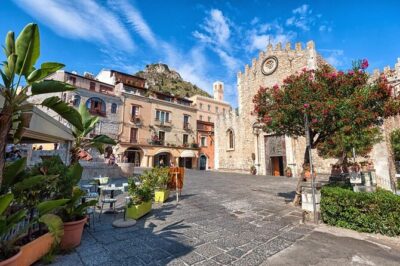 ★ 5.0Taormina and Castelmola Tour from MessinaFrom $114645 reviews
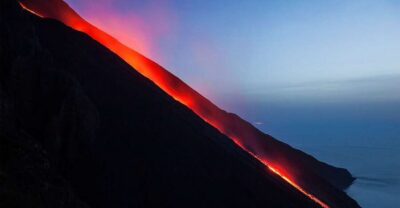 ★ 4.0Tropea: Lipari, Panarea, and Stromboli Boat Tour by NightFrom $69441 reviews
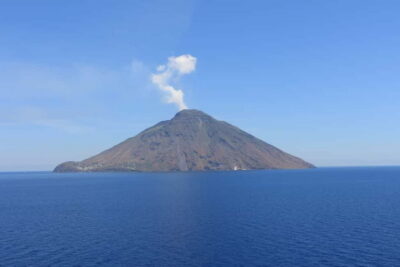 ★ 4.1From Tropea: Vulcano, Lipari, Sciara Guided Day TourFrom $67425 reviews
★ 4.3From Milazzo: Lipari and Vulcano Day TripFrom $68418 reviews
★ 4.1From Tropea: Vulcano, Lipari, Sciara Guided Day TourFrom $67425 reviews
★ 4.3From Milazzo: Lipari and Vulcano Day TripFrom $68418 reviews
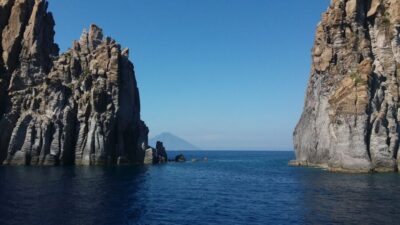 ★ 4.1From Taormina: Chic Panarea and Stromboli Day TourFrom $118396 reviews
 ★ 4.5Da Tropea: Lipari Panarea Stromboli by nightFrom $71369 reviews