
Reviewed · WALKING TOURS
The Best of Florence Walking Tour in a Small Group
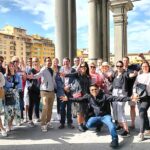
Florence can feel like a blur of marble and crowds, so this tour slows you down. You get a tight, story-driven walk through the Medici power centers, then into the Duomo area and the main civic heart of the city. I especially like the small group cap of 15 (it stays personal) and the whisper-system (you hear your guide even in busy spots). One consideration: many major interiors along the route have admission tickets not included, so you may need to buy a few separately.
The best part is how the guide connects the big names to what you’re actually seeing under your feet. Guides such as Manuel and Camilla often add practical tips on what to look for and where to eat, which helps a first day in Florence become a plan, not just a shuffle.
In This Review
- Key things that make this Florence walk work
- Small-group Florence, with a guide you can actually hear
- 12:15 meeting point and a walk that ends where you want to linger
- The Medici story starts at San Lorenzo
- Laurentian Library: Michelangelo’s architecture meets politics
- Medici Chapels and the New Sacristy you will remember
- Palazzo Medici Riccardi: power, built in brick and stone
- Duomo time: cathedral, baptistery, campanile, and the dome
- Piazza della Signoria to Palazzo Vecchio, plus the Uffizi doorstep
- Ponte Vecchio: the shops, the bridge, and why it survived
- Palazzo Pitti: the Medici story moves from church to residence
- Price and value: what you pay for and what you still might need to buy
- Pace, questions, and what you can ask your guide on the spot
- Weather and comfort: the small details that change the experience
- Should you book this Florence walking tour?
- FAQ
- How long is the Florence Best of Florence Walking Tour?
- How much does it cost per person?
- What language is the tour offered in?
- How large is the group?
- What is included in the tour price?
- Are admission tickets included?
- Where does the tour start and end?
- What time does the tour depart?
- What happens if the weather is poor?
Key things that make this Florence walk work
- 15 travelers max keeps questions easy and the pace comfortable
- Licensed guide plus whisper-system so you can actually follow the story
- A clear Medici thread, from tombs and libraries to palaces
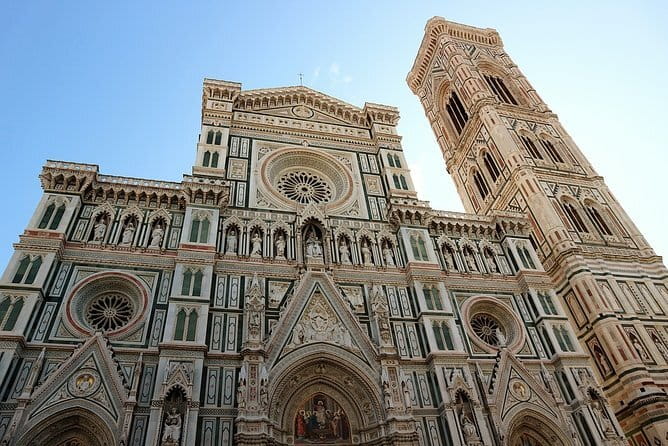
- The classic Duomo complex sights covered in one efficient route
- You end at Ponte Vecchio, a natural place to keep exploring
Small-group Florence, with a guide you can actually hear
This tour is built for people who want Florence to make sense fast. You’re not just ticking off landmarks. You’re walking with a licensed local guide who frames what you see in plain language, then uses quick stops to point out details most people miss.
The group size matters. With a maximum of 15, it is easier for the guide to keep track of everyone, adjust for the pace, and answer questions without the whole tour turning into a stopwatch. In my book, that is a big part of why walking tours can be either great or frustrating.
Then there is the whisper-system. Florence streets can be loud, and major squares can get crowded fast. With the ear pieces, you can focus on the guide rather than constantly leaning in or guessing what was said over the din. In short: the story stays intact.
Filed beside this one, more walking tours in Florence.
- Florence: Guided Walking Tour
★ 4.5 · 3,334 reviews - Skip the line: Uffizi and Accademia Small Group Walking Tour
★ 4.5 · 3,135 reviews - Florence: Guided Walking Tour
★ 4.6 · 1,602 reviews - Florence: Renaissance and Medici Tales Guided Walking Tour
★ 4.8 · 1,549 reviews
12:15 meeting point and a walk that ends where you want to linger
The tour starts at Caffè Scudieri Firenze, at Piazza di San Giovanni 19R. The time is 12:15 pm, which is a smart slot for many travelers. You avoid the earliest rush of the morning, but you still get a lot done before evening plans take over.
You finish around Ponte Vecchio. That is useful, because it is both scenic and practical. After you learn the core layout of Florence, you can decide whether you want to head toward museums, grab a snack, or wander the river streets without feeling lost.
Also, the walking time is listed as about 1 hour 45 minutes. That is long enough to get real context, but short enough that you are not dragging your feet through half the city. It is a very reasonable length for a first day, or a day when you want to add a major attraction later.
The Medici story starts at San Lorenzo
Your route kicks off at Basilica di San Lorenzo, right in the main market district. This church is big, and it is also a Medici family anchor. It serves as the burial place for principal Medici members from Cosimo il Vecchio to Cosimo III. That scope matters, because it turns what looks like a beautiful church into a political and family statement.
Admission is not included for this stop, so plan a little flexibility if you want to go inside. Even if you only view parts from outside, the guide’s explanation helps you connect the architecture to the Medici who were funding and shaping Florence’s image.
Laurentian Library: Michelangelo’s architecture meets politics
Next is the Biblioteca Medicea Laurenziana. The name alone signals what it is about, and the tour frames it as more than a reading room. It ties the Medici to the idea that they were not merely merchants, but part of the educated and ecclesiastical world.
This library is known for its architecture by Michelangelo, and it is also described as an example of Mannerism. That sounds academic, but the payoff is simple: when you learn why the space was designed the way it was, you start seeing the building’s quirks as deliberate choices, not just style.
Admission is listed as not included. If you want to spend time here, it helps to arrive with the mindset that you are paying for access, then letting the guide make sense of what you paid for.
Medici Chapels and the New Sacristy you will remember
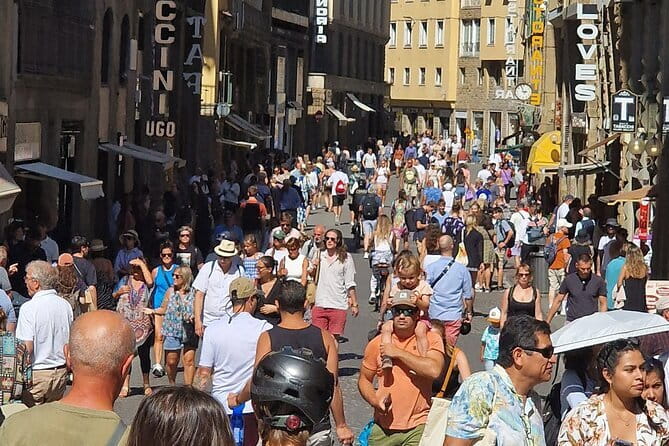
Then you reach the Cappelle Medicee, built between the 16th and 17th centuries as extensions to Brunelleschi’s earlier church. The point here is celebration and legitimacy: it is tied to the Medici as patrons of the church and rulers of Grand Dukes of Tuscany.
The standout connection on this stop is the Sagrestia Nuova (New Sacristy), designed by Michelangelo. That gives the tour real emotional voltage, because Michelangelo is not just a name you hear in Florence. He shows up here in a space meant to project power, taste, and faith all at once.
Again, admission is not included for these chapels. If you do not plan to buy tickets, you can still get a lot out of the explanation and the architectural orientation. But if you like art and sculpture, treat the ticket as part of the experience, not an optional extra.
Palazzo Medici Riccardi: power, built in brick and stone
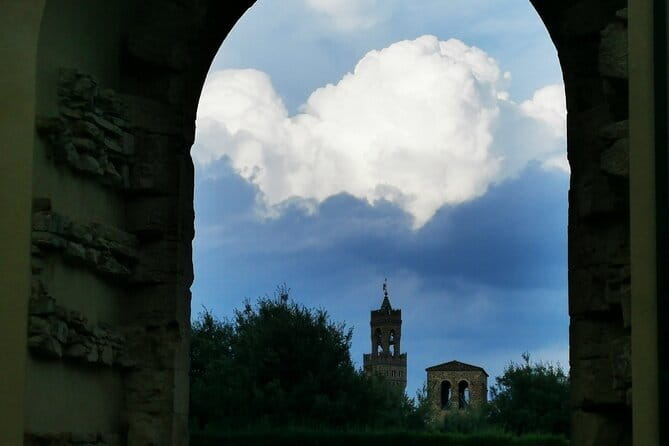
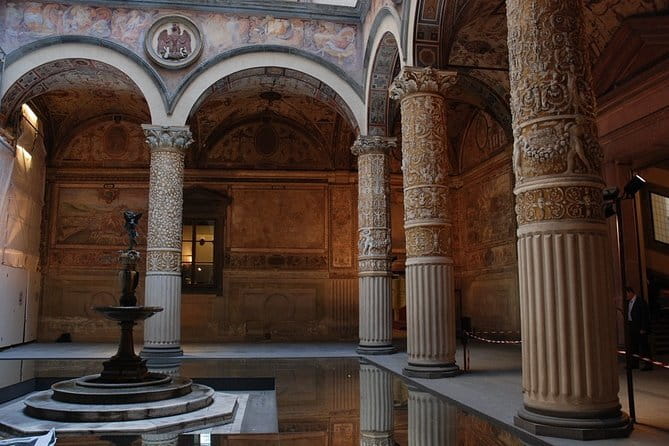
The walk continues to Palazzo Medici Riccardi, designed for Cosimo de’ Medici, constructed between 1444 and 1484. This is one of those places where the “why” of a building is as important as its look.
Think of it this way: you are seeing the Medici not just as patrons, but as people who created durable spaces for their family and political life. When your guide points out the relationships between the streets, the church network, and the palaces, the old city starts to feel like one coherent system.
Admission is not included here too. Even so, the exterior and the guide’s framing help you understand what you are seeing.
- The Best tour in Florence: Renaissance & Medici Tales – guided by a STORYTELLER
★ 5.0 · 12,316 reviews

Duomo time: cathedral, baptistery, campanile, and the dome
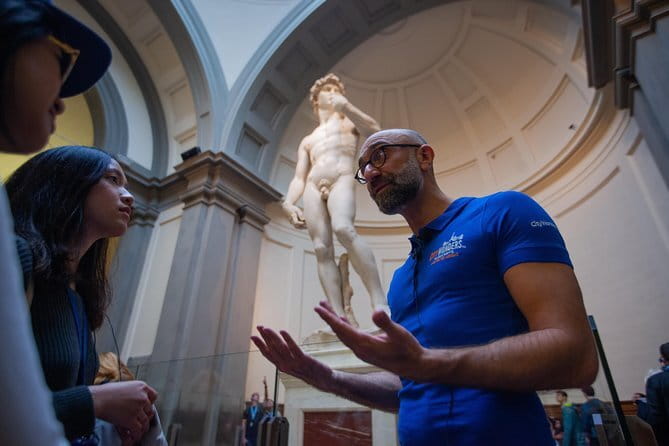
After the Medici stops, the tour shifts to Florence’s signature spiritual and architectural complex. First comes the Duomo, Cattedrale di Santa Maria del Fiore.
This cathedral complex is part of the UNESCO World Heritage Site covering Florence’s historic center. The tour notes it began in 1296 in Gothic style. It is a huge moment in the city’s story, and the guide’s narration helps you understand how a building like this becomes a long-term project, not a single-day miracle.
The tour information lists Duomo admission as free for the stop shown. Still, plan time and patience if you want to go inside later, because the cathedral area is often busy.
You then move to the Battistero di San Giovanni (Florence Baptistery). It dates from 1059 to 1128 and is in Florentine Romanesque style. Being across from the cathedral and the Campanile di Giotto means you are seeing a “triad” that defines the square. It helps to hear what connects them, because on your own you might just see three pretty buildings.
The Cupola del Brunelleschi follows. This is one of the biggest architectural “how did they do that” moments in Europe. The tour highlights that it was the largest in the world at the time and remains the largest brick dome ever constructed. Even if you do not climb it, the explanation helps you read the scale correctly.
Then you get Campanile di Giotto, a showpiece of Florentine Gothic architecture with polychrome marble decorations. The design is attributed to Giotto, and it is adjacent to the cathedral and the baptistery, which makes it a key visual anchor for the whole area.
Finally, the tour circles the Duomo area again as part of the overall route flow. You get multiple angles, which is useful because Florence buildings reveal themselves differently from different corners.
Admission tickets for these interior-focused sights are generally not included in the stops shown, so treat the walk here as your orientation plus your chance to decide on ticket upgrades.
Piazza della Signoria to Palazzo Vecchio, plus the Uffizi doorstep
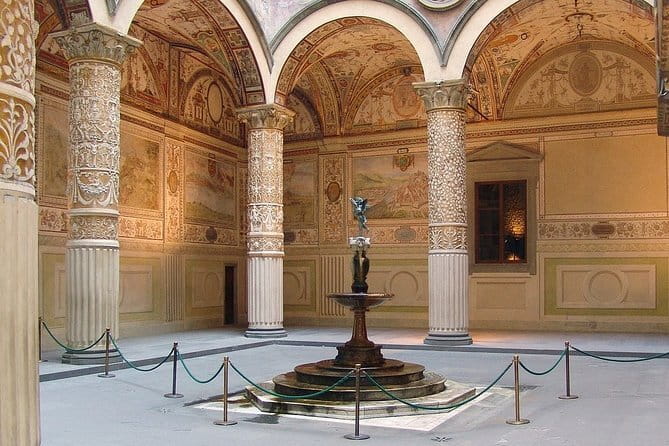
Next is Piazza della Signoria, an L-shaped square right in front of Palazzo Vecchio. It is a major meeting place and a gateway zone to the Uffizi area, so it is also where you can observe the city’s rhythm.
From there, the route brings you to Palazzo Vecchio, Florence’s town hall. It is described as a massive fortress-palace, and it is also a key public space that hosts cultural points and museums. The tour notes two things people love here: the copy of Michelangelo’s David statue overlooking the square and the presence of statues in the adjacent Loggia dei Lanzi.
Then you pass through the area tied to the Gallerie degli Uffizi, one of Italy’s most visited art museums. The tour information says the building began in 1560 by Giorgio Vasari for Cosimo I de’ Medici so the offices of the Florentine magistrates could operate there, which explains the name uffizi, meaning offices.
That context is valuable. If you go to Uffizi later, you will not only recognize the art. You will understand the building’s original civic purpose. Admission is not included for Uffizi in the stop shown, but your guide’s framing often makes your ticket decisions easier.
Ponte Vecchio: the shops, the bridge, and why it survived
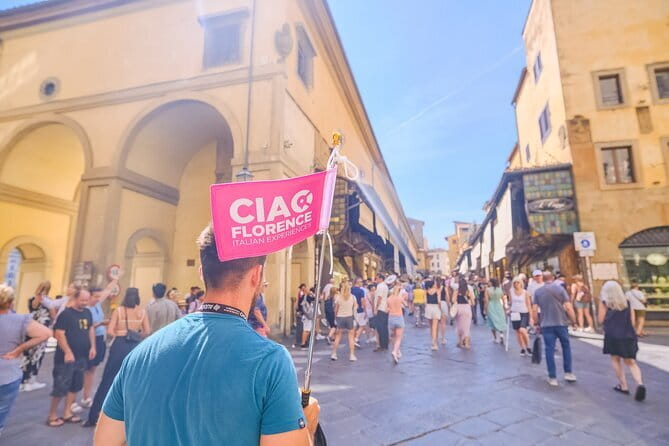
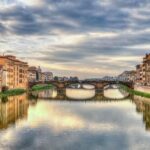
Then you reach Ponte Vecchio, the Old Bridge over the Arno River. It is noted as the oldest bridge over the Arno in Florence.
This is where the city starts to feel like everyday life, not just grand monuments. The tour explains that shops were built along the bridge, once occupied by trades like butchers, tanners, and farmers, while today the shops are mostly jewelers and art dealers.
Ponte Vecchio is free to visit at this stop, so it makes a great payoff at the end of your structured walk. If you like atmosphere, this is also where you can slow down without feeling guilty about missing something.
Palazzo Pitti: the Medici story moves from church to residence
Before the tour fully settles into your own time, there is a stop at Palazzo Pitti. The tour describes it as being bought by the Medici family in 1549, and it became the chief residence of the ruling families of the Grand Duchy of Tuscany.
The palace grows into a treasure house as later generations amassed collections like paintings and luxury items. Even if you do not go inside, the key takeaway is the shift in focus. The Medici are no longer only the patrons behind churches and chapels. They are also the people building a lived-in symbol of wealth and taste.
Admission is not included for this stop shown, so plan it as a “see and learn” moment unless you buy tickets separately.
Price and value: what you pay for and what you still might need to buy
This tour costs $59.26 per person, for about 1 hour 45 minutes. That is not a throwaway price for Florence, but it also is not in the category of expensive museum add-ons.
Here is what you get included:
- a licensed tour guide
- small group
- whisper system
And a mobile ticket is included as well.
Here is what you should expect not to be included:
- admissions are not included for several major sites on the route, including places like San Lorenzo, the Laurentian Library, Medici chapels, Palazzo Medici Riccardi, Baptistery, Brunelleschi dome, Campanile, and the Uffizi area, among others
- the Duomo stop shown is listed as free, and Piazza della Signoria and Ponte Vecchio are also listed as free
So the real value question for you is simple: do you want guided orientation and a smart route, or do you want fully ticketed access to everything? If you love walking and learning, this tour shines. If you plan to do every interior stop, you will likely add tickets on top.
Pace, questions, and what you can ask your guide on the spot
One reason this kind of tour works so well in Florence is that you can ask for a plan. Guides like Manuel and Camilla are known for adding recommendations, not just facts. The guidance you get tends to cover what to watch for and where to eat and shop as you move through neighborhoods.
If you are traveling with kids, it helps that guides can keep them engaged. In at least some cases, the tour is even adjusted to family needs and requests.
Practical tip: come with one or two priorities. For example, if you care most about Renaissance art, ask how to choose between Uffizi and other options after this walk. If you care more about architecture, ask what viewpoints or details to spot next on your own.
Weather and comfort: the small details that change the experience
This tour requires good weather. Since it is a walking-focused experience, rain can change everything. If the forecast looks questionable, it is worth keeping an eye on your plans so you can move quickly if the operator shifts dates or refunds.
Also, plan on standing and walking more than you might expect. Even with a 1 hour 45 minutes duration, Florence’s stone surfaces and stair-heavy areas can add up. Comfortable shoes are not optional if you want to enjoy the story rather than survive the route.
Should you book this Florence walking tour?
I think this is a strong choice if you want a first-day orientation that feels personal and practical. The small group, whisper-system, and the Medici-to-Duomo route are a great way to build the city’s map in your head fast. It also sets you up to enjoy Uffizi and the cathedral area with better context, even if you do not buy interior tickets on the same day.
I would skip or rethink if you already know the Medici story well and you only want interior visits with no extra ticket decisions. This tour is a guided walk with smart explanations and key outside stops, not an all-access pass.
If you want Florence to feel like a story you can follow, not a list you race through, book it and use the recommendations your guide gives you right after the last stop at Ponte Vecchio.
FAQ
How long is the Florence Best of Florence Walking Tour?
The tour lasts about 1 hour 45 minutes.
How much does it cost per person?
The price is $59.26 per person.
What language is the tour offered in?
The tour is offered in English.
How large is the group?
The maximum group size is 15 travelers.
What is included in the tour price?
You get a licensed tour guide, a small group experience, and a whisper system. A mobile ticket is also part of the experience.
Are admission tickets included?
Admission is not included for several stops, including Basilica di San Lorenzo, Biblioteca Medicea Laurenziana, Cappelle Medicee, Palazzo Medici Riccardi, Battistero di San Giovanni, Cupola del Brunelleschi, and Campanile di Giotto. The Duomo stop shown is listed as free, and Piazza della Signoria and Ponte Vecchio are also listed as free.
Where does the tour start and end?
It starts at Caffè Scudieri Firenze, Piazza di San Giovanni 19R, and ends near Ponte Vecchio (the exact endpoint can vary slightly in the area).
What time does the tour depart?
The start time is 12:15 pm.
What happens if the weather is poor?
The experience requires good weather. If it is canceled due to poor weather, you will be offered a different date or a full refund.
Other Walking Tours in Florence From Our Notebook

Our Wider Tours File for Florence

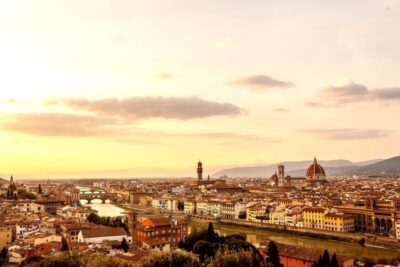
Not quite the day you had in mind? The rest of our Florence write-ups sit below
- David & Accademia Gallery: 1-Hour Small Group Tour★ 4.5 · 169 reviews
- Cinque Terre & Pisa Premium Tour from Florence★ 5.0 · 170 reviews
- Chianti Wine Tastings Day Trip at Sunset from Florence★ 4.5 · 171 reviews
- Private Transfer from Florence Airport to your Hotel in Florence★ 4.5 · 172 reviews
- Private Uffizi Gallery Tour with Reserved Entry★ 5.0 · 174 reviews
- Tasty Florence Street Food with Guided Walking of the City★ 5.0 · 174 reviews
- Uffizi Gallery Timed Tickets with Audio guide★ 4.0 · 174 reviews
- Florence: Tuscany Bike Tour with Wine & Olive Oil★ 4.9 · 174 reviews
- Florence: Small Group Guided Walking Tour★ 4.7 · 176 reviews
Walking Tours, top to bottom.
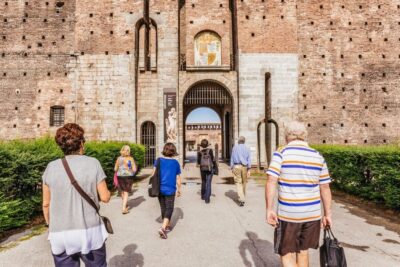 ★ 4.7Milan: Guided Walking Tour & Last Supper Visit with TicketFrom $1015,409 reviews
 ★ 4.8Naples: Street Food Walking Tour with Local GuideFrom $474,256 reviews
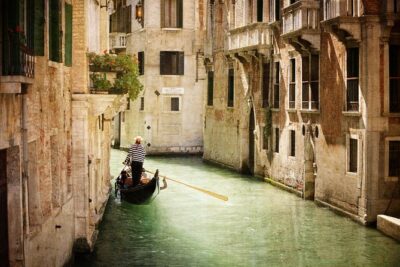 ★ 3.5Venice Walking Tour and Gondola RideFrom $723,630 reviews
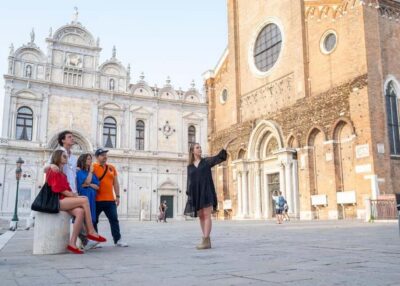 ★ 4.2Venice: Rialto Bridge & Offbeat Unusual Venice Walking TourFrom $283,538 reviews
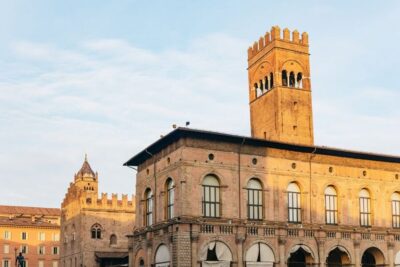 ★ 4.5Bologna: City Center Walking TourFrom $263,478 reviews
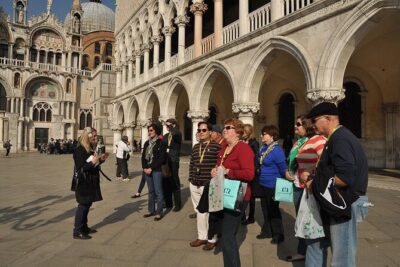 ★ 4.0Private 3 hrs Venice Tour: St Mark’s, Walking tour & Boat tourFrom $4803,372 reviews
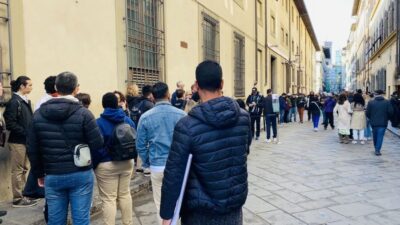 ★ 4.5Florence: Guided Walking TourFrom $313,334 reviews
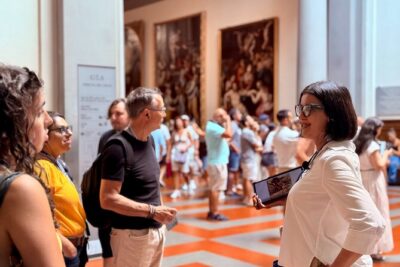 ★ 4.5Skip the line: Uffizi and Accademia Small Group Walking TourFrom $1483,135 reviews
Filed under