

Reviewed · TRASTEVERE & THE JEWISH GHETTO
Trastevere & Campo de’ Fiori Street Food Tour, Eat Like a Local
Street food turns Rome into a movie.
This Trastevere and Campo de’ Fiori Street Food Tour mixes classic sights with food stops, and I especially like the small-group, personalized feel and the built-in variety, including tastings plus gelato. One possible drawback: if you want heavy, bite-by-bite food culture lessons every single step, the pacing and depth of food history can feel uneven compared with the most academic food tours.
The route is a solid two and a half hour walk, built around lively neighborhoods on both sides of the Tiber, with breaks timed to keep you moving but not rushed. The tour runs in English, uses a mobile ticket, and you cannot do it for celiacs, and since drinks are not included, plan to grab water if you need it.
In This Review
- Key highlights to look for on this Rome street food tour
- Why Trastevere and Campo de’ Fiori make the best food tour pairing
- The first 30 minutes: Piazza San Simeone to Via del Governo Vecchio
- Campo de’ Fiori market stop: an old square with real morning energy
- Ponte Sisto viewpoints: a break from eating, and a reminder you are in Rome
- Trastevere streets: why this neighborhood feels like time travel
- Basilica di Santa Maria in Trastevere and the mystery of the fountain
- What you actually taste: Roman street food bites and gelato
- Drinks are not included
- Walking pace and small-group size: how to prepare so you enjoy it
- One thing to weigh carefully: depth and shop types can vary
- Where it ends: Piazza di San Giovanni della Malva
- Best for you if you want food plus city orientation
- Should you book this Trastevere and Campo de’ Fiori street food tour?
- FAQ
- How long is the Trastevere and Campo de’ Fiori Street Food Tour?
- Where does the tour start and end?
- What is included in the price?
- Is this tour mostly walking?
- How big is the group?
- Is the tour suitable for celiacs?
Key highlights to look for on this Rome street food tour
- Small group size up to 14 means more interaction with your guide instead of only being herded through lines
- Food tastings plus gelato included so you do not have to decide dinner on the spot
- Trastevere alley time with a guide who points out the neighborhood’s living traditions
- Campo de’ Fiori market atmosphere and the morning market energy, when it is open
- Photo-worthy bridge pause at Ponte Sisto with big views over the Tiber
- Guide personality matters, and names like Silvia, Emilia, Leonardo, Daniel, and Tiziana are repeatedly praised for storytelling and laughs
Why Trastevere and Campo de’ Fiori make the best food tour pairing
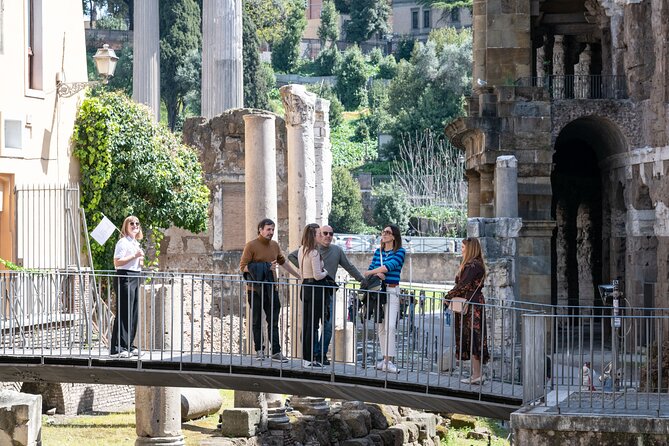
I like food tours that show you how Rome actually eats, not just where to take a photo. This one stacks two neighborhoods that feel different the moment you step into them. Campo de’ Fiori brings you to an old market square, while Trastevere gives you that backstreets vibe where you can almost hear dinner conversation echoing between buildings.
What makes this pairing work is the flow. You start with a classic fountain-area meetup, you move through Rome’s street textures, and then you end up on the west side of the Tiber, where Trastevere’s lanes make food feel like part of daily life, not a performance.
I also like that the tour does not overpromise. You know what you are there for: tastings and gelato, plus guided context as you walk.
Worth an aperitivo-hour scroll, our other Trastevere and Jewish Ghetto walks in Rome.
- Winner 2025 Rome Twilight Trastevere Food Tour by Eating Europe
★ 5.0 · 5,157 reviews - Rome: Trastevere or Jewish Quarter Street Food Tour
★ 4.8 · 3,839 reviews - Rome: Trastevere Food tour with Free-Flowing Fine Wine
★ 5.0 · 2,853 reviews - Rome: Trastevere & Campo de Fiori Street Food Walking Tour
★ 4.9 · 2,768 reviews
The first 30 minutes: Piazza San Simeone to Via del Governo Vecchio
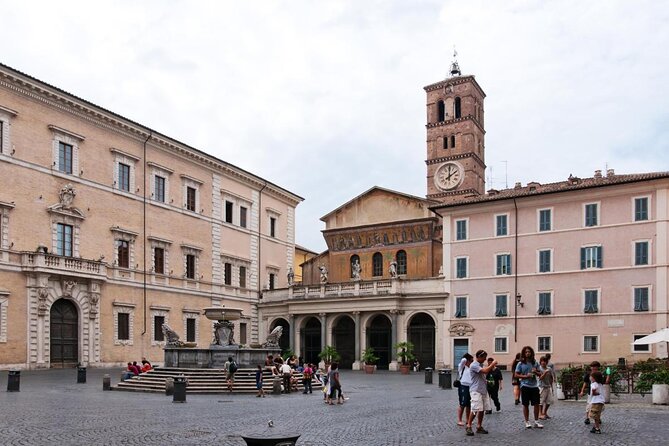
You begin at Piazza di San Simeone, right by the fountain. It is a small start point, which matters because it helps the group get together fast and lets the guide set the tone early.
From there, you head into Via del Governo Vecchio, a route known for its picturesque streetscape. This segment is not about a single landmark. It is about orientation. You get a feel for how Roman streets bend and funnel you toward plazas, and your guide can point out the kinds of cues locals use to pick where to eat, shop, and linger.
If you are the type who likes to understand a neighborhood as you walk through it, this is a good beginning. You are already learning how the city is organized, not just what to eat.
Campo de’ Fiori market stop: an old square with real morning energy
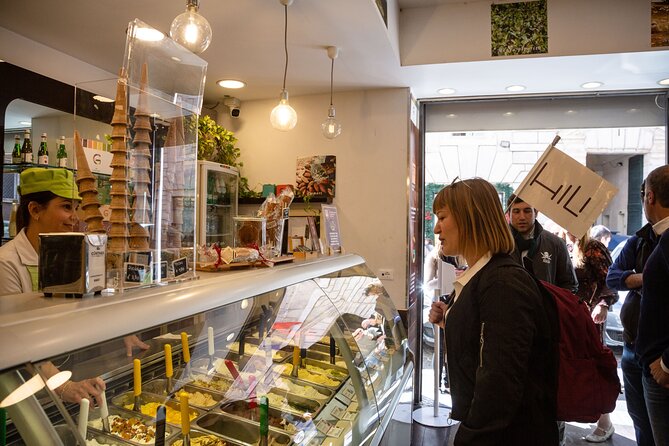
Next up is Campo de’ Fiori, timed as a meaningful pause on the route, about 30 minutes. The tour frames it as Rome’s oldest market, open in the morning, and that detail is important. Markets change by time of day, and a food tour like this is at its best when the place feels alive and busy.
This is also one of the moments where you can expect tastings tied to what people buy and snack on. In past departures, the food highlights have included things like condiment-style bites from the market and snackable items that fit the “grab, taste, keep walking” rhythm.
One practical tip: come with an appetite, but not an empty stomach. You are about to get multiple stops with food, and Campo de’ Fiori sets you up for that.
Ponte Sisto viewpoints: a break from eating, and a reminder you are in Rome
After the market, the tour shifts to a scenic reset at Ponte Sisto. This is one of Rome’s popular bridges across the Tiber, and it is there for more than a quick photo. The guide uses the pause to connect neighborhoods on opposite sides of the river, and you get those skyline and St. Peter’s-area perspectives that make you look up, not down.
This stop is about context. When you then walk into Trastevere, you understand where you are in relation to the rest of the city. It is a smart trick: a viewpoint stop improves the quality of the walking part that follows.
The group does not linger forever, but you get time to take in the view and regroup.
Trastevere streets: why this neighborhood feels like time travel
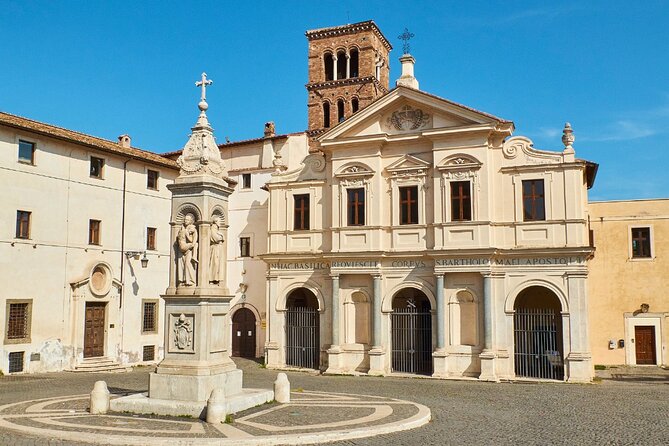
You then move into Trastevere, described as the heart-of-Rome kind of district, full of well-kept, older streets and alleyways. The tour spends time walking those lanes with your guide so you can spot small details that you might miss if you were exploring alone.
Trastevere is the part where this tour becomes more than a food list. Your guide helps you understand why locals still treat the area as a keeper of traditions, with the mix of old architecture and everyday life still holding strong. You are also walking past the kind of shops locals use for browsing and meeting friends, not just tourist browsing.
If you like the “people-watching plus wandering” style of travel, this is the heart of the experience.
Basilica di Santa Maria in Trastevere and the mystery of the fountain
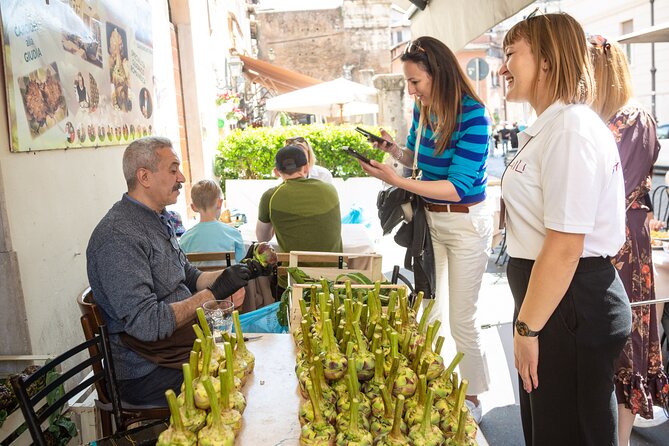
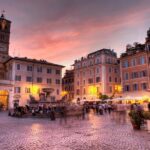
The next major stop is Basilica di Santa Maria in Trastevere. The tour includes a story around the nearby fountain in Piazza Santa Maria in Trastevere, with a legend that it dates back to the 8th century even though the exact construction date is unknown.
There is also a historical breadcrumb: a city map from 1471, designed by Pietro del Massaio, shows a fountain with two basins, one above the other, pouring into the lower basin. That kind of detail is exactly what I want from a food tour that also does city orientation. You are not only learning what you eat. You are learning why this area feels old, and how people documented it.
A note on expectations: this is still a walking food tour, so the basilica moment is not a museum-level deep session. It is a meaningful stop that adds atmosphere and place.
Our reviewers also walked through other food outings in Rome.


What you actually taste: Roman street food bites and gelato
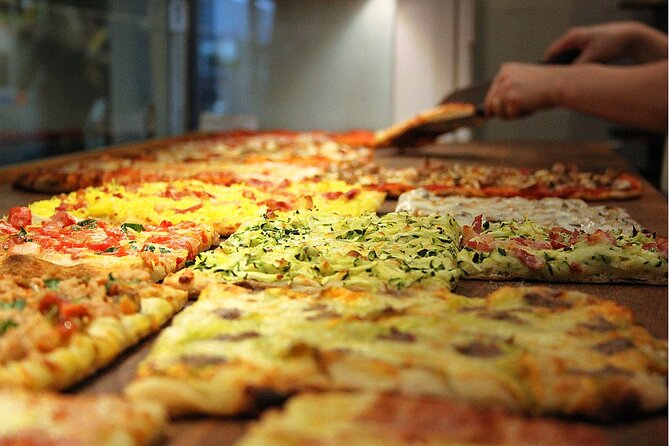
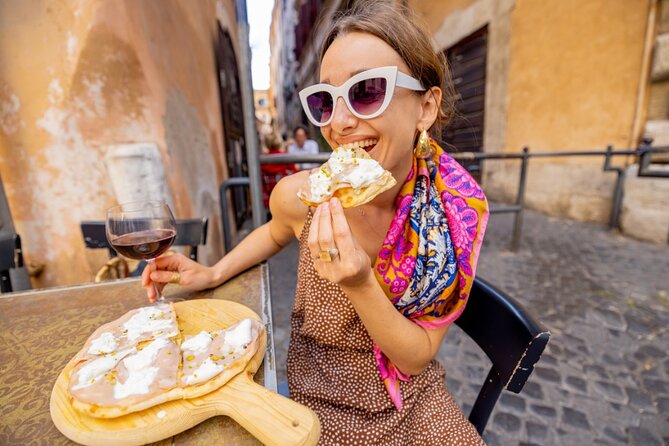
Food tours only work if the food is satisfying, and the feedback here is overwhelmingly positive on tastings and variety. People often mention classics like suppli, pizza (sometimes multiple flavors), gelato, and sweet bites such as maritozzi. You may also encounter porchetta-style sandwiches and lemoncello sampling, depending on the specific shops used that day.
Some of the most common “wow” themes from the guide side show up alongside the food:
- Guides like Silvia and Emilia are praised for bringing you to great vendors and for the range of food stops.
- Leonardo and Daniel are repeatedly highlighted for combining city insight with Roman food customs, and in their cases, a science or archaeology angle shows up in the way they explain the city.
- Alex gets credit for steering people toward family-run places and helping them avoid tourist traps outside the tour.
- Gabrielle, Anna, Hanna, Matt, and Tiziana show up in reviews for friendly, funny, and highly practical explanations.
This matters because the tastings are only part of the value. When the guide tells you what you are eating and why locals like it, your street food stops feel like a lesson, not just snacks.
Drinks are not included
Since drinks are not included, do not plan on the tour solving every hydration need. I’d plan to carry water, especially in warm months, or be ready to buy a drink at/after a stop.
Walking pace and small-group size: how to prepare so you enjoy it
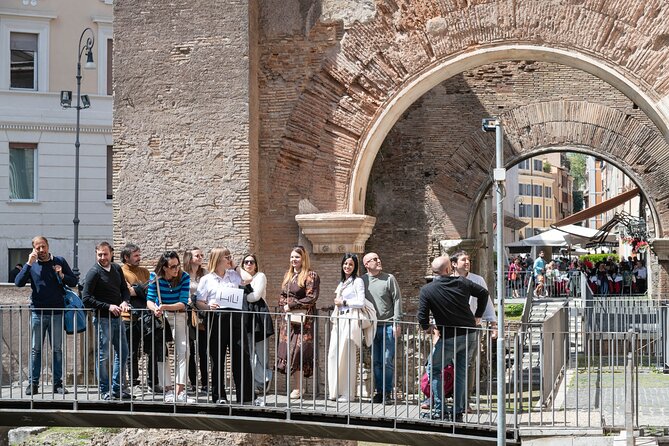
This is a walking tour, so your biggest variable is physical comfort. The tour explicitly tells you to wear comfortable shoes, and that advice is not filler. You are on cobblestones and uneven sidewalks, plus you will be moving between neighborhoods and stops.
Group size is capped at 14, and that is a sweet spot. It usually means you will not get stuck behind strangers at each shop, and it makes it easier for your guide to answer questions without the group losing momentum.
Also, the tour has a maximum group size and runs in English. If you prefer to ask lots of questions, or if you travel with picky eaters in your party, this smaller format is more workable.
One more practical reality: it requires good weather. If the day is rainy or unpleasant, you might need to switch dates.
One thing to weigh carefully: depth and shop types can vary
I want to be honest about the one notable complaint pattern in the feedback. A smaller subset of people felt the tour was a little too light on food culture education, and that some stop types felt more tourist-oriented than expected, especially around lemoncello.
So here is how I’d calibrate your expectations before booking:
- If you want a standard street-food experience with stories, this is very likely a good fit.
- If you want an extremely academic, every-bite food-ritual lecture, you might find the pacing too casual.
In practice, the tour seems to depend heavily on the guide and the day’s vendor mix. That is also why guide names get mentioned so often in the best reviews.
Where it ends: Piazza di San Giovanni della Malva
The tour finishes in Piazza di San Giovanni della Malva. Ending in a public square is useful. You are not stranded at a random side street. You can regroup, check your map, and decide what to do next without hunting for your way out of the maze.
This ending point also makes it easier to continue exploring Trastevere on your own after you have already “learned the streets” with a guide.
Best for you if you want food plus city orientation
This tour is ideal if you are trying to do two things at once:
1) Eat well in Rome without building a plan
2) Learn your way around neighborhoods that can feel confusing when you are on your own
It also fits travelers who value a guide with personality. Many of the stand-out comments point to humor, friendliness, and real enthusiasm, which turns tastings into a shared event.
It may not fit you if:
- you need a celiac-safe option (the tour cannot be done for celiacs)
- you want a fully seated, long-form meal experience instead of walking and snacking
Should you book this Trastevere and Campo de’ Fiori street food tour?
Book it if you want a smart, efficient introduction to Roman food culture in two of the most fun walking neighborhoods, with gelato included and a guide who can explain what you are eating while you walk off the calories.
I’d especially book early in your Rome trip. Not because you need to be “perfectly efficient,” but because the best guide moments often come with extra advice, like where to eat later and what to avoid. People repeatedly mention getting follow-up recommendations after the tour, which can save time and reduce the odds of accidental tourist traps.
Skip it or choose another option if you are looking for a deep, no-holding-back food history lesson at every stop, or if you have dietary restrictions that make the standard tastings unsuitable.
If you decide to go, do one simple thing: bring comfortable shoes and go hungry. The rest is built into the route, from market energy at Campo de’ Fiori to the viewpoint break at Ponte Sisto and the Trastevere streets where Rome feels most like itself.
FAQ
How long is the Trastevere and Campo de’ Fiori Street Food Tour?
The tour runs about 2 hours 30 minutes.
Where does the tour start and end?
It starts at Piazza di San Simeone (Piazza di S. Simeone, 00186 Roma) and ends at Piazza di San Giovanni della Malva (00153 Roma).
What is included in the price?
Food tastings and gelato are included. Drinks are not included.
Is this tour mostly walking?
Yes. It is a walking tour, and you are advised to wear comfortable shoes.
How big is the group?
The tour has a maximum of 14 travelers, so it stays small-group.
Is the tour suitable for celiacs?
No. The tour cannot be done for celiacs.
Our Wider Tours File for Rome

Trastevere and Jewish Ghetto Walks in Rome, Written Up Separately
Not quite the day you had in mind? The rest of our Rome write-ups sit below
- Rome: Guided Tour of St. Peter’s Dome Climb, Basilica & Vatacombs★ 5.0 · 167 reviews
- St. Peter’s Basilica Guided Tour with Reserved Entrance★ 4.0 · 168 reviews
- Golf Cart Driving Tour in Rome: 2.5 hrs Catacombs & Appian Way★ 5.0 · 168 reviews
- Rome: Trastevere Wine Tasting with Food Pairing and Gelato★ 4.9 · 168 reviews
- Guided Tour of the Colosseum Palatine Hill and Roman Forum★ 4.7 · 168 reviews
- Vatican Museums, Sistine Chapel & Saint Peter’s Semi-Private Tour★ 4.5 · 169 reviews
- Hidden Rome: Small Group E-Bike Tour with Street Food Stops★ 5.0 · 169 reviews
- Rome: Papal Audience with Pope Leo IV★ 3.9 · 169 reviews
- Rome Golf Cart Tour: Highlights & Must See★ 4.5 · 170 reviews
Trastevere & the Jewish Ghetto, top to bottom.
 ★ 5.0Winner 2025 Rome Twilight Trastevere Food Tour by Eating EuropeFrom $1255,157 reviews
 ★ 4.8Rome: Trastevere or Jewish Quarter Street Food TourFrom $513,839 reviews
 ★ 5.0Rome: Trastevere Food tour with Free-Flowing Fine WineFrom $1022,853 reviews
 ★ 4.9Rome: Trastevere & Campo de Fiori Street Food Walking TourFrom $512,768 reviews
 ★ 5.0Rome: Award Winning Trastevere Group Food Tour with WineFrom $812,273 reviews
 ★ 4.8Rome: Guided Food Tour in TrastevereFrom $1122,266 reviews
 ★ 4.5Jewish Ghetto and Trastevere Tour RomeFrom $41,729 reviews
 ★ 5.0Taste of Testaccio: Special 15 Year Anniversary EditionFrom $1311,658 reviews