
Reviewed · MOUNT ETNA TOURS
2002 Crater Excursion – Northern Etna
Etna gets personal on the north side. I loved the quieter feel around Piano Provenzana and the way a certified volcanological guide brings the 2002 eruption to life step by step. One thing to consider first, though: the route can include crater edges, so if you have vertigo, plan for that.
What I like most is how practical this excursion is. You start at a real Etna station with paved access, parking bays, and snack stops, then you hike a clear loop that clocks in around 5 km round trip and about 300 m of ascent and descent.
The big promise here is value. At $43.55 you are paying for an authorized guide, accident insurance, and a route that is less touristy than many south-side options, without turning it into a technical mountaineering day.
In This Review
- Key highlights worth planning for
- Arriving at Piano Provenzana: the calm base before the hike
- Walking the 2002 lava flow: where the story becomes steps
- The 1911 and 1923 craters: deep shafts and old eruption scars
- Back down via beech forest and ash channels: the part many people underestimate
- Guides, pacing, and that north-side vibe (Giuseppe and Luca were big fans’ favorites)
- What to wear and bring: keep your insurance valid
- Timing and logistics that actually affect your comfort
- Price and value: paying $43.55 for an authorized guide and insured steps
- Should you book the 2002 Crater Excursion on Northern Etna?
- FAQ
- How long is the excursion on Etna’s north side?
- Where do I meet, and when does it start?
- Is the tour offered in English?
- What hike distance and elevation should I expect?
- What is included, and what costs extra?
- Do I need trekking shoes, and are they required for insurance?
- What happens if weather conditions are poor?
Key highlights worth planning for
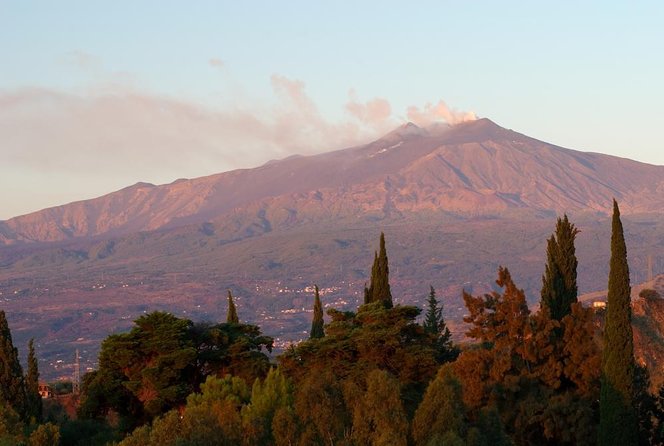
- Piano Provenzana, less crowded and easy to reach by paved roads on Etna’s north side
- Guided walking across the 27 Oct 2002 lava flow, including buried hotels and dramatic volcanic scars
- Crater-edge walking and deep-shaft features tied to the 1911 and 1923 flows
- A small group cap (max 20), which helps the hike feel controlled and safe
- Accident insurance included, but only if you wear adequate footwear
- English-speaking authorized volcanological guide, with breaks timed to keep the hike doable
Arriving at Piano Provenzana: the calm base before the hike
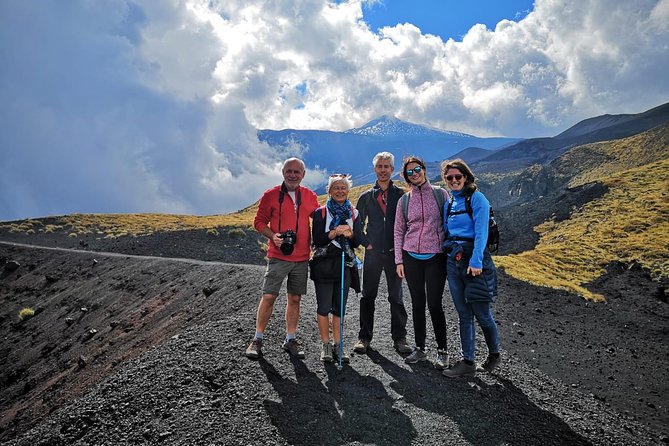
Most Etna days start fast and loud. This one starts calmer. You meet at Ufficio Guide Vulcanologiche Etna Nord, Via Provenzana 35, in Linguaglossa CT, with a 9:15 am start and the tour ending back at the same meeting point.
Piano Provenzana is on the north side and it is reachable by private or rental car on fully paved public roads. There are blue-lined parking areas for cars and camper vans, plus the basics you might want before you head out: cafés and bars, souvenir shops, and spots where you can refill water bottles.
Why that matters: it reduces stress. You do not need fancy logistics to get to the start, and you can get your bearings with coffee in hand. It also helps if you are traveling with kids, or you just want an Etna hike without feeling herded.
One more practical note: stop 1 is about getting set up at Piano Provenzana, with around 30 minutes there. The main work happens next, when you move into the hike across the eruption terrain.
Other Mount Etna tours in Sicily that earned their own write-up.
- Etna Morning Trip
★ 4.5 · 1,241 reviews - Mt. Etna nature and flavors half day Tour from Catania
★ 5.0 · 545 reviews - Etna excursion 3000 meters with 4×4 cable car and Trekking
★ 4.5 · 504 reviews - Mount Etna Adventurous Hiking Tour with Equipment
★ 4.5 · 439 reviews
Walking the 2002 lava flow: where the story becomes steps
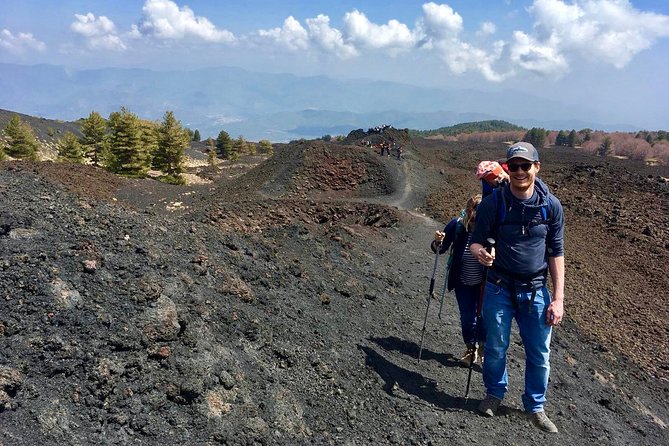
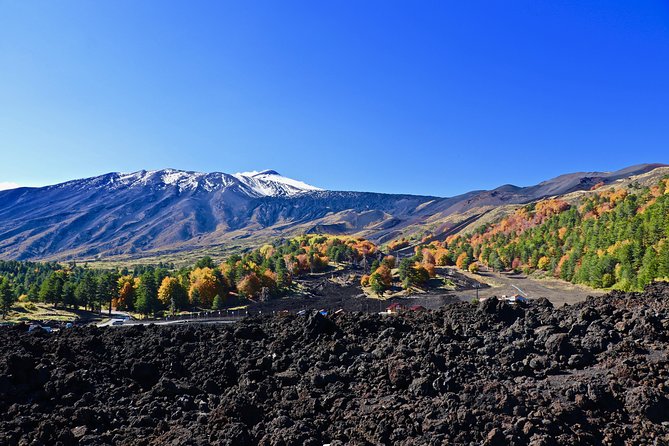
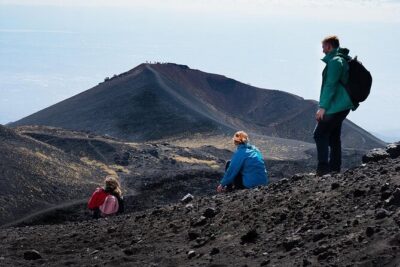
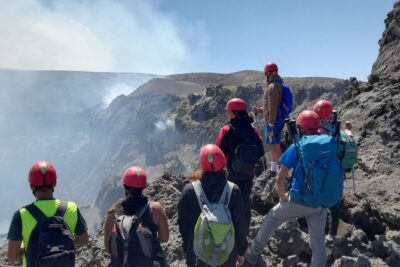
The heart of the excursion is the guided hike on Mount Etna’s north side, a less-touristic zone of Europe’s highest active volcano. Your route is roughly 5 km round trip, and you are looking at about 300 m of ascent and descent over 2.5 to 3 hours.
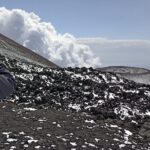
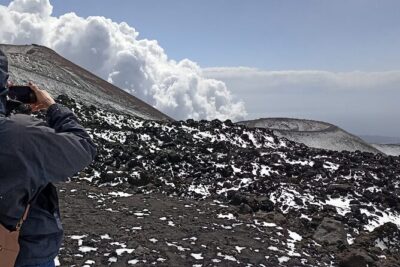
This hike is not just about seeing volcanic ground. It is about walking directly across the vast 7.2 km lava flow from the 27 Oct 2002 eruption. The dramatic part, and the part guides love to explain, is what happened to the built environment in the path of the lava. The area includes buried hotels, shops, restaurants, and a large car park, with only the roof of one hotel still visible.
That makes the hike feel oddly close to real life. You are not viewing a volcano as a distant landmark. You are seeing how quickly a landscape can be erased and rewritten.
Expect the path to mix volcanic ground with stretches through forest. The guide leads you through the route at a pace that usually keeps it “doable,” but still working. You will feel the climb and the uneven footing, especially if you forget that volcanic soil can be loose and unstable.
The 1911 and 1923 craters: deep shafts and old eruption scars
After the 2002 section, the route continues through areas tied to older eruptions, including the 1911 and 1923 flows. This is where you get more of the crater mechanics, not just the big lava scenery.
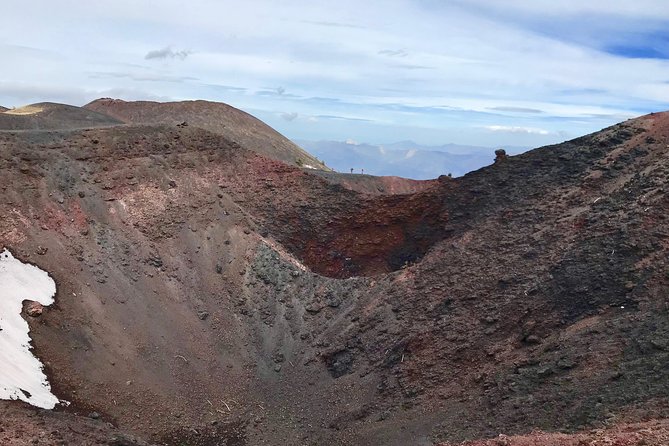
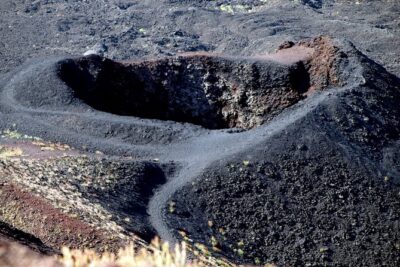
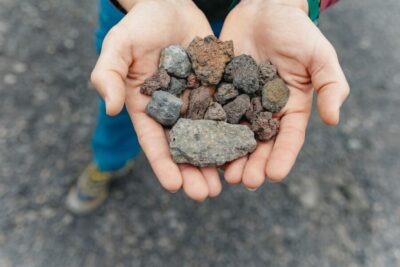
You will pass a chain of 1911 craters with shafts roughly 7 to 40 m deep. That detail matters because it changes how you see the ground around you. Volcanic features are not random. They are evidence of vents, collapses, and explosive pathways that shaped what you are standing on now.
The hike also includes climbing toward the crest of the huge 2002 eruptive fracture, a canyon strewn with volcanic bombs. Then you reach the vent that produced the destructive flow and other large explosive mouths up to around 2,100 m.
If that sounds intense, it is worth reading it as “conceptually intense.” Your feet will be busy, and your eyes will do a lot of work, but this is not presented as technical climbing. Still, the route does include crater-edge walking, and that can be a deal-breaker for sensitive visitors. If you know you get vertigo, you should take that seriously before you go.
In a practical way, this portion is often why the guide’s timing matters. You are moving through zones that are visually dramatic and physically uneven, so frequent, well-timed breaks keep the hike comfortable and safer.
Back down via beech forest and ash channels: the part many people underestimate
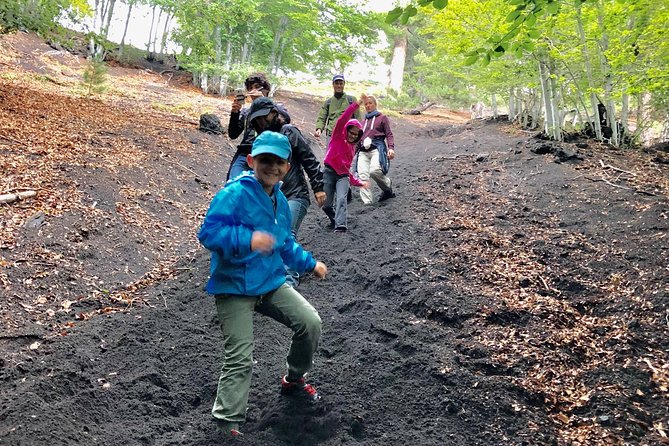
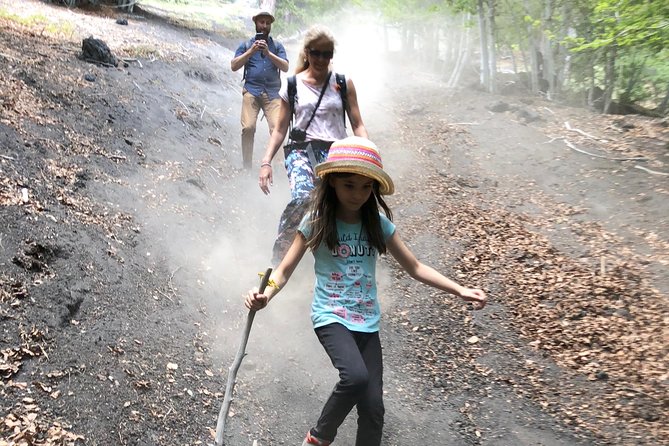
You finish with a descent through softer ground, including ash channels and beech forest, with the trail also touching ski-slope areas depending on conditions. This is a common trap: people feel fine on the way up, then realize that downhills punish your ankles and knees.
One review noted the downhill benefits from taller boots or hiking sticks. Another mentioned needing support for lava rock crossings. You may be fine in sneakers, but you are rolling the dice on footing. Your best bet is sturdy trekking shoes that grip well on loose volcanic surfaces.
Also remember the guide can adjust or interrupt the itinerary if conditions change, based on environmental, atmospheric, or volcanic safety. That flexibility can be good. It means you are not forcing a “set in stone” route when nature decides otherwise.
Guides, pacing, and that north-side vibe (Giuseppe and Luca were big fans’ favorites)
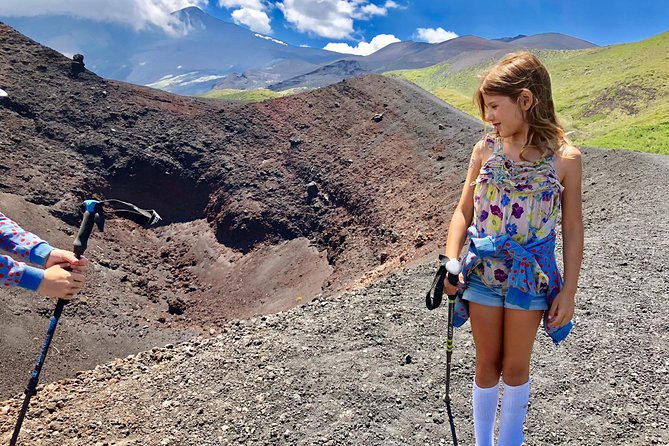
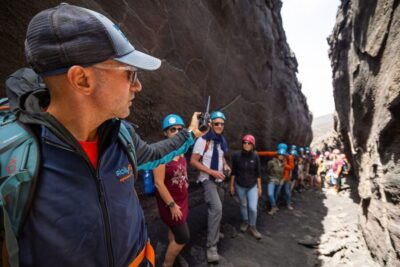
The quality of this excursion is strongly tied to the authorized guide leading it. You will have a volcanological guide approved under the law, and accident insurance is included as well.
In plain terms: a good guide turns “cool rocks” into “I understand what I just walked through.” Reviews praised guides for mixing facts with humor and for inserting learning moments at the right time, not nonstop lecturing. Names that came up include Giuseppe and Luca. Both were described as patient, full of answers, and good at making breaks feel natural rather than interruptions.
Pacing is key here. The route is described as easy in difficulty but still active, and it lasts about 2.5 to 3 hours. Expect a workout, especially if the volcanic ground is rough. The guide’s job is to keep everyone moving steadily, with advice on how to handle steep or sandy sections.
What to wear and bring: keep your insurance valid
This is where you should be strict with yourself. The tour includes accident insurance, but you are not covered if you do not have adequate shoes.
Trekking shoes are not included. You can rent them on site at authorized rentals for €5 per pair. If you already have shoes with good grip, bring them. If you do not, rental is the easiest fix.
Other items to think about:
- Bottled water is not included, though you can refill water bottles at Piano Provenzana
- Hat and gloves are recommended, especially in winter, spring, and autumn
- Trekking poles are not included, and some visitors found them helpful for downhill sections
- Without large preparations, the hike is still not a stroll. Volcanic soil can be incoherent and unstable, so you want stability underfoot
If you are sensitive to vertigo, plan your mindset for crater-edge sections. You do not have to “push through fear,” but you do need to be honest with yourself about what you can handle.

Timing and logistics that actually affect your comfort
Start time is 9:15 am at the meeting point in Linguaglossa CT, and the hike ends back where you started. The whole experience is about 3 hours on average, with the biggest block on the main hike.
The itinerary structure is simple:
- Short orientation time at Piano Provenzana
- The main guided hike across the 2002 lava flow and older eruption features
- Return to Piano Provenzana for the wrap-up
The group size is capped at 20 travelers, which is a big quality factor. Smaller groups tend to move better, with fewer bottlenecks on uneven volcanic ground.
Parking fees are not included. Expect a parking ticket cost of €5 for the entire day on weekdays and €8 on Sundays and public holidays. If you are driving yourself, this is a real cost to remember in your budget.
Also note: the tour runs in English. You get a mobile ticket, and service animals are allowed.
Price and value: paying $43.55 for an authorized guide and insured steps
At $43.55 per person, this is not a bargain in the “throwaway” sense, but it is strong value for what you are getting.
You are paying for:
- An authorized volcanological guide
- Accident insurance (with the footwear requirement)
- A structured hike of about 2.5 to 3 hours that covers specific eruption zones tied to the 2002 event and older craters
If you compare that to what it costs to hire a private guide, rent gear, and still get a coherent route, this price looks reasonable. And the north-side angle is a hidden value. One of the best reasons to pick this option is the quieter, less crowded vibe compared with many south-side tours.
The only true “gotcha” is that you may need to spend a little more on the day for parking and trekking shoe rentals. Bottled water is also extra, and trekking poles are not provided.
Should you book the 2002 Crater Excursion on Northern Etna?
I think you should book this if you want a guided Etna experience that is grounded in real eruption features, not just scenic stops. Choose it especially if you prefer the north side for a less crowded feel and you like learning that is factual and paced.
Pass on it, or at least think carefully, if you have vertigo concerns about crater edges. Also reconsider if you usually struggle with uneven walking, since the route takes a steady effort over volcanic terrain, even if it is described as not technically hard.
If you show up with proper shoes, a bit of winter planning for cold weather, and a willingness to step slowly across loose ground, you will likely come away feeling like you truly “walked the volcano,” not just looked at it.
FAQ
How long is the excursion on Etna’s north side?
The duration is about 3 hours on average. The main hike segment runs about 2.5 to 3 hours, with an overall route of about 5 km round trip.
Where do I meet, and when does it start?
You meet at Ufficio Guide Vulcanologiche Etna Nord, Via Provenzana, 35, 95015 Linguaglossa CT, Italy. The start time is 9:15 am, and the activity ends back at the meeting point.
Is the tour offered in English?
Yes. The experience is offered in English.
What hike distance and elevation should I expect?
The hike is approximately 5 km round trip, with around 300 m of ascent and descent.
What is included, and what costs extra?
Included items are accident insurance and an authorized volcanological guide. Not included are bottled water, trekking shoes rental (€5 per pair), hat and gloves (recommended), trekking poles, parking fees (€5 weekdays, €8 Sundays and public holidays), and snowshoe rental in winter (€15 per person).
Do I need trekking shoes, and are they required for insurance?
Trekking shoes are not included, but you can rent them on site for €5. The tour notes that you are not covered by accident insurance without adequate shoes.
What happens if weather conditions are poor?
This excursion requires good weather. If it is canceled due to poor weather, you will be offered a different date or a full refund.
Our Wider Tours File for Sicily
Beside This One, Mount Etna Tours in Sicily
Not quite the day you had in mind? The rest of our Sicily write-ups sit below
- Diving for certified divers with PADI 5* Diving Resort – Taormina★ 5.0 · 167 reviews
- Sicilian Cooking Class in Taormina★ 4.5 · 171 reviews
- The Godfather and Taormina Tour from Messina★ 4.5 · 174 reviews
- Palermo: Boat tour luxury★ 5.0 · 174 reviews
- Diving for patented divers★ 5.0 · 175 reviews
- Sunset Tour of the Valley of the Temples★ 4.5 · 178 reviews
- From Trapani: Egadi Islands tour with lunch on board★ 4.5 · 178 reviews
- City Sightseeing Palermo Hop-On Hop-Off Bus Tour★ 3.0 · 179 reviews
- Etna Private Tour and Excursion★ 5.0 · 180 reviews
Mount Etna Tours, top to bottom.
 ★ 4.8Catania: Mount Etna Morning or Sunset Day Trip with TastingFrom $704,028 reviews
 ★ 4.7Mount Etna: Guided Volcano Summit Hiking Tour with Cable CarFrom $1243,784 reviews
 ★ 4.8Catania: Sunset Jeep Tour of Mount Etna and Lava Flow CavesFrom $712,113 reviews
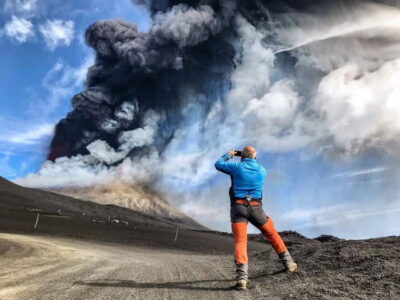 ★ 4.7Mount Etna: Trek to 3000m with cable car and jeepFrom $621,978 reviews
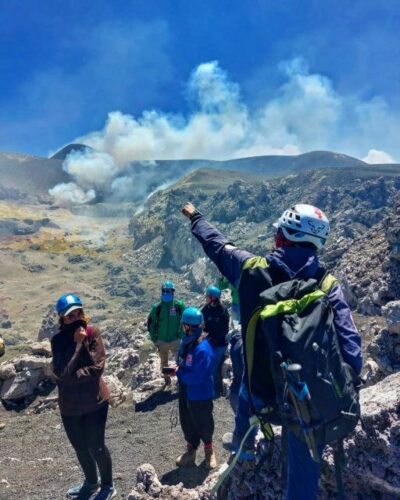 ★ 4.8Mount Etna: Summit Crater Trek with Cable CarFrom $771,875 reviews
 ★ 4.8Sicily: Etna and Alcantara Gorges Full-Day Tour with LunchFrom $1051,766 reviews
 ★ 4.3Mount Etna: Roundtrip Cable Car and 4×4 Bus TicketFrom $971,602 reviews
 ★ 4.7Etna Volcano: South Side Guided Summit HikeFrom $671,545 reviews
Filed under