
Reviewed · MOUNT ETNA TOURS
Mount Etna: Summit Crater Trek with Cable Car
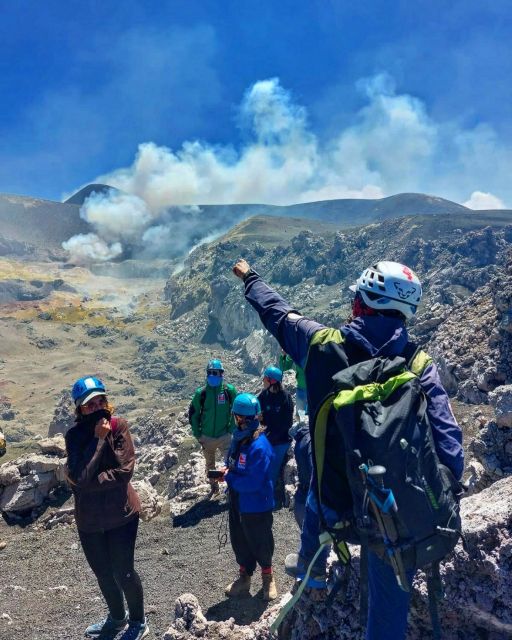
Etna is loud up close. This small-group summit crater trek takes you to Bocca Nuova’s rim with a volcano guide talking like a real field scientist, and I love the 360° views when the sky cooperates. You also get a hands-on feeling for the mountain’s changes, from volcanic sand underfoot to a lava tunnel that makes the whole place feel strangely solid and alive.
The tradeoff is money and flexibility. The tour price is just for the guiding and hiking service, and you still must pay the cable car and 4×4 in cash, plus weather or volcanic risk can mean you do not reach the very top.
In This Review
- Key points before you go
- Mount Etna summit craters: what you are really signing up for
- Price and the real value: what $77 covers, and what comes next
- The meeting point and gear: keep it simple, but be ready
- Cable car start: get altitude fast without burning your legs early
- 4×4 to Torre del Filosofo, then the hike begins
- Bocca Nuova: 2 hours at the crater rim with a volcanologist guide
- Central crater area and Barbagallo: stepping around the active system
- Lava tunnel and lunar terrain: seeing Etna as structure, not scenery
- Descent through the 2002 eruption craters and into Valle del Bove
- Cable car return: finish strong, not rushed
- Who this tour is for, and who should skip it
- Guide quality is the difference-maker here
- Should you book Mount Etna Summit Crater Trek with Cable Car?
- FAQ
- What is the duration of the tour?
- Where do I meet the guide?
- Is the cable car included in the price?
- How much are the cable car and 4×4 tickets?
- What is included with the tour?
- What languages are available for the live guide?
- What size is the group?
- Is this tour suitable for all ages?
Key points before you go
- Small group, real pacing: Limited to 8 participants, and guides manage the climb so people stay together.
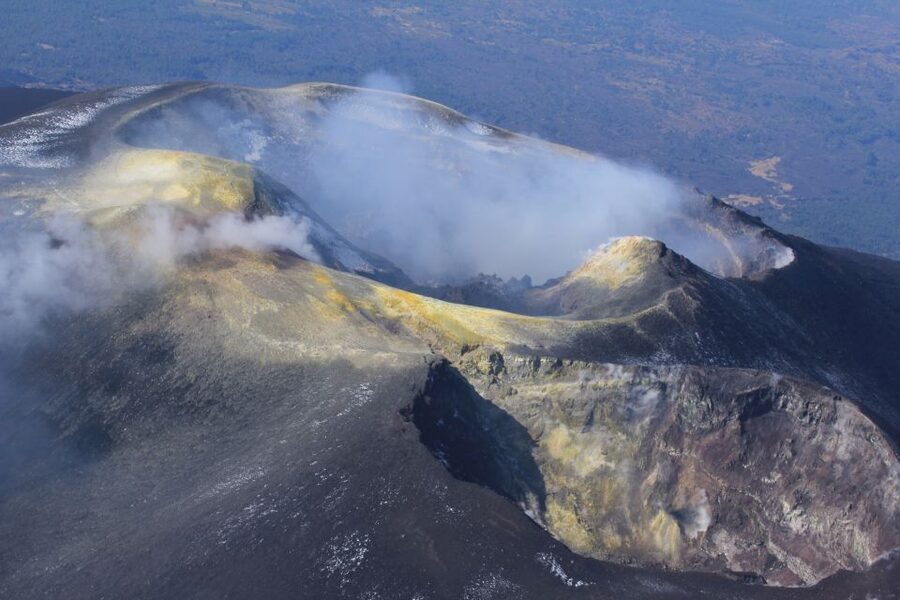
- Summit craters with names you will remember: Bocca Nuova (opened in 1968), plus stops around the central and Barbagallo craters.
- Cable car plus 4×4 gets you higher faster: You start with an easy lift, then switch to a rugged ride toward Torre del Filosofo (2850-meters).
- Lava tunnel visit makes it feel physical: You walk through volcanic space, not just look at it from afar.
- Valle del Bove is the payoff on the way down: A huge caldera (8 km long, 4 km wide) that looks like a natural amphitheater.
- This is not a stroll: Expect volcanic scree and sand, plus the sulfur smell can be intense near active vents.
Mount Etna summit craters: what you are really signing up for
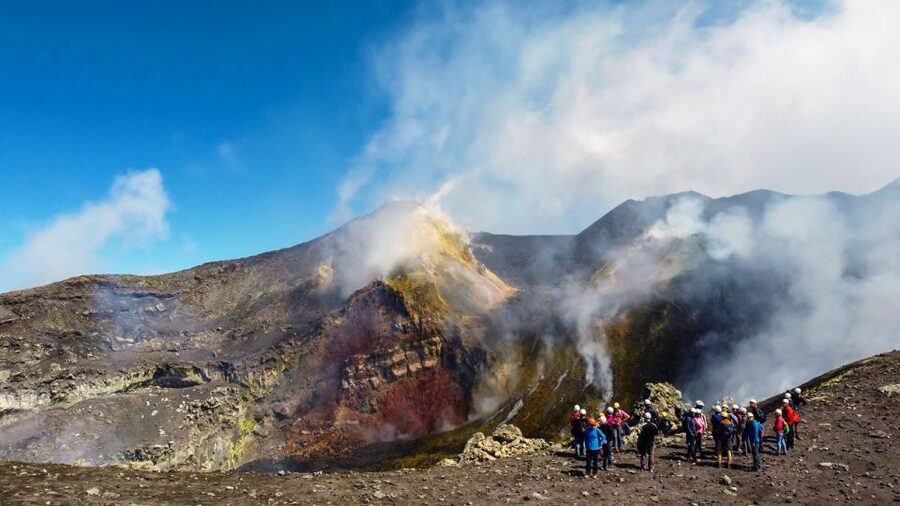
Mount Etna is not a museum volcano. It is Europe’s highest active volcano, and on summit crater walks you feel that in practical ways: the ground changes type under your boots, the wind can be mean, and the air can carry a sharp sulfur bite. The good news is that this tour is built for up-close viewing without requiring you to plan logistics on your own.
I like that the tour mixes three layers of experience. First you get altitude quickly using the southern Etna cable car, then you travel higher via a 4×4 in the Torre del Filosofo area, and finally you hike to crater edges where you get true panoramas. Second, you do not just look at craters, you learn what you are seeing, guided by a volcanologist with field-style explanations. Third, you add the walk through volcanic terrain and a lava tunnel, which helps your brain stop treating Etna like a picture and start treating it like a place.
One more point before you commit: this is a physically demanding hike. The reviews are full of “once in a lifetime” energy, but also clear warnings that it is strenuous and loose in places, so you want a decent hiking level and proper gear. If you freeze easily or get winded on steep uneven paths, plan for that.
Price and the real value: what $77 covers, and what comes next
The listed price is $77 per person for the trekking experience, and that is for the core service. What you do get included is the part that usually costs time and money when you try to DIY: volcano guide, hiking boots, walking sticks, a wind jacket, a helmet, insurance, and free parking until the supply runs out.
Then there are the add-ons that actually move your total. The cable car and the one-way 4×4 up are not included. The standard cost is €65 per person (and €50 for kids under 11), paid in cash at the office. If you cannot reach the summit due to volcanic activity or adverse weather, you will take the cable car roundtrip only, at €52 per person.
So is it worth it? In my view, yes if your goal is to get close to summit craters without taking on the risk of transport planning. You are paying for altitude access plus a guide who helps you navigate uneven terrain and understand what is happening. If you hate cash payments, or if you know you will not be able to hike hard, then the extra fees may feel steep.
The meeting point and gear: keep it simple, but be ready
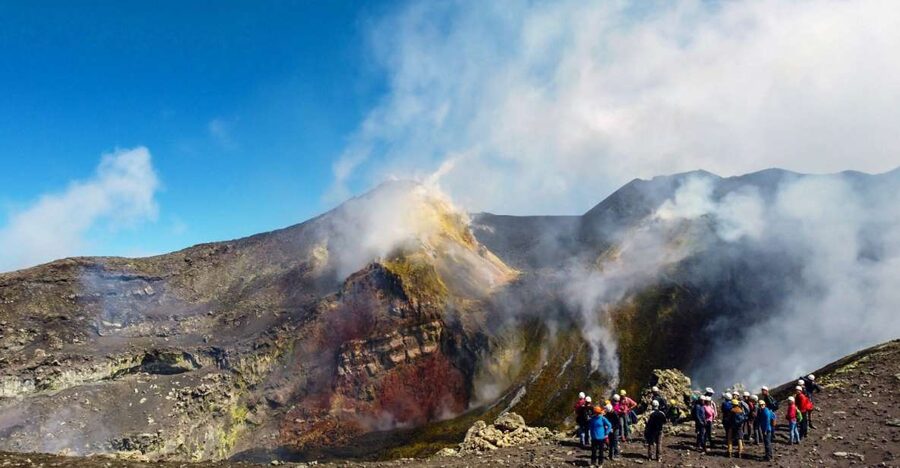
You meet the guide next to the restaurant La Terrazza dell Etna, in front of the Etna south cable car station. You will do a short safety briefing and then get ready for the climb, with boots, sticks, wind jacket, and helmet included.
A practical tip: even with gear provided, bring a mindset of layers. Etna can be cold and windy, and summit craters sit above the nicer weather you might see at lower elevations. If you are sensitive to sulfur in the air, you may want protection for your mouth and nose. Some visitors have found that you can buy covering items at the check-in counter, so ask what is available when you arrive.
Also, plan your stomach. Food and drinks are not included, and at the base you will likely find casual options that vary by day. If you want a steadier start, it is smart to eat before you go and bring water if that feels safer for you.
Cable car start: get altitude fast without burning your legs early
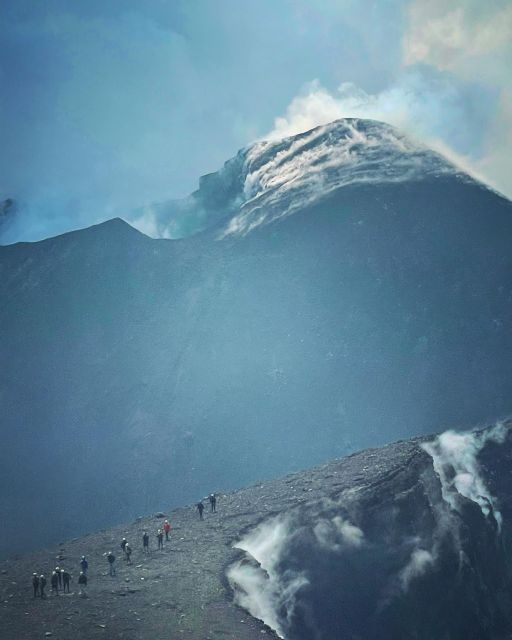
Your day begins with the cable car, a short ride (about 15 minutes) that lifts you away from the base. This matters because it helps you save energy for the hike where it counts. You are not spending the whole day on the road or slogging uphill from sea level.
Once you reach the top of the cable car, you switch to a 4×4. The ride runs about 15 minutes and takes you up toward 2850-meters, in the Torre del Filosofo area. Think of this as the transition moment, from modern transport to lunar-like volcanic ground.
This part is also where the tour’s “small group” advantage shows up. With limited participants, guides can get a quick sense of who moves slower and who might need extra pacing later.
4×4 to Torre del Filosofo, then the hike begins
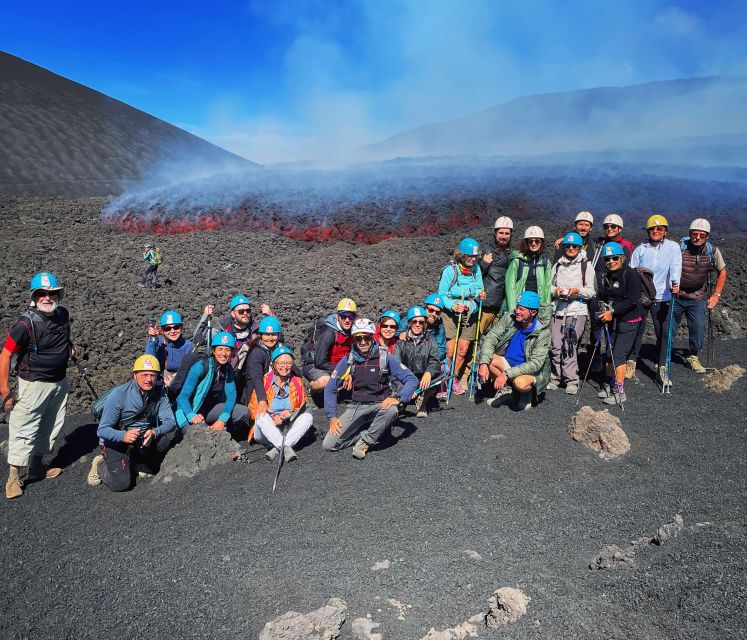
After the 4×4 stops at roughly 2850-meters, you start trekking toward the crater areas. From here the scenery becomes more stark. Volcanic surfaces can look smooth and solid from a distance, but up close you will notice textures change fast, and that affects how you plant your feet.
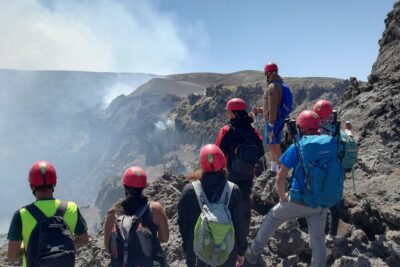
The tour route takes you toward Bocca Nuova, reaching the edge around 3300-meters. Bocca Nuova is a crater that opened in 1968, and it is one of the most impressive viewpoints in the area. You will spend about 2 hours at this stage with a guided tour, which is long enough for real explanations and for everyone to get their bearings.
If you end up with limited visibility, the crater stop still matters. Etna’s activity is often audible and visible as steam or smoke, and even when you cannot see far, the geology discussion helps you read what is happening around you.
Bocca Nuova: 2 hours at the crater rim with a volcanologist guide
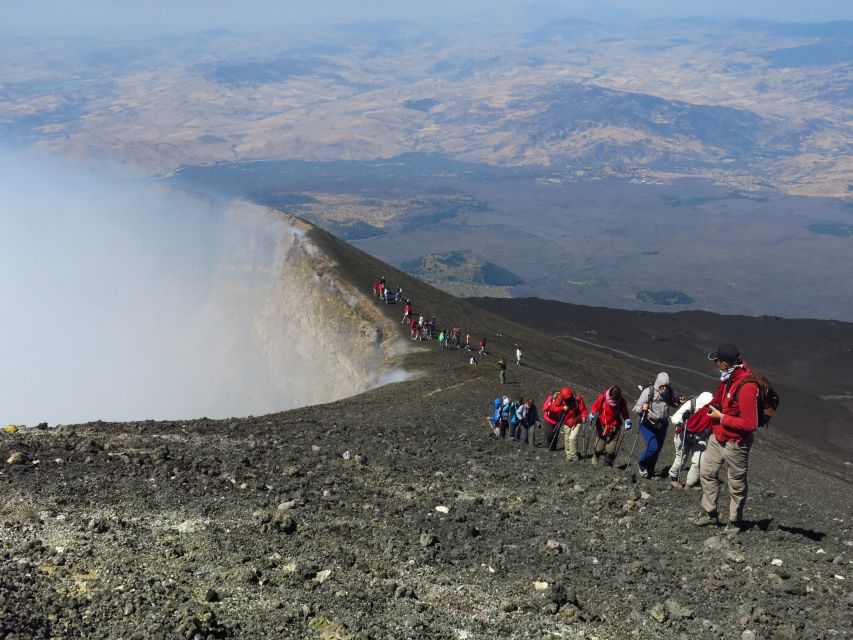
Bocca Nuova is the emotional core of this itinerary. You climb to the edge of a living crater system and then slow down. That slow pace is not wasted time. It is how you turn effort into understanding.
This is also where the best guides shine. In the feedback, guides such as Simone and Marco show up again and again for being patient, humorous, and clear while managing the group. Giuseppe and Alessandro are also mentioned for turning the geology into an engaging story, with pacing that prevents people from getting overextended too early.
What you should expect here:
- You will get crater-edge time for panoramas around Etna when weather allows.
- The guide explains what you are seeing in plain terms, not just a list of facts.
- You are likely to feel how exposed the summit can be, especially in wind.
And the weather lesson is real: if skies are clear, you can sometimes see as far as the Aeolian Islands and much of northern Sicily. If not, you still get the crater experience and the volcanic textures that make Etna look different from almost any other landscape in Italy.
Central crater area and Barbagallo: stepping around the active system
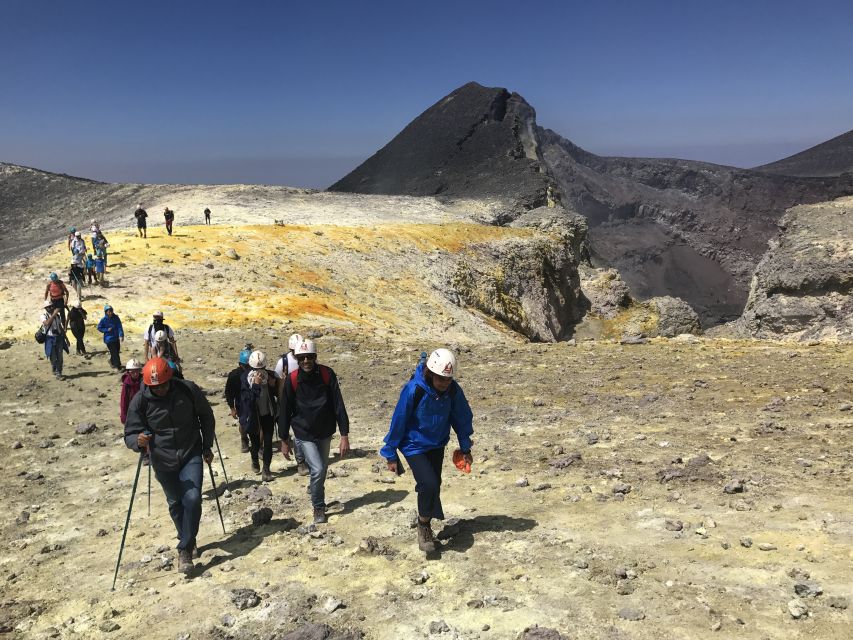
After Bocca Nuova, the tour continues to the central crater area for a shorter guided walk (about 30 minutes). Then you head toward the Barbagallo crater area for another guided segment (about 1 hour).
Why these stops matter: Etna is not one single point. It is a whole active network of vents and eruption zones. Spending time in different crater sectors helps you connect the dots between eruptions in the past and what you see now.
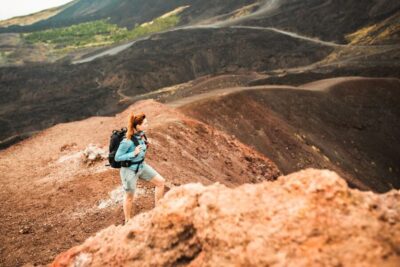
Also, you are not just walking on rocks. Reviews mention loose volcanic scree and shifting volcanic sand. That means you want the included walking sticks to be part of your strategy, not something you toss aside. Use them to stabilize on uneven ground, and keep your steps shorter near steep sections.
If you are anxious by active steam or loud sounds, this is worth knowing up front. Some people find the summit atmosphere intense. The guide will manage safety and pace, but you should enter with a calm expectation: you are standing in the airspace of an active volcano.
Lava tunnel and lunar terrain: seeing Etna as structure, not scenery
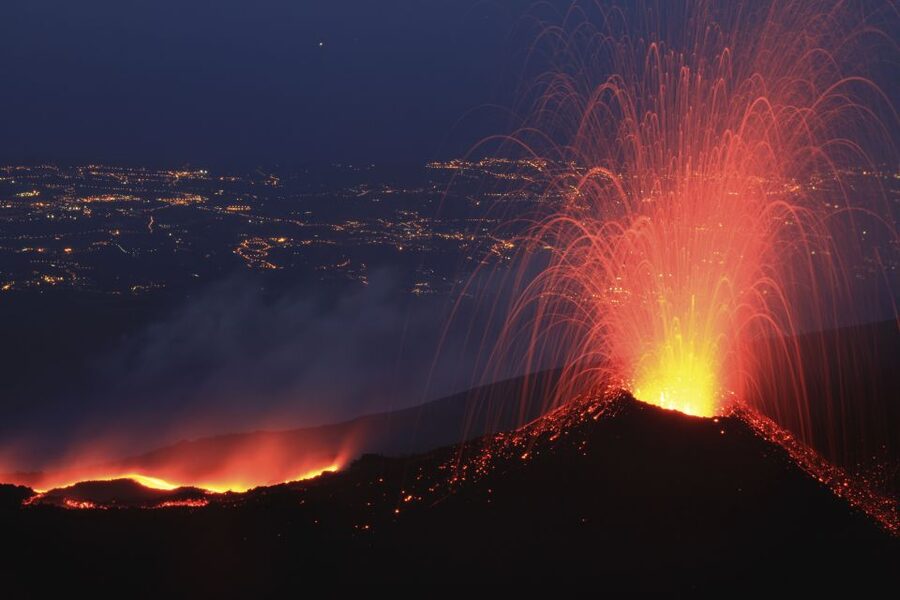
A highlight built into the experience is a stop at one of Etna’s lava tunnels. You walk through volcanic space and see how lava once moved and cooled into tubes.
This is one of those “you understand it more when you walk it” parts. From the outside, Etna can look like a giant mountain with vents. Inside a lava tunnel, you see the physical logic of how eruptions form space and structure. It also gives you a break from the open wind, which can be helpful if the summit is chilly.
Exact tunnel details can vary with conditions, but the goal stays the same: you do not just read about lava, you step into it.
Descent through the 2002 eruption craters and into Valle del Bove
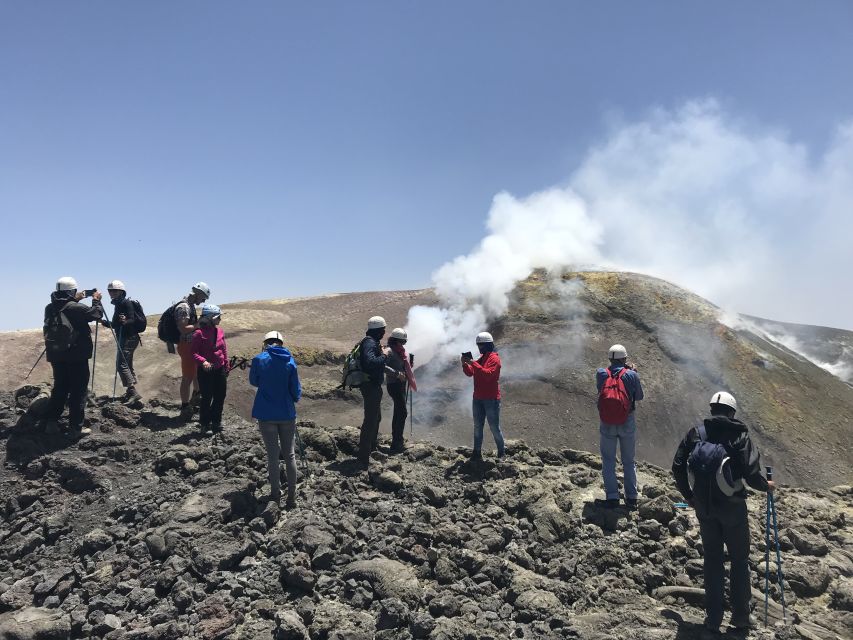
On the way back down, you pass through crater zones connected to the 2002 eruption. You also do a descent over volcanic sand, which sounds easy until you try it. Loose sand can burn your calves and ankles, so keep that in mind and take it slow.
Then comes one of the most visually satisfying moments on the whole itinerary: the Valle del Bove volcanic amphitheater. It is a spectacular caldera, about 8 km long and 4 km wide. From the right angle, it looks like nature carved out a giant bowl and left the walls standing.
The descent is where strong guides keep things organized. Multiple reviews praise how guides check on slower hikers and adjust pace so no one gets abandoned. That matters because the hardest part for many people is not the climb, it is staying steady while tired.
Cable car return: finish strong, not rushed
You return by cable car to the starting point after the full hike and crater tour. The full duration is around 5 hours, but volcanic conditions can cause route changes. The tour notes that the plan may shift due to volcanic risk or weather.
That flexibility is part of the deal with Etna. If the day is safer but visibility or summit access is limited, you might still get a worthwhile crater experience, but possibly without the highest rim segment. In any case, you will be guided, equipped, and pointed to the safest available options.
If you are budgeting time in Sicily, I suggest keeping other plans loose that day. A volcano day can run a little differently, especially when wind or volcanic activity is at play.
Who this tour is for, and who should skip it
This is best for people with a decent hiking level who want to get close to summit craters. Reviews describe it as challenging, with some groups managing it across wide age ranges, but the common thread is reasonable fitness and good footwear.
It is not suitable for:
- Children under 6, and also not for children under 7
- Pregnant women
- People with mobility impairments or wheelchair users
- People with heart problems or respiratory issues
- People who recently had surgery
- People with low level of fitness
- People over 95 years old
Even if you are fit, consider your comfort with altitude exposure and sulfur air. If you are unsure, the safest choice is to ask your doctor about respiratory or heart concerns before booking any volcano summit hike.
Guide quality is the difference-maker here
Mount Etna hikes are all about the details. Step timing, pace, gear checks, and how the guide explains what you are seeing are what turn a tough hike into a great memory.
In the feedback, specific guide names come up repeatedly: Simone, Marco, Giuseppe, Eduardo, Vincenzo, Alessandro, Basilio, and others. The themes are consistent: guides keep the group together, move at a pace that does not leave slower hikers behind, and explain the volcano in a way that feels understandable even if you are not a geology person.
So if you want to maximize value, pay attention to how you feel about the guide style. A good guide helps you get closer to what matters, without pushing the group into risky speed or sloppy footing.
Should you book Mount Etna Summit Crater Trek with Cable Car?
Book it if your top priority is an organized, small-group summit experience on Europe’s highest active volcano, with crater time, lava tunnel walking, and a serious look at Valle del Bove. The included boots, sticks, wind jacket, helmet, and insurance also make this easier to say yes to, compared to building your own plan.
Skip it if you cannot handle a strenuous hike on loose volcanic ground, or if you have respiratory or heart limitations. And if cash payments and possible route changes would stress you out, you may want a lower-stakes Etna option.
If you are ready for wind, sulfur air, and a real climb, this is the kind of Sicilian day that stays with you.
FAQ
What is the duration of the tour?
The total duration is 5 hours.
Where do I meet the guide?
Meet the guide next to the restaurant La Terrazza dell Etna, in front of the Etna south cable car station.
Is the cable car included in the price?
No. The cable car roundtrip is an extra cost paid in cash, along with the 4×4 one-way ticket for the included up-route option.
How much are the cable car and 4×4 tickets?
The 4×4 one-way plus cable car cost is €65 per person for adults and €50 for children under 11, paid in cash at the office. If the summit cannot be reached, the cable car round trip is €52 per person.
What is included with the tour?
Included are volcano guides, the Mount Etna hike, hiking boots, walking sticks, wind jacket, helmet, insurance, and free parking until supplies run out.
What languages are available for the live guide?
The live tour guide is available in French, English, and Italian.
What size is the group?
The group is small, limited to 8 participants.
Is this tour suitable for all ages?
It is not suitable for children under 6, and also not suitable for children under 7. It is also not suitable for pregnant women, people with mobility impairments, wheelchair users, people with heart problems, people with respiratory issues, people with recent surgeries, people with low fitness, and people over 95 years old.
Mount Etna Tours, top to bottom.
 ★ 4.8Catania: Mount Etna Morning or Sunset Day Trip with TastingFrom $704,028 reviews
 ★ 4.7Mount Etna: Guided Volcano Summit Hiking Tour with Cable CarFrom $1243,784 reviews
 ★ 4.8Catania: Sunset Jeep Tour of Mount Etna and Lava Flow CavesFrom $712,113 reviews
 ★ 4.7Mount Etna: Trek to 3000m with cable car and jeepFrom $621,978 reviews
 ★ 4.8Sicily: Etna and Alcantara Gorges Full-Day Tour with LunchFrom $1051,766 reviews
 ★ 4.3Mount Etna: Roundtrip Cable Car and 4×4 Bus TicketFrom $971,602 reviews
 ★ 4.7Etna Volcano: South Side Guided Summit HikeFrom $671,545 reviews
 ★ 4.9Catania: Mount Etna Trekking Trip off the Tourist PathFrom $781,351 reviews
Filed under