
Reviewed · CATANIA, SYRACUSE & ORTIGIA
Benedictine Monastery of Catania – English Guided Tour
Catania hides a monastery you can read. In this English guided tour, I love the two cloisters and the late Baroque architecture that makes the whole complex feel bigger than the city around it. You also get the fun part, the kitchen and cellar spaces where daily monastic life and later academic use overlap. One heads up: it is an efficient 75 minutes, so if you want lots of slow wandering, you may feel slightly rushed.
For the price, around $11, you get access to parts that are usually off-limits, plus baggage storage at the meeting point. The vibe is practical and watch-your-step, with staircases and corridors. Guides like Carmen, Giovanni, and Nicola are praised for strong English and for keeping the tour lively without turning it into a lecture.
In This Review
- Key things that make this tour click
- Setting foot inside San Nicolò l’Arena, not just a church
- The cloisters: where monastic life becomes architecture
- Novices’ garden, kitchens, and the side of monastery life most people miss
- The 16th-century cellar library, plus the UNICT angle
- Roman houses under the modern mezzanine: history stacked, not replaced
- Vaccarini’s work and the monumental staircase
- Restoration that took more than 30 years, and why you should care
- Lava and the cellar built into Catania’s most famous material
- How long it really takes, and what makes the pace feel right
- Price and value: why $11 can feel like more
- Who should book this Benedictine Monastery tour
- Should you book? My quick take
- FAQ
- Where does the English tour start and end?
- How long is the guided tour?
- Is the tour in English only?
- What major areas of the monastery will I see?
- Is it possible to access areas that are normally closed?
- Is skip-the-ticket-line included?
- Where do I meet for the tour?
- Is wheelchair access available?
- How much time should I allow around the tour?
- What is the cancellation window?
Key things that make this tour click
- Two cloisters plus labyrinth corridors that explain how the monastery worked in real space
- 18th-century kitchens and cellar areas that show the monastery’s everyday machinery
- A 16th-century cellar turned library tied to the University of Catania’s Humanities department (UNICT)
- Roman houses visible under a modern mezzanine, so you can literally see layers of time
- The lava-built cellar, an unusual stop that grounds the story in Catania’s geology
- Architects Vaccarini and Giancarlo De Carlo guiding you through Baroque design and modern restoration
Setting foot inside San Nicolò l’Arena, not just a church
The tour starts at the Benedictine Monastery of San Nicolò l’Arena. You pass the gate and meet at an info point in the courtyard area, right by Piazza Dante. From the first minutes, the guide frames the monastery as a time machine, from Roman-era remains to today’s university use.
That shift matters. You are not only looking at old stone. You are seeing how one complex keeps getting reused, repaired, and given a new job. With an English live guide, the maze stops being confusing and starts making sense.
And yes, this place is big. The guide keeps you moving in a logical loop, so you do not waste your hour trying to figure out where the important rooms are.
Our reviewers also walked through other Catania, Syracuse and Ortigia walks in Catania.
- Catania: Mount Etna Morning or Sunset Day Trip with Tasting
★ 4.8 · 4,028 reviews - Catania: Sunset Jeep Tour of Mount Etna and Lava Flow Caves
★ 4.8 · 2,113 reviews - Catania: Etna Sunset Tour with Pickup and Drop-off
★ 4.8 · 1,348 reviews - Mt. Etna and Taormina village full day tour from Catania
★ 5.0 · 1,155 reviews
The cloisters: where monastic life becomes architecture
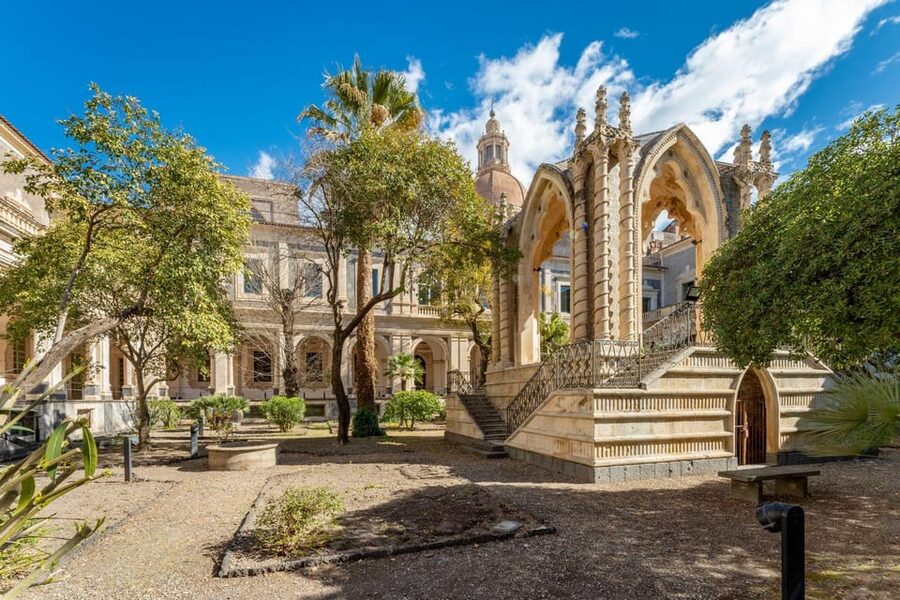
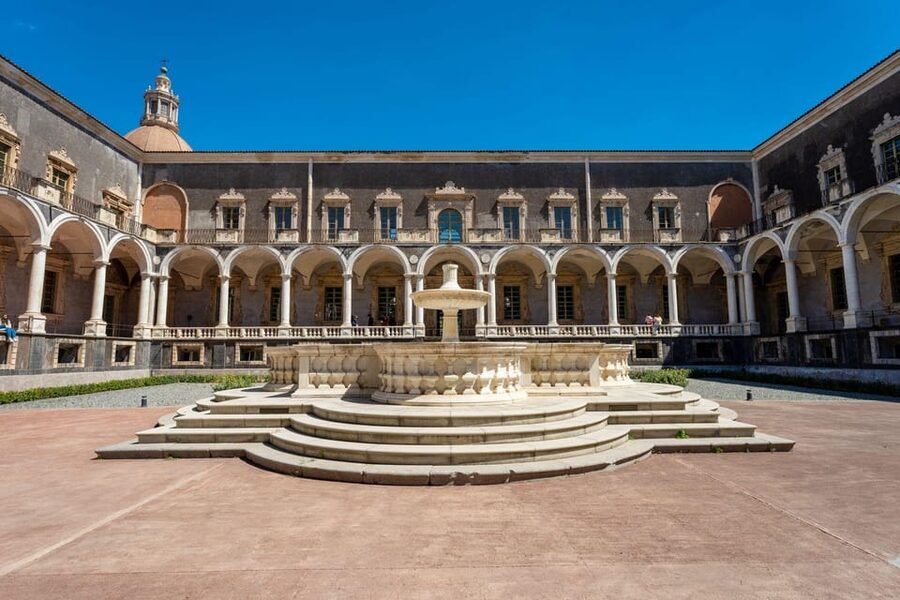
Two cloisters are central to your visit. These are not just pretty courtyards. In a monastery, the cloister is the breathing space, the place where movement, silence, and routine all connect.
What I like about the cloister stops is how the guide ties form to function. You get enough context to understand why the cloisters sit where they do, and why they matter for how people navigated daily life.
If you enjoy Baroque scale, this is where the complex can really hit you. Even when you think you have seen enough churches and courtyards, big monasteries have a way of turning corners into moments.
Novices’ garden, kitchens, and the side of monastery life most people miss
Next comes the more human stuff. You visit areas linked to the novices’ garden, dining rooms, and the famous kitchens and cellars. These spaces help you picture what lived here beyond prayer and ceremony.
The kitchens and cellar areas, including the 18th-century sections, are especially good for two reasons:
1) They are practical and visual, so you can follow the story even without needing heavy background.
2) They help you understand the wealth and organization of the Benedictine order, not in an abstract way, but in the layout of workspaces.
In hotter weather, this is also a practical win. Several visitors point out that getting into lower areas can feel cooler and more comfortable than lingering outside.
The 16th-century cellar library, plus the UNICT angle
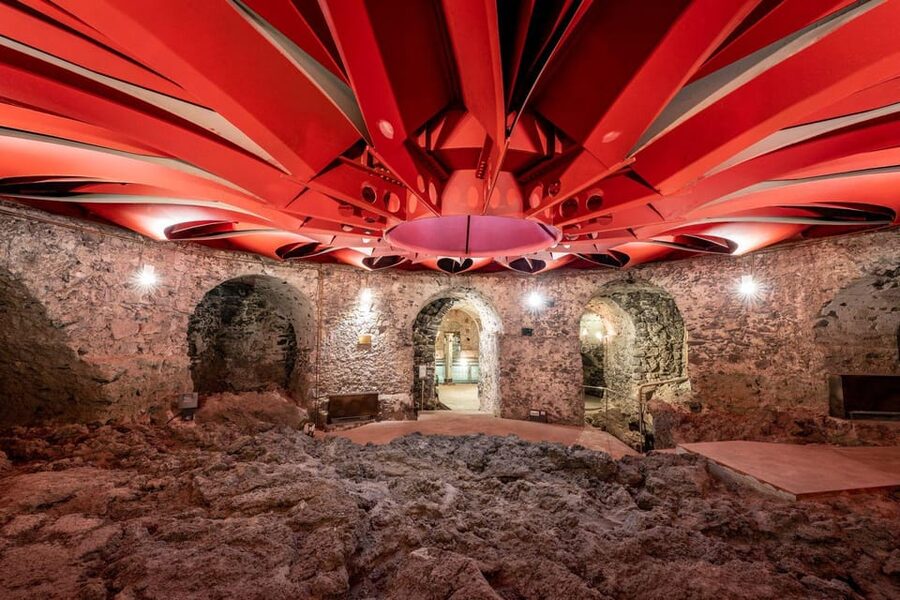
One standout stop is the library housed in a 16th-century cellar. The guide shows you how a space designed for storage and function became a reading and study environment for the University of Catania’s Department of Humanities (UNICT).
This is a valuable kind of preservation. You are not just touring a museum shell. You are watching how architecture gets adapted for modern academic use while still keeping the bones of the original building.
If you like seeing restoration outcomes, this part can feel like proof that conservation can be more than paint and signage. It is a working transformation, and the guide gives you the story behind the shift.
Roman houses under the modern mezzanine: history stacked, not replaced
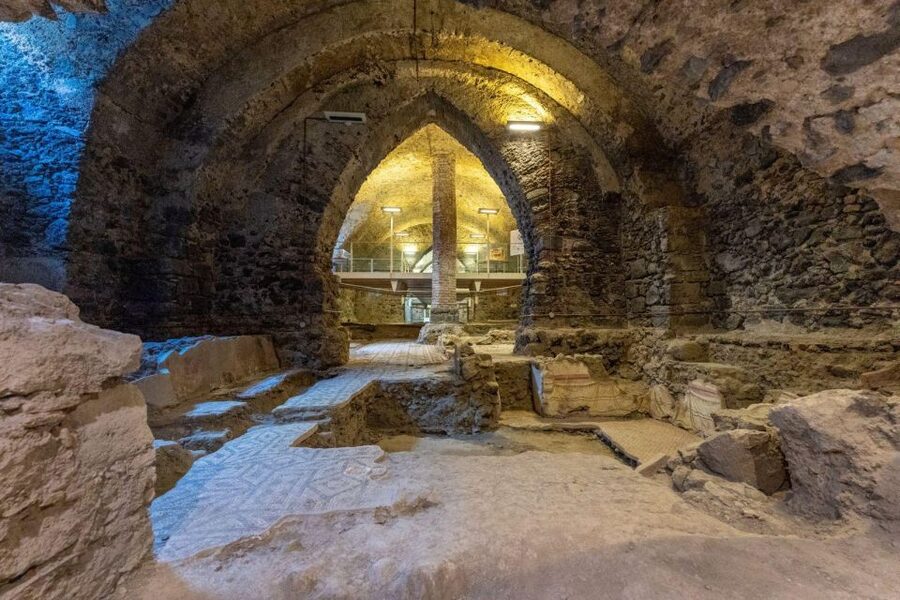
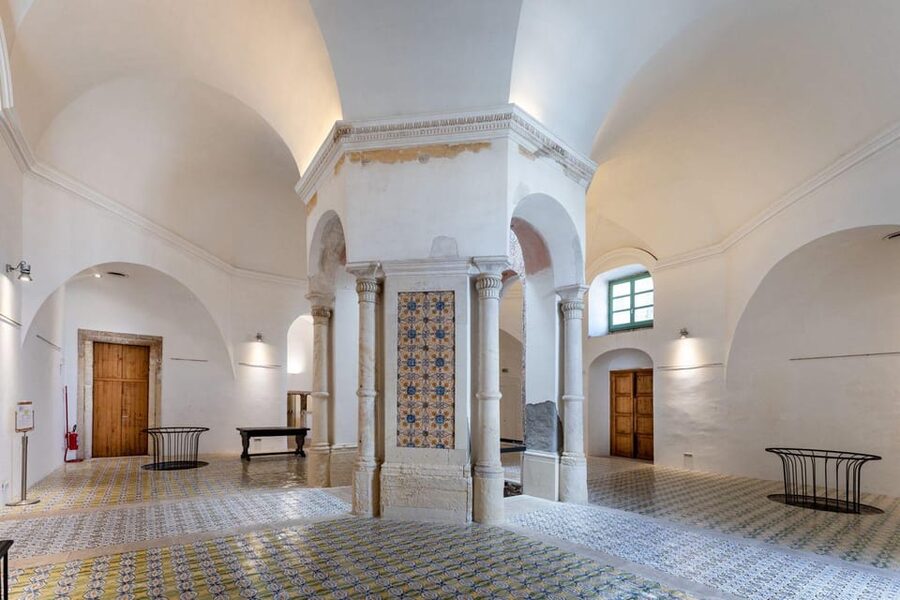
A unique moment comes when you see Roman houses visible under a modern mezzanine. This is one of those stops that makes you look twice, because you are not expecting archaeological layers to sit right under ongoing campus space.
The guide explains what you are seeing and how the modern structure relates to what remains below. The result is a clear sense of time stacking in Catania, not a neat timeline on a wall.
If you are a museum person who likes when archaeology feels real, this is a strong payoff. You get that rare feeling of being in the middle of the city’s long memory.
Vaccarini’s work and the monumental staircase
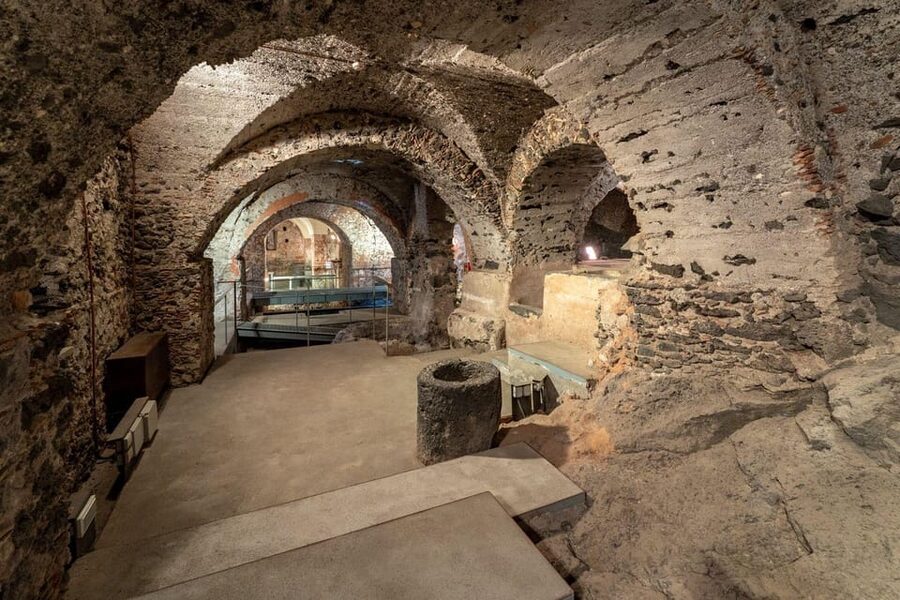
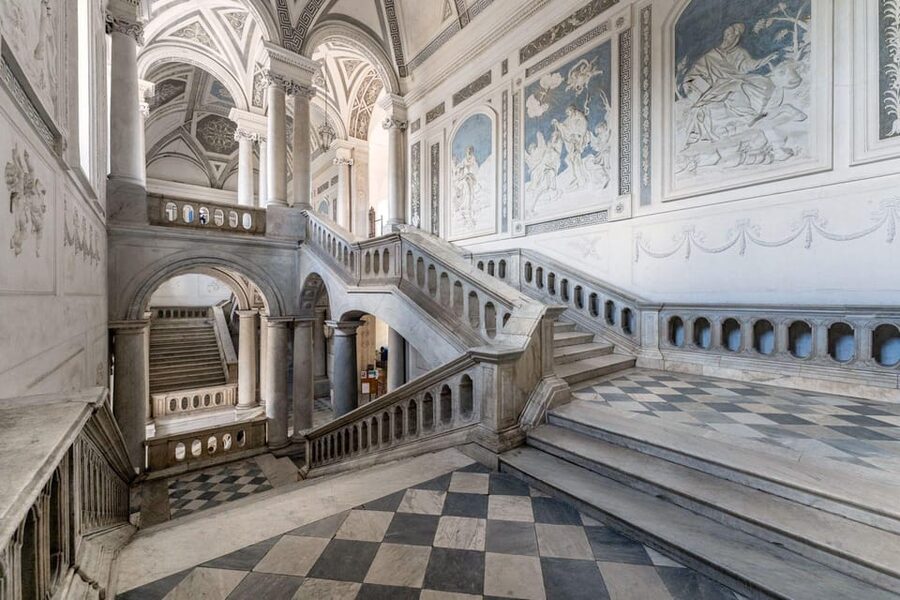
You also get a look at architectural signatures credited to the architect Vaccarini, including the monumental staircase and key design elements of the complex. This is the Baroque side, where the building flexes.
A good guide helps you read the staircase as more than decoration. You learn how the circulation and vertical movement fit into the monastery’s overall plan. When that clicks, it is easier to appreciate why restoration efforts focused on specific structures rather than just cleaning surfaces.
And because you are on a guided loop, you do not miss how these spaces connect. The guide points out relationships between rooms, corridors, and levels, so your photos end up telling a better story later.
We wrote up further guided tours in Catania on the same pass through the archive.






Restoration that took more than 30 years, and why you should care
The tour frames restoration as a long project, lasting more than 30 years. That timeline is not a trivia fact. It explains why the complex looks the way it does today, and why some areas feel carefully stabilized rather than casually reopened.
You also hear about the contemporary refurbishment led by architect Giancarlo De Carlo. The key value here is understanding that the monastery is still evolving. This is not simply a preserved ruin frozen in time.
If you care about how historic sites survive modern use, this stop gives you the bigger picture. You see the why behind the careful work, including what was made accessible and how the building could become part of an active university.
Lava and the cellar built into Catania’s most famous material
Catania is inseparable from Etna, and this monastery connects that story to the ground beneath your feet. The tour includes a cellar built on the lava, now linked to the complex’s library and underground spaces.
This stop can feel almost like a reality check. You are surrounded by centuries of design, and then the guide brings you back to something physical and local. Lava is not just scenery here. It is part of the building material logic.
Even if you are not a geology fan, it gives you a strong sense of place. You understand why Catania’s architecture has such a sturdy, heavy feel.
How long it really takes, and what makes the pace feel right
The tour runs 75 minutes. That is enough time to cover the major rooms without turning it into a marathon. Many visitors appreciate that it feels paced, with time to look at key spaces rather than just rushing you past walls.
It also helps that the guides often bring humor and stories. People mention guides answering questions patiently, and keeping the tour engaging without going overboard. If you like explanations that connect rooms to everyday life, you are likely to enjoy this format.
One practical note: it may depend on the specific tour slot whether you can access certain higher or extra areas. If you have your heart set on a viewing spot, ask when you arrive, since access can vary by time.
Price and value: why $11 can feel like more
At about $11 per person, this tour is good value because you get three things together:
- Access to areas not normally open, including parts linked to study and underground sections
- A live guide in English who explains architecture and how the complex evolved
- A tight route through key rooms, so you do not waste time sorting it out on your own
Self-guided visits are possible for many sites in Catania, but this one is easier with context. Big monasteries can be confusing fast. Here, the guide helps you understand what you are seeing, not just what it looks like.
If you are short on time in Catania, this is one of the better choices per minute. It covers Baroque design, archaeology, and restoration outcomes in one hour plus change.
Who should book this Benedictine Monastery tour
Book it if you like:
- Architecture with a story, especially Baroque spaces and big complexes
- Archaeology that feels integrated, not fenced off
- Clear explanations of how a historic site becomes a living institution
- A guided hour that uses underground rooms and cooler interiors when the weather turns warm
It might not be the best fit if you strongly prefer long free time, since the route is structured and efficient. Also, if you hate staircases or tight corridor navigation, plan accordingly, even though the tour is listed as wheelchair accessible.
Should you book? My quick take
If you want Catania that goes beyond the obvious, this is a smart pick. The monastery gives you an unusual mix: cloisters, kitchens, a library in a cellar, Roman houses under a modern mezzanine, and a lava-built cellar, all tied together by guides who explain clearly and keep it human with humor.
For the money and the 75-minute length, it is a high-value hour. I would book it if you have at least part of an afternoon or morning free, and you want something genuinely different from street-level sights.
FAQ
Where does the English tour start and end?
The tour starts at the Benedictine Monastery of San Nicolò l’Arena and returns there at the end.
How long is the guided tour?
It lasts 75 minutes.
Is the tour in English only?
The tour is offered in English. If English is not your main language, written translations in French or Spanish can be provided.
What major areas of the monastery will I see?
You will visit areas including the two cloisters, the kitchen, the garden of the novices, dining rooms, the library located in a 16th-century cellar area, and the cellar built on lava, plus other key parts such as Roman houses visible under a modern mezzanine.
Is it possible to access areas that are normally closed?
Yes. The tour includes access to the monastery, including parts that are not normally accessible.
Is skip-the-ticket-line included?
Yes. The experience includes skip the ticket line.
Where do I meet for the tour?
After you pass the main gate on Piazza Dante, the info point is in the courtyard on the right.
Is wheelchair access available?
Yes. The tour is listed as wheelchair accessible.
How much time should I allow around the tour?
Allow about 75 minutes for the guided experience, plus a little buffer to get from the meeting point to the starting area.
What is the cancellation window?
Free cancellation is available up to 24 hours in advance for a full refund.
Our Wider Tours File for Catania
The Rest of Our Catania, Syracuse and Ortigia Walks in Catania
Not quite the day you had in mind? The rest of our Catania write-ups sit below
- Catania: The heart of the City – Tour guidato in Italiano★ 4.8 · 171 reviews
- Catania: Pistachio Ravioli, Pasta Home Cooking Class w/ Wine★ 4.7 · 204 reviews
- Catania: Gulf Scuba Diving Tour with Marine Biologist★ 4.9 · 212 reviews
- From Catania: Neapolis of Syracuse, Ortygia, and Noto Tour★ 4.7 · 234 reviews
- Mount Etna: Return Funivia dell’Etna Cable Car Ticket★ 4.0 · 240 reviews
- Etna Morning Jeep Tour★ 4.5 · 241 reviews
- Mount Etna: Ascent to 2800m by 4×4★ 4.8 · 241 reviews
- Mount Etna: North Upper Craters Guided Tour by 4×4 with Trek★ 4.6 · 243 reviews
- From Catania: Day Trip to Mount Etna and Taormina★ 4.9 · 244 reviews
Catania, Syracuse & Ortigia, top to bottom.
 ★ 4.8Catania: Mount Etna Morning or Sunset Day Trip with TastingFrom $704,028 reviews
 ★ 4.8Catania: Sunset Jeep Tour of Mount Etna and Lava Flow CavesFrom $712,113 reviews
 ★ 4.9Catania: Mount Etna Trekking Trip off the Tourist PathFrom $781,351 reviews
 ★ 4.8Catania: Etna Sunset Tour with Pickup and Drop-offFrom $711,348 reviews
 ★ 5.0Mt. Etna and Taormina village full day tour from CataniaFrom $1181,155 reviews
 ★ 4.7From Catania: Mount Etna Sunset Tour with Tasting and CaveFrom $451,119 reviews
 ★ 4.7Syracuse: Boat Trip of Ortigia Island and Sea CavesFrom $23937 reviews
 ★ 4.8Catania: Etna Morning Excursion with Tasting and PickupFrom $67820 reviews
Filed under