
Reviewed · CAGLIARI & SOUTHERN SARDINIA
Cagliari: Conti Vecchi Salt Flats Train and Tour
Salt and birds in one compact outing. At Conti Vecchi near Cagliari, you walk among old saltworks and then ride a train into the Santa Gilla Basin for that strange mix of pink flamingos and hard white salt. I like how the site makes industrial archaeology feel readable, and how the story of Luigi Conti Vecchi explains why salt shaped this part of Sardinia. One thing to plan for, the live guiding is in Italian, so non-Italian speakers may rely on the films and their own reading to keep up.
The highlight for many people is the one-hour train ride inside the salt flats and the natural area around the wetlands. I also like that you get context first, with a museum visit that includes documents, tools, and hands-on style displays from the salt world.
Keep expectations realistic about the outside wildlife time. If weather turns rough, you can still learn a lot, but the flamingos may be harder to spot and the ride may feel more closed-in depending on how the staff protects passengers.
In This Review
- Quick hits
- Conti Vecchi Saltworks: Industrial Archaeology Meets Wildlife
- Where You Start in Assemini and What the Walking Part Teaches
- Salt Plant, Museum, and the Artifacts That Make Salt Real
- Luigi Conti Vecchi and the Salt Worker Stories You Hear
- One-Hour Train Ride Through Santa Gilla Basin Wetlands
- Macchiareddu Salt-Mining Village and Saltpans on Foot
- Pricing and Timing for a Two-Hour Salt and Flamingo Tour
- Who This Tour Fits Best (and Who Might Want a Different Option)
- Should You Book Conti Vecchi Salt Flats by Train?
- FAQ
- How long is the Conti Vecchi Salt Flats train and tour?
- Where do I meet for the tour?
- What is included in the ticket price?
- Is hotel pickup included?
- Is the tour wheelchair accessible?
- What language is the guide?
Quick hits
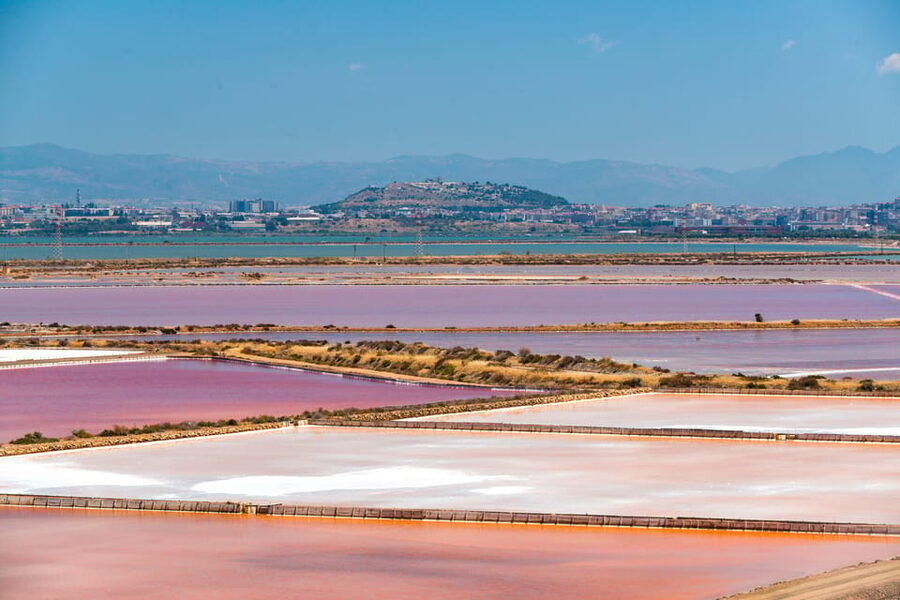
- Pink flamingos over white salt in Sardinia’s Santa Gilla Basin, best for photos when the light is kind
- Luigi Conti Vecchi’s role in the salt industry and regional development, tied to how people lived and worked
- Museum stops with real artifacts including documents and tools, plus a vintage workshop and a restored chemical lab
- A train ride that shows the process at close range, not just from a distance
- Wheelchair access is built in, with the train accessible and the old building accessible on the first floor
Conti Vecchi Saltworks: Industrial Archaeology Meets Wildlife
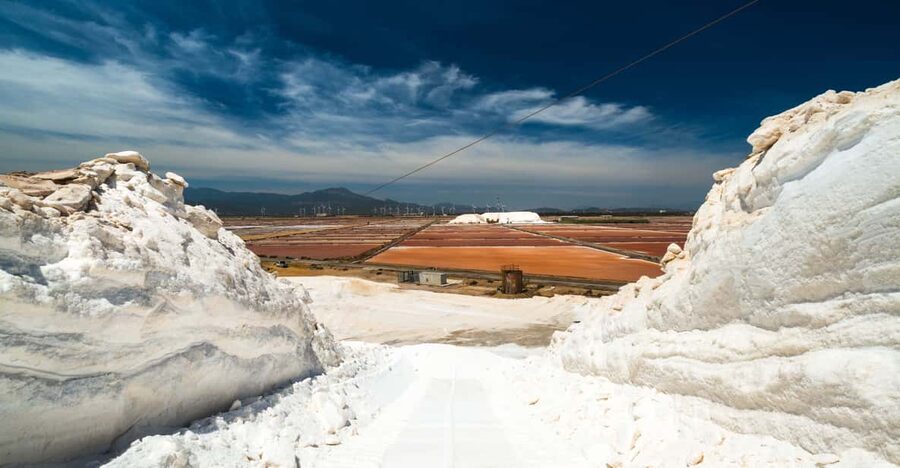
This is not your standard museum visit where you look at glass cases and move on. Conti Vecchi sits in a working landscape of salt production history, where you can see the logic of the industry in the layout of the pans and structures. Then the Santa Gilla Basin adds the animal side of the story, especially the famous pink flamingos.
What makes it click is the way the salt is treated as more than a commodity. You learn why salt mattered day to day, and you also see how engineers and workers shaped the region over time. It is practical, visual learning, with the payoff of big wildlife scenery.
And yes, the flamingos help. Even if you know nothing about salt, watching birds step through shallow water near white salt piles turns the whole place into something alive. If you came to Cagliari expecting beaches and city walks only, this gives you a completely different side of Sardinia without eating up your whole day.
Between an espresso and the next booking, compare these Cagliari and southern Sardinia outings in Cagliari.
- Cagliari: Underground Cagliari Walking Tour
★ 4.7 · 2,329 reviews - Cagliari: Devil’s Saddle Boat Tour with Spritz and Chips
★ 4.9 · 1,193 reviews - Cagliari: Boat Tour with 4 Swim Stops, Snorkeling & Prosecco
★ 4.9 · 865 reviews - Cagliari: Walking Tour of the Old City
★ 4.8 · 560 reviews
Where You Start in Assemini and What the Walking Part Teaches
You start in the industrial area of Cagliari, in the Assemini / Macchiareddu zone. The meeting point feels more like a working neighborhood than a tourist district, and that is part of the charm. You enter in an industrial-area parking lot (free of charge), leave the car, and then walk to the bookshop at the main entrance.
Before you board anything, expect a walking segment through old buildings and viewing areas. It is short, but it sets your brain in the right gear: you are going to understand salt production as a system, not as one magic moment. You also get a sense of how this space fits into the wetlands nearby, which helps a lot once you head to Santa Gilla Basin.
If you are photo-focused, arrive with enough time to settle in and get your bearings. White salt can glare hard, and you will want to judge the angle before the train ride begins.
Salt Plant, Museum, and the Artifacts That Make Salt Real
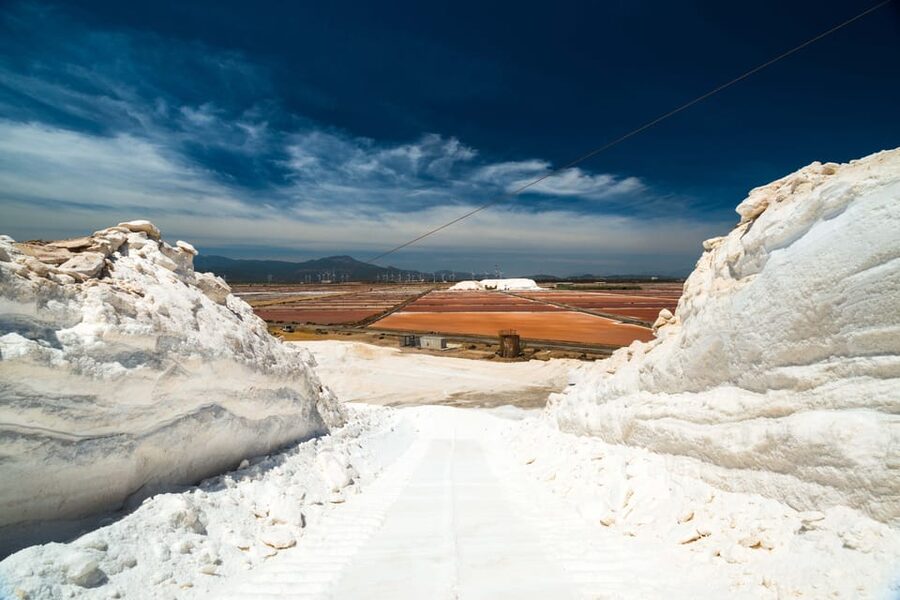
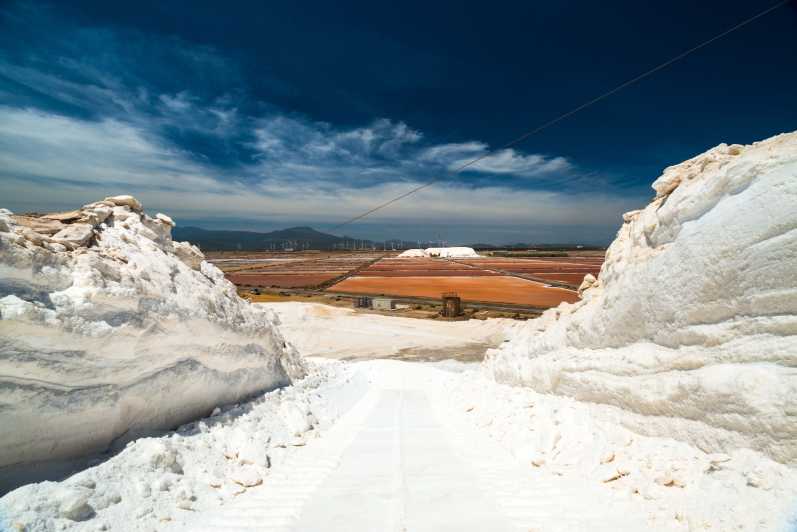
The experience starts strong with a visit to a fully operational salt plant and a museum. This part matters because it gives you the framework for everything that follows. Without it, the salt pans can look like a surreal salt desert. With it, they start looking like a working machine.
Inside, you will encounter more than one type of learning stop. You get short video elements, historical documents, and tools tied to salt production and daily life in the industry. The site also includes a vintage workshop and a restored chemical lab, which helps you see how science and craft met in salt making.
You also learn about the historic value of white gold, and what salt workers did each day. Even if you do not catch every sentence in Italian, the physical artifacts and the visual displays do a lot of the teaching for you.
A practical tip for this museum phase: treat it like your briefing, not just sightseeing. You will understand the train ride better if you pay attention to the basics of how salt is produced and why the wet-dry cycles matter.
Luigi Conti Vecchi and the Salt Worker Stories You Hear
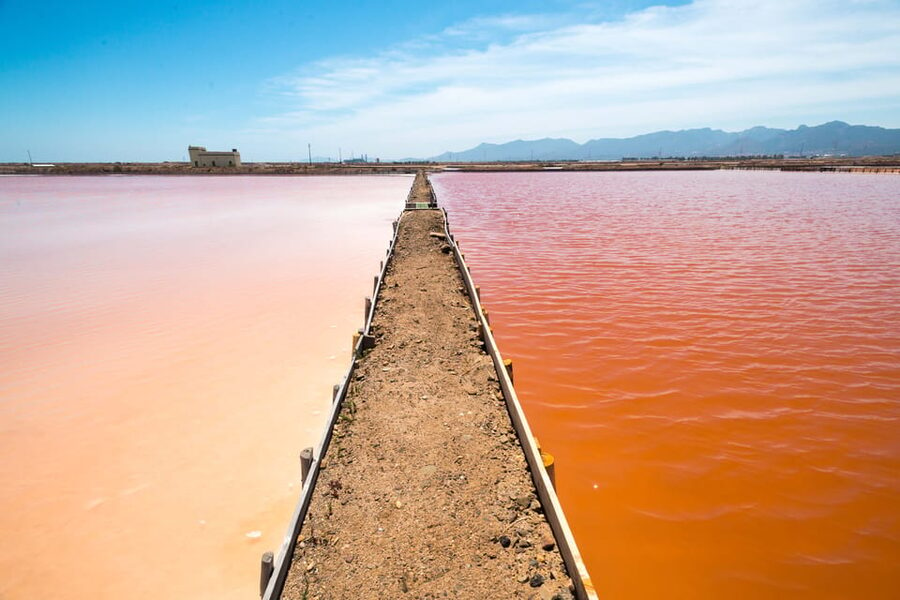
One of the biggest strengths here is storytelling that connects people to infrastructure. Engineers like Luigi Conti Vecchi show up as key figures in the way the region’s development moved forward. It is not only a biography, it is a way to explain how planning and technology turned salt into prosperity for Cagliari and the surrounding area.
The tour is also built around daily life. You will hear the salt workers’ stories and learn what it meant to work the pans and the system around them. That human layer is what keeps the subject from becoming just industrial trivia.
A detail worth noting: you might meet guides who bring extra energy, and some people have highlighted an enthusiastic guide named Elena. The best moments tend to be when the guide connects a specific part of the process to a real life routine, like timing, labor, and the reason the salt works the way it does.
If you need language support, do not panic. Use the videos and visual displays as your anchor, and let the live narration fill in the gaps. The tour is Italian, but the site is designed so you are not stuck staring at nothing.
One-Hour Train Ride Through Santa Gilla Basin Wetlands
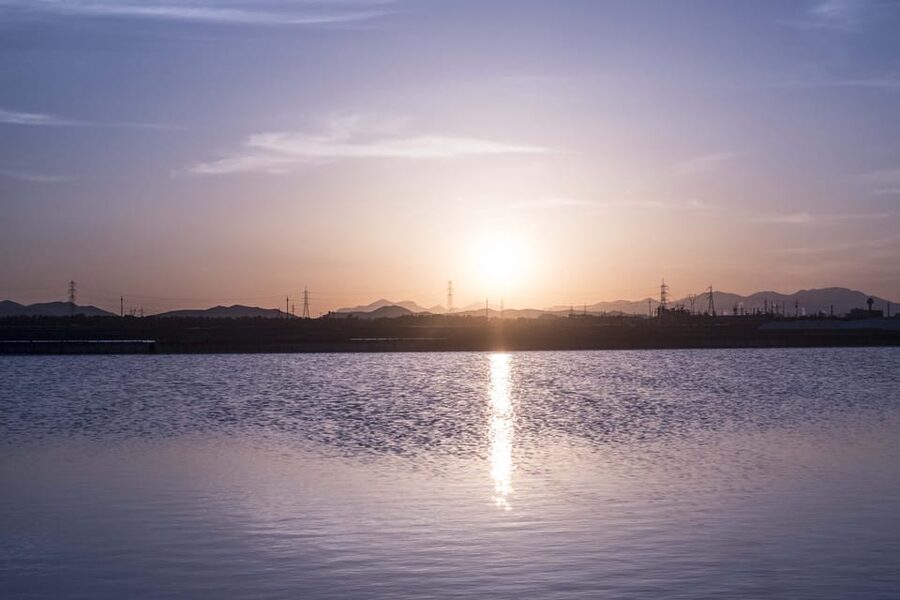
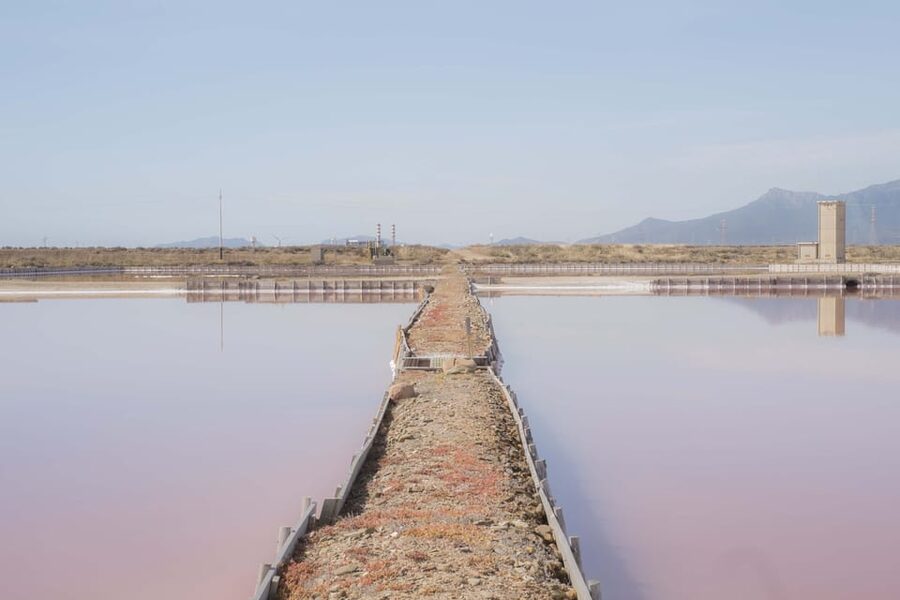
After the museum and old buildings, you board the train for a one-hour ride inside the salt flats and the naturalistic area. This is where the experience becomes cinematic. You go from walking among historical structures to actually moving through the same salt environment that supports wildlife.
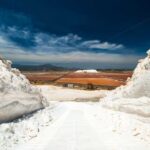
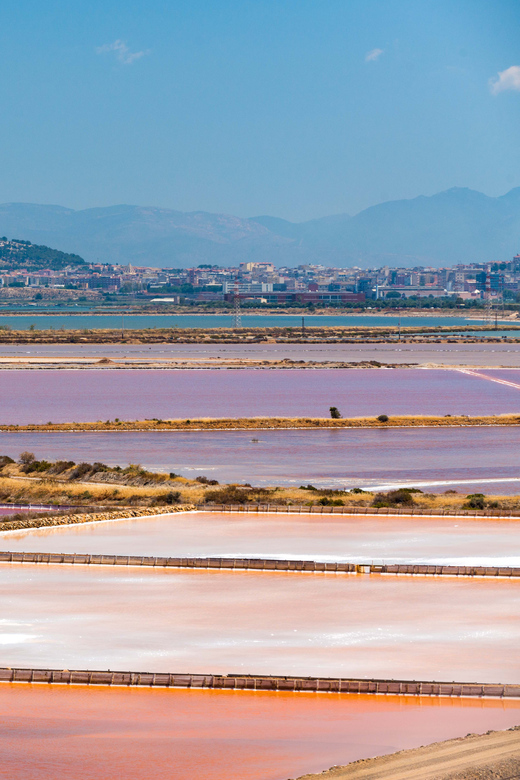
Santa Gilla Basin is Sardinia’s most important wetland, and the tour is timed so you can look for birds along the way. Pink flamingos are the headline, and the contrast against white salt piles is truly the moment people remember.
There are also real-world factors that can affect what you see. One person described losing much of the flamingo spotting during a storm, when windows were closed to protect passengers. That does not ruin the learning, but it can reduce your view and slow your bird watching.
Sound is another practical consideration. On the train, the ride can be loud and the train can shake. That means the second wagon may be harder for following the guide if sound is not carrying well. If you care about understanding every sentence, try to choose a spot where you can hear clearly and focus on the visuals outside.
The train ride does not replace the walking parts, but it complements them perfectly. You learn the process on foot inside the salt world, then the train gives you scale. Instead of thinking about salt pans as small drawings, you start seeing them as a whole system spread across the basin.
Macchiareddu Salt-Mining Village and Saltpans on Foot
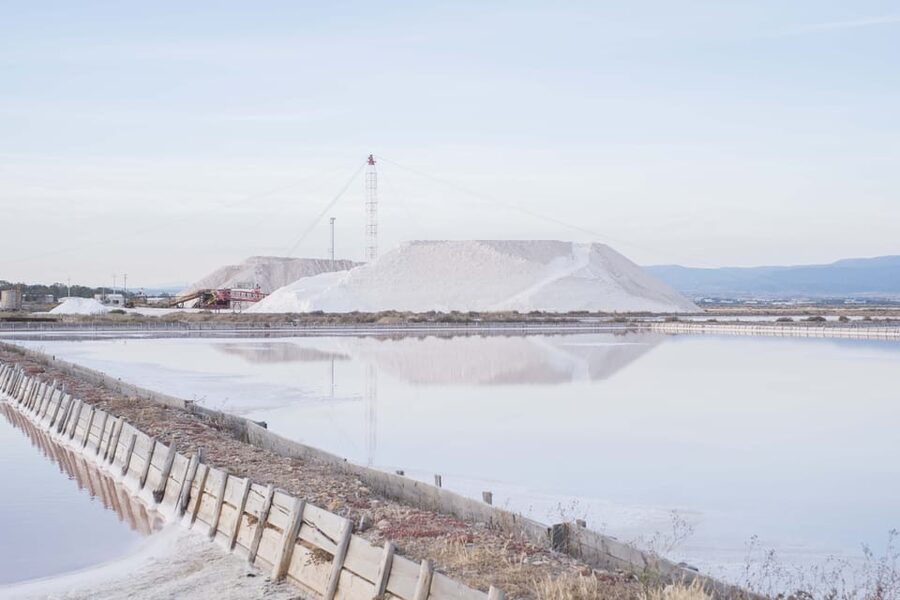
The tour also includes time to explore the historic village of Macchiareddu and wander through the saltpans. This is where the experience shifts again, from explanation to atmosphere. The salt village piece helps you understand the infrastructure of daily work and how the community fit around the production.
You will see the salt pans up close, and the salt-mining village context turns them from scenery into a place where people once lived with the industry. Even if your Italian is basic, the physical layout makes the story easy to follow.
If flamingo spotting is your top priority, treat this segment as your second chance. Birds can move, and the saltpan edges can offer different viewpoints than the train windows. Also remember that lighting changes quickly, and the white salt can make pink tones look different depending on the sun.
This walking time is not described as long, so I would not plan on hours of slow wandering. Think of it as a guided hit of context, with enough time to look around and take photos before returning to the museum.
Pricing and Timing for a Two-Hour Salt and Flamingo Tour
At about $14 per person for a total duration of around 2 hours, the value is surprisingly solid, especially because key parts are included. You get a guide, entry ticket to the salt flats, visits to old buildings and two videos, plus a one-hour train ride inside the salt environment.
That combination is what keeps the price feeling fair. You are not paying just for access to a view. You are paying for learning time that includes historical artifacts and a guided train segment that would be hard to replicate on your own without knowing what to look for.
Timing wise, plan this as an afternoon outing. You start by reaching the Assemini / Macchiareddu industrial area, walk to the entrance, do the museum and old buildings, then board the train, and finally return to the museum to conclude.
The most important scheduling advice is simple: do not stack this with a long, draining plan right before or after. It is compact, but you spend most of your energy in bright outdoor salt surroundings plus a ride with loud ambient conditions.
Who This Tour Fits Best (and Who Might Want a Different Option)
I think this tour is a great fit if you want authentic Sardinia that goes beyond beaches. It is ideal for curious travelers who like real systems, not just famous monuments. If you love animals but also love history, the flamingos plus salt worker context is a strong pairing.
It also works well for accessibility needs compared to many outdoor tours. The train is wheelchair accessible, and the old building is wheelchair accessible on the first floor. That matters because it keeps the most scenic segment inclusive.
The main reason to hesitate is language. The live guide is Italian, and while videos can help, you should be prepared that you may not catch every detail if you do not read Italian. Sound can also be a challenge on the train if you are in a wagon where the speaker is harder to understand due to noise and motion.
Finally, if you expect long free time outside to wander at will, manage expectations. The experience is structured, and the train ride is a set portion of the program. That is part of the value, but it also limits how much unscripted bird watching you can do.
Should You Book Conti Vecchi Salt Flats by Train?
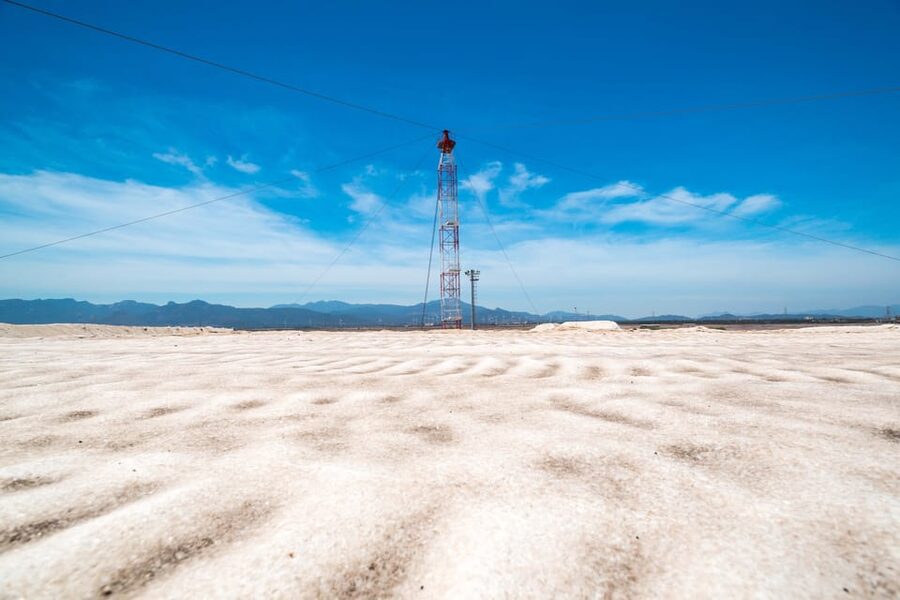
Yes, book it if you want a short, high-impact tour that mixes salt production history with the best kind of nature surprise, pink flamingos in their wetland habitat. The price is fair for the time and included train ride, and the museum stops give you enough context to make the salt pans meaningful.
Skip it or choose a backup plan if you rely on English-only guiding, or if you are extremely sensitive to loud environments and motion on public transport. Also consider that weather can change visibility for birds, even though the learning part should still land.
If you are spending time in Cagliari and want one outing that feels real and specific to this island, Conti Vecchi is one of the smarter bets you can make.
FAQ
How long is the Conti Vecchi Salt Flats train and tour?
The tour lasts about 2 hours total, including time in the saltworks area and a one-hour train ride.
Where do I meet for the tour?
You meet in the industrial area of Cagliari, in Assemini / Macchiareddu. Park inside the industrial-area parking lot (free of charge), then walk to the bookshop at the main entrance.
What is included in the ticket price?
The experience includes a guide, entry ticket to the Conti Vecchi Salt Flats, visits to old buildings and two videos, and a one-hour train ride inside the salt flats and naturalistic area.
Is hotel pickup included?
No, hotel pickup and drop-off are not included.
Is the tour wheelchair accessible?
The train is wheelchair accessible. The old building is wheelchair accessible on the first floor.
What language is the guide?
The live tour guide provides information in Italian.
Our Wider Tours File for Cagliari
More Cagliari and Southern Sardinia Outings Pinned to Our Cagliari Map
Not quite the day you had in mind? The rest of our Cagliari write-ups sit below
- Cagliari: Guided Kayak Excursion in the Gulf of Cagliari★ 4.9 · 173 reviews
- Cagliari: Boat Tour with Swim Stops, Snorkeling, & Aperitif★ 4.6 · 174 reviews
- Cagliari: More Than a Boat Tour; Snack, Swim, Sip & Snorkel★ 4.8 · 181 reviews
- Cagliari Vintage Tour★ 5.0 · 185 reviews
- Cagliari: Old Town Guided E-Bike Tour★ 4.9 · 189 reviews
- Cagliari: Coastline Cruise with Drinks and Snorkeling★ 4.7 · 201 reviews
- Cagliari: Boat Tour with Snorkeling, GoPro & Sardinian Beer★ 4.7 · 207 reviews
- Catamaran tour stops bathing and snorkeling toast with prosecco★ 5.0 · 214 reviews
- Small-Group Food and Wine Tour from Cagliari★ 5.0 · 237 reviews
Cagliari & Southern Sardinia, top to bottom.
 ★ 4.7Cagliari: Underground Cagliari Walking TourFrom $352,329 reviews
 ★ 4.9Cagliari: Devil’s Saddle Boat Tour with Spritz and ChipsFrom $651,193 reviews
 ★ 4.9Cagliari: Boat Tour with 4 Swim Stops, Snorkeling & ProseccoFrom $56865 reviews
 ★ 4.8Cagliari: Walking Tour of the Old CityFrom $25560 reviews
 ★ 4.8Cagliari: Boat Tour, 4 Stops, Swim, Snorkeling, & 1 SpritzFrom $62539 reviews
 ★ 4.9Cagliari: Zodiac Boat Tour, 3-4 SwimStops, Wine & SnorkelingFrom $41500 reviews
 ★ 4.9Buggerru: Half-Day Dinghy Tour of the Sardinian South CoastFrom $50480 reviews
 ★ 4.9Cagliari:devil’s saddle big cruise by boat drink & snackFrom $39453 reviews