
Reviewed · CAGLIARI & SOUTHERN SARDINIA
Cagliari: Underground Cagliari Walking Tour
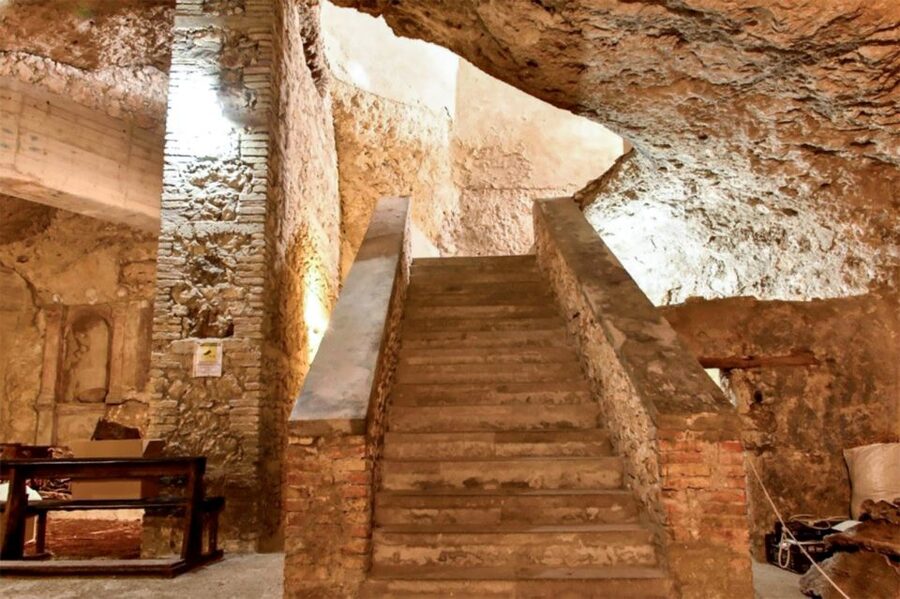
Cagliari gets more interesting underground. This walking tour links WWII shelters, early-Christian art, and Roman remains in three stops, with a bilingual guide keeping the pace easy. I especially like the way the guide switches between English and Italian without losing the thread, and how the tour connects different eras as you move through the city. One thing to consider, it is not fully underground and parts can feel tight, so if you struggle with claustrophobia or limited mobility, this may not be for you.
You get real variety in a short time: a long candle-lit tunnel under a school, a crypt with surviving frescoes, and the archaeological undergrounds connected to Saint Eulalia. I also like that the tour includes practical walking between neighborhoods like Stampace and Marina, so you finish with better city orientation instead of just standing in caves. The main drawback is that the optional wine tasting is sometimes more like a small pour plus snacks than a full tasting experience.
In This Review
- Underground Cagliari in 3 Stops: The Value Pitch
- The WWII Tunnel Shelter Under the Salesian School
- Cripta di Santa Restituta: Frescoes and 5th-Century Clues
- Saint Eulalia Undergrounds: Roman Remains Beneath the Church
- Stampace and Marina Streets: Why the Walking Sections Matter
- Old Town Add-On or Food and Wine: Choosing Your Ending
- Guided Old Town walking
- Food and wine tasting option
- Guide Quality and the Bilingual Advantage
- Price and Time: Why 35 USD Works Here
- What to Bring, What to Expect, and Who Should Skip This
- Short practical tips to make the tour smoother
- FAQ
- How long is the underground Cagliari tour?
- Is the tour fully underground?
- What underground sites are included?
- What languages do the guides speak?
- Is there a wine tasting option?
- What should I bring?
- Should you book this underground Cagliari tour?
Underground Cagliari in 3 Stops: The Value Pitch
For 35 USD per person, you are not just paying for access to underground rooms. You are getting three separate guided site visits with entry fees included, plus the in-between walking through historic areas. That matters in Cagliari, because some of the most interesting spaces are tucked under churches and older buildings, and they do not always feel obvious from street level.
The tour runs 2 to 4 hours depending on the route you choose and the opening times of the sites. It also has a private group option if you want more control over pace and questions. And it has a strong overall rating of 4.7 with over 2,300 reviews, which lines up with what I look for in a tour like this: clear explanations, a smooth pace, and guides who know how to make unusual spaces feel understandable.
The WWII Tunnel Shelter Under the Salesian School
The first big wow moment is the long tunnel shelter beneath the Salesian school area. You start with a guided visit that focuses on the tunnel used as a bomb shelter during World War II, and yes, the mood is candle-lit. The atmosphere here does a lot of storytelling for you. You hear and feel the space in a way that museum panels cannot match.
A standout detail is the tunnel length, about 120 meters. That distance changes how you experience it. Instead of a quick glance, you slowly take in the scale, how people would have moved through it, and why it became part of everyday survival history in the city. If you like modern history as much as ancient history, this stop gives you that balance early on.
Practical note: even when the rest of the route includes brief outdoor walks, this tunnel is the kind of place where tight quarters can be uncomfortable. If you are sensitive to enclosed spaces, this is the portion to judge first.
Between an espresso and the next booking, compare these Cagliari and southern Sardinia outings in Cagliari.
- Cagliari: Underground Cagliari Walking Tour
★ 4.7 · 2,329 reviews - Cagliari: Devil’s Saddle Boat Tour with Spritz and Chips
★ 4.9 · 1,193 reviews - Cagliari: Boat Tour with 4 Swim Stops, Snorkeling & Prosecco
★ 4.9 · 865 reviews - Cagliari: Walking Tour of the Old City
★ 4.8 · 560 reviews
Cripta di Santa Restituta: Frescoes and 5th-Century Clues
Next comes one of the most meaningful underground visits on the route, the crypt of Santa Restituta. This is where the tour shifts from WWII survival to much earlier religious life, and the guide’s job becomes turning damp, quiet stone into a clear timeline.
I like this stop because it includes specific visual details you can actually look for. There are frescoes that still stand, so you are not only hearing history, you are seeing it. The guide also describes the place of pagan worship during the 5th century. That is an important context piece, because it reframes what you are looking at. You realize this is not just an old room, it is a layered site where beliefs and power changed over time.
The crypt’s sensory atmosphere adds to the effect. You might notice water dripping as you study the space, and that small sound helps you take the time the site deserves. The stop is guided for about 40 minutes, which is long enough to absorb the story without feeling rushed.
Saint Eulalia Undergrounds: Roman Remains Beneath the Church
After Santa Restituta, the tour reaches the underground archaeological area connected to Saint Eulalia, visiting the MUTSEU site. Here you get the Roman layer, with ruins such as a paved Roman road. That road detail is a great example of why an underground tour like this works. Roman Cagliari is often talked about in fragments, but down here you can see an element of how people actually moved through the city.
This is also the part of the tour that feels slightly more exploratory. There is space to look around, connect the story to the city above, and follow the guide’s path between remnants. The guided portion is about 40 minutes, and by now you understand what the guide is doing: building links between street life, buildings, and what was underneath them.
Even if you are not a “ruins person,” the Roman road gives you something concrete to anchor the explanations to. You leave with a clearer mental map of Cagliari than you would from any viewpoint alone.
Stampace and Marina Streets: Why the Walking Sections Matter
Between the underground sites, you walk through parts of Cagliari’s old districts, including short stretches in Stampace and Marina. These aren’t filler minutes. They act like breathing space and help you reconnect to the city above the tunnels.
The walking is brief between the main stops, roughly 10 minutes in each neighborhood segment described in the route. That is enough to pick up street-level atmosphere, see building styles around the historic center, and reset your legs after underground time.
If you are deciding whether to add the Old Town option later, this is also your preview. You start to notice how the historic center links up visually, so when the guide later takes you through highlights, it feels like a continuation rather than a separate tour.
Old Town Add-On or Food and Wine: Choosing Your Ending
You can extend the experience after the main underground circuit in one of two directions, depending on the option you pick.
Guided Old Town walking
If you choose the option with an additional guided walk through the Old Town, you get a street-level tour of the historic center. This adds context. After seeing crypts and tunnels, the Old Town highlights help you place what you learned into the city’s visible layout.
This is also a good choice if you prefer more time outside with your eyes on the streets rather than staying underground longer. It is still guided, so you are not left wandering.




Food and wine tasting option
If you choose the food and wine tasting add-on, you should calibrate expectations. The tour description includes wine tasting and a snack with this option. One guide-led review note stood out to me as a caution: the tasting may be less about a multi-step tasting and more about receiving a glass of wine with Sardinian snacks.
That does not make it bad. It just means it is not the same experience as a structured vineyard tour. If what you want most is education about Sardinian food and flavors, I would think of it as a light finish rather than a deep tasting.
Guide Quality and the Bilingual Advantage
This tour’s success hinges on the guide. In multiple accounts, the most praised detail is how well guides handle the bilingual format. The tour runs in both English and Italian, and guides switch between languages smoothly without getting tangled or rushed.
I especially value tours where the guide does not speed through the story just to hit every stop. In this case, the pace seems to be designed for the space itself. A tunnel and crypt do not benefit from sprinting. It takes time to listen, look, and connect the details.
You may even run into guide names like Francesca or Valentina in different tour groups, and some people also mention Fredrico and Silvia for add-on experiences. Different guides will have their own style, but the common thread in feedback is strong: clear explanations, good English, and a friendly, confident way of leading.
The group size can also affect your experience. One review mentioned a group of about 25 people and suggested splitting language groups could make communication easier. That tells me two things: this tour can run with a decent number of participants, and if you are very language-sensitive, the private group option might be worth it.
Price and Time: Why 35 USD Works Here
Let us talk value in a concrete way. For about 35 USD, you typically get:
- A guided visit to three underground sites (with entry fees included)
- Stops that cover WWII shelter history, a crypt with frescoes, and Roman underground archaeology
- Short walking segments between districts
- Optional add-ons like guided Old Town or a wine and snack finish
At many destinations, you either pay separately for sites, or you get a general walk with only surface context. Here, you get multiple access points plus the story behind them. The 2 to 4 hour window is also a practical length for a vacation day, especially if you are juggling beach time in Sardinia.
If your budget is tight, prioritize the underground core first. If you have time and enjoy food, consider the add-on, but remember the wine may be light depending on what is included.
What to Bring, What to Expect, and Who Should Skip This
This tour is built for comfortable walking, not high-intensity hiking. You should wear comfortable shoes, because there is a bit of walking outside and you will likely step on uneven or damp surfaces underground.
Weather can matter. The guidance suggests bringing an umbrella if it is raining, since you do spend some time walking above ground between sites.
Here is the important suitability check, based on the tour’s own constraints:
- Not suitable for wheelchair users
- Not suitable for people with mobility impairments
- Not suitable for people with claustrophobia
- Not suitable for people who are visually impaired
Even if you feel mostly fine, I would treat the WWII tunnel shelter stop as the main test for comfort. If enclosed spaces are hard for you, that is the point where discomfort could become distracting.
Also, it is not entirely underground. You do visit three underground sites, but the route includes walks through districts like Stampace and Marina.
Short practical tips to make the tour smoother
Arrive about 10 minutes before the start time so you are not rushing into a meeting point in a city where parking can be tricky. If you are driving, I would plan extra time and aim for public parking nearby, because finding a spot can take longer than expected.
Because the tour is guided in both English and Italian, you do not need language fluency to follow along, but you should still listen closely at each stop. The guide connects details across eras, and it gets easier to understand the city as the story repeats in a new form.
One more tip: if opening times shift, the operator may visit alternative underground sites. That is normal for old buildings and living sites, so keep your expectations flexible once you see the first stop.
FAQ
How long is the underground Cagliari tour?
The duration is listed as 2 to 4 hours, depending on the starting time and which option you select.
Is the tour fully underground?
No. You visit three underground sites, but the route also includes some walking outside between stops.
What underground sites are included?
The tour includes the tunnel shelter beneath the Salesian school used as a bomb shelter during World War II, the crypt of Santa Restituta, and the underground archaeological area at Saint Eulalia (MUTSEU).
What languages do the guides speak?
The tour is offered in English and Italian, with dual language guiding.
Is there a wine tasting option?
Yes. If you select the option, the tour includes wine tasting and a snack.
What should I bring?
Wear comfortable shoes. If it is raining, bringing an umbrella is suggested.
Should you book this underground Cagliari tour?
If you want Cagliari to feel like a story, not just a walk, this tour is a strong choice. The mix of WWII tunnel history, Santa Restituta’s frescoes, and Roman remains under Saint Eulalia gives you three different angles on the same city in one afternoon range.
I would book it if you like guided explanations, want the convenience of bundled access to multiple sites, and enjoy short neighborhood walks that help you orient yourself. I would skip it if you have mobility limitations, claustrophobia, wheelchair needs, or visual impairment concerns.
Pick the Old Town add-on if you want the street-level payoff. Pick the wine tasting finish if you enjoy a small Sardinian-style snack and wine at the end, but go in knowing it may be more of a light pour than a deep tasting session.
Our Wider Tours File for Cagliari
More Cagliari and Southern Sardinia Outings Pinned to Our Cagliari Map
Not quite the day you had in mind? The rest of our Cagliari write-ups sit below
- Cagliari: Guided Kayak Excursion in the Gulf of Cagliari★ 4.9 · 173 reviews
- Cagliari: Boat Tour with Swim Stops, Snorkeling, & Aperitif★ 4.6 · 174 reviews
- Cagliari: More Than a Boat Tour; Snack, Swim, Sip & Snorkel★ 4.8 · 181 reviews
- Cagliari Vintage Tour★ 5.0 · 185 reviews
- Cagliari: Old Town Guided E-Bike Tour★ 4.9 · 189 reviews
- Cagliari: Coastline Cruise with Drinks and Snorkeling★ 4.7 · 201 reviews
- Cagliari: Boat Tour with Snorkeling, GoPro & Sardinian Beer★ 4.7 · 207 reviews
- Catamaran tour stops bathing and snorkeling toast with prosecco★ 5.0 · 214 reviews
- Small-Group Food and Wine Tour from Cagliari★ 5.0 · 237 reviews
Cagliari & Southern Sardinia, top to bottom.
 ★ 4.9Cagliari: Devil’s Saddle Boat Tour with Spritz and ChipsFrom $651,193 reviews
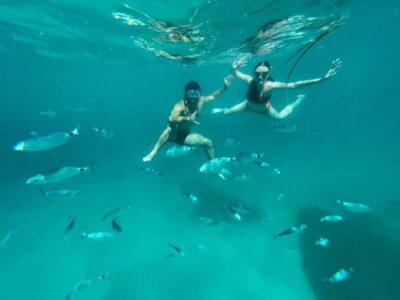 ★ 4.9Cagliari: Boat Tour with 4 Swim Stops, Snorkeling & ProseccoFrom $56865 reviews
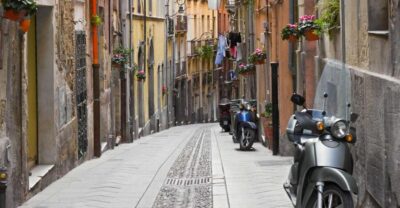 ★ 4.8Cagliari: Walking Tour of the Old CityFrom $25560 reviews
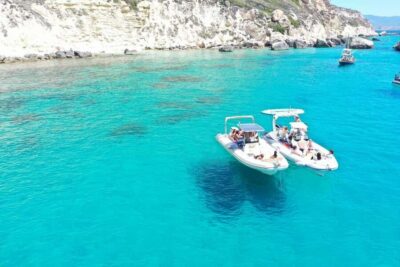 ★ 4.8Cagliari: Boat Tour, 4 Stops, Swim, Snorkeling, & 1 SpritzFrom $62539 reviews
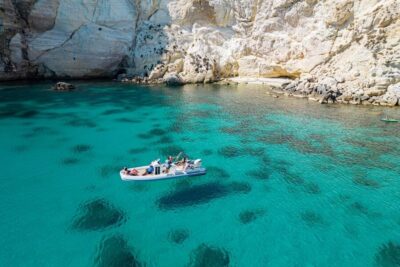 ★ 4.9Cagliari: Zodiac Boat Tour, 3-4 SwimStops, Wine & SnorkelingFrom $41500 reviews
 ★ 4.5Cagliari: Conti Vecchi Salt Flats Train and TourFrom $14484 reviews
 ★ 4.9Buggerru: Half-Day Dinghy Tour of the Sardinian South CoastFrom $50480 reviews
 ★ 4.9Cagliari:devil’s saddle big cruise by boat drink & snackFrom $39453 reviews