
Reviewed · COLOSSEUM & ROMAN FORUM TOURS
Colosseum & Ancient Rome Guided Walking Tour
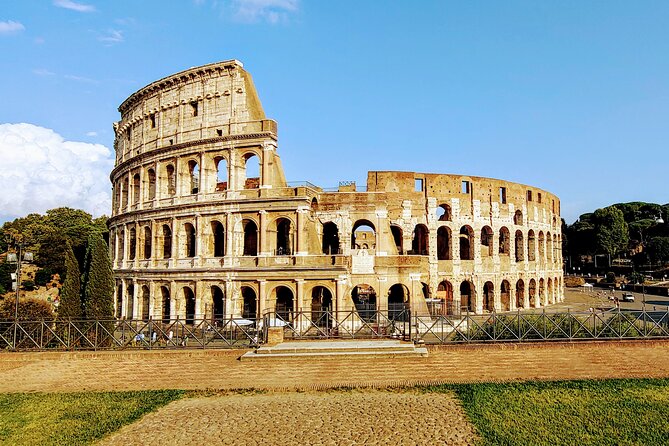
Colosseum to Forum, in one efficient loop. This guided circuit packs three must-sees into about 2 hours 45 minutes, with admission tickets included so you can focus on the story instead of ticket math. One thing to plan for: you are on cobblestones, steps, and inclines, and the crowd at the Colosseum can make the pace feel full.
What I like most is the small-group setup, max 25 people, paired with headsets that help you catch the guide’s explanation without craning your neck. Guides in this program are praised for turning big names and big dates into clear images, like using picture books at the Colosseum, keeping groups together in heat, and showing smart photo angles along the way.
For the price of $65.33, you also get real value from the included entry fees (the Colosseum ticket and reservation fee are listed separately). It’s not a long “sit and absorb” tour, but for first-time Rome visitors, it’s a fast, guided way to get your bearings and understand what you’re looking at.
In This Review
- Key highlights to look for on this tour
- Why this Colosseum-Palatine-Forum loop makes sense in Rome
- Price and value: what $65.33 buys you here
- Before you go: meeting point, end point, and the one rule that matters
- Colosseum stop: what you’re really seeing in the Flavian Amphitheatre
- Palatine Hill: Rome’s starting point and the view from the top
- Roman Forum: politics, business, and justice in the same space
- Headsets, small groups, and guide styles that make or break it
- What to wear and bring for this 2 hours 45 minutes
- Who this tour is best for
- Should you book this Colosseum & Ancient Rome guided walking tour?
- FAQ
- How long is the Colosseum, Palatine Hill, and Roman Forum walking tour?
- What does the tour cost?
- Is the tour offered in English?
- Which sites are included?
- Are admission tickets included in the price?
- Does this tour include headsets?
- Where does the tour start and end?
- What do I need for entry to the Colosseum and Roman Forum?
- Is food included?
- What is the cancellation refund timeline?
Key highlights to look for on this tour
- Tickets and fees included for the Colosseum, Palatine Hill, and Roman Forum, so you’re not juggling separate lines.
- Small-group max of 25 plus headsets, which makes it easier to hear your guide even in thick crowds.
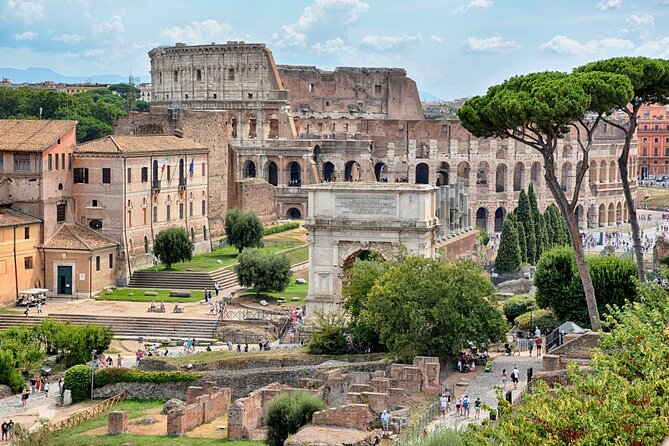
- A tight itinerary that links the Colosseum, the imperial heart on Palatine Hill, and the civic center of the Forum.
- Story-first guidance from guides praised for humor, clear explanations, and photo and rest breaks.
- Real-world crowd navigation so you spend less time herding yourself through bottlenecks.
Why this Colosseum-Palatine-Forum loop makes sense in Rome
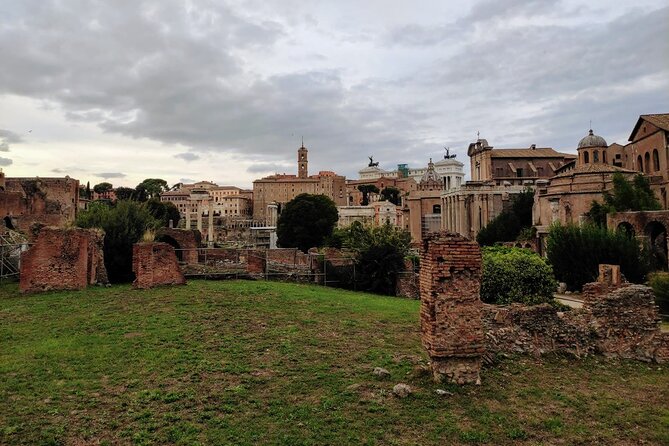
If you only have a half-day to wrap your head around ancient Rome, this format does the job. You hit three signature sites that are connected in a very practical way: entertainment and power at the Colosseum, the starting point of the city and the imperial palaces on Palatine Hill, then the political and civic center at the Roman Forum. It’s the same Rome, shown from different angles.
I also like that the tour is designed around guidance, not just sightseeing. With a live guide and headsets, you’re not left trying to guess what each broken arch or temple fragment used to mean. You get explanations timed to where you are standing, which makes the ruins feel less random.
The main tradeoff is simple: you will walk. This is a “get on your feet” tour. If you want lots of wandering time inside every corner, you might feel slightly rushed. But if you want structure and context, the schedule is a win.
Filed beside this one, more Colosseum and Roman Forum tours in Rome.
- Rome: Colosseum, Palatine Hill and Roman Forum Guided Tour
★ 4.8 · 32,814 reviews - Rome: Guided Tour of Colosseum, Roman Forum & Palatine Hill
★ 4.7 · 27,897 reviews - Rome: Colosseum & Forum with Audio Guide App -Optional Arena
★ 4.2 · 24,770 reviews - Rome: Colosseum, Roman Forum and Palatine Hill Guided Tour
★ 4.5 · 23,903 reviews
Price and value: what $65.33 buys you here
At $65.33 per person, the headline value is that Colosseum entrance and reservation fees are included. The listed value is €18 for the Colosseum ticket plus €2 for the reservation fee, and that takes some pressure off your planning budget.
The remainder of what you pay covers the guiding service and the experience operations, including things like live guide time and headsets. In a place like Rome, that matters because the biggest time thief is usually friction, not walking. A guided route helps you keep moving, stay oriented, and ask questions while the information is fresh.
So think of it like this: you’re paying to compress the learning curve and reduce the hassle. You’re not paying for a long “free roam” day. For most visitors, that’s exactly the right bargain.
Before you go: meeting point, end point, and the one rule that matters
The tour starts at L.go Gaetana Agnesi, 5, 00184 Roma RM and ends at the Roman Forum (00186 Rome). Ending in the Forum area is convenient because it lines up well with continuing your day in central Rome afterward.
Two details can prevent major headaches:
- Bring a valid passport or ID that matches the full names on your booking.
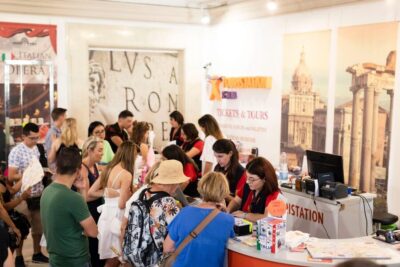
- Make sure you provide the full names of all travelers at the time of booking, because the ticket office requires matching names for entry.
That name-matching rule is not the kind of thing you want to discover after you reach the gate. If you travel with kids, double-check spelling exactly.
The start location is described as near public transportation, which helps if you’re arriving by metro or bus. Still, arrive a few minutes early so you can settle before the group moves.
Colosseum stop: what you’re really seeing in the Flavian Amphitheatre
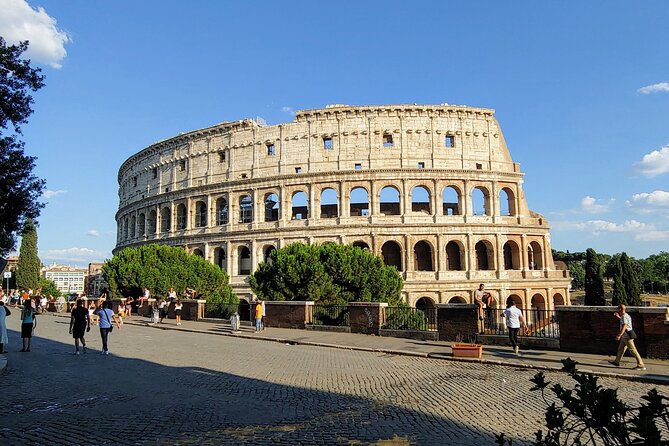
This is the centerpiece, and the guide is there to help you read it like a map.
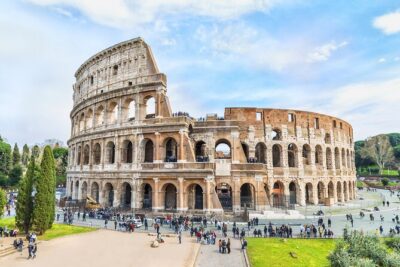
What it is: the Colosseum, also called the Flavian Amphitheatre, was built on the orders of Emperor Vespasian between 72 and 80 AD. It’s easy to admire the scale from photos, but the tour’s job is to explain the purpose behind that scale.
How massive it was: the building used more than 1 million tons of materials, including travertine, marble, and cement. When you hear that number while standing amid the surviving structure, it hits differently than a line in a guidebook.
Why it mattered to Rome: the Colosseum wasn’t a one-off attraction. There were roughly 200 entertainment venues across the Roman Empire. The games here were free to the public, paid for by the emperor to show the power and greatness of Rome.
What happened here: over almost five centuries, huge crowds witnessed gladiators, animals, and convicts fighting. The inauguration games were held by Titus in 80 AD and lasted 100 days. The tour gives you context that helps you understand the Colosseum as state-sponsored spectacle, not just an old stadium.
Photo and comfort moments: guides are praised for planning photo stops and even keeping groups in shade during hot days. People also mention that some guides use tools like picture books to make the arena layout easier to understand. Another repeated theme is guides managing the Colosseum crowd so the group stays together.
One real consideration: the Colosseum is crowded by nature. Even with a guide, you’re still in a high-demand space. Expect the noise and the density, and use your time inside by paying attention at key points rather than trying to see everything at once.
Palatine Hill: Rome’s starting point and the view from the top
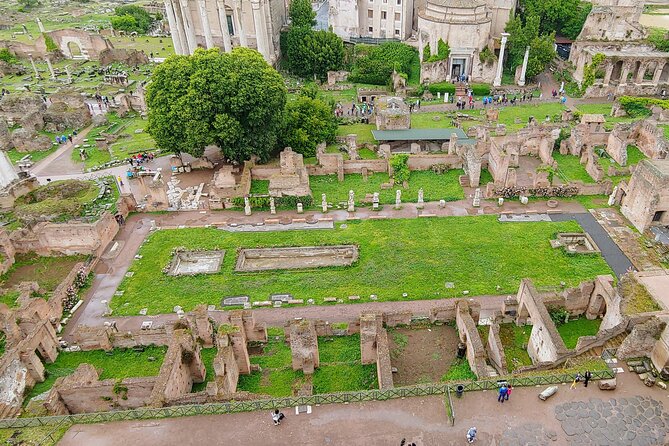
Palatine Hill is where the tour shifts from “entertainment capital” to “where Rome began.” The story starts with Romulus, who is allegedly the first king of Rome, choosing this hill in 753 BC as the place where the city began.
The tour adds something practical here: archaeologists found traces of Bronze Age settlements, which is used to support that very early foundation date. That’s the kind of detail that makes the hill feel less like legend-only.
Then you get the imperial layer. Today, you can see remains of imperial palaces, and the hill is described as the home of the kings of Rome and palaces of the emperors. In other words, Palatine is not just an old neighborhood. It’s the symbolic and physical center of power.
Why it was chosen: early civilizations favored high ground near rivers. The logic is simple and smart. Elevation helps with flood risk, and height offers strategic advantage in case of attacks. Palatine Hill’s central position among the seven hills is highlighted as part of why it was a natural first choice.
What to watch for on the ground: you’re walking among ruins that connect directly to the imperial story. It can also be a good place to pause and reset your brain before the Forum. The hill’s elevation typically gives you better sight lines across central Rome, so even quick stops feel meaningful.
One drawback to remember: this segment includes inclines and steps. If your legs are tired from the walk up to the Colosseum, build in some extra patience. The upside is that the payoff is often the feeling of standing where power actually clustered.
Roman Forum: politics, business, and justice in the same space
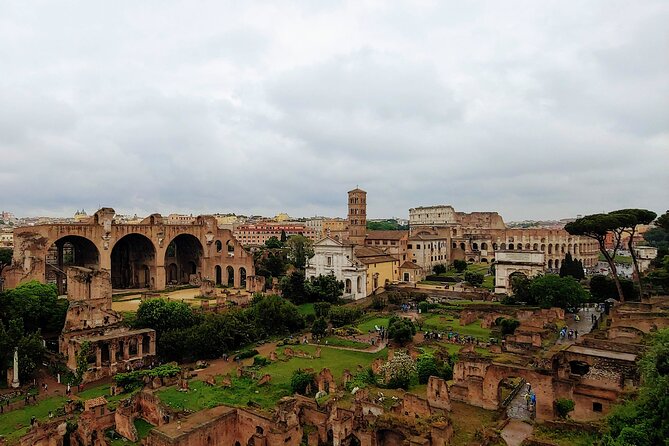
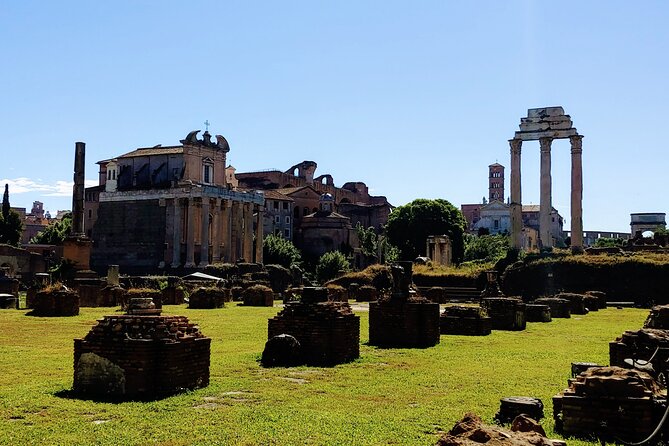
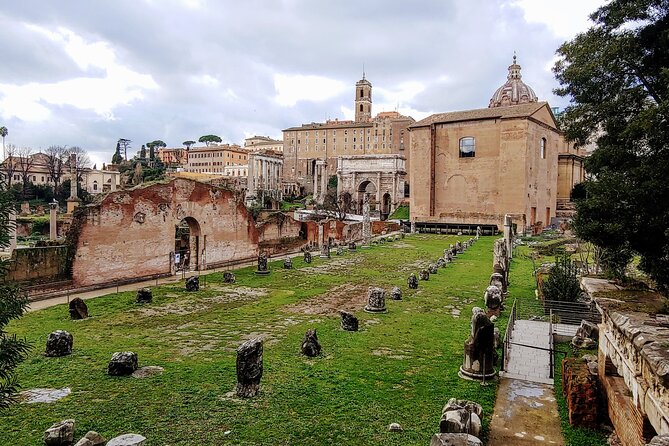
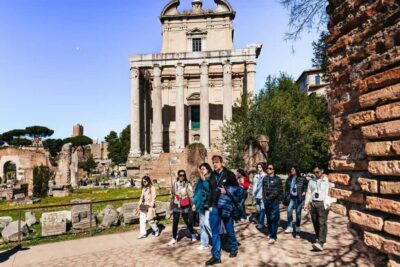
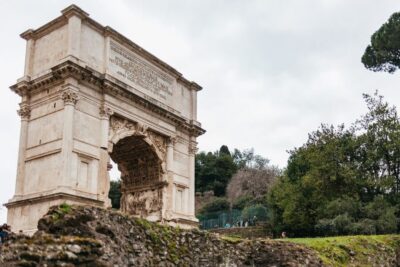
After Palatine, you move into the Roman Forum, where the tone changes again. The Forum was the center of Rome, described as an outdoor plaza where people gathered to discuss civic life.
This stop works best if you picture it as a daily system, not an ancient museum. The Forum included temples, basilicas, and palaces of power, and it’s where politics was shaped, business was made, and justice was administered.
The tour calls out key components you can look for:
- the house of the Senate
- temples and basilicas
A useful mindset here is accepting that you are seeing parts of a city in fragments. The tour frames it in a way that helps you accept the ruins as a snapshot of something larger that still influenced later ideas about society and governance.
Time reality: you get about 45 minutes at this stop. That’s enough for orientation and a few major sights, but not enough to “go slow” and read every inscription-like detail you might want. My practical advice is to use the guide for the big connections: how this civic center ties back to Palatine Hill’s power and the Colosseum’s show of authority.
Also, the Forum can feel expansive. If you want to maximize it, listen for what to prioritize at each point, then take your photos quickly so you don’t drift behind.
Filed beside this one, more walking tours in Rome.

Headsets, small groups, and guide styles that make or break it
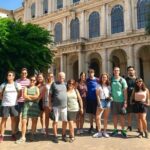
This experience is built for hearing. It includes headsets, and the group size is capped at 25 travelers. That combination matters because the Colosseum and Forum crowds make normal conversation difficult.
The guides are praised for being fun and engaging, with humor and clear storytelling. Names that show up in the guide feedback include David Battaglino, Radu, Kiara, Lumi, Giuseppe, Max, Sam, Juliya, and Adnan. More than one guide is noted for using visual aids like books with pictures to explain the Colosseum, or for knowing exactly where to stop so everyone can see.
One downside shows up in a small number of negative comments: if you struggle with accents or if a guide talks nonstop without breaking into focused stops, the tour can feel harder to process. The good news is that the format includes headsets, which improves clarity for most people.
My tip: if you’re the type who likes to ask questions, ask one early. Good guides steer you toward what matters. If you prefer light commentary and minimal talk, look for a guide style that offers brief, targeted explanations during specific stops.
What to wear and bring for this 2 hours 45 minutes
This is Rome, and Rome is hilly and uneven.
Plan for:
- Comfy shoes for cobbled pavements
- Steps and inclines, especially around Palatine and transitions between areas
- Water, particularly in hot weather, since shade breaks are mentioned as part of some guides’ approach
If you’re traveling in summer heat, take it seriously. One recurring theme in guide praise is managing the group’s comfort during extreme temperatures, including keeping people in shade during stops. Even with good guiding, you still want to start hydrated.
Also bring sun protection. You’ll be outside for most of the route. A hat and sunscreen are basic, not fancy.
Who this tour is best for
This tour is a strong fit if you:
- Want a first-time Rome overview that connects three major sites fast
- Prefer a live guide who explains what you’re seeing rather than a self-guided walk
- Like a structured route that cuts down on decision-making inside crowded monuments
- Are traveling with a mixed-age group, since guides are praised for keeping everyone engaged
It may be less ideal if you:
- Need very low walking and minimal stairs
- Get overwhelmed by crowds and noise
- Struggle with spoken explanations for any reason, even with headsets
Should you book this Colosseum & Ancient Rome guided walking tour?
I’d book it if you want the most “understand what I’m looking at” per hour. The included tickets and headsets reduce friction, and the itinerary links the Colosseum, Palatine Hill, and the Forum into a logical ancient-Rome storyline.
I would only hesitate if you know you’re sensitive to crowds, heat, or lots of walking. In that case, you can still visit these sites, but you’d want a slower plan and more room to rest.
If you’re ready for a strong, guided day of ruins with context, this is a smart way to spend your time.
FAQ
How long is the Colosseum, Palatine Hill, and Roman Forum walking tour?
The tour lasts about 2 hours 45 minutes.
What does the tour cost?
The price is $65.33 per person.
Is the tour offered in English?
Yes, it is offered in English.
Which sites are included?
You visit the Colosseum, Palatine Hill, and the Roman Forum.
Are admission tickets included in the price?
Yes. The tour includes Colosseum, Palatine Hill, and Roman Forum tickets and fees, and the Colosseum entrance ticket plus reservation fee are specifically listed as included.
Does this tour include headsets?
Yes. Headsets are included.
Where does the tour start and end?
It starts at L.go Gaetana Agnesi, 5, 00184 Roma RM, Italy and ends at the Roman Forum area (00186 Rome).
What do I need for entry to the Colosseum and Roman Forum?
You must bring a valid passport or ID document that matches the full names provided at booking. If the names do not match, entry may be denied.
Is food included?
No. Food and drinks are not included.
What is the cancellation refund timeline?
You can cancel up to 7 days in advance for a full refund. If you cancel less than 7 full days before the experience starts, the amount paid is not refunded.
Our Wider Tours File for Rome
Other Colosseum and Roman Forum Tours in Rome From Our Notebook
Not quite the day you had in mind? The rest of our Rome write-ups sit below
- Rome: Guided Tour of St. Peter’s Dome Climb, Basilica & Vatacombs★ 5.0 · 167 reviews
- St. Peter’s Basilica Guided Tour with Reserved Entrance★ 4.0 · 168 reviews
- Golf Cart Driving Tour in Rome: 2.5 hrs Catacombs & Appian Way★ 5.0 · 168 reviews
- Rome: Trastevere Wine Tasting with Food Pairing and Gelato★ 4.9 · 168 reviews
- Guided Tour of the Colosseum Palatine Hill and Roman Forum★ 4.7 · 168 reviews
- Vatican Museums, Sistine Chapel & Saint Peter’s Semi-Private Tour★ 4.5 · 169 reviews
- Hidden Rome: Small Group E-Bike Tour with Street Food Stops★ 5.0 · 169 reviews
- Rome: Papal Audience with Pope Leo IV★ 3.9 · 169 reviews
- Rome Golf Cart Tour: Highlights & Must See★ 4.5 · 170 reviews
Colosseum & Roman Forum Tours, top to bottom.
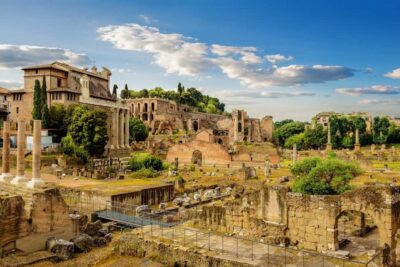 ★ 4.7Colosseum, Roman Forum & Palatine Guided TourFrom $7863,148 reviews
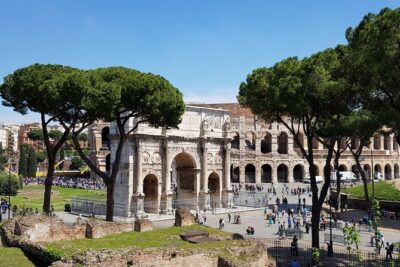 ★ 4.8Rome: Colosseum, Palatine Hill and Roman Forum Guided TourFrom $5232,814 reviews
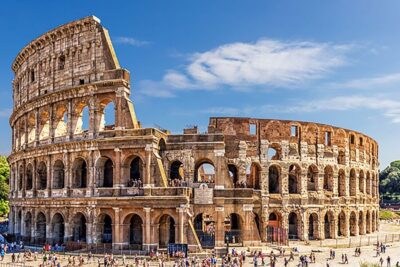 ★ 4.7Rome: Guided Tour of Colosseum, Roman Forum & Palatine HillFrom $5527,897 reviews
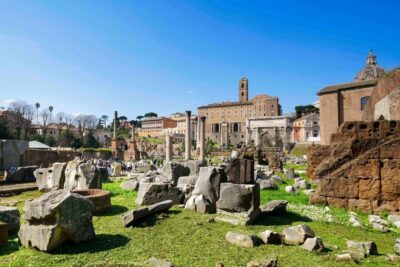 ★ 4.2Rome: Colosseum & Forum with Audio Guide App -Optional ArenaFrom $4124,770 reviews
 ★ 4.5Rome: Colosseum, Roman Forum and Palatine Hill Guided TourFrom $5923,903 reviews
 ★ 4.4Rome: Colosseum, Forum & Palatine Hill Tour & Optional ArenaFrom $5813,839 reviews
 ★ 4.0Rome: Colosseum, Roman Forum, Palatine with Multimedia VideoFrom $3212,766 reviews
 ★ 4.6Rome: Colosseum, Palatine Hill & Roman Forum Guided TourFrom $5112,703 reviews