
Reviewed · BOLOGNA, MODENA & PARMA FOOD TRAILS
Ferrara: City Highlights Walking Tour with Local Guide
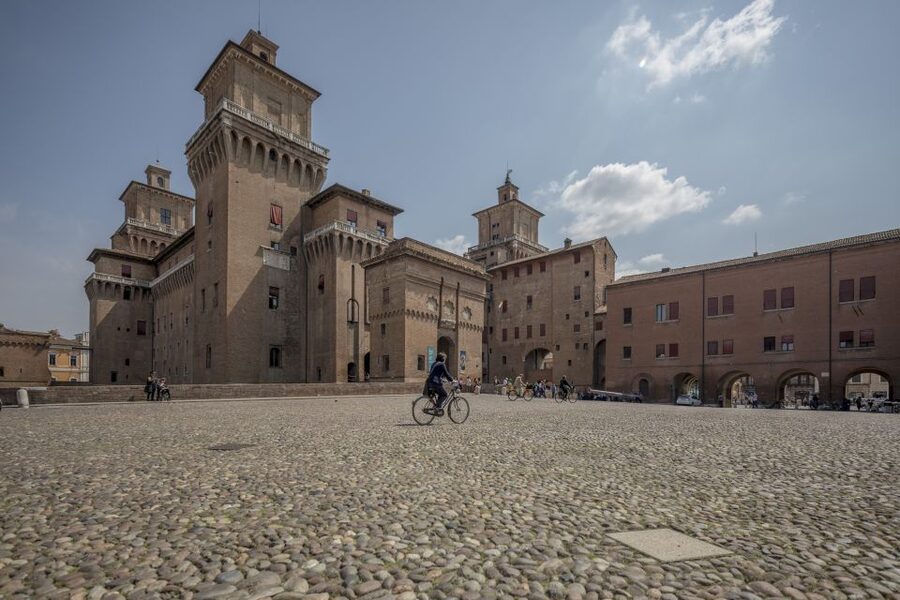
Ferrara surprises you at every corner. I love how Estense Castle quickly becomes a viewpoint lesson, and I love the way the tour stitches medieval power to Renaissance planning, with details credited to figures like Biagio Rossetti. One possible drawback: entrance tickets are not included, so plan for any paid entry moments.
This walk is built to feel human-sized and story-led, moving from family legends of the Estense to the orderly elegance of the city’s Renaissance additions. You’ll also have an Italian audio guide to support the live commentary, which is helpful when you want to slow down and look longer.
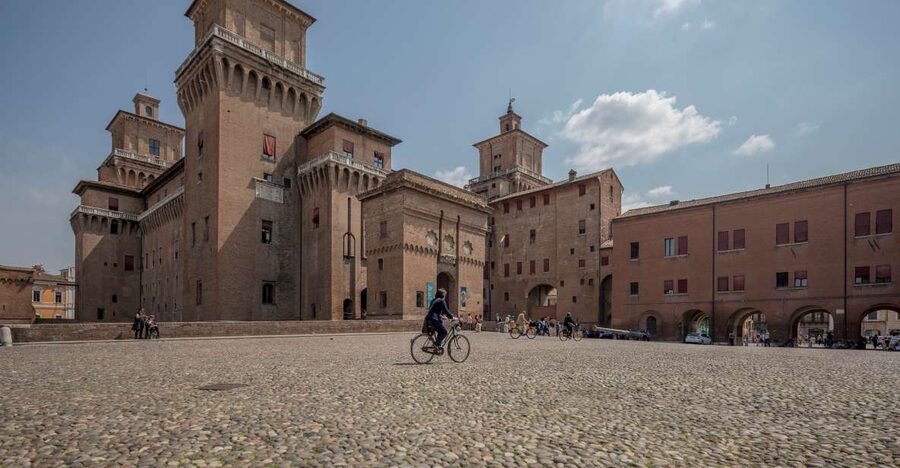
Meet in the courtyard of Estense Castle near the loggia, and lace up for a two hour stroll through a UNESCO World Heritage setting. If rain is in the forecast, bring an umbrella.
In This Review
- Key highlights to look for
- Starting at Estense Castle, the viewpoint that sets the story
- Corso Ercole I d’Este and the Renaissance planners you will keep hearing about
- Palazzo dei Diamanti and the Addizione Erculea grid in plain language
- Massari Park and the Lebanese cedars, a green breather with a point
- S.Cristoforo alla Certosa, Carthusians to a monumental cemetery
- Piazza Ariostea and the final Ariosto sightline
- Price and value for a 2 hour Ferrara highlights walk
- What the guide quality adds to your experience
- Practical tips before you go
- Who should book this tour, and who might skip it
- Should you book this Ferrara highlights walking tour?
- FAQ
- How long is the Ferrara city highlights walking tour?
- What is the price for the tour?
- Where do I meet the guide?
- What landmarks are included on the route?
- Is the tour in Italian?
- Are entrance tickets included?
- Is there an internal visit during the tour?
- What should I bring?
- Is the tour wheelchair accessible?
- What if my plans change?
Key highlights to look for
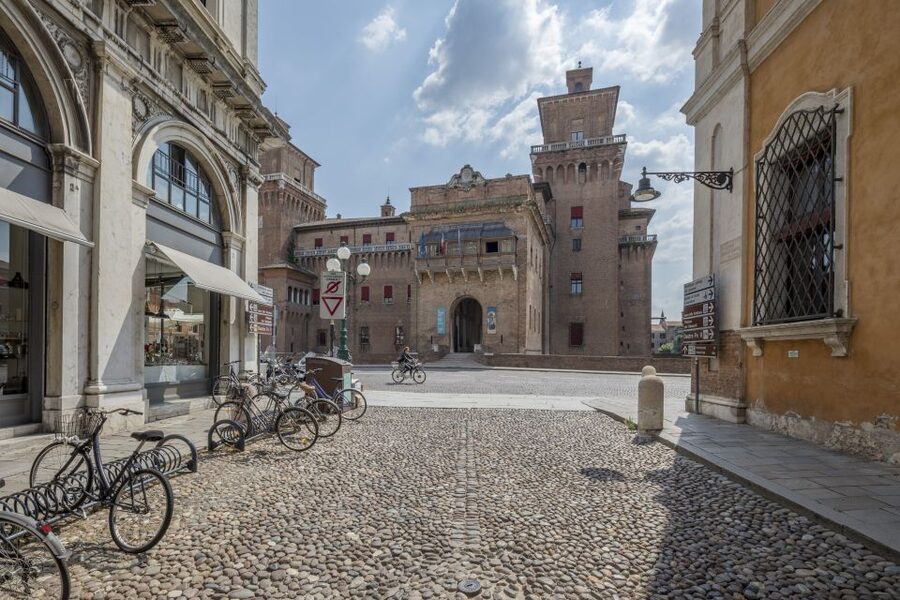
- Estense Castle views that explain why Ferrara was designed to be seen and controlled
- Renaissance city planning connected to the Addizione Erculea and architect Biagio Rossetti
- Palazzo dei Diamanti as more than a pretty façade, it’s a Renaissance symbol with a purpose
- Massari Park and the Lebanese cedars offering a quiet pause from stone and streets
- S.Cristoforo alla Certosa church visit tied to Carthusian history and Duke Borso d’Este
- Piazza Ariostea landing you with Ariosto’s legacy in a strong final focal point
Starting at Estense Castle, the viewpoint that sets the story
The tour begins in the courtyard of Estense Castle, right by the loggia. That matters because you start with perspective. You can orient yourself before the guide starts naming streets and explaining how the city grew.
From here, you get to look out and understand the logic of Ferrara. The castle is more than a stop on a route, it’s the symbol of the city and the power that shaped it. Then the walk naturally flows outward, toward Corso Ercole I d’Este, the main connection between the castle and the north gate of the walls.
I like how this kind of start prevents that classic city-tour problem: you’re given facts, but you never know how they connect. Here, the viewpoint acts like a mental map.
Corso Ercole I d’Este and the Renaissance planners you will keep hearing about
Once you move onto Corso Ercole I d’Este, you’re following a key idea: this city did not just grow randomly. The road links major points, and it also lines you up for what came later.
You’ll pass through the space shaped by the Renaissance addition commissioned from Ercole I d’Este and carried out by Ferrarese architect Biagio Rossetti. Even if you are not a architecture nerd, you will feel what the guide is doing. The tour treats Renaissance planning like a story of decisions, not just dates.
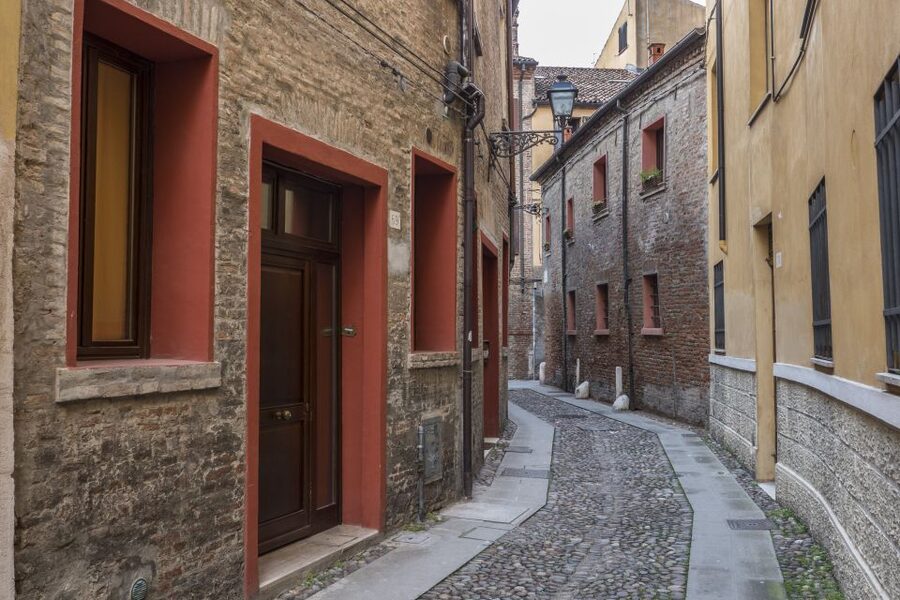
You’re basically learning how Ferrara became both Middle Ages and Renaissance in the same walking frame. That’s the tour’s charm. It doesn’t ask you to sprint from one monument to the next. It slows down just enough for the connections to click.
Palazzo dei Diamanti and the Addizione Erculea grid in plain language
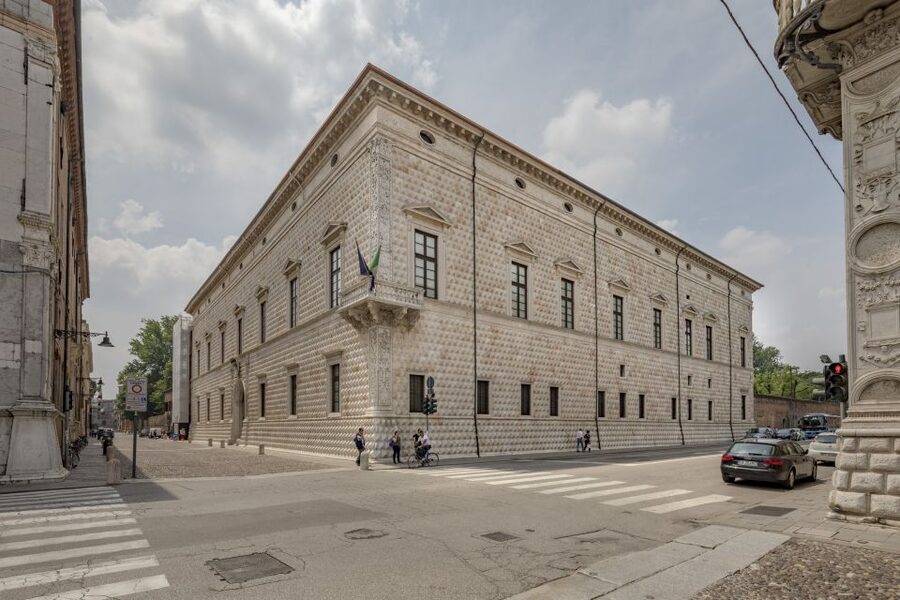
Next comes the “wow” moment, Palazzo dei Diamanti. It sits in the heart of the Addizione Erculea, an urban expansion planned at the end of the 15th century. That’s a big concept, and the guide’s job is to make it understandable in the street.
The way this stop is presented works. You’re not just looking at a façade and moving on. You’re seeing how the Renaissance expansion created a framework that still shapes how the city feels today.
I also appreciate that the tour ties the palace back to the broader idea of design. The Addizione Erculea was not only about buildings, it was about the organized growth of Ferrara. Once you have that in your head, even small details around you start to make sense.
One thing to keep in mind: this is not a long museum session. It’s a highlights walk, so you’ll get solid context and time to appreciate, but you won’t be lingering for hours.
Massari Park and the Lebanese cedars, a green breather with a point
From the historic crossroads, the tour heads toward Massari Park. This is where Ferrara changes pace. Instead of stone and façades, you get centuries-old cedars of Lebanon and a lot of mature greenery facing the University Botanical Garden.
I like this part because it gives your brain a reset. After Renaissance façades and family legends, the park helps you absorb the city as a place people actually live and walk through.
It also makes practical sense. In two hours, you need at least one moment where you can breathe, look up, and take a few photos without feeling like you’re racing the clock.
Even if you do not plan to visit the botanical garden separately, the guide’s framing helps you understand why this green space matters to the city’s character.
S.Cristoforo alla Certosa, Carthusians to a monumental cemetery
A few steps away is the monumental complex of S.Cristoforo alla Certosa, which over time became a Monumental Cemetery. Even if you’re not used to cemetery sites on walking tours, this stop is handled with care.
You’ll approach the square in front where the arcades create a strong sense of reflection. The setting matters. The architecture here is not trying to be flashy. It creates a mood.
Then comes the internal visit to the Renaissance church. You’ll learn it was an ancient temple of the Carthusian monks called to Ferrara by Duke Borso d’Este in the mid-15th century. That connection is important. It helps you understand the building as a living place of faith and discipline before it became part of the city’s later identity.
I think this is one of the most meaningful moments of the walk because it teaches you how Ferrara reuses space across centuries. The city’s layers aren’t hidden. They’re right in front of you.
Piazza Ariostea and the final Ariosto sightline
The walk closes around Piazza Ariostea. This square is a tribute to the poet Ariosto, with a statue towering over the central column. It’s a strong visual capstone because it gives you a single, memorable focal point after the moving sequence of streets.
You’ll end the visit under the loggia that flanks the green area. That’s not just pretty. It’s a fitting ending because it brings you back to the idea of the city as both designed and social, a place where people gather.
If you like tours that end in a place you can remember clearly later, this final stop is built for that.
Price and value for a 2 hour Ferrara highlights walk
At $17 per person for a two hour tour, the value is mostly about focus. You’re paying for a guide and a structured route that connects multiple Ferrara eras, rather than doing a self-guided loop where you would have to do the research yourself.
Two things help this feel like more than a basic stroll. First, you get an Italian-speaking guide who explains the city’s story. Second, you also have an Italian audio guide, which gives you backup when street noise or crowds make a detail easy to miss.
About tickets: entrance tickets are not included. That’s the main “read this before you book” financial point. If there are any optional paid entries along the way that you personally want, you will need to plan for that. If you’re happy with the highlights approach and the included internal church visit where offered, the price still makes sense.
Also, the tour has a strong overall rating of 4.6 with 219 reviews, and the strongest praise trends toward the guide experience. I would trust the guide quality on this one, especially if you care about how the information is delivered.
What the guide quality adds to your experience
A walking tour lives or dies on the guide. Here, the feedback you can feel in your plan is about energy and clarity.
The guide style gets described as passionate, prepared, empathetic, courteous, and punctual. One guide name you may run into is Maria Chiara, which is specifically called out for being brava and well prepared. That matters because this route has a lot of named places and historical threads. If the narration is loose, the tour becomes a blur. If it’s organized, it becomes a story you can repeat later.
Even if you choose to tune out for a minute, the route gives you plenty to look at. But when the guide is strong, you get what you paid for: understanding.
Practical tips before you go
This tour is best when you treat it like a focused walk, not a check-list exercise.
- Wear comfortable shoes. Ferrara streets are manageable, but you’re on your feet for two hours.
- Bring an umbrella if rain is possible, since you’ll still be walking.
- Have your camera ready, but also slow down for the viewpoint moments, especially at the castle start.
- Since everything is in Italian, if you speak only a little, the audio guide helps.
Wheelchair accessibility is listed as available, so if you need it, this is one of the Ferrara options that is explicitly built with access in mind.
Who should book this tour, and who might skip it
Book it if you want a clean, guided path through Ferrara’s Middle Ages to Renaissance shift, without having to decide where to go on your own. You’ll like it if you enjoy architecture, city planning details like the Addizione Erculea, and stops that explain why the city looks the way it does.
You might skip it if you want long museum-style time at multiple ticketed sites, because entrance tickets are not included and this is designed as a highlights walk with a set rhythm.
It’s also a good fit if you prefer a compact tour length. Two hours is long enough to feel you learned something, short enough to still do your own wandering afterward.
Should you book this Ferrara highlights walking tour?
I’d book it if you want an efficient introduction to Ferrara that connects major landmarks into one story. The mix is smart: Estense Castle, Corso Ercole I d’Este, Palazzo dei Diamanti, Massari Park, S.Cristoforo alla Certosa church, and Piazza Ariostea. That’s a lot of variety in a short time, and it helps you understand Ferrara as both human-scale and historically layered.
One last decision point: if you are the type who needs entrance tickets included to feel like a deal, consider that extra planning. If you’re okay with a guided highlights approach, this is a strong value at $17 and a good way to get oriented in Ferrara fast.
FAQ
How long is the Ferrara city highlights walking tour?
It lasts 2 hours.
What is the price for the tour?
The price is $17 per person.
Where do I meet the guide?
Meet in the courtyard of Estense Castle, near the loggia.
What landmarks are included on the route?
You will see Estense Castle, Corso Ercole I d’Este, Palazzo dei Diamanti, Massari Park, the University Botanical Garden area, S.Cristoforo alla Certosa (including an internal church visit), and Piazza Ariostea.
Is the tour in Italian?
Yes. The live tour guide is Italian-speaking, and an Italian audio guide is included.
Are entrance tickets included?
No, entrance tickets are not included.
Is there an internal visit during the tour?
Yes. There is an internal visit to the Renaissance church at S.Cristoforo alla Certosa.
What should I bring?
Bring an umbrella if rain is possible.
Is the tour wheelchair accessible?
Yes, wheelchair accessibility is listed.
What if my plans change?
Free cancellation is available up to 24 hours in advance for a full refund, and there is a reserve now and pay later option.
Bologna, Modena & Parma Food Trails, top to bottom.
 ★ 4.5Bologna: City Center Walking TourFrom $263,478 reviews
 ★ 4.8Ravenna: UNESCO Monuments and Mosaics Guided TourFrom $333,108 reviews
 ★ 5.0Guided Tour of Mosaic Tiles in RavennaFrom $331,693 reviews
 ★ 5.0Bologna Food & Market Tour with 6 Tastings, Pasta, Wines & MoreFrom $1181,328 reviews
 ★ 5.0Bologna Food Experience: Factory tours & Family-Style LunchFrom $2161,201 reviews
 ★ 4.7Maranello and Modena: Ferrari Museums Combo TicketsFrom $50994 reviews
 ★ 4.8Bologna: Walking Food Tour with a Local GuideFrom $90882 reviews
 ★ 5.0Bologna Food Tour from a local perspectiveFrom $133860 reviews