
Reviewed · BOLOGNA, MODENA & PARMA FOOD TRAILS
Guided Tour of Mosaic Tiles in Ravenna
Ravenna’s mosaics feel like time travel. This guided walk strings together the religious story and the artistry behind Ravenna’s most famous early Christian monuments, with English commentary that helps you see more than pretty pictures. I especially like that you get timed monument entry without the usual ticket scramble, and you also get the human connections, from the dome stars to Dante Alighieri.
One thing to keep in mind is comfort. Church interiors can be cold, and the tour can stretch longer than the advertised window, so bring layers and plan to stay patient if the day runs long.
In This Review
- Key takeaways before you go
- What You’re Actually Buying in Ravenna’s Mosaic Tiles Tour
- Before You Go: Warm Layers and How to Use the Audio
- Stop 1: Mausoleo di Galla Placidia and the Star Dome Connection to Dante
- Stop 2: Basilica di San Vitale and Byzantine Power in Mosaic Form
- Stop 3: Battistero Neoniano and Blue Tesserae Baptism Drama
- Why the Stops Matter Together, Not Just One by One
- Guides Make or Break the Experience (and You’ll Notice the Difference)
- Pacing and Group Size: What 2 to 3 Hours Feels Like
- Price and Value at $33.86, Including Monument Entry
- Who This Tour Suits Best
- Should You Book the Guided Tour of Mosaic Tiles in Ravenna?
- FAQ
- How long is the guided mosaic tiles tour in Ravenna?
- What language is the tour offered in?
- Which monuments are included on the tour?
- Does the price include admission tickets?
- Is there a way to hear the guide in churches?
- Where do I meet the tour?
- Is the group size limited?
- Can I cancel for a full refund?
Key takeaways before you go
- Timed entry for major Ravenna monuments saves you hassle and keeps the day moving.
- English narration that connects mosaics to power and belief, not just decoration.
- Starry symbolism linked to Dante Alighieri makes Galla Placidia feel personal.
- Radio earpieces for larger groups help you hear the guide in quiet churches.
- Stop-and-focus pacing gives enough time to actually look at the details.
What You’re Actually Buying in Ravenna’s Mosaic Tiles Tour
This isn’t a drop-in museum shuffle. You’re guided through three of the biggest “wow” spaces Ravenna offers, and the guide’s job is to translate what you see into context you can hold in your head. That matters in Ravenna, because the mosaics are dense, symbolic, and built to be read over time, not scanned for 10 seconds.
I also like the practical side. The tour price includes admission to the key sites you visit, which means you spend your energy on looking and listening instead of managing tickets. If you’re squeezing Ravenna into a tight trip, that is real value.
The group size cap is 28, so expect a lively group, not a private whisper tour. The good news is that the tour uses a radio device for larger groups, and that helps you keep the commentary while you move your eyes around inside churches.
The same shortlist carries more Emilia food trails in Ravenna.
- Ravenna: UNESCO Monuments and Mosaics Guided Tour
★ 4.8 · 3,108 reviews - Guided Tour of Mosaic Tiles in Ravenna
★ 5.0 · 1,693 reviews
Before You Go: Warm Layers and How to Use the Audio
Ravenna mosaics are indoors for most of the experience. That means weather can matter more than you expect. I’d dress like you’re going to a cool cathedral, not like you’re strolling in the sun. One review note about cold conditions came up, and it’s exactly the kind of thing that can turn a 2.5 hour plan into a long endurance test.
Also, use the radio setup correctly. If the group uses an earpiece, keep it in place so you get the guide clearly. In churches, even a perfect guide can sound distant if the audio is mismanaged, or if you’re too far from the group.
If you really care about hearing every detail, aim to stay near the front part of the group during the explanations. It’s not about power or position, it’s just physics and acoustics.
Stop 1: Mausoleo di Galla Placidia and the Star Dome Connection to Dante
You start with the Mausoleo di Galla Placidia, a small Latin cross mausoleum built in the middle of the 5th century at the direction of Galla Placidia. Externally, it’s almost calm and simple. The real drama waits for you inside.
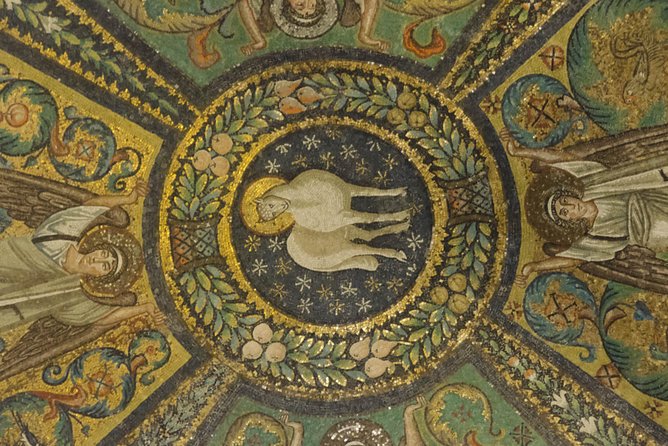
This is where you get one of the most famous visual ideas in Ravenna: the dome covered with countless star-like tesserae. The mosaics don’t just look pretty. They carried an emotional punch for centuries, and they were tied to the imagination of major figures like Dante Alighieri, who drew inspiration from them for parts of the Divine Comedy.
What I love about this stop is how quickly it teaches your eye to slow down. The dome is not a single image. It’s pattern, glow, and rhythm, and when you understand that the mosaics were designed to create a spiritual atmosphere, you stop treating it like decoration.
Time on site: about 10 minutes. That’s short, but it can be enough if you’re not trying to read every corner at once.
Practical note: because it’s a dome space, your best looking angle changes as you move. Don’t be afraid to step slightly to find where the stars “settle” visually above you.
Stop 2: Basilica di San Vitale and Byzantine Power in Mosaic Form
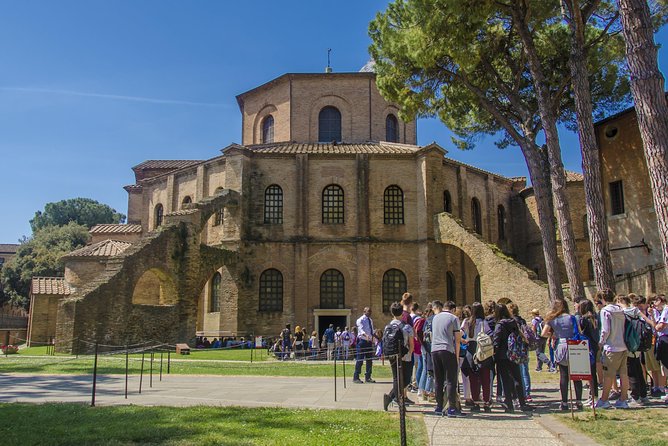
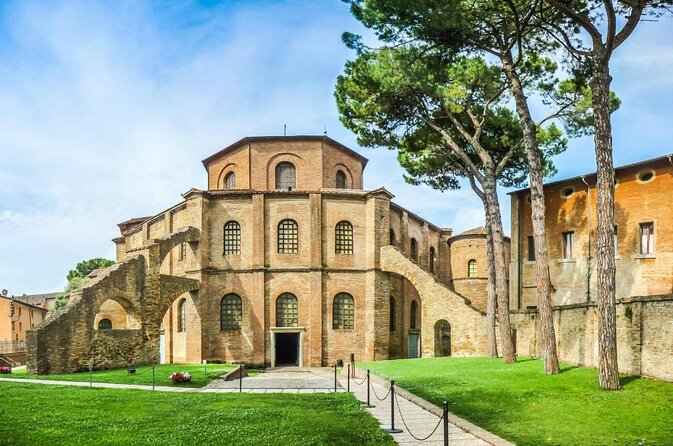
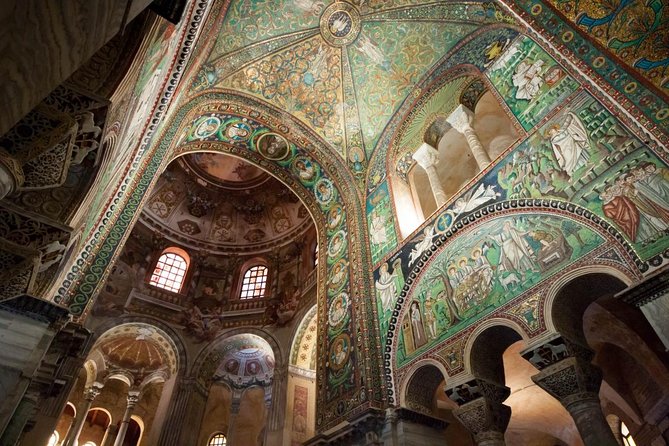
Next is Basilica di San Vitale, one of Italy’s most important early Christian monuments. This church dates to the 6th century and has a clear eastern influence, which you can feel immediately once you’re inside. The layout is octagonal, and above you the dome is frescoed, not just mosaicked.
Then comes the part that pulls your attention. The basilica’s apse area features major mosaics that do more than illustrate religious themes. They communicate status, politics, and belief through image.
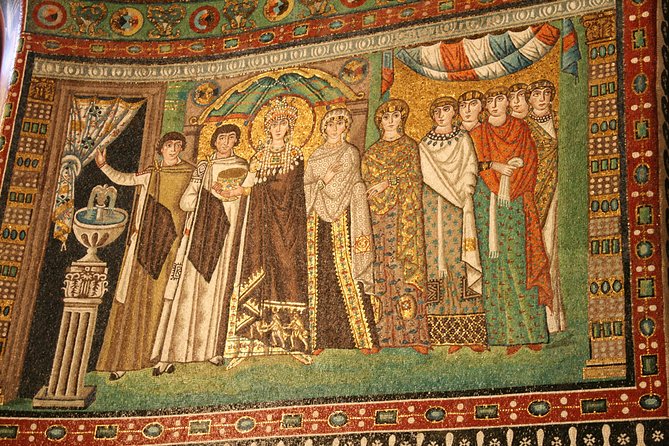
The imperial couple, Giustiniano and Teodora, appears with their parade scenes. This is where the mosaics become a kind of visual announcement. You’re not just looking at art, you’re looking at a public statement made in stone and glass tiles.
Time on site: about 30 minutes. That extra time matters here because San Vitale rewards patient looking. If you rush it, you might miss how the mosaic fields work together as a unified scene rather than separate panels.
What I’d watch for during your time inside:
- The way the apse mosaics draw your gaze upward and inward.
- The contrast between the high architectural spaces and the detailed figures below.
- How the images connect religious message and imperial messaging.
If you like your art with context, this stop tends to click fast.
Stop 3: Battistero Neoniano and Blue Tesserae Baptism Drama
Finally, you visit the Battistero Neoniano, also known as the Battistero degli Ortodossi. It’s one of Ravenna’s oldest monuments. Outside, the style is simple brick. Inside, it turns into something much more refined, with marble, stucco, and mosaics influenced by the Hellenistic-Roman world.
The dome is the centerpiece. It was commissioned by Bishop Neone in the mid-5th century and it shows the Baptism of Christ. Surrounding that central moment is a refined procession of the twelve Apostles. The entire scene sits against brilliant blue tesserae, which gives the dome its memorable emotional tone.
One detail I find particularly helpful is that the space preserves layered time. You can still see the baptismal font from the Renaissance period, and it follows the octagonal shape of the Baptistery plan. Even more, it preserves the ambo from the 5th century, meaning the site carries traces of earlier design principles forward.
Time on site: about 10 minutes. That may sound tight, but this is a space where your eyes will latch on quickly, especially once you see the dome narrative from the right angle.
If you’re wondering what to focus on: start with the blue backdrop and the central Baptism scene, then let your gaze travel outward to the apostles’ procession.
Why the Stops Matter Together, Not Just One by One
Ravenna’s mosaics can feel overwhelming if you see them like a photo checklist. This tour works because it builds meaning in layers as you move.
First, you get a spiritual, almost cosmic feeling at Galla Placidia through the star dome and its connection to Dante’s imagination. Then you shift into San Vitale, where mosaics start doing political and theological work at the same time through imperial imagery. Finally, the Baptistery brings you back to a sacred rite, with the dome’s blue scene framing the Baptism of Christ as a central turning point.
That flow is a big deal. It’s why guided narration can change your experience. Without context, you might notice craft and color. With context, you notice purpose: who built these spaces, what messages they wanted to send, and how the architecture and art reinforced belief.
Also, the tour includes a mix of religious history and decorative art, which is exactly what makes Ravenna different from other church visits. You’re not just watching architecture, you’re reading theology through visual design.
Guides Make or Break the Experience (and You’ll Notice the Difference)
A guided mosaic tour lives or dies on the person holding the thread. In this case, the narration is consistently praised, and you can feel why when the guide explains the art like a story instead of a lecture.
I saw multiple guide names come up in feedback, including Elisabetta, Francesca, Marco, Serena, Silvia, Chiara, Assunta, and Bardo. The common thread isn’t just facts. It’s how the guide makes connections, keeps an engaging tone, and answers questions while still staying on schedule.
What you want from your guide in Ravenna:
- Clear explanations that help you place the images in the right historical setting.
- A sense of pace that gives you time to look, not just listen.
- The ability to switch between symbolism and construction, so you understand both meaning and technique.
One useful detail from feedback: some guides use humor and keep the mood light without losing historical context. That matters in spaces where you’re sitting in a church, staring upward, for a while.
Pacing and Group Size: What 2 to 3 Hours Feels Like
The tour is listed as 2 to 3 hours, and you visit major interiors along the way. With scheduled time for each stop, the rest of the day is walking between sites and absorbing narration.
Most days feel manageable, but there are two things to watch for:
- The tour can run longer than expected, especially when conditions are rough, like cold weather.
- Large groups can feel unwieldy inside churches, since silence rules and space limitations apply.
This is where the radio device becomes important. When it’s working well, you can keep listening even if you step away from the group to get a better view. One review specifically called out that radio ear pieces made it easier to hear while you wandered a bit.
My advice is simple: use the earpiece, and if your tour includes one, don’t treat it like decoration. Keep it in, keep it close, and adjust if the sound is unclear.
Price and Value at $33.86, Including Monument Entry
At $33.86 per person, the big value is that admission tickets for the monuments you visit are included. That matters in Ravenna, where the “time cost” of finding tickets can eat up your sightseeing window fast.
You’re also paying for guidance that connects three major sites into one meaningful arc. If you were doing it alone, you’d probably still visit these monuments, but you’d risk missing the story thread, like how Dante’s imagination links to the star dome, or how Giustiniano and Teodora scenes communicate more than devotion.
Is it worth it? If mosaics are on your must-see list, yes. If you’re only passingly interested in early Christian and Byzantine-era art, you might feel the price a bit more than you’d expect, because the tour’s strength is interpretation, not just letting you look around.
Who This Tour Suits Best
This guided mosaic tiles tour is a great match if you:
- Want a guided framework for Ravenna’s major monuments rather than wandering randomly.
- Like historical storytelling tied to what you see inside churches.
- Have limited time and want to hit key mosaics efficiently.
It may not be your top pick if you:
- Hate walking and moving through churches with a group pace.
- Get cold easily and struggle with longer-than-expected time indoors.
- Are extremely sensitive to audio issues and sound clarity.
If you fit the first group, you’ll likely come away with more than “pretty pictures.” You’ll understand what those blue tesserae and gold scenes were trying to do.
Should You Book the Guided Tour of Mosaic Tiles in Ravenna?
Yes, I think you should book it if Ravenna mosaics are a priority and you want your time to pay off. The included admission, the English narration, and the way the guide ties together religious meaning and decorative design make this a smarter way to see Ravenna than solo ticket hunting.
Just do your part:
- Dress warm, because church interiors can be cold.
- Plan to stay alert with the earpiece if your group uses radio audio.
- Arrive at the meeting point, Piazza S. Francesco 7, where check-in happens at the tourist office, so you don’t lose time getting oriented.
If you want a mosaic visit where the story actually lands, this is one of the easiest ways to make Ravenna click.
FAQ
How long is the guided mosaic tiles tour in Ravenna?
It lasts about 2 to 3 hours.
What language is the tour offered in?
The tour is offered in English.
Which monuments are included on the tour?
The tour includes Mausoleo di Galla Placidia, Basilica di San Vitale, and Battistero Neoniano (Battistero degli Ortodossi).
Does the price include admission tickets?
Yes. Admission ticket(s) are included for the stops listed.
Is there a way to hear the guide in churches?
If the group is large, the tour uses a radio device so you can listen to the commentary.
Where do I meet the tour?
The tour starts at Piazza S. Francesco, 7, 48121 Ravenna RA, Italy.
Is the group size limited?
Yes. The maximum group size is 28 travelers.
Can I cancel for a full refund?
Free cancellation is available up to 24 hours before the experience starts for a full refund.
Our Wider Tours File for Ravenna
Emilia Food Trails in Ravenna Worth Weighing Up
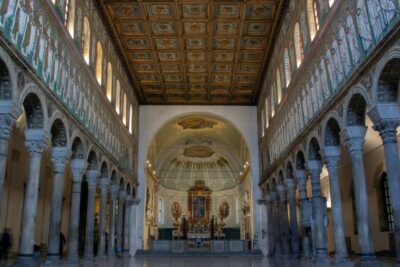
Not quite the day you had in mind? The rest of our Ravenna write-ups sit below
- Guided Tour of Mosaic Tiles in Ravenna★ 5.0 · 1,693 reviews
- Ravenna: UNESCO Monuments and Mosaics Guided Tour★ 4.8 · 3,108 reviews
Bologna, Modena & Parma Food Trails, top to bottom.
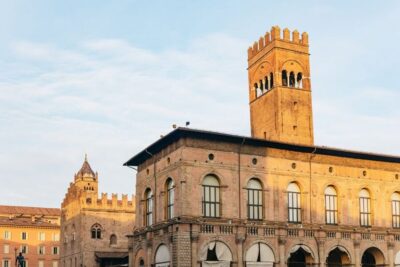 ★ 4.5Bologna: City Center Walking TourFrom $263,478 reviews
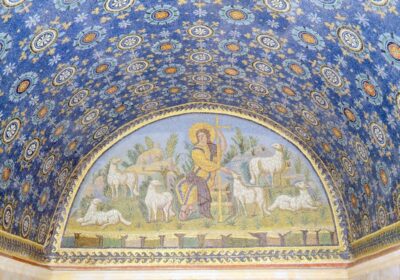 ★ 4.8Ravenna: UNESCO Monuments and Mosaics Guided TourFrom $333,108 reviews
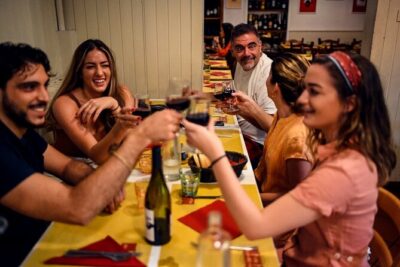 ★ 5.0Bologna Food & Market Tour with 6 Tastings, Pasta, Wines & MoreFrom $1181,328 reviews
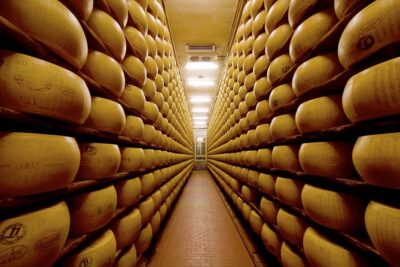 ★ 5.0Bologna Food Experience: Factory tours & Family-Style LunchFrom $2161,201 reviews
 ★ 4.7Maranello and Modena: Ferrari Museums Combo TicketsFrom $50994 reviews
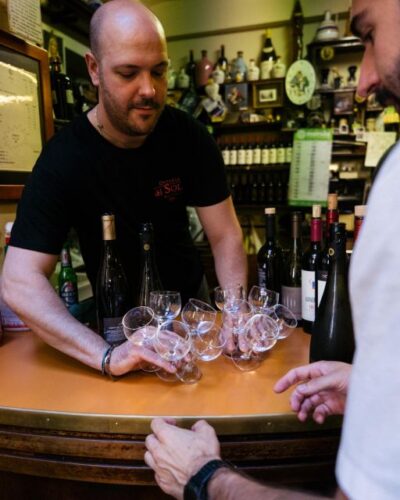 ★ 4.8Bologna: Walking Food Tour with a Local GuideFrom $90882 reviews
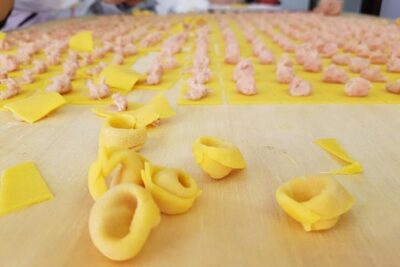 ★ 5.0Bologna Food Tour from a local perspectiveFrom $133860 reviews
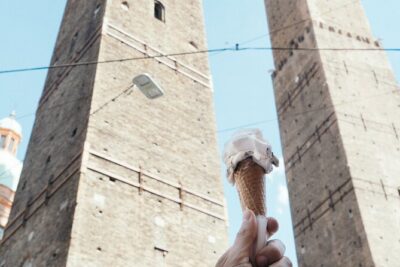 ★ 5.0Bologna gastronomic experience with a localFrom $95626 reviews
Filed under