
Reviewed · HERCULANEUM, VESUVIUS & OPLONTIS
Herculaneum Small Group Tour and Ticket With an Archaeologist
Herculaneum feels like a time capsule. You get skip-the-line tickets and an archaeologist guide who explains what you are actually seeing, not just dates. I also love the small-group format, because the tour stays focused on real buildings and daily life. One possible drawback is that it is a walking tour with lots of standing, so plan for limited sitting time.
This is a 2-hour guided route through the ruins, capped at 20 people, and you will wear headsets so you can hear clearly even when the group moves. It runs in all weather conditions, so bring shoes you can handle on uneven stone.
In This Review
- Key highlights worth your time
- Herculaneum is the easy win for people who want real daily life
- Price and value: why $53.81 can make sense here
- Meeting point and getting there without stress
- What it feels like with an archaeologist guide (and headsets that work)
- Stop-by-stop at Herculaneum: what each place is really showing you
- House of the Deer: when decoration signals status
- La Terrazza di M. Nonio Balbo: civic power made visible
- College of the Augustales: worship and administration in one building
- Casa del Rilievo di Telefo: a house with special access
- Partem Domus lignea, Casa del Tramezzo di Legno: the wooden partition that survived
- House of the Skeleton: the disaster made human-scale
- Central Thermae: separate entrances for men and women
- House of the Black Salon: monumental entry and carbon residue
- Casa Sannitica: Samnite-style atrium and frescoed rooms
- Casa del Bel Cortile: a courtyard that breaks the atrium rules
- House of the Grand Portal: the final wow and the big-room feel
- How to get the most out of your 2 hours
- Who should book this archaeologist-led Herculaneum walk
- Should you book this Herculaneum Small Group Tour with an Archaeologist?
- FAQ
- How long is the Herculaneum small group tour?
- What group size is this tour?
- Is the tour offered in English?
- Does the price include entry tickets?
- Is it a skip-the-line tour?
- Where do we meet the tour?
- How can I get to the meeting point?
- What is not included in the tour price?
- FAQ
- Are dogs allowed?
- Is the tour affected by weather?
Key highlights worth your time
- Skip-the-line entry so you can start seeing things faster instead of queueing
- Archaeologist-led explanations that connect architecture to how people lived
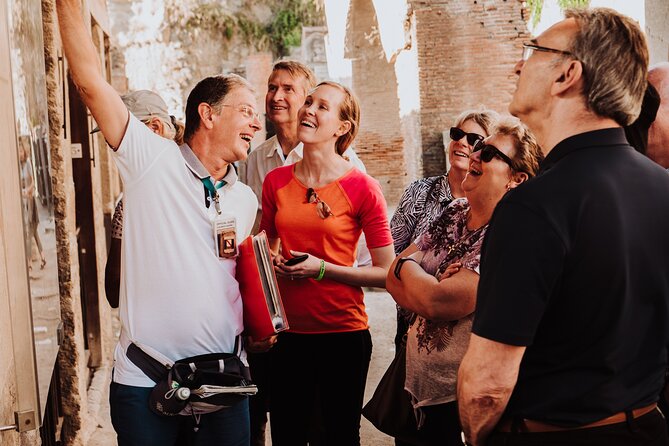
- Headsets that make the commentary easy to follow while you walk
- A tight stop sequence that covers the houses, baths, and civic sites in about two hours
- Focus on details like door carbon residue, wooden partitions, and tiled floors
- Small group cap of 20 which keeps the experience from feeling like a stampede
Herculaneum is the easy win for people who want real daily life
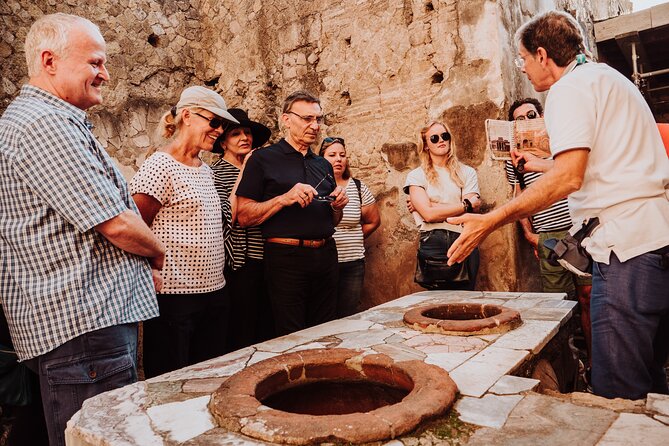
If you care about what Romans ate, argued about, built, and relaxed with, Herculaneum is a strong choice. It is not just about big monuments. You walk through neighborhoods where you can still picture the flow of a house, the look of a courtyard, and the layout of baths.
What makes this tour so useful is the way it turns scattered ruins into a coherent story. Instead of you staring at stone wondering what part you are looking at, the guide helps you decode the site. You start to recognize how wealth showed up in entrances, how public benefactors left their names behind, and how domestic spaces were organized.
I also like that the route is short enough to feel doable, even if you are pairing Herculaneum with other plans in the Naples area. You cover major highlights without feeling like you have to commit your entire day.
Kept in the same folder as this one, Herculaneum and Vesuvius visits in Naples.
- From Naples: Pompeii Ruins & Mount Vesuvius Day Tour
★ 4.3 · 11,459 reviews - Naples or Sorrento: Full-Day Pompeii and Mount Vesuvius Tour
★ 4.6 · 4,235 reviews - Herculaneum: Skip-the-Line Guided Tour with Archaeologist
★ 4.8 · 3,439 reviews - Pompeii & Mt.Vesuvius Day Tour from Naples with Pizza Lunch
★ 4.0 · 2,901 reviews
Price and value: why $53.81 can make sense here
The tour price is listed at $53.81 per person for about two hours. That number matters less than what you actually get for it.
Here is the value logic you can use:
- You pay for guidance from a licensed guide with an archaeological background.
- You get entrance included as part of the tour, which matters because the Herculaneum entry ticket for adults is 16 euros.
- You get headsets, which can be a huge quality boost on a moving walking tour.
So even if you would have bought a ticket anyway, paying this for an archaeologist-led walk is usually the difference between a passive visit and a meaningful one. You are buying context. And at Herculaneum, context is half the point.
Meeting point and getting there without stress
You meet at the Ticket Office of the Herculaneum ruins in the area of Corso Resina, 187, 80056 Ercolano NA. The tour ends inside the ruins.
Getting there is straightforward:
- By car: there is not guarded parking close to the meeting area on via Pignalver.
- By train: you can reach the Circumvesuviana station at Corso Resina 1, then walk about 10 minutes.
If you are prone to arriving late, give yourself a little buffer. This is one of those tours where the first few minutes matter because the whole route is planned as a sequence.
What it feels like with an archaeologist guide (and headsets that work)
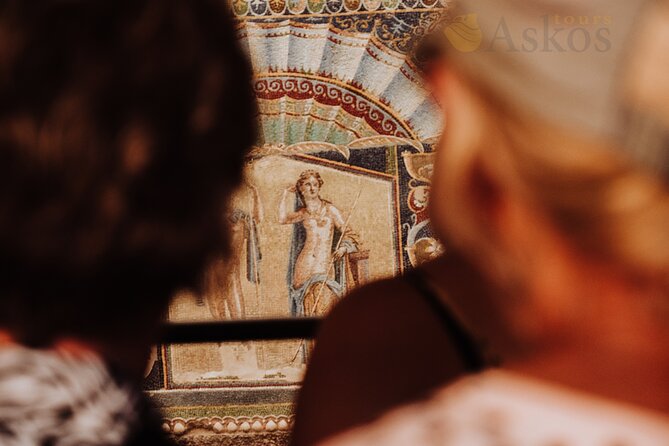
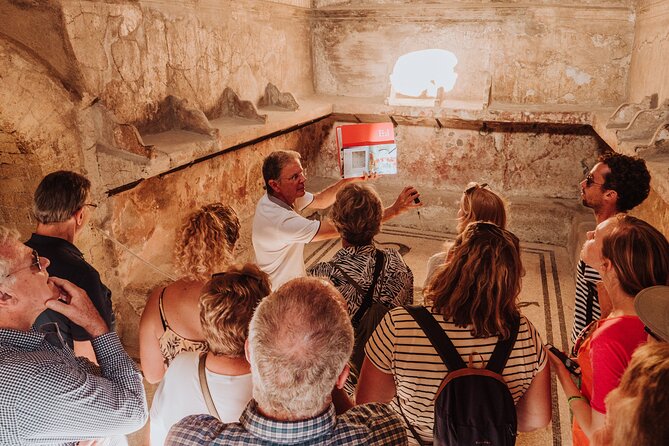
A good archaeologist guide does two things at once: they explain the site and they teach you how to look. This tour is built for that. You will move from one key building to the next, usually with a short stop that still gives you time to absorb the details.
The headsets are a big deal. When you are standing in or near doorways, courts, and bath areas, you can easily lose audio. With the headset set-up, you can keep listening without constantly turning your head.
You will also notice the guide style can vary by person, but the best ones bring the site to life with practical connections. In past tours, guides like Michele have been praised for weaving engineering and cultural history into clear stories. Luciano Leone has also earned standout notes for entertaining reconstructions that help you imagine how parts of the buildings looked in Roman times. You may or may not get the same guide, but the format is designed to deliver that kind of clarity.
Stop-by-stop at Herculaneum: what each place is really showing you
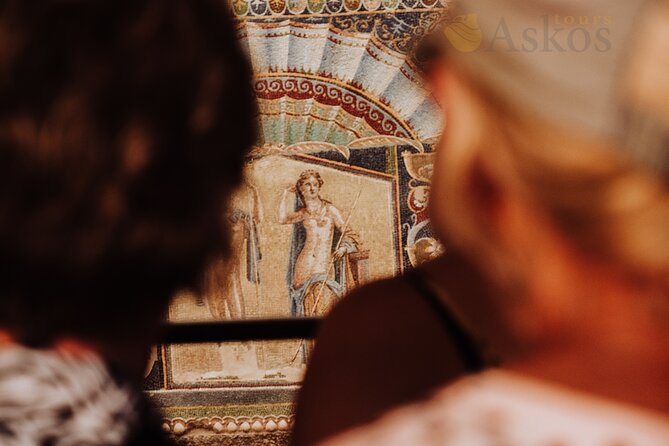
This route moves quickly in a good way, with short stays at each highlight. Expect about 10 minutes per stop and about 11 stops total for the tour length.
House of the Deer: when decoration signals status
Your first stop is the House of the Deer, named for marble stag or deer statues found in the peristyle. Look for what the peristyle communicates: this is not just a hallway. It is an inner showpiece that signals comfort and taste.
A guide will help you understand why the name matters. When a house gets nicknamed after an artwork, it usually means that object is a key clue to wealth and lifestyle.
We wrote up further entry tickets in Naples on the same pass through the archive.




La Terrazza di M. Nonio Balbo: civic power made visible
Next is La Terrazza di M. Nonio Balbo. Balbus was a major benefactor, restoring and building public buildings. After his death, he received honors noted in a long inscription tied to his funeral altar.
This stop is worth it because it shifts you from private life to public influence. You get a sense that even benefactors were remembered through stone, not only through legend.
College of the Augustales: worship and administration in one building
At the College of the Augustales, the building is thought to have been linked to the cult of Emperor Augustus and possibly connected with local civic administration. Even without a huge label on every wall, the guide helps you read what the site implies about roles and routines.
This is a good moment to pay attention to boundaries and layout. Religious and civic functions in Roman towns often shared buildings or at least architectural cues.
Casa del Rilievo di Telefo: a house with special access
Then comes Casa del Rilievo di Telefo, likely tied to a leading benefactor such as Marcus Nonius Balbus. It stands out because it has private access to the adjoining Suburban Thermae to the south.
For you, that is more than a trivia point. Private access to baths tells you about convenience, status, and daily habits. It also gives you a reason to care about where the baths are located in relation to houses.
Partem Domus lignea, Casa del Tramezzo di Legno: the wooden partition that survived
This stop focuses on an important feature: the wooden partition that remained and helped preserve how rooms were divided. It is called Partem Domus lignea and tied to Casa del Tramezzo di Legno.
This is one of those moments where the guide’s tone matters. When a tour explains how something like a partition shapes movement and privacy, suddenly you understand what the architecture did for everyday living.
House of the Skeleton: the disaster made human-scale
At the House of the Skeleton, the name comes from the discovery of human remains in a second-floor room in 1831. The focus here is on what the discovery implies about the tragedy and how people tried to move through spaces during the catastrophe.
It is not a cheerful stop, but it is important. Without context, the remains are just an eerie label. With an archaeologist’s explanation, the site becomes a record of real human choices and constraints.
Central Thermae: separate entrances for men and women
Now you move to the Central Thermae, built around the beginning of the 1st century AD. The baths were divided, following common practice, into men’s and women’s baths, each with separate entrances.
Pay attention to the idea of separate routes. It is one of the clearest ways to see how Romans organized daily routines, including leisure and hygiene.
House of the Black Salon: monumental entry and carbon residue
Next is the House of the Black Salon, one of Herculaneum’s more luxurious mansions. The tour calls out a monumental entrance with carbonised remains of doorposts and lintel.
This stop is for your eyes. You will not see a polished doorway, you will see evidence of how fire and heat affected wood and stone. When the guide points it out, it turns destruction into readable information.
Casa Sannitica: Samnite-style atrium and frescoed rooms
At Casa Sannitica, you are looking at an arrangement typical of the Samnites. The splendid atrium is skirted by a gallery with Ionic columns, and rooms feature frescoes.
This is where you start spotting regional influence in everyday architecture. The guide helps connect the design to the cultural background behind the builders and occupants.
Casa del Bel Cortile: a courtyard that breaks the atrium rules
Then you reach Casa del Bel Cortile, described as one of the most original houses in Herculaneum. Instead of a standard atrium, it has a courtyard with a stairway and a stone balcony.
If you like architecture, this is a highlight. It shows how not all wealthy houses followed the same template, even within the same town.
House of the Grand Portal: the final wow and the big-room feel
The tour finishes at the House of the Grand Portal in the center of the archaeological area. You get beautiful domus spaces, collonnati, and frescoes. The guide will also point out charred remains of wooden elements.
This last stop is a useful wrap-up. By then, you have seen enough houses and civic spaces that you can compare how luxury expressed itself.
How to get the most out of your 2 hours
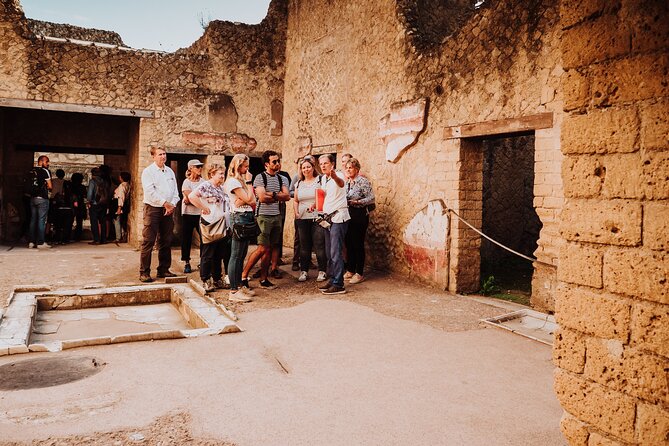
Two hours sounds short, but this route is efficient because it hits the major types of places: domestic spaces, baths, civic or religious-linked buildings, and wealthy showpieces.
Here is how you can make it land:
- Wear shoes you trust. The tour involves walking and standing, and the site is uneven.
- Keep your expectations practical. This is not a slow museum stroll. You are absorbing key highlights in a set order.
- If you want more time, plan an extra buffer after the tour for the areas your ticket covers. Some visitors choose to go on afterward to see items recovered from the site, like furniture and jewelry.
And if it rains, do not cancel in your head yet. The experience is designed to run in all weather conditions, and guides keep the pacing moving.
Who should book this archaeologist-led Herculaneum walk
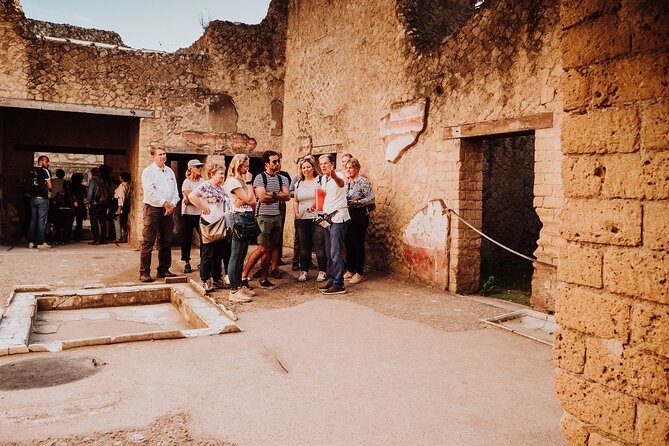
This tour is a good fit if you want:
- Architecture and daily life explained by someone with an archaeological background
- A small-group experience that helps you ask questions and actually hear answers
- A route that covers both houses and bath culture without you having to plan every stop yourself
- Clear, spoken guidance in English, with headsets to support hearing
It may be less ideal if you need frequent breaks or a mostly seated experience, because the stops require standing and walking through the ruins.
Should you book this Herculaneum Small Group Tour with an Archaeologist?
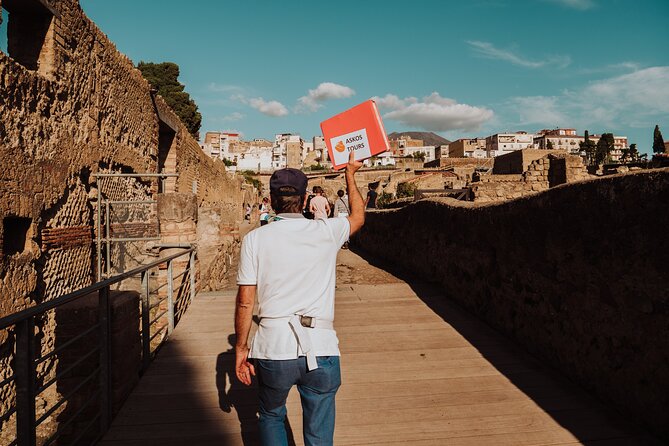
For most people, yes. If your main goal is to understand what you are looking at, the archaeologist-led format is exactly what you want. The combination of skip-the-line entry, headsets, and a route built around recognizable highlights gives you a strong experience for the money.
If you are the type who loves wandering without structure, you can still enjoy Herculaneum on your own. But if you want the site to make sense fast, and you want to spot the details that are easy to miss, this tour is one of the best ways to do it in about two hours.
FAQ
How long is the Herculaneum small group tour?
It lasts about 2 hours.
What group size is this tour?
The tour is limited to a maximum of 20 travelers per guide.
Is the tour offered in English?
Yes, it is offered in English.
Does the price include entry tickets?
Yes. The entrance fee for Herculaneum entry tickets is included.
Is it a skip-the-line tour?
Yes. It includes skip-the-line tickets to avoid waiting in long queues.
Where do we meet the tour?
You meet at the Ticket Office of the Herculaneum ruins.
How can I get to the meeting point?
You can drive to via Pignalver with nearby unguarded parking, or take the train to Corso Resina 1 and walk about 10 minutes from the Circumvesuviana station.
What is not included in the tour price?
Meals and drinks are not included, and private transportation is not included.
FAQ
Are dogs allowed?
Dogs are allowed at the Herculaneum Archaeological Park with no breed or size restrictions, but they must be kept on a leash or muzzle, and you must collect droppings. Access rules also apply inside some areas, including the Antiquarium premises and the domus featuring mosaic floors.
Is the tour affected by weather?
It operates in all weather conditions, so dress appropriately.
Our Wider Tours File for Naples
Herculaneum and Vesuvius Visits in Naples That Made the Same Shortlist
Not quite the day you had in mind? The rest of our Naples write-ups sit below
- From Naples: Pompeii and Vesuvius Guided Day Trip with Lunch
- From Naples: Mount Vesuvius and Pompeii Ruins Combo Day Trip
- Pompeii: Private Tour with an Archaeologist★ 4.9 · 168 reviews
- Herculaneum Guided Group Tour from Naples★ 4.5 · 169 reviews
- Semi Private Amalfi Coast Shore Excursion with Pick Up★ 4.5 · 174 reviews
- Private Transfer from Multiple Locations in Naples to Sorrento★ 5.0 · 175 reviews
- Naples: Capri Transfer with Island Boat Tour and Free Time★ 4.3 · 176 reviews
- Naples Shore Excursion: Sorrento and Amalfi Coast Independent Day Trip from Naples★ 4.0 · 177 reviews
- Naples: National Archaeological Museum Tour & Digital Guide★ 4.2 · 177 reviews
Herculaneum, Vesuvius & Oplontis, top to bottom.
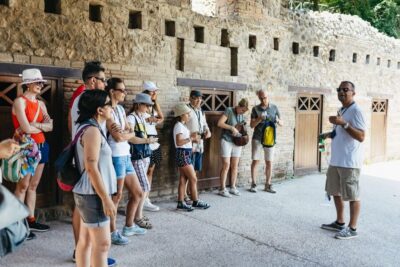 ★ 4.3From Naples: Pompeii Ruins & Mount Vesuvius Day TourFrom $12011,459 reviews
 ★ 4.5Pompeii and Mount Vesuvius Day Trip from Rome with Pizza LunchFrom $906,151 reviews
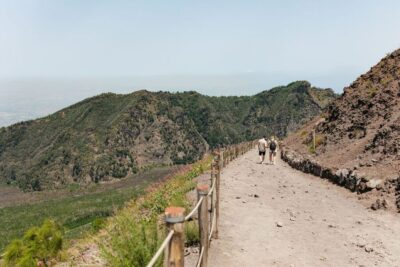 ★ 4.6From Rome: Pompeii Day Trip with Optional Vesuvius and LunchFrom $885,067 reviews
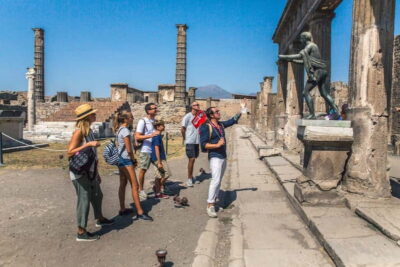 ★ 4.6Naples or Sorrento: Full-Day Pompeii and Mount Vesuvius TourFrom $1044,235 reviews
 ★ 4.8Herculaneum: Skip-the-Line Guided Tour with ArchaeologistFrom $533,439 reviews
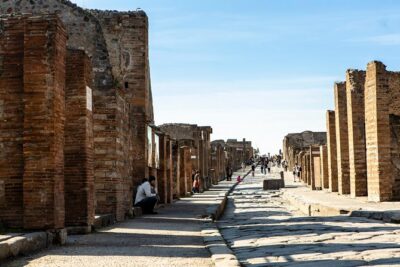 ★ 4.0Pompeii & Mt.Vesuvius Day Tour from Naples with Pizza LunchFrom $1492,901 reviews
 ★ 4.2Mount Vesuvius: Skip-the-Line Ticket and Smart Digital GuideFrom $182,780 reviews
 ★ 4.5Naples: Pompeii & Mt Vesuvius All-Inclusive Small Group w/ LunchFrom $1312,748 reviews
Filed under