
Reviewed · CAPITOLINE HILL & ROME CITY MUSEUMS
Rome: Capitoline Museums and Centrale Montemartini Tickets
Two museums, one strange story. You get the Capitoline Museums on Capitoline Hill, plus Centrale Montemartini, a former power plant turned museum, with the big payoff being the art and objects that explain Rome’s rise. I love walking the central piazza between the museum buildings, then spotting the famous She-wolf of Rome while you look out toward the Forum.
I also love how Centrale Montemartini puts classical sculpture in an industrial setting, so it feels like two time periods talking to each other. The one catch: if you choose the combined option, you are responsible for the hop between sites, about 10 minutes by car or 30 minutes by public transportation, since transfers are not included.
In This Review
- Key things to know before you go
- Capitoline Museums on Capitoline Hill
- The central piazza and Michelangelo’s Rome-Forum backdrop
- The She-wolf of Rome, Romulus and Remus, and the story of Caput Mundi
- Centrale Montemartini: sculptures inside a former power plant
- How to plan the day in 3 to 5 hours
- Skip-the-line tickets and what that buys you in Rome
- Using the city app audioguide and free Wi-Fi
- Practical tips, including the one small ticket drama to avoid
- What’s included, what’s not, and where that affects your budget
- Who should book this ticket, and who might want a different plan
- Should you book the Capitoline Museums and Centrale Montemartini?
- FAQ
- Where do I redeem my voucher?
- How long should I plan for this experience?
- Does this include skip-the-line entry?
- Is Centrale Montemartini included?
- How far apart are the Capitoline Museums and Centrale Montemartini?
- What is included besides museum tickets?
- Is a guided tour included?
- Are food and drinks included?
- Is there access to a special exhibition?
- What are the cancellation and payment options?
Key things to know before you go
- Skip-the-line access helps you use your limited time better at the Capitoline Museums
- Capitoline Hill views put you in the right setting to understand why Rome’s story mattered here
- Centrale Montemartini turns industry into a gallery, showing sculptures in the former thermoelectric power plant
- Free lockers are available for larger backpacks in the same building, so you do not have to drag everything with you
- Double-check the ticket date before entry, because ticket checks can get strict and may be Italian-only
Capitoline Museums on Capitoline Hill
This ticket is all about seeing Rome’s story told through objects, not just big names. The Capitoline Museums, sometimes called the Capitoline or Roman Empire Museums, sit on Capitoline Hill, the place that feels like Rome was designed to be looked at and argued over. You are not just stepping into rooms. You are stepping into the Roman setting itself.
One of the best parts is the sheer logic of the collection. In 1734, Pope Clement XII decided that a major collection of art and ancient sculpture should be permanently accessible to the people of Rome. That matters, because you are seeing not only ancient pieces, but also how Romans after the fact wanted to frame what those pieces meant.
This is not a guided tour with a lecturer talking nonstop. It is self-guided with a smartphone audioguide via the city app. That can be a good thing. You move at your pace, linger on the items that grab you, and skip the rooms that do not.
If you are short on time in Rome, the Capitoline Museums are a smart choice. You get Roman sculpture, artifacts, and a clear thread through Rome’s evolution, all in one museum complex.
The central piazza and Michelangelo’s Rome-Forum backdrop
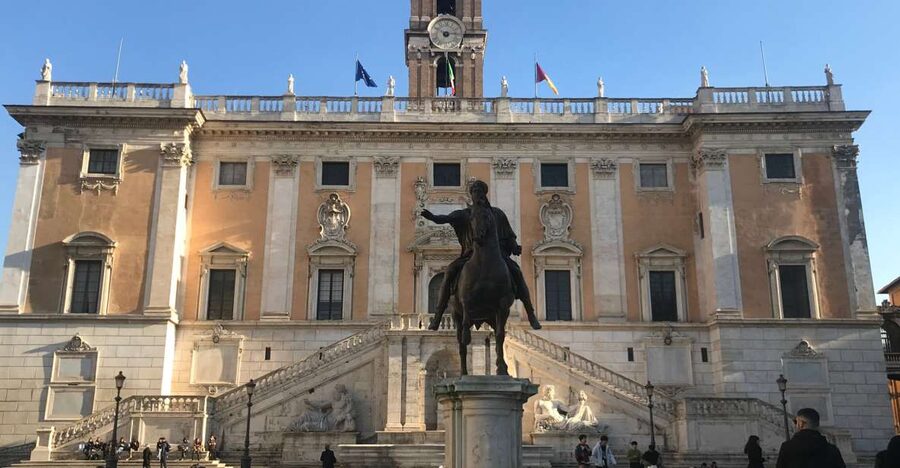
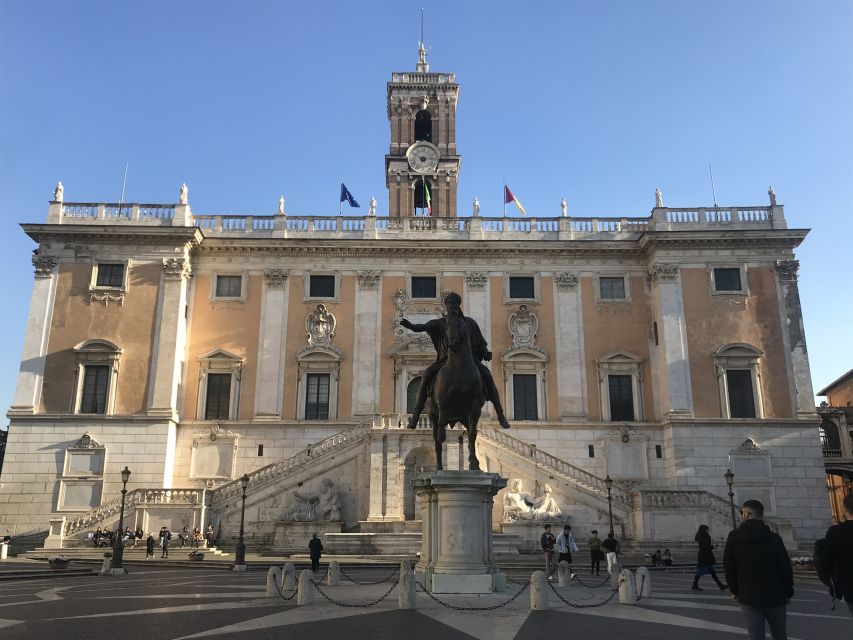
Right away, you get one of the most pleasant museum setups in the city: a central piazza that sits between the museum buildings. It is not just decorative. It gives you a pause point, a place to orient yourself, and a reminder that this is a civic space as much as a museum space.
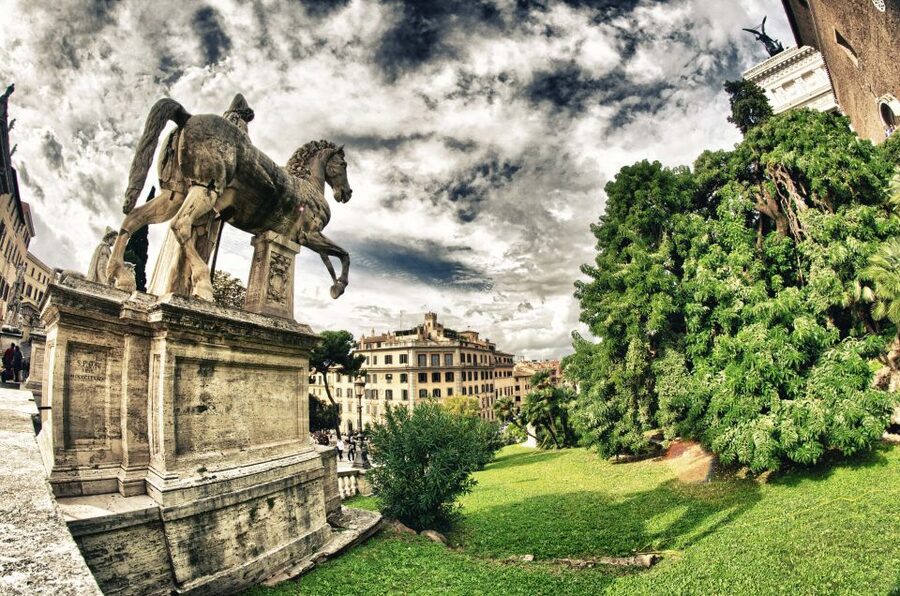
From here, you can also appreciate the architecture linked to Michelangelo, overlooking the Forum. That viewpoint is one of those Rome moments that makes the ancient world feel less distant. You are not reading about the Forum on a page. You are looking at the kind of topography that made politics and power possible in the first place.
Think about it this way. When a museum is on a hill with the Forum nearby, the museum becomes a shortcut to context. You can connect what you are seeing inside the galleries to what Rome looked like in real life. That is why the setting works so well with a self-guided visit. The objects do not float in a vacuum.
The She-wolf of Rome, Romulus and Remus, and the story of Caput Mundi
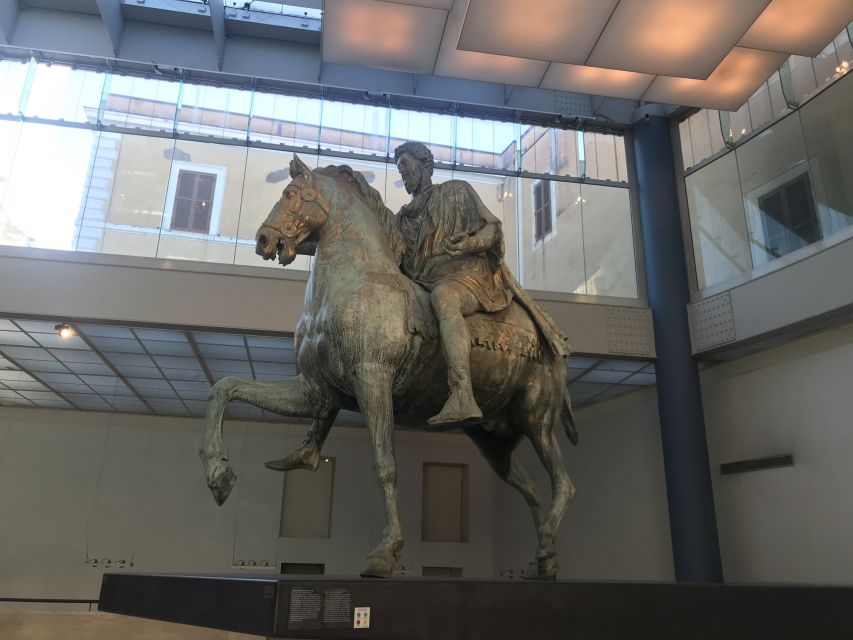
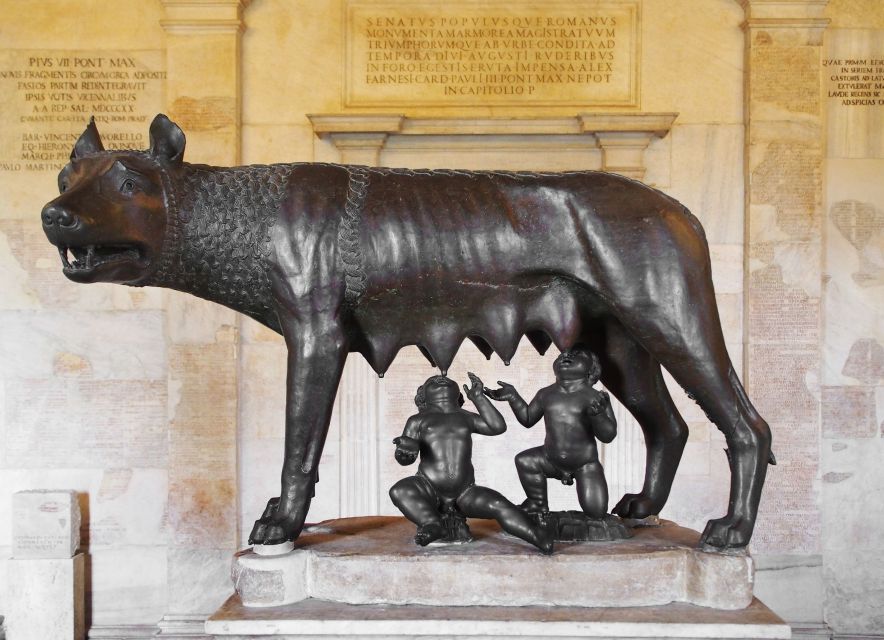
If you came to Rome for the major legends, the Capitoline Museums deliver. The She-wolf of Rome is the star, tied to the founders Romulus and Remus. Even if you already know the myth, seeing the sculpture in person has a way of making it feel more concrete. You get scale, material presence, and a sense of why this story became a symbol in the first place.
Another reason I like this museum complex is that it does not treat Roman history like a random set of artifacts. You get an organized sense of Rome as Caput Mundi, the head of the world. You will see items presented as part of the narrative of Rome itself, so it feels less like collecting photos and more like building an understanding.
Here is a practical tip. Do not rush straight from the entrance into the biggest “must-see” pieces. Spend a bit of time in the areas that help you build your mental map. The audioguide helps with that, but your eyes and feet matter too. If you get your bearings fast, the rest of the museum feels easier to follow.
Centrale Montemartini: sculptures inside a former power plant
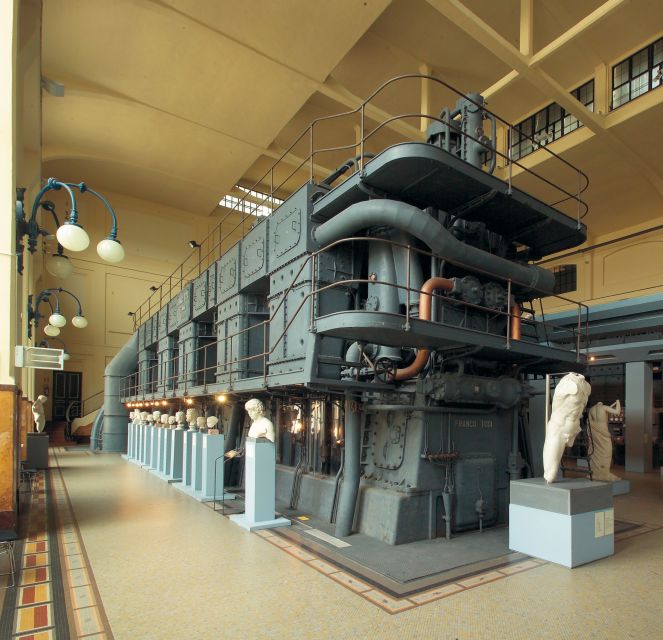
Then comes the “wait, what?” factor, and it is the reason this combo is so appealing. Centrale Montemartini is housed in Rome’s first ever public thermoelectric power plant, later converted into a museum. That shift changes the whole mood. Instead of white walls and hushed galleries, you get a location with real industrial bones.
Inside, you will see hundreds of sculptures associated with the exhibition titled The Machines and the Gods from 1997. The best way to describe the experience is the deliberate tension between worlds: classical art placed alongside industrial archaeology. It is not random. The display is built to make you compare what you associate with art and what you associate with machines.
What I think makes this museum valuable for you is the “why” behind the experience. The museum does not just show sculptures as decoration. It also illustrates the development of the ancient city, from the Republican era to the late Imperial Age, and it does that through a setting that feels modern in its technology. You start thinking about how civilizations build, how they power themselves, and how they display what they value.
Also, the architecture and room shapes can change how you view sculpture. Even when you know the subject, the industrial environment can make you notice different details, like posture, weight, and the way light lands on stone.
How to plan the day in 3 to 5 hours
The total duration for this experience is 3 to 5 hours. That is enough time to enjoy both places only if you keep moving and plan your sequencing.
If you choose the Capitoline Museums only, you can comfortably spend the full time there, especially if you stop for the big highlights like the She-wolf of Rome and spend time on the viewpoint areas that tie into the Forum.
If you choose the combined option, here is the key logistics point: the Centrale Montemartini museum is about 10 minutes away by car or 30 minutes by public transportation from the Capitoline Museums. Transfer is not included, so you need to decide how you will get between them and build that time into your schedule.
My practical suggestion for a smooth day:
- Start at the Capitoline Museums first, since you are using skip-the-line entry and you can work through the complex in an order that makes sense to you.
- Then head to Centrale Montemartini and enjoy it as a visual contrast. When you go from classical sculpture in a traditional museum environment into an industrial power plant, the second half feels extra rewarding.
Because there is no guided tour included, you will want to rely on the city app audioguide to keep the flow going. The audioguide helps you avoid the common mistake of wandering room to room with no sense of what to prioritize.
Skip-the-line tickets and what that buys you in Rome
Time in Rome is limited, and museum lines can eat your afternoon. This ticket includes skip-the-line access for the Capitoline Museums, plus a reserved entrance ticket for Centrale Montemartini if you choose the combined option.
That combination is about value. You are not paying extra just for a stamp on your ticket. You are paying to lose less time and see more. In a 3 to 5 hour window, saving time is the difference between a meaningful visit and a rushed one.
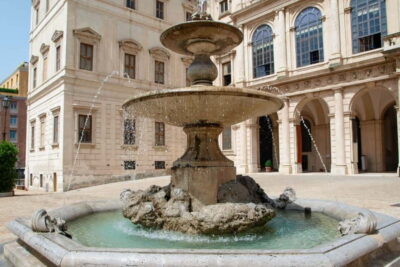
The day starts with a simple action: you redeem your vouchers at the Touristation Aracoeli office at Piazza d’Aracoeli 16. Look for the fountain and orange flags right in front of the entrance. Once you handle that step, you are set up to enter smoothly.
There is also assistance at the Touristation Office, which is helpful if you have questions about which option you selected or how to activate the audioguide.
Using the city app audioguide and free Wi-Fi
This experience includes a City app audioguide you can download on your smartphone, and free Wi-Fi. That sounds small, but it can matter. If you arrive without the app ready, you can burn time figuring out logins and downloads.
I recommend doing two things:
- Get the app ready before you walk into museum entry areas, so you are not stuck searching for settings mid-visit.
- Use the audioguide as a “path,” not as an obligation. If you hear something interesting, stop. If a room does not catch you, move on.
Because there is no guided tour, the audioguide is your best friend for context. It helps you connect what you are seeing to the bigger story Rome was built on.
Practical tips, including the one small ticket drama to avoid
A good Rome museum day has fewer surprises and fewer backtracks.
First, storage. If you have a larger backpack, you should plan on using the free lockers in the same building. That matters because museums can be awkward when you are hauling big bags through tight spaces.
Second, watch your date. One tricky issue to be aware of is that ticket checking can be strict, and some staff may speak Italian only. If your ticket date is wrong on the voucher, you could face problems at entry. Before you head in, confirm the date printed on your ticket matches the day you are trying to visit. Then you will avoid stress.
Third, the Touristation Office staff are helpful. If you are traveling with kids, there are books available for them at the ticket exchange spot, which can make the whole start of the day calmer.
What’s included, what’s not, and where that affects your budget
Price is $42 per person, and it is priced around a simple promise: you get museum entry support plus an audioguide, not a full guided experience.
Included:
- Skip-the-line ticket for the Capitoline Museums
- Reserved entrance ticket for Centrale Montemartini if you pick the combined option
- Access to the exhibition Cartier e il Mito ai Musei Capitolini (Nov 19, 2025 to Mar 15, 2026)
- Assistance at the Touristation Office
- City app audioguide on your smartphone
- Free Wi-Fi
Not included:
- Hotel pickup and drop-off
- Food and drinks
- Guided tour
- Public transport
So yes, you will still need to budget for how you get around town and where you eat. But the ticket itself is strong value if you want to hit two major museum stops without spending your limited Rome hours in lines.
And the exhibition access can raise the value further if your trip overlaps the dates. If you love fashion history and art myth themes, that added exhibit is a bonus.
Who should book this ticket, and who might want a different plan
This combo is ideal if you like contrast. You want the Roman story through sculpture and artifacts, but you also want something that feels different from the typical marble-and-walls museum experience. Centrale Montemartini is the kind of place you remember because it breaks the pattern.
It is also a good fit if you are comfortable self-guiding. You get the audioguide, and the museums are navigable enough that you can move at your own pace without needing a live guide.
I would think twice if:
- You want a fully guided, fast-paced lecture style tour.
- You do not want to manage logistics between two locations yourself.
- You have little interest in either Roman sculpture or the industrial setting at Centrale Montemartini, since the value comes from both.
Should you book the Capitoline Museums and Centrale Montemartini?
Yes, book it if you want a Rome museum day that feels organized, efficient, and slightly unexpected. The skip-the-line access is genuinely useful, and the pairing makes sense: you go from the Capitoline Museums, with its legendary sculptures and Michelangelo-era setting, to Centrale Montemartini, where classical art sits inside a former power plant.
Choose the combined option if you can handle the 10 minute car or 30 minute public transit transfer on your own. If you cannot, stick to the Capitoline Museums only and give it your full attention.
One last decision rule that works: if you enjoy seeing how place and setting change how you interpret art, Centrale Montemartini alone is worth the trip. Add the Capitoline Museums and you get Rome’s story, twice, with two totally different lenses.
FAQ
Where do I redeem my voucher?
You redeem your voucher at TOURISTATION ARACOELI, Piazza d’Aracoeli 16. There is a fountain and orange flags in front of the office entrance.
How long should I plan for this experience?
Plan for about 3 to 5 hours.
Does this include skip-the-line entry?
Yes. It includes a skip-the-line ticket for the Capitoline Museums.
Is Centrale Montemartini included?
It depends on the option you select. The combined option includes a reserved entrance ticket for Centrale Montemartini.
How far apart are the Capitoline Museums and Centrale Montemartini?
Centrale Montemartini is about 10 minutes away by car or about 30 minutes away by public transportation. Transfer between attractions is not included.
What is included besides museum tickets?
It includes access assistance at the Touristation Office, a City app audioguide download on your smartphone, and free Wi-Fi.
Is a guided tour included?
No. A guided tour is not included.
Are food and drinks included?
No. Food and drinks are not included.
Is there access to a special exhibition?
Yes, the ticket includes access to the exhibition Cartier e il Mito ai Musei Capitolini (Nov 19, 2025 to Mar 15, 2026).
What are the cancellation and payment options?
Free cancellation is available up to 24 hours in advance for a full refund. There is also a reserve now & pay later option.
Capitoline Hill & Rome City Museums, top to bottom.
 ★ 4.6Rome: Welcome To Rome Immersive Multimedia ShowFrom $213,161 reviews
 ★ 4.7Rome: Doria Pamphilj Gallery Entry TicketFrom $341,647 reviews
 ★ 4.3Rome: Capitoline Museums Experience with Multimedia VideoFrom $421,093 reviews
 ★ 4.5Welcome To Rome ExperienceFrom $21679 reviews
 ★ 4.5Rome: Altar of the Fatherland Elevator and Museum TicketsFrom $42546 reviews
 ★ 3.9Rome: Palazzo Barberini Galleria Corsini Ticket & AudioguideFrom $19322 reviews
 ★ 4.2Rome: Vittoriano with Rooftop & Palazzo Venezia Hosted EntryFrom $38306 reviews
Filed under