
Reviewed · CAPITOLINE HILL & ROME CITY MUSEUMS
Rome: Welcome To Rome Immersive Multimedia Show
A cinema show that makes Rome legible fast. Welcome To Rome is a high-tech walk through 2700 years, where walls and ceilings do the storytelling and a city model lights up as the centuries change. It is the kind of indoor stop that helps you understand what you are seeing outside, because Rome is not one era, it is layers stacked on layers.
Two things I really like: the 27-minute projection is focused and clear, and the 4 interactive models turn famous sites into something you can actually visualize. One drawback to consider, it costs $21 and it is best as an overview, not a substitute for seeing the big monuments in person.
In This Review
- Key points to know before you go
- Where Welcome To Rome fits near Piazza Navona
- Inside ex-Cinema Augustus: how the 27-minute show plays
- The city model and the “flying” effect, explained
- The interactive models: Imperial Forum, Augustus Forum, Hadrian, and San Peter
- Why this show is a smart first move for your Rome week
- Price and value: is $21 a good deal?
- Audio guide tips and timing that keep it stress-free
- Who should book Welcome To Rome, and who should skip it
- Should you book Welcome To Rome?
- FAQ
- How long is the Welcome To Rome multimedia show?
- Where is Welcome To Rome located?
- Can I start the show at any time during opening hours?
- Are audio guides included, and what languages are available?
- Is the attraction wheelchair accessible?
- Do I need to buy a timed ticket?
Key points to know before you go
- Multi-projection “time travel” uses walls, ceilings, and a light-up city model to show change over 2700 years
- A flying illusion helps you picture where monuments sit in the city as it evolved
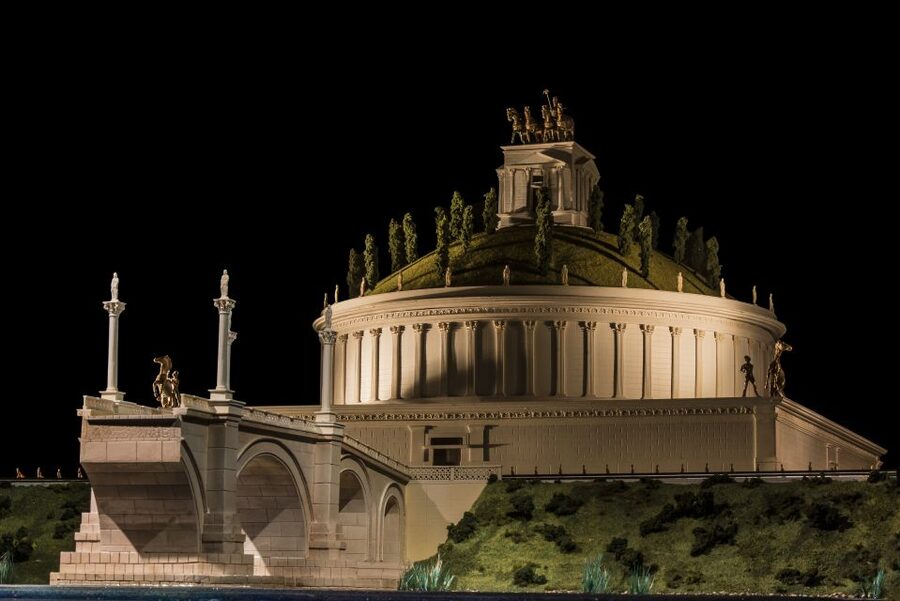
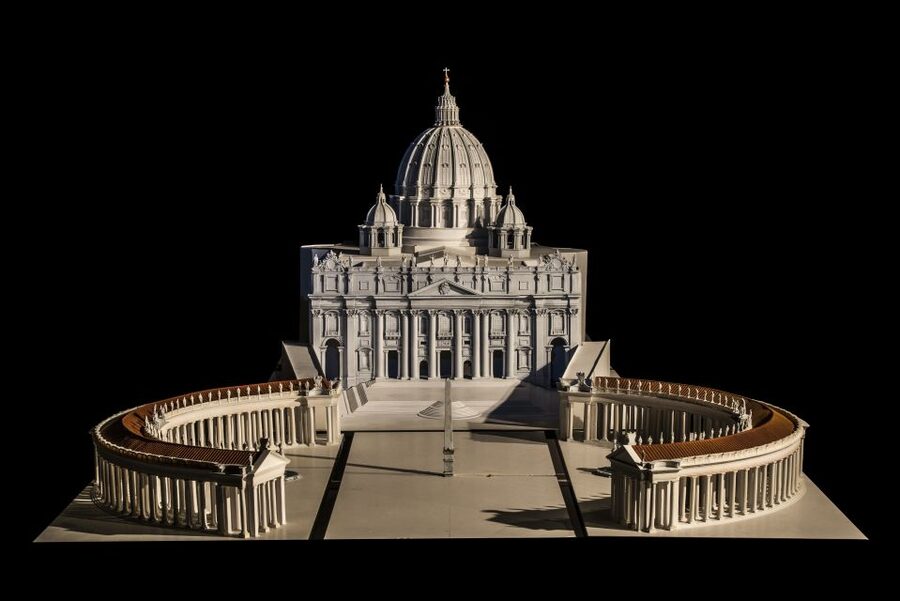
- Four interactive models cover the Imperial Forum, Augustus Forum, Mausoleum of Adrian, and San Peter Basilica
- Start when you want during opening hours, since the show runs continuously
- Audio guides in 9 languages let you follow comfortably without staring at subtitles
- A solid one-hour indoor plan that also works well as a first stop
Where Welcome To Rome fits near Piazza Navona
Welcome To Rome takes place inside the ex-Cinema Augustus, at Corso Vittorio Emanuele II, 203. It is only a few hundred meters from Piazza Navona, which makes it easy to tack onto a morning of walking or a midday break when Rome gets hot.
This is not a typical museum. You are not reading labels for an afternoon. You are settling into a show that explains how the city grew, before you go back out to hunt for those exact “why is this here?” moments in real life.
I like that the experience is built around chronology. Rome can feel like a pile of ruins and churches with no clear map in your head. Here, the story gives your eyes a filter, so the streets, forums, and sacred buildings start making sense as parts of one long evolution.
And because you can start at any time during opening hours and the show runs continuously, you are not locked into a nerve-wracking time slot. That flexibility matters in a city where plans change quickly.
Inside ex-Cinema Augustus: how the 27-minute show plays
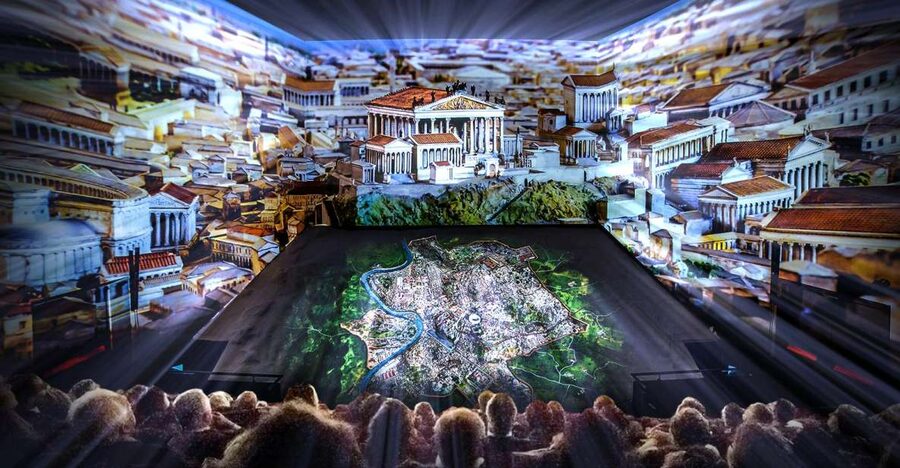
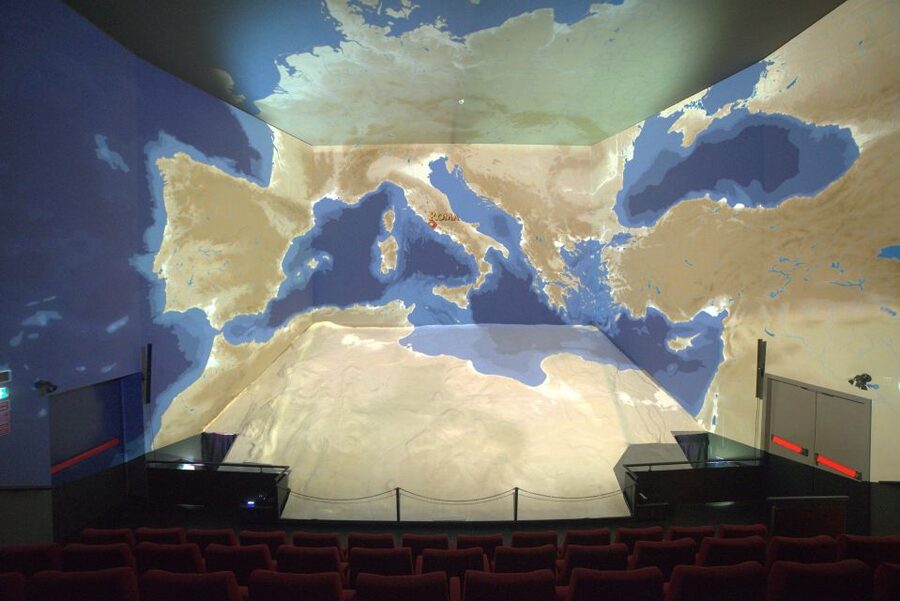
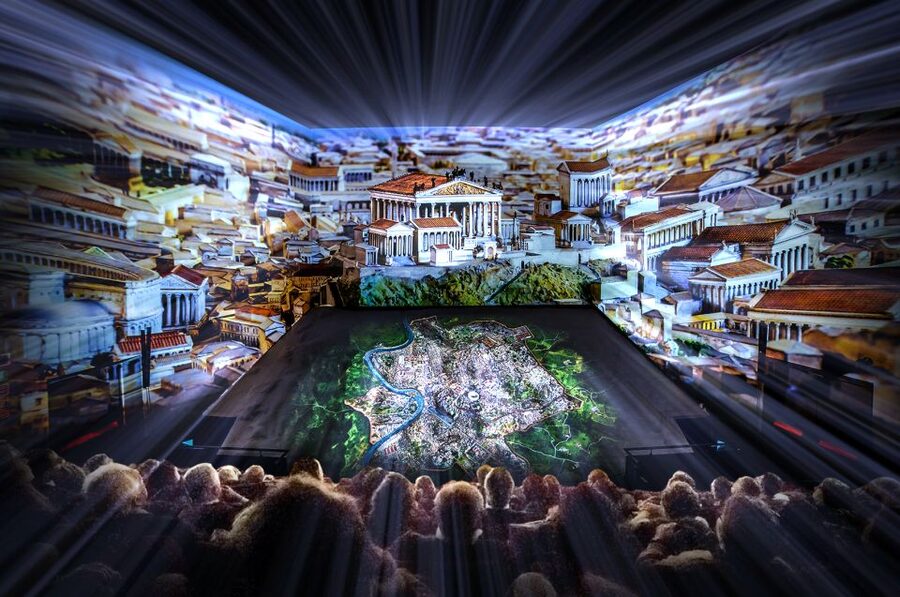
The main part is a multimedia projection that runs for about 27 minutes. As the story unfolds, you get a multi-projection setup where walls and ceilings come alive, while on the floor a large model of Rome lights up to show how the city developed across different ages.
The show also uses an illusion of flying over Rome through the centuries. That matters more than it sounds. When you are standing in a real forum or looking at the footprint of an old monument, you often struggle to understand what the surrounding area looked like. The projection gives you that missing context.
The narration is available via an audio guide in multiple languages, including English, Spanish, French, German, Italian, Russian, Chinese, Japanese, and Croatian. So you can listen at your own pace without squinting at a screen.
One more practical point: the experience runs in a cinema-style room, so it is a good way to catch your breath. Several people liked it specifically as a sit-down activity, which is smart in summer or after a long morning of museums and ruins.
The city model and the “flying” effect, explained
Here is the part I think gives the most value. The show does two jobs at once: it tells the story of Rome over 2700 years, and it builds a mental map of how that story looks on the ground.
On the floor, the model lights up to show evolution over time. In the air, you get movement between monuments, palaces, churches, and squares. That combination helps you understand why today’s Rome can feel a bit confusing. You are seeing the result of centuries, not a single snapshot.
I also like that the show does not treat Rome like a museum display. It treats it like a city that kept changing its mind. Empires rise and fall, neighborhoods shift, and new buildings reuse or reshape older spaces. When you later see ruins next to more modern streets, you are not stuck guessing what went where.
There is also a simple reality check built in. Real Rome is huge. Even with good planning, you will miss the big “connections” if you only visit sites one by one. This show gives you a guided big picture that you can carry outdoors.
The interactive models: Imperial Forum, Augustus Forum, Hadrian, and San Peter
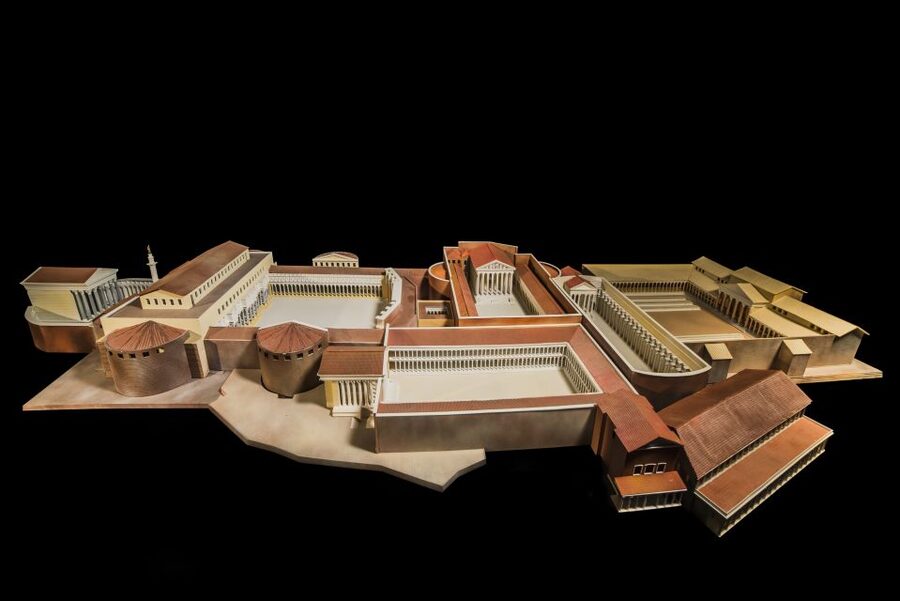
After the main projection, you get to explore four large interactive models. This is where the experience shifts from watching to doing, and it is a big reason the show earns such strong ratings.
The models you can view focus on:
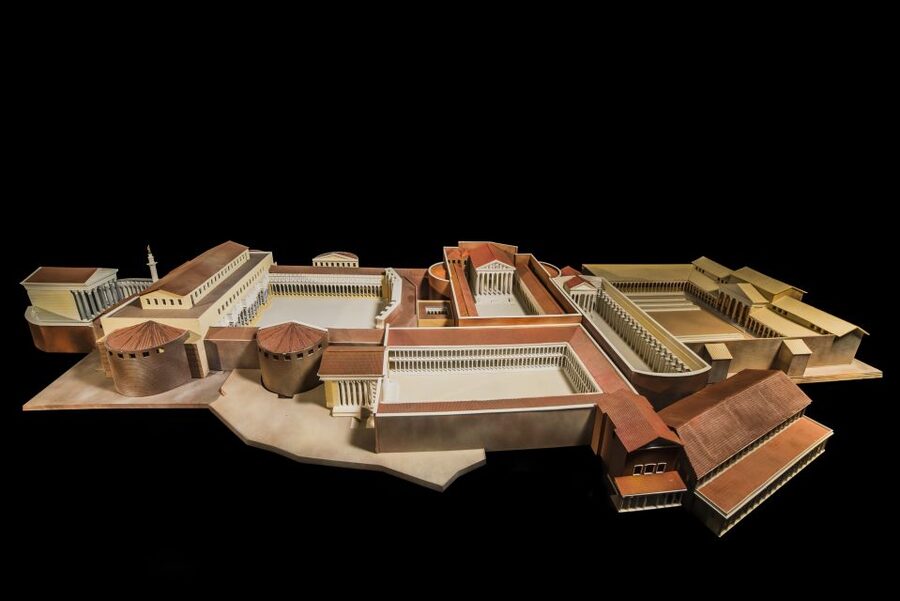
- the Imperial Forum
- the Augustus Forum
- the Mausoleum of Adrian
- San Peter Basilica
These are the kind of places where it is easy to leave a site with questions. What did it surround? How did it relate to nearby buildings? What does the layout mean once you are standing among broken stone?
Interactive models are great for that. You can take time, look around the way you want, and connect what you saw in the projection to what the site would have looked like in its heyday.
A practical tip: since the models are large and the room is designed for a flow of viewing, pay attention to any posted guidance from staff and signs so you do not wander in circles. One review even suggested more clear sign posting for an optimal viewing order, which is a hint that a little self-guided organization will improve the experience.
If you are the type who likes turning “facts” into a visual you can remember, this section is where it clicks.
Why this show is a smart first move for your Rome week
If you are doing the usual Rome plan, you will walk through the Colosseum area, then hit the forums and move toward the Vatican. The problem is that those places are separated by time, by scale, and by what your brain can hold in one day.
Welcome To Rome is a strong way to start because it gives you a timeline you can reuse. Several people described it as a way to pull the city together, especially after walking around and then seeing the projections. That is exactly how it should work: you get the big picture, then your outdoor visits feel less like random stops.
It also works as a midday reset. The show is indoors, you sit down, and you come out with clearer context. That is especially helpful if you are traveling with kids, since it gives structure without asking them to sprint from one site to another.
That said, it is not a total babysitting activity. One review noted it is not really the kind of presentation that keeps super young children entertained. So if you are bringing very little kids, plan for shorter attention spans and consider whether your family will enjoy historical visuals and narration.
Price and value: is $21 a good deal?
At $21 per person, Welcome To Rome is not the cheapest thing you can do in Rome. One review even felt it was on the high side and suggested a lower price range would be fair.
But here is my value math. You are paying for:
- a focused 27-minute multimedia presentation
- the chance to view four interactive models
- included audio guidance in 9 languages
- an experience that helps you understand what you will see outside
If you have only a limited number of hours, or you want your first day to feel organized rather than chaotic, this can save you time and confusion. It is a “pay once, benefit many” kind of attraction.
If you are already an expert on Roman history and you are confident you know the layout of major sites, you may find it less rewarding. And if you are trying to keep every activity very low cost, you might choose to spend that $21 on a second ticket for an outdoor attraction instead.
My practical take: if you want a simple overview that makes the ruins readable, the price usually feels justified. If you hate paying for indoor shows, then you will probably feel the cost more sharply.
Audio guide tips and timing that keep it stress-free
The audio guide is included, and the language list is wide: Spanish, Chinese, English, French, German, Italian, Japanese, Russian, and Croatian. That is helpful for families and mixed-language groups, since you are not forced into one group listening setup.
You can also start during opening hours because the show goes on continuously. That means you can fit it around meals and sightseeing without building an exact minute-by-minute schedule. Still, timing matters. The last show starts 1 hour before closing time, so if you are aiming for a late day slot, leave yourself enough buffer to reach the venue comfortably.
For comfort, remember this is a sit-down cinema-style experience plus walking around the interactive models. If your legs get tired easily, plan a gentle pace after the show too.
And yes, the show is accessible, with the venue and exhibits described as wheelchair accessible. That is a plus if you are planning around mobility needs, because the experience is built to be experienced in-system rather than requiring lots of stairs.
Who should book Welcome To Rome, and who should skip it
Book it if you:
- want a quick way to understand Rome’s timeline before you tackle the big sights
- like visual learning and want a mental map of how the city changes over time
- are traveling with kids who can handle a short, story-driven experience
- want a cool indoor activity that fits well into almost any day plan
Consider skipping it if:
- you prefer only outdoor, monument-level sightseeing
- you already know Rome’s history deeply and you think you will feel limited by a short presentation
- you are very cost-sensitive and would rather spend that money on an additional site ticket
Overall, I see this as a smart “connect the dots” stop. It is especially useful when you do not want to spend your first days constantly googling context or trying to mentally reconstruct ancient Rome from fragmented ruins.
Should you book Welcome To Rome?
I recommend booking Welcome To Rome if you want Rome to feel clear, not just impressive. For many people, it is the difference between seeing ruins and actually understanding what those ruins were part of.
If you are on your first visit, short on time, or traveling with a mix of ages, it is one of the easiest ways to get value quickly. Just treat it as an introduction, then spend the rest of your money and energy on the monuments you came to see.
FAQ
How long is the Welcome To Rome multimedia show?
The main projection covers about 2700 years of Rome in 27 minutes. Plan for roughly an hour total to include the projection and time with the interactive models.
Where is Welcome To Rome located?
The show is inside the ex-Cinema Augustus at Corso Vittorio Emanuele II, 203. The entrance is a few hundred meters from Piazza Navona.
Can I start the show at any time during opening hours?
Yes. The show runs continuously, so you can start your visit at any point during opening hours. The last show starts 1 hour before closing.
Are audio guides included, and what languages are available?
Yes, an audio guide is included. It is available in Spanish, Chinese, English, French, German, Italian, Japanese, Russian, and Croatian.
Is the attraction wheelchair accessible?
Yes. The projection and interactive exhibits are described as accessible for people with disabilities, including wheelchair access.
Do I need to buy a timed ticket?
You should reserve a spot in advance, but you can choose a starting time during opening hours because the show runs continuously. You can also skip the ticket line at the venue.
Capitoline Hill & Rome City Museums, top to bottom.
 ★ 4.7Rome: Doria Pamphilj Gallery Entry TicketFrom $341,647 reviews
 ★ 4.3Rome: Capitoline Museums Experience with Multimedia VideoFrom $421,093 reviews
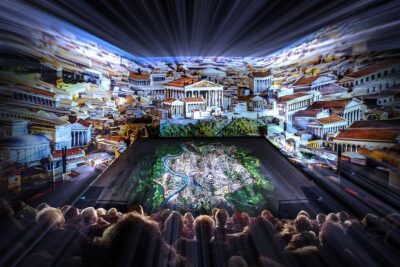 ★ 4.5Welcome To Rome ExperienceFrom $21679 reviews
 ★ 4.5Rome: Altar of the Fatherland Elevator and Museum TicketsFrom $42546 reviews
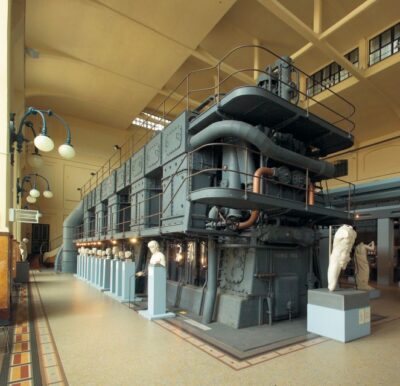 ★ 4.4Rome: Capitoline Museums and Centrale Montemartini TicketsFrom $42328 reviews
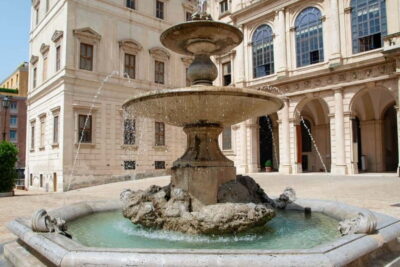 ★ 3.9Rome: Palazzo Barberini Galleria Corsini Ticket & AudioguideFrom $19322 reviews
 ★ 4.2Rome: Vittoriano with Rooftop & Palazzo Venezia Hosted EntryFrom $38306 reviews
Filed under