

Reviewed · TRASTEVERE & THE JEWISH GHETTO
Rome: Jewish Ghetto Walking Tour
Rome’s Jewish Ghetto feels alive on foot. You get ancient Rome landmarks plus ghetto-era stories in one clean route, and you finish with homemade kosher gelato. One heads-up: it is a steady 2.5 hours of walking and stops outdoors, so comfy shoes matter.
I like that the tour starts right at Foro Traiano (Trajan’s Column area), so you’re oriented fast and you’re not guessing where to begin. It’s led in English, and the guide keeps the pace moving while still making time for questions.
By the end, you’re standing on Tiber Island, hearing WWII rescue stories and an old temple background tied to today’s church. You also get big “small details” moments, like the Turtle Fountain love story and a last stretch of ghetto wall you can actually see.
In This Review
- Key highlights I’d plan around
- Meeting at Trajan’s Column, then walking into the right story
- The Theater of Marcellus, a Rome landmark you’ll never see the same way
- Piazza Mattei and the Turtle Fountain, where love stories stick
- Portico d’Ottavia and the ghetto streets: seeing what survived
- Crossing to Tiber Island: old bridge, WWII stories, and Asclepius
- The gelato break and keeping your energy for 2.5 hours
- Price and value: what you’re really paying for at $65
- Who this walking tour is best for
- Should you book this Rome Jewish Ghetto walking tour?
- FAQ
- How much does the Rome Jewish Ghetto walking tour cost?
- How long is the tour?
- Where do I meet the guide?
- What is included in the price?
- Is the tour offered in English?
- Does the tour run in bad weather?
- Do I need to cover my shoulders?
Key highlights I’d plan around

- Theater of Marcellus, even older than the Colosseum, sets the Roman context first
- Fontana delle Tartarughe (Turtle Fountain) brings romance and rumor into Piazza Mattei
- Portico d’Ottavia shows how ancient structures are still part of everyday Rome
- A surviving wall segment gives you something physical to picture centuries of confinement
- Tiber Island links the neighborhood to WWII hospital stories and the Asclepius tradition
- Guides earn serious praise, especially for turning history into “story” you can follow (James, Angela, Tom, Gabi, Elena, and Maria are repeatedly named)
Meeting at Trajan’s Column, then walking into the right story
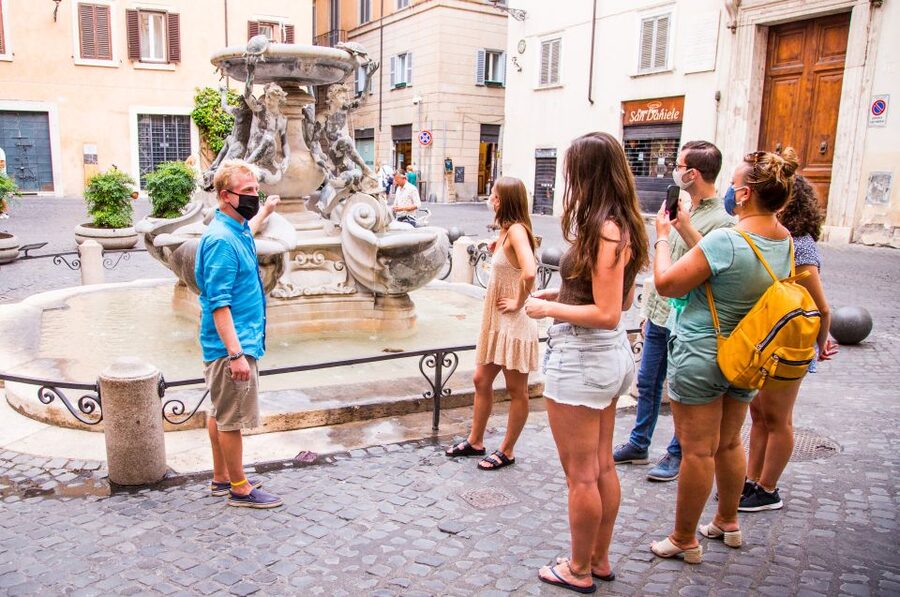
You meet at Foro Traiano 84, and you look for an orange Roman Vacations sign. This part is more important than it sounds. Starting at the Trajan’s Column zone helps you understand how the city’s old layers connect, instead of treating the ghetto as a random detour.
Once you’re grouped, the guide begins with the big frame: Rome’s Jewish life across many eras, and how the neighborhood changed shape while still leaving traces behind. From the start, the tour style is “follow the streets, learn why they matter,” not a lecture where you lose the thread.
If you’re the type who likes to ask questions, you’ll probably enjoy this. Multiple guides on this tour have been praised for answering in a way that keeps the group engaged and moving.
Worth an aperitivo-hour scroll, our other Trastevere and Jewish Ghetto walks in Rome.
- Winner 2025 Rome Twilight Trastevere Food Tour by Eating Europe
★ 5.0 · 5,157 reviews - Rome: Trastevere or Jewish Quarter Street Food Tour
★ 4.8 · 3,839 reviews - Rome: Trastevere Food tour with Free-Flowing Fine Wine
★ 5.0 · 2,853 reviews - Rome: Trastevere & Campo de Fiori Street Food Walking Tour
★ 4.9 · 2,768 reviews
The Theater of Marcellus, a Rome landmark you’ll never see the same way
The tour passes by the Theater of Marcellus, and you get a guided stop to make it make sense. Here’s the value: it’s not just an impressive ruin. It’s a time anchor that helps you place the ghetto inside a larger Roman timeline.
The guide points out that the Theater of Marcellus is older than the Colosseum, which instantly sharpens your sense of scale. You’re learning Rome as a continuous process, not a set of disconnected postcard stops.
A practical tip: since this is an early outdoor segment, bring water and stay aware of the sun. The tour runs in all weather, so your comfort is mostly about your own planning.
Piazza Mattei and the Turtle Fountain, where love stories stick
Next you go to Fontana delle Tartarughe, the Turtle Fountain in Piazza Mattei. The famous angle here is the story of unrequited love, and the guide uses it to connect myth and history in a way that’s easy to remember.
I like that this stop gives your brain a break from pure dates and names. You still get context, but it feels like you’re watching the neighborhood’s culture form, one story at a time.
It’s also a great photo stop, but do it quickly and then let the guide finish the point. If you pause too long, you’ll spend the rest of the tour trying to catch up instead of enjoying each place in order.
Portico d’Ottavia and the ghetto streets: seeing what survived
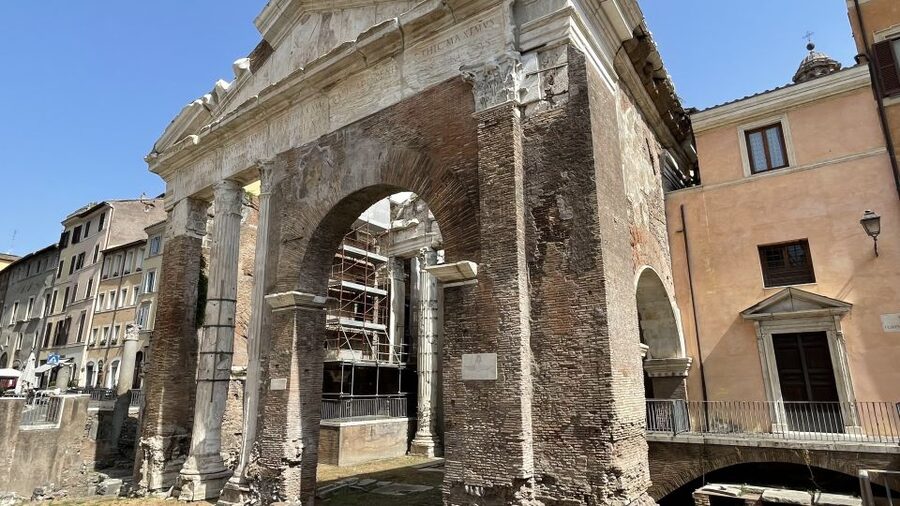
As you move through the Jewish Ghetto area, you’ll see Portico d’Ottavia and key remnants that still function as part of the city. The value of a structure like this is simple: it helps you picture daily life, not just special events.
One of the most moving moments is when you pass the last remaining piece of the wall that kept the Jewish community in this area for centuries. That’s the kind of physical detail that changes your understanding fast. It’s one thing to read about confinement. It’s another to stand beside the surviving edge of it.
You’ll also learn about the Great Synagogue of Rome as a landmark. Based on the way the tour is described and how people talk about it, think of this as a guided walk through the neighborhood’s core points, not a “show up and go inside the synagogue” experience.
If an interior visit is a top priority for you, plan on researching that separately. If your goal is street-level understanding and context, this tour is built for exactly that.
Crossing to Tiber Island: old bridge, WWII stories, and Asclepius
From the ghetto area, you cross onto Tiber Island, and the guide explains that it’s connected to the oldest functioning bridge in Rome. That’s a neat detail because it forces you to notice how infrastructure carries history. The bridge is doing its job today, just like it always has.
On Tiber Island, the stories turn more dramatic. You hear about a hospital saving people during WWII, and you connect that to the broader theme of survival and resilience that runs through the whole tour.
Then there’s the Asclepius thread. The guide explains the temple background, and how the place is now tied to a church. That’s one of those “Rome does layers” moments where you see one belief system replace another in the same physical footprint.
This segment is often where the tour stops feeling like sightseeing and starts feeling like understanding. If your attention tends to wander, I’d suggest focusing here, because the emotional payoff is big.
The gelato break and keeping your energy for 2.5 hours
The tour includes a stop at a gelateria for homemade kosher gelato (or coffee, depending on the option). This is a smart break in the middle of the walking rhythm, and it gives you a simple, included taste that fits the neighborhood theme.
I’d treat the gelato stop like a mini reset, not just dessert. Use it to rehydrate, check your feet, and decide if you want to ask a question while you still have the guide’s full attention.
Timing can vary by day and group pace, but it’s built around a steady cadence of guided stops. Bring a reusable water bottle, and wear clothes you can manage if the weather flips mid-tour.
Also plan for a lot of “look, listen, move” moments. If you’re traveling with teens, you’ll likely appreciate the story format. Many people highlight how their teenagers stayed interested because the guide told history like an unfolding narrative.
Filed beside this one, more walking tours in Rome.





Price and value: what you’re really paying for at $65

At $65 per person for 2.5 hours, the main value isn’t the route length. It’s the guide time plus the way the tour connects major landmarks.
You get guided access to several big-name sites in one afternoon stretch: Theater of Marcellus, Turtle Fountain, Portico d’Ottavia, the Great Synagogue of Rome landmark area, and Tiber Island. If you were trying to stitch this together alone, you’d spend time figuring out the story thread and where to stop for context.
Add in the included kosher gelato or coffee, and you’re already covering a small but real cost of the tour experience. Then there’s the intangible part people keep praising: guides who explain clearly, answer questions, and pace the group.
I also like that this tour can sometimes run as a small group, and in some cases people mention ending up with a private tour if signups were low. That flexibility matters because it makes your question time feel real instead of rushed.
One small scheduling thought: one reviewer specifically suggested avoiding Friday afternoon right before sabbath starts. Even if you are not observing, it’s smart to avoid timing that could make parts of the neighborhood feel constrained or less comfortable.
Who this walking tour is best for
This is a strong pick if you want a focused neighborhood experience. You’re not trying to cram every Roman monument into one day. You’re learning how Rome’s Jewish life shows up in streets, buildings, and surviving traces.
It’s also a good fit if you like history told in human terms. Guides here have repeatedly been described as story-driven, and several named guides (James, Angela, Tom, Gabi, Elena, Maria) come up with high praise for keeping people engaged.
If you care about physical walking comfort, bring comfortable shoes and keep an eye on your energy. The tour is outdoors and continues in all weather, so plan for sun and rain. Some people also mention guides working at a comfortable pace for slower walkers, but you should still come prepared.
If your must-do list includes a deep interior visit inside the Great Synagogue, consider pairing this with another option. This tour reads more like neighborhood understanding than a single-site admission plan.
Should you book this Rome Jewish Ghetto walking tour?
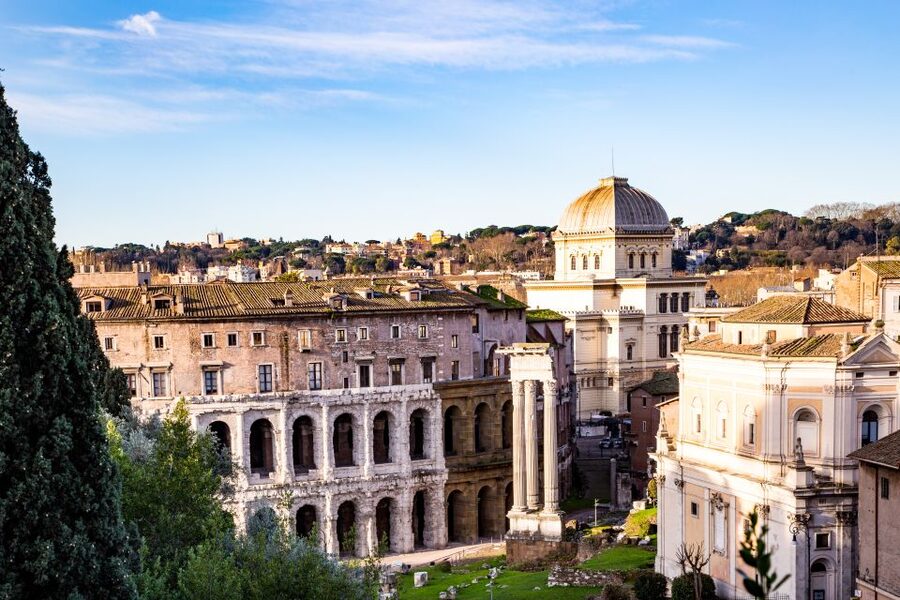
Yes, you should book it if you want a guided walk that connects ancient Roman landmarks to Jewish history in a clear, chronological way. The combination of Theater of Marcellus, Piazza Mattei, the ghetto street markers, and the turn to Tiber Island WWII and Asclepius gives you a complete arc in 2.5 hours.
Book it with extra confidence if you enjoy asking questions and you like guides who tell history as story. Based on the feedback, this is where the tour shines.
Skip it or adjust expectations if you’re looking for a lots-of-indoor-ticket style day. Also, plan your schedule carefully if you’re considering Friday afternoon timing.
If you want the kind of Rome day where you walk away with real context, this one is a strong choice.
FAQ
How much does the Rome Jewish Ghetto walking tour cost?
It costs $65 per person.
How long is the tour?
The duration is about 2.5 hours.
Where do I meet the guide?
Meet at Foro Traiano, 84, and look for an orange Roman Vacations sign.
What is included in the price?
The tour includes a tour guide and kosher gelato or coffee.
Is the tour offered in English?
Yes, the live tour guide speaks English.
Does the tour run in bad weather?
Yes, tours proceed in all weather conditions.
Do I need to cover my shoulders?
Yes. You should bring a cover for bare shoulders when visiting any churches.
Our Wider Tours File for Rome
Trastevere and Jewish Ghetto Walks in Rome, Written Up Separately
Not quite the day you had in mind? The rest of our Rome write-ups sit below
- Rome: Guided Tour of St. Peter’s Dome Climb, Basilica & Vatacombs★ 5.0 · 167 reviews
- St. Peter’s Basilica Guided Tour with Reserved Entrance★ 4.0 · 168 reviews
- Golf Cart Driving Tour in Rome: 2.5 hrs Catacombs & Appian Way★ 5.0 · 168 reviews
- Rome: Trastevere Wine Tasting with Food Pairing and Gelato★ 4.9 · 168 reviews
- Guided Tour of the Colosseum Palatine Hill and Roman Forum★ 4.7 · 168 reviews
- Vatican Museums, Sistine Chapel & Saint Peter’s Semi-Private Tour★ 4.5 · 169 reviews
- Hidden Rome: Small Group E-Bike Tour with Street Food Stops★ 5.0 · 169 reviews
- Rome: Papal Audience with Pope Leo IV★ 3.9 · 169 reviews
- Rome Golf Cart Tour: Highlights & Must See★ 4.5 · 170 reviews
Trastevere & the Jewish Ghetto, top to bottom.
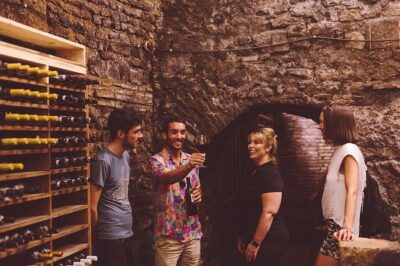 ★ 5.0Winner 2025 Rome Twilight Trastevere Food Tour by Eating EuropeFrom $1255,157 reviews
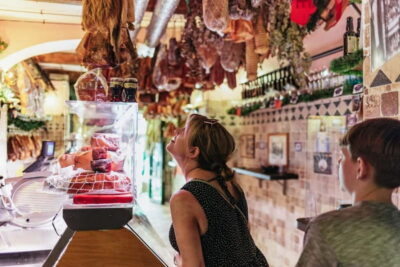 ★ 4.8Rome: Trastevere or Jewish Quarter Street Food TourFrom $513,839 reviews
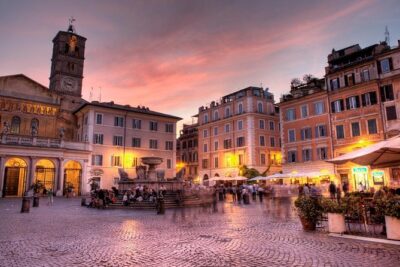 ★ 5.0Rome: Trastevere Food tour with Free-Flowing Fine WineFrom $1022,853 reviews
 ★ 4.9Rome: Trastevere & Campo de Fiori Street Food Walking TourFrom $512,768 reviews
 ★ 5.0Rome: Award Winning Trastevere Group Food Tour with WineFrom $812,273 reviews
 ★ 4.8Rome: Guided Food Tour in TrastevereFrom $1122,266 reviews
 ★ 4.5Jewish Ghetto and Trastevere Tour RomeFrom $41,729 reviews
 ★ 5.0Taste of Testaccio: Special 15 Year Anniversary EditionFrom $1311,658 reviews