

Reviewed · AUDIO TOURS
Rome: Mamertime Prison Entrance Ticket with Audio guide
A prison stop that feels shockingly real. Carcer Tullianum, Rome’s oldest penitentiary, is where Rome kept people it saw as enemies, with the stories of Peter and Paul woven through the site. What I love is the straight-to-the-point visit and the chance to see how art and sacred memory share the same dark space. The one drawback to plan for, the phone-based audio guide can be fiddly to download, and reception can drop once you’re down in the prison areas.
This is a short visit with big emotional weight. You enter the historic cell spaces, follow the audio, and move through a compact museum layout at your own pace. One key practical note: you need the Vatican&Rome App to listen.
In This Review
- Quick hits you can feel right away
- Carcer Tullianum: Rome’s oldest prison in a tightly packed visit
- The audio guide setup: your phone is the tour, so prep beats panic
- What you will see inside the prison halls and cells
- Names and stories on the route, from political prisoners to early martyrs
- Where the Christian tradition becomes part of the experience
- Value and timing: how to fit this into your Rome day
- Practical logistics that can make or break the visit
- Who should book this audio ticket
- Should you book Mamertime Prison with audio?
- FAQ
- What languages is the audio guide available in?
- How long does the visit take?
- Where do I meet, and when should I arrive?
- Do I need to download an app to use the audio guide?
- Is it suitable for people with mobility impairments?
- Can I bring a stroller or large bags?
- Can I cancel, and is reserve and pay later available?
Quick hits you can feel right away
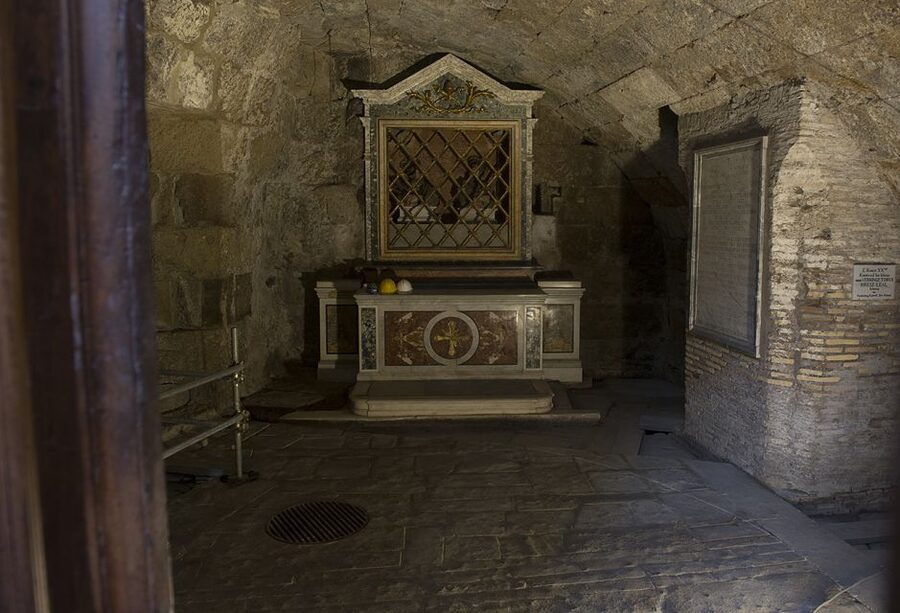
- Rome’s oldest prison, Carcer Tullianum, focused on the final days of those considered enemies of Rome
- Multilingual audio guide in Italian, English, French, German, Spanish, and Portuguese
- Story stops with names, including Jugurtha and Vercingetorix
- Christian-martyr connections, including where Peter and Paul are believed to have spent their last days
- A short, manageable visit, often around an hour or less in practice
- Small spaces, so it is not the best choice if you need mobility access
Carcer Tullianum: Rome’s oldest prison in a tightly packed visit
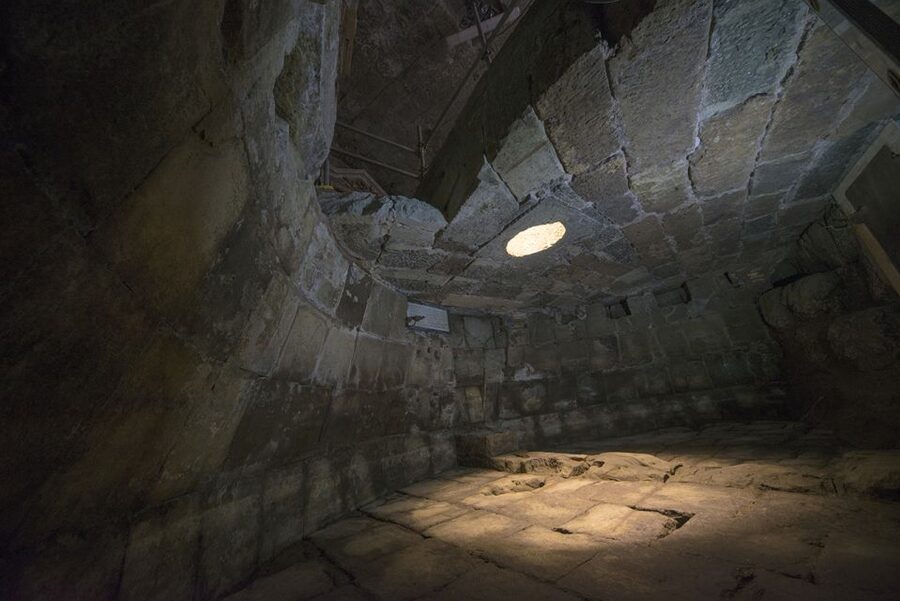
Carcer Tullianum, also tied to the Mamertine Prison name, is one of those places where history is not behind a rope and a smile. It is a real, physical setting. You enter the prison area and you follow a sequence of dark halls and enclosed spaces, with an audio guide designed to explain what you are seeing.
I like that the experience is focused. You are not bouncing around half a district or doing a marathon of corridors. This is a concentrated stop that fits neatly into a busy Rome day, even if you are also chasing the big-name sights.
What you are walking through is described as Rome’s maximum security prison for people viewed as Rome’s enemies. Some of the storytelling highlights the political side, mentioning figures like Jugurtha, king of Numidia, and Vercingetorix, king of the Gauls defeated by Julius Caesar. It also points toward the religious tradition that connects the site to early Christian martyrs.
A quick heads up for expectations. The space is small, and you only access a limited set of rooms and cells. That does not make it less powerful. It just means you should plan for a short visit rather than a long museum day.
The audio guide setup: your phone is the tour, so prep beats panic
The ticket includes entry plus a multilingual audio guide in Italian, English, French, German, Spanish, and Portuguese. The main practical twist is that to listen, you must download and use the Vatican&Rome App on your phone.
Here is how to make this painless:
- Bring your own headphones. The audio experience is meant to run through your device.
- Plan to download before you run out of patience. Some people find the download process clunky at the start, especially if you are trying to fix it on the fly.
- Expect the site to rely on on-site WiFi for downloading and setup. In practice, reception can be inconsistent once you go deeper into the prison areas, and the audio may pause if your connection drops.
A detail that matters: one of the common frustrations is figuring out exactly where to start and how to move through the exhibit flow. The format is designed to guide you, but if you arrive without your phone ready, you can end up wasting time.
My practical tip: arrive a little early and get the audio going before you step into the prison areas. The meeting point instruction says to arrive 15 minutes before the activity starts at Mamertine Prison. Even if you do not end up meeting a live guide, that buffer helps you avoid the classic Rome move, standing around with a phone spinning and trying to look confident.
What you will see inside the prison halls and cells
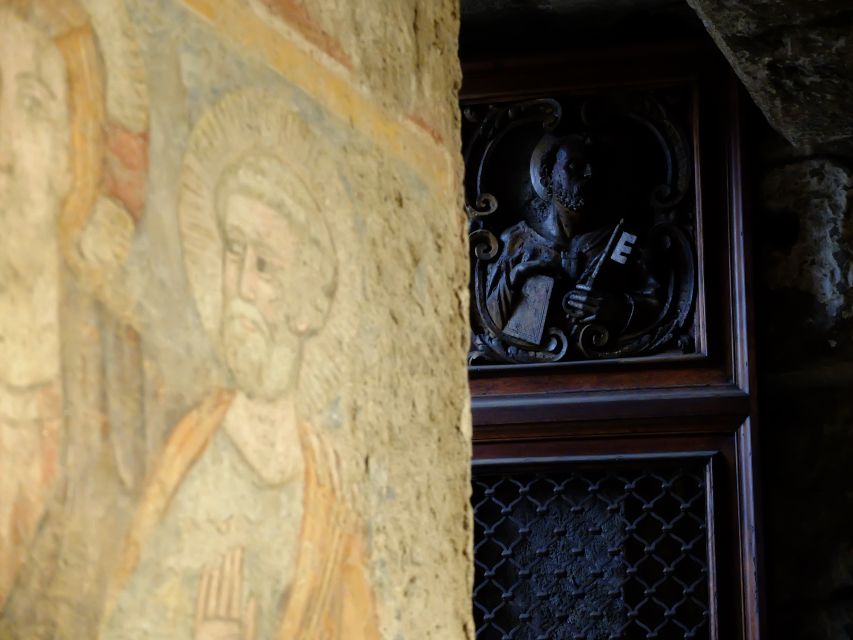
Once you are inside, the visit centers on the prison setting: enclosed spaces, the feeling of confinement, and the stark contrast between historical punishment and the layers of later meaning.
You will walk through the prison areas while accessing facts and stories through the multimedia audio guide. The audio is built to help you connect individual details to larger stories, not just recite dates. For example, the tour emphasizes the final days of prisoners associated with enemies of Rome, then transitions toward the Christian connections tied to early martyrs.
One thing I appreciate about this format is that it forces you to slow down, just a little. In a place like this, the “look around and read the plaques” approach can feel too flat. The audio gives structure so you know what you are looking at, why it matters, and how the site’s meaning shifts depending on the story being told.
Also, keep in mind what parts of the prison you can access. Some visitors point out that the prison experience is short and visitors are allowed into only certain rooms. So if you are imagining a huge underground complex, temper that idea. Think “small, focused, memorable.”
Names and stories on the route, from political prisoners to early martyrs
A lot of Roman history tours list names at you. This one tries to give you context as you move. The audio highlights prisoners tied to Rome’s enemies, including:
- Jugurtha, king of Numidia
- Vercingetorix, king of the Gauls, defeated by Julius Caesar
- followers of Catiline, whose end is tied into the prison narrative
This matters because it changes how you interpret the space. You can see it as a machine of power, a political tool. Then, as the audio moves into the Christian layer, you can also read the same walls as a place of faith tradition and sacred memory.
The site also references the idea that Peter and Paul lived there and that many Christian martyrs experienced their last days here. For people drawn to church history, this is a key reason to choose this ticket over a more general history stop. You are not just learning that Rome was violent. You are learning how later generations anchored spiritual meaning to a physical location associated with imprisonment.
It is worth saying plainly: the prison narrative is heavy. If you want something light and funny, this is not it. If you want a place that makes you sit with a hard kind of history, it works.
Where the Christian tradition becomes part of the experience
The audio guide is designed to help you appreciate hidden artistic details and the site’s layered memorial meaning. That comes through most strongly in the Christian-martyr framing, including traditions that connect:
- the imprisonment of Peter and Paul
- the place where followers of Catiline are described as meeting their end
- the idea that Christian martyrs lived their last days here
In places like this, I find the emotional tone comes from the combination of architecture and story. Even when you know the traditions are faith-linked and historical certainty can be tricky, the experience can still feel real and moving.
One practical note from real-world visits: some people feel the museum framing does not push as hard into a Christian devotional perspective as they expected. If that is important to you, go in with the mindset that this is a historical site with religious associations. Expect interpretation to be mixed rather than purely devotional.
Value and timing: how to fit this into your Rome day
The price is listed at $11 per person, and what makes it feel like good value is the structure. You are buying entry plus a multilingual audio guide, and the on-site experience is short and self-paced.
So even if you only have room for one “smaller” stop, this can be a smart pick. It is not going to swallow your entire afternoon like some bigger museum blocks. And it is often less crowded than the headline sights, meaning you get more time in the prison spaces without feeling rushed.
Timing-wise, the ticket lists a duration of 1 day, but in practice many visitors spend about an hour inside. Treat it as a one-hour commitment, plus whatever time you need for phone setup and walking from nearby areas.
Where it fits best:
- If you want church history that connects to a specific, physical place
- If you like museum pacing where the audio gives you a guided thread
- If you are trying to balance the big-ticket attractions with something quieter and more concentrated
Where it might not fit:
- If you are traveling without a smartphone or you dislike app-based listening
- If mobility access is a concern, since the activity is noted as not suitable for people with mobility impairments
Practical logistics that can make or break the visit
Mamertine Prison is one of those places where “easy to find” depends on the day, and your attention span. Some people describe the entrance as confusing to locate, so do yourself a favor:
- arrive early
- give yourself time to find the correct entry point
Also, plan for restrictions:
- No baby strollers
- No luggage or large bags
That matters because even if the exhibit itself is small, Rome entrances and offices can feel tight once you are carrying things.
And then there is the app. The most common complaint pattern is not about the facts. It is about the phone experience: confusing setup steps, difficulty downloading, and audio pausing in the prison because reception can drop. If you want the visit to go smoothly, bring charged phone power, download anything you can, and keep your expectations realistic.
When the app does work, it is a big plus. Many people describe it as extensive and valuable, especially for understanding the site’s artistic details and storytelling.
Who should book this audio ticket

This ticket is a strong match if you:
- care about church history and want a place tied to Peter and Paul traditions
- prefer audio narration rather than a live guide
- want a compact site that does not eat your whole day
- like history that mixes politics and religious meaning, rather than only one thread
It is less ideal if you:
- need step-free access or mobility accommodations, since it is noted as not suitable for people with mobility impairments
- travel with strollers or large bags
- do not want to rely on your own phone and headphones for the guide
If you are on the fence between this and another top Rome museum, use this rule of thumb: choose Mamertine Prison if you want a short, emotionally intense stop with a guided narrative. Choose something else if you want a large, do-everything museum day.
Should you book Mamertime Prison with audio?
Yes, I think you should book it if you want a focused, meaningful experience that is easier to fit than many other Roman attractions. At $11, you are paying for entry plus a multilingual audio guide, and the visit is often around an hour in practice. That makes it good value for time, especially if you are juggling multiple sights.
I would book with a simple condition: make sure your phone setup is ready. If you want to avoid stress, arrive early, download the app using the on-site WiFi when available, bring headphones, and expect that audio may pause in the deeper cell areas due to reception.
If your priority is a smooth, low-tech visit with no phone dependence, consider options with an alternative format. For everyone else who enjoys guided storytelling in a small space, Mamertine Prison is the kind of stop that sticks with you after you leave the crowd noise behind.
FAQ
What languages is the audio guide available in?
The audio guide is included in Italian, English, French, German, Spanish, and Portuguese.
How long does the visit take?
The activity is listed as 1 day, and the on-site experience is often about an hour or less in practice.
Where do I meet, and when should I arrive?
Arrive 15 minutes before the activity starts at Mamertine Prison in Rome.
Do I need to download an app to use the audio guide?
Yes. To listen to the audio guide, you need to download the Vatican and Rome App from the App Store or Play Store.
Is it suitable for people with mobility impairments?
No, it is not suitable for people with mobility impairments.
Can I bring a stroller or large bags?
No baby strollers are allowed, and luggage or large bags are not allowed.
Can I cancel, and is reserve and pay later available?
Free cancellation is available up to 24 hours in advance for a full refund, and reserve now, pay later is offered to keep plans flexible.
Audio Tours, top to bottom.
 ★ 4.2Rome: Colosseum & Forum with Audio Guide App -Optional ArenaFrom $4124,770 reviews
 ★ 4.3Rome: Pantheon Fast-Track Ticket and Official Audio GuideFrom $621,008 reviews
 ★ 4.2Pompeii: Entry Ticket with Optional Audio GuideFrom $2612,360 reviews
 ★ 4.6Venice: La Fenice Opera House Entry Ticket with Audio GuideFrom $1411,742 reviews
 ★ 4.2Rome: St. Peter’s Basilica & Dome Entry Ticket & Audio TourFrom $177,537 reviews
 ★ 4.4Florence: Cathedral & Brunelleschi’s Dome Ticket & Audio AppFrom $706,973 reviews
 ★ 4.4Florence: Michelangelo’s David Priority Ticket & Audio AppFrom $236,812 reviews
 ★ 4.2Florence: Uffizi Priority Ticket & Masterpieces Audio AppFrom $316,402 reviews
Filed under