
Reviewed · POMPEII ARCHAEOLOGICAL SITE
Pompeii: Entry Ticket with Optional Audio Guide
Pompeii hits hard, fast. This is a reserved-entry ticket with an optional audio guide, so you can get inside smoothly and roam the streets of a Roman city preserved by volcanic ash. I like that it’s built for self-guided pacing and that you can see major highlights like the amphitheater and the Villa Mysteries. One thing to consider: signposting and audio logistics can take a minute to figure out on busy days.
My favorite part is the flexibility. You choose Pompei Express (ancient Pompeii only) or Pompei+ (ancient Pompeii plus suburban villas in Boscoreale), then explore on your schedule instead of squeezing your day into a rigid group tour. I also really like the audio guide setup, with the device geared to function as both your narration and practical orientation tool.
The main drawback is that the site is big, and not every building may be open when you reach it. If you rely heavily on the audio route, you can end up listening to descriptions you cannot fully see, especially if you arrive later in the day.
In This Review
- Key points worth knowing
- Reserved entry plus optional audio guide: what you get
- Pompei Express vs Pompei+: picking the right ticket for your interests
- Pompei Express (ancient Pompeii only)
- Pompei+ (ancient city plus suburban villas)
- Getting inside: vouchers, entrances, and where the audio desk really is
- Using the audio guide like a pro (so it actually helps)
- What you’ll see in ancient Pompeii’s streets, markets, and public spaces
- Market life and everyday Roman routines
- Public baths and mosaics
- Theater and amphitheater moments
- Temples: Venus, Apollo, and Jupiter
- House of the Faun and Hellenistic touches
- Villa Mysteries and the suburban villas in Boscoreale (Pompei+ payoff)
- Comfort tips: how to plan your day without burning out
- What can go wrong (and how to handle it fast)
- Who this Pompeii ticket fits best
- Should you book this Pompeii entry ticket with optional audio guide?
- FAQ
- What is included with this Pompeii ticket?
- What is the difference between Pompei Express and Pompei+?
- Where do I pick up the audio guide?
- Are there headphones included with the audio guide?
- What time should I plan for Pompei+ entry?
- Do I need ID?
Key points worth knowing
- Choose Pompei Express vs Pompei+ based on whether you want just the main city or the suburban villas too
- Audio guide pick-up is inside Pompeii, at the official desk near Porta Marina Superiore
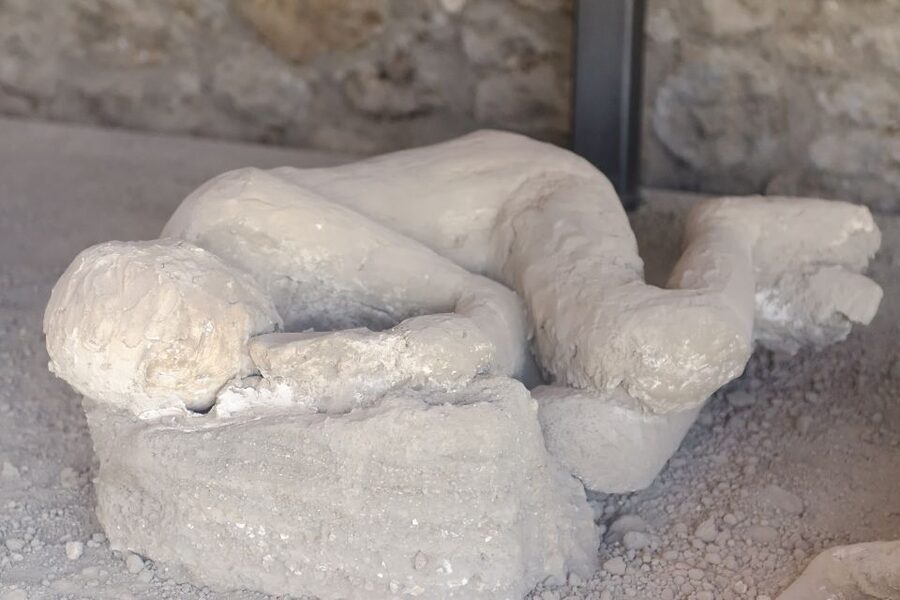
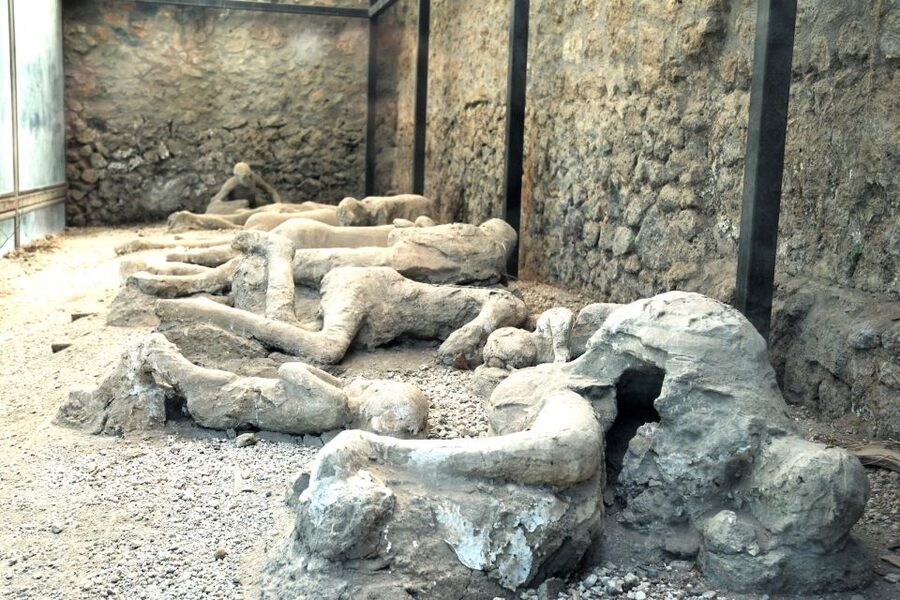
- Plan time for the far end, including the area with the famous plaster casts
- Expect uneven opening times for specific buildings, so not every stop will be visible
- Bring compatible headphones and skip Bluetooth since it does not work with the device
Reserved entry plus optional audio guide: what you get

For Pompeii, this kind of ticket makes the whole day easier. You get a reserved entry slot, and you can use your phone voucher to get where you need to go. Once you’re in, the main value is simple: you are not stuck waiting in long lines or trapped on a clock.
The optional audio guide is what turns “walking around ruins” into a story you can actually follow. The narration is designed to help you place yourself as you move through Pompeii’s streets, temples, theaters, villas, and baths. In practice, it also acts like a moving map when you are trying to connect what you see to what it used to mean.
You can also store luggage for free, which matters because Pompeii is a full walking day. Toss your bag, then focus on moving through neighborhoods, public buildings, and the homes of ordinary people.
Our reviewers also walked through other Pompeii site visits in Pompeii Archaeological Site.
- Pompeii: Archaeological Park Tour with Ticket on request
★ 4.5 · 2,283 reviews - Pompeii Ruins Private Tour with Optional Skip-the-Line Entry
★ 4.9 · 732 reviews - Pompeii: Exclusive Tour with Archaeologist and Entry Tickets
★ 4.9 · 634 reviews - Pompeii: Group Tour with an Archeologist Guide
★ 4.4 · 490 reviews
Pompei Express vs Pompei+: picking the right ticket for your interests
This is the first decision you should make before you arrive, because it changes what you’ll be able to see.
Pompei Express (ancient Pompeii only)
Pompei Express includes the ancient city of Pompeii, but it does not include the suburban villas. That means you will miss the Villa Mysteries and the other out-of-town sites in the Boscoreale area.
If your goal is to focus on the urban core, temples, theaters, streets, and public life, Pompei Express is often the best fit. You still get a full day’s worth of walking because the ancient city alone is huge.
Pompei+ (ancient city plus suburban villas)
Pompei+ includes the ancient city of Pompeii plus the suburban villas: Villa of the Mysteries, Villa of Diomedes, and Villa Regina in Boscoreale, with the Antiquarium. If you love frescoes, wealthy household details, and the way elite life worked outside the city center, Pompei+ is the stronger choice.
One timing detail you should plan around: last entry for Pompei+ is 3:30 p.m. in winter (Nov 1 to Mar 31) and 5:30 p.m. in summer (Apr 1 to Oct 31). If you show up late, you may not have enough time to make the extra suburban pieces worth it.
Getting inside: vouchers, entrances, and where the audio desk really is
On arrival, the experience is usually smooth, but Pompeii can still feel chaotic because of crowds and multiple lines. The best tip is to avoid defaulting to the first ticket queue you see.
I recommend arriving early if you can. Not only for cooler walking conditions, but because it gives you time to sort out where to go next without feeling rushed.
Here’s the big logistical piece: even if you prebook, you collect audio guidance through the official audio guide desk inside Pompeii, near the ticket area at Porta Marina Superiore. You should be ready to use a valid ID as a deposit to rent the audio device.
Also keep in mind:
- Bluetooth headphones do not work with the audio guide device. Bring what you know will connect reliably, since headphones are not included.
- If you printed or saved vouchers, having them ready helps you get the right entry step done faster.
- Free luggage storage is available, so you can travel lighter once you enter.
If you feel confused at the meeting point at first, that can happen, but it is usually fixable once you locate Porta Marina Superiore and follow the signs to the audio desk area.
Using the audio guide like a pro (so it actually helps)
The audio guide can be a huge upgrade, but only if you use it correctly.
The official audio desk is near Porta Marina Superiore, and you pick up and return the audio device there. If you forget this and try to hunt for help elsewhere, you will lose time. The device setup can be slightly awkward at the start, so give yourself a few minutes to get comfortable before you hit the busiest streets.
A practical way to use it:
- Start with one clear target in your mind (for example, the amphitheater or the baths with mosaics).
- Let the audio narration orient you, then pause and look around until you recognize what the buildings used to be used for.
- If you hit a place where the audio references a building you cannot see, do not panic. Just shift your attention to what is visible and keep moving.
One useful heads-up from how people experience it: the audio can sometimes lag behind what you are physically looking at, or it may not always nail your exact position inside certain spaces. That is why you should not treat it like a GPS you never question. Use it as guidance, then confirm with what you see.
We wrote up further entry tickets in Pompeii Archaeological Site on the same pass through the archive.
What you’ll see in ancient Pompeii’s streets, markets, and public spaces
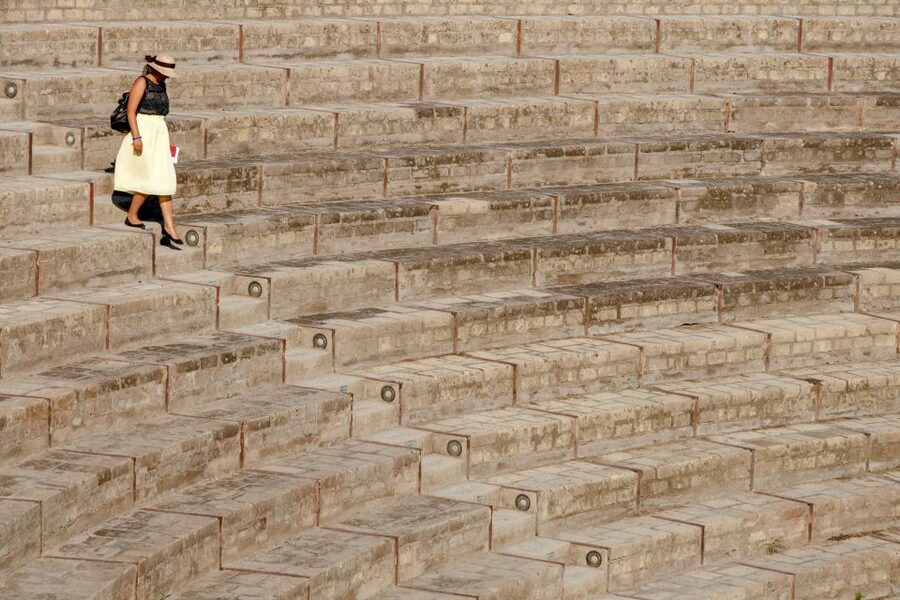
Pompeii is not a single monument. It is a whole city you walk through. That is why the audio guide and your pacing matter so much.
Market life and everyday Roman routines
You’ll want to start by getting a feel for street life. One of the standout moments is imagining where people picked up lunch in the market area. It sounds basic, but standing in the right street view, you can really picture daily routines: errands, quick meals, and social stops.
If you like human-scale travel, this is your section of Pompeii. You are not just looking at big sights. You are stepping into the rhythm of a place that felt normal to its residents.
Public baths and mosaics
Pompeii’s baths are a highlight for a reason. Even without technical background, you can appreciate the design and the artistry. The mosaics in the bathing areas help you see how public entertainment blended with comfort, status, and taste.
When you reach these spaces, slow down. Baths are complex. Rooms connect in ways that make sense once you stop treating them like a checklist and start treating them like a system.
Theater and amphitheater moments
If you enjoy dramatic settings, plan time for the amphitheater. The scale helps you understand the social life of Pompeii. Think audience, noise, and performances that were part of civic identity.
Similarly, theaters and performance spaces come through best when you look both from the audience perspective and from the building’s entry points. Even a quick glance at sight lines can make these spaces click.
Temples: Venus, Apollo, and Jupiter
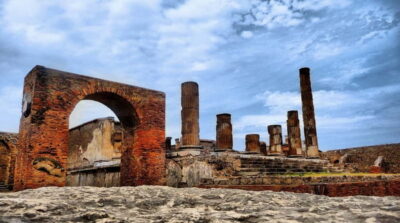
Pompei’s temples are not just “pretty ruins.” They are places that signal what mattered to people. The temples of Venus, Apollo, and Jupiter give you a sense of how belief and public space were intertwined.
This is where the audio guide really earns its keep, because you can connect the worship theme to the building layout.
House of the Faun and Hellenistic touches
One of the named highlights is the House of the Faun, including Hellenistic elements. If you have ever wondered how cultures blend across the Mediterranean, Pompeii is a strong place to see it visually.
When you arrive at larger house interiors or courtyards, you may want to linger. These areas reward your attention, especially if you are using the audio narration to understand what you are looking at.
Villa Mysteries and the suburban villas in Boscoreale (Pompei+ payoff)

If you choose Pompei+, you are buying extra time, but also extra drama. The suburban villas outside the main city are where you get a deeper look at wealthy life and decorating style.
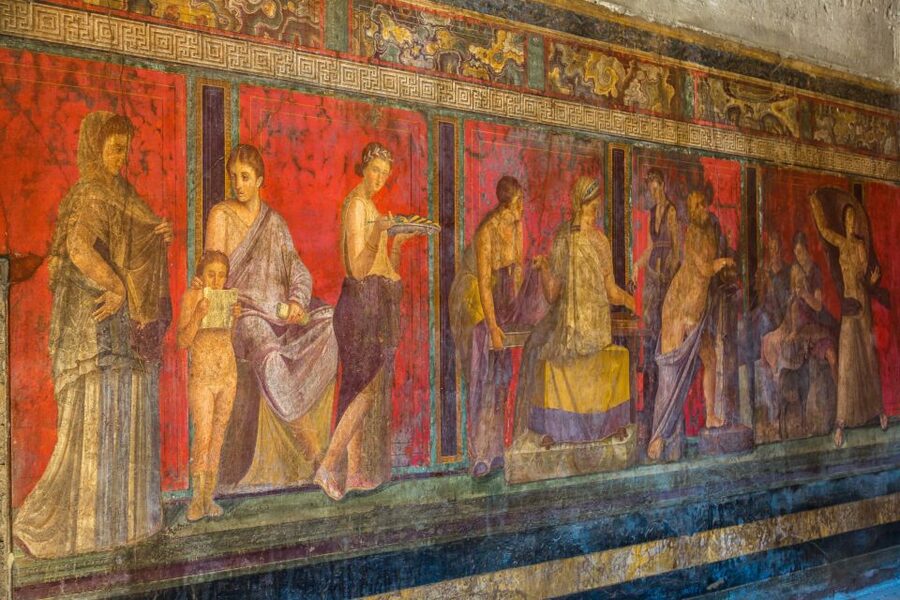
The Villa Mysteries is the headline. People love it because the space includes frescoed rooms that feel vivid even after centuries. The idea is not only that it was expensive. It is that it was curated, and those wall scenes were part of how the household expressed identity.
Pompei+ also includes:
- Villa of Diomedes
- Villa Regina in Boscoreale
- the Antiquarium
Here’s the practical consideration: you will be walking more, and you have to respect the last entry times in your season. If you are the type of traveler who runs at a sprint, Pompei Express may keep you happier. If you want the extra layers, Pompei+ is where your day gets bigger and more rewarding.
Comfort tips: how to plan your day without burning out
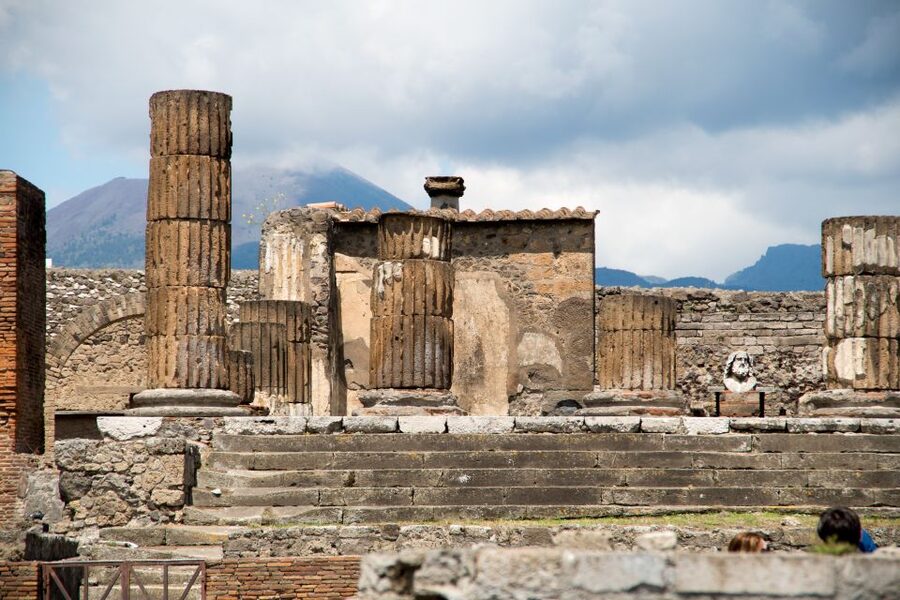
Pompeii is huge. Even when the route feels logical, you are still dealing with stone paths, long distances, and lots of stairs or uneven ground in places.
So plan like this:
- Wear comfortable shoes. This is not a soft-sneaker destination.
- Bring water. The site is outdoors and you will work up a thirst.
- Use the luggage storage so you are not hauling bags all day.
- Start early if you can. It helps with crowds and gives you margin for the farthest sights.
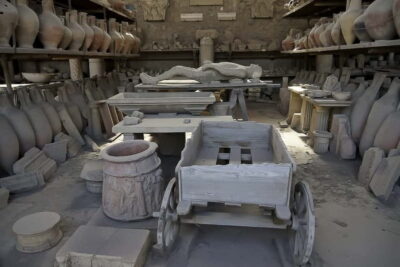
One more timing clue: the area with the famous plaster casts is at the far end of the site. If you leave it for the end without a plan, you might rush or feel disappointed. I like to at least reserve mental space for it earlier, so the last stretch does not feel like a sprint.
To make your walking smoother, think in halves. Do one cluster of major public spaces first (baths, theaters, market streets), then transition into the residential and temple zones. That reduces backtracking and keeps your brain fresh.
What can go wrong (and how to handle it fast)

Even a good ticket cannot fix everything, because Pompeii is a living archaeological site with areas that may not be accessible.
The common frustration is when the audio guide references buildings that are not open when you arrive. That can mean you hear about something you cannot fully see. When that happens, shift focus. Use the narration as background context, then spend your time at the spots you can actually view.
Another issue is confusion at the entrance and meeting points. Signposting can feel inconsistent, and you may be directed toward different areas before you find the right spot. If you feel stuck, go back to the landmarks you know: Porta Marina Superiore for the audio desk.
Finally, the audio device experience can be hit or miss if you rely on Bluetooth headphones, since they do not work with this system. That one is easy to solve before you go.
Who this Pompeii ticket fits best

This is a strong match if you want:
- Self-guided time to move at your own pace
- A way to hit the major highlights without booking a full guided tour
- An audio guide that helps you make sense of houses, temples, baths, and theaters
It is also a decent family choice if you manage expectations. Pompeii is a workout. But with the audio guide, kids and adults can stay engaged longer because there is a constant story thread. You also get a lot of toilets scattered around, which helps a long day.
If you want a very structured experience with a person leading every step, this is not that. It is built for you to explore independently. The audio guide bridges the gap, but it will not replace a live guide who adapts to questions in real time.
Should you book this Pompeii entry ticket with optional audio guide?
Book it if you want to maximize your time and reduce stress. The reserved entry matters because it keeps your day from turning into a line-waiting contest. The audio guide is worth it if you like understanding what you are seeing, not just photographing it.
Pick Pompei Express if you want a focused day on the ancient city and you do not want to chase extra suburban sites. Pick Pompei+ if frescoes, elite villas, and the Boscoreale side of Pompeii sound like your kind of history, and you can comfortably manage the extra walking plus seasonal last entry time.
My final advice is simple: arrive early, bring compatible headphones (skip Bluetooth), and treat the audio guide as your helper, not your boss. If you do that, Pompeii becomes more than ruins. It becomes a real sense of how people lived, walked, worshiped, shopped, ate, and gathered in a Roman city that was suddenly changed forever.
FAQ
What is included with this Pompeii ticket?
You get a reserved entry ticket with a choice between Pompei Express or Pompei+. If you select it, you also get a physical audio guide. A digital audio guide is available in English, German, French, Italian, and Spanish.
What is the difference between Pompei Express and Pompei+?
Pompei Express includes only the ancient city of Pompeii. It does not include the suburban villas. Pompei+ includes the ancient city of Pompeii plus the Villa of the Mysteries, the Villa of Diomedes, and the Villa Regina in Boscoreale with the Antiquarium.
Where do I pick up the audio guide?
You collect the audio guides inside the Pompeii archaeological site at the official audio guide desk near the ticket office, at Porta Marina Superiore.
Are there headphones included with the audio guide?
No. Headphones are not included, and Bluetooth headphones do not work with the audio guide device.
What time should I plan for Pompei+ entry?
For Pompei+ the last entry time is 3:30 p.m. in winter (Nov 1 to Mar 31) and 5:30 p.m. in summer (Apr 1 to Oct 31).
Do I need ID?
Yes. You need a passport or ID card, and a valid ID is required as a deposit to rent the audio guide device.
Entry Tickets in Pompeii Archaeological Site We Also Walked


The Rest of Our Pompeii Site Visits in Pompeii Archaeological Site
Not quite the day you had in mind? The rest of our Pompeii Archaeological Site write-ups sit below
- From Naples: Pompeii and Vesuvius Guided Day Trip with Lunch
- From Naples: Mount Vesuvius and Pompeii Ruins Combo Day Trip
- Ancient Pompeii Private Tour: Skip the Line & Kid-Friendly Option★ 5.0 · 167 reviews
- Pompeii: Private Tour with an Archaeologist★ 4.9 · 168 reviews
- Mt Vesuvius and Pompeii Tour by Bus from Sorrento★ 4.5 · 170 reviews
- Pompeii 2-hour Private Tour with an Archaeologist-Ticket included★ 5.0 · 181 reviews
- Pompeii Private Tour with an Archaeologist Guide★ 5.0 · 184 reviews
- Mount Vesuvius Tour from Pompeii Led by an Expert Guide★ 5.0 · 185 reviews
- Pompeii and Mount Vesuvius excursion from Naples★ 4.6 · 188 reviews
Pompeii Archaeological Site, top to bottom.
 ★ 4.8Pompeii: Entry Ticket and Guided Tour with an ArchaeologistFrom $3519,459 reviews
 ★ 4.8Pompeii: Small Group Tour with an ArchaeologistFrom $4012,264 reviews
 ★ 4.3From Naples: Pompeii Ruins & Mount Vesuvius Day TourFrom $12011,459 reviews
 ★ 4.6From Rome: Pompeii, Amalfi Coast, and Sorrento Day TripFrom $797,031 reviews
 ★ 4.6From Rome: Pompeii, Amalfi Coast and Positano Day TripFrom $996,620 reviews
★ 5.0Pompeii Small Group Tour with an ArchaeologistFrom $356,593 reviews
★ 4.6From Rome: Pompeii, Amalfi Coast and Positano Day TripFrom $996,620 reviews
★ 5.0Pompeii Small Group Tour with an ArchaeologistFrom $356,593 reviews
 ★ 4.5Pompeii, Amalfi Coast and Positano Day Trip from RomeFrom $1016,250 reviews
 ★ 4.5Pompeii and Mount Vesuvius Day Trip from Rome with Pizza LunchFrom $906,151 reviews