
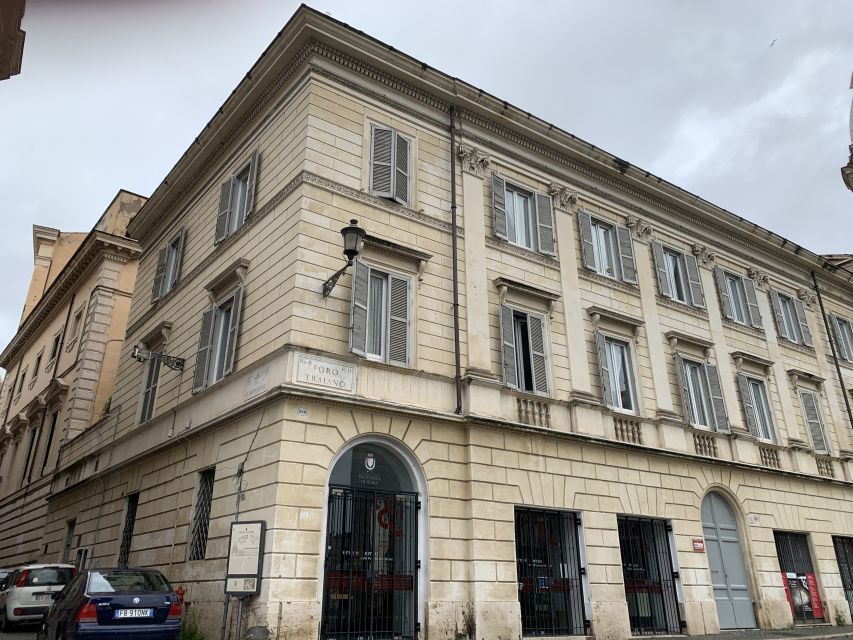
Reviewed · ROMAN BATHS, DOMUS & UNDERGROUND ROME
Rome: Palazzo Valentini Roman Domus Multimedia Experience
Rome turns into 3D time travel. I love the VR headset reconstruction that brings the Roman Domus spaces to life, and I also love the focus on mosaics and decorated rooms rather than just ruins-as-rocks. One thing to consider: this is very headset-and-screen based, so it is not a great fit if you get uncomfortable in enclosed settings or dislike VR.
At around $35 for about 2 hours, you get more than a quick look. You start with a multimedia intro video, then you move through the Domus with an audio guide headset and a smartphone app option.
Plan your timing at the Touristation Aracoeli office on Piazza d’Ara Coeli. You’ll watch the short pre-visit film first, and then the Domus portion begins one hour later, so don’t show up expecting an immediate walk-through.
In This Review
- Key highlights at a glance
- Meeting at Touristation Aracoeli, then the Domus starts an hour later
- The 25 minute Rome multimedia video: useful, but not the main event
- Palazzo Valentini Domus VR: rooms, mosaics, and daily life reconstructed
- What you should pay attention to in the VR portion
- Trajan’s Column reconstruction: closer look at bas-reliefs and the Dacia story
- Optional FOROF: archaeology, contemporary art, and an olfactory add-on
- The creative ingredients you’ll encounter
- Price and value: what $35 buys in a 2-hour slot
- Pace, language, and the practical stuff that affects your comfort
- Not a fit for everyone
- Who this experience suits best
- Should you book Palazzo Valentini Roman Domus with VR?
- FAQ
- Where is the meeting point for the Palazzo Valentini Roman Domus experience?
- How long does the experience take?
- How does the visit start?
- What is included in the ticket?
- Is food or drinks included?
- Is transportation included?
- Which languages are available?
- Is the experience suitable for wheelchair users?
- Is it suitable for claustrophobia?
- Are pets or large bags allowed?
Key highlights at a glance
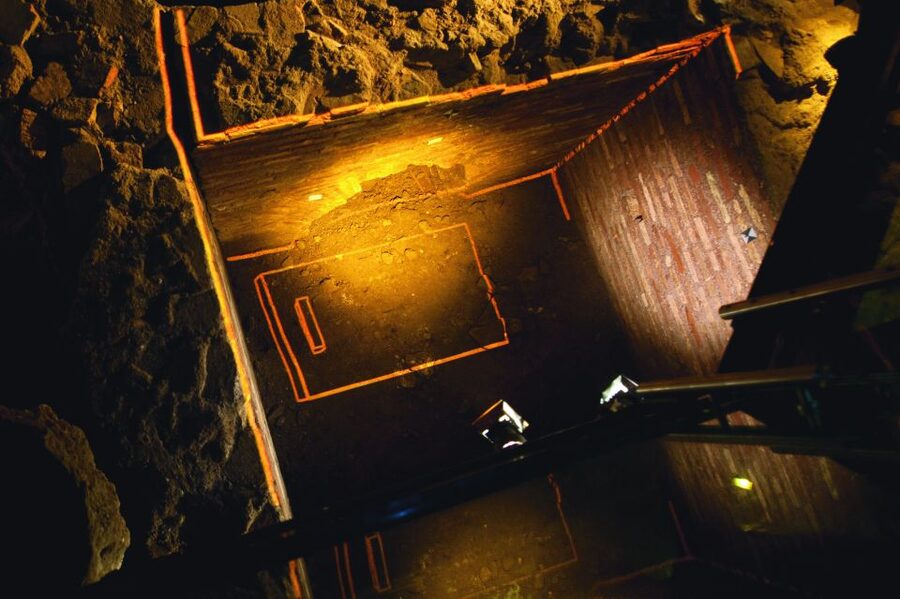
- VR reconstruction of a Roman Domus, including rooms, walls, floors, peristyles, kitchens, baths, and furnishings
- Short multimedia video (25 minutes) set the scene for major Rome landmarks
- Audioguide headset plus a smartphone city app option for extra context
- Trajan’s Column virtual reconstruction, with a close-up look at bas-reliefs and the Dacia campaign story
- Optional FOROF experience, pairing archaeology with contemporary art and an olfactory element
Meeting at Touristation Aracoeli, then the Domus starts an hour later
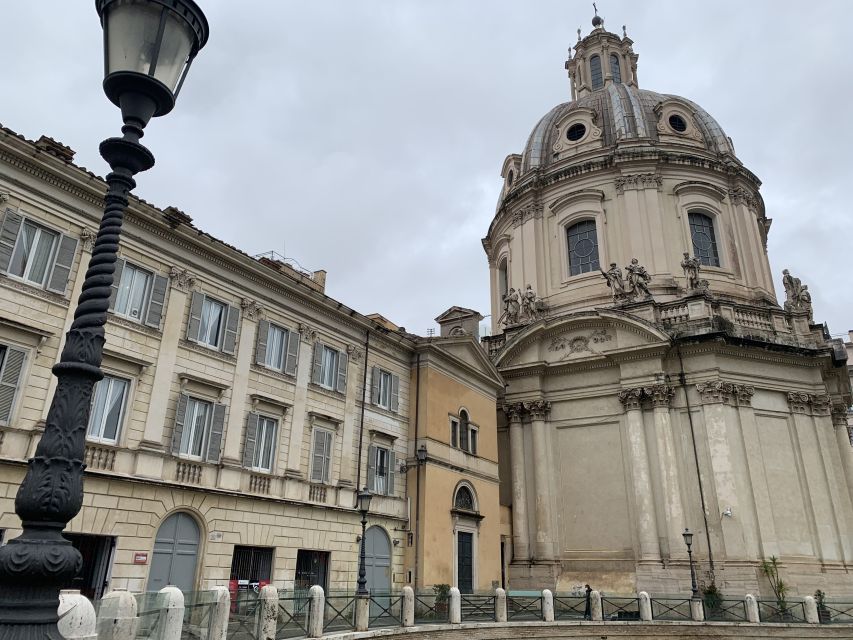
Your day begins at TOURISTATION ARACOELI, Piazza D’Ara Coeli 16. Look for the fountain and orange flags in front of the office entrance so you do not waste time hunting.
This is one of those experiences where the first step matters for your pacing. You report there, watch the short multimedia film, and then the visit at the Domus begins one hour later. If you arrive early with no plan, you might end up hanging around longer than you want.
If you bring luggage, leave the big stuff behind. Large bags and luggage are not allowed, and pets are not allowed either. Comfortable shoes help, since you will be moving between areas before the VR portion kicks in.
The 25 minute Rome multimedia video: useful, but not the main event
Before you go into the Domus rooms, you’ll watch a 25-minute multimedia video inside the Touristation Office. The film connects past and present across some of Rome’s headline sites: the Colosseum, Roman Forum, St. Peter’s Basilica, Castel St. Angel, Circus Maximus, and Ara Pacis.
For me, the value here is simple: it helps you connect what you are seeing later in the Domus to the wider city. Instead of treating the Domus as a standalone exhibit, the video gives you a mental map of where Roman power and daily life clustered.
The only potential downside is that if you are the type who wants to skip anything that feels introductory, the video and app component can feel like extra. I’d still watch it, because it sets up the later Trajan’s Column reconstruction, but you can keep your expectations realistic: this is the prelude, not the finale.
Palazzo Valentini Domus VR: rooms, mosaics, and daily life reconstructed
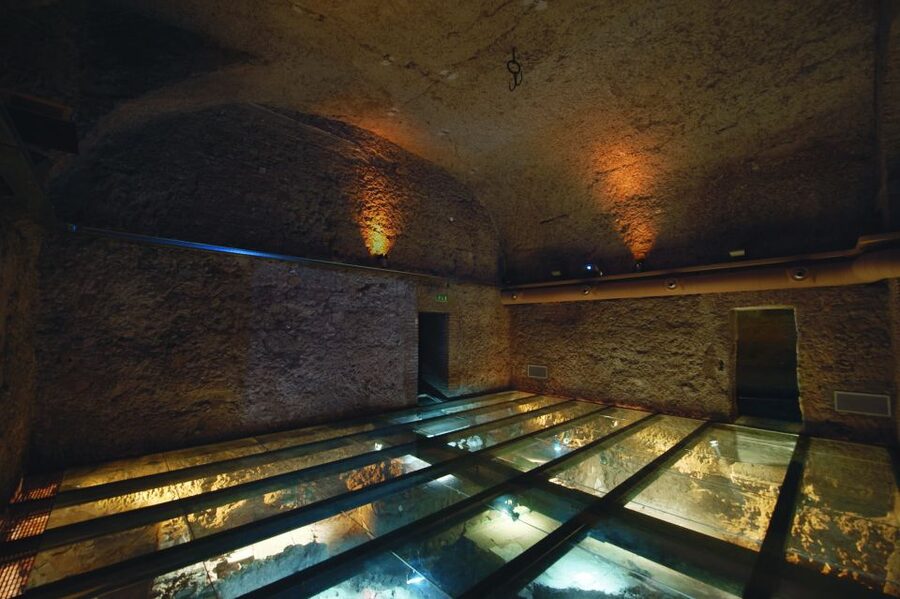
Once the Domus session begins, you put on the headset and step into a virtual reconstruction of a Roman Imperial-age home. The experience is designed to make spaces feel lived-in, not just photographed from the outside.
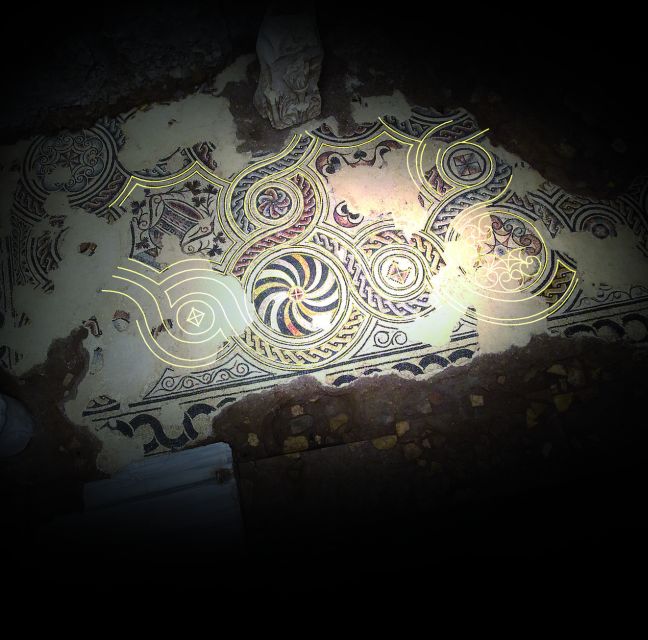
I like that the reconstruction is not vague. You are guided through a set of key areas such as rooms, walls, mosaic floors, peristyles, kitchens, baths, and decorated furnishings. The idea is that your brain stops seeing the Domus as a “museum stop” and starts reading it like a functioning house.
As you watch the virtual overlays, the spaces are meant to come back to life during the tour. Practically, that means you spend less time asking yourself, What was here?, and more time noticing patterns: decorative style, layout, and how different parts of the house relate to daily routines.
One more good point: this experience helps connect ancient, medieval, and modern layers of Rome. That matters in this part of the city, where the timeline is stacked, and ruins are often only one chapter of what you’re standing on.
What you should pay attention to in the VR portion
You’ll get the most out of the headset if you treat it like a guided “visual inventory.” Watch for:
- How mosaics and polychrome floors are presented as design, not just decoration
- The peristyle layout, which is one of the best clues to how the home was organized around light and movement
- The shifts between bathing and cooking areas, which helps you understand how private life worked
Because the tour is self-paced with audio support, you can pause mentally and compare what you’re seeing in VR to what you imagine surviving in real life.
Trajan’s Column reconstruction: closer look at bas-reliefs and the Dacia story
A standout element is the opportunity to observe how the area around Trajan’s Column looked in older times. The experience includes a virtual reconstruction of the column, with a close-up view of the bas-reliefs and the story they tell.
The theme is Trajan’s military campaign, specifically the conquest of Dacia, which is in present-day Romania. Even if you do not know the history in advance, this section gives you a narrative backbone so the carving details do not feel random.
What makes it valuable is scale and clarity. In real life, you can be limited by distance and viewpoint. In the virtual portion, you get the close-up look needed to understand that the reliefs are sequential storytelling, not just decorative carving.
Optional FOROF: archaeology, contemporary art, and an olfactory add-on
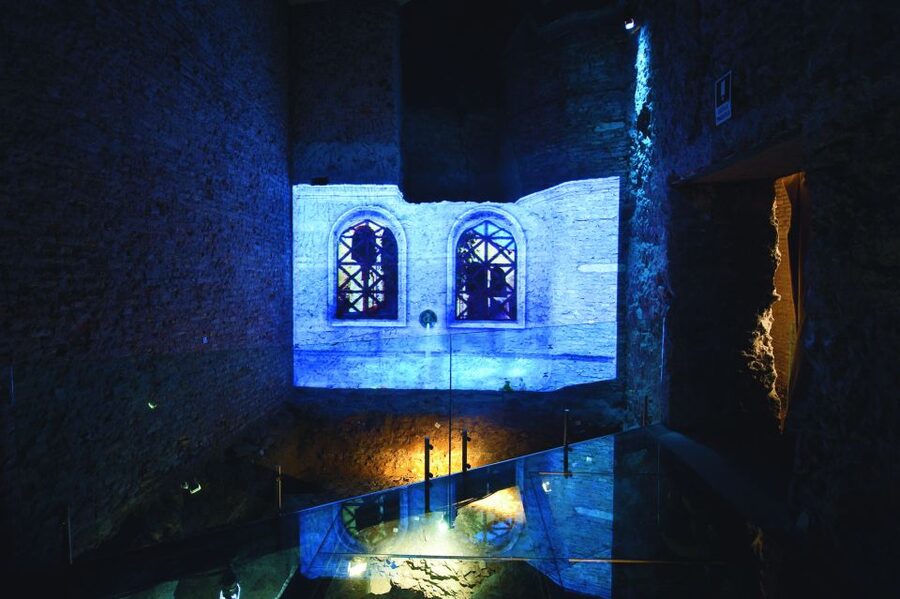
If you select the FOROF option, your ticket expands beyond the Domus VR. FOROF blends contemporary art and archaeology in a regenerative, ongoing cultural setting inspired by the atmosphere of 20th-century avant-garde cultural cafes.
This part has a strong “why does it feel different?” factor. It is located at Palazzo Roccagiovine, opposite Trajan’s Column at the Imperial Fora. If you like tying experiences to a place you can point to on the map, this pairing is convenient.
FOROF also includes hypogeum environments where colored marble pavement from the Basilica Ulpia is preserved, along with remains of the eastern apse dating to the 2nd century A.D. That gives the stop a tangible archaeological weight, even though it is packaged with contemporary artistic programming.
The creative ingredients you’ll encounter
The project mentioned for the site-specific exhibition is Nimbus Limbus Omnibus by Bartolomeo Pietromarchi, realized by a collective described as Viennese, in Rome for the first time. There’s also an olfactory component: FOROF ESSENZA, developed by Laura Bosetti Tonatto, a professional “nose” known worldwide.
In plain terms, this is not just a visual add-on. You are also invited to experience the place through scent, aiming to return the spirit of a location as a social and cultural tale about freedom. If you like museum experiences that use more than sight, this option can be the more memorable half of your outing.
Price and value: what $35 buys in a 2-hour slot
At $35 per person for about 2 hours, you are paying for a specific kind of value: guided interpretation using a VR system plus audio support. You are not paying only for a traditional walkthrough of stones. You’re paying for reconstruction, storytelling, and the ability to see the Domus layout as it was imagined.
Included elements that matter for value:
- Admission to the Ancient Roman Domus museum
- The 25-minute multimedia Rome video
- Audioguide headset for the Domus portion
- A city app audioguide download
- Optional FOROF experience if you chose that add-on
Where people can disagree is the “extra” content. The video and the app may feel like padding if you are mainly here for the VR reconstruction. Still, the pre-visit film ties together Rome’s biggest sites and can help you connect what you’re seeing later, especially when Trajan’s Column comes into focus.
If you prefer live guidance, keep your expectations straight. A guided tour at Palazzo Valentini is not included. The experience is built around self-guided VR plus audio, with language options available through the experience and the audio headset.
Pace, language, and the practical stuff that affects your comfort
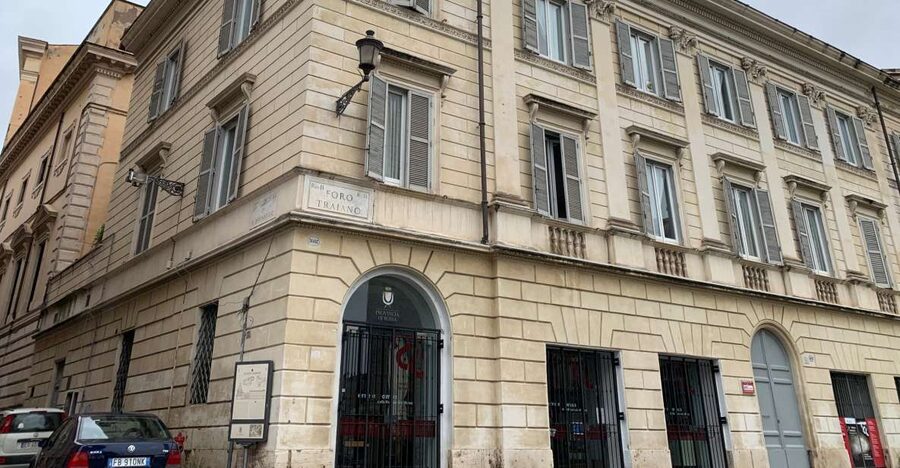
This experience is scheduled for 2 hours, and starting times depend on availability. The flow is designed to fit your day: you report at the office, watch the intro film, and then move into the Domus VR segment.
Language coverage works in layers. The Palazzo Valentini experience lists English, Italian, Spanish, French, and German. The audioguide headset includes additional language options: English, French, German, Italian, Spanish, Russian, and Japanese.
If you add FOROF, guided tours there are in English and Italian. So if you are choosing between languages, you can plan around whether you want the FOROF add-on or keep it strictly to the Domus VR.
Not a fit for everyone
This experience is not suitable for people with claustrophobia. It is also not suitable for wheelchair users. Given the VR headset and the nature of museum spaces, these constraints make sense, so it is better to avoid frustration.
Also, plan around luggage restrictions and the “small-group but tech-based” feel. You should bring comfortable shoes and expect a fair amount of time in headset mode during the reconstruction.
Who this experience suits best
You should consider this if you want a modern way to understand a Domus without needing a live archaeologist next to you the whole time. I think it fits especially well for:
- People who learn well through visuals and layout, not just written history
- Visitors who want to connect multiple Roman sites, starting with the video and ending with Trajan’s Column
- Anyone curious about everyday Roman design, especially mosaics, peristyles, baths, kitchens, and room decorations
If you strongly dislike VR headsets, or you want more discussion and less reconstruction, you might feel this is more technology-first than museum-talk-first.
If you do like museums that experiment, the optional FOROF stop adds a second layer: contemporary art and archaeology in the same breath, plus an olfactory experience that goes beyond the usual.
Should you book Palazzo Valentini Roman Domus with VR?
Book it if you want the best kind of shortcut: seeing a Domus as a functioning home, not just an outline. The VR reconstruction plus the audio headset is built for understanding layout and decoration quickly, and Trajan’s Column’s close-up story is a smart historical anchor.
Skip it or choose another option if you are prone to claustrophobia or need wheelchair access. And if you know you hate any pre-visit video or app content, just note that those are included, even though the Domus VR is the main show.
If you can handle VR comfortably and you like the idea of placing Trajan’s era into both architecture and storytelling, this is a solid use of two hours in Rome, with an optional add-on that can make the experience feel more like culture and less like a screen-only stop.
FAQ
Where is the meeting point for the Palazzo Valentini Roman Domus experience?
You meet at TOURISTATION ARACOELI, Piazza D’Ara Coeli, 16. There is a fountain and orange flags in front of the office entrance.
How long does the experience take?
The duration is 2 hours. Starting times depend on availability.
How does the visit start?
You report at the Touristation Office first and watch a 25-minute multimedia video. The Domus visit begins one hour later.
What is included in the ticket?
It includes admission to the Ancient Roman Domus museum, the 25-minute Ancient Rome multimedia video, an audioguide headset for the Domus, and a city app audioguide download to your smartphone. If you select it, the FOROF experience is included too.
Is food or drinks included?
No, food and drinks are not included.
Is transportation included?
No, transportation is not included.
Which languages are available?
The Palazzo Valentini experience languages are English, Italian, Spanish, French, and German. The audioguide headset includes English, French, German, Italian, Spanish, Russian, and Japanese. FOROF guided tours are in English and Italian.
Is the experience suitable for wheelchair users?
No. It is not suitable for wheelchair users.
Is it suitable for claustrophobia?
No. It is not suitable for people with claustrophobia.
Are pets or large bags allowed?
Pets are not allowed, and luggage or large bags are not allowed.
Roman Baths, Domus & Underground Rome, top to bottom.
 ★ 4.3Rome: Colosseum, Roman Forum & Trajan’s Market Exterior TourFrom $292,038 reviews
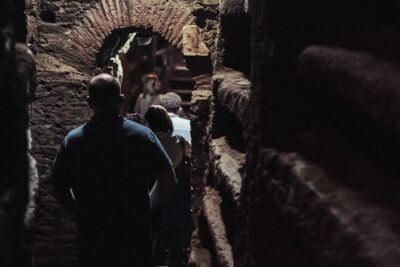 ★ 5.0Rome Underground: Catacombs Tour, Aqueducts and Appian WayFrom $651,007 reviews
 ★ 4.7Rome: Caracalla Baths & Circus Maximus — Private or SharedFrom $77835 reviews
 ★ 4.6Rome: Domus Aurea Guided Group TourFrom $55697 reviews
 ★ 4.4Rome: Trevi Fountain District Underground Domus Guided TourFrom $50550 reviews
 ★ 4.6Rome: Domus Aurea, Nero’s Golden House guide tourFrom $59449 reviews
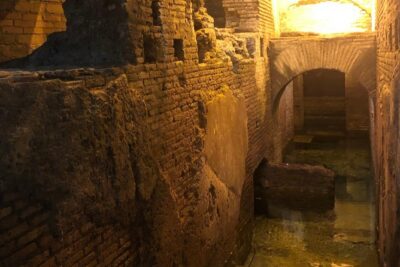 ★ 4.5Rome: Trevi Fountain District and Underground Domus Guided TourFrom $53298 reviews
 ★ 5.0Catacombs and Hidden Underground Rome: Small Group Max 6 PeopleFrom $240293 reviews
Filed under