

Reviewed · PANTHEON, TREVI & PIAZZA NAVONA
Rome: Trevi Fountain District Underground Domus Guided Tour
Rome hides rivers underground, and this tour gives you two big wins: the chance to see Vicus Caprarius 9 meters below street level, and an archaeologist-style guide who makes the Roman water system make sense fast. I also like that you end near Trevi so the story lands in the real place you came for. Just know the title can feel a bit grand, because you do not go under the actual Trevi Fountain basin.
If you’re choosing one short Rome add-on, this is a strong pick because it stays human-sized, and it runs in English with a live guide. Past groups have praised guides such as Naomi, Erika, Erica, and Alessia for clear explanations and lots of question time, plus a good sense of humor. Wear comfy shoes, because the walkways underground can feel snug.
In This Review
- Key highlights you will actually care about
- Why Rome’s underground water story is worth 45 minutes
- Finding the meeting point at Vicolo del Puttarello, 25
- Vicus Caprarius, City of Water, and the three sections
- Ancient pipes, the domus residence, and what 9 meters down feels like
- Polychrome marble, coins, amphorae, and Alessandro Helios
- Trevi Fountain time: crowded, close, and still worth it
- Price and value for a $50, 45-minute guided experience
- Who should book this tour, and who should think twice
- Practical tips for comfort, questions, and a smooth Rome day
- Should you book? My honest take
- FAQ
- How long is the Rome Trevi Fountain District Underground Domus guided tour?
- Where do I meet the guide?
- Is the tour guided in English?
- Does the tour go under the actual Trevi Fountain?
- What is included in the price?
- Is an audio guide included?
- Can I skip the line at Trevi Fountain with this tour?
- Is the tour suitable for wheelchair users or mobility impairments?
Key highlights you will actually care about
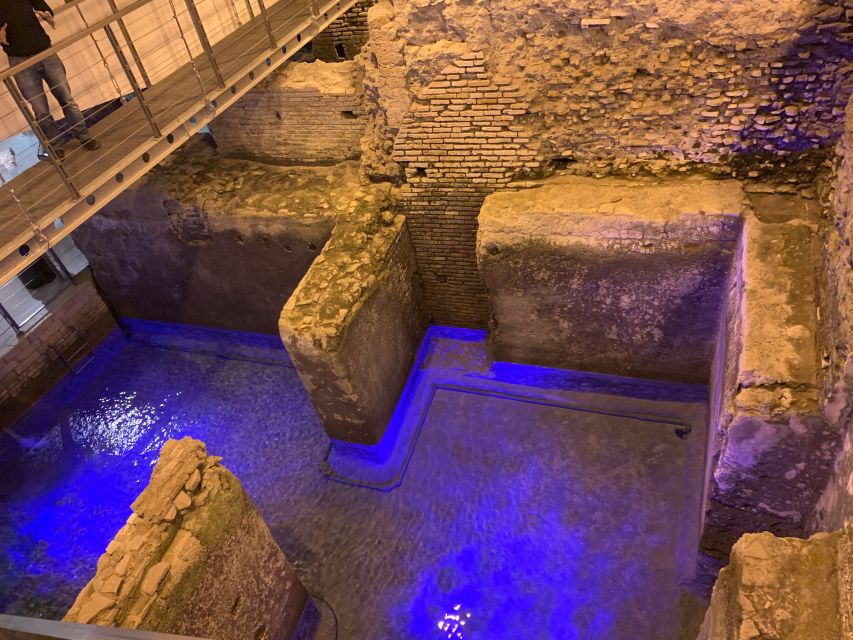
- 9 meters down to the Vicus Caprarius, known as the City of Water
- Water system storytelling that connects Trevi to Roman pipes, filters, and a domus
- Imperial Age artifacts like ancient coins and African amphorae
- Standout finds such as polychrome marble and the head of Alessandro Helios
- Small group vibe with a guide who handles questions well
- Trevi Fountain finish with time to look and take photos, even though it is crowded
Why Rome’s underground water story is worth 45 minutes
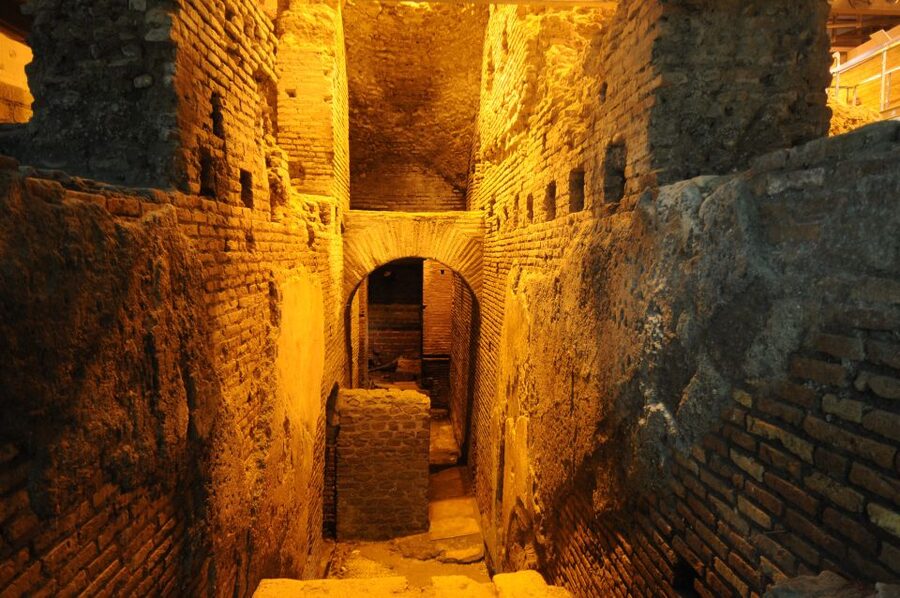
This is not just an underground walk. It is a guided explanation of how Rome made water behave, and how that plumbing shaped everyday life, fancy households, and even one of the most famous fountains in the world.
I like tours that connect the dots, and this one does. You start at an ancient archaeological zone in the Trevi area, then follow the theme of water: where it came from, how it was treated, and where it ended up. The time also works well. Forty minutes underground plus five minutes at Trevi means you can fit it into a busy day without burning half of it.
The setting adds a bonus. Rome is hot, stone-heavy, and loud on the surface. Going below ground gives you a cooler, quieter perspective that makes the engineering feel real, not textbook.
Finding the meeting point at Vicolo del Puttarello, 25
Meeting is straightforward: you meet the guide at the entrance to the Vicus Caprarius archaeological area, at Vicolo del Puttarello 25. There is no hotel pickup, so plan to arrive a few minutes early and take your time getting oriented.
This matters because you will be dealing with two kinds of nerves in Rome. First, there is the normal city navigation chaos. Second, there is the idea that you are about to enter a restricted underground space with a set starting time. Showing up calm helps you enjoy the beginning instead of rushing.
One more practical note: the tour is English, and it is led by a live guide. That is a big deal for this topic, because Roman water tech has lots of details. A good guide can keep it clear instead of turning it into a list.
Vicus Caprarius, City of Water, and the three sections

Your main stop is Vicus Caprarius, often described as the City of Water. The big idea is simple: you are stepping into an ancient Roman environment that was tied directly to spring water and the way it fed the city.
The tour moves through three sections inside this underground site. I like that structure because it gives you a sense of sequence, not random ruins in the dark. It also helps you understand how the area functioned as more than one room or one purpose.
You are also going far enough underground to feel a temperature shift and a change in atmosphere. That physical change makes the history land. You are not imagining a water system, you are standing near parts of it that were built for use, long before modern plumbing existed.
Ancient pipes, the domus residence, and what 9 meters down feels like
The story here follows water as it traveled from the direction of Trevi, through ancient masonry, and into the luxurious parts of a domus residence. You are not just looking at a collection of stones. You are tracing a flow.
That is where the tour earns its keep. Rome’s greatness is not only in monuments. It is also in infrastructure, and this visit gives you a clear path from water source to how people actually lived and drank and bathed. You even learn about pools and pipes linked to a high-status home.
Space and comfort are worth mentioning. The underground area is not huge, and some groups note that multiple tours can overlap in the same general area. If you get claustrophobic or you hate waiting in tight corridors, this is something to think about before you go.
Also, the tour timing is short, so you will have a guided highlight approach, not an all-day archaeological seminar. That is a plus for most people, but it is not for anyone who wants to linger.
Polychrome marble, coins, amphorae, and Alessandro Helios
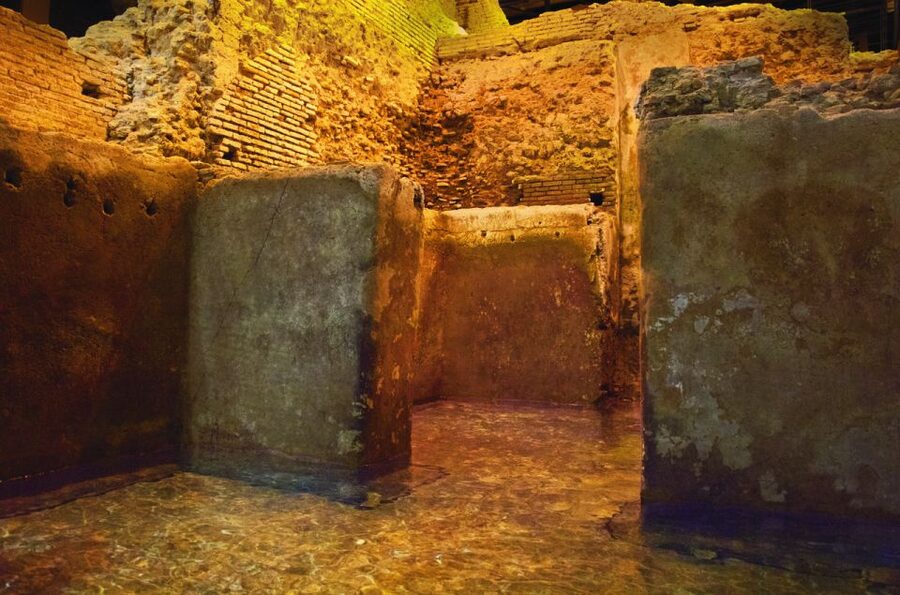
This is the part I would tell friends to pay attention to, because it turns the water theme into a human one.
You get to hear about specific discoveries, including polychrome marble, the head of Alessandro Helios, hundreds of ancient coins, and African amphorae used to transport oil. These details matter because they show Roman life was connected to trade, status, and daily routines. It was not only local water. It was an empire moving goods and resources.
I also like how the guide connects objects to function. Seeing coins and amphorae is one thing. Understanding why they ended up in an underground context tied to water and household infrastructure makes the whole site click.
There is also an engineering awe factor that keeps coming up. You are looking at water infrastructure built roughly 2,000 years ago, and it worked well enough to become part of the story of Trevi’s water supply. That scale of effort is hard to grasp unless someone puts it into words.
Trevi Fountain time: crowded, close, and still worth it
After the underground visit, the tour ends at Trevi Fountain. You get only about five minutes with it as part of the guided portion, so think of this as a quick orientation moment rather than a leisurely sightseeing stop.
Here is the key reality check. Trevi Fountain can be very crowded, and you can expect lines just to get close. The good news is that you still get to visit afterwards, and the guide can help you connect what you learned underground to what you see above.
Your ticket includes access for Trevi as part of the experience, but it does not include skip-the-line access. Since the fountain entrance is free, you are still dealing with the crowd logistics on your own.
If you care about photos, arrive mentally prepared. Use the guided moment to understand the fountain’s design and layout, then decide if you want to push closer or settle for a better vantage point and enjoy the atmosphere.
Price and value for a $50, 45-minute guided experience
At about $50 per person for 45 minutes, the value is not in the length. It is in what you get for the time: a guided visit to a specific archaeological zone tied to Trevi’s water story.
This is where I see the best return. Underground sites can be confusing without context. Seeing artifacts without help can feel like a scavenger hunt. A strong guide turns it into a narrative, especially for something technical like Roman water systems.
Small-group format helps too, because it makes questions practical. Several guides are praised for strong English and humor, and for handling lots of questions. That matters when you are paying for a short window. You want the guide to earn that time with clear explanations, not just walk you from point A to B.
One small bonus is optional add-ons. Some bookings offer a with ice cream option, with a voucher for ice cream near Trevi that you can use during your stay. If your booking includes it, it is a fun way to end the day on a simple note.
Who should book this tour, and who should think twice
I think this tour suits you if you enjoy connections. You like understanding how a famous place works, not just taking photos of it. If Roman engineering, archaeology, and daily life details are your thing, this will feel like a smart use of time.
It also fits well if you have limited time in Rome. Forty-five minutes is manageable, and the meeting point is near Trevi’s orbit. Some people also suggest doing it early in your trip, because the explanations help you recognize what you will see around the city afterward.
Think twice if you want Trevi Fountain access in the sense of standing under it or getting special entry to the fountain basin. This tour focuses on the underground archaeological area next to Trevi, not on a private fountain viewing.
It is also not suitable for people with mobility impairments or wheelchair users, since the experience is described as not suitable for those access needs.
Practical tips for comfort, questions, and a smooth Rome day

Start with shoes. Comfortable shoes are a must because you are walking underground and moving between points in an archaeological site.
Bring a question list. This topic invites it. Roman water systems, domus life, and the meaning of finds like amphorae and marble all have details worth asking about. If your guide is as good as the ones praised by past groups, you will get answers instead of vague remarks.
Also, pace your day around the Trevi crowd. Your guided time ends quickly at Trevi, but the fountain itself will be busy. If you want photos, plan for a bit of waiting and decide in advance how close you really need to be.
Finally, if you are sensitive to tight spaces, mentally prepare for an underground site that is not huge. The payoff is great, but the physical environment can feel snug.
Should you book? My honest take
Book it if you want the Trevi story explained properly, from water source to household to monument. For the price, you are buying context, and the context is the whole point. The best version of this tour happens when you show up curious, ask questions, and accept that the underground site is the main event.
Skip or adjust expectations if you came for a special Trevi Fountain experience inside the basin area. You will still get Trevi time, but the crowd and the short guided window are part of the deal. Also, if mobility is an issue, this is not the right match.
FAQ
How long is the Rome Trevi Fountain District Underground Domus guided tour?
The tour lasts 45 minutes total.
Where do I meet the guide?
Meet the guide at the entrance to the Vicus Caprarius archaeological area at Vicolo del Puttarello 25.
Is the tour guided in English?
Yes, the tour is led by a live guide in English.
Does the tour go under the actual Trevi Fountain?
No. The tour focuses on the underground Vicus Caprarius area next to Trevi, and it ends at Trevi Fountain.
What is included in the price?
Included are assistance, a reserved entry ticket for Vicus Caprarius, the Vicus Caprarius guided tour, and a Trevi Fountain access ticket.
Is an audio guide included?
No, an audio guide is not included.
Can I skip the line at Trevi Fountain with this tour?
No. Skip-the-line access is not included, even though entrance to the fountain is free.
Is the tour suitable for wheelchair users or mobility impairments?
No. It is not suitable for people with mobility impairments or wheelchair users.
If you want, tell me what day and time you plan to visit Rome, and I’ll suggest the best way to build a tight schedule around this stop.
Pantheon, Trevi & Piazza Navona, top to bottom.
 ★ 4.3Rome: Pantheon Fast-Track Ticket and Official Audio GuideFrom $621,008 reviews
 ★ 5.03 in 1 Cooking Class near Navona: Fettuccine, Ravioli & TiramisuFrom $837,376 reviews
 ★ 4.0Pantheon Reserved Entry Ticket with Audio GuideFrom $134,486 reviews
 ★ 4.9Rome: Pantheon Timeless Marvel Guided Tour with Entry TicketFrom $214,002 reviews
 ★ 4.1Rome: Pantheon Priority Entry Ticket & Audio Guide AppFrom $63,234 reviews
 ★ 5.0Enjoy Spritz and Pasta Making in Piazza NavonaFrom $901,681 reviews
 ★ 4.3Rome: Trevi Fountain and Underground Guided TourFrom $411,664 reviews
 ★ 5.0Pantheon Elite Guided Tour – Rome’s Iconic Ancient TempleFrom $411,447 reviews